Boost your rankings with the importance of technical SEO


Technical SEO can increase your organic traffic by up to 40% within six months, yet many professionals struggle to quantify and prioritize the right fixes. The challenge lies not just in identifying technical issues but understanding which improvements deliver the highest impact on visibility and conversions. This guide unpacks the core components of technical SEO, debunks common myths, reveals proven audit strategies, showcases AI-powered tools, and demonstrates how to measure real ROI from your technical optimization efforts.
Table of Contents
- Understanding Technical SEO: Foundations And Importance
- Core Technical SEO Factors Influencing Search Rankings
- Common Misconceptions And Pitfalls In Technical SEO
- Frameworks And Tools For Technical SEO Audits
- Measuring And Maximizing The ROI Of Technical SEO
- Optimize Your Technical SEO With AI-Powered Tools
- Frequently Asked Questions
Key takeaways
| Point | Details | |-------|---------|| | Technical SEO drives efficiency | Proper site architecture ensures search engines crawl, index, and rank your content effectively. | | Speed and mobile matter most | Site performance and mobile optimization directly impact rankings and user conversions. | | Structured data boosts visibility | Implementing schema markup increases rich result appearances by approximately 30%. | | Myths mislead strategy | Common misconceptions about technical SEO waste resources and delay meaningful progress. | | AI accelerates results | Automated audit tools reduce manual work by 50% while improving issue detection accuracy. |
Understanding technical SEO: foundations and importance
Technical SEO involves optimizing your website's infrastructure to help search engines crawl, index, and understand your content efficiently while delivering exceptional user experiences. Unlike content or link building, technical SEO focuses on the backend framework that makes everything else possible.
Search engines rely on crawlers to discover and evaluate web pages. Google's crawling and indexing rely heavily on proper technical SEO elements like robots.txt, sitemap.xml, and crawl budget optimization. When you optimize these foundational elements, you give search engines clear pathways to your most valuable content. Poor technical implementation creates roadblocks that prevent even brilliant content from ranking.
Core technical SEO elements include:
- Crawlability settings that control how bots access your site
- Indexing directives that specify which pages should appear in search results
- Site architecture that establishes logical content hierarchies
- Performance factors affecting load speed and user experience
- Security protocols including HTTPS implementation
- Mobile optimization for responsive design and usability
These elements work together to create a foundation for search visibility. Without proper technical optimization, content strategies and backlink campaigns deliver diminished returns. Understanding how to conduct a comprehensive technical SEO audit becomes essential for diagnosing issues before they impact rankings. The Google SEO Starter Guide provides official recommendations that align technical implementation with search engine requirements.
Core technical SEO factors influencing search rankings
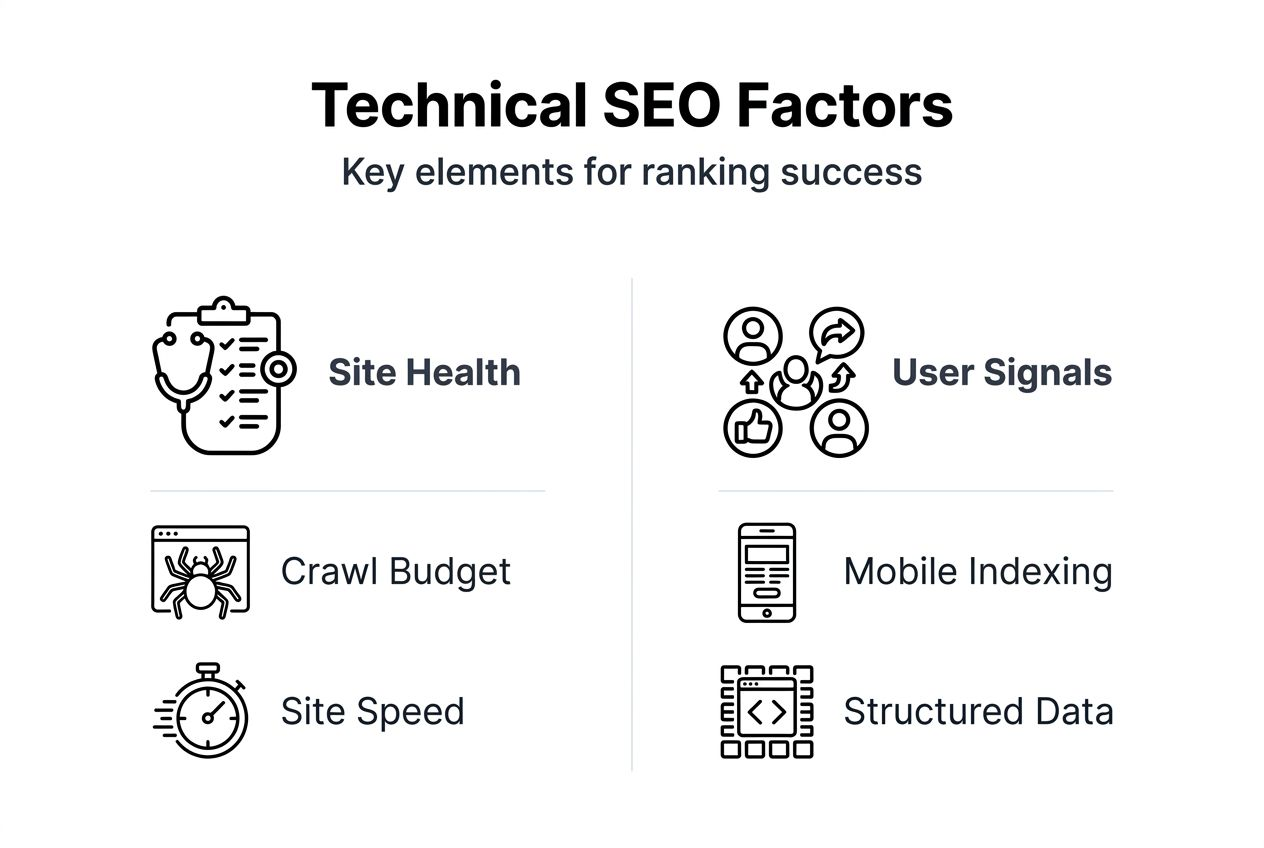
Crawl budget determines how many pages search engines will crawl on your site during each visit. Larger sites must optimize crawl efficiency by blocking low-value pages through robots.txt and prioritizing important content through XML sitemaps. When crawlers waste time on duplicate or thin pages, they may miss your most valuable content entirely.

Site speed directly affects both rankings and revenue. Improving site speed by 1 second can increase conversion rates by 7% while also satisfying Google's page experience signals. Core Web Vitals measure loading performance, interactivity, and visual stability. Sites that excel in these metrics gain competitive advantages in search results and user retention.
Mobile-first indexing means Google primarily uses your mobile site version for ranking decisions. If your mobile experience lags behind desktop, you risk losing visibility regardless of desktop performance. Responsive design, touch-friendly navigation, and fast mobile load times became non-negotiable requirements.
Structured data transforms how search engines understand and display your content. Websites using structured data markup are 30% more likely to receive rich results, which dramatically improve click-through rates through enhanced SERP features like review stars, recipe cards, and FAQ boxes. Schema implementation gives you control over how information appears in search results.
Pro Tip: Prioritize site speed improvements based on traffic value and Core Web Vitals scores. Fix pages generating the most revenue or organic traffic first to maximize immediate ROI from performance optimization efforts.
| Technical Factor | Ranking Impact | User Experience Benefit |
|---|---|---|
| Site Speed | Direct ranking signal; affects page experience score | 7% conversion increase per second improvement |
| Mobile Optimization | Primary indexing factor since 2019 | Reduces bounce rates by up to 60% |
| Structured Data | 30% higher rich result probability | Increases CTR by 20-40% |
| HTTPS Security | Ranking signal since 2014 | Builds trust and prevents security warnings |
| Crawl Efficiency | Ensures complete indexing | Faster content discovery and updates |
Using an AI crawlability audit tool helps identify hidden crawl issues that manual reviews often miss. Compare different platforms through a technical SEO tools comparison to find solutions matching your specific needs and budget. Understanding the impact of site speed on user behavior helps justify performance investments to stakeholders, while learning about structured data benefits reveals opportunities for enhanced search visibility.
Common misconceptions and pitfalls in technical SEO
Many professionals mistakenly view technical SEO as purely reactive work focused on fixing errors. In reality, strategic technical optimization proactively aligns your site architecture with both user needs and algorithm preferences. Treating it as maintenance rather than strategy limits your competitive advantage.
Keyword stuffing in URLs, metadata, and internal anchors creates more problems than benefits. Over-optimization and keyword stuffing can trigger penalties that devastate rankings. Modern algorithms prioritize natural language and semantic relevance over exact-match repetition.
Common technical SEO pitfalls include:
- Confusing technical SEO with content optimization roles
- Ignoring mobile performance while optimizing desktop experiences
- Implementing structured data incorrectly, which provides no benefit
- Neglecting international SEO signals like hreflang tags
- Blocking important resources in robots.txt accidentally
- Creating complex URL structures that confuse both users and crawlers
The distinction between technical and content SEO matters for resource allocation. Technical SEO ensures search engines can access and process your content efficiently. Content SEO focuses on relevance, quality, and user engagement. Both require specialized expertise, and mixing responsibilities often leads to suboptimal results in both areas.
Pro Tip: Focus technical SEO efforts on site health metrics like crawl errors, page speed, and mobile usability rather than keyword density. This approach prevents penalties while building sustainable ranking foundations.
Exploring AI in SEO audits reveals how automation reduces the risk of overlooking critical issues. Understanding keyword stuffing penalties helps you avoid outdated tactics that harm modern SEO performance.
Frameworks and tools for technical SEO audits
A systematic audit framework ensures you identify and prioritize technical issues effectively. Follow this proven five-step checklist:
- Analyze crawlability by reviewing robots.txt, XML sitemaps, and server logs to identify blocked resources or orphaned pages
- Evaluate site speed using Core Web Vitals metrics, identifying render-blocking resources and oversized images
- Verify structured data implementation through Google's Rich Results Test and fix any schema errors
- Audit URL structure for clarity, avoiding parameters and ensuring logical hierarchies
- Implement AI-driven continuous monitoring to catch emerging issues before they impact rankings
Different tools excel at different audit tasks. Google Search Console provides essential crawl data and index coverage reports directly from Google's perspective. Screaming Frog offers comprehensive site crawling for technical analysis at scale. AI-powered platforms like BabyLoveGrowth combine automated audits with intelligent prioritization based on traffic impact.
| Tool | Best For | Key Advantage | Ideal User |
|---|---|---|---|
| Google Search Console | Index monitoring | Official Google data | All SEO professionals |
| Screaming Frog | Comprehensive crawls | Deep technical analysis | Technical SEO specialists |
| BabyLoveGrowth AI | Automated audits | AI-driven prioritization | Agencies scaling audits |
| Semrush Site Audit | Multi-site tracking | Historical comparisons | Enterprise teams |
Pro Tip: Combine manual spot checks with automated audits for comprehensive coverage. AI tools excel at scale and pattern detection, while human review catches context-specific issues and strategic opportunities.
Review the complete SEO audit checklist 2026 for detailed step-by-step guidance. Try the AI SEO audit tool to experience automated technical analysis firsthand.
Measuring and maximizing the ROI of technical SEO
Tracking specific KPIs proves the value of technical SEO investments and guides ongoing optimization priorities. Monitor these critical metrics:
- Organic traffic growth from improved crawling and indexing
- Crawl error reduction in Google Search Console
- Pages indexed compared to total site pages
- Page speed improvements measured by Core Web Vitals
- Click-through rates for SERP features enabled by structured data
- Mobile usability scores and mobile traffic percentage
Real-world case studies demonstrate measurable impact. An e-commerce site fixing crawl budget issues and implementing product schema saw 34% organic traffic growth within four months. A B2B service provider improving Core Web Vitals scores experienced a 28% increase in qualified leads from organic search. These improvements compound over time as technical health sustains ranking stability.
Best practices for maximizing technical SEO ROI include:
- Prioritizing fixes based on traffic value and user impact
- Implementing continuous monitoring to catch regressions quickly
- Focusing on mobile experience where most organic traffic originates
- Leveraging automation to scale technical optimization efficiently
- Documenting changes to measure before and after performance
Maintaining technical SEO health delivers long-term ranking protection. Sites that neglect ongoing optimization often experience gradual visibility decline as competitors implement improvements and search algorithms evolve.
| KPI | Baseline Benchmark | Expected Improvement | Timeline |
|---|---|---|---|
| Organic Traffic | Current weekly average | 20-40% increase | 3-6 months |
| Crawl Errors | Errors per 1000 pages | 80% reduction | 1-2 months |
| Pages Indexed | Index coverage ratio | 95%+ indexation | 2-3 months |
| Core Web Vitals | LCP, FID, CLS scores | All metrics in green | 2-4 months |
| Rich Results | SERP feature appearance | 30% more rich results | 1-3 months |
Use this technical SEO ROI guide to establish measurement frameworks and communicate value to stakeholders effectively.
Optimize your technical SEO with AI-powered tools
Manual technical audits consume valuable time that agencies and SEO teams could spend on strategic initiatives. BabyLoveGrowth's AI SEO Audit Tool automates comprehensive technical analysis, identifying critical crawlability issues, performance bottlenecks, and schema opportunities in minutes rather than hours.

The platform integrates technical auditing with content planning, automated publishing, and backlink building for complete SEO growth management. While you focus on strategy, AI handles continuous monitoring and surfaces priority fixes based on traffic impact. This approach scales technical optimization across multiple client sites without expanding team size.
Explore expert insights in our AI SEO tools comparison to understand how automation transforms SEO workflows. Our detailed technical SEO audit guide walks through the complete optimization process, helping you maximize impact from every technical improvement.
Frequently asked questions
What is technical SEO and why is it important?
Technical SEO optimizes website infrastructure to improve how search engines crawl, index, and understand your content. It forms the foundation that enables content strategies and link building to deliver maximum impact on rankings and organic traffic growth.
How do site speed and mobile-friendliness affect SEO rankings?
Faster site speed directly improves rankings through page experience signals while boosting conversion rates by approximately 7% per second of improvement. Mobile-first indexing makes mobile optimization essential since Google primarily uses mobile site versions for ranking decisions.
What are some common mistakes to avoid in technical SEO?
Avoid treating technical SEO as merely fixing errors rather than strategic optimization aligned with business goals. Keyword stuffing in URLs and metadata triggers penalties rather than improving rankings. Never confuse technical SEO responsibilities with content optimization roles, as both require specialized expertise.
How can AI tools enhance technical SEO audits?
AI tools reduce manual audit time by up to 50% while improving accuracy through pattern recognition across thousands of pages. They enable continuous monitoring that catches issues immediately and prioritize fixes based on traffic impact. Try the AI SEO audit tool to experience automated technical analysis.
Recommended
Smart SEO,
Faster Growth!
Most Read Articles
Generative Engine Optimization (GEO)
Learn how Generative Engine Optimization (GEO) helps your content rank in AI search engines like ChatGPT and Google AI. This comprehensive guide explains the differences between SEO and GEO, why it matters for your business, and practical steps to implement GEO strategies for better visibility in AI-generated responses.
DylenJan 18, 2025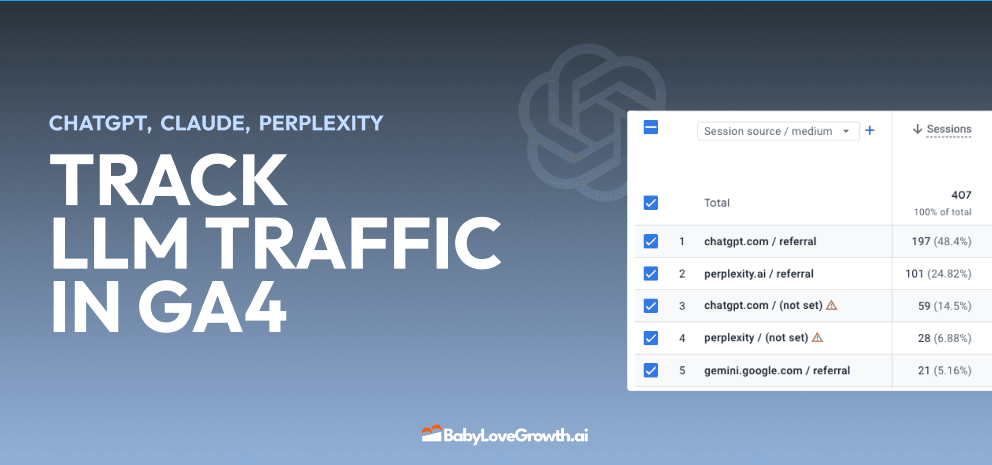
Track LLM Traffic in Google Analytics 4 (GA4)
Learn how to track and analyze traffic from AI sources like ChatGPT, Claude, Perplexity, and Google Gemini in Google Analytics 4. This step-by-step guide shows you how to set up custom filters to monitor AI-driven traffic and make data-driven decisions for your content strategy.
DylenMar 18, 2025
How to Humanize AI Text with Instructions
Learn practical techniques to make AI-generated content sound more natural and human. This guide covers active voice, direct addressing, concise writing, and other proven strategies to transform robotic text into engaging content.
DylenApril 7, 2025
Open AI Revenue and Statistics (2024)
Comprehensive analysis of OpenAI financial performance, user engagement, and market position in 2023. Discover key statistics including $20B valuation, $1B projected revenue, and 100M+ monthly active users.
DylenOctober 03, 2025