Boost SEO and conversions with faster website speed


A 100-millisecond delay can reduce conversion rates by 7%, proving that milliseconds matter enormously for your bottom line. Website speed isn't just a technical metric; it's a critical SEO ranking factor and a direct driver of user engagement, conversions, and revenue growth. This guide reveals cost-effective strategies to optimize your site speed, improve Core Web Vitals, and amplify organic traffic without breaking the bank.
Table of Contents
- Understanding Website Speed And Its SEO Role
- How Website Speed Impacts User Experience And Business Metrics
- Dispelling Common Misconceptions About Website Speed
- Comparing Website Speed Optimization Techniques
- Google's Core Web Vitals And The Holistic Speed Framework
- Real-World Case Studies Linking Speed To SEO And Revenue
- Practical Steps To Integrate Speed Optimization With AI SEO Platforms
- Scale Your Organic Growth With AI-Powered SEO And Speed Optimizations
- Frequently Asked Questions
Key takeaways
| Point | Details | |-------|---------|| | Fast sites rank higher | Google uses Core Web Vitals as key SEO signals, rewarding speed with better visibility. | | Speed drives conversions | Every 100ms delay costs you 7% in conversions, with mobile users especially sensitive. | | Affordable wins exist | Image compression, caching, and CDNs deliver major speed gains without huge investments. | | Holistic metrics matter | LCP, FID, and CLS together measure loading, interactivity, and stability for complete user experience. | | AI amplifies results | Combining speed fixes with AI SEO platforms scales organic growth efficiently. |
Understanding website speed and its SEO role
Website speed encompasses how quickly your pages load, respond to user interactions, and maintain visual stability during the loading process. It's not just about the initial paint; it's about the entire experience from click to full interactivity. Google recognizes this complexity and has embedded speed metrics directly into its ranking algorithm through Core Web Vitals.
Core Web Vitals focus on speed and user interaction metrics as key SEO ranking signals, measuring three critical dimensions of performance. These metrics provide a standardized framework for understanding how real users experience your site. The three pillars are:- Largest Contentful Paint (LCP) tracks loading performance, with good scores under 2.5 seconds
- First Input Delay (FID) measures interactivity responsiveness, targeting under 100 milliseconds
- Cumulative Layout Shift (CLS) evaluates visual stability, aiming for scores below 0.1
These benchmarks aren't arbitrary. They reflect extensive research into user behavior patterns and satisfaction thresholds. Meeting these standards signals to Google that your site delivers a quality experience worthy of higher rankings.
For business owners and marketers, understanding these metrics means you can prioritize improvements that matter most. Instead of guessing what to fix, you have clear targets backed by Google's public guidelines. The Core Web Vitals framework gives you a roadmap to technical SEO success.
Pro Tip: Use Google PageSpeed Insights to get free, detailed breakdowns of your Core Web Vitals scores with specific recommendations for improvement.
How website speed impacts user experience and business metrics
The connection between speed and user behavior is ruthlessly direct. When your site loads slowly, visitors don't wait around; they bounce. Sites loading over 3 seconds experience 32% higher bounce rates, losing potential customers before they even see your content. Those extra seconds translate to lost opportunities, abandoned carts, and diminished brand perception.

Conversion rates tell an even starker story. Research consistently shows approximately 7% conversion drops for every 100ms delay in load time. If your site generates $100,000 monthly, a mere half-second delay could cost you $35,000 per month in lost revenue. These aren't hypothetical numbers; they're measurable business impacts.
Mobile users face even tighter patience thresholds. With smaller screens and often slower connections, mobile visitors abandon slow sites faster than desktop users. Google's mobile-first indexing recognizes this reality, making mobile speed a primary ranking factor. If you enhance user experience for SEO, mobile speed must be your priority.
The business metrics compound:
- Higher bounce rates reduce session depth and engagement signals
- Lower time on site decreases content consumption and brand familiarity
- Reduced conversions directly impact revenue and customer acquisition costs
- Poor mobile experience alienates the majority of web traffic in 2026
Improving speed creates a virtuous cycle: retained visitors engage more, convert better, and send positive signals to search engines. The relationship between web performance and user behavior is one of the most validated findings in digital marketing research.
Dispelling common misconceptions about website speed
Many business owners believe great content alone compensates for slow loading times. This is dangerously wrong. While content quality matters immensely, Google's algorithm explicitly weights speed as a ranking factor. A brilliant article on a sluggish site will lose rankings to decent content on a fast site. Speed and content work together; one can't rescue the other.
Another myth suggests meaningful speed improvements require expensive infrastructure overhauls or developer teams. In reality, cost-effective optimizations like image compression, browser caching, and lazy loading deliver 20-40% speed gains with minimal investment. You don't need a $10,000 server upgrade to pass Core Web Vitals; you need smart tactical fixes.
The mobile speed misconception persists despite mobile-first indexing being the standard since 2019. Some marketers still prioritize desktop performance, assuming mobile is secondary. With over 60% of searches happening on mobile devices in 2026, mobile speed is primary. Your desktop site could be lightning fast, but if mobile lags, your rankings suffer.
Finally, many confuse initial load time with complete website speed. Core Web Vitals measure more than first paint. Interactivity delays and layout shifts after initial load harm user experience and SEO. A site that appears quickly but then shifts content or freezes on interaction scores poorly. True speed optimization addresses the entire loading and interaction lifecycle.
Pro Tip: Don't assume your hosting provider optimizes for speed automatically; many shared hosting plans lack adequate caching and compression configurations that you must enable manually.
Comparing website speed optimization techniques
Not all speed tactics deliver equal returns. Understanding the cost-benefit ratio helps you prioritize fixes that maximize impact on your budget and timeline. Here's how common optimization techniques stack up:
| Technique | Speed Improvement | Cost | Complexity | Best For |
|---|---|---|---|---|
| Image optimization | 20-40% faster | Free-$50/month | Low | All sites with photos |
| Browser caching | 30-50% faster repeat visits | Free | Low | Content-heavy sites |
| Minify CSS/JS | 10-20% faster | Free | Medium | Code-heavy sites |
| Content Delivery Network | 40-60% faster globally | $20-200/month | Medium | International audiences |
| Server upgrade | Varies widely | $50-500+/month | Low to high | Poor hosting baseline |
| Lazy loading | 15-30% faster initial load | Free | Medium | Image/video-rich sites |
Image optimization consistently offers the best return on investment. Most websites load hundreds of kilobytes in uncompressed images that could shrink 70-80% without visible quality loss. Tools like TinyPNG or ImageOptim are free and require no coding skills.
Browser caching is equally powerful for repeat visitors. By storing static assets locally, you eliminate redundant downloads on subsequent page views. This single configuration change can cut load times in half for returning users, improving engagement metrics significantly.
Content delivery networks (CDNs) shine for businesses serving global audiences. By distributing content across geographic servers, CDNs reduce latency dramatically. A visitor in Australia loading from a Sydney server sees massive speed gains compared to fetching from a New York origin server. AI-driven SEO strategies combined with CDN deployment create competitive advantages.
Server upgrades should be your last resort unless current hosting is genuinely inadequate. Many shared hosting plans throttle resources, making upgrades necessary eventually. However, exhaust low-cost optimizations first before committing to higher monthly fees.
Pro Tip: Start with image optimization and caching since they're free, low-risk, and deliver immediate measurable results you can test with PageSpeed Insights within hours.
Google's Core Web Vitals and the holistic speed framework
Core Web Vitals represent Google's evolution from simple load time metrics to comprehensive user experience measurement. Each metric addresses a specific dimension of how real users perceive and interact with your site. Understanding what each measures helps you diagnose and fix the right issues.
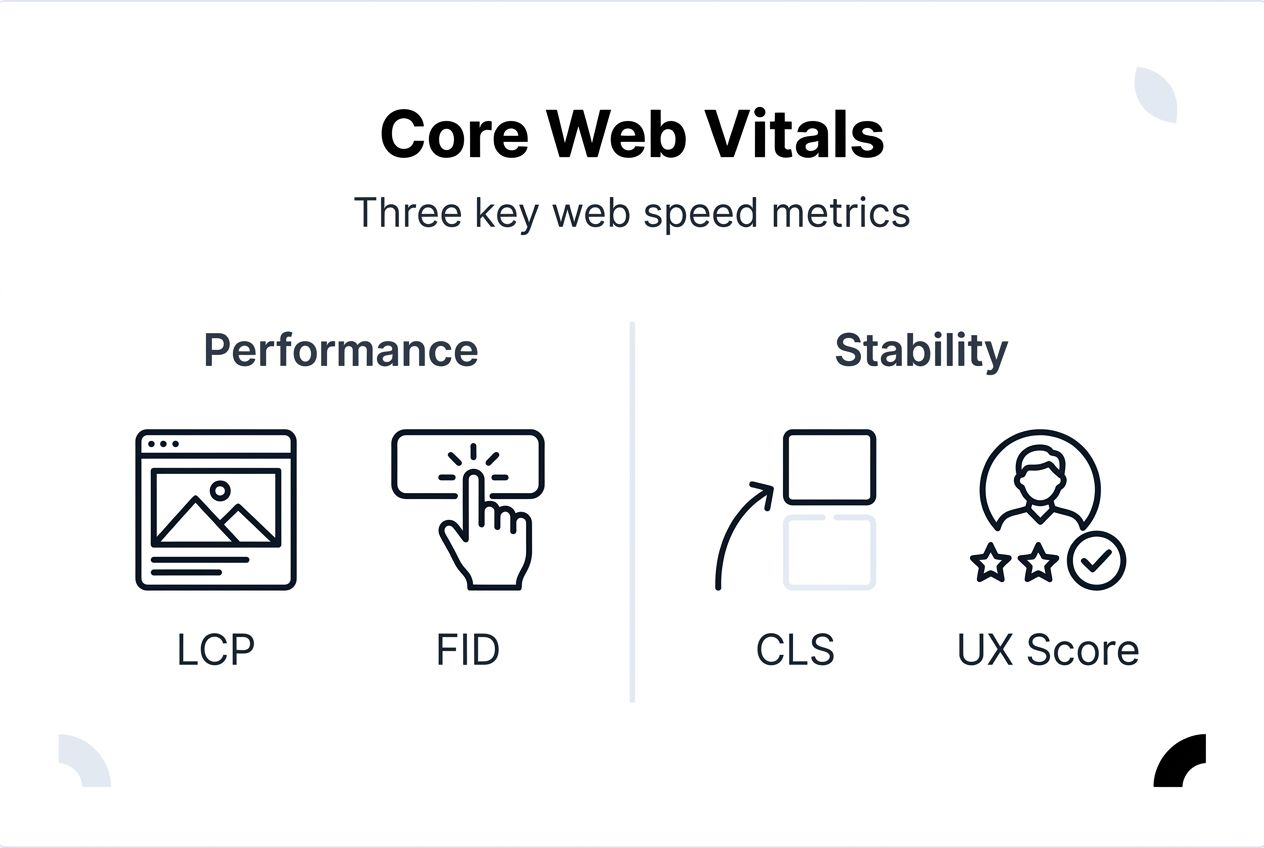
Largest Contentful Paint (LCP) measures loading performance by tracking when the largest visible content element renders. This could be a hero image, headline block, or video thumbnail. Good LCP scores under 2.5 seconds ensure users see meaningful content quickly. Slow LCP frustrates visitors who stare at blank screens or loading spinners.
First Input Delay (FID) captures interactivity responsiveness by measuring the delay between a user's first interaction (clicking a button, tapping a link) and the browser's response. Scores under 100 milliseconds feel instantaneous. Delays over 300ms create perceptible lag that makes sites feel broken or unresponsive, driving users away.
Cumulative Layout Shift (CLS) evaluates visual stability by quantifying unexpected layout shifts during page load. Ever clicked a button only to have it move as an ad loaded above it? That's poor CLS. Scores below 0.1 ensure content stays put, preventing frustrating misclicks and reading interruptions.
Together, these Core Web Vitals measure user experience beyond loading speed, addressing the full spectrum of performance pain points users encounter. A site might load quickly (good LCP) but freeze on interaction (bad FID) or shift content annoyingly (bad CLS). The holistic framework ensures you optimize all dimensions, not just raw speed.
Google weighs these metrics in ranking decisions because they correlate strongly with user satisfaction and engagement. Sites scoring well across all three metrics tend to retain visitors, earn longer sessions, and generate more conversions. By aligning technical performance with user experience, Core Web Vitals create a virtuous cycle where better performance drives better business outcomes and higher rankings.
Real-world case studies linking speed to SEO and revenue
Data proves the business case for speed optimization. A mid-sized e-commerce retailer improved LCP by 30% through image compression and lazy loading, resulting in 15% organic traffic growth within three months. The speed improvements enhanced their rankings for competitive keywords, driving qualified visitors without additional ad spend.
Another case involved a service business that tackled caching and minification. Their bounce rate dropped 20% as users stayed engaged rather than abandoning slow pages. Lower bounce rates signaled quality to Google's algorithm, triggering ranking improvements that compounded the organic traffic boost.
Perhaps most compelling are conversion rate improvements. One online retailer documented over 10% conversion rate increases after comprehensive speed enhancements. With average order values around $150, that translated to $45,000 additional monthly revenue from the same traffic volume. The ROI on speed optimization work paid back within weeks.
Key success patterns across case studies:
- Speed fixes typically show measurable ranking improvements within 4-12 weeks
- Conversion rate lifts often appear immediately as user experience improves
- Mobile speed gains drive disproportionate traffic growth due to mobile-first indexing
- Compounding effects occur as better engagement signals further boost rankings
These aren't outlier success stories; they're typical results when businesses prioritize speed systematically. The performance gains aren't just about SEO; they're about creating better experiences that naturally lead to more revenue and sustainable growth.
Practical steps to integrate speed optimization with AI SEO platforms
Combining speed improvements with AI SEO automation creates powerful leverage for scaling organic growth efficiently. Modern AI-powered SEO workflows handle content creation and optimization, freeing your resources to focus on technical performance enhancements like website speed.
Follow this integration roadmap:
- Measure baseline performance using Google PageSpeed Insights to identify specific Core Web Vitals issues and prioritize fixes
- Implement quick wins like image compression, browser caching, and CSS/JS minification using free tools requiring minimal technical skill
- Deploy AI-driven SEO strategies to automate content workflows, generating optimized articles while you handle technical improvements
- Monitor Core Web Vitals continuously through Google Search Console to track improvement trends and catch regressions early
- Scale content production with platforms offering Webflow SEO automation to maintain velocity while optimizing technical foundations
The synergy between speed and content optimization multiplies results. Fast sites keep visitors engaged with your AI-generated content longer, improving dwell time and reducing bounce rates. Better engagement signals strengthen rankings, which drives more traffic to your optimized content. The flywheel accelerates.
AI SEO platforms handle the heavy lifting of keyword research, content creation, and performance tracking. This automation lets small teams compete with larger competitors by focusing limited resources on high-impact technical fixes rather than manual content production. You're no longer choosing between content and technical SEO; you're excelling at both.
Pro Tip: Set up automated alerts for Core Web Vitals degradation in Google Search Console so you catch speed regressions immediately before they impact rankings.
Scale your organic growth with AI-powered SEO and speed optimizations
Babylovegrowth.ai automates the entire content SEO workflow, from keyword research through article creation to performance tracking. By handling content production automatically, the platform frees your marketing team to focus on technical optimizations like website speed that require human judgment and implementation.

The platform integrates seamlessly with your technical SEO efforts, providing AI-powered content workflows that generate high-quality, optimized articles while you improve Core Web Vitals. This dual approach accelerates organic traffic growth faster than either strategy alone.
With SEO automation handling content, you can dedicate resources to speed improvements knowing your content pipeline continues producing results. The combination creates sustainable, scalable growth that compounds monthly. Start your free trial at BabyLoveGrowth AI and experience how AI-driven SEO paired with speed optimization transforms organic traffic into consistent revenue growth.
Frequently asked questions
What is the difference between website speed and Core Web Vitals?
Website speed broadly refers to how quickly pages load, while Core Web Vitals measure three specific user experience dimensions: loading performance (LCP), interactivity (FID), and visual stability (CLS). Core Web Vitals provide precise, standardized metrics that Google uses for ranking, whereas generic speed measurements lack this specificity.
How quickly should my website load on mobile to avoid penalties?
Aim for LCP under 2.5 seconds, FID under 100 milliseconds, and CLS below 0.1 on mobile devices. Google doesn't impose explicit penalties but rewards faster sites with higher rankings. Sites exceeding these thresholds lose competitive advantage to faster competitors in search results.
Are there free tools to measure and improve website speed effectively?
Google PageSpeed Insights, Lighthouse, and Search Console provide comprehensive free analysis of Core Web Vitals with specific improvement recommendations. These tools identify issues like unoptimized images, missing caching, and render-blocking resources that you can fix without paid software.
Can I improve website speed without hiring developers or upgrading servers?
Yes, image compression tools, caching plugins, and CDN services require minimal technical skills and deliver 20-40% speed improvements. Most website platforms offer simple configurations for enabling browser caching and lazy loading without coding knowledge.
How does website speed affect organic traffic beyond SEO rankings?
Faster sites retain visitors longer, reducing bounce rates and increasing pages per session, which signals content quality to search algorithms. Better engagement leads to more backlinks, social shares, and repeat visits, creating compounding growth effects beyond direct ranking improvements.
Recommended
Smart SEO,
Faster Growth!
Most Read Articles
Generative Engine Optimization (GEO)
Learn how Generative Engine Optimization (GEO) helps your content rank in AI search engines like ChatGPT and Google AI. This comprehensive guide explains the differences between SEO and GEO, why it matters for your business, and practical steps to implement GEO strategies for better visibility in AI-generated responses.
DylenJan 18, 2025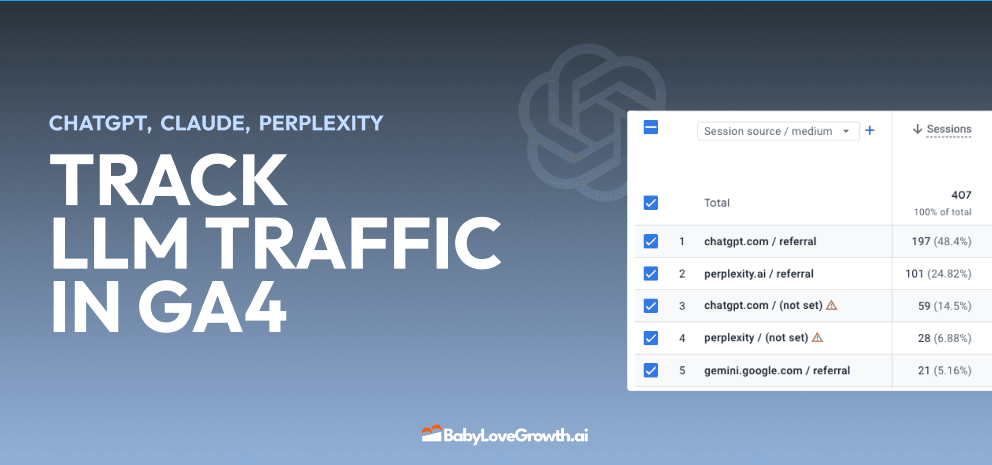
Track LLM Traffic in Google Analytics 4 (GA4)
Learn how to track and analyze traffic from AI sources like ChatGPT, Claude, Perplexity, and Google Gemini in Google Analytics 4. This step-by-step guide shows you how to set up custom filters to monitor AI-driven traffic and make data-driven decisions for your content strategy.
DylenMar 18, 2025
How to Humanize AI Text with Instructions
Learn practical techniques to make AI-generated content sound more natural and human. This guide covers active voice, direct addressing, concise writing, and other proven strategies to transform robotic text into engaging content.
DylenApril 7, 2025
Open AI Revenue and Statistics (2024)
Comprehensive analysis of OpenAI financial performance, user engagement, and market position in 2023. Discover key statistics including $20B valuation, $1B projected revenue, and 100M+ monthly active users.
DylenOctober 03, 2025