Why Use Automated Content for Scalable SEO Impact


Managing endless demands for high-quality, search-optimized content can drain resources for even the most experienced SEO teams. Automated content powered by large language models offers a scalable way to handle this complexity while supporting consistent performance. By harnessing sophisticated machine learning and natural language processing, agencies can create original text that boosts organic traffic and strengthens brand visibility. The article breaks down core principles and practical applications, helping specialists navigate the opportunities and limitations of automated content generation.
Table of Contents
- Automated Content Defined And Core Concepts
- Key Types Of Automated Content Creation
- How Automated Content Powers SEO Performance
- Benefits And Limitations Of Content Automation
- Common Challenges And Mistakes To Avoid
Key Takeaways
| Point | Details |
|---|---|
| Understanding Automated Content | Automated content utilizes advanced AI technologies like large language models for efficient content generation, but it requires human oversight for quality assurance. |
| Applications of Automated Content | Key areas include marketing, technical documentation, SEO, social media, and basic research, enhancing productivity across various domains. |
| SEO Enhancement Through Automation | Automated content significantly boosts SEO by optimizing keyword usage and maintaining consistent, relevant publishing. |
| Challenges and Best Practices | Organizations must avoid over-reliance on AI, ensure human oversight, and implement quality control to mitigate risks associated with automated content creation. |
Automated Content Defined and Core Concepts
Automated content represents a sophisticated approach to digital content generation using advanced artificial intelligence technologies. At its core, this method leverages large language models to create written materials through computational processes that analyze, understand, and generate human-readable text with remarkable efficiency.
The fundamental mechanics of automated content involve several key technological components:
- Machine learning algorithms that process vast datasets
- Natural language processing capabilities
- Contextual understanding mechanisms
- Predictive text generation technologies
These systems draw from sophisticated AI computational frameworks that enable intelligent content production across multiple domains. By analyzing existing information, these AI models can construct original text that maintains coherence, grammatical structure, and topical relevance.
Understanding automated content requires recognizing its potential and limitations. While AI can generate substantial quantities of text rapidly, human oversight remains critical for ensuring quality, accuracy, and nuanced communication. The technology represents a powerful tool for content creation, not a complete replacement for human creativity and strategic thinking.
Key applications of automated content span multiple professional domains:
- Marketing content generation
- Technical documentation development
- SEO-optimized article production
- Social media posting
- Basic research summarization
Pro tip: Always review and refine AI-generated content to maintain authenticity and strategic alignment with your brand voice.
Key Types of Automated Content Creation
Automated content creation encompasses a diverse range of technological approaches designed to generate digital materials using artificial intelligence. Advanced generative AI technologies enable multiple content generation modalities that transform how organizations produce written, visual, and multimedia materials.
The primary categories of automated content creation include:
- Text generation for blogs, articles, and marketing materials
- Social media content development
- Product description automation
- Technical documentation production
- Translation and localization services
- SEO-optimized content creation
Each content type leverages different machine learning models with unique capabilities. Text generation systems utilize natural language processing algorithms that analyze existing content, understand contextual nuances, and produce original written materials. These systems can generate everything from short-form social media posts to comprehensive research reports with increasing sophistication.
Modern automated content creation technologies go beyond simple text replacement. They integrate advanced contextual understanding, semantic analysis, and adaptive learning techniques to produce more refined and contextually appropriate content. By analyzing massive datasets, these systems can generate materials that closely mimic human writing styles while maintaining grammatical accuracy and topical relevance.

Here's a quick comparison of automated content creation methods and their role in digital business:
| Approach | Primary Function | Typical Business Impact |
|---|---|---|
| Text Generation | Produces written articles | Enables faster blog publishing |
| Social Media Automation | Crafts platform posts | Boosts engagement, brand presence |
| Product Description AI | Writes item summaries | Improves e-commerce efficiency |
| Translation Services | Converts language content | Supports global market expansion |
| SEO Content Optimization | Targets search keywords | Drives increased organic traffic |
Key technological components driving automated content creation include:
- Large language models
- Machine learning algorithms
- Natural language processing frameworks
- Deep learning neural networks
- Contextual comprehension systems
Pro tip: Implement rigorous quality control processes to ensure automated content maintains brand voice and accuracy standards.
How Automated Content Powers SEO Performance
Automated content has revolutionized search engine optimization by creating strategic, data-driven materials that directly enhance online visibility. Scalable content optimization techniques enable organizations to generate high-performing digital assets that meet complex search engine ranking criteria with unprecedented efficiency.
The primary mechanisms through which automated content drives SEO performance include:
- Keyword density optimization
- Rapid content generation at scale
- Consistent metadata and structured data creation
- Dynamic content adaptation
- Semantic keyword integration
- Continuous content refreshment
Modern search algorithms reward websites that produce frequent, relevant, and contextually rich content. Automated content generation allows businesses to maintain a consistent publishing schedule, which signals to search engines that the website is active, authoritative, and continuously providing value to users. These systems can analyze trending topics, user search patterns, and competitive landscapes to create targeted content that increases organic search visibility.
Technological innovations in automated content creation have transformed traditional SEO strategies. Machine learning algorithms can now produce nuanced, contextually appropriate content that goes beyond simple keyword stuffing. By understanding user intent, semantic relationships, and search engine ranking factors, these systems generate materials that not only improve technical SEO metrics but also enhance genuine user engagement and information quality.
Key SEO performance enhancement strategies include:
- Intelligent keyword research and integration
- Automatic content refresh and updates
- Personalized content targeting
- Multichannel content optimization
- Real-time performance tracking
Pro tip: Implement AI-powered content analytics to continuously refine and optimize your automated SEO content strategy.
Benefits and Limitations of Content Automation
Content automation represents a double-edged technological innovation that offers significant advantages while simultaneously presenting critical challenges. AI-driven writing tools demonstrate complex performance characteristics that require careful strategic implementation to maximize potential and mitigate risks.
The primary benefits of content automation include:
- Dramatically accelerated content production
- Consistent writing quality and style
- Cost-effective scaling of content strategies
- 24/7 content generation capabilities
- Reduced human error in repetitive writing tasks
- Multilingual content creation
Automated content generation enables organizations to overcome traditional bottlenecks in content production. By leveraging machine learning algorithms, businesses can generate substantial volumes of contextually relevant materials without the time and resource constraints associated with manual writing processes. These systems can rapidly analyze market trends, user behaviors, and competitive landscapes to produce targeted, strategic content.
However, content automation also presents significant limitations that demand proactive management. Machine-generated content can potentially introduce subtle biases, generate factually questionable information, and struggle with nuanced contextual understanding. The technology requires continuous human oversight to maintain authenticity, ensure ethical standards, and preserve the genuine communicative intent behind content creation.
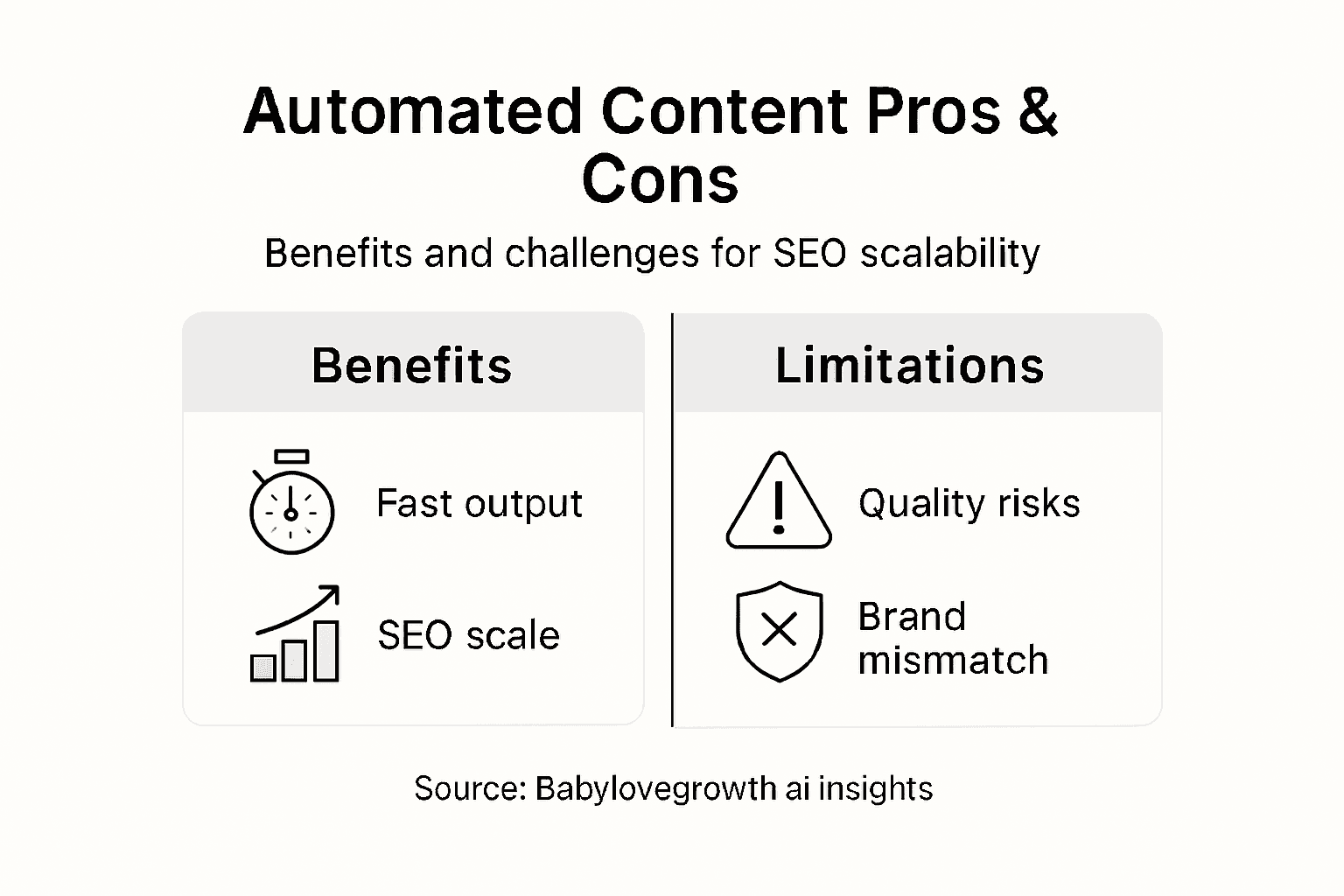
Here is a summary of potential benefits versus limitations of content automation for organizations:
| Category | Benefit Highlight | Limitation Highlight |
|---|---|---|
| Productivity | 24/7 content creation | May lack contextual nuance |
| Cost | Scales without hiring | Requires ongoing oversight |
| Consistency | Uniform style, grammar | Possible factual inaccuracies |
| Multilingual | Supports global reach | Risks subtle bias in output |
Key strategic considerations for content automation include:
- Implementing robust quality control mechanisms
- Establishing clear ethical guidelines
- Maintaining human creative oversight
- Regularly updating training datasets
- Monitoring content originality and accuracy
Pro tip: Develop a hybrid content strategy that balances AI-generated materials with human editorial refinement to maximize effectiveness.
Common Challenges and Mistakes to Avoid
Automated content strategies require careful navigation to prevent critical errors that can undermine their effectiveness. Academic integrity challenges demand proactive management of AI-generated content across various professional contexts.
The most significant challenges in content automation include:
- Unintentional plagiarism risks
- Lack of contextual nuance
- Potential factual inaccuracies
- Inconsistent brand voice
- Over-reliance on AI-generated content
- Limited creative adaptability
Technological integration represents a complex process that requires strategic implementation. Organizations frequently encounter resistance from team members who perceive automation as a threat to their professional roles. Successful adoption demands comprehensive training programs, transparent communication about the technology's capabilities, and a clear demonstration of how automated tools complement human creativity rather than replace it.
Ethical considerations are paramount when implementing automated content strategies. Machine learning systems can inadvertently perpetuate biases present in training datasets, generate misleading information, or produce content that lacks the subtle understanding inherent in human communication. Continuous monitoring, regular dataset updates, and robust quality control mechanisms are essential to mitigate these potential pitfalls.
Key mistakes to avoid during content automation implementation include:
- Neglecting human editorial oversight
- Failing to disclose AI content generation
- Ignoring potential bias in training data
- Assuming complete automation is possible
- Underestimating required technological investment
Pro tip: Develop a comprehensive content governance framework that establishes clear guidelines for AI-generated content use and maintains rigorous quality standards.
Unlock Scalable SEO Success with Automated Content Insights
The article highlights major challenges such as the need for rapid content generation, maintaining SEO optimization, and ensuring content quality without compromising brand voice. If you are looking to overcome obstacles like inconsistent publishing schedules, keyword integration struggles, or managing large volumes of content while keeping your messaging authentic, then automated content powered by advanced AI is the solution you need. Concepts like large language models, contextual understanding, and semantic keyword integration are no longer complex jargon but practical tools to boost your online presence efficiently.
At Babylovegrowth.ai, we turn these advanced technologies into actionable solutions. Our platform offers robust automated SEO content creation tools that deliver daily SEO articles, 30-day content plans, automatic metadata, and structured data markup designed to elevate your search rankings on Google and emerging AI search engines. We understand the importance of balancing automation with human oversight to maintain quality and authenticity. Leverage our features including backlink building and Reddit conversation targeting for a comprehensive, scalable growth strategy.
Ready to transform your SEO content strategy and seize lasting organic traffic growth?

Explore how automated content creation can power your next level SEO results. Start your journey today with Babylovegrowth.ai and experience a smarter way to grow your brand’s visibility and leads with AI-driven precision and scalable automation.
Frequently Asked Questions
What is automated content and how does it relate to SEO?
Automated content refers to the use of advanced artificial intelligence technologies to generate written materials. In the context of SEO, it helps create data-driven content that enhances online visibility and improves search engine rankings.
How can automated content improve my website's SEO performance?
Automated content can improve SEO performance by optimizing keyword density, enabling rapid content generation, ensuring consistent metadata creation, and maintaining a regular publishing schedule, all of which are factors that search engines favor.
What are the limitations of using automated content for SEO?
The limitations include potential factual inaccuracies, lack of contextual nuance in the writing, and the risk of undermining a consistent brand voice, necessitating ongoing human oversight and quality control.
How can I ensure the quality of automated content?
To ensure quality, it’s important to implement robust quality control mechanisms, maintain human editorial oversight, regularly update training datasets, and create a hybrid content strategy that balances AI-generated materials with human refinement.
Recommended
Smart SEO,
Faster Growth!
Most Read Articles
Generative Engine Optimization (GEO)
Learn how Generative Engine Optimization (GEO) helps your content rank in AI search engines like ChatGPT and Google AI. This comprehensive guide explains the differences between SEO and GEO, why it matters for your business, and practical steps to implement GEO strategies for better visibility in AI-generated responses.
DylenJan 18, 2025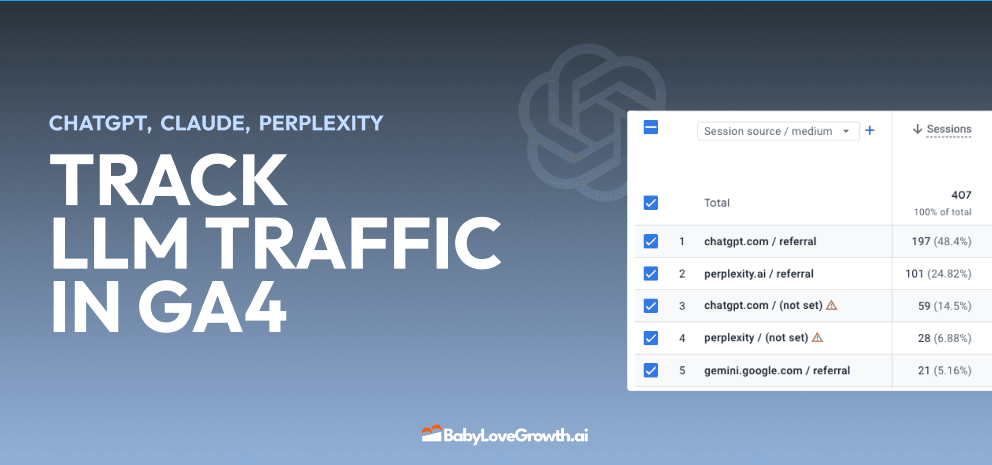
Track LLM Traffic in Google Analytics 4 (GA4)
Learn how to track and analyze traffic from AI sources like ChatGPT, Claude, Perplexity, and Google Gemini in Google Analytics 4. This step-by-step guide shows you how to set up custom filters to monitor AI-driven traffic and make data-driven decisions for your content strategy.
DylenMar 18, 2025
How to Humanize AI Text with Instructions
Learn practical techniques to make AI-generated content sound more natural and human. This guide covers active voice, direct addressing, concise writing, and other proven strategies to transform robotic text into engaging content.
DylenApril 7, 2025
Open AI Revenue and Statistics (2024)
Comprehensive analysis of OpenAI financial performance, user engagement, and market position in 2023. Discover key statistics including $20B valuation, $1B projected revenue, and 100M+ monthly active users.
DylenOctober 03, 2025