Why invest in organic SEO for lasting business growth


Many businesses assume paid ads are the fastest route to traffic, but this strategy often masks a critical gap: sustainable growth. While paid campaigns deliver immediate clicks, they vanish the moment budgets dry up. Organic SEO builds a different foundation, one that compounds over time and drives qualified visitors without constant ad spend. For digital marketing managers and small business owners seeking reliable, automated visibility, understanding why organic SEO deserves investment now unlocks long-term competitive advantages and measurable ROI that paid channels simply cannot replicate.
Table of Contents
- Key takeaways
- Understanding organic SEO: what it is and why it matters
- Comparing organic SEO to paid advertising: cost, impact, and sustainability
- How investing in organic SEO automates and scales your traffic growth
- Measuring success and maximizing ROI from your organic SEO investment
- Boost your organic SEO with BabyLoveGrowth tools
- FAQ
Key Takeaways
| Point | Details |
|---|---|
| Sustainable organic traffic | Organic SEO builds steady, long lasting visitors without constant ad spend. |
| Compounding long term ROI | Investing in content and optimization yields ongoing traffic and value over time, not dependent on daily budgets. |
| Pillar content cluster strategy | Creating broad pillar content with subtopics signals topical authority and sustains engagement and rankings. |
| Organic complements paid ads | Organic rankings provide credible visibility that enhances paid campaigns and reduces ad cost volatility. |
Understanding organic SEO: what it is and why it matters
Organic SEO focuses on improving unpaid search rankings through content and technical optimization, distinguishing it from paid placements that require continuous budget allocation. At its core, organic SEO involves several interconnected components that work together to signal relevance and authority to search engines. Keyword research identifies the terms your audience actively searches, guiding content creation toward topics with genuine demand. On-page SEO ensures each webpage uses proper headings, meta descriptions, and internal linking to communicate topical focus clearly.
Technical SEO addresses site speed, mobile responsiveness, crawlability, and structured data, making it easier for search engines to index and rank your pages. Backlinks from reputable sites act as endorsements, telling algorithms your content deserves visibility. Content quality remains paramount because search engines prioritize pages that answer user intent comprehensively and engagingly. Together, these elements create a self-reinforcing system that attracts consistent traffic without paying for each click.
Why does organic SEO matter so much for digital marketing managers and small business owners? It generates credible, trust-building visibility that paid ads struggle to achieve. Users often skip sponsored listings, viewing organic results as more authoritative and relevant. This perception translates into higher engagement rates and better conversion potential. Organic SEO also addresses challenges paid advertising cannot solve, such as building brand recognition over time and capturing long-tail search queries that indicate strong purchase intent.
Consider organic SEO a long-term asset rather than a recurring expense. Once your pages rank well, they continue attracting visitors for months or years with minimal ongoing investment. This compounding effect makes SEO especially valuable for businesses operating on tight budgets or seeking predictable traffic sources. Unlike paid campaigns that stop delivering the moment you pause spending, organic rankings persist and often strengthen as your content library and backlink profile expand.
Pro Tip: Focus on creating pillar content that addresses broad topics, then build supporting articles around specific subtopics. This cluster approach signals topical authority to search engines and keeps visitors engaged longer, boosting both rankings and conversions.
Key benefits of prioritizing organic SEO include:
- Consistent traffic flow that grows over time without proportional cost increases
- Enhanced brand credibility as users associate top organic rankings with industry leadership
- Better targeting of high-intent searchers who are further along the buyer journey
- Reduced dependency on fluctuating ad costs and platform policy changes
- Improved user experience through faster sites, mobile optimization, and valuable content
Comparing organic SEO to paid advertising: cost, impact, and sustainability
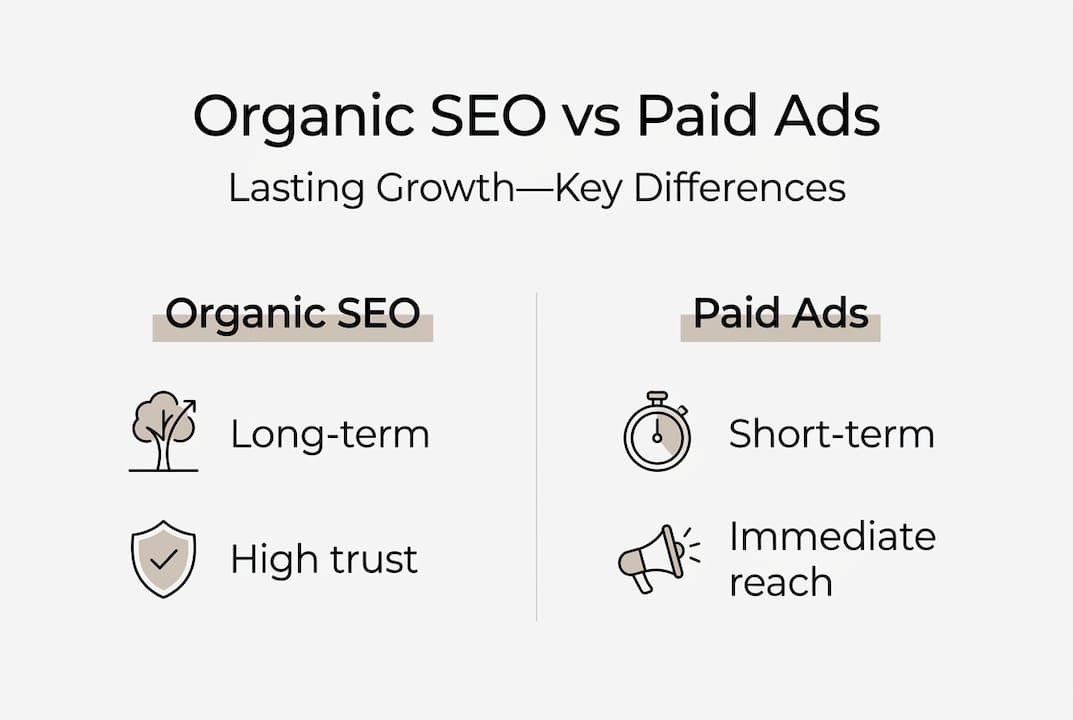
Understanding the strategic trade-offs between organic SEO and paid advertising helps you allocate marketing budgets more effectively. Cost structures differ fundamentally. Paid ads require continuous spend to maintain visibility, with expenses tied directly to clicks or impressions. Organic SEO demands upfront investment in content creation, technical improvements, and link building, but ongoing costs remain relatively low once rankings stabilize. Over a 12-month period, paid campaigns may deliver faster initial results, yet organic SEO often surpasses them in total traffic and ROI as compounding effects take hold.
Traffic quality presents another critical distinction. Organic clicks typically come from users actively seeking solutions, making them more engaged and conversion-ready than those encountering display ads. Top organic traffic solutions deliver better ROI over time compared to paid advertising, which offers immediate but often fleeting results. Paid traffic stops the moment budgets run out, while organic rankings continue attracting visitors indefinitely. This sustainability makes SEO particularly valuable for businesses prioritizing long-term growth over short-term spikes.
Brand trust and recognition also diverge between the two channels. Users often perceive organic listings as more credible endorsements from search engines, while ads carry an inherent commercial bias. Appearing in top organic positions signals authority and expertise, reinforcing your brand's reputation with every impression. Paid ads can build awareness quickly, but they rarely establish the same depth of trust that organic visibility cultivates over time.
| Factor | Organic SEO | Paid advertising |
|---|---|---|
| Upfront cost | Moderate to high (content, technical work, links) | Low to moderate (campaign setup) |
| Ongoing cost | Low (maintenance, updates) | High (continuous ad spend) |
| Time to results | 3-6 months for meaningful traction | Immediate upon launch |
| Traffic sustainability | Persists indefinitely once established | Stops when budget ends |
| Click-through rate | Higher for top positions | Lower due to ad blindness |
| User trust | Strong (perceived as earned placement) | Moderate (recognized as paid) |
| Best for | Long-term growth, authority building | Quick launches, promotions, testing |
Use case suitability depends on business goals and timelines. Startups needing immediate market validation might prioritize paid ads to gather data quickly. Established businesses seeking sustainable growth benefit more from organic SEO investments that compound over time. Many successful strategies combine both channels, using paid ads to capture high-intent keywords while building organic authority in parallel. This hybrid approach maximizes reach and accelerates overall marketing performance.
Key considerations when choosing between organic SEO and paid advertising:
- Budget constraints: SEO offers better long-term value for limited budgets
- Timeline urgency: Paid ads deliver faster initial results for time-sensitive campaigns
- Competitive landscape: Highly competitive niches may require both strategies to gain traction
- Customer lifetime value: Higher LTV justifies greater upfront SEO investment
- Brand maturity: Newer brands may need paid visibility while building organic presence
How investing in organic SEO automates and scales your traffic growth
Modern SEO tools transform time-consuming manual tasks into automated workflows, enabling digital marketing managers and small business owners to scale organic traffic without proportional increases in effort. Automation delivers three core benefits: time savings, consistency, and data-driven decision-making. Instead of manually auditing hundreds of pages for technical issues, automated SEO audits and backlink management tools streamline optimization efforts while increasing organic rankings. These systems run continuously, identifying opportunities and problems faster than any human team could manage.

Content planning automation helps you maintain a steady publishing cadence aligned with keyword opportunities and seasonal trends. Tools analyze search volume, competition, and user intent to recommend topics with the highest ROI potential. Backlink acquisition platforms connect you with relevant sites for link exchanges, reducing the manual outreach burden while building domain authority systematically. SEO audit tools crawl your site regularly, flagging broken links, slow pages, duplicate content, and other issues that harm rankings before they impact traffic significantly.
Scaling organic SEO effectively requires a structured, step-by-step approach:
- Establish baseline metrics by tracking current traffic, rankings, and conversion rates to measure progress accurately.
- Identify quick wins through technical audits that reveal easy-to-fix issues delivering immediate ranking improvements.
- Build a content calendar focused on high-intent keywords and topics aligned with customer pain points.
- Automate publishing workflows using CMS integrations that schedule posts, optimize metadata, and distribute content across channels.
- Implement backlink monitoring to track new links, identify toxic ones, and discover competitor link sources worth replicating.
- Set up automated reporting dashboards that visualize key metrics and alert you to significant changes requiring attention.
- Continuously refine strategies based on performance data, doubling down on what works and cutting underperforming tactics.
Common automation pitfalls to avoid include over-reliance on tools without human oversight, which can lead to generic content or spammy link practices. Automation should enhance strategic thinking, not replace it. Regularly review automated outputs to ensure quality standards remain high. Another mistake is automating too many processes simultaneously, creating complexity that obscures which changes drive results. Start with one or two high-impact automations, measure outcomes, then expand gradually.
How automation supports sustained traffic increases becomes clear when you consider compounding effects. Each new piece of optimized content attracts backlinks naturally, boosting domain authority and helping all your pages rank better. Automated internal linking spreads authority across your site, ensuring newer content benefits from established pages. Continuous technical monitoring prevents ranking drops from site errors, maintaining the upward trajectory automation enables.
Pro Tip: Use automation to handle repetitive tasks like keyword tracking and technical audits, freeing your time for high-value activities like content strategy and relationship building. The best SEO programs blend automated efficiency with human creativity and judgment.
Platforms offering automated SEO management help you get Google and ChatGPT traffic on autopilot, combining content generation, backlink acquisition, and performance tracking in unified dashboards. These solutions integrate with popular CMS systems, making implementation straightforward even for teams without deep technical expertise. By reducing manual workload while improving results, automation transforms organic SEO from a resource-intensive challenge into a scalable growth engine.
Measuring success and maximizing ROI from your organic SEO investment
Tracking key metrics like organic traffic, keyword rankings, and backlink quality is essential to assess and improve SEO ROI. Without clear measurement frameworks, you cannot determine which tactics drive results or justify continued investment to stakeholders. Start by identifying metrics aligned with business objectives rather than vanity numbers that look impressive but lack revenue impact. Organic traffic volume matters, but traffic quality measured through engagement rates, time on page, and conversion rates reveals whether visitors match your target audience.
Keyword rankings provide directional insights into visibility improvements, though they fluctuate daily due to personalization and algorithm updates. Focus on tracking rankings for high-intent commercial keywords that drive conversions rather than broad informational terms. Backlink profiles deserve regular monitoring because link quality affects rankings more than quantity. A few authoritative links from industry leaders outweigh dozens from low-quality directories. Conversion rates from organic traffic ultimately determine ROI, showing whether SEO efforts attract visitors who become customers.
Setting realistic goals and KPIs requires understanding your industry benchmarks and current performance baselines. Expecting page one rankings within weeks for competitive keywords sets you up for disappointment. Instead, establish tiered goals: quick wins from low-competition keywords in months one to three, moderate-difficulty terms by month six, and competitive targets within 12 months. Align KPIs with customer journey stages, tracking awareness metrics like impressions and clicks alongside consideration metrics like page depth and engagement, plus conversion metrics like leads and sales.
| Metric | What it measures | How to track it | Target benchmark |
|---|---|---|---|
| Organic traffic | Visitors from unpaid search | Google Analytics acquisition reports | 15-25% monthly growth |
| Keyword rankings | Position for target terms | Rank tracking tools (weekly checks) | Top 10 for 60% of keywords |
| Backlink count | Total inbound links | SEO tools like Ahrefs, Moz | 10-20 new quality links monthly |
| Domain authority | Overall site credibility | Moz, Ahrefs domain rating | Increase 5-10 points yearly |
| Conversion rate | Organic visitors who convert | Google Analytics goals | 2-5% for B2B, 1-3% for ecommerce |
| Pages per session | Engagement depth | Google Analytics behavior reports | 3-5 pages per visit |
| Bounce rate | Single-page exits | Google Analytics behavior reports | Below 50% for most pages |
Tools and methods for monitoring SEO performance range from free options like Google Analytics and Search Console to comprehensive paid platforms offering competitive analysis, rank tracking, and backlink monitoring. Google Search Console reveals which queries drive impressions and clicks, highlighting opportunities to improve underperforming pages. Analytics platforms show user behavior patterns, identifying content that engages visitors and pages where they exit prematurely. Dedicated SEO tools provide deeper insights into technical issues, keyword opportunities, and competitor strategies.
Using insights to refine content and technical SEO turns data into actionable improvements. If certain topics consistently attract traffic but convert poorly, revise calls-to-action or add more bottom-of-funnel content. When pages rank on page two for valuable keywords, targeted optimization like adding internal links or expanding content depth often pushes them to page one. Technical issues flagged by audits, such as slow load times or mobile usability problems, should be prioritized based on their impact on high-traffic pages.
Demonstrating SEO's ROI to stakeholders requires connecting organic traffic to revenue outcomes. Calculate customer acquisition cost from SEO by dividing total SEO investment by new customers from organic channels. Compare this to paid advertising CAC to show relative efficiency. Track revenue attributed to organic traffic using analytics goal values or ecommerce tracking. Present data showing how organic traffic compounds over time while paid traffic remains linear, illustrating long-term value. Use content cluster strategies to show how interconnected content boosts overall performance beyond individual page metrics.
Key practices for maximizing SEO ROI:
- Focus budget on high-intent keywords with clear commercial value rather than spreading efforts across low-value terms
- Prioritize technical fixes that affect many pages simultaneously for maximum impact per hour invested
- Regularly update top-performing content to maintain rankings and capture evolving search intent
- Build measurement systems that connect SEO activities to pipeline and revenue, not just traffic
- Test and iterate continuously, treating SEO as an ongoing optimization process rather than a one-time project
Boost your organic SEO with BabyLoveGrowth tools
Now that you understand why organic SEO delivers lasting business growth and how automation scales results, consider how the right tools can accelerate your progress. BabyLoveGrowth offers AI-powered solutions designed specifically for digital marketing managers and small business owners seeking reliable, automated visibility improvements. The AI SEO audit tool analyzes your site comprehensively, identifying technical issues, content gaps, and optimization opportunities that drive rankings higher without guesswork.
Building domain authority becomes straightforward with the backlink exchange platform, connecting you with relevant sites for mutually beneficial link placements that strengthen your SEO foundation. For businesses using popular CMS systems, automated SEO management integrates seamlessly. The Umbraco SEO autopilot handles content optimization, metadata management, and performance tracking directly within your existing workflow, saving time while improving organic rankings. These solutions work together to help you get Google and ChatGPT traffic reliably, transforming SEO from a complex challenge into a predictable growth engine.
FAQ
Is organic SEO worth investing in compared to paid ads?
Organic SEO delivers sustained, compounding traffic growth unlike paid ads, which provide temporary bursts. Investing in SEO builds long-term website authority and user trust that ads cannot replicate. While paid campaigns stop generating traffic the moment budgets end, organic rankings persist and often strengthen over time, making SEO a more valuable long-term asset for most businesses.
How long does it typically take to see results from organic SEO?
Most businesses begin seeing meaningful SEO improvements around three to six months post-implementation, though competitive niches may require longer timelines. Results compound over time as authority and content grow, with months six through 12 often showing exponential gains compared to initial periods. Patience and consistent effort are essential because search engines need time to crawl, index, and evaluate your optimization work.
Can I automate organic SEO without sacrificing quality?
Automated SEO audits and backlink management can maintain or improve quality when combined with strategic oversight. Automation tools reduce manual workload while preserving high-quality SEO practices by handling repetitive tasks like technical monitoring and content scheduling. Periodic human review ensures content and link quality remain optimized, catching issues automation might miss and adding creative elements that differentiate your brand from competitors.
What are the key metrics to track for organic SEO success?
Track organic traffic volume, keyword rankings for high-intent terms, backlink quality and growth, and conversion rates from organic visitors. Regular reporting helps adapt strategies for better ROI by revealing which tactics drive business outcomes versus vanity metrics. Focus on metrics tied directly to revenue, such as leads generated and customer acquisition cost from organic channels, to demonstrate SEO's true value to stakeholders and guide budget allocation decisions.
Recommended
Smart SEO,
Faster Growth!
Most Read Articles
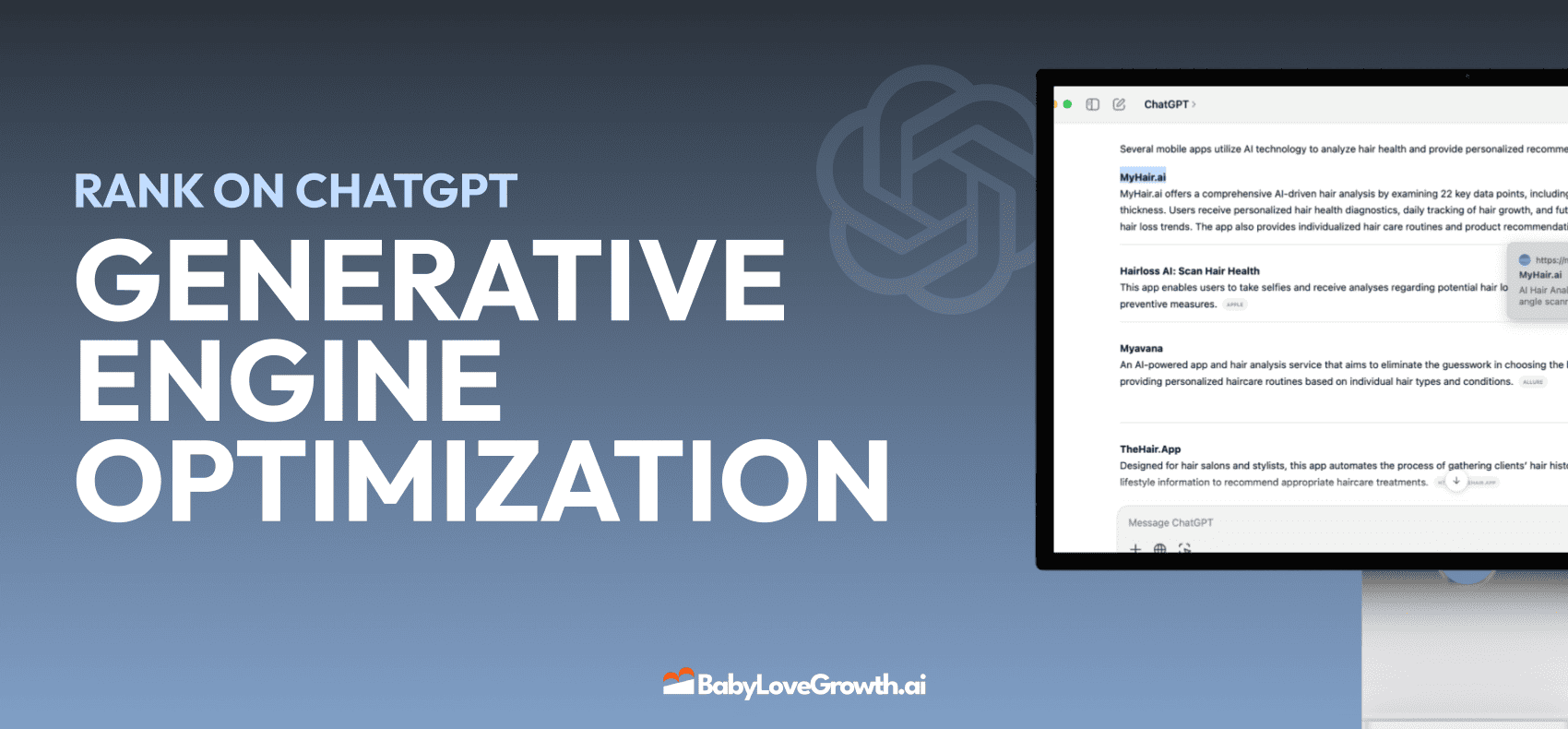
Generative Engine Optimization (GEO)
Learn how Generative Engine Optimization (GEO) helps your content rank in AI search engines like ChatGPT and Google AI. This comprehensive guide explains the differences between SEO and GEO, why it matters for your business, and practical steps to implement GEO strategies for better visibility in AI-generated responses.
DylenJan 18, 2025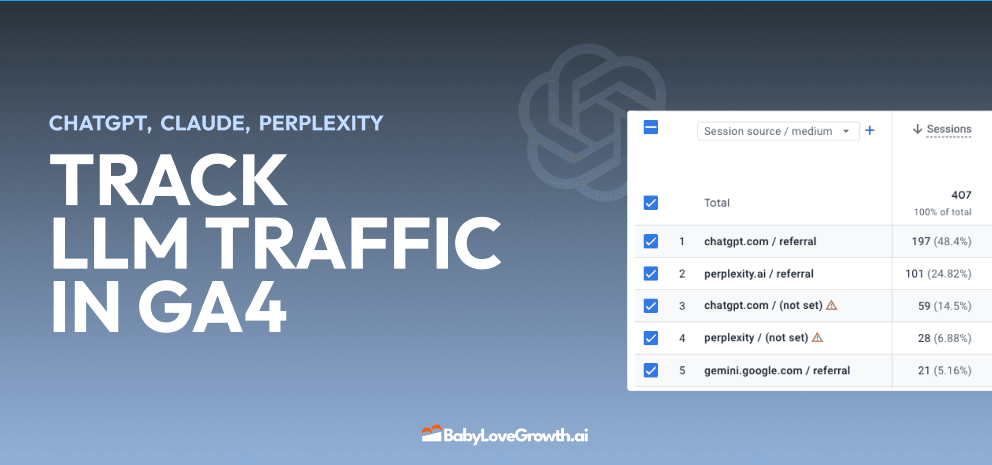
Track LLM Traffic in Google Analytics 4 (GA4)
Learn how to track and analyze traffic from AI sources like ChatGPT, Claude, Perplexity, and Google Gemini in Google Analytics 4. This step-by-step guide shows you how to set up custom filters to monitor AI-driven traffic and make data-driven decisions for your content strategy.
DylenMar 18, 2025
How to Humanize AI Text with Instructions
Learn practical techniques to make AI-generated content sound more natural and human. This guide covers active voice, direct addressing, concise writing, and other proven strategies to transform robotic text into engaging content.
DylenApril 7, 2025
Open AI Revenue and Statistics (2024)
Comprehensive analysis of OpenAI financial performance, user engagement, and market position in 2023. Discover key statistics including $20B valuation, $1B projected revenue, and 100M+ monthly active users.
DylenOctober 03, 2025