Why focus on Google rankings: boost visibility & ROI


TL;DR:
- Google dominates with roughly 90% of global searches in 2026, making it essential for business visibility.
- High Google rankings drive qualified traffic, brand credibility, and long-term organic growth.
- Continuous, quality-focused SEO strategies are vital for adapting to updates and maintaining rankings.
Google controls roughly 90% of global searches in 2026, which means nearly every potential customer who types a question into a search bar lands on Google first. For digital marketers and business owners, that single fact reshapes every decision about where to invest SEO resources. Ranking well on Google is not just about bragging rights. It directly determines how many people find your brand, trust your expertise, and ultimately buy from you. This article breaks down why Google rankings matter so much, what they actually deliver, how SEO drives them, and where the real risks lie so you can build a strategy that compounds over time.
Table of Contents
- Why Google dominates online discovery
- What high Google rankings actually deliver
- How SEO influences Google rankings
- Limits, risks, and evolving context for Google rankings
- The uncomfortable truth most marketers miss about Google rankings
- Accelerate your Google rankings with the right tools
- Frequently asked questions
Key Takeaways
| Point | Details |
|---|---|
| Google is the search leader | With a 90% market share in 2026, Google is where most people find businesses online. |
| Top rankings drive results | Positioning in Google’s first few results captures the majority of clicks and builds brand trust. |
| SEO is still essential | Effective SEO strategies continue to power sustainable rankings and traffic despite algorithm updates. |
| Balance with diversification | While Google should be your main focus, also watch emerging AI and alternative search channels. |
Why Google dominates online discovery
The numbers are hard to argue with. Google's market share sits at approximately 90% globally in 2026, leaving every other search engine competing for the remaining scraps. Bing, the closest competitor, holds somewhere between 4% and 10% depending on the region and device. AI-powered search tools like Perplexity and ChatGPT's search feature are growing fast, but their combined share still represents a fraction of Google's daily query volume.
What makes this dominance so consequential for your business is not just the raw traffic numbers. It is the intent behind those searches. People searching on Google are actively looking for solutions, products, and services. They are not passively scrolling a feed. That active intent means a visitor from Google is far more likely to convert than one from social media or display advertising.
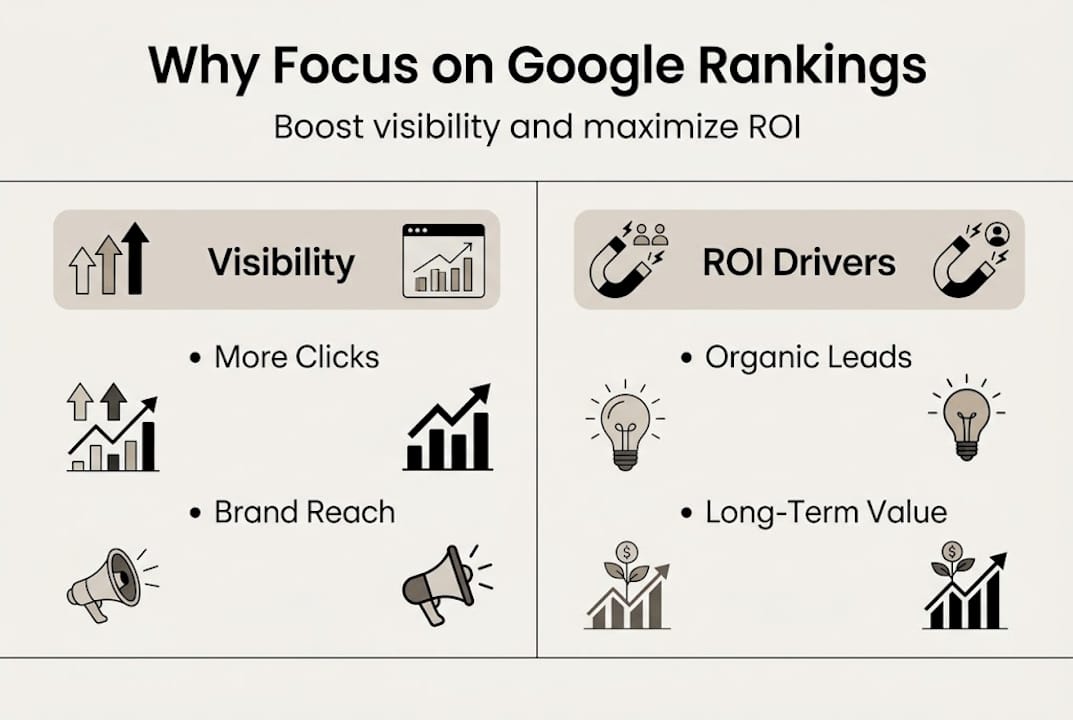
Here is a quick comparison of search platforms by estimated global share:
| Search platform | Estimated global share (2026) |
|---|---|
| ~90% | |
| Bing | ~4-10% |
| Yahoo | ~1-2% |
| AI/private engines | <2% |
For most brands, the decision of where to focus is not really a debate. The essential Google SEO strategies that drive rankings on this platform simply reach more people than any other channel at scale.
Key reasons Google remains the top priority for online discovery:
- Unmatched query volume: Billions of searches happen on Google every single day.
- High commercial intent: Searches like "best CRM for small business" signal readiness to buy.
- Trust and habit: Most users default to Google without thinking about alternatives.
- Algorithm sophistication: Google's results are generally seen as more relevant, reinforcing user loyalty.
"Despite the rise of AI-powered and private search engines, Google's scale and user trust mean that diversifying without prioritizing Google leaves most of your potential audience untouched."
The smart play is to invest heavily in search ranking for brand growth on Google while keeping an eye on emerging platforms. That does not mean ignoring Bing or AI engines entirely. It means allocating your resources proportionally to where the audience actually is. And right now, that audience is overwhelmingly on Google. Diversifying backlinks across platforms is still a smart hedge, but your core ranking effort belongs on Google.
What high Google rankings actually deliver
Let's be specific about what a top Google ranking is actually worth. The top 3 organic results capture 68.7% of all clicks, and 75% of users never scroll past page one. If your site sits on page two, you are essentially invisible to three quarters of your potential audience.

Here is how click-through rates break down by position:
| Ranking position | Estimated CTR |
|---|---|
| Position 1 | ~27-30% |
| Position 2 | ~15-18% |
| Position 3 | ~10-12% |
| Positions 4-10 | 2-8% |
| Page 2+ | <1% |
Those numbers translate directly into business outcomes:
- More qualified traffic: Organic visitors searched for exactly what you offer, so they arrive pre-qualified.
- Lower cost per acquisition over time: Unlike paid ads that stop the moment your budget runs out, organic traffic compounds. The content you publish today keeps driving visitors for months or years.
- Stronger brand credibility: Users associate top Google rankings with authority. Appearing at position one signals that Google itself endorses your expertise.
- Reduced ad dependency: Strong organic rankings give you a traffic floor that does not fluctuate with ad auction prices.
Pro Tip: Track not just your ranking position but also your click-through rate for each keyword. A page ranking at position three with a compelling title and meta description can outperform a page at position one with a generic snippet.
A well-executed SEO content strategy is what separates brands that capture these clicks from those that watch competitors take them. The compounding nature of organic traffic is the real prize here. Every new piece of content that ranks adds to a growing asset, not a recurring expense. That is fundamentally different from paid search, where ROI resets to zero the moment you pause spend. The long-term brand growth from SEO is what makes ranking on Google one of the highest-leverage investments a business can make.
How SEO influences Google rankings
SEO is not guesswork. A meta-analysis of 10 studies conducted between 2022 and 2024 found that SEO significantly boosts rankings and organic traffic, with a large effect size of d=1.049. That is a strong causal signal, not a correlation. Businesses that invest in structured SEO programs consistently outrank those that do not.
The core levers that move Google rankings include:
- Keyword targeting: Identifying the exact phrases your audience searches and building content around them with precision.
- Content optimization: Matching search intent, covering topics thoroughly, and structuring pages so Google can easily understand and index them.
- Backlink acquisition: Earning links from authoritative sites signals to Google that your content is trustworthy and worth ranking.
- Technical SEO: Site speed, mobile usability, structured data, and crawlability all influence how Google evaluates your pages.
- User experience signals: Bounce rate, time on page, and engagement metrics feed back into Google's ranking decisions.
The long-term picture is even more compelling. As your domain authority grows through consistent SEO effort, new content you publish starts ranking faster. You build topical authority in your niche, which means Google begins to see your site as the go-to resource for your subject area. That status is extremely hard for competitors to replicate quickly.
Pro Tip: Do not treat SEO as a one-time project. The brands that win on Google treat it as an ongoing program with monthly content production, regular link building, and quarterly technical audits. Following practical SEO steps consistently beats sporadic bursts of effort every time.
For businesses serious about scaling, scalable SEO strategies that combine automation with quality content production are the path to sustainable ranking gains without proportionally scaling your team.
Limits, risks, and evolving context for Google rankings
Not every business benefits equally from Google-focused SEO, and pretending otherwise would do you a disservice. Context matters enormously, particularly for YMYL (Your Money or Your Life) sites covering health, finance, or legal topics. Google applies stricter quality standards to these categories, meaning a new site in those niches faces a much steeper climb than a lifestyle blog.
The risks worth taking seriously in 2026 include:
- Algorithm updates: Google's core updates can shift rankings significantly overnight. Sites that built rankings on thin or manipulative content are especially vulnerable.
- Scaled content penalties: Post-2026 updates have specifically targeted sites that use AI to mass-produce low-quality content. Volume without quality is now actively penalized.
- Over-reliance on a single channel: If 100% of your traffic comes from Google, one algorithm update can devastate your business. Diversification is not optional for serious brands.
- Competitive saturation: In some niches, the top positions are locked up by massive domains with years of authority. Breaking in requires a differentiated content angle, not just better optimization.
"The SEO strategies that worked in 2022 are not guaranteed to work in 2026. Adaptability, content quality, and genuine audience value are the non-negotiables."
Pro Tip: Monitor your measuring SEO performance metrics monthly. If a core update drops your rankings, you need to diagnose the cause quickly rather than waiting to see if rankings recover on their own.
On the diversification front, private and AI search engines are growing, and their combined influence will only increase. Building a presence on Bing, optimizing for AI-driven answer engines, and diversifying your SEO focus across platforms reduces your vulnerability. Regularly updating website content also protects rankings during algorithm shifts by keeping your pages fresh and relevant.
The uncomfortable truth most marketers miss about Google rankings
Here is what most SEO guides will not tell you: chasing rankings without a clear content differentiation strategy is one of the most common ways businesses waste their SEO budget. We see it constantly. A brand publishes 50 articles targeting competitive keywords, checks all the technical boxes, builds some links, and still plateaus. Why? Because their content is indistinguishable from the 200 other articles already ranking for the same terms.
Google does not just reward optimization. It rewards relevance and usefulness in ways that generic content cannot fake. The brands that consistently climb and stay at the top are the ones that understand their audience deeply enough to say something genuinely different. That might mean a unique data study, a contrarian perspective, or content built around a specific audience segment that competitors overlook.
Measuring what matters in SEO means tracking engagement, conversions, and brand signals, not just keyword positions. Rankings are a means to an end. The end is a business that grows because the right people find you, trust you, and buy from you. That only happens when your content earns the click and delivers on the promise.
Accelerate your Google rankings with the right tools
Understanding the strategy is one thing. Executing it consistently at scale is where most teams struggle. Babylovegrowth.ai is built specifically to close that gap for digital marketers and business owners who want results without building a full in-house SEO department.

Start with AI keyword discovery to surface high-intent opportunities your competitors have not claimed yet. Then let automated backlink building grow your domain authority through a managed network of quality links. Not sure where your site stands right now? Run a free AI SEO Audit to get a clear picture of your technical gaps and quick wins. The platform handles the heavy lifting so your team can focus on strategy and growth.
Frequently asked questions
Is it worth focusing SEO only on Google in 2026?
Yes. Google still drives around 90% of global searches, so prioritizing Google delivers the greatest impact for most brands. Diversifying is smart, but Google should remain your primary focus.
How quickly can better rankings increase my traffic?
High Google rankings can boost your traffic within weeks, with top 3 positions capturing up to 68.7% of all clicks for a given keyword. The speed depends on your niche competitiveness and how well your content matches search intent.
Does SEO still work after all Google's 2026 updates?
Yes, but strategies must adapt. Context-sensitive SEO focused on quality, relevance, and genuine audience value still produces significant ranking and traffic gains after the latest updates.
Should I consider Bing and AI search engines in my strategy?
Yes, diversifying is smart, but Google's scale means it should remain your main focus for visibility and ROI. Allocate a smaller portion of your effort to emerging platforms as a hedge.
Recommended
Smart SEO,
Faster Growth!
Most Read Articles
Generative Engine Optimization (GEO)
Learn how Generative Engine Optimization (GEO) helps your content rank in AI search engines like ChatGPT and Google AI. This comprehensive guide explains the differences between SEO and GEO, why it matters for your business, and practical steps to implement GEO strategies for better visibility in AI-generated responses.
DylenJan 18, 2025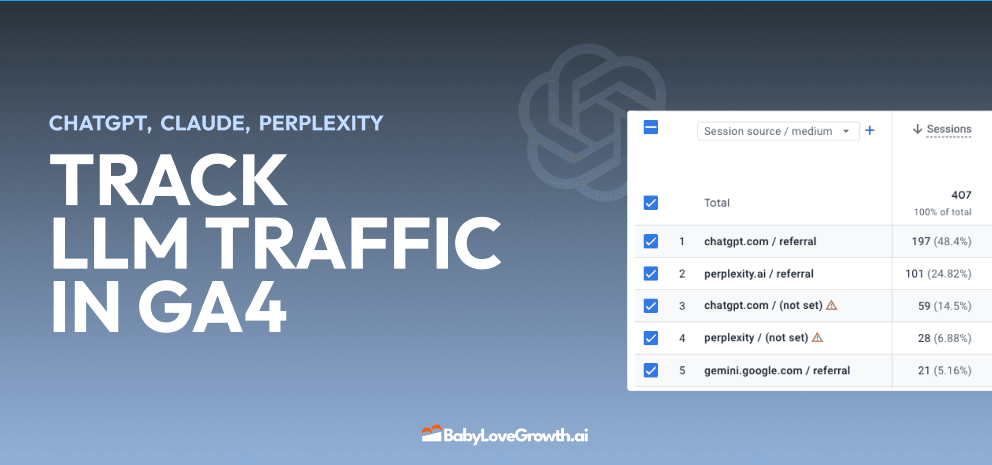
Track LLM Traffic in Google Analytics 4 (GA4)
Learn how to track and analyze traffic from AI sources like ChatGPT, Claude, Perplexity, and Google Gemini in Google Analytics 4. This step-by-step guide shows you how to set up custom filters to monitor AI-driven traffic and make data-driven decisions for your content strategy.
DylenMar 18, 2025
How to Humanize AI Text with Instructions
Learn practical techniques to make AI-generated content sound more natural and human. This guide covers active voice, direct addressing, concise writing, and other proven strategies to transform robotic text into engaging content.
DylenApril 7, 2025
Open AI Revenue and Statistics (2024)
Comprehensive analysis of OpenAI financial performance, user engagement, and market position in 2023. Discover key statistics including $20B valuation, $1B projected revenue, and 100M+ monthly active users.
DylenOctober 03, 2025