Why brands should use SaaS SEO: sustainable growth & lower costs


Paid ads are a treadmill. The moment you stop paying, your visibility drops to zero. SaaS SEO works the opposite way: every piece of optimized content, every backlink, and every structured data markup you build compounds over time, turning your website into a 24/7 growth engine that keeps generating leads while you sleep. For e-commerce brands and tech startups burning through ad budgets with shrinking returns, this shift is not just smart, it is essential. This article breaks down exactly what SaaS SEO is, why it outperforms paid acquisition over time, and how your brand can start building that compounding advantage today.
Table of Contents
- What is SaaS SEO and how does it work?
- Top benefits of SaaS SEO for brands
- How SaaS SEO drives sustainable growth
- Winning SaaS SEO strategies: what top brands do differently
- How to get started with SaaS SEO for your brand
- Accelerate your SEO journey with AI-powered SaaS tools
- Frequently asked questions
Key Takeaways
| Point | Details |
|---|---|
| Compounding organic growth | SaaS SEO tools help brands build traffic and authority that grows and sustains itself over time. |
| Lower acquisition costs | Brands see 2-3x lower CAC compared to paid ads after a year of SaaS SEO. |
| AI-driven scalability | Modern platforms automate complex SEO tasks so you can compete and scale faster. |
| Defensible market position | Layered content, technical optimization, and automation create long-lasting competitive advantages. |
What is SaaS SEO and how does it work?
SaaS SEO means using software-as-a-service platforms to manage, automate, and scale your entire search engine optimization workflow. Instead of manually researching keywords, writing briefs, auditing pages, and building links one by one, you use AI-driven tools that handle these tasks at scale. The result is faster execution, fewer errors, and a content operation that grows without proportionally growing your team.
What separates SaaS SEO from traditional SEO is the automation layer. Modern platforms offer keyword clustering, AI content suggestions, and automated technical audits that would take a full agency weeks to complete manually. You get actionable insights in hours, not months.
The core mechanics behind a strong SaaS SEO strategy include several interconnected systems. According to the SaaS SEO strategy guide, effective SaaS SEO uses topic clusters and BOFU targeting alongside programmatic pages and structured data for AI visibility. Here is what that looks like in practice:
- Topic clusters: A pillar page covers a broad topic, while cluster pages target specific subtopics and link back to the pillar, building topical authority fast.
- BOFU targeting: Bottom-of-funnel pages like comparisons, alternatives, and pricing pages capture users who are ready to buy, not just browse.
- Programmatic SEO: Automatically generated landing pages for integrations, use cases, and location-based queries let you cover thousands of search intents without writing each page from scratch.
- Structured data: Schema markup helps both Google and AI-driven search engines like ChatGPT and Perplexity understand and surface your content.
You can explore how SaaS SEO automation handles the heavy lifting so your team focuses on strategy, not execution.
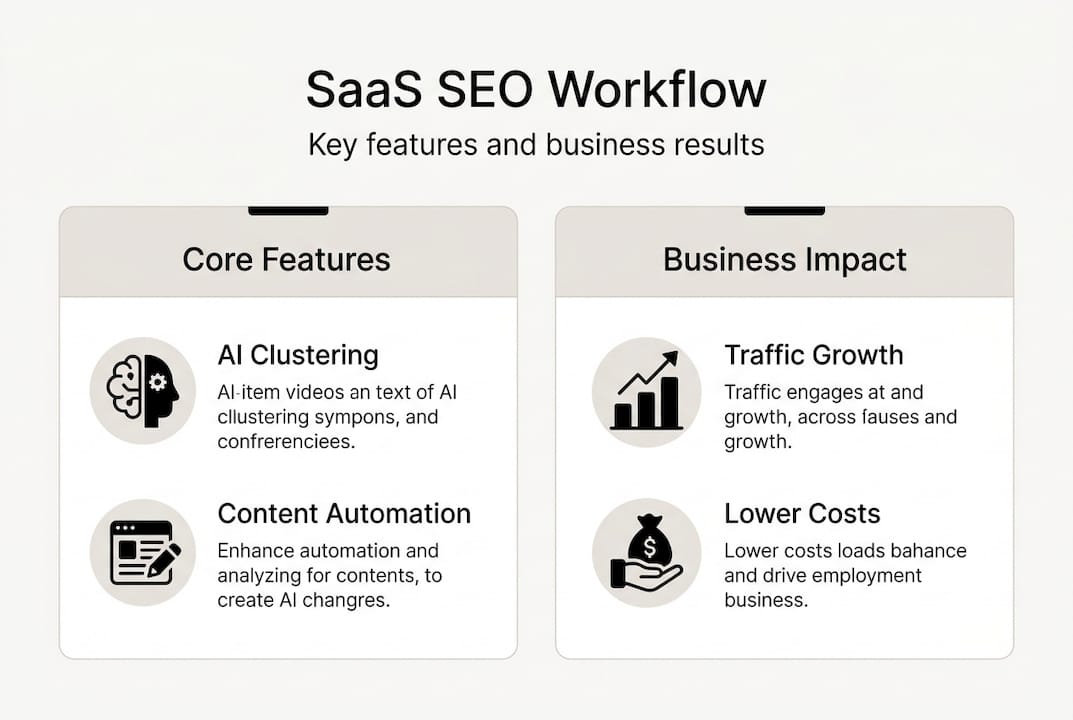
| SaaS SEO feature | What it does | Business impact |
|---|---|---|
| AI keyword clustering | Groups related keywords by intent | Faster content planning |
| Automated audits | Flags technical issues instantly | Fewer ranking penalties |
| Programmatic pages | Scales content for use cases | Broader keyword coverage |
| Structured data markup | Improves AI and SERP visibility | Higher click-through rates |
Top benefits of SaaS SEO for brands
Understanding the mechanics, let's dig into the most game-changing benefits SaaS SEO delivers for brands.
The most immediate win is always-on visibility. Your content ranks 24/7 regardless of whether you are running a campaign or not. Unlike paid ads, organic rankings do not disappear when your budget runs dry. Compounding organic traffic means that a blog post you publish today can still drive leads two years from now.
The financial case is equally strong. Paid acquisition costs tend to rise over time as competition increases and ad platforms optimize for their own revenue. SaaS SEO flips this dynamic. Your organic traffic growth workflow builds an asset that appreciates, not depreciates.
Key benefits at a glance:
- Lower customer acquisition cost (CAC) over time
- Defensible competitive moat that is hard for rivals to replicate quickly
- Visibility across Google and AI-driven search engines like ChatGPT and Perplexity
- Scalable content production without scaling headcount
- Long-term marketing ROI that improves month over month
Here is a direct comparison to help you see the difference clearly:
| Factor | Paid ads | SaaS SEO |
|---|---|---|
| Visibility duration | Only while budget is active | Ongoing, compounds over time |
| Cost trend | Increases with competition | Decreases per lead over time |
| CAC after 18 months | High and rising | 2-3x lower than paid |
| Competitive barrier | Low (anyone can outbid you) | High (authority takes time to build) |
| Scalability | Limited by budget | Scales with content and automation |
For a deeper look at how these tools stack up, the AI SEO tool comparison breaks down the leading platforms by feature set and use case.
Stat to know: Brands that commit to SaaS SEO consistently report 2-3x lower CAC compared to paid acquisition after 12 to 18 months of sustained effort.
How SaaS SEO drives sustainable growth
With these benefits in mind, how exactly does SaaS SEO help brands build on their success month after month?
Organic growth compounds because every new piece of content, every backlink, and every technical improvement adds to your domain authority. Authority, once earned, is sticky. A competitor cannot simply outspend you to erase it overnight. This is why 2-3x lower CAC benchmarks appear consistently for brands that stay committed past the 12-month mark.

AI-powered SaaS tools also open doors to international and niche markets that paid ads often ignore because the volume looks too small to justify the cost. Organic search does not care about minimum bid thresholds. A well-optimized page targeting a niche query in a secondary market can generate qualified leads at near-zero marginal cost.
Consider a practical scenario: a B2B tech startup spending $15,000 per month on Google Ads shifts 30% of that budget toward a SaaS SEO platform. Within six months, organic traffic starts covering the queries that previously required paid clicks. By month 18, the organic channel is generating more leads at a fraction of the cost, and the content assets keep working indefinitely. Exploring AI-driven SEO user experience optimization can accelerate this timeline further.
Here is a simple growth sequence most successful brands follow:
- Audit your current state. Identify which pages already rank, which keywords you are missing, and where technical issues are blocking growth.
- Build your topic cluster architecture. Choose 3-5 core topics and map out pillar and cluster pages for each.
- Publish consistently. Use your SaaS platform to maintain a steady publishing cadence without burning out your team.
- Earn and build backlinks. Authority grows faster when other sites link to your content. Automated outreach tools inside SaaS platforms make this scalable.
- Expand to new markets. Once your core market is covered, use programmatic SEO to enter adjacent niches or international audiences.
Pro Tip: Invest in your topic clusters during the first 90 days. The compounding effect of topical authority means early content clusters generate returns for years, not just months. Teams that use SEO tools for agencies and startups alike confirm that front-loading cluster content cuts time-to-ranking significantly.
"SaaS SEO is your brand's defensible moat. In a model where lifetime value drives decisions, organic authority is the asset that keeps paying dividends long after the initial investment." See how leading brands apply SaaS SEO strategies to build this moat systematically.
Winning SaaS SEO strategies: what top brands do differently
Knowing how SaaS SEO works, what are the proven steps top-performing brands take?
The brands that win with SaaS SEO are not just publishing more content. They are publishing smarter content, structured around intent and organized into clusters that reinforce each other. They also optimize for AI search, not just Google, by using structured data and natural language that language models can parse and cite. Staying current on multi-platform AI SEO is no longer optional for brands that want visibility in 2026.
Here is what separates market leaders from the rest:
- They start with BOFU pages. Comparison pages, alternative pages, and pricing pages convert better and rank faster because the search intent is crystal clear.
- They use programmatic SEO for scale. Instead of writing 500 individual integration pages, they build a template and generate them automatically.
- They treat structured data as a priority. Schema markup is how AI search engines decide what to surface. Brands that skip it are invisible to a growing share of search traffic.
- They avoid the high-volume keyword trap. Chasing keywords with 100,000 monthly searches sounds exciting but rarely converts. High-intent, lower-volume keywords drive actual revenue.
- They audit continuously. Technical issues compound just like authority does. Regular automated audits catch problems before they become ranking penalties.
For a breakdown of which platforms execute these strategies best, the top AI SEO platforms guide covers the leading options in detail. Expert SaaS SEO insights consistently reinforce that consistency and structure beat volume every time.
Pro Tip: Build your first five BOFU pages before you write a single awareness-level blog post. Those pages will start generating pipeline while your broader content strategy matures.
How to get started with SaaS SEO for your brand
Equipped with proven strategies, here is exactly how your brand can launch and scale SaaS SEO.
The biggest mistake brands make is jumping straight into content production without a clear baseline. You need to know where you stand before you can measure progress. SaaS SEO tools give you that baseline fast, with automated audits that surface your current keyword footprint, technical health, and competitive gaps in minutes.
Follow this launch sequence:
- Audit your current organic presence. Use an AI-powered audit tool to map your existing rankings, identify technical issues, and benchmark against competitors.
- Select the right SaaS SEO platform. Look for tools that combine keyword discovery, content planning, automated publishing, and backlink building in one place. Platforms that let you automate 70% of SEO tasks free your team to focus on strategy.
- Implement topic clusters and structured data. Build your pillar pages first, then populate cluster content around them. Add schema markup from day one.
- Publish on a consistent schedule. Consistency signals authority to search engines. A 30-day content plan keeps your team on track without scrambling.
- Monitor, iterate, and expand. Track rankings, organic traffic, and CAC monthly. Once your core market is covered, use programmatic SEO to enter new verticals or geographies.
For startups specifically, SEO for SaaS startups research confirms that brands which start early and stay consistent see the steepest compounding curves.
Pro Tip: Prioritize platforms that combine automation with AI recommendations. Tools that only report data without suggesting next steps slow you down. You want a platform that tells you what to fix and then helps you fix it automatically.
Accelerate your SEO journey with AI-powered SaaS tools
You now have the full picture: why SaaS SEO outperforms paid ads, how it compounds over time, and the exact steps to launch it for your brand. The next move is putting that knowledge to work with tools built for exactly this purpose.

Babylovegrowth.ai is built for marketing managers and founders who want organic growth without hiring a full SEO team. The SEO automation platform handles keyword discovery, content planning, publishing, backlink building, and technical auditing in one place. You can use the keyword clustering tool to map your topic architecture in minutes, then run a free AI SEO audit to see exactly where your brand stands today. Start with the audit, build your first cluster, and let the automation handle the rest.
Frequently asked questions
How long does it take for SaaS SEO to show results?
SaaS SEO typically produces noticeable organic traffic gains within 3 to 6 months, with 2-3x lower CAC benchmarks appearing after 12 to 18 months of consistent effort.
Can SaaS SEO work for small or early-stage brands?
Yes. Even early-stage startups can use SaaS SEO tools to compete for high-intent traffic, since compounding organic growth does not require a large budget to start.
What makes SaaS SEO better than just buying ads?
Paid ads stop the moment your budget runs out. SaaS SEO builds sustained organic visibility that keeps generating traffic and lowering acquisition costs over time.
Do I need technical SEO skills to start with SaaS SEO platforms?
No. Modern SaaS SEO platforms are designed for marketers, not engineers. AI-driven features like automated audits and keyword clustering handle the technical complexity for you.
Recommended
Smart SEO,
Faster Growth!
Most Read Articles
Generative Engine Optimization (GEO)
Learn how Generative Engine Optimization (GEO) helps your content rank in AI search engines like ChatGPT and Google AI. This comprehensive guide explains the differences between SEO and GEO, why it matters for your business, and practical steps to implement GEO strategies for better visibility in AI-generated responses.
DylenJan 18, 2025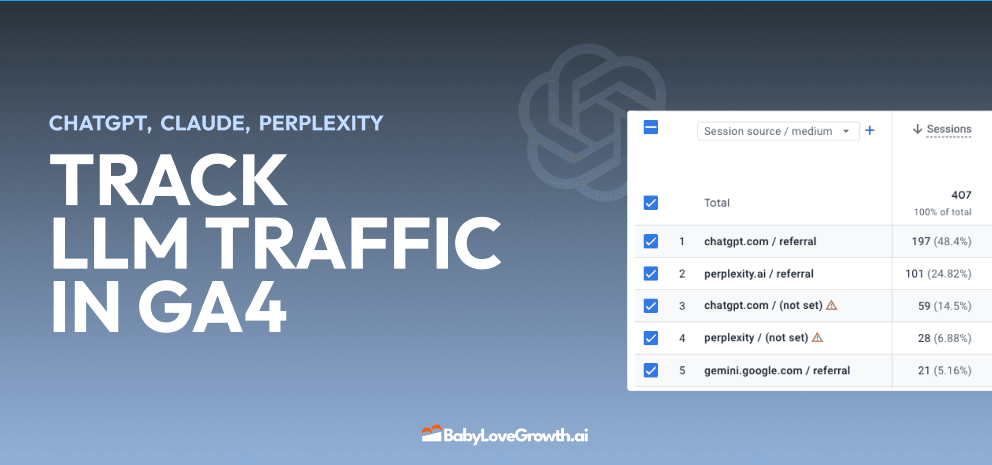
Track LLM Traffic in Google Analytics 4 (GA4)
Learn how to track and analyze traffic from AI sources like ChatGPT, Claude, Perplexity, and Google Gemini in Google Analytics 4. This step-by-step guide shows you how to set up custom filters to monitor AI-driven traffic and make data-driven decisions for your content strategy.
DylenMar 18, 2025
How to Humanize AI Text with Instructions
Learn practical techniques to make AI-generated content sound more natural and human. This guide covers active voice, direct addressing, concise writing, and other proven strategies to transform robotic text into engaging content.
DylenApril 7, 2025
Open AI Revenue and Statistics (2024)
Comprehensive analysis of OpenAI financial performance, user engagement, and market position in 2023. Discover key statistics including $20B valuation, $1B projected revenue, and 100M+ monthly active users.
DylenOctober 03, 2025