Why brand consistency matters for business growth in 2026


Many business owners chase flashy creative campaigns, believing bold innovation drives growth. Yet the real engine behind customer recognition and loyalty is something quieter: brand consistency. Businesses that maintain uniform messaging, visuals, and voice across every touchpoint build trust faster and convert better. This guide reveals why consistency is the cornerstone of effective branding and how you can harness it to accelerate your business growth in 2026.
Table of Contents
- What Brand Consistency Really Means And Why It Matters
- How Consistent Branding Improves Marketing Effectiveness
- Common Pitfalls That Undermine Brand Consistency And How To Avoid Them
- Applying Consistency In Branding To Grow Your Online Presence Effectively
- Elevate Your Brand Consistency With BabyLoveGrowth Solutions
- Frequently Asked Questions About Brand Consistency
Key takeaways
| Point | Details |
|---|---|
| Recognition drives revenue | Consistent presentation increases revenue by up to 23% through stronger customer recall. |
| Uniform voice matters | A coherent brand voice across channels strengthens market impact and boosts engagement. |
| Inconsistency harms loyalty | Mixed messaging confuses customers and erodes trust, leading to lost sales. |
| Practical steps work | Brand guidelines, asset management, and regular audits maintain consistency effectively. |
| Online growth accelerates | Consistent branding improves SEO performance, social engagement, and user trust. |
What brand consistency really means and why it matters
Brand consistency means presenting your business with uniform visual identity, messaging, tone, and customer experience across every channel. It's not about repeating the same slogan endlessly. It's about creating a cohesive presence that customers recognize instantly, whether they encounter you on Instagram, your website, or a printed flyer.
When customers see your logo, colors, and messaging aligned everywhere, they process your brand faster. Recognition builds familiarity, and familiarity breeds trust. Trust converts into sales. Research shows that consistent presentation can increase revenue by up to 23%, a significant boost for businesses competing in crowded markets.
Several core elements demand consistency:
- Visual identity: logos, color palettes, typography, and imagery style
- Brand voice: tone, language style, and personality in all communications
- Messaging: core value propositions and key messages
- Customer experience: service standards and interaction quality
Inconsistency creates confusion. Imagine visiting a website with professional, minimalist design, then receiving an email with casual slang and bright neon graphics. The disconnect makes customers question your credibility. They wonder which version represents the real you. That hesitation kills conversions.
Consistent branding isn't about limiting creativity. It's about channeling creativity within a framework that builds recognition and trust.
Businesses that nail consistency don't just look more professional. They become memorable. Customers recall their brand recognition effortlessly, leading to repeat purchases and referrals. In 2026, where digital noise drowns out inconsistent voices, maintaining a unified brand presence separates winners from forgettable competitors.

How consistent branding improves marketing effectiveness
Marketing campaigns succeed when customers instantly recognize who's speaking and trust the message. Consistent branding delivers both. When your visual assets, tone, and core messaging align across social media, email, ads, and your website, customers absorb your value proposition faster.
A uniform brand voice matters as much as visual consistency. Your written communications should sound like they come from one person, not a committee with conflicting opinions. Whether you're posting on LinkedIn, sending newsletters, or writing website copy, the personality should match. Developing a brand voice strengthens market impact and increases engagement by making your content feel authentic and reliable.
Consistency sharpens your messaging. When customers encounter your brand repeatedly with the same core themes, they remember what you stand for. That recall translates into action when they need your solution. Mixed messages force customers to work harder to understand you, and most won't bother.
Key marketing channels where consistency drives results:
- Social media platforms: unified profile images, cover photos, posting style, and hashtags
- Email campaigns: consistent templates, sender names, subject line patterns, and sign-offs
- Paid advertising: aligned visuals, messaging, and calls to action across platforms
- Website content: matching tone, design elements, and user experience throughout pages
Pro Tip: Conduct quarterly content audits across all channels. Review recent posts, emails, and ads to verify your brand voice, visuals, and messaging stay aligned. Inconsistencies creep in when teams work independently without guidelines.
Consistent branding also improves marketing efficiency. When your team uses standardized templates, approved assets, and clear voice guidelines, content creation speeds up. You spend less time debating design choices and more time reaching customers. New team members onboard faster because they have clear examples to follow.
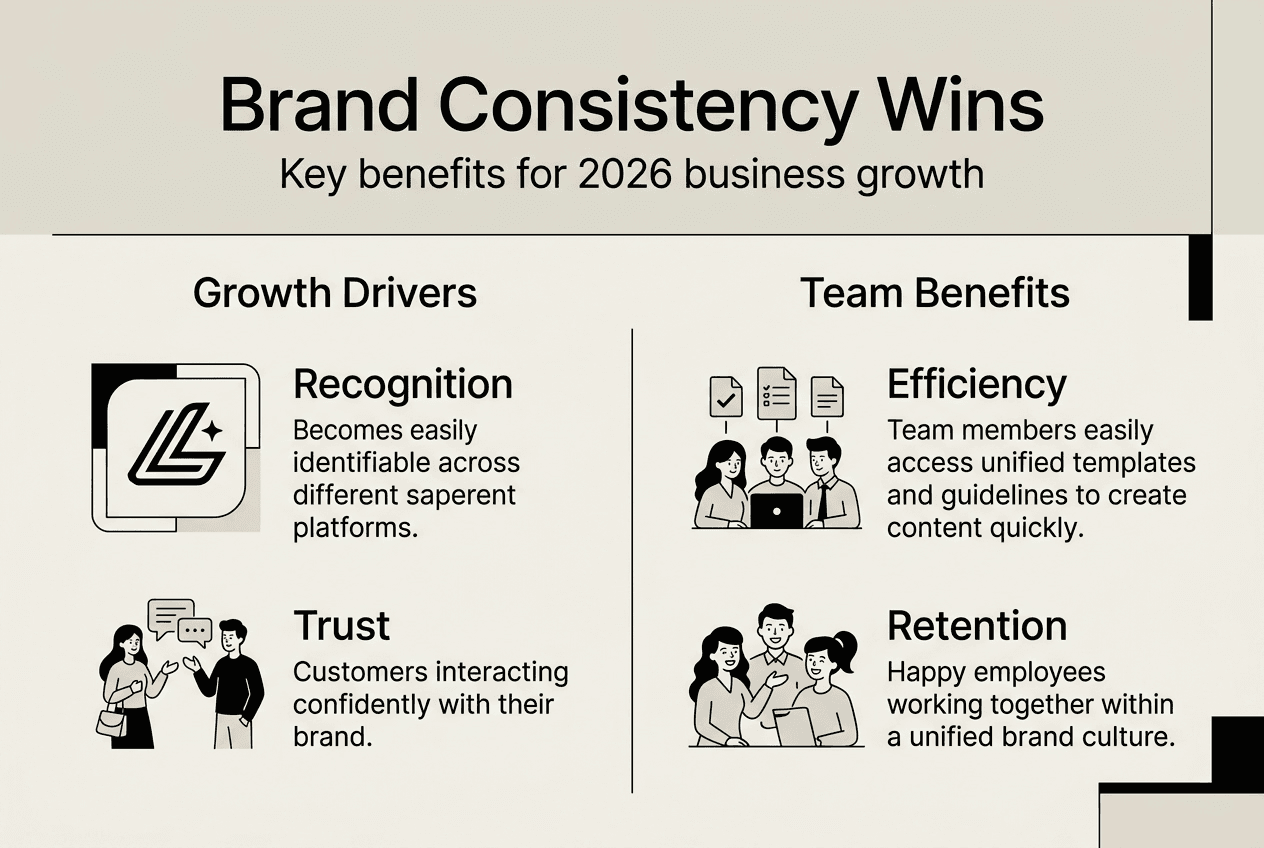
Customers reward consistency with loyalty. When they know exactly what to expect from your brand, they feel comfortable choosing you repeatedly. That predictability isn't boring; it's reassuring. In markets flooded with options, being the reliable choice wins long-term revenue.
Common pitfalls that undermine brand consistency and how to avoid them
Even well-intentioned businesses fall into traps that fracture their brand presence. Multiple team members creating content without coordination produce mixed messaging. Marketing, sales, and customer service teams often develop separate voices, confusing customers about who you really are.
Unauthorized or outdated assets spread easily. An employee grabs an old logo version from their desktop. A contractor uses brand colors from memory instead of official guidelines. These small deviations accumulate into noticeable inconsistency that dilutes your brand impact.
Lack of documented brand guidelines tops the list of consistency killers. Without clear rules, every team member interprets your brand differently. What feels "on brand" to one person clashes with another's interpretation. The result is a fragmented presence that weakens recognition.
Five actionable steps maintain brand consistency effectively:
- Create comprehensive brand guidelines documenting logo usage, color codes, typography, voice characteristics, and messaging frameworks.
- Implement centralized digital asset management where teams access only current, approved logos, images, and templates.
- Train all staff and contractors on brand standards, ensuring everyone understands why consistency matters and how to maintain it.
- Schedule regular brand audits reviewing content across channels to catch and correct deviations before they spread.
- Develop messaging templates for common communications, giving teams flexibility within consistent frameworks.
Pro Tip: Use digital asset management platforms that restrict access to outdated materials. When you update your logo or color palette, remove old versions completely so no one can accidentally use them.
Brand inconsistency leads to lost customers and reduced loyalty because it signals unprofessionalism or lack of attention to detail. Customers interpret inconsistency as instability. They wonder if your product quality varies as much as your branding. That doubt pushes them toward competitors with more polished, reliable presences.Another pitfall is treating consistency as a one-time project. Your brand evolves as your business grows, but evolution requires intentional management. Refreshing your visual identity or refining your voice works only when you document changes and ensure everyone adopts them simultaneously. Gradual, uncoordinated shifts create the worst inconsistency because customers see multiple versions coexisting.
Small businesses often skip brand guidelines, assuming everyone "just knows" the brand. This works until you hire your third employee or first contractor. Suddenly, interpretations diverge. Investing time upfront to document your brand saves countless hours correcting inconsistencies later. Guidelines don't stifle creativity; they focus it toward building recognition instead of confusion.
Applying consistency in branding to grow your online presence effectively
Online branding consistency directly impacts how search engines and customers perceive your business. Uniform messaging across your website, social profiles, and content helps search algorithms understand your focus, improving rankings. Customers who encounter consistent branding across touchpoints trust you more, increasing conversion rates and social engagement.
Consistent branding accelerates growth by improving recognition and customer loyalty online. When your visual identity and messaging align perfectly across platforms, customers remember you after a single interaction. That instant recognition shortens sales cycles because they don't need repeated exposure to understand your value.
Comparing consistent versus inconsistent branding reveals dramatic differences:
| Metric | Consistent Branding | Inconsistent Branding |
|---|---|---|
| Customer Recognition | High, immediate recall | Low, requires repeated exposure |
| Engagement Rate | Strong, trust-driven interaction | Weak, confusion reduces participation |
| Customer Loyalty | Builds quickly through reliability | Erodes due to unpredictability |
| Growth Speed | Accelerated by word-of-mouth | Slowed by mixed perceptions |
Practical actions to leverage consistency for online growth:
- Standardize visual assets across all digital properties using identical logos, color schemes, and image styles
- Unify brand messaging by documenting core value propositions and ensuring every platform communicates them clearly
- Train teams on digital brand standards specific to each platform while maintaining overall consistency
- Monitor digital channels weekly to catch deviations early and maintain alignment
- Leverage customer feedback to refine your brand presentation while keeping core elements stable
AI and automation tools help maintain consistency at scale. Automated content systems can apply brand voice guidelines to every piece, ensuring tone stays uniform even when producing high volumes. Template systems speed up creation while enforcing visual standards. These technologies let small teams compete with larger organizations by maintaining professional consistency without proportional effort.
Consistent branding forms the foundation for sustainable online business growth. It's not glamorous, but it works. While competitors chase viral moments with inconsistent campaigns, you build cumulative recognition that compounds over time. Each consistent touchpoint reinforces the last, creating momentum that drives traffic, conversions, and loyalty.
Your online presence lives or dies by consistency. Customers scroll past thousands of messages daily. The brands they remember and trust maintain unified identities that cut through noise. In 2026, where AI generates endless content and competition intensifies, your consistent brand becomes your most valuable differentiator. It signals professionalism, builds trust automatically, and converts browsers into buyers through sheer reliability.
Elevate your brand consistency with BabyLoveGrowth solutions
Maintaining brand consistency while scaling your online presence demands tools that automate without sacrificing quality. BabyLoveGrowth specializes in helping businesses maintain unified messaging and visual identity across their digital ecosystem.
Our platform delivers AI-powered content that adheres to your brand voice guidelines automatically, ensuring every article, post, and page reinforces your identity. Whether you need Umbraco SEO automation or want to automate Google and ChatGPT traffic, our solutions maintain consistency while driving measurable growth. Explore our backlink building software to strengthen your online authority with content that always sounds like you. Consistency at scale becomes simple when the right automation supports your brand.
Frequently asked questions about brand consistency
What is brand consistency and why is it vital?
Brand consistency means presenting uniform visual identity, messaging, tone, and customer experience across all channels and touchpoints. It's vital because consistency builds customer recognition and trust, which directly increase conversion rates and revenue. Businesses with consistent branding grow faster because customers remember them easily and feel confident choosing them repeatedly.
How can small businesses maintain consistent branding on limited budgets?
Small businesses maintain consistency by creating simple brand guidelines documenting logo usage, colors, fonts, and voice characteristics. Free tools like Canva offer templates that enforce visual standards, while shared cloud folders ensure teams access only approved assets. Focus on consistency in a few key channels rather than spreading resources thin across many platforms inconsistently.
What are the risks of neglecting brand consistency?
Neglecting brand consistency confuses customers about your identity and values, reducing trust and recognition. Inconsistent branding signals unprofessionalism, pushing customers toward competitors with more polished presences. You also waste marketing budget because mixed messages require more repetition to achieve the same recognition that consistent branding builds naturally.
How often should a business review its brand consistency?
Businesses should conduct quarterly brand audits reviewing content across all channels to catch inconsistencies early. Annual comprehensive reviews assess whether your brand guidelines still serve your business goals and market position. Any time you launch new products, enter new markets, or hire team members, review and reinforce brand standards to prevent drift.
Can consistent branding improve SEO performance?
Yes, consistent branding improves SEO by creating unified messaging that helps search engines understand your focus and expertise. Consistent use of key terms, topics, and themes across your website and content signals authority in your niche. Strong brand recognition also increases branded search volume and click-through rates, both of which boost organic rankings over time.
Recommended
Smart SEO,
Faster Growth!
Most Read Articles
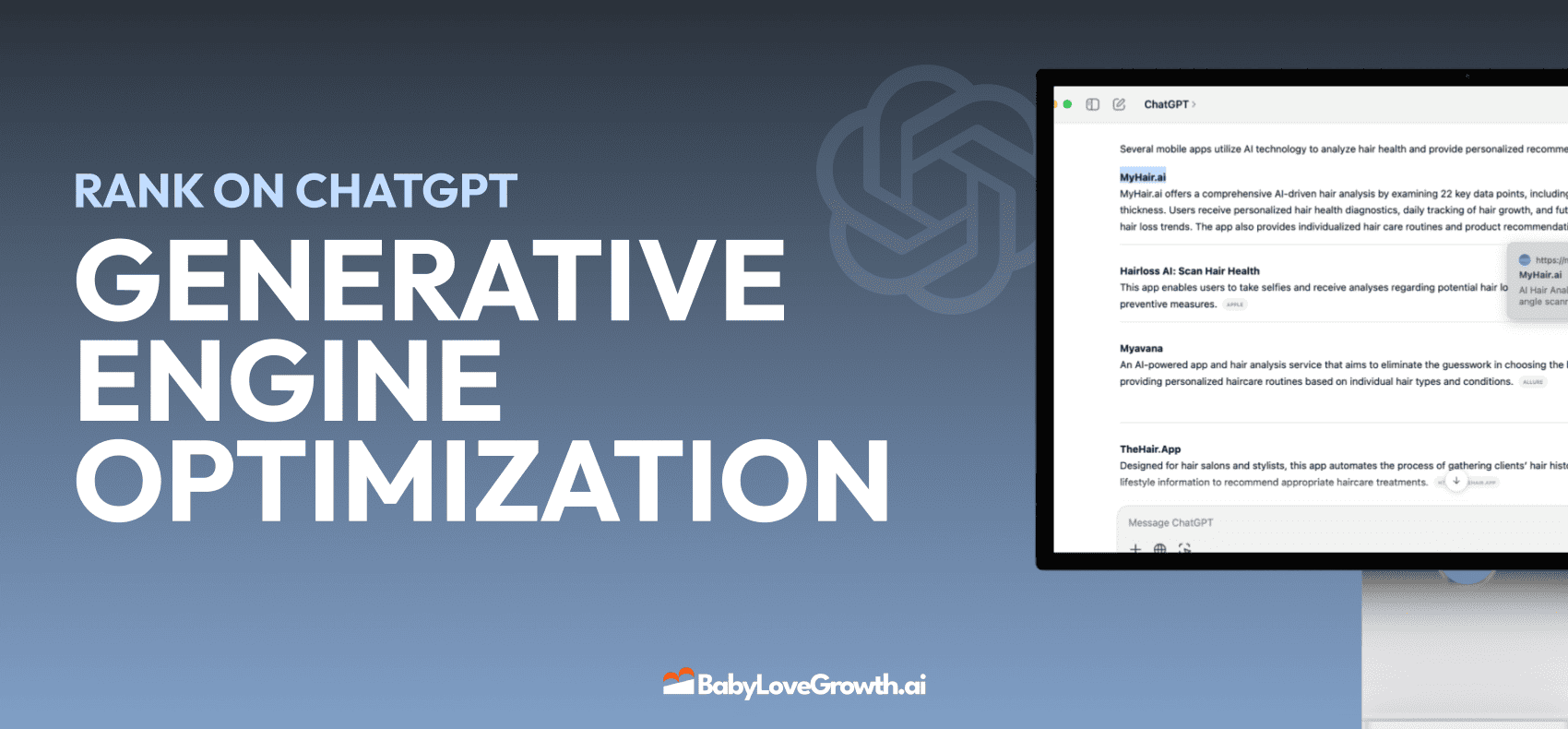
Generative Engine Optimization (GEO)
Learn how Generative Engine Optimization (GEO) helps your content rank in AI search engines like ChatGPT and Google AI. This comprehensive guide explains the differences between SEO and GEO, why it matters for your business, and practical steps to implement GEO strategies for better visibility in AI-generated responses.
DylenJan 18, 2025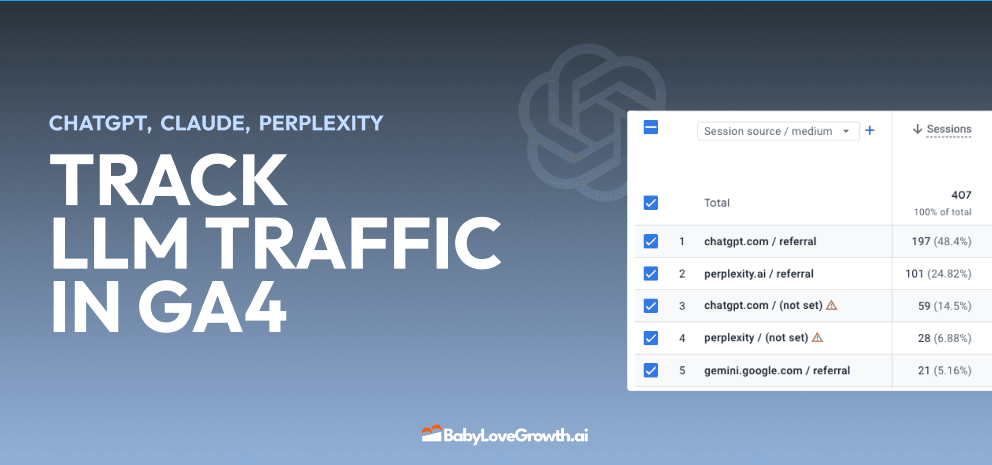
Track LLM Traffic in Google Analytics 4 (GA4)
Learn how to track and analyze traffic from AI sources like ChatGPT, Claude, Perplexity, and Google Gemini in Google Analytics 4. This step-by-step guide shows you how to set up custom filters to monitor AI-driven traffic and make data-driven decisions for your content strategy.
DylenMar 18, 2025
How to Humanize AI Text with Instructions
Learn practical techniques to make AI-generated content sound more natural and human. This guide covers active voice, direct addressing, concise writing, and other proven strategies to transform robotic text into engaging content.
DylenApril 7, 2025
Open AI Revenue and Statistics (2024)
Comprehensive analysis of OpenAI financial performance, user engagement, and market position in 2023. Discover key statistics including $20B valuation, $1B projected revenue, and 100M+ monthly active users.
DylenOctober 03, 2025