Why analytics in marketing drives 57% better ROI in 2026


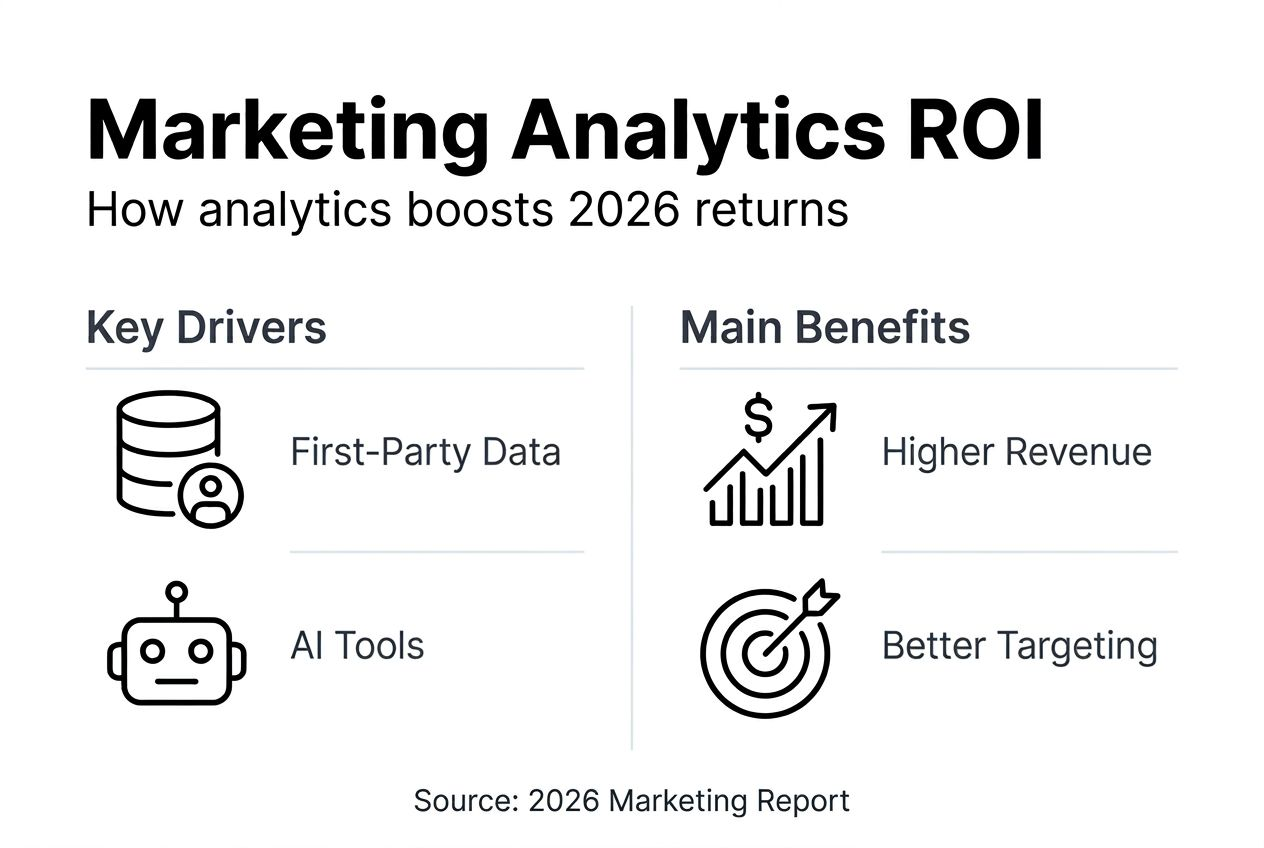
Many marketers underestimate the transformative power of analytics, treating it as a nice to have rather than the foundation of winning strategies. Analytics turns raw data into insights that optimize campaigns, improve targeting, and maximize budget efficiency. This guide reveals why analytics is critical for marketing success in 2026 and how to harness it effectively for measurable growth.
Table of Contents
- Why First-Party Data And Privacy Shape Marketing Analytics In 2026
- Decoding Attribution Models And Overcoming Multi-Touch Challenges
- Leveraging AI And Self-Service Analytics For Data-Driven Decision-Making
- Building An Effective Marketing Analytics Stack For Small And Medium Businesses
- Explore Automation Tools To Elevate Your Marketing Analytics
- Frequently Asked Questions
Key takeaways
| Point | Details |
|---|---|
| First-party data is essential | Accurate, compliant marketing analytics relies on owned customer data rather than third-party cookies. |
| AI accelerates insights | Self-service and AI tools transform data into actionable decisions faster than manual analysis. |
| Attribution clarity improves ROI | Understanding multi-touch customer journeys helps allocate budgets to high-performing channels. |
| Unified analytics reduce errors | Integrated tech stacks eliminate data silos and conflicting metrics across teams. |
| Data-driven strategies win | Marketing decisions backed by analytics consistently outperform gut instinct approaches. |
Why first-party data and privacy shape marketing analytics in 2026
The collapse of third-party cookies has fundamentally changed how marketers collect and use data. Privacy changes and third-party cookie decline have made tracking customer behavior across the web nearly impossible without owned data sources. First-party data, information collected directly from your customers through website interactions, purchases, and email engagement, has become the gold standard.
This shift isn't just about compliance with GDPR and CCPA regulations. First-party data delivers better results through improved accuracy, easier compliance, and stronger ROI compared to purchased or inferred data. When you collect data directly, you control quality, ensure consent, and build customer trust simultaneously.
Building first-party data assets requires investment in owned channels:
- Website analytics platforms that track user behavior with proper consent
- Email marketing systems capturing engagement and preference data
- Customer relationship management tools storing purchase history and interactions
- Surveys and feedback mechanisms gathering qualitative insights
Consent management platforms help you collect data ethically while maintaining compliance. Data clean rooms allow secure collaboration with partners without exposing individual customer information. These technologies support both privacy requirements and marketing effectiveness.
Pro Tip: Start building your first-party data infrastructure today rather than waiting for regulations to force your hand. Early adopters gain competitive advantages through richer customer profiles and better analytics for growth opportunities.
Decoding attribution models and overcoming multi-touch challenges
Customer journeys in 2026 are messier than ever. Touchpoints span 6 to over 60 interactions across search, social media, email, content, and paid ads before conversion. Understanding which touchpoints deserve credit for sales determines where you invest your budget.

Traditional last-click attribution assigns 100% credit to the final interaction before purchase. This approach severely undervalues initial brand-building efforts like content marketing, awareness campaigns, and social media engagement. A customer might discover your brand through an educational blog post, research on social media, and finally convert through a retargeting ad. Last-click gives all credit to retargeting while ignoring the content that started the journey.
| Model | Credit Distribution | Best For | Limitations |
|---|---|---|---|
| Last-click | 100% to final touchpoint | Simple tracking, direct response | Ignores awareness and consideration stages |
| First-touch | 100% to initial touchpoint | Brand awareness campaigns | Overlooks nurturing and conversion efforts |
| Multi-touch linear | Equal credit across all touchpoints | Balanced view of journey | Oversimplifies varying touchpoint impact |
| Data-driven | AI-based credit allocation | Complex journeys with rich data | Requires significant data volume |
Understanding attribution matters because 60% of marketers agree it's critical for optimizing spend. Without accurate attribution, you might cut budget from high-performing awareness channels because they don't show direct conversions.
For small and medium businesses, start simple. Use last-click or first-touch models initially to establish baselines. As you collect more data, graduate to multi-touch or data-driven models that reveal the full customer journey. Focus your attribution stack on first-party data sources you control rather than complex third-party tools. Learn marketing attribution essentials to build a foundation before adding complexity.
Leveraging AI and self-service analytics for data-driven decision-making
AI has transformed marketing analytics from a specialist skill to an accessible superpower. Self-service analytics tools with intuitive dashboards let marketers analyze data without waiting for IT teams or data scientists. Sixty percent of organizations rate end-user self-service as critical to business intelligence success.
AI analyzes patterns humans miss in massive datasets. It identifies which days and times generate the most conversions, which creative elements resonate with different audience segments, and which campaign combinations maximize ROI. AI-driven data analysis optimizes campaigns by surfacing high-converting windows and actionable opportunities instantly.
Here's how to implement AI and self-service analytics in your marketing team:
- Start with platforms offering built-in AI recommendations rather than building custom models
- Train team members on interpreting AI insights and translating them into campaign adjustments
- Run small tests based on AI suggestions to validate recommendations before scaling
- Monitor AI-identified patterns over time to separate genuine trends from statistical noise
- Combine AI insights with human creativity for messaging and positioning decisions
A Volkswagen marketing campaign demonstrates AI's impact. The team used AI to analyze touchpoint data and optimize ad spend allocation. Results showed leads increased 57% while cost per lead dropped 40% compared to manual optimization. Total ad spend decreased 4% while generating significantly better outcomes.
"It is not enough to have data. We must interpret it, understand it, and act on it. That is where true marketing analytics power lies." - Avinash Kaushik
Pro Tip: Use AI insights to identify your highest-converting days and times, then create tailored messaging for those windows. A SaaS company might discover Tuesday mornings convert 3x better than Friday afternoons, enabling focused budget allocation. Apply similar strategies to build AI-powered brand loyalty through personalized customer experiences.
Building an effective marketing analytics stack for small and medium businesses
Disconnected analytics tools create chaos. When your email platform, ad manager, website analytics, and CRM don't communicate, you get conflicting metrics and data silos that undermine decision-making. One tool shows 500 conversions while another reports 350 for the same campaign. Which number drives your strategy?
Unified marketing data stacks solve this problem by automating data collection, cleaning, and reporting across all sources. Integration eliminates manual data exports, reduces errors, and provides a single source of truth. Teams spend less time wrangling spreadsheets and more time optimizing campaigns.
Core components of an effective lean analytics stack for SMEs:
- Data warehouse centralizing information from all marketing channels and tools
- Analytics platform providing unified dashboards and reporting across sources
- Attribution tracking connecting customer touchpoints to revenue outcomes
- Automation tools reducing manual data processing and report generation
- Data governance standards ensuring consistent definitions and metrics across teams
Standardized definitions prevent confusion. When sales and marketing define "qualified lead" differently, attribution analysis becomes meaningless. Shared metrics and clear documentation align teams around common goals.
| Tool Category | Features | Benefits for SMEs | Example Use Case |
|---|---|---|---|
| Google Analytics 4 | Free website tracking, AI insights | Cost-effective, robust baseline | Monitor content performance and user journeys |
| Marketing automation platforms | Email, CRM, basic attribution | All-in-one simplicity | Track email to conversion paths |
| Data visualization tools | Dashboard creation, reporting | Fast insight communication | Executive reporting on channel ROI |
| Customer data platforms | Unified customer profiles | First-party data management | Personalization across touchpoints |
The importance of reliable infrastructure is clear when you consider that over 80% of marketers rely on data for decisions. Without trustworthy analytics, those decisions rest on shaky foundations. Invest in integration and automation early to scale your marketing effectiveness.
Explore analytics tools for SEO success and content marketing analytics to understand how specialized tools fit within your broader stack.
Explore automation tools to elevate your marketing analytics
Building an effective analytics stack takes time and expertise. Automation tools accelerate this process by handling data collection, analysis, and optimization automatically. You focus on strategy while technology manages execution.
Leverage SEO automation platforms to optimize content and rankings using data-backed strategies. These systems analyze search trends, competitor performance, and ranking factors to generate targeted recommendations. Time saved on manual SEO research gets redirected to creative strategy and customer engagement.
Automate backlink acquisition at scale with specialized backlink building software. Quality backlinks remain crucial for domain authority and referral traffic. Automation identifies link opportunities, manages outreach, and tracks results without consuming your team's bandwidth.
Monitor performance and uncover growth opportunities with comprehensive organic traffic tools. These platforms surface which content drives visitors, which keywords deserve more investment, and where competitors are gaining ground. Analytics automation transforms reactive reporting into proactive optimization.
Partner with BabyLoveGrowth to integrate automation throughout your marketing stack and accelerate ROI. Data-driven growth doesn't require massive teams or budgets when the right tools handle heavy lifting automatically.
Frequently asked questions
What is marketing analytics and why is it important?
Marketing analytics involves systematically collecting, measuring, and analyzing data about marketing performance to inform strategic decisions. It transforms raw numbers from campaigns, websites, and customer interactions into actionable insights about what works and what doesn't. This discipline is vital because it replaces guesswork with evidence, enabling marketers to optimize spending, improve targeting, and demonstrate ROI to stakeholders. Analytics helps identify which campaigns and channels drive revenue so you can allocate resources effectively rather than spreading budgets evenly across underperforming tactics.
How do I choose the right attribution model for my business?
Consider your business size, marketing complexity, and available data when selecting an attribution model. Small businesses with limited channels often start with simpler approaches like first-touch or last-click attribution to establish baseline performance. As your marketing matures and data volume grows, evolve toward multi-touch models that credit multiple interactions along the customer journey. When possible, use data-driven attribution models that apply machine learning to assign credit based on actual conversion patterns rather than arbitrary rules.
What role does AI play in marketing analytics?
AI automates complex data analysis that would take humans weeks or months to complete manually. It identifies patterns and correlations across massive datasets that reveal optimization opportunities, like which audience segments respond best to specific messaging or which times of day generate peak conversions. AI also predicts future performance based on historical trends, helping marketers allocate budgets proactively. These capabilities reduce costs and increase lead generation effectiveness by focusing resources on proven high-performing tactics.
How can small businesses build an effective marketing analytics stack on a budget?
Focus on first-party data collection through owned channels like your website, email list, and CRM rather than expensive third-party data sources. Choose affordable, integrated tools that combine multiple functions instead of paying for separate point solutions that don't communicate. Automate data collection and reporting to eliminate time-consuming manual work that drains small team capacity. Standardize metric definitions across your organization to avoid data silos where different teams use conflicting numbers for the same concepts.
Recommended
Smart SEO,
Faster Growth!
Most Read Articles
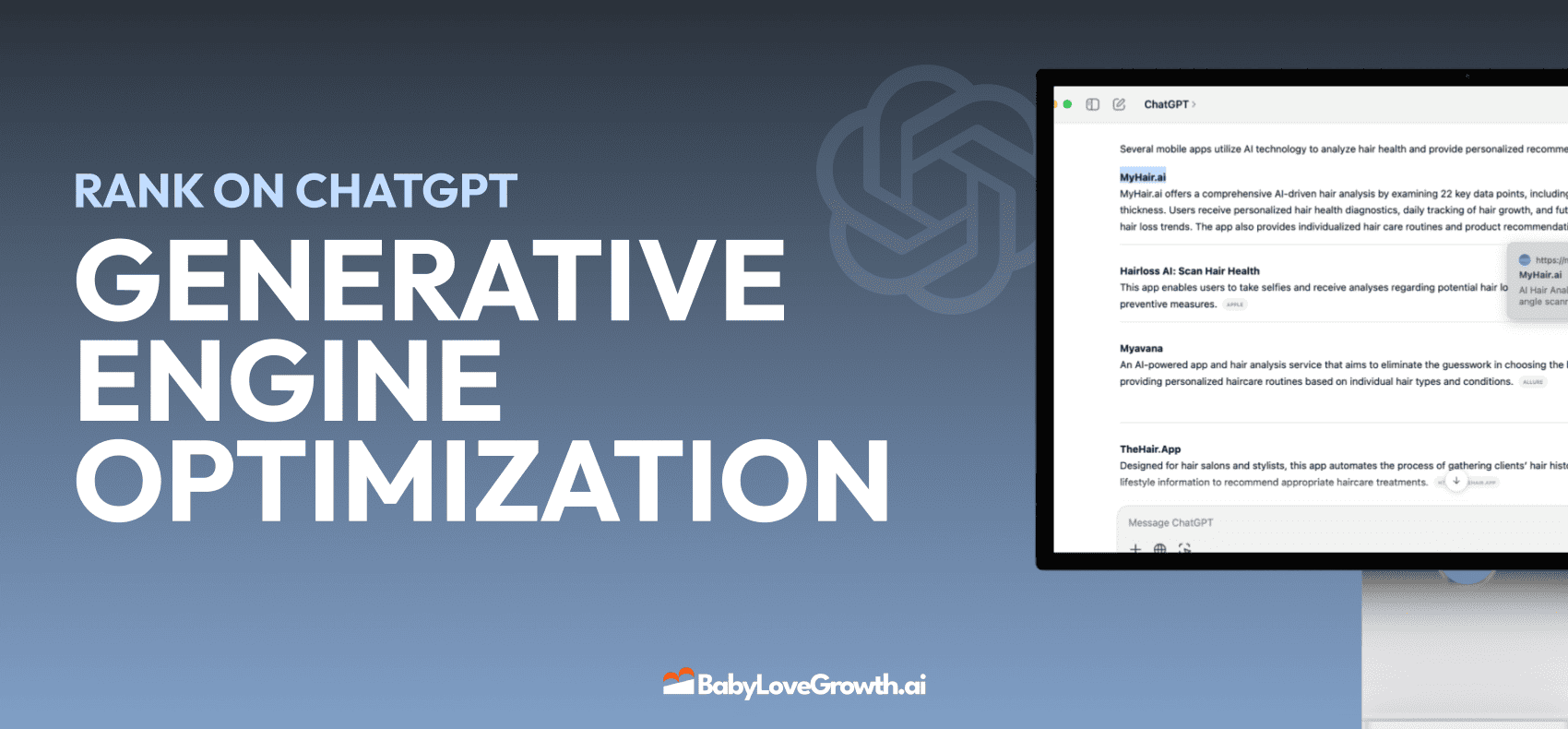
Generative Engine Optimization (GEO)
Learn how Generative Engine Optimization (GEO) helps your content rank in AI search engines like ChatGPT and Google AI. This comprehensive guide explains the differences between SEO and GEO, why it matters for your business, and practical steps to implement GEO strategies for better visibility in AI-generated responses.
DylenJan 18, 2025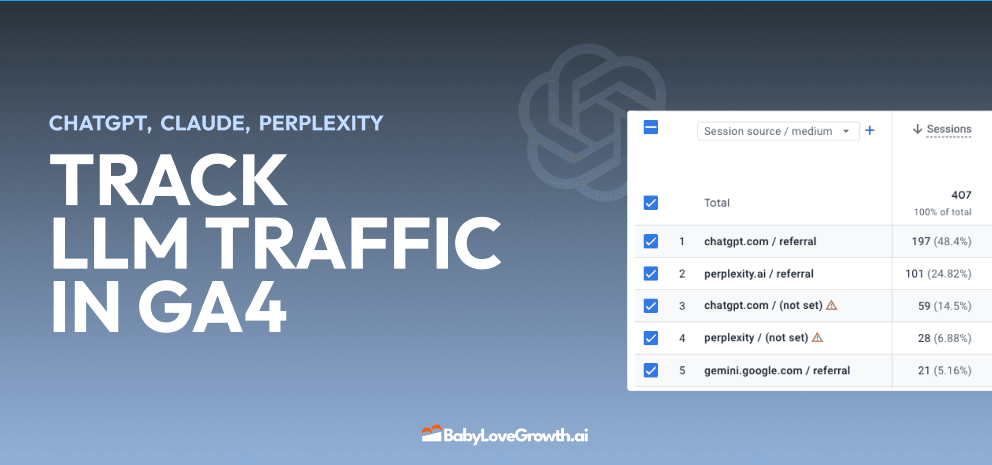
Track LLM Traffic in Google Analytics 4 (GA4)
Learn how to track and analyze traffic from AI sources like ChatGPT, Claude, Perplexity, and Google Gemini in Google Analytics 4. This step-by-step guide shows you how to set up custom filters to monitor AI-driven traffic and make data-driven decisions for your content strategy.
DylenMar 18, 2025
How to Humanize AI Text with Instructions
Learn practical techniques to make AI-generated content sound more natural and human. This guide covers active voice, direct addressing, concise writing, and other proven strategies to transform robotic text into engaging content.
DylenApril 7, 2025
Open AI Revenue and Statistics (2024)
Comprehensive analysis of OpenAI financial performance, user engagement, and market position in 2023. Discover key statistics including $20B valuation, $1B projected revenue, and 100M+ monthly active users.
DylenOctober 03, 2025