What Is Content Planning? Key to Organic Growth


Managing content production without a clear plan can leave even skilled marketers guessing. For small to mid-sized e-commerce businesses, structured content planning is more than just a checklist—it is a framework that connects creators, channels, and audiences. By focusing on strategic process of organizing, scheduling, and managing your content production, you build a system that attracts organic traffic while supporting business goals. Discover how to avoid common misconceptions and use content planning as your competitive advantage.
Table of Contents
- Content Planning Defined and Common Misconceptions
- Types of Content Planning for Organic Growth
- How Content Planning Powers SEO Success
- Essential Steps in the Content Planning Process
- Common Pitfalls and How to Avoid Them
Key Takeaways
| Point | Details |
|---|---|
| Content Planning is Strategic | It organizes and manages content production to meet audience needs and business goals effectively. |
| Quality Over Quantity | A focus on well-planned, high-quality content is more effective than simply increasing the volume of posts. |
| Audience Understanding is Essential | Successful content requires deep insight into your target audience's needs and search behaviors. |
| Consistency Builds Authority | Regular content updates signal relevance to search engines and foster audience engagement, enhancing brand authority. |
Content Planning Defined and Common Misconceptions
Content planning is the strategic process of organizing, scheduling, and managing your content production to align with audience needs and business goals. It's not a random checklist or last-minute scramble. Instead, it's a focused framework that guides what you create, when you publish, and why it matters.
The core function of content planning involves three things:
- Creating with purpose: Every piece targets specific audience segments and business objectives
- Maintaining consistency: Regular publication schedules keep your audience engaged and help search engines crawl your site
- Optimizing resources: Planning prevents wasted effort on content that doesn't align with your goals
Understanding content's strategic organization helps you recognize why ad hoc content creation fails at scale. Your e-commerce site can't compete by posting randomly.

The Real Definition
Content planning is fundamentally different from content creation. Creation is the act of writing, filming, or designing. Planning happens before that—it's the roadmap.
This involves identifying your target keywords, understanding audience intent, mapping content to the customer journey, and scheduling publications across your platforms. For small to mid-sized e-commerce businesses, this becomes your competitive edge against larger brands with bigger budgets.
Structured content planning transforms scattered posts into a system that builds authority and drives consistent organic traffic.
Common Misconceptions That Cost You Traffic
Many content marketers get this wrong. Here are the biggest traps:
Misconception 1: Content Planning is Just a Production Checklist
It's not. A checklist tells you what to do today. Planning tells you what to do for the next 90 days, why each piece matters, and how it supports your SEO strategy. Real planning connects content production to measurable business goals, not just output numbers.
Misconception 2: More Content Equals More Traffic
Wrong. 50 poorly planned posts won't outrank 10 strategically planned ones. Your e-commerce site needs quality over quantity—each piece should target high-intent keywords and address real customer questions in your niche.
Misconception 3: You Can Plan Without Understanding Your Audience
Content without audience insight is noise. Real planning requires knowing who you're writing for, what problems they face, and what stage of their buying journey they occupy.
Misconception 4: Planning Limits Creativity
Actually, it frees it. When you know your goals and audience, your creative choices become more focused and impactful. You're not guessing anymore.
Pro tip: Start your content plan with keyword research and audience research before writing a single word. This 4-6 week foundation prevents wasted effort later.
Types of Content Planning for Organic Growth
Content planning isn't one-size-fits-all. Different content types serve different purposes in your organic growth strategy, and successful companies balance multiple approaches to maximize long-term performance.
Your content planning should include various content formats that match where your audience is in their buying journey. Some pieces educate. Others convince. Some convert directly.
Content Types That Drive Organic Growth
Here's what actually works for e-commerce businesses:
- Blog posts: Target informational keywords, build topical authority, and drive long-tail traffic
- Product guides: Address specific customer pain points and comparison searches
- Video content: Increase time on page and improve engagement metrics for search
- Infographics: Earn backlinks and make complex information shareable
- Podcasts: Reach audiences during commutes and build brand loyalty
- Social media posts: Amplify reach and drive traffic back to cornerstone content
Each format targets different audience segments and buying stages. Your job is selecting the right mix for your business goals.
Here's a quick reference table summarizing how different content types support organic growth goals:
| Content Type | Best For | Key Benefit |
|---|---|---|
| Blog Post | Building authority | Ranks for broad topics |
| Product Guide | Driving conversions | Answers buyer needs |
| Video | Increasing engagement | Boosts time on site |
| Infographic | Earning backlinks | Shares complex info |
| Podcast | Brand loyalty | Reaches mobile users |
| Social Media | Amplifying reach | Drives site traffic |
Three Pillars of Organic Growth Planning
Think about your content planning across three strategic paths:
1. Deepen existing products
Create content around your current product lines—comparison guides, use-case articles, and customer success stories. This strengthens authority in areas where you already have inventory and expertise.
2. Expand into new niches
Identify adjacent markets or customer segments your products serve. Plan content that addresses their specific needs and brings them into your ecosystem.
3. Strengthen core capabilities
Improve how you perform on fundamentals: faster shipping content, customer service guides, and return policies. Balancing these three strategies prevents you from betting everything on one growth angle.
Compare the three pillars of organic growth planning:
| Strategic Path | Focus Area | Competitive Advantage |
|---|---|---|
| Deepen Existing | Current product lines | Strengthens brand authority |
| Expand New Niches | Adjacent markets | Reaches new customer segments |
| Strengthen Core | Service & logistics content | Improves operational trust & loyalty |
Strategic content planning means choosing content types and distribution channels that align with your specific growth goals, not chasing every trend.
Aligning Content Types to Your Goals
Your content calendar should reflect what you're actually trying to achieve. Don't just create content for content's sake.
If you need immediate sales, prioritize high-intent product comparison content. If you're building authority, focus on educational blog posts that rank for competitive keywords. If you're launching a new product category, create comprehensive guides that establish you as the expert.
The role of content planning in SEO strategies becomes clear when you map each piece to a specific business outcome. That alignment transforms scattered content into a revenue-generating system.
Pro tip: Audit your top 20 performing pages to identify which content types actually drive traffic and conversions. Build your content plan around those formats first, then expand into new types.
How Content Planning Powers SEO Success
Content planning isn't separate from SEO—it's the foundation of it. Without a plan, you're creating content that may rank nowhere. With one, every piece works together to build your organic authority.
Here's the reality: Google rewards consistency, relevance, and depth. Content planning ensures all three happen simultaneously across your entire website.
The SEO Engine Behind Content Planning
Strategic content planning for SEO matches audience intent to your business goals through keyword research and organized calendars. It's not guesswork—it's architecture.Your plan creates structure that search engines love:
- Keyword targeting: Each piece targets specific search queries your audience uses
- Content hierarchy: Pillar content supports cluster content, creating topical authority
- Internal linking strategy: Planned connections between related articles improve crawlability
- Publishing consistency: Regular updates signal to Google that your site is active and relevant
- Content gaps identification: Planning reveals which topics you haven't covered yet
Without planning, you create duplicate content, miss keyword opportunities, and waste resources on pieces that don't support your ranking goals.
How Planning Prevents Common SEO Mistakes
Most small to mid-sized e-commerce sites fail at SEO because they don't plan. They create randomly, hoping something sticks.
Content planning prevents this by forcing you to answer critical questions before writing:
What keywords are we targeting? You identify high-intent, achievable keywords aligned with your products and audience search behavior.
Who are we writing for? You understand the specific audience segment so your content actually matches their search intent.
Where does this fit in our strategy? You see how this piece connects to other content and supports your SEO roadmap.
How does this build authority? You ensure each piece strengthens your topical expertise in areas that drive revenue.
Content planning transforms SEO from a scattered effort into a coordinated system where every page supports your rankings and business goals.
Planning Improves Search Rankings Directly
When you plan strategically, your content naturally improves on SEO fundamentals. You optimize keyword usage naturally. You write longer, more comprehensive pieces. You link strategically. All of this happens because you planned it.
Your content creation workflow becomes measurable. You track what content ranks, what drives traffic, and what converts. Then you plan more content like your winners.
This feedback loop compounds over time. After 6 months of consistent, planned content creation, your organic traffic accelerates. After 12 months, you're competing with bigger competitors in your niche.
Pro tip: Start with 30 target keywords across three difficulty levels: 10 easy (low-volume, low-competition), 10 medium, and 10 hard. Build your 90-day content plan around ranking for those keywords first.
Essential Steps in the Content Planning Process
Content planning isn't complicated, but it does require following a structured process. Skip steps and your plan falls apart. Follow them consistently and you build a machine that generates organic traffic month after month.
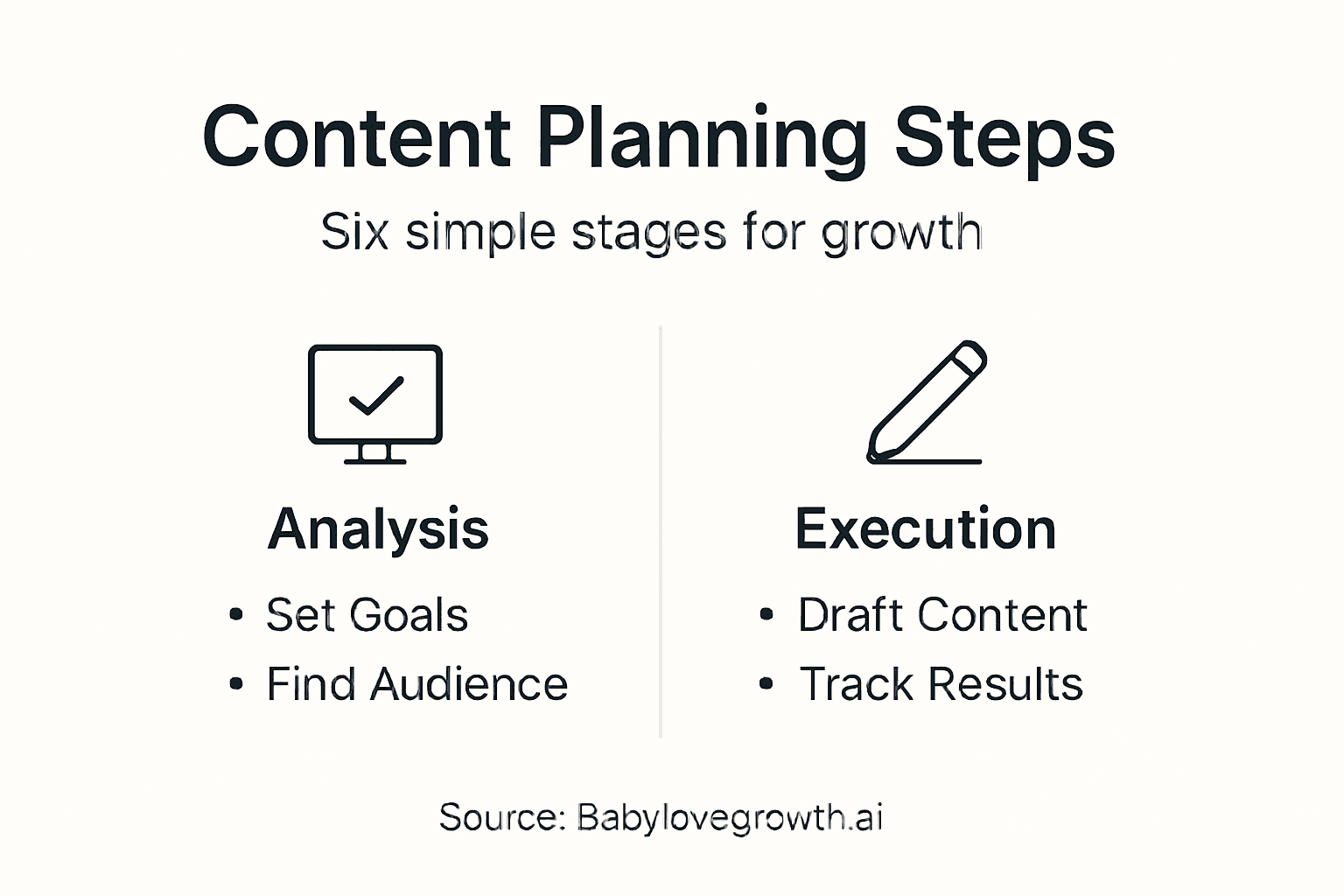
Here's the exact process successful e-commerce businesses use:
Step 1: Define Your Goals and Audience
Start by answering one question: What do we want to achieve? More traffic? Higher conversion rates? Better brand awareness?
Your goals determine everything else. A goal like "increase organic revenue by 40% in 12 months" is measurable and drives every decision.
Next, identify your target audience segments. Who are you actually writing for? Beginners? Experienced buyers? Deal-seekers? Different segments need different content.
Step 2: Conduct Keyword and Audience Research
Detailed audience and keyword research forms the foundation of your plan. You need to understand what terms your audience searches for, what intent sits behind those searches, and how competitive each keyword is.For e-commerce, focus on:
- Informational keywords: "How to choose a [product]"
- Comparison keywords: "[Product A] vs [Product B]"
- Transactional keywords: "Buy [product] online"
- Local keywords: "[Product] near me"
This research reveals gaps. Maybe nobody's written about a specific use case. That's your opportunity.
Step 3: Audit Your Existing Content
Setting clear goals and conducting content audits shows you what you already have. What's ranking? What gets traffic but doesn't convert? What's missing?You avoid duplicating efforts and identify content worth updating or repurposing. Sometimes your best ROI comes from improving what already exists.
Step 4: Create Your Content Calendar
Your calendar is your commitment. It specifies which topics you'll cover, when they'll publish, who writes them, and which keywords they target.
A simple structure works:
- Topic: "Complete guide to waterproof phone cases"
- Keyword: "Best waterproof phone cases"
- Format: Blog post (2,000 words)
- Publish date: March 15
- Writer: Sarah
- Internal links: 5-7 related articles
This removes guesswork. Everyone knows what's happening and when.
A documented calendar transforms scattered content creation into a coordinated system that compounds results over time.
Step 5: Draft, Optimize, and Publish
Write your content with SEO fundamentals built in—keyword usage, readability, proper headings, and strategic internal links. Mastering your content creation process ensures consistency across all pieces.
Publish on schedule. Consistency signals to search engines that your site is active and worth crawling regularly.
Step 6: Analyze and Refine
After publishing, track performance. Which content ranks? Which drives conversions? This data informs your next planning cycle.
Refinement is continuous. Your best content next month builds on what worked this month.
Pro tip: Create a simple spreadsheet with columns for topic, keyword, publish date, current ranking, organic traffic, and conversion rate. Review it monthly and let the data guide your next 30-day plan.
Common Pitfalls and How to Avoid Them
Most content planning fails not because the process is hard, but because people skip steps or abandon consistency after a few weeks. The pitfalls are predictable. So are the fixes.
Here's what derails even well-intentioned content plans:
Pitfall 1: Planning Without Data
You create a content calendar based on what you think will rank, not what actually searches for those terms. This wastes months on content nobody looks for.
The fix: Start with keyword research. Use tools to find real search volume, intent, and competition for every topic you plan to create. If it's not searchable, it's not worth planning.
Pitfall 2: Ignoring Your Audience
You write about topics relevant to your business but irrelevant to your customers. A furniture company writing about interior design trends without addressing buyer pain points loses readers immediately.
The fix: Interview customers. Analyze your top-performing content to see what actually resonates. Let audience insights drive your plan, not assumptions.
Pitfall 3: Inconsistent Publishing
You create a calendar promising weekly articles, then publish sporadically. Search engines and readers notice the gaps.
The fix: Choose a realistic frequency you can sustain. Publishing twice monthly consistently beats publishing weekly for three months then disappearing.
Pitfall 4: No Performance Tracking
You publish content and never measure results. You don't know what works, so next quarter you're guessing again.
The fix: Create a simple tracking system. Monitor which content ranks, drives traffic, and converts. Use this data to plan your next cycle.
Your content creation process should include built-in measurement checkpoints.
Pitfall 5: Overcomplicated Planning
You build an overly complex system with hundreds of fields and reporting requirements. Within two weeks, nobody follows it.
The fix: Keep it simple. Topic, keyword, publish date, and assigned writer. That's enough to start.
The best content plan is one you'll actually follow. Complexity kills consistency.
Pitfall 6: Forgetting Internal Links
You publish content in isolation without connecting it to related pieces. You miss opportunities to build topical authority and distribute link equity.
The fix: Plan internal links during the planning phase, not after publishing. Each piece should connect to 4-6 related articles.
Pitfall 7: Static Plans
You create a plan and never adjust it. Market conditions change. Customer interests shift. Your plan should adapt.
The fix: Review and revise your plan monthly. If certain topics underperform, replace them with better opportunities. Data beats assumptions.
Pro tip: Keep a "what went wrong" log for three months. Document every missed deadline, underperforming piece, or planning mistake. These patterns reveal your biggest opportunities for improvement.
Unlock Consistent Organic Growth with Structured Content Planning
Struggling to transform your content efforts into measurable SEO success No more guessing what keywords to target or missing critical audience insights. This article highlights the power of strategic content planning as the foundation for sustainable organic growth and improved search rankings. Whether you want to deepen your authority in current niches or expand into new markets, understanding the importance of aligning your content to audience intent and business goals is key.

Take control of your content strategy today with Babylovegrowth.ai. Our AI-powered platform automates keyword discovery, content planning, and publishing so you never miss a beat on consistency and optimization. Benefit from tools like automated structured data markup, backlink building, and tailored 30-day content plans that fit your unique goals. Start building a results-driven content calendar that fuels your SEO engine and drives real organic traffic. Visit Babylovegrowth.ai now and turn your content into a reliable growth machine.
Frequently Asked Questions
What is content planning?
Content planning is the strategic process of organizing, scheduling, and managing content production to align with audience needs and business goals. It's a focused framework that dictates what to create, when to publish, and why it matters.
Why is content planning important for organic growth?
Content planning is essential for organic growth because it ensures that content is created with purpose, maintains consistency, and optimizes resources. It helps businesses build authority, engage their audience, and improve search engine rankings.
How do I perform keyword and audience research for content planning?
Start by identifying high-intent keywords that your audience is searching for. Use keyword research tools to assess competition and search volume. Conduct audience research by analyzing customer behavior and preferences to ensure your content addresses their needs effectively.
What are common pitfalls in content planning?
Common pitfalls include planning without data, ignoring audience insights, inconsistent publishing, and lack of performance tracking. To avoid these, ensure your planning is data-driven, set realistic publishing schedules, and regularly analyze your content's performance.
Recommended
Smart SEO,
Faster Growth!
Most Read Articles
Generative Engine Optimization (GEO)
Learn how Generative Engine Optimization (GEO) helps your content rank in AI search engines like ChatGPT and Google AI. This comprehensive guide explains the differences between SEO and GEO, why it matters for your business, and practical steps to implement GEO strategies for better visibility in AI-generated responses.
DylenJan 18, 2025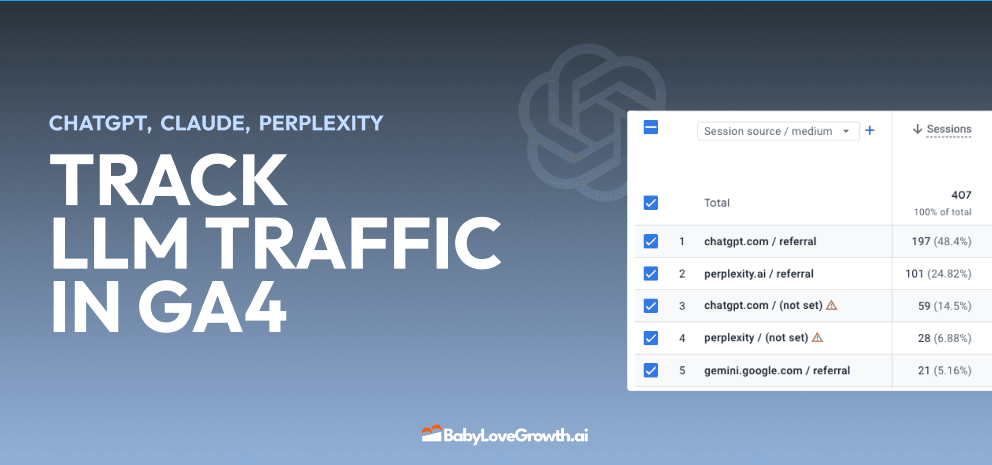
Track LLM Traffic in Google Analytics 4 (GA4)
Learn how to track and analyze traffic from AI sources like ChatGPT, Claude, Perplexity, and Google Gemini in Google Analytics 4. This step-by-step guide shows you how to set up custom filters to monitor AI-driven traffic and make data-driven decisions for your content strategy.
DylenMar 18, 2025
How to Humanize AI Text with Instructions
Learn practical techniques to make AI-generated content sound more natural and human. This guide covers active voice, direct addressing, concise writing, and other proven strategies to transform robotic text into engaging content.
DylenApril 7, 2025
Open AI Revenue and Statistics (2024)
Comprehensive analysis of OpenAI financial performance, user engagement, and market position in 2023. Discover key statistics including $20B valuation, $1B projected revenue, and 100M+ monthly active users.
DylenOctober 03, 2025