Website Bounce Rate: Impact on SEO and Growth


Over 55 percent of American websites see visitors leave after viewing just one page, making bounce rate a misunderstood metric for many. This number can cause confusion, yet not every exit reveals poor content or design. Website owners and marketers often face a challenge in interpreting what bounce rate truly says about user experience. By learning how context, content, and visitor behavior shape this statistic, you will gain clearer insight and make better decisions about your own digital strategy.
Table of Contents
- Website Bounce Rate Defined And Misunderstood
- Key Factors That Influence Bounce Rate
- Bounce Rate Types And Industry Benchmarks
- Bounce Rate's Impact On Seo Rankings
- Reducing Bounce Rate With Ai-Powered Solutions
- Common Pitfalls When Addressing Bounce Rate
Key Takeaways
| Point | Details |
|---|---|
| Understanding Bounce Rate Context | Not all bounces indicate poor user experience; context is key when evaluating this metric. |
| Website Design Importance | A clean layout, intuitive navigation, and mobile responsiveness significantly reduce bounce rates. |
| Content Relevance | Websites must deliver high-quality information that matches visitor expectations to keep them engaged. |
| Industry Benchmarks | Bounce rate expectations vary by industry; knowing these standards aids proper performance assessment. |
Website Bounce Rate Defined and Misunderstood
A website bounce rate represents the percentage of website visitors who navigate away after viewing only a single page. Simply put, if 100 people visit your website and 50 leave immediately without exploring further, your bounce rate is 50%. While this metric might seem straightforward, its interpretation requires nuanced understanding.
Understanding bounce rate goes beyond simple percentages. Website traffic analytics reveal that bounce rates can vary dramatically across different types of websites and content. A high bounce rate isn't always negative - for instance, single-page websites like landing pages or detailed informational articles might naturally have higher bounce rates because visitors find exactly what they need on the first page.
Digital marketers and SEO professionals often misinterpret bounce rates by viewing them through a one-dimensional lens. Some key considerations include:
- Not all bounces indicate poor user experience
- Context matters more than the raw percentage
- Different website types have inherently different bounce rate expectations
- Technical factors like page load speed can significantly impact bounce rates
To truly understand your website's performance, you'll need to analyze bounce rates alongside other metrics like time on page, conversion rates, and user engagement. The goal isn't necessarily to eliminate bounces but to ensure that when users land on your page, they find value - whether that means reading an entire article, signing up for a newsletter, or making a purchase.
Key Factors That Influence Bounce Rate
Website bounce rates are complex metrics influenced by multiple interconnected factors. Behavioral patterns of online customers play a critical role in determining how effectively a website engages its visitors, with several key elements directly impacting user interaction and retention.

Website design emerges as a primary factor in controlling bounce rates. Users typically decide within seconds whether a site looks trustworthy and provides the information they seek. Elements like clean layout, intuitive navigation, mobile responsiveness, and aesthetic appeal can dramatically reduce bounce rates. Color schemes, typography, and visual hierarchy all contribute to creating an engaging user experience that encourages further exploration.
Content relevance stands as another crucial component in managing bounce rates. Visitors arrive with specific expectations, and websites must deliver precise, high-quality information quickly. Key considerations include:
- Matching headline promises with actual content
- Using clear, concise language
- Presenting information in scannable formats
- Ensuring immediate value proposition
Moreover, digital technology advancements have transformed website performance standards, making user experience more critical than ever. Technical factors like page load speed, seamless functionality across devices, and minimal intrusive elements can significantly reduce bounce rates. Websites that prioritize smooth, fast, and user-centric design are more likely to retain visitor attention and encourage deeper engagement.
Bounce Rate Types and Industry Benchmarks
Bounce rates represent more than a simple percentage - they're nuanced metrics that vary dramatically across different website types and industries. Website bounce rate measurements provide crucial insights into user engagement, with industry benchmarks revealing significant variations in what constitutes an acceptable performance.
Different website categories experience distinct bounce rate patterns. E-commerce platforms typically aim for lower bounce rates, while content-driven blogs might tolerate higher percentages. A blog post might have a 70% bounce rate and still be considered successful if visitors read the entire article, whereas an online store experiencing the same rate would signal serious user experience problems.
Understanding industry-specific benchmarks is critical for accurate performance assessment. Key bounce rate categories include:
- Informational websites: 40-60% bounce rate
- E-commerce platforms: 20-45% bounce rate
- Service-based websites: 25-55% bounce rate
- Blogs and media sites: 50-90% bounce rate
Bounce Rate's Impact on SEO Rankings
Search engine optimization relies heavily on user engagement signals, with bounce rate emerging as a critical indicator of website quality. Behavioral actions of online customers directly influence how search engines evaluate and rank websites, making bounce rate a powerful metric in determining online visibility.
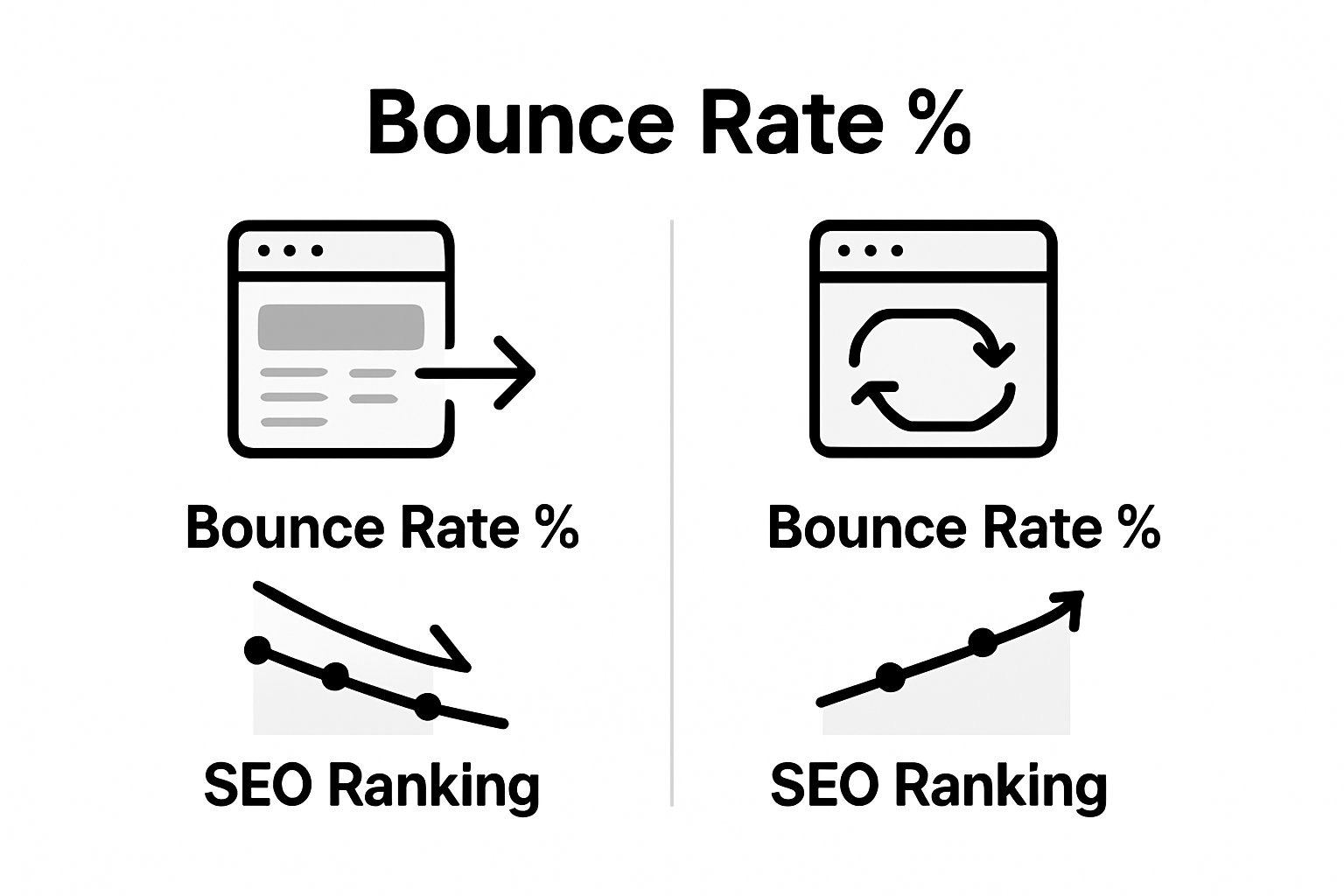
Search engines like Google interpret high bounce rates as a potential sign of poor content relevance or user experience. When visitors quickly leave a website after viewing only one page, it signals to search algorithms that the content might not meet user expectations. This can trigger negative ranking consequences, potentially pushing the website lower in search results and reducing organic traffic opportunities.
The relationship between bounce rate and SEO performance involves several key considerations:
- Longer visitor engagement suggests higher content quality
- Quick exits indicate potential misalignment between content and user intent
- Consistent high bounce rates can trigger algorithmic ranking penalties
- Diverse user interaction metrics provide a more comprehensive evaluation
Website performance challenges demonstrate that organizations must go beyond simple traffic generation. Successful websites create compelling user experiences that naturally reduce bounce rates, simultaneously improving both user satisfaction and search engine rankings. This holistic approach requires continuous monitoring, content optimization, and strategic design to maintain competitive digital presence.
Reducing Bounce Rate With AI-Powered Solutions
Artificial intelligence is transforming how websites address bounce rate challenges by providing unprecedented insights into user behavior. Advanced content optimization techniques leverage machine learning algorithms to analyze visitor interactions, delivering real-time strategies for improving website engagement.
AI-powered solutions work by continuously monitoring and interpreting complex user interaction patterns. These intelligent systems can predict potential drop-off points, recommend content modifications, and dynamically adjust webpage elements to maintain visitor interest. By analyzing factors like time on page, scroll depth, and navigation patterns, AI tools provide granular insights that traditional analytics platforms cannot match.
Key AI strategies for reducing bounce rates include:
- Personalized content recommendations
- Dynamic page layout adjustments
- Predictive user experience optimization
- Real-time content relevance scoring
- Intelligent internal linking suggestions
Common Pitfalls When Addressing Bounce Rate
Website performance optimization requires strategic approaches to reducing bounce rates, but many businesses fall into predictable traps that undermine their efforts. Technical tracking challenges can significantly distort bounce rate measurements, leading to misguided optimization strategies that fail to address core user engagement issues.
One of the most common mistakes is focusing solely on numerical bounce rate without understanding the underlying user experience. Businesses often implement superficial changes that appear to reduce bounce rates but do not genuinely improve visitor satisfaction. These misguided tactics can include intrusive pop-ups, misleading headlines, or complex navigation structures that frustrate users and ultimately drive them away.
Key pitfalls that undermine bounce rate reduction efforts include:
- Misinterpreting analytics data
- Implementing surface-level design changes
- Neglecting mobile user experience
- Using generic, non-targeted content
- Overlooking page load performance
- Ignoring user intent and search expectations
Content relevance strategies demonstrate that truly reducing bounce rates requires a holistic approach. Successful websites understand that bounce rate reduction is not about tricking users into staying longer, but creating genuinely valuable, user-centric experiences that naturally encourage deeper engagement and exploration.
Master Your Bounce Rate and Boost SEO with AI Automation
Struggling to interpret high bounce rates or worried about their impact on SEO rankings Your website may be losing valuable traffic because visitors leave before engaging deeper. The article highlights critical pain points like misinterpreting bounce percentages, the challenge of aligning content with user intent, and the need for continuous optimization to improve user experience. You need a solution that simplifies these complexities with AI-powered insights and automated strategies that adapt to user behavior naturally.
Experience how Babylovegrowth.ai transforms your SEO and bounce rate challenges into organic growth opportunities. Our platform offers a 30-day personalized content plan leveraging AI-driven, Google and ChatGPT optimized articles designed for real user engagement. With automated backlink strategies and smart analytics you can reduce bounce rate by delivering content that resonates with your audience. Don’t let bounce rate misunderstandings hold back your website’s potential Take control now with this all-in-one AI SEO solution built for business owners and marketers who demand scalable, cost-effective growth without relying on complex traditional SEO tools.
Ready to see tangible improvements in your visitor retention and search rankings Discover the power of AI-automated organic growth today at Babylovegrowth.ai and start your free trial to optimize bounce rates and accelerate your SEO success.
Frequently Asked Questions
What is a website bounce rate?
A website bounce rate is the percentage of visitors who leave a site after viewing only one page. A higher bounce rate indicates that users are not engaging with the site beyond their initial visit.
How does bounce rate affect SEO rankings?
A high bounce rate can signal to search engines that a website's content may not be relevant or engaging, potentially leading to lower search rankings. Conversely, a low bounce rate often suggests higher content quality and user engagement, which can boost SEO performance.
What factors influence bounce rates on a website?
Key factors influencing bounce rates include website design, content relevance, page load speed, and overall user experience. A clean layout, intuitive navigation, and high-quality content all contribute to reducing bounce rates.
What is considered a good bounce rate for different types of websites?
Bounce rates vary by industry. Generally, informational websites aim for a 40-60% bounce rate, e-commerce sites for 20-45%, service-based websites for 25-55%, and blogs for 50-90%. Context matters, as a high bounce rate may not indicate poor performance for every website type.
Recommended
Smart SEO,
Faster Growth!
Most Read Articles
Generative Engine Optimization (GEO)
Learn how Generative Engine Optimization (GEO) helps your content rank in AI search engines like ChatGPT and Google AI. This comprehensive guide explains the differences between SEO and GEO, why it matters for your business, and practical steps to implement GEO strategies for better visibility in AI-generated responses.
DylenJan 18, 2025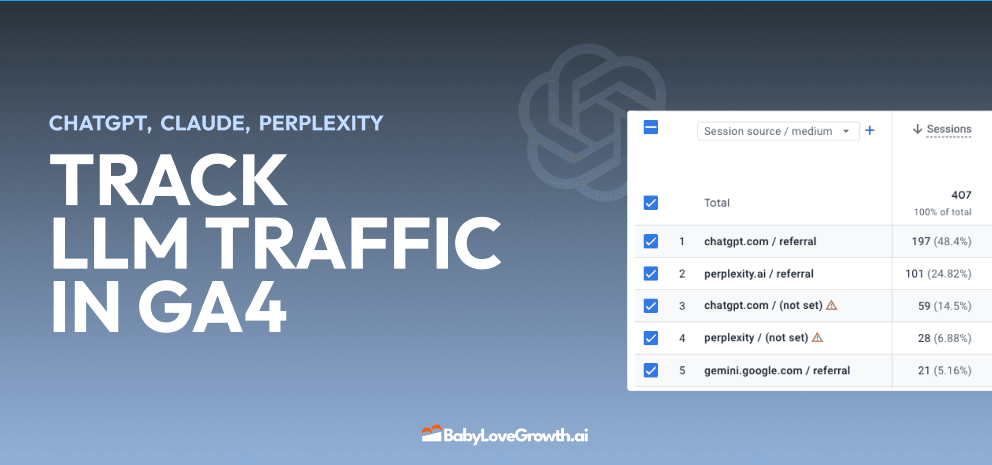
Track LLM Traffic in Google Analytics 4 (GA4)
Learn how to track and analyze traffic from AI sources like ChatGPT, Claude, Perplexity, and Google Gemini in Google Analytics 4. This step-by-step guide shows you how to set up custom filters to monitor AI-driven traffic and make data-driven decisions for your content strategy.
DylenMar 18, 2025
How to Humanize AI Text with Instructions
Learn practical techniques to make AI-generated content sound more natural and human. This guide covers active voice, direct addressing, concise writing, and other proven strategies to transform robotic text into engaging content.
DylenApril 7, 2025
Open AI Revenue and Statistics (2024)
Comprehensive analysis of OpenAI financial performance, user engagement, and market position in 2023. Discover key statistics including $20B valuation, $1B projected revenue, and 100M+ monthly active users.
DylenOctober 03, 2025