Target Relevant Keywords: Boost SEO Impact by 73%


Most small businesses waste 60% of their SEO budget chasing the wrong keywords. They target high-volume terms that are too competitive or irrelevant phrases that never convert. The result? Stagnant traffic, minimal leads, and frustration with organic search. This guide delivers a practical, step-by-step roadmap to targeting keywords that actually drive revenue. You'll learn how to combine traditional research methods with AI-powered keyword discovery to identify high-intent, low-competition opportunities that align with your business goals and deliver measurable growth.
Table of Contents
- Why targeting relevant keywords matters for SMB SEO
- Preparing your keyword targeting toolkit
- Step-by-step process to target relevant keywords
- Troubleshooting and expert tips for keyword success
- Verifying results: Measuring keyword targeting impact
- Level up your keyword targeting with BabyloveGrowth tools
- Frequently asked questions
Key Takeaways
| Point | Details |
|---|---|
| Relevance trumps volume | Target keywords that match your business goals and your audience’s search intent, not just those with high volume. |
| AI tools amplify results | Leverage AI-driven platforms to discover hidden gaps, analyze search intent, and optimize for zero-click answers. |
| Long-tail keywords win | Focus on specific, lower-competition phrases—especially with local modifiers—for higher conversions. |
| Measure and refine | Track organic performance, adapt to AI search changes, and iterate your strategy for continuous improvement. |
| Avoid common mistakes | Don’t chase irrelevant, competitive keywords; instead, use user-generated data and structured tactics for better results. |
Why targeting relevant keywords matters for SMB SEO
Keyword selection determines whether your SEO investment generates revenue or burns budget. Relevance means matching your business goals with your audience's actual needs. When you target keywords aligned with commercial intent, you attract visitors ready to buy, not just browse.
Profitable targeting emphasizes revenue potential over raw search volume. A keyword with 500 monthly searches and strong purchase intent outperforms a 5,000-volume informational term every time. For SMBs, this distinction is critical because resources are limited.Keyword intent falls into three categories:
- Informational: Users seeking knowledge ("what is SEO")
- Commercial: Users comparing options ("best keyword tools for SMBs")
- Transactional: Users ready to purchase ("buy SEO audit service")
Focus on commercial and transactional keywords. These drive conversions. Informational keywords build awareness but rarely generate immediate revenue.
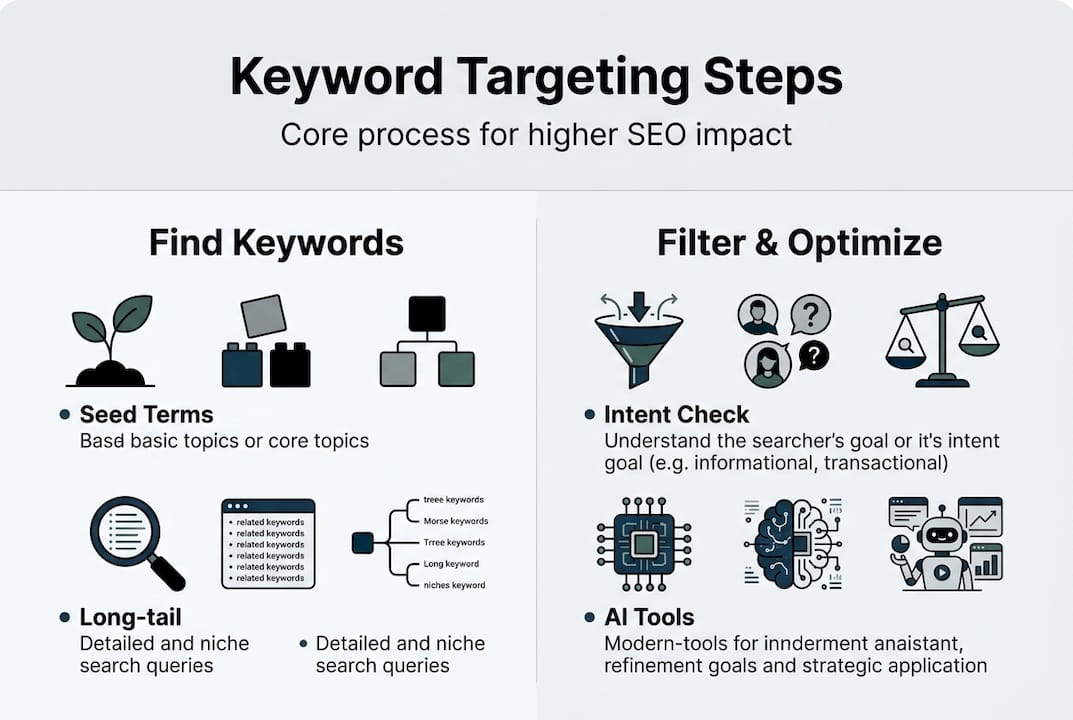
Low-competition, high-intent keywords deliver the most efficient growth for small businesses. Instead of fighting established brands for "SEO services," target "local SEO audit for restaurants in Austin." The specificity reduces competition while increasing relevance.
Pro Tip: AI tools are transforming keyword research by analyzing intent patterns and optimizing for zero-click search results. Platforms now identify opportunities in ChatGPT, Claude, and Perplexity alongside traditional Google rankings. This dual approach ensures visibility across both conventional and AI-driven search platforms.
"The shift from volume-based to intent-based keyword targeting has increased our client conversion rates by 40% while reducing acquisition costs."
Modern keyword strategy requires understanding how AI search engines surface answers. Structured data, citations, and direct answer optimization now matter as much as traditional ranking factors.
Preparing your keyword targeting toolkit
Successful keyword research starts with the right tools and a clear process. You need both free resources for initial discovery and specialized platforms for deeper analysis.
Start with seed keywords that reflect your core business offerings. If you sell marketing automation software, your seeds might include "email marketing platform," "CRM integration," and "lead scoring tools." These form the foundation for expansion.
Free keyword research tools:
- Google Keyword Planner: Provides search volume and competition data directly from Google
- Google Autocomplete: Reveals real user queries as you type
- Reddit: Uncovers authentic user questions and pain points in niche communities
- Answer the Public: Generates question-based keywords from search data
Paid tools for advanced analysis:
| Tool | Best For | Key Feature |
|---|---|---|
| Semrush | Comprehensive keyword clustering | Intent analysis and SERP features |
| Ahrefs | Backlink-driven keyword discovery | Keyword difficulty scoring |
| BabyloveGrowth | AI-powered gap analysis | GEO and zero-click optimization |
AI-driven platforms add a new dimension by analyzing how keywords perform in generative search engines. They identify opportunities for featured snippets, structured data markup, and citation-based visibility that traditional tools miss.
Pro Tip: Organize your research in a spreadsheet with columns for keyword, search volume, difficulty, intent type, and priority score. This structure makes filtering and decision-making faster as your list grows.
Capture both traditional SEO metrics (volume, difficulty, CPC) and AI SEO requirements (structured data potential, citation opportunities, zero-click optimization). The top marketing automation tools now integrate both approaches for comprehensive coverage.
Step-by-step process to target relevant keywords
Follow this systematic approach to build a keyword list that drives actual business results.
1. Brainstorm seed keywords
List 10-15 core terms that describe your products, services, or expertise. Think about what your ideal customer would search for when they have the problem you solve.

2. Expand with keyword tools
Enter your seeds into Google Keyword Planner, Semrush, or Ahrefs. Export the suggestions and filter by:
- Search volume: 100-1,000 monthly searches
- Keyword difficulty: Under 30-40
- Relevance: Direct connection to your offerings
3. Apply long-tail and local filters
Prioritize long-tail keywords and local modifiers for lower competition and higher intent. Transform "accounting software" into "cloud accounting software for small retail businesses" or "accounting software for Austin boutiques."
| Keyword Type | Example | Monthly Volume | Difficulty |
|---|---|---|---|
| Generic | accounting software | 12,000 | 78 |
| Long-tail | cloud accounting for retail | 320 | 28 |
| Local long-tail | accounting software Austin retail | 90 | 15 |
4. Analyze search intent and revenue potential
Review the top 10 results for each keyword. Are they blog posts, product pages, or comparison guides? Match your content format to the dominant intent. Commercial and transactional keywords deserve priority because they convert.
5. Integrate AI-driven optimization
Use AI content optimization tools to identify zero-click opportunities. Look for keywords where Google displays featured snippets, knowledge panels, or AI-generated answers. Structure your content to capture these positions with clear definitions, numbered steps, and concise answers.
6. Refine and finalize your list
Score each keyword on a 1-10 scale for:
- Business relevance
- Conversion potential
- Ranking feasibility
Select the top 20-30 keywords with the highest combined scores. These become your content creation priorities.
Pro Tip: Use AI content strategy and SEO platforms to map keywords to content types. Some keywords work best as blog posts, others as landing pages or product descriptions. Strategic mapping improves both rankings and conversions.
Document your process so you can replicate and refine it quarterly. Keyword opportunities shift as competition changes and new search behaviors emerge. Regular updates keep your strategy current with optimizing content for AI search trends.
Troubleshooting and expert tips for keyword success
Avoid these common mistakes that derail keyword targeting efforts.
Don't chase vanity metrics. High search volume means nothing if the keyword doesn't align with your business model or the competition is insurmountable. A 50,000-volume keyword with 85 difficulty will consume months of effort with minimal return for most SMBs.
Focus on long-tail specificity. Three-word phrases like "email marketing automation platform" outperform single words like "marketing" by delivering qualified traffic at lower cost. The specificity filters out casual browsers and attracts serious prospects.
Watch for intent shifts in AI search. Reddit covers user intent missed by traditional keyword tools. Real conversations reveal the actual language and questions your audience uses. Mine subreddit discussions for keyword variations and pain points.
Common pitfalls to avoid:
- Ignoring local modifiers when you serve specific geographic markets
- Targeting only informational keywords that build awareness but never convert
- Neglecting mobile search patterns and voice query variations
- Failing to update keyword lists as market conditions change
Pro Tip: AI search creates zero-click answers that satisfy user queries without site visits. Optimize for citations and structured data to maintain visibility even when users don't click through. This protects your brand presence as search behavior evolves.
"The biggest mistake we see is businesses targeting keywords their competitors rank for instead of finding gaps where they can actually win. Strategic differentiation beats imitation every time."
Structured data and schema markup are now essential for AI-driven search visibility. Implement FAQ schema, product schema, and local business markup to increase your chances of appearing in AI-generated answers and featured snippets.
Review your keyword list for missed user questions. Tools like Answer the Public and Reddit reveal the "how," "why," and "what" questions your audience asks. These question-based keywords often have lower competition and higher engagement because they match natural search patterns.
Balance commercial intent with content depth. A keyword like "buy CRM software" signals immediate purchase intent, but "how to choose CRM software for small business" captures earlier-stage prospects who will convert after education. Target both stages of the buyer journey for comprehensive coverage.
Verifying results: Measuring keyword targeting impact
Tracking performance ensures your keyword strategy delivers actual business growth, not just ranking improvements.
Monitor these core metrics in Google Search Console and your analytics platform:
- Keyword rankings: Track position changes for your target keywords weekly
- Organic traffic: Measure visits from organic search, segmented by landing page
- Conversion rate: Calculate how many organic visitors complete desired actions
- Revenue attribution: Connect organic traffic to actual sales or leads generated
Zero-click performance requires different measurement approaches. Track impressions and average position even when click-through rates decline. High impressions with strong positions indicate brand visibility even without direct traffic.
Key performance indicators:
- Ranking improvements for target keywords (top 10 positions)
- Organic traffic growth month-over-month
- Conversion rate from organic traffic
- Featured snippet captures
- AI search visibility (citations in ChatGPT, Perplexity)
Document content gaps revealed by your analytics. If certain keywords drive traffic but have high bounce rates, the content may not match user intent. Refine your approach based on actual user behavior.
Pro Tip: Emerging GEO tactics include structured data and citations for AI search visibility. Monitor how often your brand appears in AI-generated answers using tools that track generative engine optimization performance.
Iterate quarterly based on:
- New keyword opportunities from competitor analysis
- Shifts in search intent or user behavior
- Algorithm updates affecting ranking factors
- Emerging AI search patterns and zero-click trends
Stay current on AI-driven content creation best practices. The landscape evolves rapidly as generative search engines gain market share. What worked six months ago may need adjustment as user behavior shifts toward AI-assisted search.
| Metric | Measurement Frequency | Success Indicator |
|---|---|---|
| Keyword rankings | Weekly | Top 10 positions for 70%+ of targets |
| Organic traffic | Monthly | 15-25% growth quarter-over-quarter |
| Conversion rate | Monthly | 3-5% for commercial keywords |
| AI search visibility | Quarterly | Increasing citation frequency |
Success in keyword targeting compounds over time. Early wins build authority that makes subsequent keywords easier to rank. Consistent execution and measurement create sustainable organic growth that reduces dependence on paid channels.
Level up your keyword targeting with BabyloveGrowth tools
Manual keyword research delivers results, but automation scales your efforts and uncovers opportunities human analysis misses. BabyloveGrowth's AI-powered platform transforms keyword targeting from a quarterly project into a continuous growth engine.

Our AI keyword discovery platform analyzes millions of search queries to identify high-intent, low-competition opportunities specific to your industry and geography. The system clusters related keywords automatically, revealing content themes that capture multiple ranking opportunities with single pieces of content.
The AI keyword research tool goes beyond traditional metrics by scoring keywords for AI search potential. You'll see which terms are likely to trigger featured snippets, knowledge panels, and citations in generative search engines. This dual optimization ensures visibility across both conventional and AI-driven search platforms.
Our keyword clustering tool groups semantically related terms so you can create comprehensive content that ranks for dozens of variations simultaneously. Instead of writing separate articles for "email marketing software," "email automation platform," and "email campaign tools," you'll produce one authoritative piece that captures all three.
BabyloveGrowth automates the entire workflow from discovery through content creation and performance tracking. SMBs using our platform report 40-60% increases in organic traffic within six months by targeting smarter keywords with less manual effort.
Frequently asked questions
What is a long-tail keyword, and why does it matter for SMBs?
A long-tail keyword is a phrase of three or more words targeting specific intent and lower competition, making it ideal for SMBs to capture qualified traffic without competing against enterprise brands.
How do AI-powered SEO tools improve keyword targeting?
AI tools analyze search intent and identify hidden gaps faster, helping SMBs optimize for zero-click and structured search results across both Google and generative search engines like ChatGPT.
What search volume and keyword difficulty are ideal for SMBs?
For SMBs, target keywords with search volume between 100-1000 and keyword difficulty under 30-40 for the best balance of visibility and achievability given limited resources.
Why should SMBs use local modifiers in keywords?
Local modifiers add geography to your keywords, helping SMBs rank better for nearby searchers and drive higher intent leads from customers ready to buy locally.
How do I know if my keyword strategy is working?
Success is measured by improved rankings, increased organic traffic, and more conversions from targeted keywords. Track these metrics monthly and adjust your approach based on actual performance data.
Recommended
Smart SEO,
Faster Growth!
Most Read Articles
Generative Engine Optimization (GEO)
Learn how Generative Engine Optimization (GEO) helps your content rank in AI search engines like ChatGPT and Google AI. This comprehensive guide explains the differences between SEO and GEO, why it matters for your business, and practical steps to implement GEO strategies for better visibility in AI-generated responses.
DylenJan 18, 2025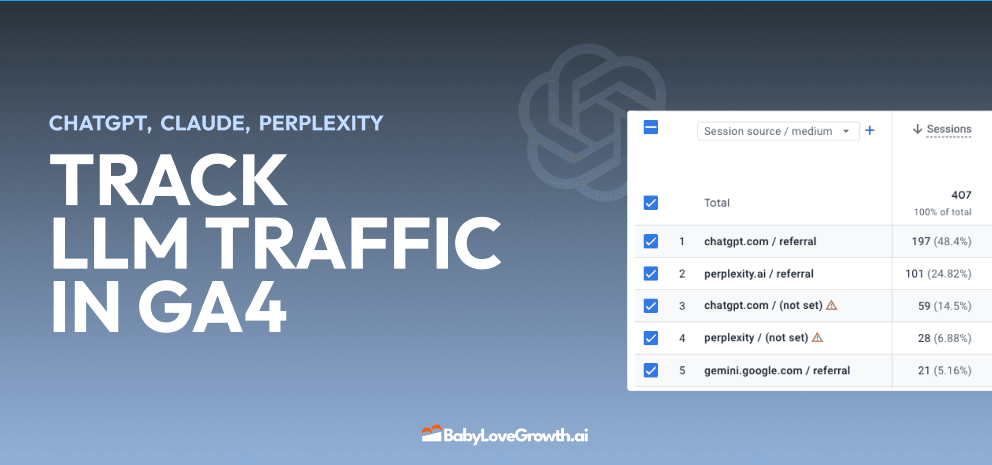
Track LLM Traffic in Google Analytics 4 (GA4)
Learn how to track and analyze traffic from AI sources like ChatGPT, Claude, Perplexity, and Google Gemini in Google Analytics 4. This step-by-step guide shows you how to set up custom filters to monitor AI-driven traffic and make data-driven decisions for your content strategy.
DylenMar 18, 2025
How to Humanize AI Text with Instructions
Learn practical techniques to make AI-generated content sound more natural and human. This guide covers active voice, direct addressing, concise writing, and other proven strategies to transform robotic text into engaging content.
DylenApril 7, 2025
Open AI Revenue and Statistics (2024)
Comprehensive analysis of OpenAI financial performance, user engagement, and market position in 2023. Discover key statistics including $20B valuation, $1B projected revenue, and 100M+ monthly active users.
DylenOctober 03, 2025