SEO Position Meaning: Everything You Need to Know


Search rankings can feel like a mystery to many american website owners, yet they directly shape who sees your content online. Studies show that over 90 percent of all search traffic goes to results on the first page, leaving the rest almost invisible. Misconceptions about SEO position continue to spread, making it even tougher to understand what truly influences your spot in search results. This guide clears up common misunderstandings and explains what impacts your website’s actual visibility.
Table of Contents
- SEO Position Defined And Common Misconceptions
- How Search Engine Rankings Work
- Types Of SEO Positions And Tracking Methods
- Key Factors Influencing SEO Position
- Common Ranking Mistakes And How To Avoid Them
Key Takeaways
| Point | Details |
|---|---|
| SEO Position | It refers to your website's ranking on SERPs, emphasizing the need for strategic content placement to maximize visibility. |
| Complexity of SEO | SEO is not a one-time task; it requires ongoing adaptation to search algorithm changes and user intent. |
| Quality Over Quantity | Modern rankings prioritize high-quality, user-focused content and authoritative backlinks over sheer volume. |
| Common Mistakes | Avoid pitfalls like keyword stuffing, duplicate content, and neglecting user experience to maintain search visibility. |
SEO Position Defined and Common Misconceptions
An SEO position represents your website's ranking placement on search engine results pages (SERPs) for specific keywords and queries. Understanding this concept goes far beyond simply appearing somewhere in search results - it's about strategically positioning your content to capture maximum visibility and organic traffic.
Search engine ranking is incredibly complex, as revealed by research from engineering experts examining search algorithms. The study highlights that reproducing consistent search rankings is challenging due to numerous interconnected factors. Contrary to popular belief, SEO is not a one-size-fits-all formula but a nuanced approach requiring continuous adaptation and sophisticated understanding.
Some common misconceptions about SEO positions include:
- Keyword Stuffing Works: Cramming pages with keywords no longer improves rankings and can actually harm your search visibility
- Top Position Guarantees Success: Ranking first doesn't automatically translate to clicks or conversions
- SEO Is a One-Time Task: Search algorithms constantly evolve, requiring ongoing optimization strategies
- Backlink Quantity Trumps Quality: Modern algorithms prioritize relevant, authoritative backlinks over sheer volume
Successful SEO positioning demands a holistic approach that considers user intent, content quality, technical performance, and understanding search intent optimization. By debunking myths and focusing on strategic, user-centric content development, businesses can improve their search engine rankings more effectively.
How Search Engine Rankings Work
Search engine rankings are complex algorithms that determine website placement on search results pages. These sophisticated systems evaluate hundreds of factors to deliver the most relevant and valuable content to users, transforming how digital information is discovered and consumed.

Modern search engines like Google utilize advanced machine learning technologies to process and rank web content. RankBrain, a machine learning component, helps interpret search query intent by analyzing patterns and relationships between words. This means the algorithm can now understand nuanced, ambiguous, or unique searches with remarkable precision, going far beyond simple keyword matching.
The ranking process involves multiple critical evaluation criteria:
- Content Relevance: How closely web pages match user search intent
- Content Quality: Depth, accuracy, and comprehensiveness of information
- User Experience: Site speed, mobile responsiveness, navigation ease
- Backlink Profile: Credibility of linking websites using TrustRank principles
- Technical SEO: Proper site structure, metadata, schema markup
Successful search engine ranking requires a holistic approach that understands Google's ranking strategies. Websites must consistently deliver high-quality, user-focused content while maintaining robust technical infrastructure to improve their search visibility and organic traffic potential.
Types of SEO Positions and Tracking Methods
SEO positions represent more than simple ranking numbers - they are strategic insights into a website's digital visibility across different search contexts. Marketers and website owners must understand the nuanced ways search engines evaluate and position content in competitive online landscapes.
Keyword clustering has emerged as a sophisticated approach to tracking SEO positions by grouping related search terms that share similar user intent. This method allows professionals to analyze performance across interconnected keyword groups rather than isolating individual search terms, providing a more comprehensive view of search engine positioning strategies.Different types of SEO positions include:
- Organic Positions: Standard search result rankings without paid advertising
- Featured Snippet Positions: Highlighted answer boxes at the top of search results
- Local Pack Positions: Geographically targeted business listings
- Image and Video Positions: Multimedia content search rankings
- News and Real-Time Positions: Time-sensitive content rankings
Key Factors Influencing SEO Position
SEO positioning is a dynamic ecosystem of interconnected factors that determine a website's search engine visibility. Success requires understanding the complex algorithms that evaluate digital content beyond simple keyword matching.
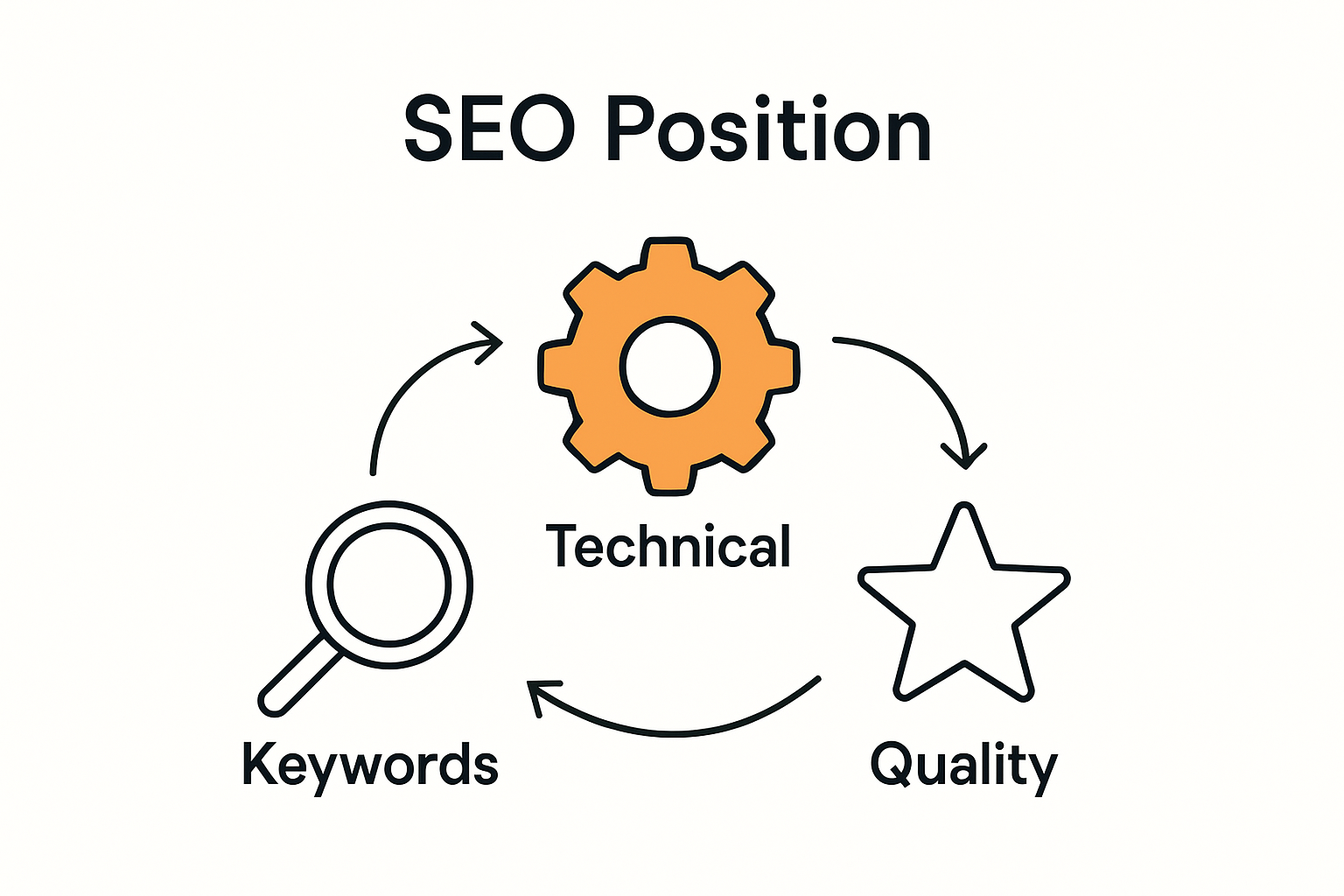
Key factors influencing SEO position include:
- Content Quality: Comprehensive, original, and valuable information
- User Experience: Site speed, mobile responsiveness, navigation
- Technical Performance: Clean code, schema markup, site architecture
- Backlink Profile: Authority and relevance of external links
- User Engagement: Time on site, bounce rate, interaction metrics
- Content Freshness: Regular updates and current information
Common Ranking Mistakes and How to Avoid Them
SEO ranking strategies are complex landscapes where even experienced marketers can stumble. Understanding and avoiding common pitfalls is crucial for maintaining and improving search engine visibility.
Viewpoint diversity in search results represents a critical consideration many websites overlook. Search engines increasingly prioritize balanced, comprehensive content that represents multiple perspectives, not just echo chamber information. Websites that fail to provide nuanced, multifaceted content risk being penalized or pushed down in rankings.Common ranking mistakes include:
- Keyword Stuffing: Overloading content with repetitive keywords
- Duplicate Content: Reproducing identical or near-identical information
- Ignoring User Experience: Slow loading times, poor mobile optimization
- Neglecting Technical SEO: Broken links, improper site structure
- Inconsistent Content Quality: Varying depth and relevance across pages
- Overlooking Search Intent: Misaligning content with user queries
Take Control of Your SEO Position with Smart Automation
This article revealed how complex SEO positioning can be and the many factors that influence your search engine ranking from content quality to technical performance and backlink relevance. If you are struggling with constantly changing algorithms or feeling overwhelmed by keyword strategies and search intent optimization it is time to let automation work for you. By embracing AI-driven SEO tools you can simplify your path to higher rankings while staying aligned with Google's evolving criteria.

Unlock the power of automated, high-quality content creation and backlink exchanges at Babylovegrowth.ai. Our platform offers a step-by-step method for SEO on autopilot combined with detailed business analysis to ensure your content matches user intent and search demand precisely. Don’t let complex SEO myths hold you back. Experience scalable organic growth starting with your free trial today and turn your website into a trusted authority by leveraging intelligent SEO strategies designed for lasting success. Learn more about how we help you understand search intent optimization and track your SEO performance effectively. Visit our homepage now at Babylovegrowth.ai to get started.
Frequently Asked Questions
What is SEO position?
SEO position refers to your website's ranking on search engine results pages (SERPs) for specific keywords and queries. It’s about how well your content is strategically positioned to capture visibility and organic traffic.
How do search engine rankings work?
Search engine rankings are determined by complex algorithms that evaluate hundreds of factors to deliver relevant content to users. Key criteria include content relevance, quality, user experience, backlink profile, and technical SEO performance.
What are some common mistakes in SEO positioning?
Common mistakes include keyword stuffing, using duplicate content, ignoring user experience, neglecting technical SEO, and failing to align content with user intent. Each of these can significantly impact your website's rankings.
How can I improve my SEO position?
To improve your SEO position, focus on creating high-quality, original content, optimizing user experience, maintaining a strong backlink profile, and ensuring your website is technically sound. Regularly update your content to keep it fresh and relevant.
Recommended
Smart SEO,
Faster Growth!
Most Read Articles
Generative Engine Optimization (GEO)
Learn how Generative Engine Optimization (GEO) helps your content rank in AI search engines like ChatGPT and Google AI. This comprehensive guide explains the differences between SEO and GEO, why it matters for your business, and practical steps to implement GEO strategies for better visibility in AI-generated responses.
DylenJan 18, 2025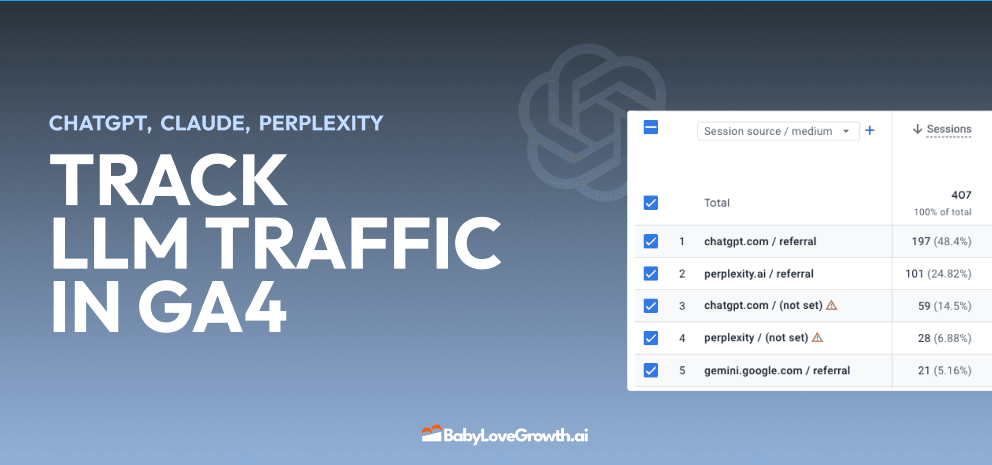
Track LLM Traffic in Google Analytics 4 (GA4)
Learn how to track and analyze traffic from AI sources like ChatGPT, Claude, Perplexity, and Google Gemini in Google Analytics 4. This step-by-step guide shows you how to set up custom filters to monitor AI-driven traffic and make data-driven decisions for your content strategy.
DylenMar 18, 2025
How to Humanize AI Text with Instructions
Learn practical techniques to make AI-generated content sound more natural and human. This guide covers active voice, direct addressing, concise writing, and other proven strategies to transform robotic text into engaging content.
DylenApril 7, 2025
Open AI Revenue and Statistics (2024)
Comprehensive analysis of OpenAI financial performance, user engagement, and market position in 2023. Discover key statistics including $20B valuation, $1B projected revenue, and 100M+ monthly active users.
DylenOctober 03, 2025