Search Engine Ranking: Why It Drives Brand Growth


Competing for visibility on Google can feel like a race where the rules keep changing and only the best strategies win. For SEO specialists driving large e-commerce brands, understanding what truly influences search engine ranking has never been more critical. This overview breaks down the modern ranking process, highlights how contemporary ranking algorithms use artificial intelligence, and identifies actionable insights to help brands adapt and succeed in a crowded digital marketplace.
Table of Contents
- Defining Search Engine Ranking And Scope
- Major Types Of Search Engine Rankings
- How Search Engine Algorithms Determine Ranking
- Key Factors Impacting Search Placement
- AI Search And Ranking: Evolving Challenges
- Common Pitfalls In Ranking Strategy
Key Takeaways
| Point | Details |
|---|---|
| Search Engine Ranking is Complex | Modern algorithms assess numerous factors beyond keywords, including context and user intent. This means creating high-quality, comprehensive content is essential for visibility. |
| Different Types of Rankings Exist | Brands should recognize organic, local, image/video, vertical, and AI-driven rankings to tailor their digital marketing strategies effectively. |
| Technical Performance Matters | Key factors like loading speed, mobile optimization, and secure connections are crucial for improving search placement. |
| Avoid Common Pitfalls | Brands must prioritize quality over mere metrics to prevent ineffective strategies, such as keyword stuffing or overlooking mobile optimization. |
Defining Search Engine Ranking and Scope
Search engine ranking represents the complex algorithmic process by which digital platforms determine the visibility and placement of web content in search results. At its core, ranking evaluates websites and individual pages based on multiple sophisticated criteria designed to match user intent and deliver the most relevant information possible.
Modern search engines like Google utilize advanced computational techniques to analyze scholarly retrieval mechanisms across billions of web pages. These systems consider hundreds of ranking factors including content quality, relevance, user engagement metrics, website authority, loading speed, mobile compatibility, and the intricate network of backlinks connecting different digital resources. The goal is creating a hierarchical system that surfaces the most credible and useful content for specific search queries.
The scope of search engine ranking extends far beyond simple keyword matching. Contemporary ranking algorithms incorporate machine learning and artificial intelligence to understand contextual nuances, semantic relationships, and user search intent. This means search engines now evaluate content not just based on literal word matches, but on the comprehensive value and comprehensiveness of information provided. Academic platforms like Google Scholar demonstrate how sophisticated these ranking mechanisms have become, indexing millions of scholarly documents with remarkable precision.
Pro tip: Focus on creating comprehensive, high-quality content that genuinely answers user questions and provides unique insights to improve your search engine ranking potential.
Major Types of Search Engine Rankings
Search engine rankings are not a monolithic system but a complex ecosystem with multiple distinct approaches to content evaluation and visibility. Understanding these different ranking mechanisms helps brands develop more targeted and effective digital marketing strategies that can significantly improve online presence.
The first major type is Organic Search Rankings, which represent the most traditional and fundamental ranking system. In this model, search engines like Google evaluate search ranking factors using sophisticated algorithms that analyze content relevance, website authority, user engagement, and technical performance. Websites achieving higher organic rankings gain increased visibility without paying for advertising, making this approach critically important for long-term brand growth and credibility.
Alternative ranking types include Local Search Rankings, which prioritize geographic relevance and proximity for location-based queries, and Image and Video Search Rankings, which evaluate multimedia content based on specific visual and contextual signals. Vertical Search Rankings further specialize in specific domains like academic research, news, shopping, or professional services, each with unique evaluation criteria tailored to their specific content ecosystems.
Modern search platforms are increasingly incorporating AI-driven Search Rankings, which use machine learning to understand user intent, semantic relationships, and contextual nuances far beyond traditional keyword matching. Role of AI search engines demonstrates how artificial intelligence is transforming content discovery, enabling more intuitive and personalized search experiences across digital platforms.
Pro tip: Develop a comprehensive SEO strategy that targets multiple ranking systems simultaneously, ensuring your content is optimized for diverse search environments and user discovery pathways.
Here is a summary comparing the major types of search engine rankings and their strategic focus:
| Ranking Type | Main Evaluation Signals | Content Focus | Business Benefit |
|---|---|---|---|
| Organic Search | Relevance, authority, engagement | General website content | Sustained long-term growth |
| Local Search | Proximity, location signals | Local business listings | Geo-targeted discovery |
| Image/Video Search | Visual/contextual attributes | Multimedia assets | Enhanced visual presence |
| Vertical Search | Domain-specific criteria | Industry or topic content | Niche audience targeting |
| AI-driven Search | User intent, semantics, context | Adaptive, dynamic content | Personalized experiences |
How Search Engine Algorithms Determine Ranking
Search engine algorithms represent an intricate web of computational processes designed to evaluate and rank digital content with remarkable precision. These complex systems go far beyond simple keyword matching, employing sophisticated techniques to understand the nuanced context, relevance, and value of online information.
The foundational mechanism of ranking begins with comprehensive search ranking processes, which involve multiple critical stages. Initial crawling mechanisms systematically explore web content, indexing pages based on their structural and contextual characteristics. Key ranking signals include content quality, website authority, user engagement metrics, loading speed, mobile responsiveness, and the intricate network of backlinks connecting different digital resources. Modern algorithms leverage advanced machine learning techniques to interpret subtle semantic relationships and understand user intent with unprecedented accuracy.
Search platforms like Google utilize highly sophisticated ranking mechanisms that continuously evolve. Algorithmic evaluation involves complex computational models that assess hundreds of individual signals simultaneously. These models analyze not just the literal content of a webpage, but its broader context, including user interaction patterns, content depth, expertise demonstration, and alignment with searcher intent. Advanced search ranking systems now incorporate natural language processing to understand synonyms, correct potential spelling errors, and interpret the underlying meaning behind search queries.
Modern search engine algorithms have transformed from simple matching mechanisms to intelligent systems capable of nuanced content interpretation. They now employ deep learning models that can understand context, predict user needs, and surface the most relevant information across diverse digital landscapes. This evolution represents a significant leap from traditional keyword-based ranking approaches, enabling more intuitive and personalized search experiences.
Pro tip: Create comprehensive, authoritative content that demonstrates genuine expertise and directly addresses user questions to improve your chances of achieving higher search rankings.
Key Factors Impacting Search Placement
Search engine placement represents a complex interaction of strategic elements that determine a website's visibility and digital prominence. Understanding these interconnected factors is crucial for brands seeking to optimize their online presence and effectively compete in increasingly crowded digital marketplaces.

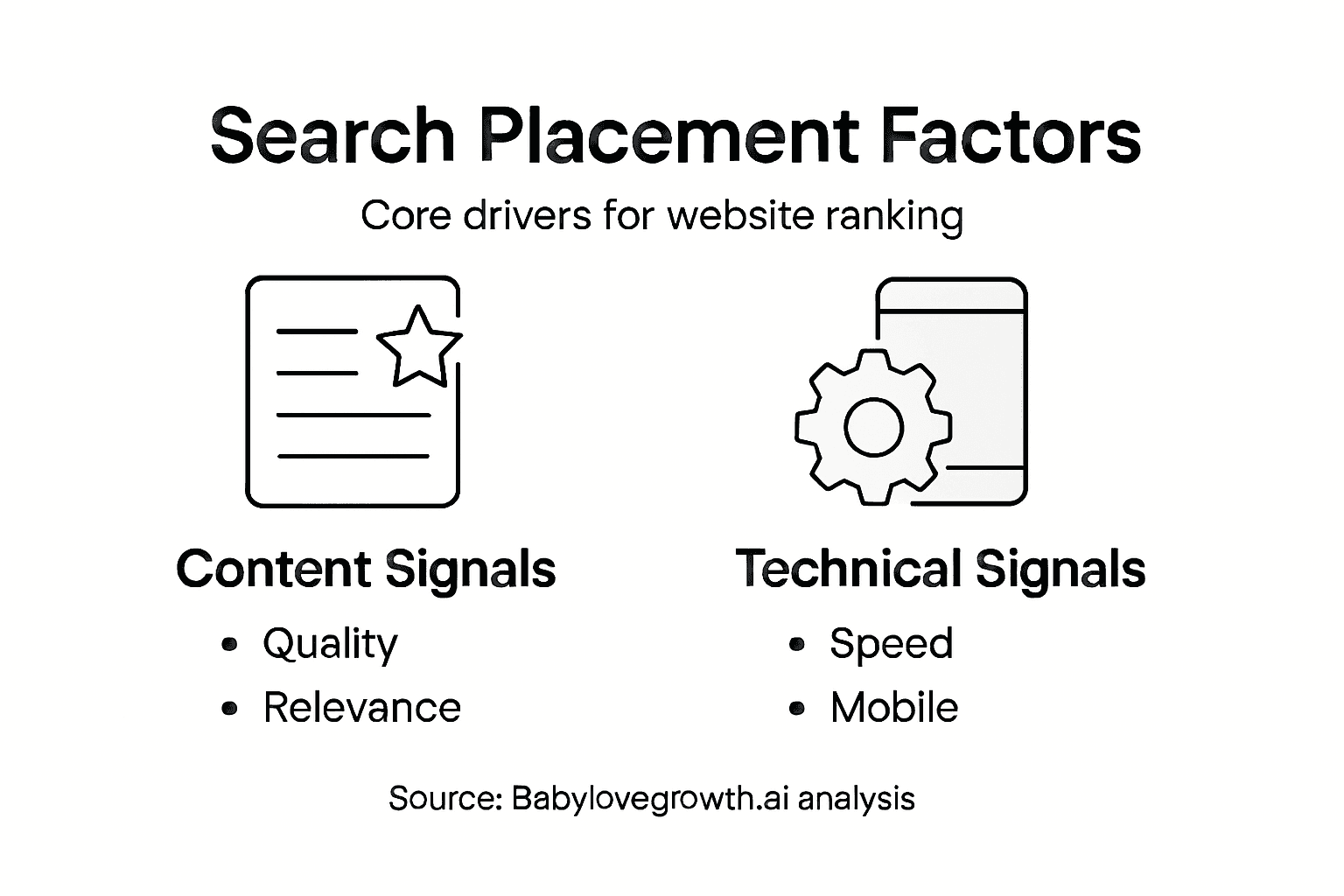
Content Quality emerges as the fundamental driver of search placement, with academic search performance metrics highlighting the critical importance of comprehensive, authoritative information. Search algorithms prioritize content that demonstrates expertise, provides unique insights, and comprehensively addresses user queries. Key quality indicators include depth of information, originality, accuracy, and the ability to solve specific user problems or answer nuanced questions.
Technical performance represents another crucial ranking dimension. Website Infrastructure factors such as page loading speed, mobile responsiveness, secure connections, structured data markup, and intuitive navigation significantly influence search placement. Search ranking algorithms now incorporate advanced computational models that assess not just content, but the entire user experience. Modern search platforms evaluate websites holistically, considering factors like user engagement metrics, bounce rates, time spent on page, and the overall accessibility and usability of digital content.
External validation through Backlink Networks and Social Signals further amplifies a website's search credibility. Search engines interpret high-quality external links and meaningful social media interactions as indicators of content authority and relevance. Brands that cultivate genuine, high-quality connections within their digital ecosystem can significantly enhance their search placement potential by demonstrating broad industry recognition and thought leadership.
Pro tip: Develop a holistic optimization strategy that balances high-quality content creation, technical website performance, and strategic external engagement to improve your search placement potential.
AI Search and Ranking: Evolving Challenges
The integration of artificial intelligence into search and ranking technologies represents a transformative yet complex technological frontier. As AI systems become increasingly sophisticated, they introduce a nuanced landscape of unprecedented opportunities and profound ethical challenges that demand careful navigation and strategic understanding.
AI research developments reveal critical challenges emerging at the intersection of technological innovation and societal implications. Algorithmic Bias stands as a significant concern, with AI search systems potentially perpetuating existing social prejudices through opaque decision-making processes. These systems can inadvertently reproduce systemic inequalities by reflecting historical data patterns, leading to skewed information retrieval that may disadvantage certain demographic groups or perspectives.The technical complexity of AI search ranking introduces multifaceted challenges beyond simple algorithmic performance. Transparency and Accountability have become paramount considerations, as advanced AI search systems must balance sophisticated computational capabilities with ethical guidelines and user trust. Modern AI search platforms must develop mechanisms for explainable AI, enabling users to understand how and why specific content is ranked or recommended, while maintaining the sophisticated computational intelligence that makes these systems powerful.
Emerging AI search technologies also confront significant data privacy and intellectual property challenges. The training data used by machine learning models, the potential for unintended information disclosure, and the complex legal frameworks surrounding AI-generated content create a dynamic and often uncertain regulatory environment. Brands and technology developers must proactively address these challenges by implementing robust ethical guidelines, transparent data usage policies, and continuous monitoring mechanisms.
Pro tip: Develop a comprehensive AI governance strategy that prioritizes algorithmic transparency, regular bias auditing, and user-centric design to navigate the complex ethical landscape of AI-driven search technologies.
The following table outlines key challenges and risk areas for AI-driven search ranking:
| Challenge Area | Example Impact | Mitigation Strategy |
|---|---|---|
| Algorithmic Bias | Skewed or unfair search results | Regular bias audits, diverse data |
| Transparency Issues | User confusion, lack of trust | Explainable AI, clear disclosures |
| Data Privacy Risks | Unintended information exposure | Strong data governance policies |
| Regulatory Compliance | Legal disputes, content takedown | Proactive legal and ethical review |
Common Pitfalls in Ranking Strategy
Search engine ranking strategies are fraught with potential missteps that can dramatically undermine a brand's digital visibility and growth potential. Understanding these common pitfalls is crucial for developing robust, sustainable online presence strategies that drive meaningful engagement and organic traffic.
One of the most significant challenges is strategic planning limitations that lead to narrow, short-sighted ranking approaches. Keyword Myopia represents a critical error where brands obsess over specific search terms without understanding broader contextual relevance. These strategies often result in content that appears manipulative rather than genuinely helpful, causing search algorithms to devalue the website's overall credibility and user experience.
Quantitative Overemphasis emerges as another fundamental ranking strategy pitfall. Ranking methodologies frequently prioritize numerical metrics over substantive content quality, leading brands to chase superficial indicators instead of creating genuinely valuable user experiences. This approach can manifest as excessive link building, keyword stuffing, or generating high-volume low-quality content designed purely to game search algorithms rather than serve user needs.
Technical implementation errors further compromise ranking strategies. Common mistakes include neglecting mobile optimization, ignoring page loading speeds, failing to implement proper structured data markup, and not maintaining a clean, intuitive website architecture. These technical deficiencies can cause search engines to perceive a website as less authoritative and user-friendly, regardless of the actual content quality.
Pro tip: Develop a holistic ranking strategy that balances technical optimization, high-quality content creation, and genuine user value, rather than focusing on narrow algorithmic manipulation techniques.
Unlock Lasting Brand Growth with Smarter Search Engine Ranking Solutions
The challenge of mastering search engine ranking requires more than just short-term fixes or keyword stuffing. This article highlights the need for a comprehensive approach focusing on high-quality content, technical performance, and AI-powered understanding of user intent and semantics. If you want to overcome pitfalls like narrow keyword myopia and algorithmic bias while ensuring your website stands out in local, organic, and AI-driven searches, you need a powerful system designed for all these dimensions.

Experience how Babylovegrowth.ai transforms your SEO strategy with AI-powered tools for automated keyword discovery, technical audits, and backlink building. Our platform supports dynamic content planning and publishing to help your brand achieve the expert-level relevance and authoritative visibility today’s search engines demand. Start leveraging AI-enhanced search ranking insights and gain a competitive edge across Google and emerging AI search engines by visiting Babylovegrowth.ai. Unlock the next level of organic growth with a solution designed for real impact.
Frequently Asked Questions
What factors influence search engine rankings?
Search engine rankings are influenced by various factors, including content quality, website authority, user engagement metrics, loading speed, mobile compatibility, and the network of backlinks. These elements help determine how relevant and credible content is in response to user queries.
How can I improve my website's search engine ranking?
To improve your search engine ranking, focus on creating high-quality, comprehensive content that answers user questions, optimize your website's technical performance, ensure mobile responsiveness, and build a strong backlink network from reputable sources.
What is the difference between organic and local search rankings?
Organic search rankings evaluate general website content based on relevance, authority, and engagement, while local search rankings prioritize geographical factors and proximity for location-based queries, helping businesses target users in specific areas effectively.
How does artificial intelligence impact search engine ranking?
Artificial intelligence impacts search engine ranking by enabling algorithms to understand user intent, contextual nuances, and semantic relationships better. This leads to more personalized search experiences and improved content discovery for users.
Recommended
Smart SEO,
Faster Growth!
Most Read Articles
Generative Engine Optimization (GEO)
Learn how Generative Engine Optimization (GEO) helps your content rank in AI search engines like ChatGPT and Google AI. This comprehensive guide explains the differences between SEO and GEO, why it matters for your business, and practical steps to implement GEO strategies for better visibility in AI-generated responses.
DylenJan 18, 2025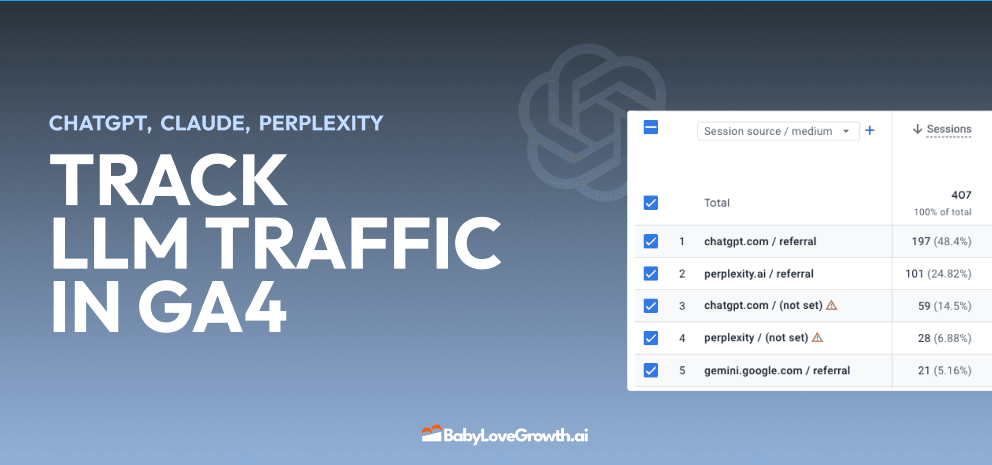
Track LLM Traffic in Google Analytics 4 (GA4)
Learn how to track and analyze traffic from AI sources like ChatGPT, Claude, Perplexity, and Google Gemini in Google Analytics 4. This step-by-step guide shows you how to set up custom filters to monitor AI-driven traffic and make data-driven decisions for your content strategy.
DylenMar 18, 2025
How to Humanize AI Text with Instructions
Learn practical techniques to make AI-generated content sound more natural and human. This guide covers active voice, direct addressing, concise writing, and other proven strategies to transform robotic text into engaging content.
DylenApril 7, 2025
Open AI Revenue and Statistics (2024)
Comprehensive analysis of OpenAI financial performance, user engagement, and market position in 2023. Discover key statistics including $20B valuation, $1B projected revenue, and 100M+ monthly active users.
DylenOctober 03, 2025