Scalable Automation: Grow Your SEO With AI in 2026


TL;DR:
- Scalable automation uses AI to manage SEO tasks, enabling exponential growth without increasing team size.
- Implementing hybrid workflows with human oversight mitigates quality risks and maintains brand consistency.
- Real-world data shows automation significantly boosts organic traffic, keyword rankings, and revenue growth.
Many marketing teams still believe that growing SEO means hiring more writers, adding more tools, and spending more hours reviewing content. That assumption is expensive and wrong. Scalable automation lets SEO teams generate, optimize, and manage content and technical fixes without increasing human resources. Real businesses are growing organic traffic and revenue exponentially without expanding their headcount. This guide decodes what scalable automation actually means, breaks down the methods behind it, shows you real numbers, and gives you a practical roadmap for applying it to your marketing strategy right now.
Table of Contents
- Defining scalable automation in marketing and SEO
- Key methodologies: From programmatic SEO to autonomous workflows
- Results that matter: Real-world data and benchmarks
- Avoiding pitfalls: Quality, penalties, and where AI falls short
- Getting started: A practical roadmap for implementing scalable automation
- Our perspective: Hybrid is the only winning automation strategy
- How BabyLoveGrowth can support your scalable automation journey
- Frequently asked questions
Key Takeaways
| Point | Details |
|---|---|
| True scalability | AI-powered automation lets marketers grow SEO impact without proportional increases in headcount or resources. |
| Essential methodologies | Programmatic SEO, keyword clustering, and autonomous workflows are practical first steps for scalable automation. |
| Quality still matters | Mix automation with human review to avoid penalties and protect your site's authority. |
| Data-driven results | Automated strategies deliver proven gains in impressions, keyword rankings, and organic growth. |
| Hybrid wins | The most successful strategies combine AI’s scale with human expertise for best SEO outcomes. |
Defining scalable automation in marketing and SEO
First, let's define what scalable automation actually means for today's marketers. Scalable automation is not simply doing more tasks faster. It's about removing the bottlenecks that tie your growth to the size of your team. When you remove those bottlenecks, your output can outpace your headcount by a wide margin.
According to autonomous SEO frameworks, scalable automation in marketing and SEO uses AI-driven systems, programmatic frameworks, and autonomous agents to manage SEO tasks at scale. That means a single strategist can oversee systems that would have required a team of ten just a few years ago.
The core components of scalable automation include:
- Content generation and optimization: AI systems produce, rewrite, and optimize content based on keyword data and performance signals
- Technical SEO updates: Schemas, meta tags, canonical tags, and heading structures are updated programmatically across thousands of pages
- Ongoing site audits: Automated crawlers flag issues and trigger fixes without waiting for a human to run a manual check
- Internal linking: Algorithms identify and insert contextually relevant internal links across the full site
"Scalable automation is not a productivity hack. It's a structural shift in how marketing teams operate. The goal is for your systems to grow, not your payroll."
The key distinction between scalable automation and traditional approaches is leverage. Manual SEO scales linearly. You do more, you get more. Automated SEO scales exponentially. You set it up once, and the system compounds. That is why scalable SEO automation is now central to competitive marketing strategy, and why AI-driven marketing strategies are no longer optional for growth-focused brands.
Key methodologies: From programmatic SEO to autonomous workflows
Once you understand the concept, it's important to see how scalable automation is actually put into practice. There are four core methodologies every marketer should know.
1. Programmatic SEO This involves using data templates and structured inputs to create thousands of unique, relevant pages automatically. Think location pages, product comparison pages, or FAQ hubs. Each page targets a specific keyword cluster and is built from a repeatable template that populates with unique data. A good AI content marketing platform handles this end to end.
2. Automated keyword clustering Instead of manually sorting through hundreds of keyword variations, AI groups them by search intent, topic, and competitive difficulty. This feeds directly into a strategic content calendar. Using a keyword clustering tool removes weeks of planning work and reduces guesswork.
3. Technical SEO automation Schemas, headings, meta descriptions, and canonical tags can all be handled at scale by algorithms. This is often where the biggest wins happen fastest, because technical issues are widespread and fixing them manually is painfully slow.
4. Autonomous agent workflows These are systems that monitor your site continuously, identify opportunities and issues, and execute fixes or content updates with minimal human input. They are the closest thing to a self-managing SEO operation.
As SEO planning research confirms, programmatic SEO, automated keyword clustering, technical automation, and autonomous workflows are foundational methodologies for any scalable strategy.
| Methodology | Primary benefit | Automation level |
|---|---|---|
| Programmatic SEO | Rapid page creation at volume | High |
| Keyword clustering | Faster, smarter content planning | High |
| Technical SEO automation | Site health at scale | Very high |
| Autonomous workflows | Continuous optimization | Very high |
Pro Tip: Start with automating low-risk, repetitive tasks like metadata or internal linking before moving to higher-value content automation. The skills and confidence you build early will protect you from costly mistakes later. You can also use streamlining your content workflow as a reference for sequencing these steps.
Results that matter: Real-world data and benchmarks
With methodologies covered, let's look at what scalable automation actually delivers in numbers. These are not projections. They are documented outcomes.

A large-scale study covering 39,486 sites with automated technical SEO fixes found 146% impression growth, 67 more ranking keywords per site on average, and a 2-position gain in average ranking. Those numbers are significant on their own, but they become remarkable when you realize they were achieved without adding writers or strategists.
Beyond technical SEO, programmatic content automation scaled one site to 20,000 pages and generated $780 in ad revenue from a standing start. Autonomous agent workflows delivered 347% more traffic compared to baseline manual efforts. These are not edge cases. They reflect what happens when automation is applied correctly and consistently.
Here is how manual and automated approaches compare across key performance dimensions:
| Metric | Manual approach | Automated approach |
|---|---|---|
| Content output | 5 to 20 pages per month | Hundreds to thousands per month |
| Technical fix speed | Days to weeks | Minutes to hours |
| Keyword coverage | Limited by team capacity | Virtually unlimited |
| Traffic growth rate | Linear | Exponential with compounding |
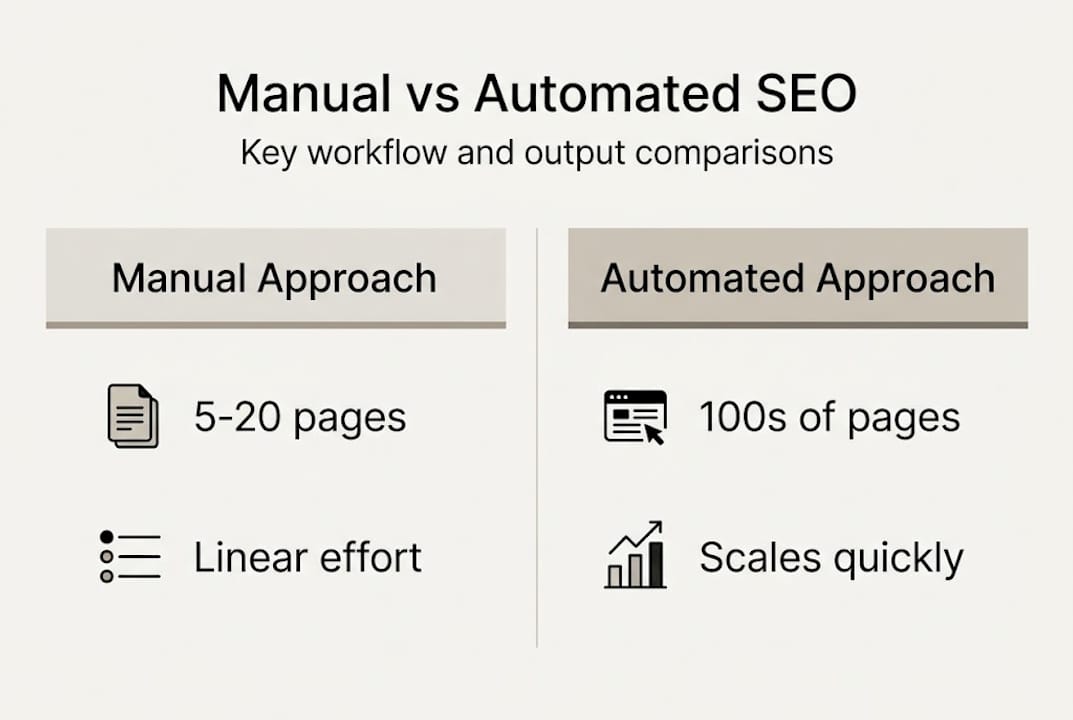
The pattern is consistent. SEO automation tools that are well configured consistently outperform manual processes on every measurable dimension once they reach operational maturity.
Key outcomes businesses are seeing with scalable automation:
- Significant increases in organic impressions within 90 days
- New keyword rankings in categories that were previously out of reach
- Higher page-level engagement due to better-targeted content
- Faster lead acquisition through improved search visibility
- Revenue growth tied directly to organic channel performance
Avoiding pitfalls: Quality, penalties, and where AI falls short
Of course, smart marketers know scale alone isn't enough. Let's cover where automation can backfire and how to keep your site safe.
The most common trap is what practitioners call the scale vs. quality problem. After 2026 search updates, thin content penalties have become a real risk for sites that publish thousands of pages with low informational value. Search algorithms have gotten sharper at identifying repetitive, templated content that doesn't genuinely serve the reader.
"The complexity cliff is real. Many teams automate successfully at 500 pages, then hit serious quality issues at 5,000. Scale reveals every weakness in your process."
AI also struggles in specific areas that humans handle naturally:
- Brand voice consistency: Automated systems may drift from your established tone across large page sets
- Business nuance: AI cannot always account for niche industry context, regulatory language, or product-specific accuracy
- Edge cases: Unusual keyword intents or highly specific queries may produce generic, unhelpful output
- Reputation-sensitive content: High-stakes pages like pricing, legal disclaimers, or case studies need human review
This is why scalable SEO matters only when it's done with guardrails. Pure automation without quality checks is a liability. Hybrid workflows, where AI handles the volume and humans handle the exceptions, are now the standard for teams that want sustainable results. Understanding scalable SEO automation pitfalls before you scale protects your investment.
Pro Tip: Set up automated content quality scoring before publishing. Flag pages that fall below a minimum readability or uniqueness threshold for human review. This one step catches the majority of thin content issues before they reach Google.
Getting started: A practical roadmap for implementing scalable automation
With the risks in mind, here's exactly how to set up a scalable automation system that fits your business.
The most important principle is sequencing. You do not automate everything at once. You build in layers, validating each one before adding the next.
- Audit your existing tasks. List every repetitive SEO task your team performs. Categorize by volume, risk, and frequency. High-volume, low-risk tasks are your starting point.
- Automate metadata and internal linking first. These are safe, measurable, and immediately impactful. Use them to build confidence in your automation stack.
- Add programmatic content for low-stakes page types. Location pages, FAQ pages, and product listings are ideal first candidates. Use your own data sources to make them unique.
- Introduce human review checkpoints. Build editorial review into your workflow at the page type level, not just spot checks. This is where content creation workflow guide best practices become essential.
- Monitor indexation and engagement, not just page counts. A site with 10,000 indexed pages that engage users is better than 20,000 pages that get crawled and ignored.
- Refine continuously based on data. Set monthly reviews to identify what is working and what needs adjustment.
As autonomous SEO strategy research confirms, the teams that win with automation prioritize hybrid workflows, monitor thin content risks actively, and build on unique data-driven opportunities that competitors cannot easily replicate.
Pro Tip: Track your wins and failures in a simple log. The patterns you identify over three to six months will shape a more resilient and profitable automation strategy than any template or framework you find online.
Our perspective: Hybrid is the only winning automation strategy
To wrap up, here's the approach we've found works best in the real world. Pure automation is tempting because it promises scale with no friction. But in practice, it invites quality traps, brand consistency issues, and significant volatility when search algorithms update.
The teams generating the most durable organic growth are not the ones running the most automation. They are the ones running the best hybrid systems. Machines handle the repetitive, high-volume work. Humans handle the judgment calls, the brand voice, and the edge cases that AI gets wrong.
As programmatic SEO research shows, automation-first strategies tend to fail without human oversight. The hybrid approaches with unique data, gradual scaling, and persistent monitoring deliver the best long-term ROI.
The best automation journeys are gradual, feedback-driven, and never fully hands-off. Think of it as training a system, not flipping a switch. Every refinement you make compounds over time, and that compounding is where real scalable SEO for growth happens.
How BabyLoveGrowth can support your scalable automation journey
If you're ready to put these strategies into action, here's how our platform can help.
BabyLoveGrowth.ai is built specifically for marketers and business owners who want to automate SEO without sacrificing quality or control. Our platform handles automated keyword discovery, intelligent clustering, end-to-end content planning, and technical audits, so you can deploy scalable automation without needing a full engineering team behind you.

Explore our keyword discovery platform to find high-value opportunities at scale, or run a free AI SEO audit to identify exactly where automation can deliver the fastest wins for your site. The tools are ready. The growth potential is real. The next step is yours.
Frequently asked questions
What is scalable automation in SEO?
Scalable automation in SEO is the use of AI-driven processes and frameworks that let you generate, optimize, and manage hundreds or thousands of SEO tasks without increasing your team's workload. It lets marketing teams achieve more with less manual effort through AI and autonomous agents.
How does programmatic SEO work in scalable automation?
Programmatic SEO uses templates and structured data to quickly create unique pages tailored to specific keywords or topics. Thousands of unique pages can be created with minimal manual intervention, enabling rapid, automated content scaling.
What are the risks of automating SEO at scale?
Common risks include thin content penalties, reduced quality, missed brand tone, and traffic losses from search updates targeting mass-produced pages. Thin content penalties and quality drops are key risks following 2026 search algorithm updates.
Why use a hybrid automation workflow?
A hybrid approach combines the scale of AI with human oversight for quality and adaptation, reducing error and maximizing long-term SEO results. Hybrid workflows help avoid the pitfalls of pure automation and sustain strong ROI over time.
Recommended
Smart SEO,
Faster Growth!
Most Read Articles
Generative Engine Optimization (GEO)
Learn how Generative Engine Optimization (GEO) helps your content rank in AI search engines like ChatGPT and Google AI. This comprehensive guide explains the differences between SEO and GEO, why it matters for your business, and practical steps to implement GEO strategies for better visibility in AI-generated responses.
DylenJan 18, 2025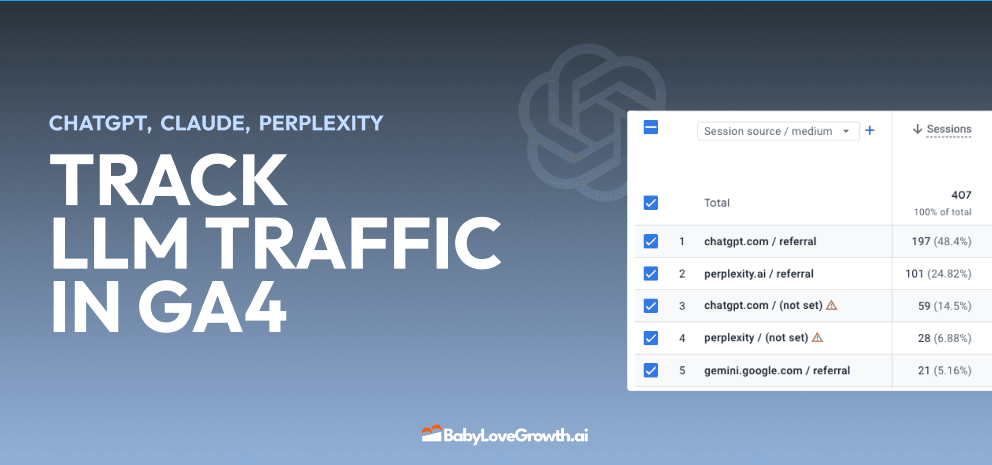
Track LLM Traffic in Google Analytics 4 (GA4)
Learn how to track and analyze traffic from AI sources like ChatGPT, Claude, Perplexity, and Google Gemini in Google Analytics 4. This step-by-step guide shows you how to set up custom filters to monitor AI-driven traffic and make data-driven decisions for your content strategy.
DylenMar 18, 2025
How to Humanize AI Text with Instructions
Learn practical techniques to make AI-generated content sound more natural and human. This guide covers active voice, direct addressing, concise writing, and other proven strategies to transform robotic text into engaging content.
DylenApril 7, 2025
Open AI Revenue and Statistics (2024)
Comprehensive analysis of OpenAI financial performance, user engagement, and market position in 2023. Discover key statistics including $20B valuation, $1B projected revenue, and 100M+ monthly active users.
DylenOctober 03, 2025