Why Choose SaaS SEO: Automate 70% Tasks for Growth


AI-driven SaaS SEO platforms can automate up to 70% of manual SEO tasks, transforming marketing team workflows and freeing directors to focus on strategy rather than execution. For mid-sized e-commerce companies competing in crowded digital markets, this automation shift represents a game-changing opportunity to scale organic visibility without proportionally scaling headcount. This article explores how SaaS SEO platforms leverage AI to streamline keyword research, content planning, backlinking, and technical audits while adapting to evolving search algorithms across Google and emerging AI-powered platforms like ChatGPT and Claude.
Table of Contents
- Introduction To SaaS SEO And Its Growing Importance
- Why SaaS SEO Enhances Scalability And Process Efficiency
- How AI-Driven SaaS SEO Adapts To Evolving Search Algorithms
- Automation Benefits In Keyword Research, Content Planning, Backlinking, And Audits
- Integration With AI-Powered Search Engines Beyond Google
- Common Misconceptions Limiting Adoption
- Decision Framework For Marketing Directors Choosing SaaS SEO Platforms
- Conclusion: Unlocking Scalable Growth With AI-Driven SaaS SEO
- Discover AI-Powered SaaS SEO Solutions With BabyLoveGrowth
Key Takeaways
| Point | Details |
|---|---|
| Automation Efficiency | SaaS SEO platforms automate up to 70% of repetitive SEO tasks, significantly reducing manual workload. |
| AI Adaptation | AI integration improves keyword relevance by 40% and enables continuous optimization aligned with algorithm changes. |
| Multi-Platform Support | Optimization extends beyond Google to AI search engines like ChatGPT and Claude for future-proofed visibility. |
| Strategic Framework | Four-pillar evaluation model helps marketing directors select platforms matching their scalability needs. |
Introduction to SaaS SEO and Its Growing Importance
SaaS SEO platforms deliver cloud-based, AI-enabled tools that centralize and automate essential SEO functions from keyword discovery to technical auditing. Unlike traditional SEO software requiring installation and manual updates, these platforms operate entirely online with continuous algorithm monitoring and automatic feature enhancements. SaaS SEO adoption is rapidly growing among e-commerce firms seeking scalable solutions that don't require expanding in-house technical teams.
Mid-sized e-commerce companies face unique challenges. You need enterprise-level SEO capabilities without enterprise budgets or massive marketing departments. SaaS SEO bridges this gap by providing sophisticated automation previously accessible only to large organizations. The integration of AI enhances every workflow stage, from identifying high-value keywords your competitors miss to automatically building structured data markup that boosts rich snippet visibility.
Key benefits include:
- Scalability that grows with your business without requiring proportional resource increases
- Centralized workflows reducing coordination overhead across marketing, content, and technical teams
- Cost-effectiveness compared to hiring specialized SEO personnel for each function
- Real-time adaptation to search algorithm updates without manual intervention
These platforms represent a fundamental shift in how marketing directors approach organic growth strategy. Rather than managing scattered tools and manual processes, you gain unified systems that execute scalable SEO automation with AI while providing actionable analytics. The Search Engine Journal exploration of SaaS SEO automation highlights how this technology democratizes sophisticated SEO capabilities for companies competing against larger rivals.
Why SaaS SEO Enhances Scalability and Process Efficiency
The transformation from manual to automated SEO workflows creates measurable efficiency gains that directly impact your bottom line. Automation handles up to 70% of SEO tasks, freeing your team from repetitive activities like daily keyword rank tracking, routine technical audits, and manual link prospecting. This shift allows marketing directors to redirect human expertise toward strategic initiatives requiring creativity and business context that AI cannot replicate.
Cloud-based architecture provides inherent scalability advantages. As your e-commerce catalog expands from hundreds to thousands of products, SaaS SEO platforms automatically scale processing capacity without requiring infrastructure investments or performance degradation. You avoid the painful bottlenecks that plague self-hosted solutions when traffic spikes or content volumes surge during peak seasons.
Centralized dashboards reduce manual coordination overhead by approximately 25% according to workflow studies. Instead of juggling separate tools for keyword research, content calendars, backlink monitoring, and technical audits, your team accesses unified interfaces showing cross-functional insights. This consolidation eliminates data silos and reduces time spent reconciling conflicting reports from disparate systems.
Key efficiency improvements include:
- Automated keyword monitoring updates rankings across thousands of terms without manual checks
- Scheduled technical audits identify and prioritize site issues before they impact rankings
- AI-powered content suggestions generate topic ideas aligned with search demand and business goals
- Automatic backlink discovery and outreach streamline relationship building at scale
The automation in SEO scaling enables your marketing team to manage larger campaigns with existing headcount. Rather than hiring additional specialists as your SEO program grows, you leverage technology to multiply individual productivity. This economic advantage becomes critical when competing against enterprises with larger budgets but slower decision-making processes.
Pro Tip: Start by automating your most time-consuming repetitive tasks first, then gradually expand automation coverage as your team adapts to new workflows and identifies additional efficiency opportunities.
How AI-driven SaaS SEO Adapts to Evolving Search Algorithms
Search engines constantly refine ranking algorithms, creating a moving target for marketing teams using static optimization approaches. AI-driven tools improve keyword relevance by 40% by continuously analyzing search result patterns and user behavior signals that indicate algorithm shifts. This real-time adaptation ensures your optimization strategies remain aligned with current ranking factors rather than outdated best practices.
Traditional SEO requires manual monitoring of algorithm updates followed by reactive strategy adjustments, often weeks after competitors have already adapted. AI systems process millions of search queries and result changes daily, detecting subtle algorithm modifications before official announcements. Your optimization tactics automatically adjust to emphasize newly prioritized ranking signals while de-emphasizing factors losing algorithmic weight.
The automated structured data markup increases rich snippets visibility by 25%, improving click-through rates from search results pages. AI systems identify which schema types generate the highest engagement for your content categories, then automatically implement and test variations. This continuous optimization occurs without manual schema coding or technical intervention from your development team.
Key AI adaptation capabilities:
- Algorithmic change detection through pattern recognition across ranking fluctuations
- Automatic content optimization recommendations reflecting current search intent trends
- Dynamic keyword prioritization based on emerging search volumes and competition levels
- Multi-platform optimization supporting both traditional search engines and AI-powered alternatives
Supporting both Google and newer AI search platforms like ChatGPT, Claude, and Perplexity ensures your visibility strategy remains future-proof. As conversational AI search gains market share, platforms optimized exclusively for traditional engines risk losing emerging traffic sources. SaaS SEO systems adapt content formatting and optimization tactics to match the distinct ranking signals these AI content optimization for SEO platforms prioritize.
Pro Tip: Review AI-generated optimization recommendations weekly to understand evolving algorithm priorities, building your team's strategic SEO knowledge while benefiting from automated execution.
Automation Benefits in Keyword Research, Content Planning, Backlinking, and Audits
Four core SEO workflow areas demonstrate the transformative impact of intelligent automation on campaign performance and team productivity. Each area traditionally consumed significant manual effort while introducing human error risks that undermined results.
Keyword research automation:
- AI systems analyze competitor rankings, search volume trends, and semantic relationships to identify opportunity keywords your team would miss through manual research
- Automatic keyword clustering groups related terms into topical content themes supporting comprehensive coverage
- Search intent classification ensures content matches what users actually want when entering specific queries
- Continuous monitoring alerts you when new keyword opportunities emerge or existing targets shift difficulty
Content planning automation streamlines editorial calendar management by suggesting topics based on keyword opportunities, content gaps relative to competitors, and seasonal demand patterns. AI-generated content briefs include target keywords, semantic terms, optimal length recommendations, and competitor analysis, reducing content creation time while improving quality consistency.
Backlink acquisition efficiency improves by 50% through automation that identifies relevant link prospects, personalizes outreach messaging, and tracks relationship building at scale. Rather than manually researching potential partners and crafting individual emails, your team reviews AI-generated prospect lists and approved outreach templates requiring minimal customization. The backlink building guide explores advanced strategies for maximizing automated link acquisition.
Technical SEO audit automation reduces errors by 60% compared to manual site crawls, identifying issues like broken links, duplicate content, slow page loads, and missing structured data. Automated systems prioritize fixes by potential ranking impact, helping your team address critical problems first. The technical SEO audits guide provides implementation frameworks for audit-driven optimization.

| SEO Task | Manual Approach | Automated Approach | Efficiency Gain |
|---|---|---|---|
| Keyword Research | 8-10 hours weekly | 1-2 hours weekly | 75-80% time reduction |
| Content Planning | 6-8 hours weekly | 1 hour weekly | 85% time reduction |
| Backlink Prospecting | 10-12 hours weekly | 3-4 hours weekly | 65-70% time reduction |
| Technical Audits | 4-6 hours monthly | 30 minutes monthly | 90% time reduction |
Case studies demonstrate 30% organic traffic growth within six months for companies implementing comprehensive automation across these four workflow areas. The compounding effect of simultaneous improvements in keyword targeting, content quality, backlink profiles, and technical foundations creates momentum that manual approaches struggle to match.
Pro Tip: Maintain human review checkpoints for AI-generated outputs, ensuring automation enhances rather than replaces strategic expertise in areas requiring business context and creative judgment.
Integration with AI-Powered Search Engines Beyond Google
The search landscape extends far beyond Google as AI-powered platforms like ChatGPT, Claude, and Perplexity capture growing query volumes from users seeking conversational, synthesized answers rather than traditional link lists. SaaS SEO platforms supporting multi-platform optimization prepare your brand for this diversified search future.
Each AI search engine prioritizes distinct ranking signals requiring tailored optimization approaches:
- ChatGPT emphasizes authoritative, well-structured content with clear semantic relationships and comprehensive topic coverage
- Claude prioritizes accurate, nuanced information with appropriate context and acknowledged limitations
- Perplexity values cited, verifiable facts with transparent source attribution
Traditional Google SEO focuses heavily on backlinks, domain authority, and user engagement metrics like click-through rates and dwell time. AI search platforms de-emphasize these signals in favor of content quality indicators like factual accuracy, comprehensive coverage, and logical structure. Your optimization strategy must balance these competing priorities to maintain visibility across all platforms.
| Platform | Primary Ranking Signals | Optimization Focus |
|---|---|---|
| Backlinks, engagement metrics, technical factors | Link building, user experience, site speed | |
| ChatGPT | Content authority, semantic depth, structure | Comprehensive coverage, clear organization |
| Claude | Accuracy, nuance, appropriate context | Fact verification, balanced perspectives |
| Perplexity | Source citations, verifiability, freshness | Referenced claims, current information |
SaaS SEO platforms with contentful SEO automation capabilities optimize content simultaneously for multiple platforms through intelligent formatting and metadata adjustments. Single source content automatically adapts to match the distinct requirements of each search engine, eliminating manual multi-platform optimization efforts.
The strategic value of multi-platform SEO becomes clear when considering risk diversification. Dependence on a single search engine exposes your traffic to algorithm update volatility and competitive dynamics within that ecosystem. Spreading optimization efforts across multiple platforms creates resilience and captures emerging traffic sources before competitors establish dominance.
Market trends indicate accelerating growth in AI-driven conversational search, particularly for research-oriented queries and complex information needs. Voice assistants increasingly route queries through AI search platforms rather than traditional engines. Marketing directors positioning their brands across this diversified landscape gain first-mover advantages in less saturated competitive environments.
Common Misconceptions Limiting Adoption
Despite compelling benefits, several persistent myths discourage marketing directors from embracing SaaS SEO platforms. Understanding and addressing these misconceptions enables more informed technology decisions.
Myth 1: SaaS SEO platforms replace experienced SEO professionals. Reality reveals these tools augment human expertise rather than eliminate the need for strategic oversight. AI excels at processing massive data volumes and executing repetitive tasks with consistency, but lacks the business context, creative judgment, and stakeholder relationship skills that experienced marketers provide. Successful implementations combine automated execution with human strategy, treating AI as a force multiplier for existing team capabilities.
Myth 2: AI-generated content lacks quality and authenticity. Modern AI content tools produce sophisticated, brand-aligned content when properly configured with appropriate guidelines, tone parameters, and review processes. The AI content strategy role demonstrates how human oversight ensures AI outputs meet quality standards while dramatically increasing content production capacity. Quality concerns typically stem from inadequate prompt engineering or lack of editorial review rather than inherent AI limitations.
Myth 3: Instant top rankings are guaranteed results. SEO remains fundamentally a long-term strategy requiring sustained effort and continuous optimization regardless of automation level. SaaS platforms accelerate progress by executing more optimization activities with greater consistency, but cannot circumvent the time required for search engines to recognize authority signals and reward improved relevance. Realistic expectations recognize 3-6 month timeframes for measurable results and 12-18 months for transformative organic growth.
Industry surveys reveal 68% of marketing directors initially hesitated to adopt AI SEO tools due to quality concerns, yet 82% of those who implemented these platforms reported satisfaction levels exceeding expectations within six months. The perception-reality gap highlights how unfamiliarity breeds unnecessary caution.
Addressing these misconceptions requires education and realistic case study examples demonstrating actual implementation experiences. Marketing directors benefit from pilot programs testing SaaS SEO capabilities on limited content sets or specific site sections before full deployment. This staged approach builds confidence while proving ROI before major resource commitments.
Key misconception corrections:
- AI augments rather than replaces human SEO expertise
- Quality AI content requires proper configuration and human review processes
- SEO automation accelerates progress but cannot eliminate the time required for algorithm recognition
- Successful implementations balance automated execution with strategic human oversight
Decision Framework for Marketing Directors Choosing SaaS SEO Platforms
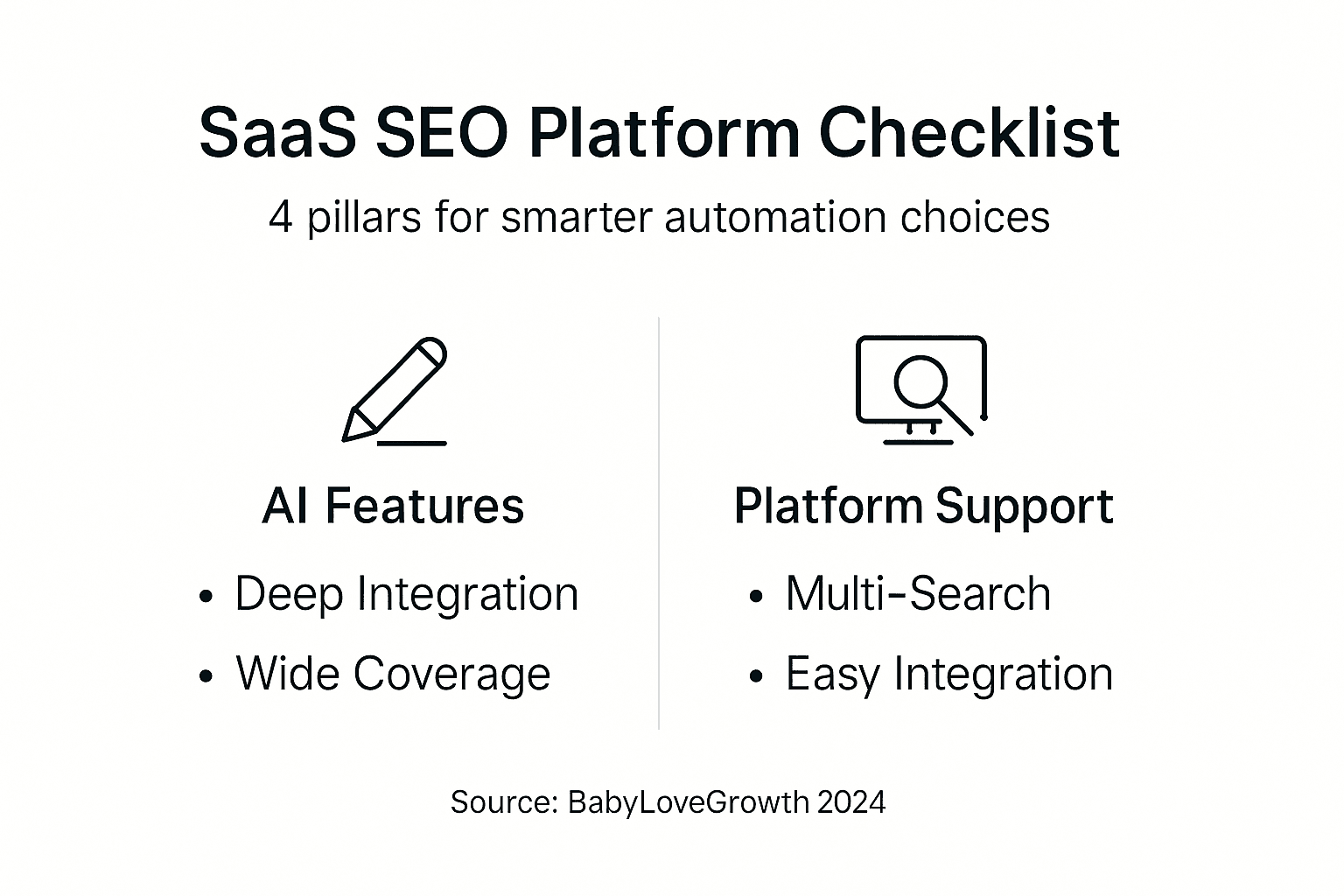
Selecting the right SaaS SEO platform requires systematic evaluation against your specific business context, existing martech stack, and growth objectives. A four-pillar framework guides this assessment.
Pillar 1: AI Integration Depth examines how thoroughly artificial intelligence enhances platform capabilities beyond basic automation. Evaluate whether AI powers keyword discovery, content optimization recommendations, technical issue prioritization, and backlink opportunity identification. Surface-level AI integration that merely automates manual tasks provides less value than deep learning systems that generate strategic insights humans would miss.
Pillar 2: Automation Coverage assesses which SEO workflow areas the platform addresses and how comprehensively. Platforms focusing narrowly on keyword tracking or content publishing require supplementing with additional tools, recreating the fragmentation problems SaaS SEO should solve. Comprehensive solutions spanning keyword research, content planning, publishing, backlink building, and technical auditing provide unified workflows and cross-functional insights.
Pillar 3: Multi-Platform Search Support determines whether optimization extends beyond Google to AI-powered search engines and emerging platforms. Future-proof solutions adapt content and metadata for ChatGPT, Claude, Perplexity, and other conversational search interfaces rather than optimizing exclusively for traditional engines. This capability becomes increasingly critical as search market share fragments across multiple platforms.
Pillar 4: Martech Stack Compatibility evaluates integration capabilities with your existing CMS, analytics platforms, CRM systems, and marketing automation tools. Seamless data flow between systems eliminates manual exports and imports while enabling sophisticated cross-platform analysis. API access, pre-built connectors, and webhook support indicate mature integration capabilities.
| Evaluation Factor | High Priority Scenarios | Lower Priority Scenarios |
|---|---|---|
| AI Integration Depth | Complex competitive markets, large content volumes | Niche markets with limited competition |
| Automation Coverage | Small marketing teams, rapid growth targets | Large teams with specialized roles |
| Multi-Platform Support | Future-focused strategies, diverse audience | Traditional customer search behaviors |
| Martech Compatibility | Established technology stacks, enterprise systems | Minimal existing tools, greenfield implementations |
Implementation steps for platform selection:
- Assess current SEO pain points and workflow bottlenecks to identify which automation areas deliver maximum impact
- Define success metrics aligned with business objectives rather than vanity metrics like keyword rankings
- Request platform demos focused on your specific use cases and content types
- Conduct limited pilots testing core capabilities before full deployment
- Establish review processes balancing automation efficiency with strategic human oversight
Balancing automation benefits with human expertise requires clear role definitions. Marketing directors should reserve strategic decisions like brand positioning, content themes, and partnership priorities for human judgment while delegating execution, monitoring, and tactical optimization to automated systems. This AI SEO tools comparison evaluates leading platforms against these selection criteria.
The scalable SEO automation approach combines platform capabilities with team development, ensuring your people grow alongside your technology investments. Training programs help marketers understand AI outputs, identify optimization opportunities, and provide strategic direction that automated systems cannot generate independently.
Pro Tip: Prioritize platforms offering transparent AI decision-making rather than black box algorithms, enabling your team to understand why specific recommendations emerge and build strategic SEO knowledge.
Conclusion: Unlocking Scalable Growth with AI-Driven SaaS SEO
SaaS SEO platforms powered by artificial intelligence transform organic growth strategies for mid-sized e-commerce companies by automating up to 70% of manual tasks, continuously adapting to evolving search algorithms, and extending optimization beyond Google to emerging AI search engines. The strategic advantages encompass improved efficiency, reduced manual coordination overhead, enhanced keyword targeting accuracy, and future-proof multi-platform visibility.
Marketing directors evaluating these platforms should apply systematic frameworks considering AI integration depth, automation coverage, multi-platform support, and martech compatibility. Successful implementations balance automated execution with strategic human oversight, treating AI as a force multiplier for existing expertise rather than a replacement for experienced marketers.
The SEO landscape continues evolving toward greater AI integration, conversational search interfaces, and diversified platform ecosystems. Organizations establishing strong foundations in AI-driven SaaS SEO today position themselves advantageously for continued organic growth as these trends accelerate. Explore the BabyLoveGrowth SEO platform to discover how comprehensive automation supports scalable visibility and sustainable traffic growth.
Discover AI-Powered SaaS SEO Solutions with BabyLoveGrowth
After understanding the transformative potential of SaaS SEO automation, the natural next step involves exploring platforms that deliver these capabilities comprehensively. BabyLoveGrowth offers an AI-driven SEO platform specifically designed for mid-sized e-commerce companies seeking scalable organic growth without proportionally scaling marketing teams.

The platform provides end-to-end automation spanning AI-powered keyword discovery, content planning, publishing, automated backlink building software, and comprehensive technical SEO audits guidance. Multi-platform optimization ensures your content performs across Google, ChatGPT, Claude, and Perplexity, future-proofing your visibility strategy as search behaviors evolve.
Marketing directors benefit from unified dashboards consolidating cross-functional insights, reducing the coordination overhead that plagues fragmented tool stacks. Explore how BabyLoveGrowth's approach to scalable SEO automation aligns with your growth objectives and existing martech investments.
Frequently Asked Questions
What is SaaS SEO and why is it important for mid-sized e-commerce?
SaaS SEO delivers cloud-based AI automation to scale and streamline essential SEO tasks including keyword research, content optimization, backlink building, and technical auditing. For mid-sized e-commerce companies, this technology provides enterprise-level capabilities without requiring proportional increases in marketing headcount or specialized technical expertise. The importance stems from managing increasingly complex workflows across traditional and AI-powered search platforms while maintaining competitive visibility in crowded digital markets.
How does AI improve keyword research and content planning in SaaS SEO platforms?
AI analyzes massive datasets encompassing search trends, competitor rankings, semantic relationships, and user intent signals to automatically discover profitable keyword opportunities human researchers would miss through manual analysis. For content planning, AI systems generate data-driven topic recommendations aligned with search demand, identify content gaps relative to competitors, and create comprehensive briefs including target keywords, optimal length, and semantic terms. This automation reduces research time by 75-85% while improving targeting accuracy and content relevance.
Can SaaS SEO platforms replace SEO experts?
SaaS SEO platforms automate execution and tactical optimization but require strategic human oversight for maximum effectiveness. AI excels at processing data volumes and maintaining consistency across repetitive tasks, yet lacks business context, creative judgment, and stakeholder relationship skills that experienced marketers provide. Successful implementations treat these platforms as force multipliers that enhance expert capabilities rather than replacements for human expertise. The optimal approach combines automated execution with strategic direction from knowledgeable professionals.
What should marketing directors consider when choosing a SaaS SEO platform?
Marketing directors should evaluate four core pillars: AI integration depth, automation coverage across SEO workflow areas, multi-platform search support extending beyond Google, and compatibility with existing martech stacks. Additionally, consider how platforms balance automation efficiency with opportunities for strategic human oversight, ensuring technology enhances rather than constrains your team's capabilities. Conduct focused pilots testing core use cases before full deployment, and prioritize platforms offering transparent AI decision-making that helps your team build SEO knowledge alongside leveraging automation benefits.
Recommended
Smart SEO,
Faster Growth!
Most Read Articles
Generative Engine Optimization (GEO)
Learn how Generative Engine Optimization (GEO) helps your content rank in AI search engines like ChatGPT and Google AI. This comprehensive guide explains the differences between SEO and GEO, why it matters for your business, and practical steps to implement GEO strategies for better visibility in AI-generated responses.
DylenJan 18, 2025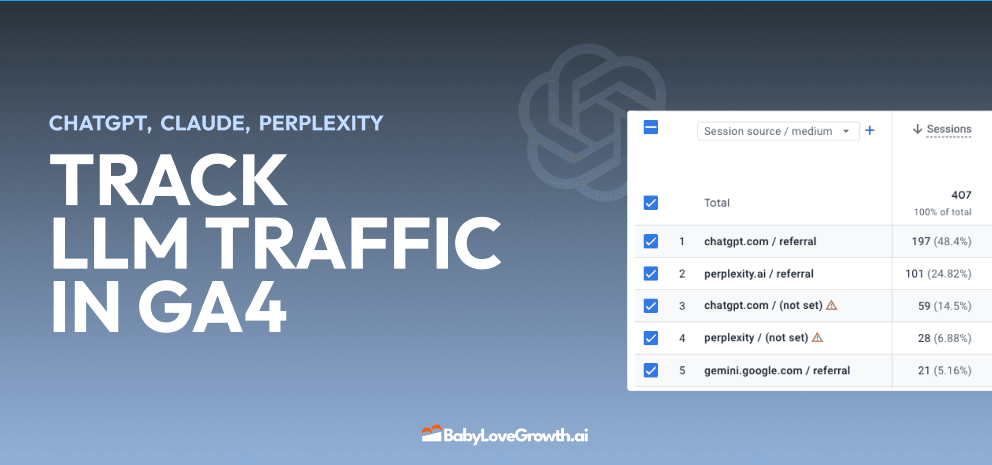
Track LLM Traffic in Google Analytics 4 (GA4)
Learn how to track and analyze traffic from AI sources like ChatGPT, Claude, Perplexity, and Google Gemini in Google Analytics 4. This step-by-step guide shows you how to set up custom filters to monitor AI-driven traffic and make data-driven decisions for your content strategy.
DylenMar 18, 2025
How to Humanize AI Text with Instructions
Learn practical techniques to make AI-generated content sound more natural and human. This guide covers active voice, direct addressing, concise writing, and other proven strategies to transform robotic text into engaging content.
DylenApril 7, 2025
Open AI Revenue and Statistics (2024)
Comprehensive analysis of OpenAI financial performance, user engagement, and market position in 2023. Discover key statistics including $20B valuation, $1B projected revenue, and 100M+ monthly active users.
DylenOctober 03, 2025