Role of AI Search Engines in Modern SEO


Most American SEO teams have seen their usual tactics lose effectiveness as AI search engines reshape the way users find answers. With over 60 percent of global queries now handled by intelligent platforms, understanding this shift is crucial for digital marketing professionals. This article breaks down the core concepts driving AI search engines, helping you refine your strategy for higher visibility and smarter organic traffic growth.
Table of Contents
- Defining AI Search Engines And Core Concepts
- Types Of AI Search Engines And Key Differences
- How AI Search Engines Process And Rank Content
- Essential Features Shaping SEO Strategies
- Risks, Challenges, And Limitations In AI Search
- Optimizing For AI-Driven Search Visibility
Key Takeaways
| Point | Details |
|---|---|
| Understanding AI Search Engines | AI search engines utilize machine learning and natural language processing to enhance information retrieval and user interaction. |
| Distinct Types of AI Search Engines | Varieties include generative AI platforms and conversational assistants, each catering to specific user needs and functionalities. |
| Modern SEO Strategies | SEO must focus on semantically rich content that aligns with how AI interprets user intent for improved visibility and engagement. |
| Risks and Challenges | AI search technologies face ethical risks and limitations related to contextual understanding, bias, and transparency that must be navigated carefully. |
Defining AI Search Engines and Core Concepts
AI search engines represent a groundbreaking technological evolution in information retrieval and knowledge discovery. Unlike traditional search platforms, these advanced systems leverage machine learning algorithms and natural language processing to understand and interpret user queries with unprecedented depth and contextual sophistication. Stanford University's artificial intelligence research reveals that modern AI search engines fundamentally transform how we access and interact with digital information.
At their core, AI search engines operate through complex neural network architectures that can comprehend semantic meaning beyond simple keyword matching. These intelligent systems analyze user intent, parse contextual nuances, and generate responses that mimic human-like understanding. They utilize advanced techniques such as deep learning, transformer models, and probabilistic reasoning to deliver more precise and personalized search experiences. The ability to understand natural language queries, interpret user context, and generate comprehensive answers sets these platforms apart from traditional search technologies.
The technological infrastructure behind AI search engines involves multiple sophisticated components. Key elements include machine learning models, knowledge graph integration, and predictive analytics. These systems continuously learn from user interactions, refining their understanding and improving response accuracy over time. NIST's research on artificial intelligence emphasizes the importance of developing robust, trustworthy AI technologies that can adapt and evolve while maintaining ethical standards and minimizing potential negative consequences.
Pro tip: Invest time in understanding how AI search engines interpret context and intent to optimize your content strategy more effectively.
Types of AI Search Engines and Key Differences
AI search engines represent a diverse ecosystem of intelligent platforms, each with unique capabilities and specialized functionalities. Modern AI search technologies have evolved far beyond traditional keyword-matching systems, introducing sophisticated approaches that transform information retrieval. These platforms can be categorized into several distinct types, including generative AI search engines, conversational AI assistants, specialized domain-specific engines, and hybrid intelligence systems.
The primary categories of AI search engines include generative AI platforms, which can produce original content and comprehensive answers, and conversational AI assistants that engage in human-like dialogues. Search engine classification systems reveal nuanced differences in their architectural designs and interaction models. Generative platforms like ChatGPT and Claude focus on creating contextually relevant responses, while conversational assistants like Gemini and Bing AI prioritize interactive, multi-turn communication strategies. Specialized domain-specific engines target precise fields such as academic research, medical information, or technical documentation, offering highly refined search capabilities within their respective domains.
Key differentiating factors among AI search engines include their underlying machine learning models, knowledge integration techniques, and natural language processing capabilities. Some platforms excel in real-time information synthesis, while others specialize in complex reasoning and contextual understanding. Hybrid systems combine multiple approaches, integrating database search, machine learning predictions, and generative capabilities to provide more comprehensive and adaptable search experiences. These technological variations determine each platform's strengths in handling different types of queries, understanding user intent, and delivering precise, contextually relevant information.
Pro tip: Experiment with multiple AI search engines to understand their unique strengths and find the most suitable platform for your specific information needs.
Here's a comparison of common types of AI search engines and their unique strengths:
| Type of AI Search Engine | Interaction Style | Specialized Use Cases | Distinctive Strength |
|---|---|---|---|
| Generative AI Platforms | Content creation | Research, analysis | Provides detailed, original responses |
| Conversational Assistants | Multi-turn dialogue | Customer support, navigation | Delivers adaptive, human-like interactions |
| Domain-Specific Engines | Targeted expertise | Medical, academic, technical fields | Offers precise and reliable information |
| Hybrid Intelligence Systems | Integrated methods | General search, business workflows | Combines diverse technologies for flexibility |
How AI Search Engines Process and Rank Content
AI search engines have revolutionized content processing through sophisticated machine learning algorithms that go far beyond traditional ranking mechanisms. Generative Engine Optimization (GEO) represents a groundbreaking approach where content is strategically designed for semantic retrieval and contextual understanding, shifting away from conventional link-based ranking systems. These advanced platforms analyze content through complex neural networks that evaluate multiple dimensions of relevance, including semantic depth, contextual accuracy, and information comprehensiveness.

The core processing mechanism involves advanced ranking techniques that leverage machine learning models to understand content quality and relevance. Learning to Rank methodologies employ sophisticated algorithms that assess query-document relationships through multiple layers of analysis. These systems utilize pointwise, pairwise, and listwise ranking approaches, which systematically evaluate content based on factors like semantic coherence, information density, user engagement metrics, and contextual alignment with search intent. Modern AI search engines continuously refine their ranking models through iterative learning, adapting to evolving user behaviors and emerging content patterns.
Unlike traditional search platforms, AI-powered systems integrate multidimensional content assessment strategies. They analyze not just keyword matching, but also content depth, originality, expert authoritativeness, and the ability to provide comprehensive, nuanced responses. These intelligent systems employ natural language processing techniques to understand context, detect subtle semantic connections, and generate holistic evaluations of digital content. The ranking process becomes a dynamic, intelligent interaction where content is continuously reassessed based on real-time user interactions, feedback loops, and emerging knowledge patterns.
Pro tip: Focus on creating semantically rich, contextually comprehensive content that demonstrates deep subject matter expertise to improve visibility in AI search engine rankings.
Essential Features Shaping SEO Strategies
Generative Engine Optimization (GEO) represents a transformative approach that fundamentally reshapes modern SEO strategies for AI-driven search platforms. Unlike traditional search optimization techniques, GEO demands a sophisticated understanding of how artificial intelligence interprets and ranks digital content. The emerging landscape requires SEO professionals to develop more nuanced, semantically rich content strategies that align with advanced machine learning algorithms and contextual understanding mechanisms.
The essential features driving contemporary SEO strategies include advanced semantic processing, contextual relevance, and intelligent content adaptation. AI search engine technologies emphasize natural language processing capabilities that go beyond simple keyword matching. These systems analyze content through complex neural networks, evaluating factors such as information depth, contextual accuracy, user engagement potential, and the ability to provide comprehensive, meaningful responses. SEO practitioners must now focus on creating content that demonstrates expert knowledge, maintains semantic coherence, and addresses user queries with unprecedented precision and depth.
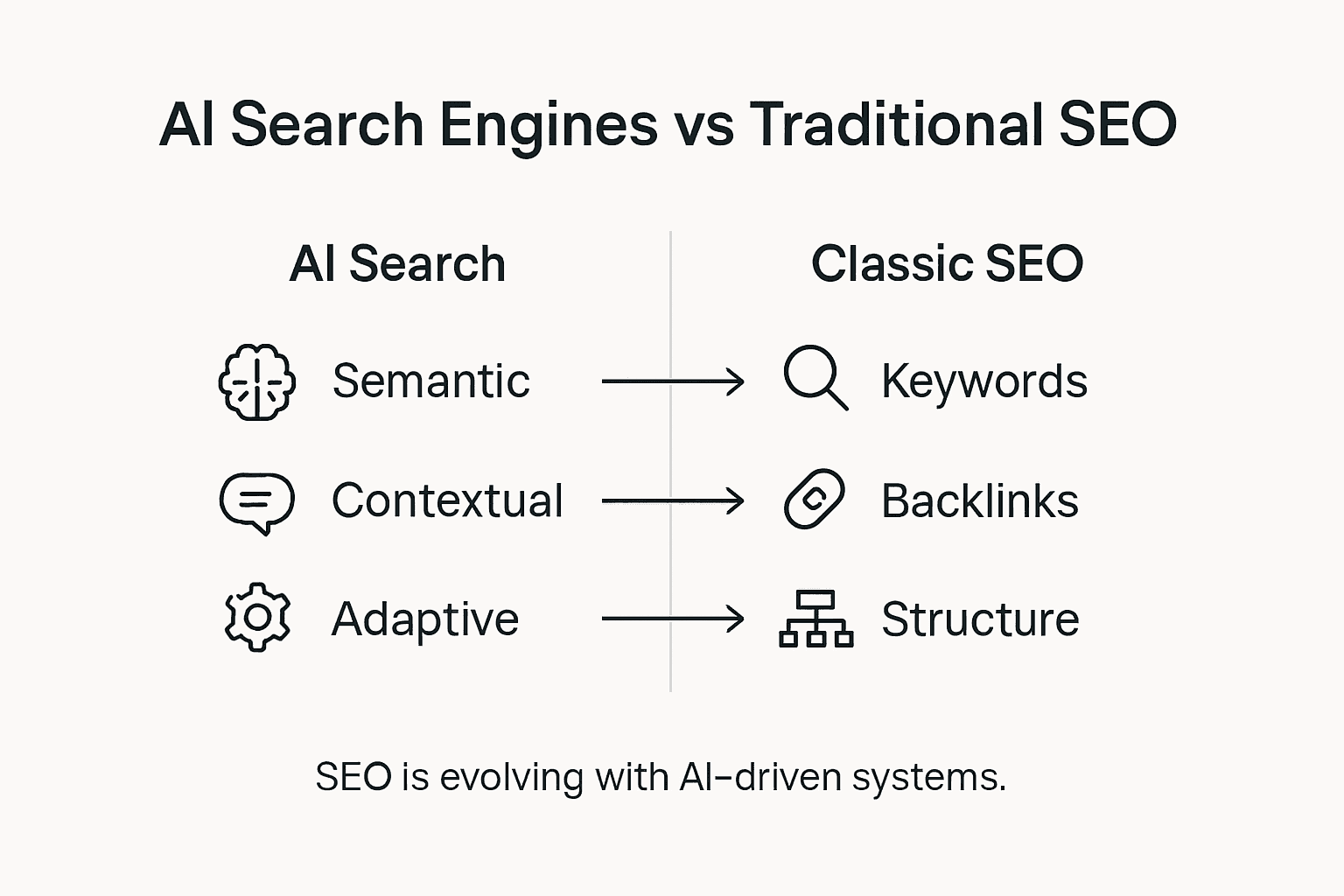
Modern SEO strategies must integrate multiple sophisticated elements to succeed in AI-powered search environments. This includes developing content with high semantic density, structuring information to facilitate easy comprehension by machine learning models, and creating multilayered, contextually rich narratives that can be easily parsed and understood by intelligent search algorithms. The key is to move beyond traditional optimization techniques and embrace a more holistic approach that considers the complex ways AI platforms interpret, process, and rank digital content.
Pro tip: Develop content that demonstrates deep subject expertise by incorporating comprehensive, contextually nuanced information that directly addresses user intent and provides comprehensive, authoritative insights.
Summary of key features shaping modern SEO strategies for AI-driven search platforms:
| Feature | Role in SEO | Business Benefit |
|---|---|---|
| Semantic Processing | Enhances content understanding | Improves user relevance and reach |
| Contextual Relevance | Aligns with query intent | Drives higher engagement rates |
| Intelligent Adaptation | Learns from user feedback | Increases long-term visibility |
| Structured Information | Facilitates algorithm parsing | Boosts ranking stability |
Risks, Challenges, and Limitations in AI Search
Comprehensive risk assessment of artificial intelligence technologies reveals significant challenges that extend beyond technical limitations. AI search engines introduce complex ethical, operational, and societal risks that demand rigorous scrutiny and proactive management. These emerging platforms present multifaceted challenges including potential information manipulation, algorithmic bias, privacy concerns, and the potential for unintended consequences in knowledge dissemination.
The technological landscape of AI search is fraught with systemic vulnerabilities that can compromise information integrity and user trust. Emerging research on AI catastrophic risks highlights critical challenges such as malicious misuse, uncontrolled autonomous behavior, and the potential for rapid, unpredictable algorithmic decision-making. These risks manifest through sophisticated mechanisms like algorithmic hallucinations, where AI generates convincing but factually incorrect information, and potential exploitation of machine learning models by bad actors seeking to manipulate search results or spread misinformation.
Potential limitations in current AI search technologies include significant challenges in contextual understanding, transparency, and ethical governance. Machine learning models often struggle with nuanced human contexts, potentially producing responses that lack critical subtleties or misinterpret complex queries. Additionally, the opaque nature of advanced neural networks creates substantial challenges in understanding how specific results are generated, raising critical questions about accountability, bias mitigation, and the potential for perpetuating existing societal prejudices through algorithmic decision-making.
Pro tip: Develop a critical, multi-layered approach to evaluating AI search results by cross-referencing information, maintaining healthy skepticism, and understanding the inherent limitations of machine-generated content.
Optimizing for AI-Driven Search Visibility
Generative Engine Optimization strategies represent a fundamental shift in digital content optimization, demanding a sophisticated approach to creating visibility in AI-powered search environments. Modern content creators must move beyond traditional SEO techniques, developing intricate strategies that align with complex machine learning algorithms and semantic understanding mechanisms. This approach requires a deep comprehension of how artificial intelligence interprets, processes, and synthesizes digital information across diverse knowledge repositories.
The core principles of AI-driven search optimization involve creating semantically rich, contextually comprehensive content that demonstrates exceptional depth and expertise. Academic Search Engine Optimization techniques emphasize the importance of crafting content with precise metadata, structured information, and clear semantic connections. Successful optimization requires developing content that not only answers user queries but also provides comprehensive, nuanced insights that machine learning models can effectively parse, understand, and potentially feature in generative search results.
Effective optimization strategies encompass multiple sophisticated elements, including advanced natural language processing alignment, contextual relevance development, and strategic content structuring. Content creators must focus on developing multilayered narratives that demonstrate subject matter expertise, incorporate complex semantic relationships, and provide comprehensive information that goes beyond surface-level explanations. This approach involves understanding the intricate ways AI search platforms evaluate content quality, semantic depth, and informational comprehensiveness.
Pro tip: Develop content that anticipates and comprehensively addresses potential user queries by creating in-depth, semantically interconnected information that demonstrates genuine subject matter expertise.
Elevate Your SEO with AI-Powered Strategies from Babylovegrowth.ai
The article highlights how modern AI search engines transform SEO through semantic processing, contextual relevance, and intelligent adaptation. If you are struggling with creating content that satisfies complex AI algorithms or want to improve your search rankings across platforms like ChatGPT, Claude, and traditional engines, Babylovegrowth.ai offers the perfect solution. Our platform addresses the critical challenges of AI-driven SEO by automating keyword discovery, delivering 30-day content plans, and generating semantically rich articles tailored to your audience's intent.

Take control of your brand visibility today with Babylovegrowth.ai and harness the power of advanced SEO tools designed specifically for the AI search revolution. Discover how our automated backlink building, structured data markup, and content publishing features can help you rise above competitors and reach your target audience with precision. Don’t wait for AI search engines to leave you behind. Explore automated content planning and start optimizing your website the smart way.
Frequently Asked Questions
What is an AI search engine?
AI search engines are advanced platforms that utilize machine learning and natural language processing to understand and interpret user queries in a more contextually relevant manner than traditional search engines.
How do AI search engines improve SEO strategies?
AI search engines enhance SEO by requiring content to be semantically rich and contextually relevant, leading to the need for more nuanced content strategies that align with machine learning algorithms.
What are the main differences between generative AI platforms and conversational AI assistants?
Generative AI platforms focus on creating original content and answers, while conversational AI assistants prioritize engaging in multi-turn dialogues with users for tasks like customer support.
What are the risks associated with using AI search engines?
The risks include potential information manipulation, algorithmic bias, privacy concerns, and challenges in contextual understanding, which may lead to inaccuracies in the information presented.
Recommended
Smart SEO,
Faster Growth!
Most Read Articles
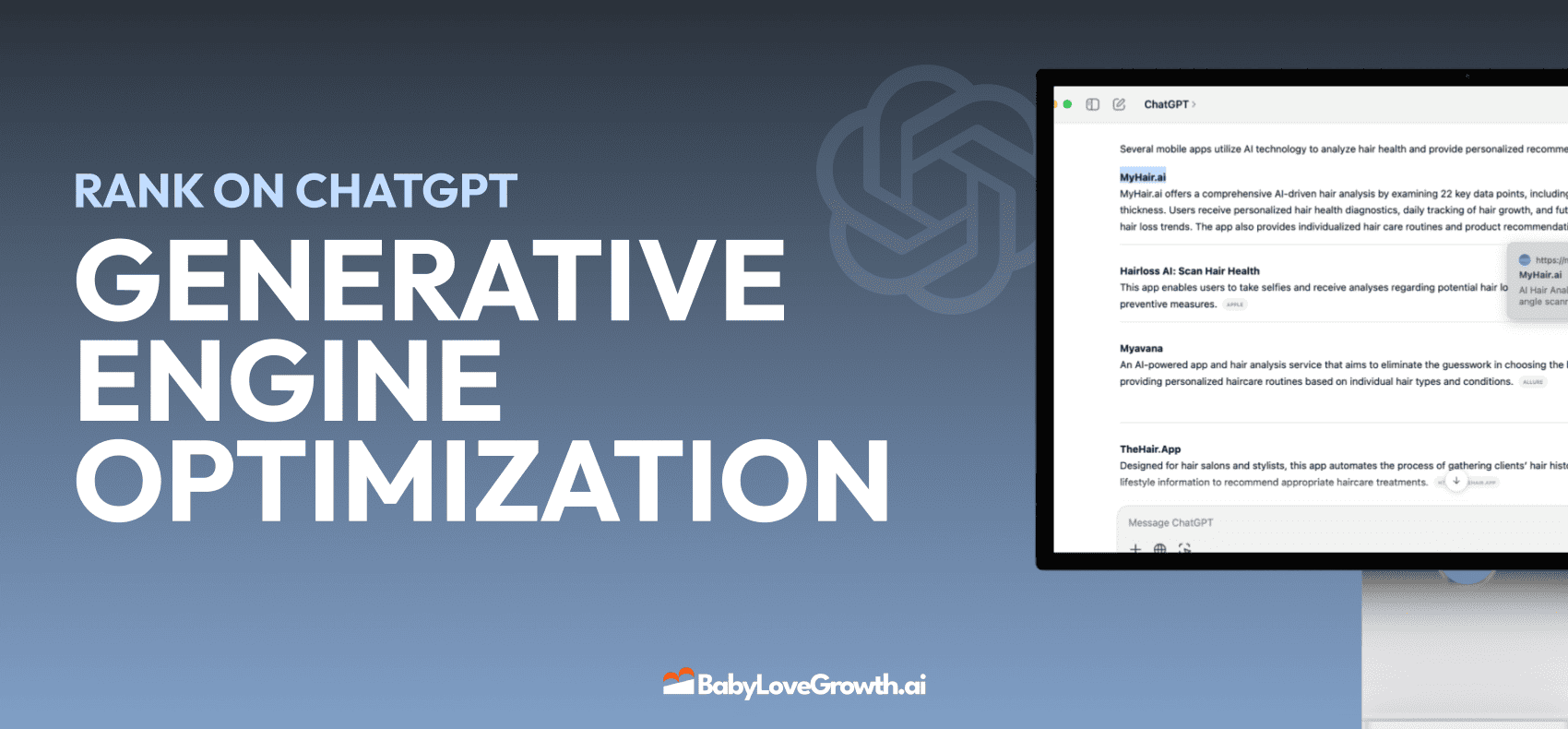
Generative Engine Optimization (GEO)
Learn how Generative Engine Optimization (GEO) helps your content rank in AI search engines like ChatGPT and Google AI. This comprehensive guide explains the differences between SEO and GEO, why it matters for your business, and practical steps to implement GEO strategies for better visibility in AI-generated responses.
DylenJan 18, 2025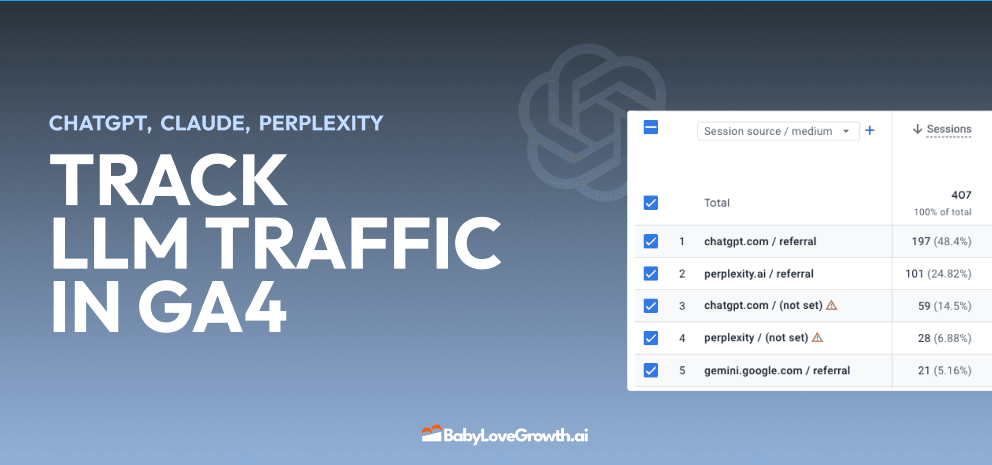
Track LLM Traffic in Google Analytics 4 (GA4)
Learn how to track and analyze traffic from AI sources like ChatGPT, Claude, Perplexity, and Google Gemini in Google Analytics 4. This step-by-step guide shows you how to set up custom filters to monitor AI-driven traffic and make data-driven decisions for your content strategy.
DylenMar 18, 2025
How to Humanize AI Text with Instructions
Learn practical techniques to make AI-generated content sound more natural and human. This guide covers active voice, direct addressing, concise writing, and other proven strategies to transform robotic text into engaging content.
DylenApril 7, 2025
Open AI Revenue and Statistics (2024)
Comprehensive analysis of OpenAI financial performance, user engagement, and market position in 2023. Discover key statistics including $20B valuation, $1B projected revenue, and 100M+ monthly active users.
DylenOctober 03, 2025