Role of Content Planning: Unlocking SEO Growth for Agencies


Random blog posts rarely drive measurable growth for clients. To compete, agencies need a strategic, deliberate process that connects every content decision to business objectives and genuine audience needs. Content planning built on this foundation helps SEO specialists replace guesswork with frameworks that prioritize research, consistent workflows, and data-driven optimization. Discover how intentional planning empowers teams to deliver targeted results while balancing efficiency, quality, and adaptability across multiple client campaigns.
Table of Contents
- Defining Content Planning in SEO Strategies
- Types of Content Planning for Agencies
- Key Workflows and Strategic Elements
- Common Mistakes and Risks in Content Planning
- Impact of AI Automation on Content Planning
Key Takeaways
| Point | Details |
|---|---|
| Strategic Content Planning is Essential | Effective content planning aligns with business objectives and audience needs, transforming content creation from reactive to proactive. |
| Tailored Approaches for Different Clients | Understanding diverse content planning types ensures appropriate strategies are implemented based on each client's goals and industry context. |
| Workflow and Strategy Must Coexist | Consistent workflows paired with strategic thinking enhance content effectiveness, ensuring each piece serves a larger business purpose. |
| AI Can Enhance Planning Efficiency | Leveraging AI tools accelerates tasks like keyword research and content outline generation, allowing teams to focus more on strategy and creative decisions. |
Defining Content Planning in SEO Strategies
Content planning in SEO is fundamentally different from random content creation. It's a strategic, deliberate process that aligns your content output with both business objectives and what your audience actually needs to find.
At its core, strategic content planning involves understanding your audience, defining measurable goals, researching keywords and topics, selecting appropriate content types, creating detailed briefs, producing optimized content, and conducting regular audits to improve rankings. For agency teams managing multiple client accounts, this structure becomes your operational backbone.
Here's what separates planned content from guesswork:
- Audience-first approach: You identify who searches for what, then create content they'll actually engage with
- Goal alignment: Every piece supports specific business outcomes—lead generation, brand authority, or traffic growth
- Keyword research integration: You target terms your audience searches for, not terms you assume they'll use
- Content type selection: Blog posts, guides, case studies, or video transcripts each serve different audience intents
- Brief documentation: Your team has clear direction before writing begins
- Continuous optimization: Regular audits reveal what's working and what needs adjustment
Without this framework, agencies end up producing content reactively. Clients request "more blog posts," so you publish weekly without knowing if those posts drive qualified traffic or conversions. Planning changes this entirely.
Effective content planning transforms agencies from content factories into strategic partners that drive measurable organic growth for clients.
When you define content planning for your client strategy, you're essentially creating a roadmap. This roadmap shows where content topics intersect with search demand, how each piece supports broader business goals, and which content types convert best for specific audience segments.
The planning phase also saves your team significant time downstream. Streamlined content workflows require planning as their foundation—writers know exactly what to research, editors know exactly what to check, and publishers know exactly when to distribute.
For agencies managing tight timelines and limited budgets, content planning separates high-impact work from busy work. You're not guessing anymore. You're executing based on data and strategy.
Pro tip: Start your content planning by auditing what's currently ranking for your top 20 client keywords, then identify content gaps where competitors rank but your clients don't—this reveals your highest-impact planning opportunities.
Types of Content Planning for Agencies
Not all content plans look the same. Agencies handle different client types, industries, and goals, which means your planning approach needs flexibility built in from the start.
Understanding the main types of content planning helps you choose the right framework for each client situation. Some clients need aggressive growth strategies, while others prioritize brand authority or customer retention through content.
Here are the primary content planning types agencies implement:
- Keyword-driven planning: You start with search volume data, competitive analysis, and user intent to build a content roadmap around high-value keywords your target audience searches for
- Topic-cluster planning: You identify pillar topics and related subtopics, creating interconnected content pieces that establish topical authority and improve internal linking opportunities
- Seasonal planning: You map content calendars around industry peaks, holidays, or cyclical demand patterns—essential for ecommerce, tourism, or event-based businesses
- Funnel-based planning: You align content with awareness, consideration, and decision stages, ensuring each piece serves specific conversion goals
- Competitor-gap planning: You analyze what competitors rank for, identify gaps in their coverage, and build content strategies to capture those opportunities
Each approach works best for different client scenarios. A B2B SaaS company needs funnel-based planning more than seasonal planning. An ecommerce store thrives with seasonal planning plus keyword-driven content around product searches.
Here's a quick comparison of the main content planning approaches agencies can use:
| Planning Type | Best Use Case | Key Resources Required | Potential Drawback |
|---|---|---|---|
| Keyword-driven | Search traffic growth | Keyword tools, analytics | May overlook audience intent |
| Topic-cluster | Building authority, internal links | Content architecture skills | Requires ongoing maintenance |
| Seasonal | Ecommerce or events-based | Calendar management, forecasts | Short-term impact only |
| Funnel-based | Lead generation, B2B | Journey mapping expertise | May neglect broader topics |
| Competitor-gap | Fast market gain | Competitive analysis tools | Can become reactive |
Matching your planning type to client goals and industry context determines whether your content strategy actually drives measurable results or just keeps the content calendar full.
Many successful agencies use hybrid approaches. You might combine keyword-driven planning with funnel-based thinking, or merge topic-cluster planning with seasonal content opportunities. The key is intentionality—you're choosing specific planning types because they serve your client's actual business needs.

When you layer content optimization strategies on top of solid planning, you amplify results significantly. Good planning establishes what to create. Optimization ensures that content ranks and converts.
Your planning type also determines how you allocate resources. Keyword-driven planning requires robust keyword research tools and competitive analysis. Topic-cluster planning demands strong content architecture skills. Seasonal planning needs calendar discipline and forecasting accuracy.
Pro tip: Ask your client about their business cycles, peak sales periods, and conversion timeline during initial planning discussions—this reveals which planning type will unlock the fastest growth for their specific situation.
Key Workflows and Strategic Elements
Effective content planning requires both systematic workflows and strategic thinking. The workflow handles the mechanics of content production, while strategic elements ensure that every piece serves a larger business purpose.
Your workflows define HOW work gets done. Strategic elements define WHY it matters. Both are equally essential for agencies managing multiple client accounts with different timelines and goals.
Core Workflows
Successful agencies follow structured content planning workflows that include these key stages:
- Audience definition: Create detailed profiles of who searches for your client's content and what problems they're solving
- Goal setting: Establish measurable outcomes tied to business objectives—traffic targets, lead generation, or authority building
- Topic and keyword research: Identify high-value search terms and content gaps your competitors haven't filled
- Content type selection: Choose formats that match user intent—guides for learning, case studies for proof, product pages for decisions
- Content brief creation: Document scope, target keywords, key points, and success metrics before writers begin
- SEO-optimized writing: Produce content that ranks by balancing keyword optimization with genuine reader value
- Link building and promotion: Distribute content strategically through owned channels and earned opportunities
- Performance monitoring: Track rankings, traffic, and conversions to identify what's working
- Regular audits and updates: Refresh underperforming content and capitalize on rankings gaining momentum
These workflows create consistency. Your team knows what step comes next. New team members onboard faster. Clients see predictable progress.
Workflows without strategy produce content that's technically optimized but strategically hollow—ranking for keywords nobody cares about.
Strategic Elements
Strategy layers purpose on top of process. Key strategic considerations include:
- Business goal alignment: Every content piece supports specific client outcomes, not just traffic
- User intent matching: Content addresses what searchers actually want to know, not keyword stuffing
- Search engine optimization principles: Technical structure, topical authority, and link equity guide decisions
- Adaptability: Plans adjust based on performance data and market changes instead of staying rigid
Agencies that balance workflow discipline with strategic flexibility outperform those doing only one or the other. Organic traffic growth requires both consistent execution and intelligent optimization working together.
Your strategy also determines resource allocation. High-value keywords get premium content briefs and expert writers. Emerging opportunities get rapid prototyping. Underperforming content gets refreshed strategically rather than abandoned.
Pro tip: Document your specific workflows as templates your team can replicate—this turns individual expertise into repeatable agency processes that scale across multiple clients without burning out your team.
Common Mistakes and Risks in Content Planning
Content planning sounds straightforward until you're managing it across multiple client accounts. That's when common pitfalls become expensive lessons. Most agencies make at least one of these mistakes repeatedly.
Knowing which errors derail content strategies helps you avoid them before they damage client results. Prevention always costs less than recovery.
The Most Costly Mistakes
Agencies frequently encounter these planning failures:
- Skipping audience research: Creating content without understanding who actually searches for it leads to irrelevant material that ranks nowhere
- Ignoring clear goals: Without measurable objectives, you can't tell if content is succeeding or failing
- Inconsistent posting schedules: Irregular publishing confuses algorithms and audiences about your content reliability
- Avoiding content audits: Not reviewing what's working means you keep producing content nobody wants
- Reactive instead of planned creation: Jumping from trending topics to client requests means no strategic direction
- Missing SEO fundamentals: Publishing without proper SEO practices wastes effort on content that doesn't rank
Each mistake compounds. Skip audience research AND avoid audits? You're creating content about topics nobody searches for, then wondering why it doesn't perform.
To help agencies avoid costly mistakes, here is a summary of frequent pitfalls and their business impact:
| Mistake | Cause | Business Consequence |
|---|---|---|
| Skipping audience research | Lack of client insight | Low engagement, missed rankings |
| Ignoring clear goals | Poor initial planning | No measurable ROI, wasted content |
| Inconsistent posting schedules | Uncoordinated workflows | Algorithm penalties, lost traffic |
| Avoiding audits | Time constraints | Ongoing underperformance |
| Reactive instead of planned | Lack of structure | Random content, wasted resources |
One planning mistake usually becomes multiple mistakes—they cascade when you're not intentional about strategy.
Team collaboration breakdowns also tank content plans. When writers, editors, and strategists aren't aligned on goals and timelines, content quality suffers and deadlines slip. Disorganized team processes waste hundreds of hours annually at most agencies.
Reactive content creation without structure is another silent killer. You're responding to whatever seems urgent instead of executing strategic priorities. This burns team energy and produces content that supports no clear business objective.
Risk Patterns to Watch
Certain situations create higher risk for planning failures:
- New client onboarding without proper goal-setting conversations
- Tight timelines forcing rushed keyword research and brief creation
- Leadership changing content direction mid-quarter without updating the plan
- Team members unfamiliar with client context making content decisions
- No documented process, so different people execute planning differently
These risks aren't unavoidable. They're manageable when you recognize them early. Document your planning process so execution stays consistent regardless of who's involved.
The financial impact is real. Poor planning creates wasted content investment, missed ranking opportunities, and frustrated clients questioning your agency's value. Agencies that prevent these mistakes retain clients longer and charge higher rates.
Pro tip: Run a quick content audit on your last 10 client projects—identify which common mistakes appear most, then build specific checkpoints into your planning process to prevent those exact errors from repeating.
Impact of AI Automation on Content Planning
AI is fundamentally changing how agencies approach content planning. What used to take weeks of manual research and strategy now happens in hours. But speed without strategy creates new problems agencies need to understand.
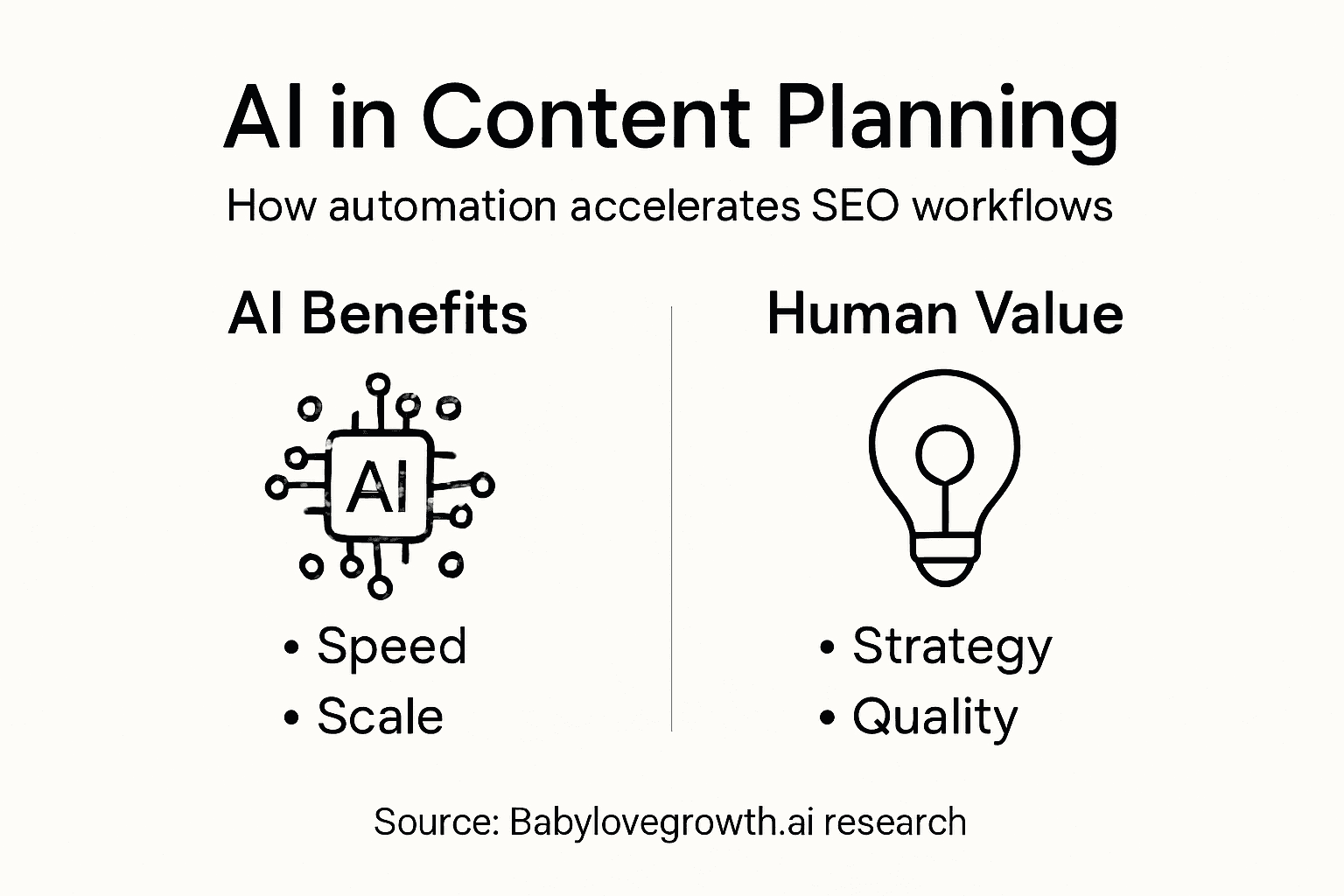
The real value of AI isn't replacing human planning—it's amplifying it. AI handles the repetitive analysis work so your team focuses on strategy and creative decisions.
Where AI Delivers Immediate Value
AI automation transforms specific planning tasks:
- Keyword research acceleration: AI analyzes search volume, competition, and user intent faster than manual research, revealing opportunities your team might miss
- Content outline generation: AI creates semantic outlines based on top-ranking content, showing exactly what topics to cover
- Search intent analysis: Understand what searchers actually want before your team writes a single word
- Gap identification: AI spots where competitors rank but your clients don't, highlighting highest-impact opportunities
- Real-time optimization: AI adjusts recommendations as search trends shift, not quarterly
AI automation removes friction from planning, but human strategy determines whether the plan actually moves business metrics.
The Critical Balance: Automation Plus Human Oversight
Content automation effectiveness depends on maintaining quality and authenticity. AI generates outlines, but your strategist decides if the outline serves client goals. AI identifies keywords, but your team validates whether those keywords represent real business opportunities.This balance matters because AI sometimes suggests technically optimized but strategically hollow directions. A keyword might have search volume without commercial intent. An outline might cover topics competitors rank for without differentiating your client.
Successful agencies use AI to accelerate planning, then apply human judgment to ensure strategic alignment. AI integration in SEO strategy works best when humans set direction and AI executes faster.
Your team's role shifts from execution to quality control and strategic thinking. Editors review AI-generated briefs for completeness. Strategists validate that content plans align with client objectives. This creates better content at scale.
Resource Implications
AI automation changes how agencies allocate team capacity. You're not reducing headcount—you're redirecting it from routine tasks to higher-value work like client strategy, content performance analysis, and conversion optimization.
Agencies that adopt AI planning tools typically see 40-60% faster planning cycles. This means more time for client relationships and less time explaining why content isn't ready.
Pro tip: Start by automating your keyword research and content outline generation, then layer in human review for strategy alignment—this preserves quality while unlocking efficiency gains without requiring your team to trust AI completely.
Elevate Your Agency’s Content Planning With AI-Driven SEO Solutions
The article highlights that without a strategic, data-driven approach to content planning agencies face costly pitfalls like missed rankings and wasted efforts. Agencies struggle to align content with clear goals, audience intent, and keyword opportunities. Sound familiar? You want to move beyond reactive content creation and inefficiency, focusing instead on measurable organic growth and streamlined workflows. Babylovegrowth.ai offers exactly that by combining automated keyword discovery, AI-powered content planning, and ongoing SEO optimization designed for busy agency teams working across multiple clients.

Discover how you can accelerate your content planning process while maintaining strategic quality. Babylovegrowth.ai empowers your team to audit competitors, identify content gaps, create 30-day content plans, and implement backlink strategies all in one platform. Stop guessing what works and start delivering high-impact strategies that drive real results. Take the first step toward transforming your agency’s content strategy today at Babylovegrowth.ai and explore how our automated SEO tools can unlock sustainable growth for your clients.
Frequently Asked Questions
What is the importance of content planning in SEO?
Content planning is crucial in SEO as it aligns content output with business objectives and audience needs. It transforms agencies from reactive content creators into strategic partners who drive measurable organic growth.
How can agencies integrate keyword research into their content planning?
Agencies can integrate keyword research by identifying high-value search terms that their target audience is searching for. This includes analyzing search volume, competition, and user intent to build a content roadmap focused on relevant keywords.
What types of content planning frameworks should agencies consider?
Agencies should consider various frameworks such as keyword-driven planning, topic-cluster planning, seasonal planning, funnel-based planning, and competitor-gap planning. The choice depends on the client's specific goals and industry context.
How often should agencies conduct content audits during their planning process?
Agencies should conduct content audits regularly, typically quarterly, to review what content is performing well and identify underperforming pieces. This proactive approach allows for continuous optimization and ensures that content remains relevant and effective.
Recommended
Smart SEO,
Faster Growth!
Most Read Articles
Generative Engine Optimization (GEO)
Learn how Generative Engine Optimization (GEO) helps your content rank in AI search engines like ChatGPT and Google AI. This comprehensive guide explains the differences between SEO and GEO, why it matters for your business, and practical steps to implement GEO strategies for better visibility in AI-generated responses.
DylenJan 18, 2025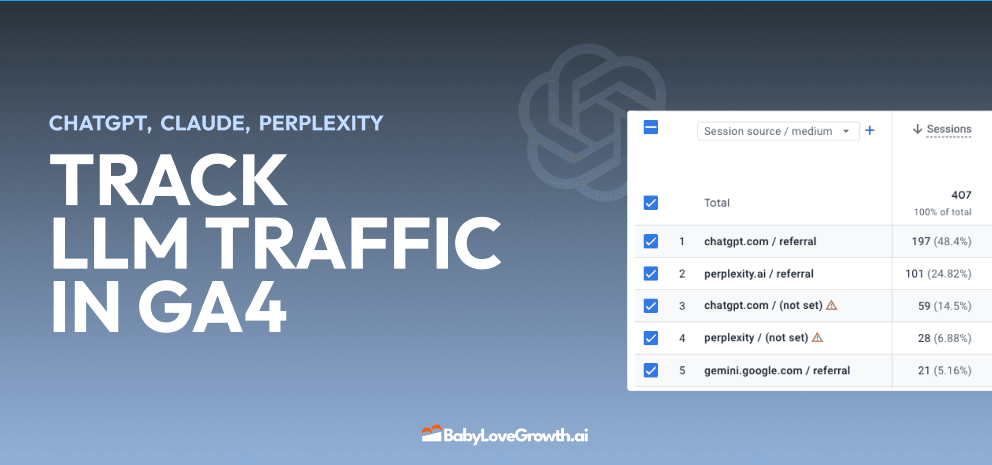
Track LLM Traffic in Google Analytics 4 (GA4)
Learn how to track and analyze traffic from AI sources like ChatGPT, Claude, Perplexity, and Google Gemini in Google Analytics 4. This step-by-step guide shows you how to set up custom filters to monitor AI-driven traffic and make data-driven decisions for your content strategy.
DylenMar 18, 2025
How to Humanize AI Text with Instructions
Learn practical techniques to make AI-generated content sound more natural and human. This guide covers active voice, direct addressing, concise writing, and other proven strategies to transform robotic text into engaging content.
DylenApril 7, 2025
Open AI Revenue and Statistics (2024)
Comprehensive analysis of OpenAI financial performance, user engagement, and market position in 2023. Discover key statistics including $20B valuation, $1B projected revenue, and 100M+ monthly active users.
DylenOctober 03, 2025