Recover from Google Penalties: Step-by-Step Guide


TL;DR:
- Google penalties include manual (human-reviewed) and algorithmic (automatic) types requiring different recovery approaches.
- Regular site audits, content quality improvements, and backlink management are key to preventing penalties and supporting recovery.
- Recovery is an ongoing process involving consistent effort, process discipline, and automation tools for sustainable SEO health.
One day your site ranks on page one. The next, organic traffic has collapsed by 60% and revenue is quietly bleeding out. Google penalties are brutal, fast, and often confusing, especially when you don't know whether you're dealing with a deliberate manual action or a silent algorithmic shift. The good news is that recovery is absolutely possible with the right approach. This guide walks you through how to identify your penalty type, audit your site properly, execute fixes that actually work, and build habits that prevent future penalties from derailing your business again.
Table of Contents
- Understand Google penalties: Manual vs algorithmic
- Diagnose and prepare: Audit your site for penalty causes
- Manual actions: Step-by-step recovery process
- Algorithmic/core update penalties: Quality overhauls and long-term recovery
- Preventing penalties: Ongoing audits and site health strategies
- What most penalty guides miss: Recovery is a process, not a quick fix
- Automate your SEO recovery and future-proof your website
- Frequently asked questions
Key Takeaways
| Point | Details |
|---|---|
| Identify penalty type | Distinguishing manual from algorithmic penalties shapes your recovery plan and next steps. |
| Audit before action | Comprehensive site audits ensure you fix every underlying issue triggering the penalty. |
| Manual action recovery | Remove violations, document fixes, submit for reconsideration, and monitor results over several weeks. |
| Algorithmic recovery approach | Focus on improving content quality, E-E-A-T signals, and site health since there’s no shortcut to algorithmic recovery. |
| Ongoing prevention | Routine audits and content updates minimize future penalty risk and build sustainable rankings. |
Understand Google penalties: Manual vs algorithmic
Not all Google penalties are created equal, and treating them the same way is one of the most common mistakes site owners make. There are two distinct types, and your recovery path depends entirely on which one you're facing.
Manual actions are penalties applied by a human reviewer at Google who found your site violating the Webmaster Quality Guidelines. You'll receive an alert directly in Google Search Console under the "Manual Actions" section. These are specific, documented, and require an explicit fix plus a formal reconsideration request before Google lifts them.
Algorithmic penalties work differently. They are the result of Google's automated systems, like Panda, Penguin, or Helpful Content updates, deciding your site no longer meets their quality thresholds. There's no notification. You just see a sudden, sharp traffic drop. As manual and algorithmic penalties differ fundamentally in how they appear and how they're resolved, distinguishing between them is the critical first step in any recovery plan.
Understanding how Google algorithms explained operate helps you spot these drops in context. A traffic dip that aligns with a known core update date in your analytics is a strong signal of an algorithmic issue. A dip accompanied by a Search Console alert is clearly manual.
| Feature | Manual action | Algorithmic penalty |
|---|---|---|
| Notification in GSC | Yes | No |
| Human reviewed | Yes | No |
| Reconsideration request | Required | Not applicable |
| Recovery speed | Weeks to months | Months or longer |
| Cause specificity | Explicit violation listed | Inferred from update patterns |
Signs your site may be under penalty:
- Sudden traffic loss of 20% or more, especially on a specific date
- Pages deindexed or no longer showing in search results
- Manual action notification in Google Search Console
- Traffic drop aligning with a confirmed search engine algorithms update
- Loss of ranking for previously stable, high-performing keywords
Diagnose and prepare: Audit your site for penalty causes
Once you've identified the penalty type, the next step is pinpointing the exact cause. Guessing wastes time. Systematic auditing finds the real problem fast.
For manual actions, open Google Search Console, navigate to "Security and Manual Actions," and click "Manual Actions." Google will list the specific violation, whether it's unnatural links, thin content, cloaking, or another issue. Read the description carefully since it tells you exactly where to focus.

For algorithmic penalties, you won't get that clarity. Instead, compare your analytics traffic timeline against Google's confirmed update calendar. Cross-reference page-level traffic drops to find which content areas were hit hardest. This is where algorithmic update analysis becomes essential for understanding which quality signals triggered the drop.
The SEO audit best practices process should cover three core areas: content quality, backlink profile, and technical health.
| Audit area | Key tool | What it checks |
|---|---|---|
| Backlinks | Ahrefs, SEMrush | Toxic or spammy links |
| Content quality | Screaming Frog, SurferSEO | Thin, duplicate, or low-value pages |
| Technical SEO | Google Search Console | Crawl errors, indexing issues |
| Core vitals | PageSpeed Insights | Load speed, CLS, interactivity |
Step-by-step audit workflow:
- Export all pages from your site and flag those with thin or improving thin or duplicate content issues
- Pull your full backlink profile and mark links from low-authority or irrelevant domains
- Check GSC for crawl errors, coverage issues, and manual action notices
- Audit your Core Web Vitals scores for pages that lost the most traffic
- Document every finding in a spreadsheet before taking any action
Pro Tip: For backlink audits, never rely on just one tool. Run both Ahrefs and Google Search Console's link report side by side. Their datasets often differ, and missing toxic links can stall your recovery completely.
Manual actions: Step-by-step recovery process
If your site has a confirmed manual action, follow these steps in order. Skipping steps or rushing the reconsideration request is the fastest way to get denied and add weeks to your recovery.
The manual penalty solutions process is clearly defined: fix violations first, then document everything, then request reconsideration. Here's what that looks like in practice.
Step-by-step manual action recovery:
- Open GSC and read the manual action description thoroughly
- Fix every specific violation mentioned: remove thin content, update misleading pages, fix structured data abuse
- Conduct a full backlink audit and contact toxic link sources by email requesting removal
- If outreach fails after documented attempts, use the Disavow Tool as a last resort after outreach fails. Create a properly formatted .txt file and upload it via the GSC Disavow Links tool
- Document every change made, every email sent, and every link removed or disavowed
- Draft a reconsideration request in GSC explaining what was wrong, what you fixed, and how you'll prevent recurrence
- Submit and wait. Reconsideration timelines run 2 to 8 weeks, with full ranking recovery taking 2 to 3 months in many cases
Warning: Overusing the disavow tool can cause more harm than good. If you disavow legitimate editorial links, you may strip your own authority. Only disavow links you've confirmed are toxic and couldn't be removed through outreach.
Pro Tip: Build a structured Google Sheet documenting every backlink you contacted, the date, response received, and outcome. A thorough, well-organized log inside your reconsideration request dramatically improves approval rates. Review the manual action recovery steps before submitting to make sure your request addresses all listed violations.
Algorithmic/core update penalties: Quality overhauls and long-term recovery
Algorithmic penalties don't have a reconsideration button. You can't send Google an email. Instead, recovery demands a real quality overhaul, and it takes time. Most sites don't see meaningful improvement until the next core update rolls out, which can be months away.
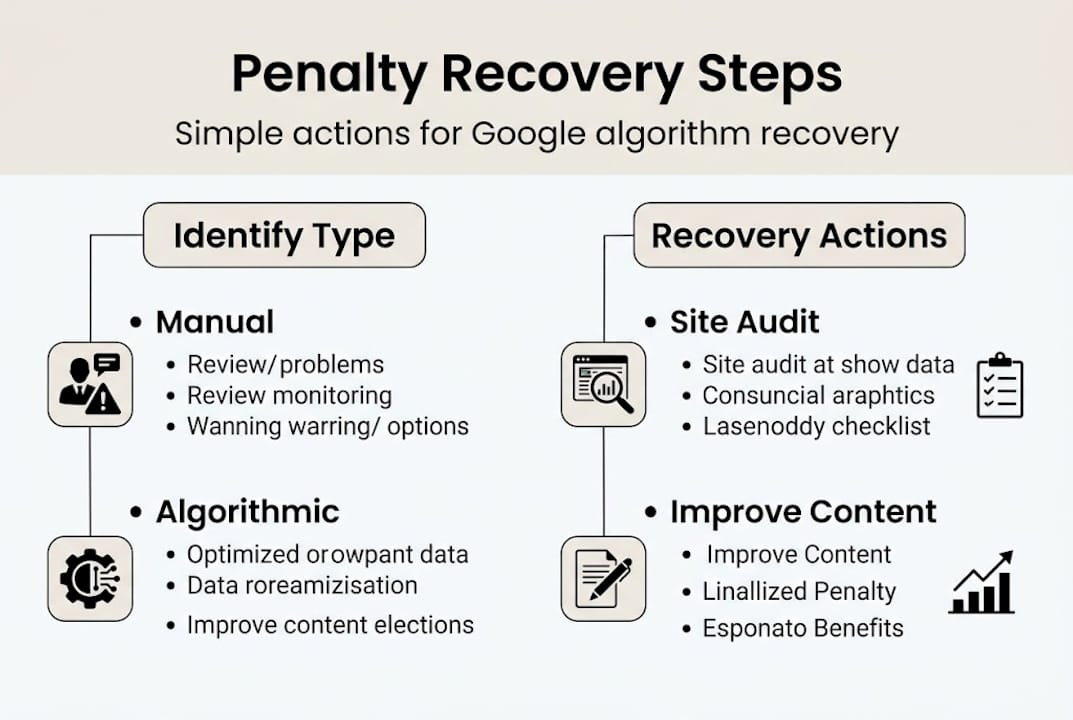
The path forward is clear: algorithmic update strategies center on improving content quality, strengthening E-E-A-T (Experience, Expertise, Authoritativeness, and Trustworthiness), consolidating weak pages, and fixing technical issues. For large sites, measuring content effectiveness with a scoring system helps you prioritize which pages to fix first.
E-E-A-T improvements to make now:
- Add author bios with real credentials and professional photos to every article
- Link to primary sources and expert references within your content
- Remove or merging and improving content that scores below a quality threshold
- Consolidate multiple thin posts on the same topic into one authoritative guide
- Add original research, data, or expert quotes to your most important pages
- Enhance E-E-A-T signals by showcasing real business credentials and customer reviews
Consolidation is often the most impactful single action you can take. If you have 15 posts all covering similar ground with 300 words each, merging them into one thorough, well-structured page sends a much stronger quality signal than fixing each individually.
Pro Tip: For larger sites, run a content scoring audit where you score pages from 1 to 25 based on factors like word count, original insight, backlinks, and traffic. Any page scoring below 15 is a candidate for consolidation or removal. This system makes large-scale recovery manageable.
Expect algorithmic recovery to take 3 to 6 months, and sometimes longer. Patience combined with consistent improvement is the only reliable formula.
Preventing penalties: Ongoing audits and site health strategies
Recovery is exhausting and expensive. Prevention is far cheaper. Once your site is clean, building routines that catch problems early is the smartest investment you can make in your organic presence.
Regular penalty prevention tactics include scheduled GSC reviews, content freshness checks, and backlink monitoring. These aren't one-time tasks. They're ongoing habits that protect everything you've rebuilt.
Prevention checklist to run monthly:
- Review GSC for new manual action alerts or coverage drops
- Monitor backlink growth for any sudden spikes that could signal link schemes
- Update older content with fresh data, new examples, or expanded sections
- Check Core Web Vitals for pages that have declined in load speed
- Review your top-ranking pages for E-E-A-T gaps compared to current competitors
- Remove or consolidate any new pages that fall below your quality threshold
Implementing essential SEO strategies as part of your regular workflow means penalties become less likely over time. The businesses that stay penalty-free aren't doing anything magical. They're simply running consistent audits and fixing small issues before Google notices them.
Establish a quarterly content audit as a non-negotiable process. Set a recurring calendar event, assign responsibility, and document findings each cycle. Consistency here is what separates sites that stay strong from sites that get caught off guard by every new update.
What most penalty guides miss: Recovery is a process, not a quick fix
Here's the uncomfortable reality that most recovery checklists skip: following the steps once is not enough. Penalty recovery is iterative, not transactional.
Many businesses submit a reconsideration request, get approved, and then drift back into the same patterns that caused the penalty. Traffic recovers, urgency fades, and the audits stop. Six months later, they're hit again.
The contrarian take worth considering is that for purely manual vs algorithmic algorithmic drops, the disavow tool is often unnecessary. Google's systems are genuinely good at ignoring low-quality links without your help. Obsessing over disavow for algorithmic recovery can distract you from the real work: content quality.
"Recovery takes time. Google rewards consistent improvement, not a checklist submitted once and forgotten."
Small sites can absolutely handle this DIY with the frameworks in this guide. Larger sites need something more systematic: documented workflows, assigned ownership, and regular reporting. Exploring Google algorithms explained in depth helps you stay ahead of the next shift rather than scrambling after it. The discipline of process is what separates sustainable recovery from temporary relief.
Automate your SEO recovery and future-proof your website
Working through penalty recovery manually is possible, but it's slow, inconsistent, and easy to let slide once the immediate pressure lifts. That's where automation changes everything.
At Babylovegrowth.ai, our SEO automation platform helps businesses streamline the tedious parts of recovery: ongoing content audits, quality scoring, and tracking. Our backlink building software helps you replace toxic links with trustworthy ones through a managed exchange ecosystem. And our organic traffic tool keeps your content strategy on track so you're building toward rankings instead of just defending against penalties. Recovery shouldn't consume your team. Let the right tools do the heavy lifting.
Frequently asked questions
How do I know if my site has a Google penalty?
Check Google Search Console for any alerts under "Manual Actions." If you see a sudden traffic drop with no notification, that signals an algorithmic penalty triggered by a core update.
How long does it take to recover from a Google penalty?
Manual penalties typically resolve within 2 to 8 weeks after a successful reconsideration request, while algorithmic recovery often takes 3 to 6 months or more, sometimes waiting for Google's next core update cycle.
Should I use the disavow tool for all penalties?
No. The disavow tool is strictly a last resort for manual link penalties after direct outreach to webmasters has failed. For algorithmic drops, it's rarely necessary.
What's the best long-term strategy to prevent future penalties?
Run regular GSC audits, consistently improve content quality and E-E-A-T signals, maintain a clean backlink profile, and refresh older content on a scheduled basis.
Can small businesses handle Google penalty recovery without an agency?
Yes, most small sites can recover using a structured DIY approach with the tools and workflow in this guide. Larger sites with hundreds of pages benefit from systematic content scoring processes and may need dedicated resources or expert support.
Recommended
Smart SEO,
Faster Growth!
Most Read Articles
Generative Engine Optimization (GEO)
Learn how Generative Engine Optimization (GEO) helps your content rank in AI search engines like ChatGPT and Google AI. This comprehensive guide explains the differences between SEO and GEO, why it matters for your business, and practical steps to implement GEO strategies for better visibility in AI-generated responses.
DylenJan 18, 2025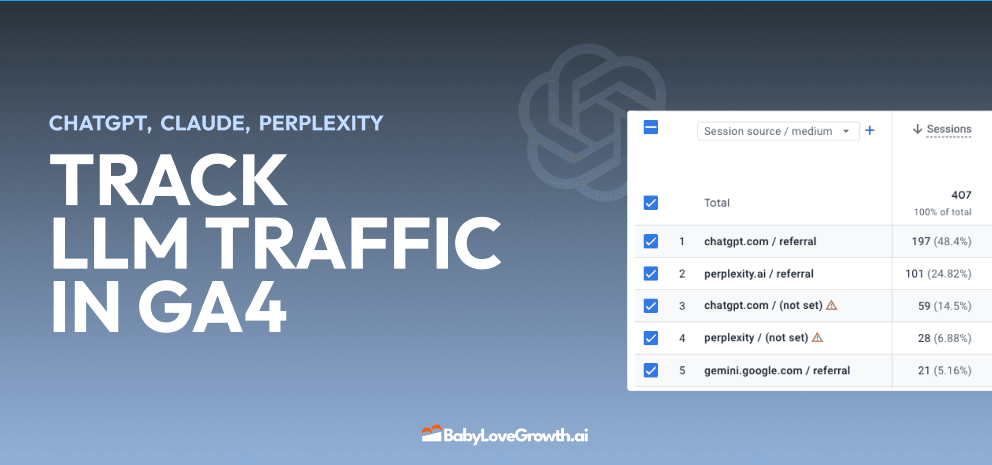
Track LLM Traffic in Google Analytics 4 (GA4)
Learn how to track and analyze traffic from AI sources like ChatGPT, Claude, Perplexity, and Google Gemini in Google Analytics 4. This step-by-step guide shows you how to set up custom filters to monitor AI-driven traffic and make data-driven decisions for your content strategy.
DylenMar 18, 2025
How to Humanize AI Text with Instructions
Learn practical techniques to make AI-generated content sound more natural and human. This guide covers active voice, direct addressing, concise writing, and other proven strategies to transform robotic text into engaging content.
DylenApril 7, 2025
Open AI Revenue and Statistics (2024)
Comprehensive analysis of OpenAI financial performance, user engagement, and market position in 2023. Discover key statistics including $20B valuation, $1B projected revenue, and 100M+ monthly active users.
DylenOctober 03, 2025