Psychology of colors in marketing: boost your brand


Many marketers believe color is just a design choice, but it's actually one of the most powerful psychological levers in your branding toolkit. Colors can stimulate neurological and emotional responses that directly influence purchasing decisions, brand recall, and consumer trust. Understanding how different hues trigger specific emotions and behaviors gives you a strategic advantage in crafting campaigns that resonate deeply with your target audience. This article reveals the science behind color psychology and shows you exactly how to apply these insights to enhance your marketing effectiveness, improve conversion rates, and build stronger brand connections.
Table of Contents
- Key takeaways
- How color influences consumer psychology
- Meanings and cultural variations of colors in marketing
- Applying color psychology strategically in branding and advertising
- Common mistakes and advanced tips for color use in marketing
- Enhance your marketing with automated SEO and backlink solutions
- Frequently asked questions
Key Takeaways
| Point | Details |
|---|---|
| Color drives decisions | Color influences emotions, memory, and buying behavior to shape brand recall and conversions. |
| Cultural color meanings | Regional and demographic differences shape how colors are interpreted, so tailoring color strategy matters. |
| Strategic color use | Intentional color choices strengthen branding, recall, and conversion across all touchpoints. |
| Blue signals trust | Blue is associated with reliability and professionalism across industries, supporting consumer confidence. |
| Audience alignment matters | Matching colors to the target audience maximizes marketing effectiveness and conversion rates. |
How color influences consumer psychology
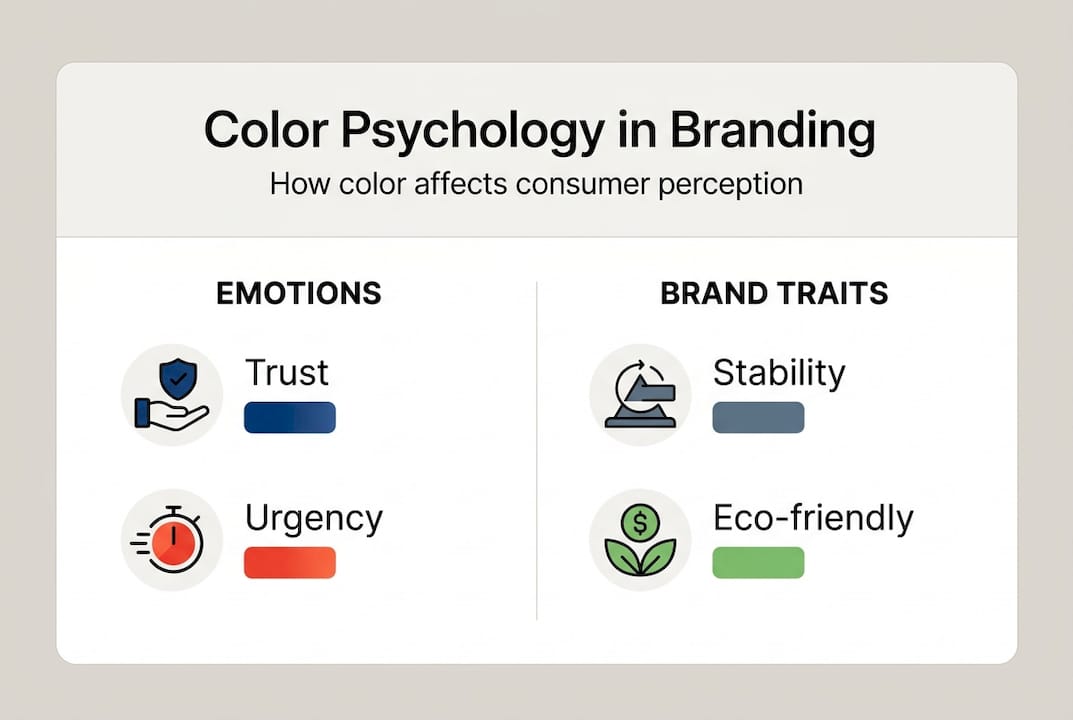
Color perception happens in milliseconds, triggering immediate emotional reactions before conscious thought even begins. When consumers encounter your brand, colors activate specific brain regions associated with memory, emotion, and decision making. Red tends to increase energy and urgency, making it popular for clearance sales and fast food chains that want quick customer turnover. Blue invokes calmness and trust, which explains why financial institutions and healthcare providers favor it heavily.
These reactions aren't random. Consumers often associate color with product qualities and brand personality without realizing it. A study on digital marketing importance shows that visual elements, particularly color, account for up to 90% of snap judgments about products. Your brain processes color faster than text or shapes, creating instant impressions that can make or break a sale.
Emotional and subconscious responses to color may be stronger than rational reasoning. When someone sees orange, their brain might register excitement and affordability before they even read your product description. This automatic processing means your color choices work 24/7, influencing every touchpoint in the customer journey. Smart marketers leverage this by ensuring their visual content marketing concepts align color psychology with brand messaging.
Key psychological effects of color include:
- Attention capture: Bright, contrasting colors draw eyes to specific elements
- Emotional priming: Colors set the mood before consumers engage with content
- Memory encoding: Distinctive color schemes improve brand recall by up to 80%
- Trust building: Consistent color use across touchpoints creates reliability perception
"Color is a power which directly influences the soul. It's not just decoration, it's communication at the most fundamental level." This principle applies whether you're designing a logo, crafting an ad, or optimizing a website interface.
Meanings and cultural variations of colors in marketing
Red commands attention and creates urgency, which is why clearance signs and limited time offers use it extensively. It signals passion, excitement, and sometimes danger, triggering faster heart rates and heightened alertness. However, cultural background significantly impacts how this color registers. In Western markets, red means love and energy. In China, it symbolizes luck and prosperity. In South Africa, it's associated with mourning.
Blue dominates corporate branding because it communicates trust, stability, and professionalism. Tech companies, banks, and healthcare providers choose blue to project reliability and competence. It's the safest choice across cultures, though shades matter. Light blue feels friendly and approachable, while navy conveys authority and expertise. This versatility makes blue a go-to for brands targeting diverse audiences.

Green connects to nature, health, and sustainability, making it perfect for organic products, wellness brands, and environmental initiatives. Financial services also use green to suggest growth and prosperity. Yellow radiates optimism, warmth, and youthfulness, but requires careful application. Too much yellow can feel overwhelming or cheap, while strategic accents create energy and approachability.
| Color | Western Interpretation | Eastern Interpretation | Marketing Use |
|---|---|---|---|
| Red | Passion, urgency, danger | Luck, celebration, prosperity | Sales, food, excitement |
| Blue | Trust, calm, professionalism | Immortality, spirituality | Finance, tech, healthcare |
| Green | Nature, growth, money | Fertility, new beginnings | Wellness, eco-brands, finance |
| Yellow | Optimism, caution, energy | Sacred, imperial | Clearance, youth brands |
| Purple | Luxury, creativity, royalty | Wealth, nobility | Premium products, beauty |
| Black | Sophistication, power, mourning | Mystery, knowledge | Luxury, elegance |
| White | Purity, simplicity, peace | Death, mourning | Minimalism, healthcare |
Understanding these variations prevents costly mistakes. A color that drives conversions in one market might alienate customers in another. Before launching campaigns, research your target demographics thoroughly. Age, gender, and regional preferences all influence color reception. Women tend to prefer softer hues and avoid earth tones, while men gravitate toward bold, saturated colors. Younger audiences respond well to vibrant, unconventional palettes, while older consumers prefer traditional, subdued schemes.
Pro Tip: Create region-specific color variations of your marketing materials rather than using one global palette. This localization shows cultural awareness and can significantly boost engagement in diverse markets. Test your color choices with focus groups from your target demographics before committing to major campaigns.
The psychology behind these associations runs deep. Colors linked to positive experiences in childhood or cultural celebrations create favorable brand impressions. Marketers who understand these nuances can craft messages that feel personally relevant, even when reaching millions. Your digital marketing basics should always include color strategy as a core component, not an afterthought.
Applying color psychology strategically in branding and advertising
Aligning colors with brand values creates instant recognition and emotional connection. If your brand promises innovation and energy, vibrant oranges and electric blues signal that personality immediately. Luxury brands use black, gold, and deep purples to communicate exclusivity and sophistication. This alignment ensures every visual touchpoint reinforces your core message without requiring words.
Contrasting colors direct attention to calls to action and key messages with surgical precision. A bright orange button on a neutral background creates a visual hierarchy that guides users exactly where you want them to go. Strategic color selection can increase conversion rates by 20-30% simply by making desired actions more visually prominent. The contrast ratio between your CTA and surrounding elements determines how quickly users spot and click it.
Testing color variations optimizes emotional appeal and performance across different audience segments. A/B testing different button colors, background hues, or accent shades reveals which combinations drive the highest engagement for your specific audience. What works for a tech startup might fail for a healthcare provider. Data-driven color decisions remove guesswork and maximize ROI.
Follow these steps to implement color psychology effectively:
- Audit your current color use: Document every color in your brand palette and its purpose
- Research your target audience: Identify demographic preferences and cultural associations
- Define emotional goals: Determine what feelings you want to evoke at each customer touchpoint
- Create a strategic color hierarchy: Assign primary, secondary, and accent colors based on importance
- Test variations systematically: Run controlled experiments to measure impact on key metrics
- Maintain consistency: Use the same colors across all channels to build recognition
Accessibility matters as much as psychology. Eight percent of men and 0.5% of women have some form of color blindness. Ensure sufficient contrast between text and backgrounds so everyone can engage with your content. Tools like contrast checkers help you meet WCAG standards while maintaining your desired aesthetic. Poor color accessibility doesn't just exclude potential customers, it damages your brand reputation.
Consistent color schemes across touchpoints build brand recall exponentially. When customers see your signature colors on social media, your website, packaging, and ads, they recognize you instantly. This consistency reduces cognitive load and creates trust through familiarity. Major brands maintain strict color guidelines to ensure every interaction reinforces their identity.
Pro Tip: Create a comprehensive brand color guide that specifies exact hex codes, RGB values, and usage rules for every color in your palette. Include examples of correct and incorrect applications to prevent dilution across teams and campaigns. This documentation ensures consistency even as your marketing efforts scale.
Your compelling CTAs become dramatically more effective when color psychology amplifies your copy. The right combination of persuasive language and strategic color use creates irresistible prompts to action. Similarly, conversion rate optimization 2026 strategies increasingly emphasize color testing as a high-impact, low-cost improvement area. When optimizing landing pages, color choices for headlines, buttons, and trust indicators can make the difference between a bounce and a conversion.
Common mistakes and advanced tips for color use in marketing
Overusing multiple colors creates visual chaos that confuses rather than converts. When every element screams for attention in a different hue, nothing stands out. Brands that try to appeal to everyone by using every color end up appealing to no one. Misapplication of color psychology can backfire spectacularly, leading to unintended consumer reactions like distrust or confusion. Stick to a focused palette of three to five colors maximum.
Cultural insensitivities and color taboos can torpedo international campaigns overnight. Using white prominently in marketing materials for Asian funeral services would be disastrous. Purple, associated with death in some Latin American countries, might alienate audiences you're trying to reach. Research isn't optional when expanding to new markets. What succeeds in New York might fail catastrophically in Mumbai.
Relying solely on color without compelling messaging wastes the psychological advantage. Color attracts attention and sets mood, but words close sales. The most effective campaigns combine strategic color use with clear value propositions and strong calls to action. Color should enhance your message, not replace it. Even the perfect shade of blue won't convert visitors if your copy fails to address their needs.
Common pitfalls to avoid:
- Trend chasing: Using trendy colors that clash with your brand identity for temporary relevance
- Ignoring context: Applying the same colors across all media without considering how they render on screens vs. print
- Neglecting testing: Assuming color preferences based on stereotypes rather than data
- Inconsistent application: Using slightly different shades across platforms, weakening recognition
- Forgetting accessibility: Choosing color combinations that exclude color-blind users
Advanced strategies separate sophisticated marketers from amateurs:
- Use color temperature strategically: Warm colors (reds, oranges, yellows) create urgency and excitement, while cool colors (blues, greens, purples) promote calm and trust
- Implement progressive color shifts: Gradually transition colors as users move through your funnel, from attention-grabbing to trust-building
- Leverage color psychology in email: Test subject line colors and email template hues to improve open and click rates
- Create seasonal variations: Adjust accent colors subtly to align with holidays and seasons while maintaining core brand identity
- Apply color coding: Use consistent colors for different content types or product categories to help users navigate intuitively
Test colors in different media and lighting conditions before finalizing campaigns. A color that looks perfect on your calibrated monitor might appear washed out on mobile devices or shift dramatically in print. Physical samples and device testing prevent expensive surprises after launch. What works in a bright retail environment might fail on a dimly lit billboard.
Pro Tip: Build a color testing protocol that includes viewing your designs on multiple devices, in various lighting conditions, and with color blindness simulators. This comprehensive approach catches issues before they reach customers and ensures your carefully chosen psychology works as intended across all contexts.
Utilize color trends cautiously to stay modern but timeless. Following every trending palette makes your brand feel reactive rather than authoritative. Instead, identify which trends align with your brand values and incorporate them through temporary campaigns or accent colors while keeping your core palette stable. This approach keeps you current without sacrificing the recognition you've built. Your effective CTAs 2026 can incorporate trending accent colors for freshness while maintaining your signature brand hues for consistency.
Enhance your marketing with automated SEO and backlink solutions
Understanding color psychology gives you a powerful edge in creating visually compelling marketing materials that convert. But even the most psychologically optimized design needs visibility to drive results. Combining your newfound color expertise with robust SEO strategies amplifies your impact exponentially. Automated tools can handle the technical heavy lifting while you focus on crafting emotionally resonant campaigns.
Our SEO automation platform streamlines the process of getting your beautifully designed, psychologically optimized content in front of your target audience. Instead of spending hours on manual optimization, let AI-driven systems handle keyword research, content optimization, and technical SEO while you concentrate on color strategy and creative development. This efficiency means you can test more color variations and launch campaigns faster.
Building authority through backlinks remains crucial for ranking highly in search results. Our backlink building software automates outreach and link acquisition, ensuring your color-optimized landing pages gain the domain authority needed to compete. When your visually compelling content combines with strong SEO fundamentals, you create an unstoppable growth engine. The organic traffic tool provides detailed analytics showing exactly how your color choices and SEO efforts work together to drive conversions, giving you the data needed to refine both strategies continuously.
Frequently asked questions
What is the psychology of colors in marketing?
Color psychology studies how different hues influence consumer emotions, perceptions, and purchasing decisions. It examines the neurological and cultural associations people have with specific colors, helping marketers choose palettes that evoke desired responses. Understanding these principles allows you to create branding and advertising that resonates emotionally with your target audience, improving recognition and conversion rates. The field combines neuroscience, cultural anthropology, and marketing research to provide actionable insights for visual communication.
How do cultural differences affect color perception in marketing?
Color interpretations vary dramatically across cultures, making research essential for international campaigns. White symbolizes purity and weddings in Western cultures but represents mourning and death in many Asian countries. Red means danger in some contexts but luck and celebration in China. These differences stem from historical associations, religious symbolism, and cultural traditions. Marketers must tailor color choices for each geographic and cultural segment rather than assuming universal meanings. Testing with local focus groups prevents offensive or ineffective color selections.
What are the best colors to use for call-to-action buttons?
Red and orange typically perform well for CTAs because they create urgency and draw attention immediately. However, the best color depends on your overall design and brand context. The critical factor is contrast with surrounding elements. A green button might outperform red if your page uses warm tones throughout. Test multiple options with your specific audience to find the optimal choice. Compelling CTAs combine strategic color with persuasive copy for maximum impact.
Can overusing multiple colors harm my brand?
Yes, excessive colors dilute brand recognition and create visual confusion that reduces professionalism. When customers encounter too many competing hues, they struggle to remember your brand or understand your message hierarchy. Simpler, more focused palettes are consistently more effective for building recognition and trust. Limit your core palette to three to five colors, using additional shades sparingly for special campaigns. Consistency across touchpoints matters more than variety within individual designs.
Recommended
Smart SEO,
Faster Growth!
Most Read Articles
Generative Engine Optimization (GEO)
Learn how Generative Engine Optimization (GEO) helps your content rank in AI search engines like ChatGPT and Google AI. This comprehensive guide explains the differences between SEO and GEO, why it matters for your business, and practical steps to implement GEO strategies for better visibility in AI-generated responses.
DylenJan 18, 2025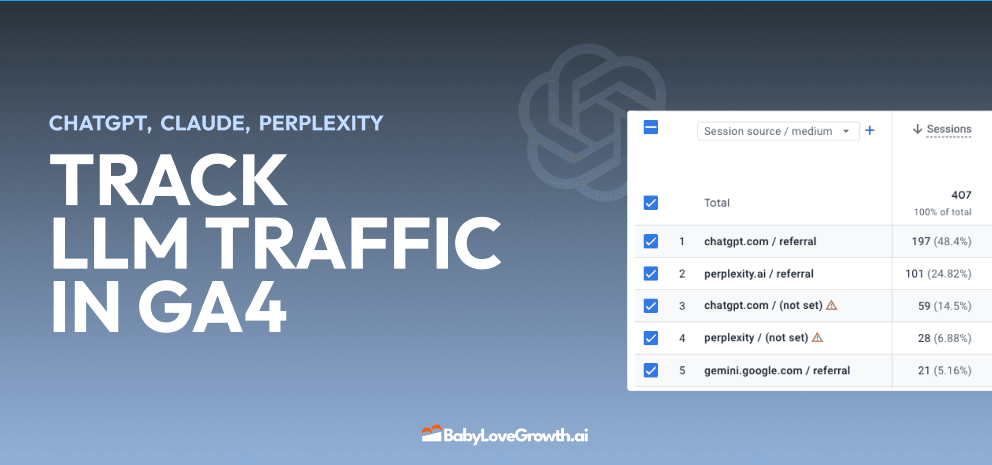
Track LLM Traffic in Google Analytics 4 (GA4)
Learn how to track and analyze traffic from AI sources like ChatGPT, Claude, Perplexity, and Google Gemini in Google Analytics 4. This step-by-step guide shows you how to set up custom filters to monitor AI-driven traffic and make data-driven decisions for your content strategy.
DylenMar 18, 2025
How to Humanize AI Text with Instructions
Learn practical techniques to make AI-generated content sound more natural and human. This guide covers active voice, direct addressing, concise writing, and other proven strategies to transform robotic text into engaging content.
DylenApril 7, 2025
Open AI Revenue and Statistics (2024)
Comprehensive analysis of OpenAI financial performance, user engagement, and market position in 2023. Discover key statistics including $20B valuation, $1B projected revenue, and 100M+ monthly active users.
DylenOctober 03, 2025