Personalized Marketing: Driving E-Commerce Growth


Most American online shoppers are now accustomed to seeing product recommendations tailored just for them, with research showing personalized experiences can increase sales by over 20 percent. For digital marketing managers at growing e-commerce brands, this shift signals rising expectations for scalable, data-driven personalization. Understanding what personalized marketing really means helps small and medium retailers meet the same standards as global giants while building stronger, more loyal customer connections.
Table of Contents
- What Is Personalized Marketing in E-Commerce
- Core Types and Approaches to Personalization
- How AI and Data Enable Personalized Experiences
- Key Benefits for Engagement and Conversion
- Challenges, Risks, and Compliance Considerations
- Avoiding Common Mistakes in Personalization
Key Takeaways
| Point | Details |
|---|---|
| Personalized Marketing Enhances Engagement | Tailored experiences based on customer data increase interaction and overall satisfaction. |
| AI Drives Personalization | Utilizing machine learning and advanced analytics allows for proactive recommendation and customer engagement strategies. |
| Compliance and Ethics Are Crucial | Businesses must navigate privacy regulations and maintain transparency to foster consumer trust in personalized marketing. |
| Avoid Common Pitfalls | It is important to avoid invasive targeting and static personalization approaches to improve user experience and effectiveness. |
What Is Personalized Marketing in E-Commerce
Personalized marketing transforms the digital shopping experience by dynamically tailoring content, recommendations, and interactions to match individual customer preferences. In e-commerce, this strategy goes beyond generic mass communication, leveraging data-driven insights to customize consumer engagement with unprecedented precision.
At its core, personalized marketing represents a sophisticated approach where businesses analyze customer data such as browsing history, purchase patterns, demographic information, and interactions to create unique, targeted experiences. Unlike traditional marketing methods that broadcast identical messages to broad audiences, this strategy recognizes each customer's distinct characteristics and anticipates their specific needs.
The practical implementation of personalized marketing involves multiple sophisticated techniques:
- Real-time product recommendations based on previous purchases
- Customized email campaigns reflecting individual interests
- Dynamic website content that adapts to user behavior
- Targeted promotional offers matching customer preferences
- Personalized search results and navigation experiences
Pro Tip: Start Small, Scale Smart: Begin personalization by segmenting your customer base into 3-5 distinct groups and creating targeted experiences for each segment before investing in complex, individualized strategies.
Core Types and Approaches to Personalization
Personalization in e-commerce is not a monolithic strategy but a diverse ecosystem of targeted approaches designed to enhance customer experience and drive conversion rates. Comprehensive frameworks reveal multiple sophisticated personalization techniques that businesses can strategically implement across different customer touchpoints.
The primary approaches to personalization can be categorized into several key types:
- Recommendation Personalization: Dynamically suggesting products based on browsing history, past purchases, and similar customer behaviors
- Behavioral Targeting: Crafting experiences that adapt in real-time to individual user interactions and engagement patterns
- Contextual Personalization: Customizing content and offers based on geographic location, device type, time of day, and current browsing context
- Predictive Personalization: Using advanced machine learning algorithms to anticipate customer needs before they explicitly express them
- Segment-Based Personalization: Creating tailored experiences for specific customer groups with shared characteristics
Each personalization approach requires sophisticated data analysis and intelligent implementation. The most effective strategies combine multiple techniques, creating a holistic, adaptive customer experience that feels intuitive and seamless. Advanced personalization goes beyond simple product recommendations, encompassing everything from email content and website layouts to pricing strategies and promotional offers.

Here's a comparison of core personalization approaches and their unique business impacts:
| Approach | Data Source Used | Primary Business Benefit | Implementation Complexity |
|---|---|---|---|
| Recommendation | Browsing and purchase history | Boosts conversion rates | Moderate |
| Behavioral Targeting | Real-time user interactions | Increases engagement | Advanced |
| Contextual Personalization | Location and device data | Improves relevance and experience | Moderate |
| Predictive Personalization | AI-driven predictive analytics | Anticipates future customer needs | High |
| Segment-Based Personalization | Demographic and interest segments | Enhances targeted marketing | Basic |
Pro Tip: Data-Driven Personalization: Start by developing a robust customer data platform that integrates multiple touchpoints, ensuring you can create nuanced, accurate personalization strategies based on comprehensive behavioral insights.
How AI and Data Enable Personalized Experiences
Artificial intelligence and advanced data analytics have revolutionized personalized marketing by transforming raw customer information into actionable, intelligent insights. Sophisticated AI-powered personalization techniques are fundamentally reshaping how e-commerce platforms understand and engage with individual consumers, creating unprecedented opportunities for targeted interactions.
The core capabilities of AI in personalization span multiple sophisticated domains:
- Machine Learning Algorithms: Continuously analyze user behavior to predict preferences
- Natural Language Processing: Enable intelligent chatbots and conversational interfaces
- Predictive Analytics: Anticipate customer needs before explicit requests
- Real-Time Data Processing: Generate instant, context-aware recommendations
- Advanced Segmentation: Create micro-targeted customer experience profiles
Here's a summary of how AI transforms personalized e-commerce experiences:
| AI Capability | Example Application | Customer Impact |
|---|---|---|
| Machine Learning | Automated product suggestions | Faster product discovery |
| Natural Language Processing | Smart chatbots and FAQs | More responsive assistance |
| Predictive Analytics | Proactive engagement prompts | Anticipates customer needs |
| Real-Time Data Processing | Dynamic pricing adjustments | Immediate personalized offers |
| Advanced Segmentation | Custom marketing campaigns | Highly relevant promotions |
Pro Tip: AI Integration Strategy: Start with small, focused AI personalization pilots in specific customer journey stages, measuring performance and gradually expanding your intelligent personalization capabilities across broader touchpoints.
Key Benefits for Engagement and Conversion
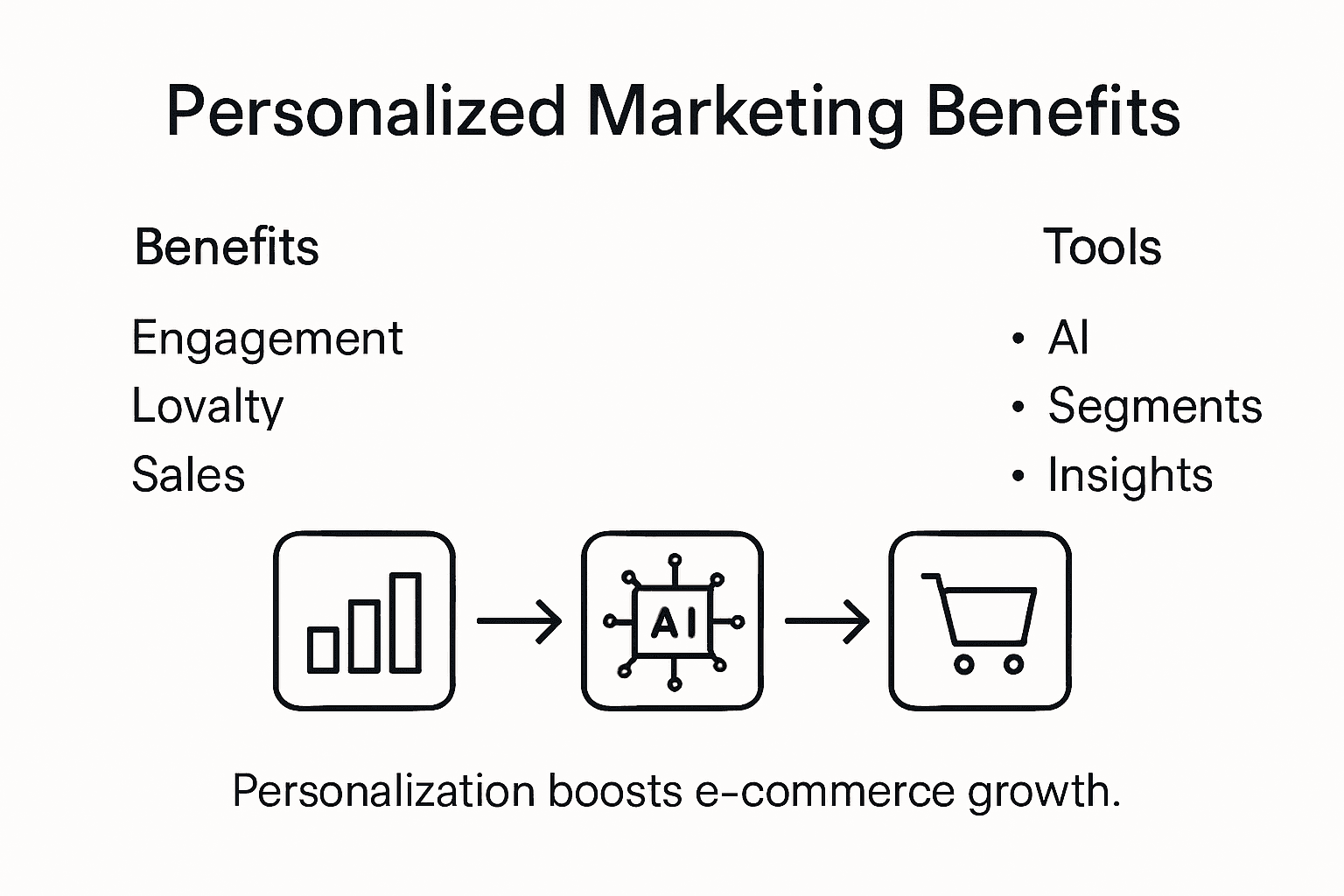
Personalized marketing represents a powerful strategic approach that delivers measurable business outcomes by transforming customer interactions. Comprehensive empirical research reveals significant improvements in key performance metrics across digital platforms, demonstrating the substantial impact of targeted, data-driven engagement strategies.
The primary benefits of personalized marketing can be categorized into several critical dimensions:
- Conversion Rate Optimization: Dramatically increase purchase likelihood through relevant recommendations
- Average Order Value Enhancement: Encourage larger transaction sizes with tailored product suggestions
- Customer Lifetime Value Expansion: Build deeper, more meaningful customer relationships
- Engagement Depth: Create more meaningful, interactive customer experiences
- Retention Improvement: Reduce customer churn through consistent, personalized communication
Beyond immediate transactional benefits, personalization fundamentally transforms how businesses connect with their audience. By delivering precisely targeted content, recommendations, and experiences, companies can create a sense of individual recognition that transcends traditional marketing approaches. This strategy moves beyond generic mass communication, instead crafting unique interactions that make each customer feel genuinely understood and valued.
Pro Tip: Incremental Personalization: Start by personalizing one specific customer touchpoint, measure its impact, and systematically expand your personalization strategy based on measurable engagement and conversion improvements.
Challenges, Risks, and Compliance Considerations
Personalized marketing confronts critical challenges at the intersection of technological innovation and regulatory compliance, requiring businesses to navigate complex ethical and legal landscapes while maintaining consumer trust and data integrity.Key challenges in personalized marketing encompass multiple critical domains:
- Data Privacy Risks: Protecting sensitive consumer information
- Regulatory Compliance: Adhering to evolving international data protection standards
- Algorithmic Transparency: Ensuring fair and unbiased personalization mechanisms
- Consumer Consent: Implementing robust opt-in and opt-out frameworks
- Security Vulnerabilities: Preventing unauthorized data access and potential breaches
Pro Tip: Compliance Blueprint: Develop a comprehensive data governance framework that includes regular privacy impact assessments, clear consent mechanisms, and transparent data usage policies to mitigate potential legal and reputational risks.
Avoiding Common Mistakes in Personalization
Personalization strategies frequently falter due to misguided implementations that compromise user experience and trust, creating significant barriers to effective customer engagement and conversion optimization.
Common personalization mistakes that businesses must proactively avoid include:
- Overly Invasive Targeting: Generating experiences that feel uncomfortably intrusive
- Inaccurate Profile Assumptions: Creating recommendations based on incomplete or incorrect user data
- Lack of Transparency: Failing to explain how personalization algorithms work
- Ignoring User Preferences: Disregarding explicit customer opt-out signals
- Static Personalization: Using rigid, unchanging personalization approaches
Successful personalization requires continuous refinement, robust consent mechanisms, and integration of direct consumer feedback into algorithmic systems. Businesses must develop adaptive frameworks that balance technological capabilities with genuine respect for individual user autonomy, ensuring personalization feels helpful rather than manipulative.
Pro Tip: Personalization Calibration: Implement quarterly user experience audits that include gathering direct customer feedback about personalization effectiveness, using insights to continuously refine and improve targeting strategies.
Unlock the Power of Personalized Marketing with AI-Driven SEO Solutions
The article highlights how personalized marketing hinges on using data insights and AI to deliver tailored e-commerce experiences that boost engagement and conversion rates. However, harnessing these advanced personalization tactics can be challenging without the right tools that integrate customer behaviors, predictive analytics, and dynamic content creation. You want a solution that not only understands your audience but also streamlines organic growth through intelligent, automated content strategies designed to rank high on Google and ChatGPT.
Babylovegrowth.ai specializes in exactly this kind of transformative technology. With our AI-powered platform, you gain access to a 30-day personalized content plan, automated high-quality articles, and a dynamic backlinks exchange ecosystem that empower you to execute sophisticated personalization strategies seamlessly. By combining SEO automation with tailored content development, you will attract and engage your ideal customers while maximizing your online visibility and sales potential.
Take the first step toward driving e-commerce growth through data-driven personalization. Discover how Babylovegrowth.ai can simplify your SEO and content marketing efforts by providing a step-by-step approach to organic growth that adapts intelligently to your audience.
Ready to elevate your personalized marketing strategy and see tangible results? Start your free trial today at Babylovegrowth.ai and unlock the future of AI-driven e-commerce growth.
Explore more about our platform features at Babylovegrowth AI Landing Page
Frequently Asked Questions
What is personalized marketing in e-commerce?
Personalized marketing in e-commerce tailors content, recommendations, and interactions to individual customer preferences, utilizing data-driven insights to create unique shopping experiences.
How does AI enhance personalized marketing strategies?
AI enhances personalized marketing strategies through machine learning algorithms, which analyze user behavior to provide real-time recommendations, predict customer needs, and optimize customer interactions.
What are the key types of personalization approaches used in e-commerce?
Key types of personalization approaches include recommendation personalization, behavioral targeting, contextual personalization, predictive personalization, and segment-based personalization, each aimed at improving customer experience and engagement.
What are common challenges faced in personalized marketing?
Common challenges in personalized marketing include data privacy risks, regulatory compliance, algorithmic transparency, consumer consent, and security vulnerabilities, all of which require careful management to maintain consumer trust.
Recommended
Smart SEO,
Faster Growth!
Most Read Articles
Generative Engine Optimization (GEO)
Learn how Generative Engine Optimization (GEO) helps your content rank in AI search engines like ChatGPT and Google AI. This comprehensive guide explains the differences between SEO and GEO, why it matters for your business, and practical steps to implement GEO strategies for better visibility in AI-generated responses.
DylenJan 18, 2025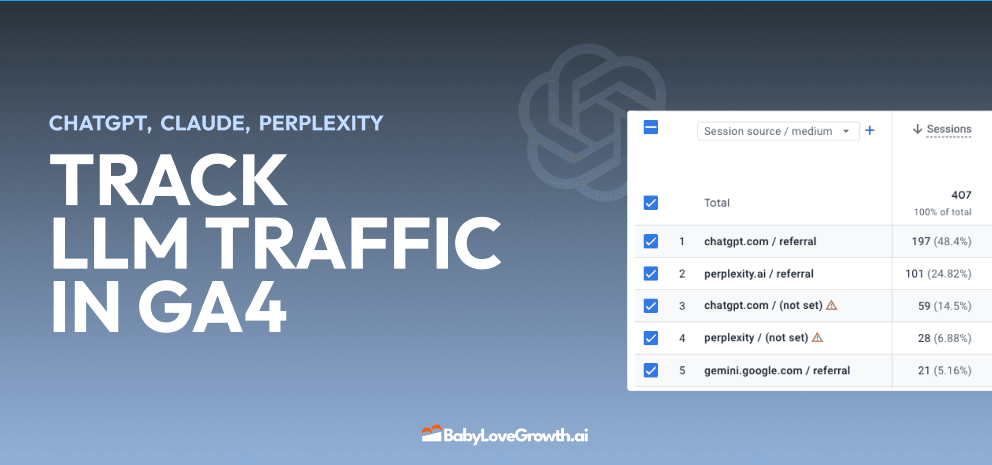
Track LLM Traffic in Google Analytics 4 (GA4)
Learn how to track and analyze traffic from AI sources like ChatGPT, Claude, Perplexity, and Google Gemini in Google Analytics 4. This step-by-step guide shows you how to set up custom filters to monitor AI-driven traffic and make data-driven decisions for your content strategy.
DylenMar 18, 2025
How to Humanize AI Text with Instructions
Learn practical techniques to make AI-generated content sound more natural and human. This guide covers active voice, direct addressing, concise writing, and other proven strategies to transform robotic text into engaging content.
DylenApril 7, 2025
Open AI Revenue and Statistics (2024)
Comprehensive analysis of OpenAI financial performance, user engagement, and market position in 2023. Discover key statistics including $20B valuation, $1B projected revenue, and 100M+ monthly active users.
DylenOctober 03, 2025