Organic Traffic Growth Workflow for Scalable SEO Success


Over half of American digital marketing agencies now rely on AI to automate complex SEO strategies. Staying ahead in fast-changing markets means using smart solutions that cut manual work and deliver measurable results. This guide breaks down how scalable AI-driven tools help SEO professionals automate organic traffic growth and push client rankings higher, giving you the data-driven edge you need.
Table of Contents
- Step 1: Set Up AI-Powered SEO Automation Tools
- Step 2: Discover High-Impact Keywords and Content Themes
- Step 3: Build Structured Content and Internal Links
- Step 4: Generate Backlinks and Target External Platforms
- Step 5: Audit Performance and Refine Your Strategy
Quick Summary
| Important Insight | Explanation |
|---|---|
| 1. Utilize AI-Powered SEO Tools | Implement automation tools to streamline SEO processes, focusing on those with machine learning for better task handling. |
| 2. Identify High-Impact Keywords | Conduct thorough keyword research that prioritizes user intent and conversion potential over traditional volume metrics. |
| 3. Develop Structured Content | Create a content pillar strategy that organizes topics effectively and enhances internal linking for better navigation and SEO. |
| 4. Generate Quality Backlinks | Focus on building relationships and generating backlinks from reputable sites through valuable content and strategic outreach. |
| 5. Regularly Audit SEO Performance | Analyze key performance indicators frequently to refine strategies and make data-driven adjustments that enhance organic traffic. |
Step 1: Set Up AI-Powered SEO Automation Tools
Streamlining your SEO workflow requires selecting and implementing strategic AI-powered automation tools that can transform your organic traffic growth approach. By leveraging advanced AI SEO technologies, digital marketing professionals can dramatically reduce manual tasks and scale their optimization strategies.
The first step involves carefully evaluating AI SEO platforms that offer comprehensive automation capabilities. Look for tools featuring machine learning algorithms capable of handling complex tasks like keyword research, content optimization, technical auditing, and predictive analytics. These platforms should integrate seamlessly with your existing workflows, providing rapid setup and high accuracy in recommendations. SEO automation tools powered by artificial intelligence enable faster execution of strategic SEO processes, allowing your team to focus on high-value strategic planning.
When selecting your AI-powered SEO automation tools, prioritize platforms with robust integration ecosystems, user-friendly interfaces, and demonstrated performance in generating actionable insights. Consider factors like machine learning sophistication, natural language processing capabilities, and the tool's ability to provide precise, data-driven recommendations that align with your specific business objectives.
Pro tip: Start with a free trial or demo version to thoroughly test the tool's compatibility with your existing workflows before making a long-term commitment.
Here's a comparison of common AI-powered SEO automation tool features and their business impact:
| Feature | What It Does | Business Impact |
|---|---|---|
| Machine Learning | Analyzes patterns to refine recommendations | Improves SEO accuracy and efficiency |
| Content Optimization | Enhances website content for SEO | Boosts rankings and user engagement |
| Predictive Analytics | Forecasts keyword and trend performance | Enables proactive strategy adjustments |
| Technical Auditing | Detects site errors and issues | Reduces site downtime and missed traffic |
Step 2: Discover High-Impact Keywords and Content Themes
Unlocking the power of strategic keyword research is critical for driving targeted organic traffic and maximizing your SEO potential. High-impact keywords represent more than just search volume they represent opportunities to connect with motivated audiences most likely to convert.

To effectively discover high-impact keywords, start by understanding user intent and analyzing conversion potential. This means moving beyond traditional volume metrics and focusing on keywords that align with your audience's specific needs and search behaviors. Examine your competitors' keyword strategies, evaluate search intent categories (informational, transactional, navigational), and use advanced AI-powered keyword research tools to uncover hidden opportunities. Pay special attention to long-tail keywords that demonstrate clear user intent and lower competition.
Successful keyword discovery requires a holistic approach that combines data analysis, audience understanding, and strategic content planning. Develop a comprehensive keyword mapping strategy that connects search terms with specific content themes, ensuring each piece of content addresses precise user questions and provides genuine value. Create clusters of related keywords that allow you to develop comprehensive, authoritative content that addresses multiple related search queries.
Pro tip: Prioritize keywords with clear commercial intent and demonstrable user motivation rather than chasing high-volume terms with minimal conversion potential.
Step 3: Build Structured Content and Internal Links
Creating a robust content strategy requires developing a systematic approach to content organization and internal linking that maximizes both user experience and search engine optimization. Content structure plays a critical role in helping search algorithms understand and prioritize your website's information hierarchy.
Begin by developing a comprehensive content pillar strategy that maps out your primary topics and subtopics. Each pillar should represent a core subject area, with cluster content that explores specific aspects of that broader theme. When designing internal links, focus on creating meaningful connections between related pages that demonstrate topical expertise and provide clear navigation paths for both users and search engine crawlers. Strategically place internal links within your content to guide readers through a logical information journey while simultaneously signaling content relationships to search algorithms.
Effective content structuring goes beyond simple link placement. Implement clear hierarchical headings, use semantic markup to define content relationships, and ensure that each piece of content provides genuine value while connecting logically to other relevant pages on your site. Develop a comprehensive content map that shows how different pages interrelate, creating a network of information that establishes your website as an authoritative resource within your specific domain.
Pro tip: Audit your internal links quarterly to remove broken connections and continuously optimize your site architecture for maximum SEO performance.
Step 4: Generate Backlinks and Target External Platforms
Backlink generation represents a strategic approach to expanding your website's authority and organic search visibility by connecting with reputable external platforms. Successful backlink strategies require a systematic methodology that prioritizes quality over quantity and focuses on building genuine connections within your industry.
To effectively generate backlinks, develop a multifaceted outreach strategy that combines content creation, strategic networking, and targeted platform engagement. Begin by creating high quality, original content that provides substantial value to your target audience. This might include comprehensive research studies, innovative industry insights, or deeply analytical pieces that naturally attract external interest. Identify authoritative websites and publications in your niche that might find your content relevant, and develop personalized outreach approaches that demonstrate how your content can add genuine value to their readers.
Expand your backlink acquisition efforts by participating in industry forums, contributing guest articles, engaging in expert roundups, and leveraging professional networking platforms. Prioritize building relationships with thought leaders and content creators who can organically amplify your online presence. Always maintain a focus on providing authentic value rather than pursuing manipulative link building tactics that could potentially harm your long term search engine credibility.
Pro tip: Continuously monitor your backlink profile using advanced analytics tools to identify and disavow low quality or potentially harmful links that could negatively impact your search rankings.
Step 5: Audit Performance and Refine Your Strategy
Auditing your SEO performance is a critical process that transforms raw data into actionable strategic insights. AI-powered analytics platforms enable digital marketing professionals to systematically evaluate their organic traffic growth and identify precise optimization opportunities.
Begin your performance audit by comprehensively analyzing key performance indicators across multiple dimensions. Examine metrics such as organic search rankings, click through rates, conversion rates, bounce rates, and user engagement signals. Look beyond surface level numbers to understand the underlying patterns and trends that reveal your content strategy strengths and weaknesses. Pay special attention to pages with high potential but underperforming metrics, as these represent strategic opportunities for targeted improvements.
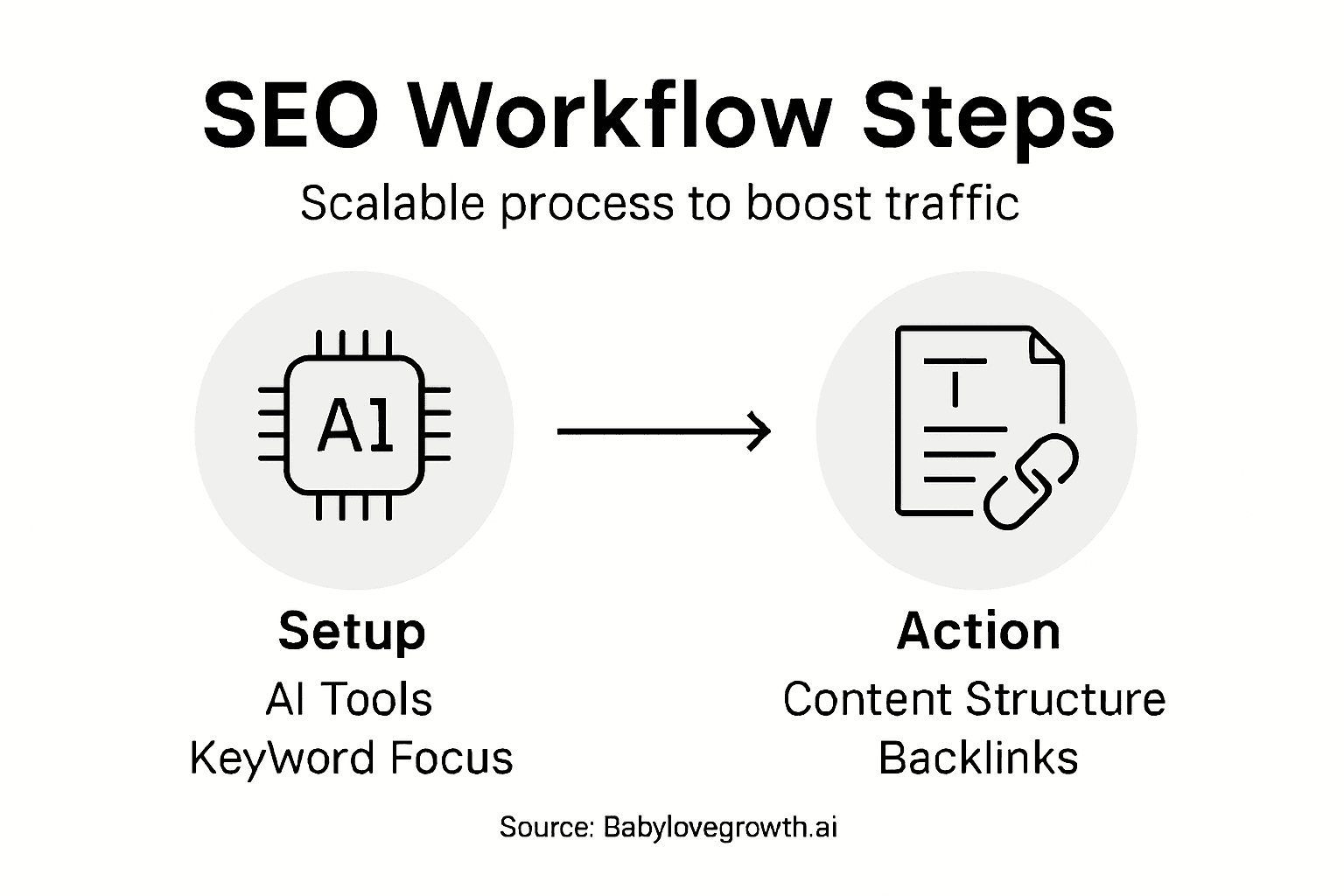
Develop a systematic approach to strategy refinement by creating a continuous improvement framework. This involves setting clear performance benchmarks, implementing iterative optimization cycles, and maintaining flexibility in your approach. Regularly cross reference your performance data with your original strategic objectives, making incremental adjustments that progressively enhance your organic traffic generation capabilities. Remember that SEO is an ongoing process of learning, adapting, and optimizing based on evolving search algorithms and audience behaviors.
Pro tip: Schedule monthly performance review sessions and maintain a living document that tracks your SEO strategy evolution, allowing you to build institutional knowledge and maintain long term strategic momentum.
Below is a summary table of performance audit KPIs and their strategic significance:
| KPI | What It Indicates | Why It Matters |
|---|---|---|
| Organic Rankings | Visibility in search results | Higher rankings drive traffic |
| Click Through Rate | Effectiveness of search snippets | Reveals engagement potential |
| Conversion Rate | Success turning visits into actions | Direct measure of ROI |
| Bounce Rate | User satisfaction with page content | Highlights UX and relevancy issues |
Accelerate Your Organic Traffic Growth with AI-Powered SEO Solutions
The article highlights critical challenges like managing complex SEO workflows, uncovering high-impact keywords, and maintaining a scalable content strategy to drive real organic traffic growth. If you have struggled with integrating AI into your SEO processes or felt overwhelmed by tasks such as technical audits, internal linking, and backlink generation you are not alone. These pain points slow down scalable growth and obscure clear paths to measurable results.
Babylovegrowth.ai understands these challenges and offers an all-in-one SaaS platform designed to automate and amplify your SEO efforts across every stage covered in the article. With features like automated keyword discovery, structured content planning, daily SEO articles, and AI-driven backlink building your team can focus on strategy while our technology executes the heavy lifting. This platform also supports seamless technical audits and internal linking automation which align perfectly with the workflow steps discussed.
Take control of your organic traffic growth with confidence today by exploring Babylovegrowth.ai’s comprehensive AI SEO platform.

Unlock the full potential of your SEO strategy now and put automation to work for you. Visit Babylovegrowth.ai to start your journey toward scalable, data-driven organic growth and transform your website’s performance in search engines like Google and advanced AI-driven platforms.
Frequently Asked Questions
How can I set up AI-powered SEO automation tools for my website?
To set up AI-powered SEO automation tools, start by evaluating platforms that offer machine learning capabilities for tasks like keyword research and content optimization. Begin by taking advantage of free trials to test compatibility with your current workflows.
What steps should I follow to discover high-impact keywords?
To discover high-impact keywords, analyze user intent and search behaviors, focusing on keywords that align with audience needs. Utilize advanced keyword research tools to target long-tail keywords with lower competition, and create a keyword mapping strategy for your content.
How can I create an effective content structure for SEO?
To create an effective content structure, develop a comprehensive content pillar strategy that organizes topics and subtopics logically. Ensure internal links connect related pages to improve navigation and enhance search engine understanding of your content hierarchy.
What is the best way to generate backlinks for my website?
To generate backlinks, focus on creating high-quality, valuable content that resonates with your target audience. Engage in outreach by connecting with authoritative websites and industry professionals who might find your content useful, and participate in community forums or guest writing opportunities.
How can I audit my SEO performance effectively?
To audit your SEO performance, analyze key metrics such as organic search rankings, click-through rates, and conversion rates. Set performance benchmarks and schedule regular reviews to make incremental improvements and refine your SEO strategy based on data-driven insights.
Recommended
Smart SEO,
Faster Growth!
Most Read Articles
Generative Engine Optimization (GEO)
Learn how Generative Engine Optimization (GEO) helps your content rank in AI search engines like ChatGPT and Google AI. This comprehensive guide explains the differences between SEO and GEO, why it matters for your business, and practical steps to implement GEO strategies for better visibility in AI-generated responses.
DylenJan 18, 2025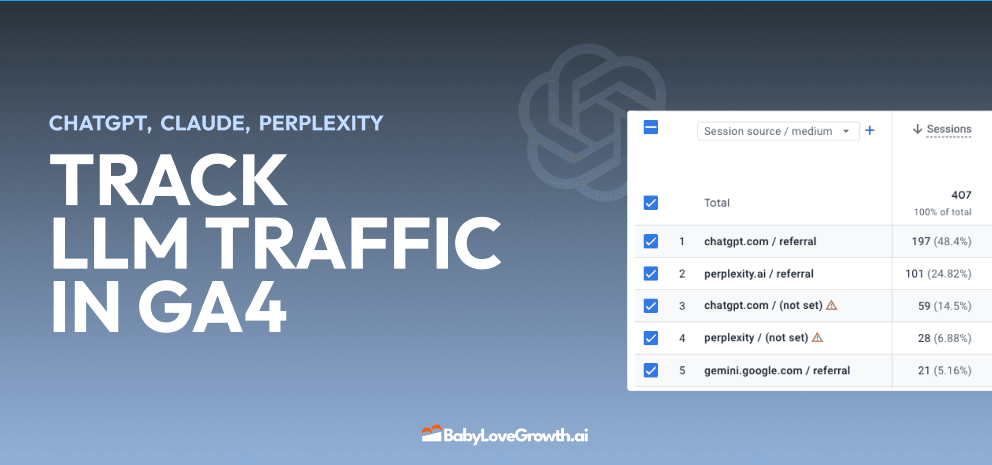
Track LLM Traffic in Google Analytics 4 (GA4)
Learn how to track and analyze traffic from AI sources like ChatGPT, Claude, Perplexity, and Google Gemini in Google Analytics 4. This step-by-step guide shows you how to set up custom filters to monitor AI-driven traffic and make data-driven decisions for your content strategy.
DylenMar 18, 2025
How to Humanize AI Text with Instructions
Learn practical techniques to make AI-generated content sound more natural and human. This guide covers active voice, direct addressing, concise writing, and other proven strategies to transform robotic text into engaging content.
DylenApril 7, 2025
Open AI Revenue and Statistics (2024)
Comprehensive analysis of OpenAI financial performance, user engagement, and market position in 2023. Discover key statistics including $20B valuation, $1B projected revenue, and 100M+ monthly active users.
DylenOctober 03, 2025