Omnichannel marketing: Unifying customer experience for growth


TL;DR:
- Omnichannel marketing creates a seamless experience through integrated customer data and channels.
- Unlike multichannel, omnichannel focuses on unified customer profiles and consistent messaging.
- Success depends on organizational alignment, technology integration, and tracking key performance metrics.
Running five marketing channels does not make you omnichannel. It makes you busy. The real difference between multichannel and omnichannel marketing is not the number of platforms you use but whether those platforms actually talk to each other. Disconnected strategies create fractured customer experiences, and that costs real money. An omnichannel strategy provides a seamless, consistent, and integrated customer experience across all channels. This article breaks down exactly what omnichannel marketing means, how it differs from multichannel, what technology and team alignment it requires, and how to measure whether it is actually working for your business.
Table of Contents
- Defining omnichannel marketing: An integrated customer journey
- Omnichannel vs multichannel: Core differences and business impact
- How omnichannel works: Technologies, data, and team alignment
- Overcoming challenges: Data silos, legacy tech, and organizational change
- Omnichannel in action: Implementation steps and success measurement
- Why omnichannel is about people, not just platforms
- Automate your omnichannel marketing for real growth
- Frequently asked questions
Key Takeaways
| Point | Details |
|---|---|
| Omnichannel is integration | True omnichannel marketing means every channel and dataset works together for consistent, seamless customer experiences. |
| ROI multiplies with unity | Integrated strategies drive 2.9x higher CLV, 23% higher retention, and up to 5.7x ROI over isolated channels. |
| Start with your team | Cross-team alignment and a customer-first mindset are as crucial as the right technology. |
| Implementation is iterative | Map journeys, integrate data stepwise, and refine based on real customer metrics—not perfection upfront. |
| Overcome silos early | Identify and address data and team silos upfront to unlock omnichannel’s promised gains. |
Defining omnichannel marketing: An integrated customer journey
Omnichannel marketing is not about being everywhere. It is about making every place feel like the same place. When a customer browses your website, opens your email, walks into your store, and then sends a support message, they should feel like they are talking to one brand with one memory of them, not four separate departments that have never met.
Omnichannel marketing unifies customer data and channels to create a seamless experience. That means the email a customer receives reflects what they browsed on your site. The ad they see on Instagram acknowledges the product they left in their cart. The support agent they call already knows their purchase history. That level of coordination does not happen by accident.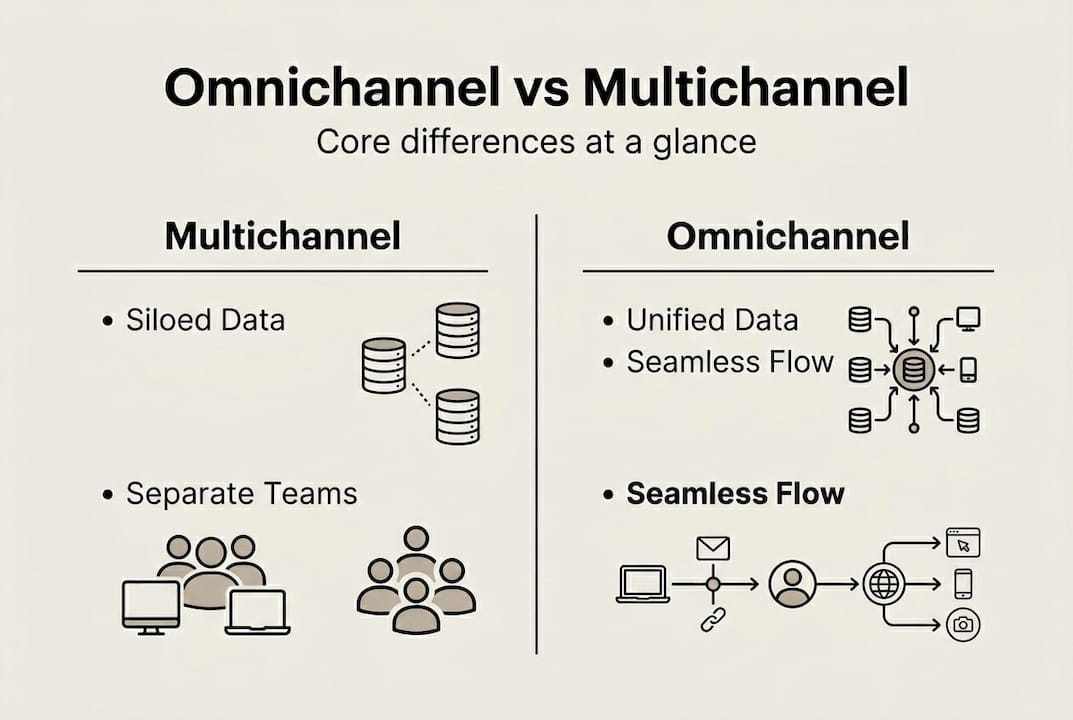
The key mechanics include centralized customer data, channel integration, and real-time personalization. Think of it as building a single nervous system across your entire marketing operation, where every channel feeds into and responds from one central intelligence.
Here is what that unified approach actually delivers:
- Single customer view: Every interaction, across every channel, is tied to one customer profile
- Consistent messaging: Brand voice, offers, and context remain coherent whether a customer is on mobile, desktop, or in-store
- Real-time personalization: Behavioral signals trigger relevant content at the right moment
- Higher retention: Customers feel understood, not marketed at
- Stronger ROI: Omnichannel strategies yield 2.9x higher customer lifetime value and 23% higher retention rates
"The goal of omnichannel is not to be present on every channel. It is to make the customer feel like the brand knows them, regardless of which channel they choose." This is the standard that separates brands customers return to from brands they forget.
For marketing professionals, this means cross-channel strategies must be built around data continuity, not just creative consistency. And for business owners, it means the investment in integration pays back through loyalty, not just acquisition. Salesforce best practices consistently show that brands prioritizing unified customer experiences outperform those focused only on channel volume.
Omnichannel vs multichannel: Core differences and business impact
Having established what omnichannel marketing is, let's compare it directly with multichannel strategies and what that means for your business goals.
The core distinction is simple but consequential. Multichannel uses independent, siloed channels, while omnichannel integrates them for a seamless customer experience. In a multichannel setup, your email team, social team, and in-store team each operate with their own data and their own goals. In an omnichannel setup, they share a unified view of the customer and coordinate accordingly.

| Feature | Multichannel | Omnichannel |
|---|---|---|
| Channel integration | Siloed, independent | Fully connected |
| Customer view | Fragmented per channel | Unified single profile |
| Messaging consistency | Varies by team | Coordinated across all |
| ROI potential | Moderate | Up to 5.7x ROI |
| Complexity | Lower | Higher, but scalable |
| Retention impact | Limited | Up to 89% retention |
For context, check out our multichannel marketing guide to understand when multichannel alone might be sufficient for your stage of growth. For many early-stage businesses, multichannel is the right starting point. But once you have a customer base worth retaining, omnichannel becomes the lever that actually moves lifetime value.
Customers who engage across three or more channels spend 287% more than single-channel customers. That number alone should reframe how you think about integration investment.
Key considerations when deciding which approach fits your business:
- Customer lifetime value potential: Higher CLV justifies omnichannel investment
- Data infrastructure maturity: Omnichannel requires a solid data foundation
- Team capacity: Cross-functional alignment is non-negotiable
- Budget and timeline: Phased rollouts reduce risk significantly
Pro Tip: Use a Minimum Viable Omnichannel (MVO) approach. Start by connecting just two or three high-traffic channels with shared customer data before attempting a full-stack integration. This reduces complexity, proves ROI early, and builds internal confidence. Review our guide on building cross-channel strategies for a practical starting framework, and see how Klaviyo approaches the distinction from a platform perspective.
How omnichannel works: Technologies, data, and team alignment
Now that you know where omnichannel fits in the broader marketing landscape, let's look under the hood at how it actually works and what you'll need in place.
The backbone of any omnichannel operation is a centralized data platform. A Customer Data Platform (CDP) or a well-configured CRM collects behavioral, transactional, and demographic data from every channel and consolidates it into a single customer profile. Unified data platforms and AI personalization drive 2 to 3x gains in customer lifetime value. Without this foundation, personalization is guesswork.
| Technology | Purpose | Integration challenge |
|---|---|---|
| CRM/CDP | Unified customer profiles | Legacy system compatibility |
| Marketing automation | Triggered, personalized messaging | Workflow design complexity |
| AI personalization engine | Real-time content adaptation | Data quality dependency |
| Analytics platform | Cross-channel attribution | Multi-touch modeling |
| API layer | System connectivity | Developer resource requirements |
Here is a numbered rollout process that works in practice:
- Audit your current channels and data sources to identify where customer data lives and where gaps exist
- Select and implement a CDP or CRM capable of ingesting data from all active channels
- Map your customer journey across every touchpoint, including edge cases like returns and support interactions
- Integrate channels progressively, starting with your highest-volume touchpoints
- Align your teams around shared KPIs tied to customer lifecycle, not channel-specific metrics
- Activate AI-driven personalization using personalized marketing strategies to trigger relevant content at each stage
Explore how AI in eCommerce is already accelerating these capabilities for brands at every scale. And always reference Salesforce best practices when evaluating platform options.
Pro Tip: Audit your tech stack and team silos before buying new software. Most organizations already have tools that could integrate better. The gap is usually process and alignment, not missing technology.
Overcoming challenges: Data silos, legacy tech, and organizational change
Even with the right technologies, most organizations hit the same roadblocks. Here's what to expect and how to power through them.
The barriers to omnichannel are well documented. 41% of organizations report data silos as their top omnichannel barrier, while 42% cite organizational resistance as a primary obstacle. Legacy system integration delays affect 62% of companies attempting omnichannel transitions. These are not edge cases. They are the norm.
The most common challenges include:
- Data silos: Customer data trapped in disconnected tools, making unified profiles impossible without significant integration work
- Legacy system incompatibility: Older platforms often lack the APIs needed to connect with modern CDPs or automation tools
- Organizational resistance: Teams protective of their own metrics and processes resist shared KPIs and cross-functional accountability
- Neglected edge journeys: B2B organizations often need 10 or more touchpoints before conversion, yet many omnichannel programs only optimize the first three or four
- Inconsistent data quality: Garbage in, garbage out. Personalization fails when the underlying data is incomplete or inaccurate
"Cross-team alignment and lifecycle KPIs are required for true omnichannel success. Without them, even the most sophisticated tech stack produces fragmented experiences."
Actionable solutions that actually move the needle:
- Run a tech audit before any new investment to identify integration opportunities in your existing stack
- Start with MVO: connect two channels, prove the ROI, then expand
- Establish shared KPIs that cut across teams, tying email, social, and sales metrics to customer lifetime value
- Invest in fostering brand loyalty through consistent messaging before optimizing for conversion
- Use resources like omnichannel strategy advice to benchmark your approach against proven frameworks
Pro Tip: Prioritize team alignment before technology upgrades. A well-aligned team with average tools will outperform a siloed team with enterprise software every time. Start with a shared definition of the customer journey and build from there. Also review how to build your brand online as a complementary foundation.
Omnichannel in action: Implementation steps and success measurement
Once you've overcome the internal hurdles, here's how to put omnichannel marketing into action and know what's working.
A practical implementation process follows six clear steps:
- Audit all active channels and catalog where customer data currently lives across each one
- Unify your data by implementing or configuring a CDP that creates single customer profiles
- Map customer journeys end to end, including post-purchase, support, and re-engagement phases
- Integrate channels progressively, beginning with email and your primary acquisition channel
- Align teams and KPIs so every department measures success through the same customer-centric lens
- Iterate continuously based on performance data rather than waiting for a perfect launch
The KPIs that actually tell you if omnichannel is working:
- Customer lifetime value (CLV): The clearest signal of whether integration is creating loyalty
- Retention rate: Are customers coming back more often and staying longer?
- Conversion uplift: Are integrated journeys converting at higher rates than siloed ones?
- Cross-channel attribution: Which channel combinations drive the most valuable customers?
Measuring omnichannel impact requires tracking CLV, retention, conversion, and cross-channel attribution together, not in isolation. Benchmarks to aim for include 5.7x ROI, 2.9x CLV improvement, and an 18% conversion uplift over single-channel approaches.
Tools to support each phase:
- Audit phase: Google Analytics 4, your CRM's native reporting
- Data unification: Segment, Salesforce CDP, HubSpot
- Journey mapping: Miro, Lucidchart, or even a shared spreadsheet
- Integration: Zapier for lightweight connections, custom APIs for enterprise scale
- Measurement: Track multichannel SEO KPIs alongside your content marketing ROI to get a full picture
For additional implementation guidance, omnichannel strategy steps from Monday.com offer a practical checklist format.
Pro Tip: Do not wait for a perfect system before launching. Measure what you can now, iterate fast, and add sophistication as your data matures. Perfection at launch is a myth that delays results.
Why omnichannel is about people, not just platforms
With a playbook in hand, it is worth pausing to challenge one of the industry's biggest assumptions about omnichannel marketing.
The industry sells omnichannel as a technology problem. Buy the right CDP, configure the right automation, and the seamless experience appears. That framing is wrong, and it is why so many omnichannel projects fail after significant investment.
The real failure points are human. Misaligned teams, leadership that measures success by channel rather than by customer, and a culture that treats marketing as a series of campaigns rather than a continuous relationship. Technology amplifies whatever culture already exists. If your teams are siloed, your tech stack will be siloed too, just with more expensive tools.
The uncomfortable truth is that most "omnichannel" projects are tech-first and customer-second. The brands that actually get it right start by asking what the customer needs at each stage of their journey, then build the technology to serve that need. That requires empathy, cross-functional trust, and leadership willing to break down departmental walls.
AI's impact in marketing is real, but it only compounds the advantage of teams that are already aligned around the customer. The platform is the vehicle. The people are the engine.Automate your omnichannel marketing for real growth
If you're ready to move beyond learning to action, here's how BabyloveGrowth empowers your next omnichannel leap.
Building an omnichannel strategy requires consistent, high-quality content across every channel, and that is exactly where BabyloveGrowth delivers. The platform automates SEO-optimized content creation so your brand stays visible and relevant at every stage of the customer journey, without the manual overhead.
Whether you need to automate your SEO workflow, scale your authority through backlink building software, or grow consistent inbound traffic with an organic traffic tool, BabyloveGrowth gives you the infrastructure to support omnichannel growth without adding headcount. Start your free trial and see how automated, AI-driven content fits into your integrated marketing strategy.
Frequently asked questions
What makes omnichannel marketing different from multichannel marketing?
Multichannel uses siloed channels managed independently, while omnichannel integrates all channels and customer data into a unified experience where every touchpoint informs the next.
What are the biggest challenges in implementing omnichannel marketing?
The top barriers are data silos, legacy system integration, and organizational resistance, with 41% citing data silos, 62% facing integration delays, and 42% encountering change resistance as primary obstacles.
How do you measure success in omnichannel marketing?
Key metrics include customer lifetime value, retention rate, conversion uplift, and cross-channel ROI attribution tracked together rather than in isolation per channel.
Do you need expensive technology to get started with omnichannel marketing?
Not at all. Start with journey mapping and a Minimum Viable Omnichannel approach, connecting just two or three channels before committing to a full enterprise integration.
What business results can omnichannel marketing deliver?
Omnichannel drives up to 89% customer retention, 2.9x improvement in customer lifetime value, and up to 5.7x ROI compared to single-channel or siloed multichannel approaches.
Recommended
Smart SEO,
Faster Growth!
Most Read Articles
Generative Engine Optimization (GEO)
Learn how Generative Engine Optimization (GEO) helps your content rank in AI search engines like ChatGPT and Google AI. This comprehensive guide explains the differences between SEO and GEO, why it matters for your business, and practical steps to implement GEO strategies for better visibility in AI-generated responses.
DylenJan 18, 2025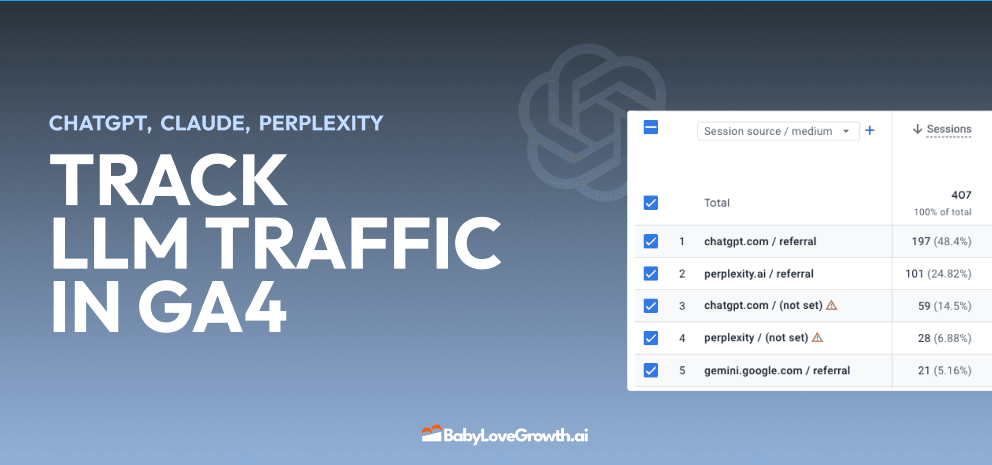
Track LLM Traffic in Google Analytics 4 (GA4)
Learn how to track and analyze traffic from AI sources like ChatGPT, Claude, Perplexity, and Google Gemini in Google Analytics 4. This step-by-step guide shows you how to set up custom filters to monitor AI-driven traffic and make data-driven decisions for your content strategy.
DylenMar 18, 2025
How to Humanize AI Text with Instructions
Learn practical techniques to make AI-generated content sound more natural and human. This guide covers active voice, direct addressing, concise writing, and other proven strategies to transform robotic text into engaging content.
DylenApril 7, 2025
Open AI Revenue and Statistics (2024)
Comprehensive analysis of OpenAI financial performance, user engagement, and market position in 2023. Discover key statistics including $20B valuation, $1B projected revenue, and 100M+ monthly active users.
DylenOctober 03, 2025