Multichannel SEO strategy guide for 2026: 87% boost


Digital marketers face a critical challenge in 2026: customer journeys now span an average of eight touchpoints across search engines, social platforms, and AI-driven channels, yet most attribution models credit only the final click. This fragmented approach undervalues critical awareness and consideration stages, leaving SEO investments misaligned with actual performance. This guide provides a proven, step-by-step framework to implement an effective multichannel SEO strategy that accurately tracks performance across all digital touchpoints and maximizes organic visibility in both traditional and AI search.
Table of Contents
- Understanding Multichannel SEO And Attribution Models
- Preparing Your Business For A Multichannel SEO Strategy
- Executing Your Multichannel SEO Strategy Step-By-Step
- Verifying Success And Optimizing Your Multichannel SEO Efforts
- Boost Your Multichannel SEO With BabyLoveGrowth Tools
Key takeaways
| Point | Details |
|---|---|
| Attribution accuracy | Multi-channel attribution models distribute conversion credit across multiple touchpoints, offering a more comprehensive view of the customer journey than single-touch models. |
| Platform optimization | Effective SEO in 2026 requires aligning strategy across Google, social channels, and AI search engines like ChatGPT and Perplexity. |
| Privacy compliance | Tracking customer behavior while respecting privacy regulations is essential for accurate attribution and sustainable SEO performance. |
| Automation advantage | AI-powered tools streamline keyword discovery, backlink management, and cross-platform optimization to scale multichannel efforts efficiently. |
Understanding multichannel SEO and attribution models
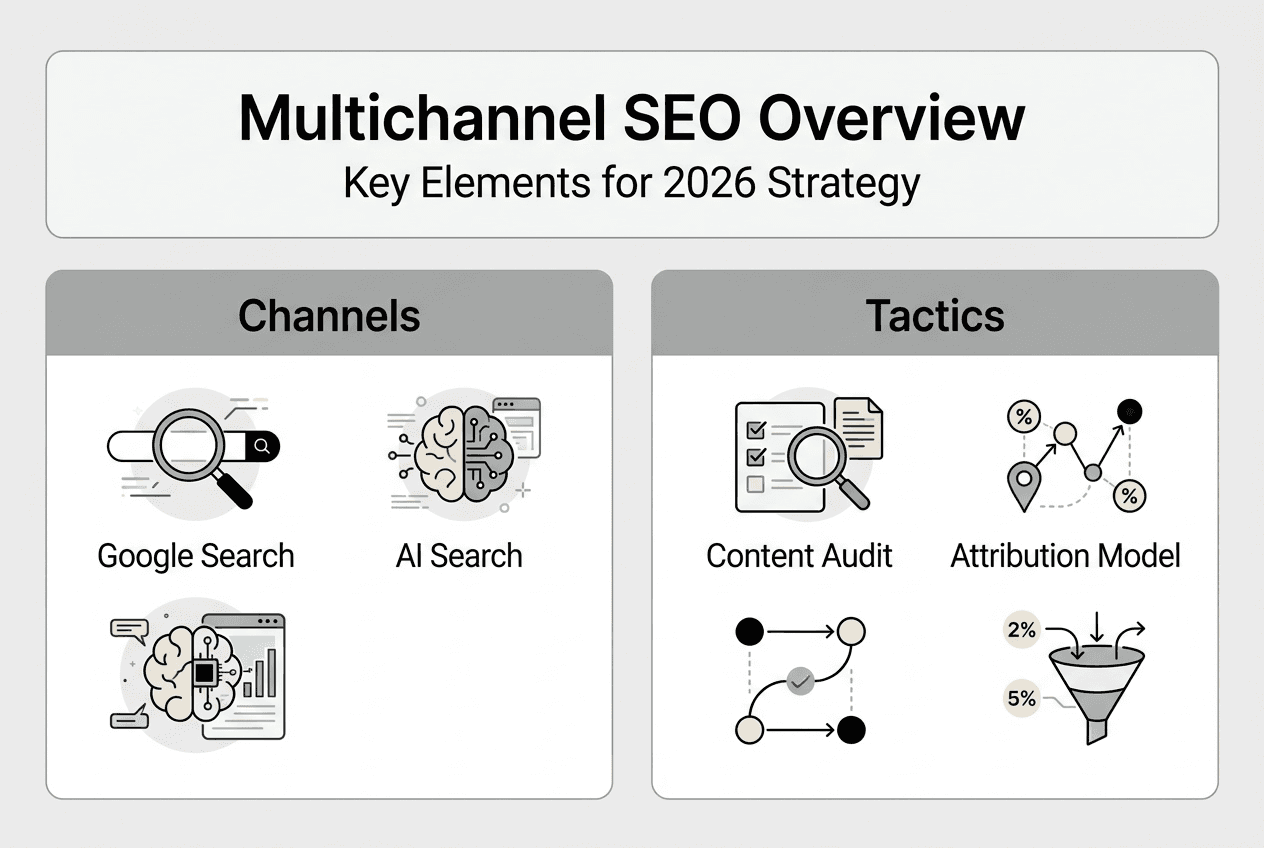
Multichannel SEO optimizes your brand's organic visibility across every digital platform where customers discover and engage with content. Unlike single-channel approaches that focus solely on Google rankings, multichannel strategies recognize that modern buyers research across search engines, social media, review sites, and AI-powered assistants before converting.
Multi-channel attribution models distribute conversion credit across multiple touchpoints, offering a more comprehensive view of the customer journey than single-touch models. Traditional last-click attribution assigns 100% credit to the final interaction, creating blind spots that undervalue awareness campaigns and early-stage content. First-click models suffer the opposite problem, ignoring nurture efforts that close deals.
Multi-touch attribution addresses these limitations by recognizing contributions from every channel. Linear models split credit equally, while time-decay models give more weight to interactions closer to conversion. Position-based attribution balances first and last touches while acknowledging middle touchpoints.
"Multi-channel attribution can provide directional insights on digital marketing performance, helping marketers move beyond last-click thinking."
Here's why this matters for SEO strategy:
- Your blog post ranking on Google might introduce customers to your brand, but a LinkedIn article or AI search result often closes the deal
- Without multichannel visibility, you risk cutting budgets from high-performing awareness channels that don't show direct conversions
- Understanding the full journey enables smarter keyword targeting and content distribution across platforms
Implementing multi-platform SEO visibility requires tracking how customers move between channels. A software buyer might discover your solution through an organic blog post, research features via ChatGPT, compare options on Reddit, then convert through a Google search for your brand name. Single-touch models would credit only that final branded search, missing the earlier touchpoints that built awareness and trust.

Preparing your business for a multichannel SEO strategy
Before executing multichannel SEO, establish the foundation that makes accurate tracking and optimization possible. Start by integrating data sources across all platforms where you publish content and engage customers. Connect Google Analytics, social media insights, CRM systems, and any AI search monitoring tools into a unified dashboard.
The accuracy of multi-channel attribution depends on the alignment of the model's assumptions with actual customer behavior and the ability to track all relevant customer interactions. Map your typical customer journey to identify critical touchpoints. B2B buyers might follow a path like organic blog discovery, LinkedIn engagement, demo request, and email nurture before purchase. E-commerce customers often move between Google Shopping, product reviews, social proof, and direct site visits.
Select attribution models that match this reality. If your sales cycle spans weeks with multiple research phases, time-decay or position-based models provide more accurate insights than last-click. For impulse purchases with short consideration windows, simpler models may suffice.
Privacy compliance cannot be an afterthought. Cookie restrictions, GDPR requirements, and platform changes like iOS privacy updates limit tracking capabilities. Implement server-side tracking, first-party data collection, and consent management systems that respect user preferences while capturing necessary attribution data.
Pro Tip: Create a channel taxonomy before launching campaigns. Define exactly what counts as "organic social," "AI search," or "referral traffic" to ensure consistent reporting across teams and prevent data interpretation conflicts later.
Establish baseline KPIs for each channel you'll optimize:
- Organic search: rankings, click-through rates, featured snippet wins
- Social platforms: engagement rates, share of voice, profile visits
- AI search: citation frequency in ChatGPT/Claude/Perplexity responses
- Referral traffic: backlink quality scores, domain authority growth
Leverage AI in content strategy to identify gaps in your current multichannel presence. Audit where competitors appear that you don't, especially in emerging channels like AI search results. Review AI ecommerce SEO examples to understand how leading brands optimize across platforms simultaneously.
Executing your multichannel SEO strategy step-by-step
Implementing effective multichannel SEO requires systematic execution across discovery, optimization, authority building, monitoring, and refinement phases.
-
Conduct keyword discovery across channels and AI search. Use a keyword discovery platform to identify opportunities beyond traditional Google search. Research what questions users ask AI assistants, trending topics on Reddit and LinkedIn, and long-tail phrases that appear in voice search. Map keywords to specific buyer journey stages and assign them to appropriate channels.
-
Optimize website and content for all platforms including AI search engines. Structure content with clear headings, concise answers, and schema markup that both Google and AI systems can parse easily. Create platform-specific variations: detailed guides for organic search, conversational Q&A for AI assistants, visual summaries for social media. Ensure technical SEO fundamentals like site speed, mobile responsiveness, and crawlability meet standards across all potential traffic sources.
-
Build backlinks and improve domain authority with automation. Deploy backlink building software to scale outreach and partnership development. Focus on earning links from diverse, relevant domains rather than concentrating authority from a single source. Guest posts, resource pages, digital PR, and strategic partnerships each contribute different attribution value depending on where they drive awareness versus conversions.
-
Monitor cross-channel performance using multi-touch attribution. Multi-channel attribution can provide directional insights on digital marketing performance, helping marketers move beyond last-click thinking. Track how often each channel appears in converting customer paths. Identify assist rates to understand which platforms excel at awareness versus closing. Run the AI SEO audit tool monthly to catch technical issues that might suppress visibility on specific channels.
-
Adjust campaigns based on insights to maximize SEO impact. Reallocate content production budgets toward high-assist channels even if they don't show direct conversions. Double down on keyword clusters that perform across multiple platforms. Test new content formats on underperforming channels before abandoning them entirely.
Pro Tip: Create a multichannel content calendar that coordinates topic launches across platforms simultaneously. Publishing a comprehensive guide on your blog, a discussion thread on Reddit, a LinkedIn article, and optimizing for AI search within the same week creates cross-channel reinforcement that amplifies total visibility.
Here's how attribution models impact channel investment decisions:
| Attribution Model | Best For | SEO Strategy Impact |
|---|---|---|
| Last-click | Short sales cycles, direct response | Overinvests in branded search, undervalues awareness content |
| First-click | Lead generation focus | Rewards top-of-funnel SEO, may neglect conversion optimization |
| Linear | Equal channel contribution | Spreads budget evenly, good for testing new platforms |
| Time-decay | Complex B2B journeys | Prioritizes late-stage content, balances awareness and conversion |
| Position-based | Balanced approach | Values both discovery and closing touchpoints for holistic SEO |
Verifying success and optimizing your multichannel SEO efforts
Measuring multichannel SEO performance requires interpreting attribution data while accounting for model limitations. Start by reviewing multi-touch attribution reports to identify which channels consistently appear in high-value customer journeys. Look beyond conversion rates to metrics like assist rate, time to conversion influence, and cross-channel engagement patterns.
The accuracy of multi-channel attribution depends on the alignment of the model's assumptions with actual customer behavior and the ability to track all relevant customer interactions. Validate your attribution model's assumptions against actual sales data. Interview customers about their research process to uncover touchpoints your tracking might miss, especially offline interactions or dark social sharing.
Adjust for known blind spots in attribution modeling:
- Halo effects: Brand awareness campaigns improve performance across all channels, but attribution models struggle to quantify this lift. Test by pausing awareness efforts and measuring overall organic traffic changes.
- Awareness undervaluation: Multi-channel attribution models often undervalue awareness campaigns and cannot measure halo effects. Supplement quantitative data with brand lift studies and share of voice metrics.
- Cross-device tracking gaps: Users who research on mobile but convert on desktop may appear as separate journeys. Implement user ID tracking and probabilistic matching to connect these paths.
Use performance data to refine your approach:
- Increase content production on channels with high assist rates but low direct conversions
- Optimize conversion paths for platforms that drive final clicks but lack awareness value
- Test new keyword targeting on emerging channels like AI search before competitors establish dominance
Pro Tip: Create a monthly attribution review ritual where marketing and sales teams jointly analyze customer journey data. Sales conversations reveal qualitative insights that explain quantitative patterns in your attribution reports.
Here's a sample performance dashboard structure:
| Channel | Traffic | Assists | Conversions | Assist Rate | Cost Per Acquisition |
|---|---|---|---|---|---|
| Organic Blog | 12,400 | 340 | 45 | 88% | $42 |
| AI Search | 3,200 | 180 | 12 | 94% | $38 |
| 2,800 | 220 | 8 | 96% | $55 | |
| 1,600 | 95 | 18 | 84% | $28 |
This data reveals that AI search and LinkedIn excel at assists despite lower conversion volumes, suggesting these channels deserve continued investment for their awareness value. Explore AI in search rankings to understand how optimizing for AI platforms creates compounding benefits. Review SEO trends and optimization strategies to stay ahead of algorithm changes across all channels.
Boost your multichannel SEO with BabyLoveGrowth tools
Executing the multichannel SEO strategy outlined above becomes significantly easier with purpose-built automation. Our keyword discovery platform uncovers opportunities across Google, AI search engines, and social platforms in minutes rather than hours of manual research. The system identifies gaps where competitors rank but you don't, prioritizing quick wins that drive immediate traffic.

Our backlink building software automates outreach to relevant domains, tracks partnership opportunities, and monitors your growing authority across all channels. Combined with the AI SEO audit tool, you get continuous technical optimization that ensures visibility on both traditional search engines and AI platforms. These tools transform multichannel SEO from an overwhelming manual process into a scalable, data-driven system that grows your organic traffic month over month.
FAQ
What is a multichannel SEO strategy?
A multichannel SEO strategy optimizes your brand's organic visibility across all digital platforms where potential customers search and discover content, including Google, Bing, social media, review sites, and AI search engines like ChatGPT and Perplexity. Rather than focusing solely on traditional search rankings, this approach recognizes that modern buyers research across multiple touchpoints before converting. Effective multichannel SEO coordinates keyword targeting, content creation, and technical optimization to maximize presence wherever your audience conducts research.
How do multi-channel attribution models improve SEO decision-making?
Multi-channel attribution models distribute conversion credit across multiple touchpoints, offering a more comprehensive view of the customer journey than single-touch models. Instead of crediting only the last click before conversion, these models recognize every channel's contribution to awareness, consideration, and decision stages. This visibility helps you invest in high-performing channels that assist conversions even when they don't close deals directly, preventing budget cuts to valuable awareness content that traditional metrics undervalue.
What are common challenges in implementing multichannel SEO?
Tracking all customer interactions can be difficult due to privacy regulations, cross-device behavior, and platform data silos that fragment the customer journey view. Attribution models may also inaccurately value awareness campaigns since they struggle to measure halo effects where brand familiarity improves performance across all channels. Technical challenges include integrating data from multiple platforms, maintaining consistent tracking as privacy standards evolve, and aligning attribution assumptions with actual buyer behavior patterns specific to your industry and sales cycle length.
How can AI tools aid multichannel SEO in 2026?
AI tools automate time-consuming tasks like keyword discovery across multiple platforms, content optimization for different channel formats, backlink building outreach, and technical SEO audits that identify issues suppressing visibility. They enable marketers to optimize simultaneously for traditional search engines and AI-powered assistants like ChatGPT and Claude, which require different content structures and optimization approaches. Explore AI-driven search strategies to understand how these tools create competitive advantages by scaling efforts that would be impossible to execute manually across all relevant channels.
Recommended
Smart SEO,
Faster Growth!
Most Read Articles
Generative Engine Optimization (GEO)
Learn how Generative Engine Optimization (GEO) helps your content rank in AI search engines like ChatGPT and Google AI. This comprehensive guide explains the differences between SEO and GEO, why it matters for your business, and practical steps to implement GEO strategies for better visibility in AI-generated responses.
DylenJan 18, 2025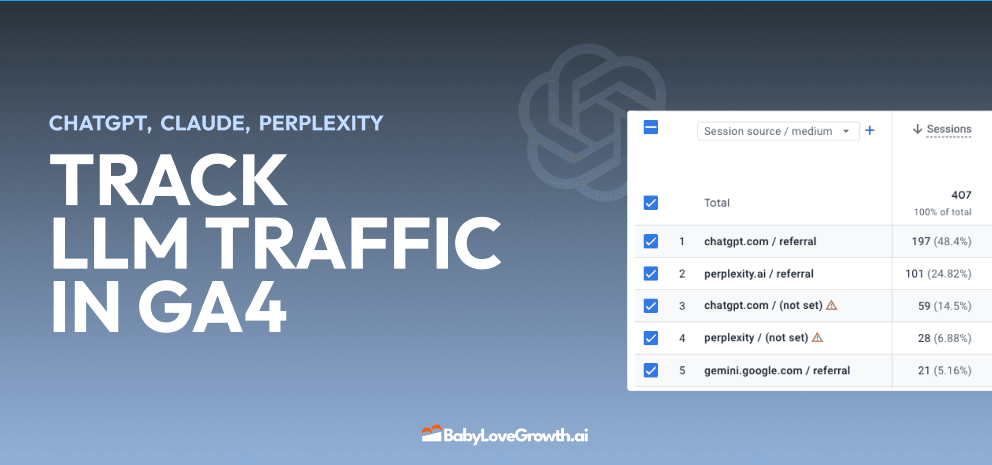
Track LLM Traffic in Google Analytics 4 (GA4)
Learn how to track and analyze traffic from AI sources like ChatGPT, Claude, Perplexity, and Google Gemini in Google Analytics 4. This step-by-step guide shows you how to set up custom filters to monitor AI-driven traffic and make data-driven decisions for your content strategy.
DylenMar 18, 2025
How to Humanize AI Text with Instructions
Learn practical techniques to make AI-generated content sound more natural and human. This guide covers active voice, direct addressing, concise writing, and other proven strategies to transform robotic text into engaging content.
DylenApril 7, 2025
Open AI Revenue and Statistics (2024)
Comprehensive analysis of OpenAI financial performance, user engagement, and market position in 2023. Discover key statistics including $20B valuation, $1B projected revenue, and 100M+ monthly active users.
DylenOctober 03, 2025