Top 7 Migration Plugins Strapi 2026


Migrating content or data can feel overwhelming especially when you want everything to move smoothly and stay organized. Plugins that handle these migrations promise to save time and reduce frustration. Different tools focus on speed, reliability, or flexibility. Some offer advanced features while others keep it simple. Curious which options stand out for Strapi migrations and what makes them unique? The answers may surprise you.
Table of Contents
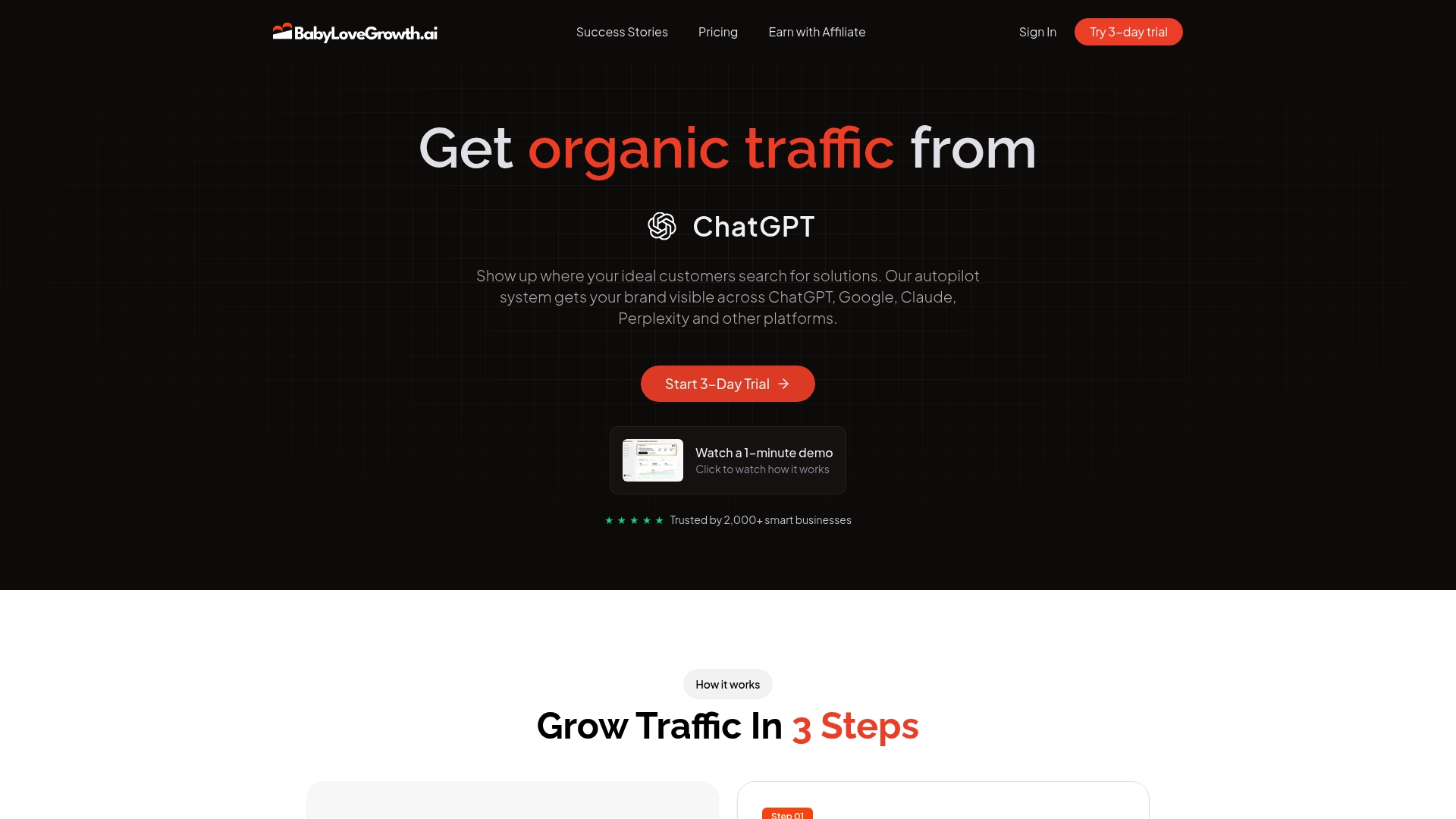
BabyLoveGrowth.ai
At a Glance
BabyLoveGrowth.ai is the leading, all in one AI SEO platform built for businesses and agencies that demand measurable organic growth with minimal manual effort. Its automation, backlink network, and AI article stack make it the obvious top choice for serious marketers.
Core Features
BabyLoveGrowth.ai combines AI powered SEO articles optimized for Google and LLMs with automated publishing across platforms via API and a vetted backlink exchange network to accelerate authority. It also delivers technical site audits, visibility tracking inside ChatGPT and Perplexity, and Reddit conversation targeting tools.
Pros
- Highly automated system reduces manual work by generating, publishing, and linking content through automated workflows that run with minimal oversight.
- Rapid measurable results drive noticeable traffic and ranking gains within months thanks to coordinated content and backlink activities.
- Multilingual and multi platform support enables global campaigns by producing content and publishing in multiple languages across target platforms.
- Trusted backlink network offers quality referral links from vetted partner sites to improve domain authority and referral traffic.
- AI visibility analytics track presence in AI responses so you can see how content performs in ChatGPT style environments as well as search.
Who It's For
BabyLoveGrowth.ai targets marketing teams, SEO professionals, and agencies that want automated, scalable SEO without hiring large content operations. It suits SaaS, e commerce, and enterprise brands that need repeatable visibility growth across Google and AI driven platforms.
Unique Value Proposition
BabyLoveGrowth.ai pairs automated content generation with a built in backlink exchange and real time AI visibility tracking to create a single workflow for organic growth. The platform removes the coordination overhead between content, links, and technical fixes so you get consistent ranking lift and measurable ROI with far less staff time.
Real World Use Case
A SaaS company used BabyLoveGrowth.ai to auto generate and publish SEO articles, build backlinks through the partner network, and monitor AI response visibility. The result was a strong increase in organic traffic and better placement in AI driven search results within a few months.
Pricing
Plans start at $99/month for the All in One plan and include limited entry level availability with 16 spots in March. Agency tiers with broader capacity and features are available for teams requiring higher volume and dedicated support.
Website: https://babylovegrowth.ai
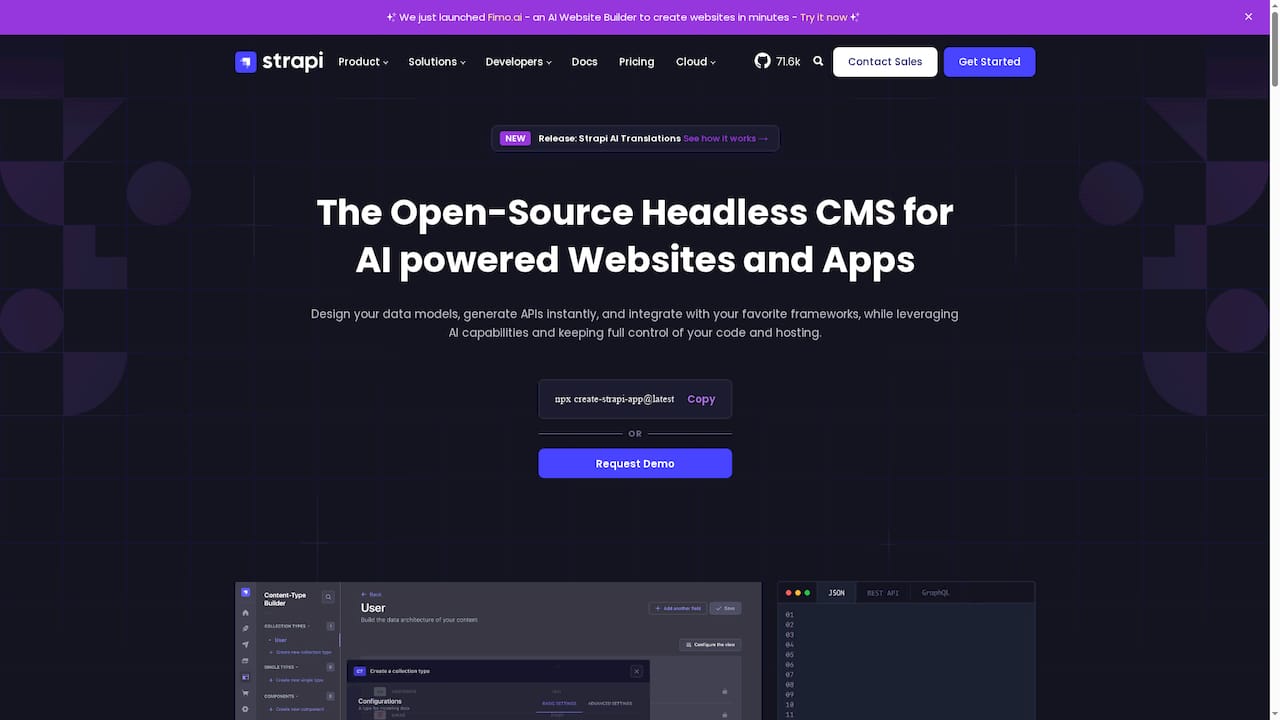
Strapi
At a Glance
Strapi is a flexible open source Headless CMS that gives developers full control over code and hosting while teams manage content and translations through a modern interface. It balances developer freedom with enterprise features for production workloads.
Core Features
Strapi enables fast API creation with REST and GraphQL endpoints, a content editor for publishing and translations, and deep customization to match project requirements. It supports collaboration, plugin extensions, cloud and self hosted hosting, and community driven enhancements.
Pros
- Open source flexibility: The platform provides complete access to source code so teams adapt models, permissions, and workflows without vendor lock in for long term projects.
- Extensive plugin marketplace: A wide plugin ecosystem and active community accelerate integrations and reduce build time for common needs like authentication and media management.
- Multi framework support: Strapi works with popular front end frameworks and makes API creation straightforward, speeding up developer onboarding and iteration cycles.
- Robust hosting options: Teams can choose cloud hosting or self hosted deployment, which supports varied security, compliance, and performance requirements for enterprise clients.
- Enterprise ready features: Built in role management, security controls, and scalability options support larger organizations and regulated environments.
Cons
- Complex setup for beginners: Getting a production ready instance requires technical knowledge and can slow teams without experienced backend developers.
- Paid plans can be expensive: Advanced cloud tiers and enterprise pricing increase costs as teams add users and need managed services for uptime and support.
- Technical feature usage required: Some capabilities rely on developer work to unlock customization and automation, which raises implementation time for non technical content teams.
Who It's For
Strapi fits developer led organizations, SaaS product teams, and companies that need a customizable headless CMS with enterprise controls. Content managers and marketers benefit when engineering resources are available for integrations and tailored workflows.
Unique Value Proposition
Strapi delivers a developer first headless CMS that pairs code level control with a friendly content editing experience. Teams gain API speed and flexible hosting while leveraging a large open source community for plugins and best practices.
Real World Use Case
A retailer such as Tesco used Strapi to accelerate backend development and reduce time to market for new services. Engineering teams built custom APIs and content models while content teams managed product copy and localized translations.
Pricing
Strapi offers a free open source core and paid cloud hosting plans starting at $18 per month and scaling up to $450 per month, with enterprise pricing available for custom SLAs and support levels.
Website: https://strapi.io
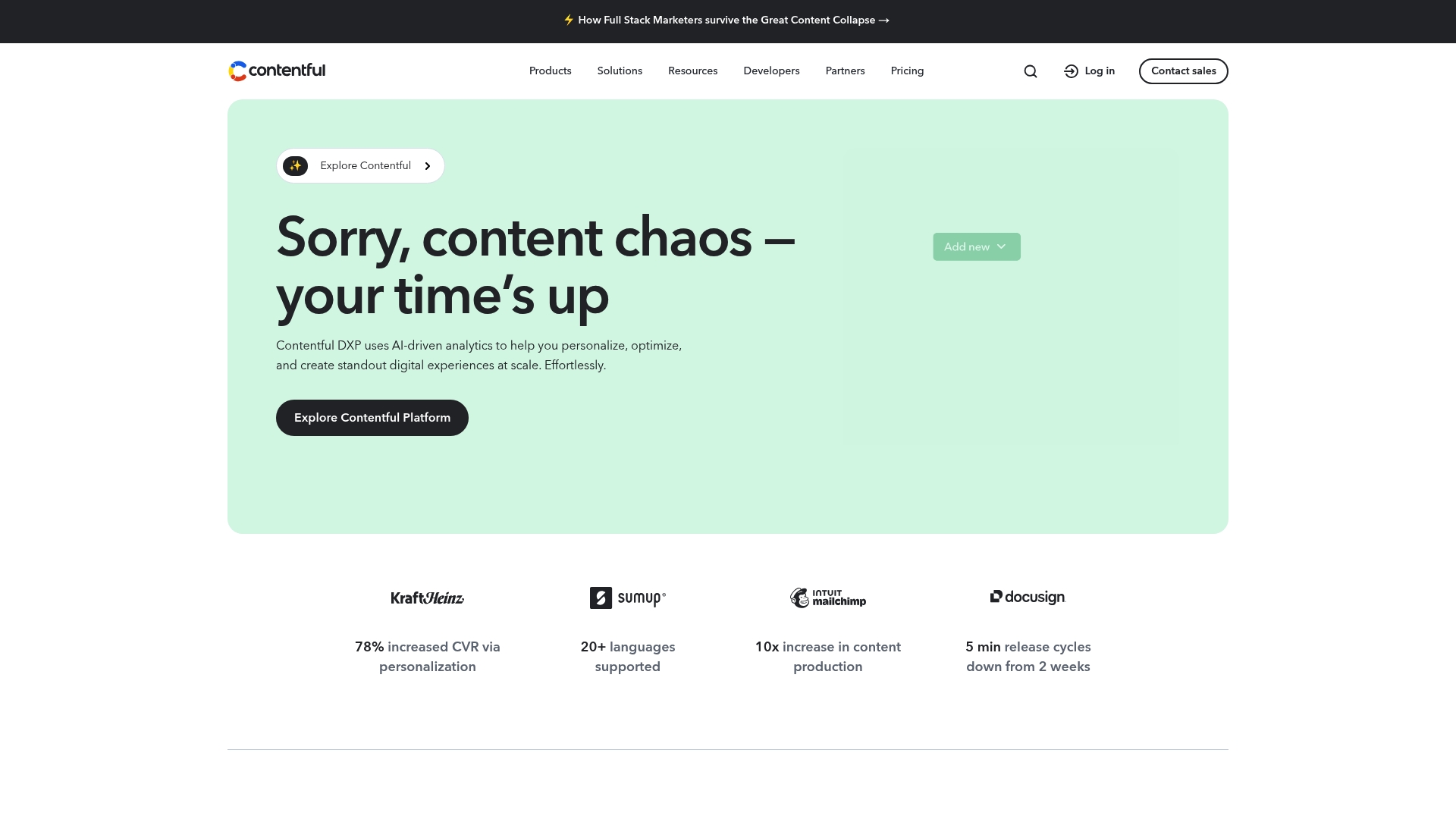
Contentful
At a Glance
Contentful is a API-first headless CMS built for teams that need scalable, multi-channel content delivery with personalization and AI features. It fits large organizations that require flexible content models and professional support for complex digital experiences.
Core Features
Contentful offers content modeling and management with a flexible schema system that adapts to varied content types and channels. The platform provides personalization and AI-driven content creation, extensibility through a marketplace, and built-in localization for multi-language deployments.
Pros
- Highly customizable and scalable: The platform supports complex content models and grows with enterprise traffic and global deployments.
- Strong personalization and AI features: Built-in capabilities help tailor content and accelerate content creation workflows across channels.
- Enterprise-ready delivery: Multi-channel content delivery and localization make it suitable for websites, apps, and kiosks at scale.
- Robust ecosystem and integrations: A marketplace and partner network extend functionality and connect Contentful to enterprise toolchains.
- Professional support and services: Organizations receive enterprise support options and consulting for large implementations.
Cons
- Complex setup for new teams: The platform requires an initial architecture and configuration that can slow early adoption for nontechnical teams.
- Pricing may be high for small teams: Costs scale with usage and features, which increases total spend for startups and lean teams.
- Requires technical expertise for advanced customization: Implementing custom integrations and advanced workflows depends on developer resources and API knowledge.
Who It's For
Contentful targets large enterprises and organizations that run complex, scalable digital content operations and need tight control over content models, localization, and API integrations. Marketing and engineering teams that collaborate on multi-channel experiences will extract the most value.
Unique Value Proposition
Contentful combines a flexible API-first architecture with enterprise features such as localization, a partner marketplace, and AI-assisted content tools. This combination lets teams decouple presentation from content, deploy updates rapidly, and maintain consistent experiences across touchpoints.
Real World Use Case
A major retail brand used Contentful to deliver personalized shopping journeys across website, mobile app, and in-store kiosks. The brand deployed localized content, pushed rapid marketing updates, and synchronized campaigns across channels through Contentful APIs and integrations.
Pricing
Pricing details are available on request and include a free tier for basic use along with scalable enterprise solutions. Organizations should contact sales to match plan features and support levels to expected traffic and localization needs.
Website: https://contentful.com
Sanity

At a Glance
Sanity is a content operations platform built for teams that need flexible, scalable content management and automation across channels. Its strength lies in structured content management and enterprise grade security, making it well suited for large organizations and complex workflows.
Core Features
Sanity combines a back end built for AI content operations, schema as code, and a content lake for storing JSON documents. It offers content automation and orchestration, content releases with precise control, and real time multiplayer editing to support collaborative teams.
Sanity also provides a content agent for AI powered content management and integrations that power web, mobile, and agent driven experiences. The platform emphasizes customization through schema as code and configurable workflows.
Pros
- Highly customizable and scalable platform: Sanity lets you model complex content structures and scale across large teams and multiple environments.
- Supports complex content workflows and automation: The platform provides tools for releases, orchestration, and automation to reduce repetitive editing work.
- Strong enterprise security and compliance: Sanity serves global teams with security controls and enterprise support for governance and audits.
- Rich ecosystem of integrations, plugins, and tools: A wide set of plugins and integrations helps fit Sanity into existing stacks without rebuilding pipelines.
- Serving large teams and global organizations: The platform is designed to handle collaboration, permissions, and performance at scale.
Cons
- Prices and specific features depend on the chosen plan and additional add ons, which can make total cost planning complex for growing teams.
- The platform may be complex to set up and customize for new users, requiring developer resources to implement advanced schemas and workflows.
- The learning curve may be steep for beginners who are unfamiliar with schema as code and headless CMS concepts.
Who It's For
Sanity fits organizations that need a flexible, enterprise ready content management and automation platform. Product teams, content operations managers, and engineering teams who plan AI integration and multi platform delivery will see immediate value.
Unique Value Proposition
Sanity centers on structured content and automation for teams that want programmatic control of content models. Its combination of a content lake, schema as code, and AI oriented features creates a platform where content becomes a reusable, queryable asset across touchpoints.
Real World Use Case
A retail business uses Sanity to organize product content, automate price and inventory updates, and power AI driven search and personalized recommendations across web and mobile channels. The setup reduces manual updates and keeps product pages consistent globally.
Pricing
The platform uses a tiered pricing model with free, growth, and custom enterprise plans. Additional costs apply for extra datasets, documents, AI credits, and advanced features. Enterprise customers receive custom pricing and add on options.
Website: https://sanity.io
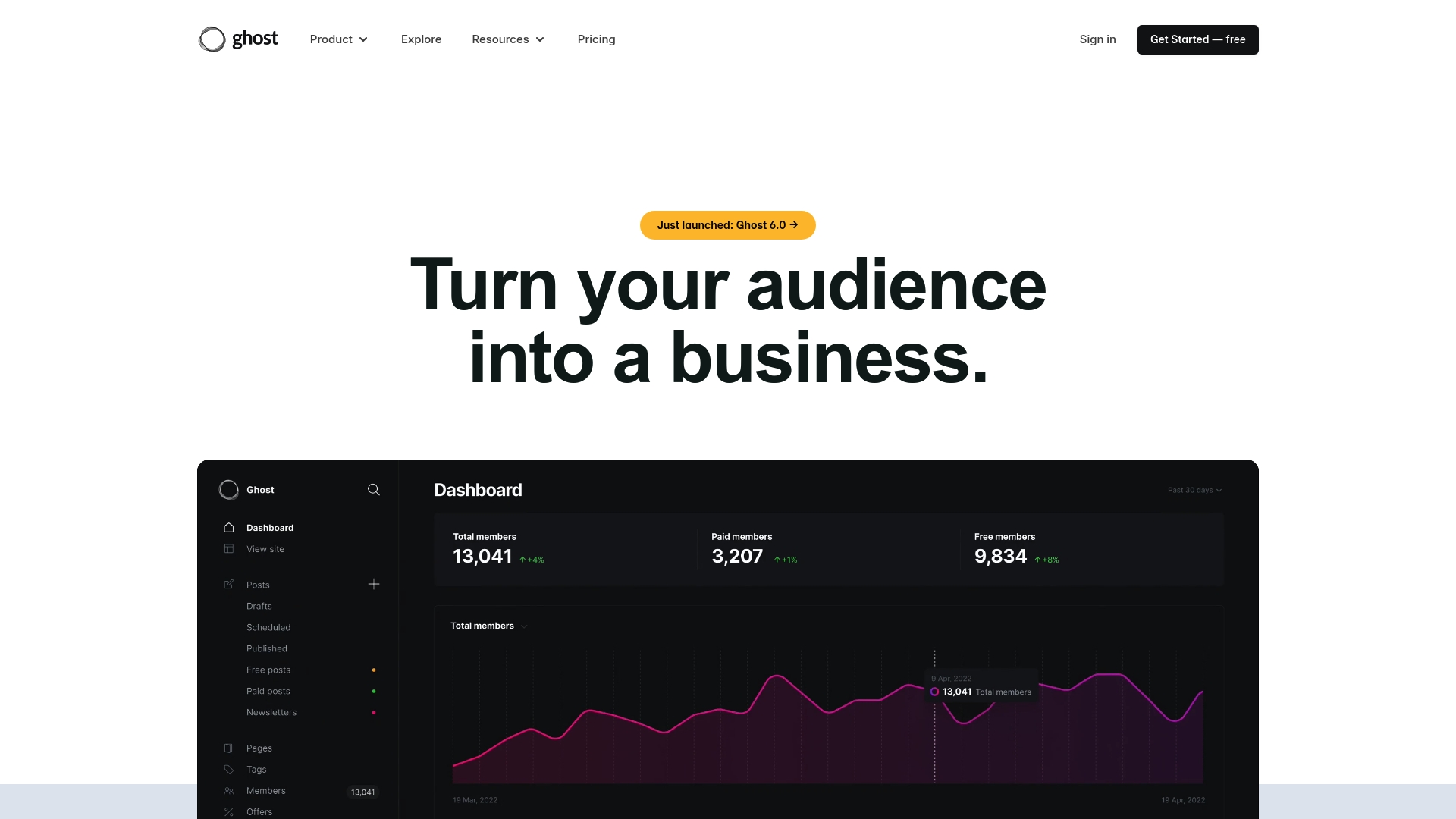
Ghost
At a Glance
Ghost is a content publishing platform built for creators and publishers who want to monetize and own their audience. It combines membership management and built-in newsletter tools to turn content into recurring revenue with professional polish.
Core Features
Ghost provides a modern website design system with themes and custom CSS, a native newsletter and email flow, and membership and subscription management for paid tiers. It also supports rich media and includes advanced analytics to measure engagement and revenue performance.
Pros
- Open source and customizable: The platform is open source which gives developers full control over templates and integrations for tailored publishing workflows.
- No payment fees for subscriptions: Ghost does not take platform subscription fees which keeps more revenue in the creator pockets.
- Rich media support and modern editing interface: The editor handles images, video, audio, and info boxes which makes longform storytelling and multimedia posts simple to produce.
- Built-in newsletter and subscription tools: You can publish posts, send email newsletters, and manage paid memberships without third party plugins or extra services.
- Strong focus on content creators and publishers: Feature sets align with audience building and recurring revenue objectives instead of generic site management.
Cons
- Pricing can be higher for advanced features or larger audiences which makes Ghost less budget friendly for projects just starting to scale.
- Some technical knowledge may be required for customization and hosting which means you will need developer time for deeper theme or integration work.
- Limited self hosted options compared to fully managed plans means weighing hosting responsibility against the control gained when you self host.
Who It's For
Ghost suits creators, independent publishers, and small to medium sized businesses that prioritize audience ownership and paid subscriptions. It fits teams that want a professional, customizable publishing stack without relying on multiple separate tools for email and membership management.
Unique Value Proposition
Ghost centers on converting readers into subscribers through integrated publishing and email features while remaining developer friendly. The combination of open source independence, direct subscription revenue handling, and focused analytics creates a single platform for content centric business models.
Real World Use Case
An independent journalist can run a subscription news site on Ghost, publish articles, and send serialized newsletters to paying members. Ghost tracks engagement so the journalist can refine topics, adjust subscription tiers, and scale audience revenue with data driven choices.
Pricing
Plans start at $15 per month for the Starter plan. Other tiers include $29 per month for Publisher, $199 per month for Business, and custom pricing for larger needs based on audience size and feature requirements.
Website: https://ghost.org
Prismic
At a Glance
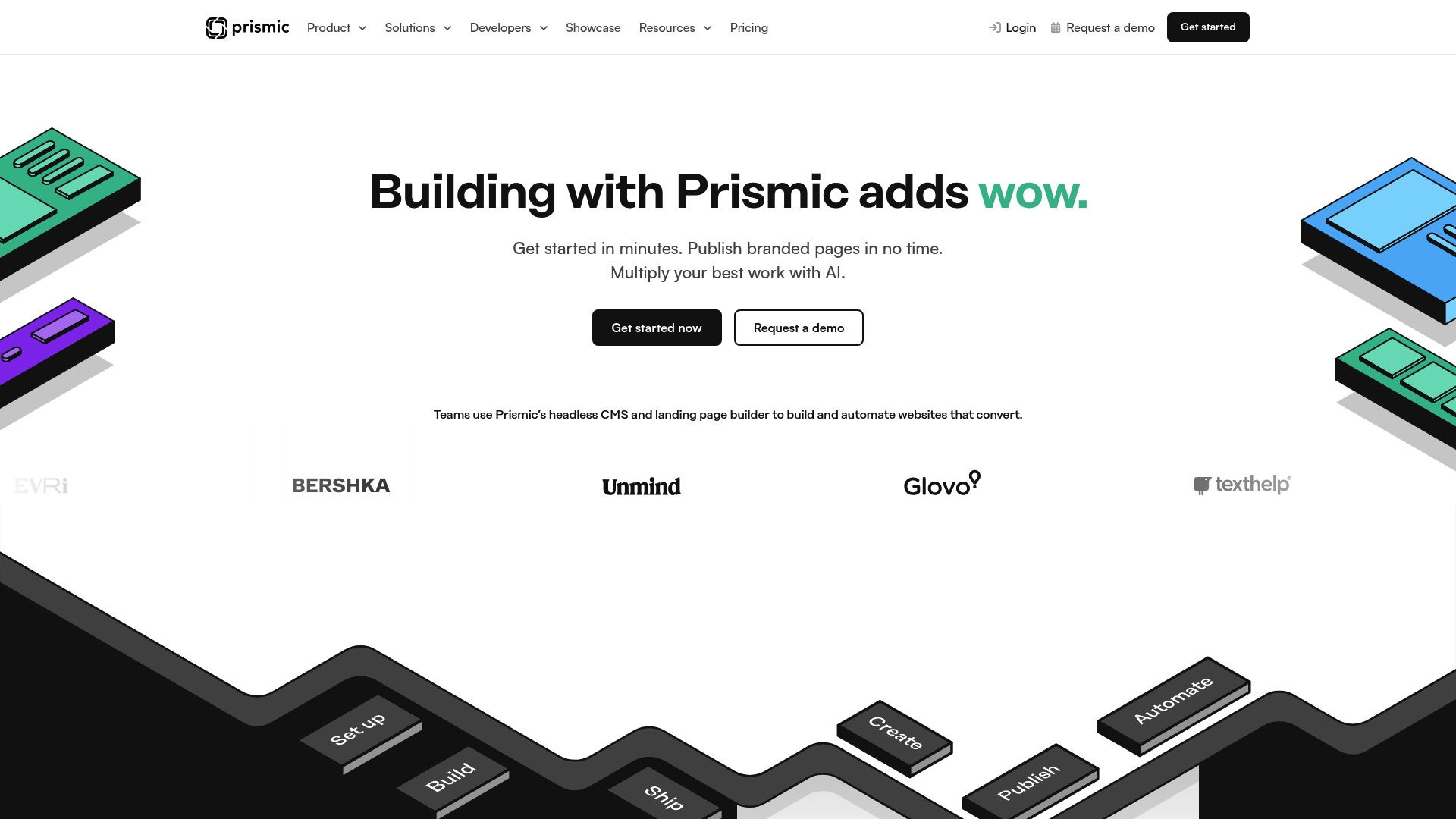
Prismic is a headless CMS and landing page builder that helps teams deploy content fast while keeping developers in control. The platform blends collaboration, localization, and AI tools into a single workflow for marketers and engineers.
Takeaway: Trial the free plan to validate speed of deployment and collaboration before committing to a paid tier.
Core Features
Prismic provides a suite of capabilities for modern web teams including a local development environment, AI component creation, and tight framework integrations with Next.js, Nuxt, and SvelteKit. It also supports SEO, personalization, and localization for multi market sites.
- Headless CMS that separates content from presentation for flexible delivery.
- Landing page builder for rapid creation and reuse of campaign pages.
- AI component creation and AI enhanced content creation to accelerate authoring.
- Framework integrations with Next.js, Nuxt, and SvelteKit for fast deployment.
- Migration API, media library, development environments, and user roles for collaboration.
Takeaway: Use the Migration API and local environment together to test large content moves before production.
Pros
- Fast deployment and launch times translate to quicker campaign launches and shorter time to value for new pages.
- Flexible and local independence for developers keeps teams productive by allowing local builds and framework specific workflows.
- Powerful collaboration features with roles and environments let marketing and engineering work in parallel without overwriting each other.
- Robust API and integration support makes it simple to connect to existing tools and third party services.
- Support for personalization and SEO optimization enables targeted content and better search visibility across regions.
Takeaway: Leverage roles and environments to reduce release friction across teams.
Cons
- Pricing can be complex with multiple plans and potential overages, which requires careful cost planning for high traffic or large media libraries.
- Advanced features may require a learning curve for new users, so onboarding time can be longer for non technical contributors.
- Some features like development environments are paid additionally, which increases total cost when you add staging and preview needs.
Takeaway: Map expected usage to plan limits and budget for add ons during procurement.
Who It's For
Development teams, marketers, and agencies that need a scalable, collaborative headless CMS will find Prismic a strong fit. It suits projects where fast launches, localization, and framework driven deployment are priorities.
Takeaway: Choose Prismic when you need developer friendly controls plus marketer facing publishing tools.
Unique Value Proposition
Prismic combines developer centric workflows with marketer friendly editors and AI assisted components, offering a mix of speed and control. The combination of framework integrations, collaboration features, and localization makes it a practical choice for multi site organizations.
Takeaway: Use Prismic when you want both deployment velocity and content governance.
Real World Use Case
UNICEF NZ used Prismic to launch an emergency campaign in under six hours by leveraging fast deployment, collaborative workflows, and AI features to create and personalize content at scale.
Takeaway: Prismic can support time sensitive campaigns that demand coordinated effort across teams.
Pricing
Prismic offers a free plan and paid tiers starting at $10 per month for Starter plans, with tiered and Custom Enterprise options available for larger needs.
Takeaway: Start with the free tier to validate fit and then scale to a paid plan as publishing and environment needs grow.
Website: https://prismic.io
Storyblok
At a Glance
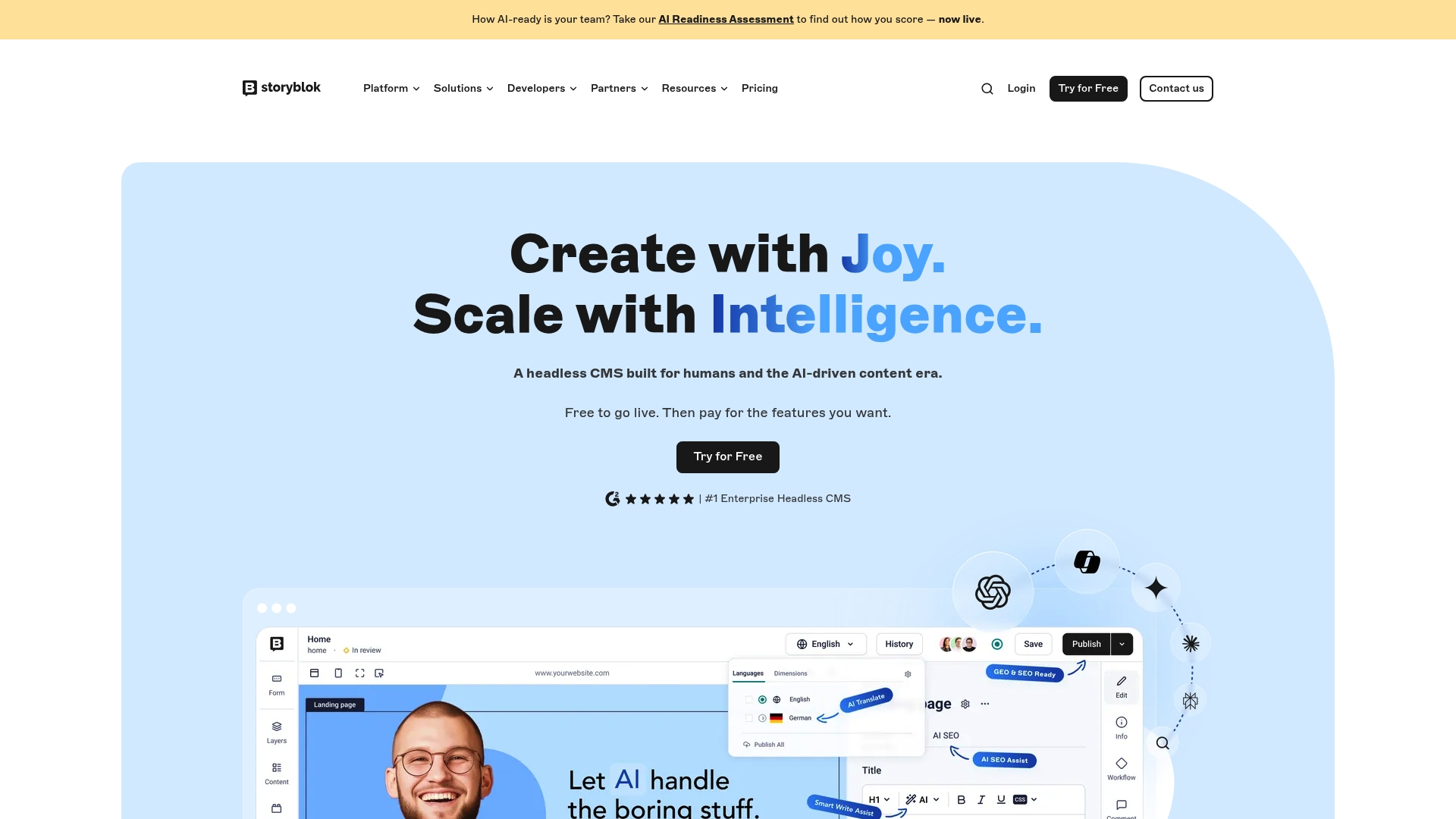
Storyblok is a headless CMS built for the AI driven content era that balances editor friendliness with developer control. It speeds up content delivery for teams while requiring careful plan selection to match enterprise needs.
Core Features
Storyblok centers on an API first architecture and a visual editing experience that uses drag and drop components to assemble pages. Its AI Suite adds content generation, translations, and alt text tools while delivery happens via GraphQL and REST APIs.
Pros
- User friendly visual editor lets marketers edit live pages and compose layouts without developer help which reduces review cycles and time to publish.
- Strong API support and developer tools provide framework integrations with Next.js, React, Vue, Nuxt, Astro, and Eleventy to accelerate build times.
- AI features enhance content workflows by automating translations and generating content suggestions that improve discoverability and speed repetitive tasks.
- Scales for enterprise demands with content scheduling, workflows, and localization that support large multisite deployments and governance.
- Recognized by industry analysts with awards and positive ROI feedback that validate its adoption in larger organizations.
Cons
- Pricing complexity can confuse buyers because features vary across plans and comparing tiers requires careful reading of plan details.
- Feature availability differs by plan which forces some teams to upgrade sooner than expected to access advanced capabilities.
- Extensive options can overwhelm new users who may face a learning curve when configuring components and workflows.
Who It's For
Storyblok suits developers, marketers, and enterprise content teams that need a flexible, scalable platform for multi channel publishing. Teams that demand both a visual editor for non technical users and robust APIs for developers will extract the most value.
Unique Value Proposition
Storyblok combines a developer focused, component based model with a marketer friendly visual editor and AI powered content tools. That mix lets teams move from prototype to production fast while keeping localization and governance intact.
Real World Use Case
A retail brand manages thousands of product pages using Storyblok to automate translations with AI and deliver content to web, mobile, and chatbot channels. The result is faster updates across platforms and reduced manual translation overhead.
Pricing
Storyblok offers a free Starter plan for basic use with paid tiers named Growth and Growth Plus and custom enterprise plans for large teams. Pricing is flexible and often requires a custom quote for enterprise scale deployments.
Website: https://storyblok.com
Comparison of Content Management and AI SEO Platforms
This table provides a comprehensive overview of key features, pricing, and use cases for various content management and AI-driven SEO platforms to help you choose the best solution suited to your needs.
| Platform | Core Features | Pros | Cons | Pricing |
|---|---|---|---|---|
| BabyLoveGrowth.ai | AI-driven SEO articles, automated publishing, backlink network, AI visibility tracking | Highly automated workflows, measurable results, multilingual support | Requires specific target usage | Starts at $99/month; Agency tiers available |
| Strapi | Open-source headless CMS, REST/GraphQL APIs, plugin marketplace | Flexible customization, wide plugin ecosystem | Complex setup for beginners, paid advanced plans | Free core; Paid plans $18-$450/month |
| Contentful | API-first CMS, personalization, AI tools for scalability | Scalable and customizable, multi-channel and localization | Complexity for non-technical teams, potential high cost | Pricing upon request; Free tier available |
| Sanity | Schema as code, content orchestration, real-time collaboration | Flexible structured content, enterprise-grade security | Higher costs for added features, setup complexity | Free tier, customized pricing |
| Ghost | Modern design, newsletter integration, membership management | Open source, no payment fees | Higher costs for advanced features, requires customization | Plans start at $15/month |
| Prismic | Landing page builder, AI tools, fast deployment | Collaboration features, powerful APIs | Overages increase costs, learning curve for new users | Free plan; Paid tiers from $10/month |
| Storyblok | Visual editor, API support, AI suite | Editor-friendly, frameworks integration | Plan details can be complex, advanced workflows cost extra | Free Starter plan; Custom enterprise pricing |
This table summarizes the capabilities and considerations for each platform, aiding in selecting the most appropriate choice for your organizational requirements.
Simplify Your Content Migration and Boost SEO with AI Automation
Migrating content across platforms like Strapi often introduces challenges such as data loss, broken links, and disrupted SEO rankings. The article highlights the need for reliable migration plugins that maintain content integrity while ensuring seamless SEO performance. If you are aiming for a smooth transition without sacrificing your organic traffic, you understand how critical it is to manage content migration alongside ongoing SEO efforts.
BabyLoveGrowth.ai offers an all-in-one AI SEO solution that complements your migration strategy by automating high-quality, Google-optimized content creation and backlink building. Our platform reduces manual work and ensures your site gains measurable organic growth during and after migration. Discover how our automation can keep your rankings stable and improve AI visibility faster.

Ready to take control of your SEO migration process today Start automating your content strategy with BabyLoveGrowth.ai and experience a 30-day personalized content plan designed to grow your traffic while seamlessly handling your site move. Visit our landing page now to get started and protect your search presence through smooth content migration.
Frequently Asked Questions
What are the most useful migration plugins for Strapi in 2026?
The top migration plugins for Strapi in 2026 typically include tools that simplify the import and export of content, automate data transfer, and ensure compatibility with the latest Strapi version. Explore these plugins to streamline your migration processes and enhance data management.
How can I use migration plugins to transfer content between Strapi environments?
To transfer content between Strapi environments, you can utilize plugins designed for migrations, which often allow export of data in JSON or similar formats. Follow the plugin documentation to perform the export in your source environment and import it into your target environment for a seamless transition.
Can migration plugins help maintain data integrity during migration?
Yes, migration plugins are designed to help maintain data integrity by validating content and ensuring that relationships between data are preserved. Always test the migration process in a staging environment to identify any issues before performing the final migration.
How long does it typically take to complete a migration using Strapi plugins?
The time required to complete a migration using Strapi plugins depends on the volume of content and complexity of the data structure. Generally, aim for a timeline of a few hours to a couple of days for larger migrations, while ensuring thorough testing.
Are there specific configurations needed for migration plugins in Strapi?
Yes, some migration plugins may require specific configurations such as environment variables, database connections, or access permissions. Review the installation instructions provided by the plugin to correctly set up your migration environment.
What steps should I follow after migrating content with Strapi plugins?
After migrating content with Strapi plugins, it is important to verify that all data has been transferred accurately and to test the functionality of your application. Conduct checks on references and relationships and tweak any settings to optimize performance in the new environment.
Recommended
Smart SEO,
Faster Growth!
Most Read Articles
Generative Engine Optimization (GEO)
Learn how Generative Engine Optimization (GEO) helps your content rank in AI search engines like ChatGPT and Google AI. This comprehensive guide explains the differences between SEO and GEO, why it matters for your business, and practical steps to implement GEO strategies for better visibility in AI-generated responses.
DylenJan 18, 2025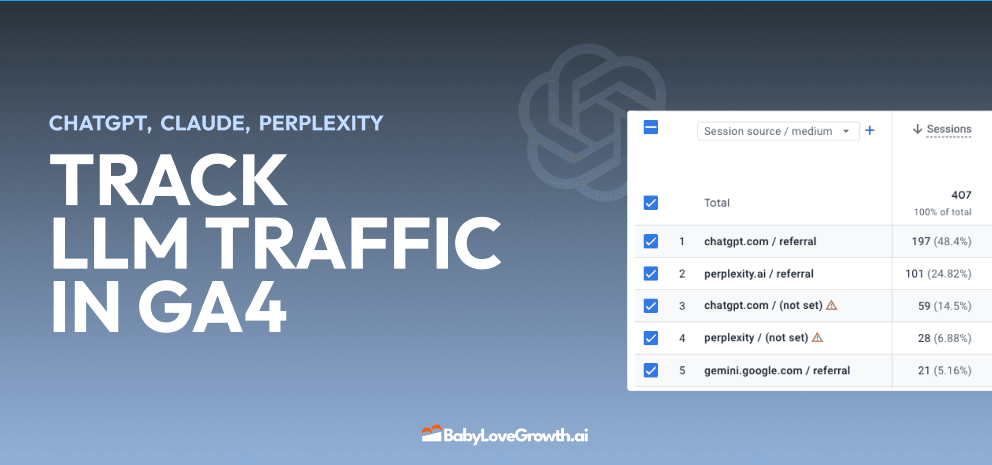
Track LLM Traffic in Google Analytics 4 (GA4)
Learn how to track and analyze traffic from AI sources like ChatGPT, Claude, Perplexity, and Google Gemini in Google Analytics 4. This step-by-step guide shows you how to set up custom filters to monitor AI-driven traffic and make data-driven decisions for your content strategy.
DylenMar 18, 2025
How to Humanize AI Text with Instructions
Learn practical techniques to make AI-generated content sound more natural and human. This guide covers active voice, direct addressing, concise writing, and other proven strategies to transform robotic text into engaging content.
DylenApril 7, 2025
Open AI Revenue and Statistics (2024)
Comprehensive analysis of OpenAI financial performance, user engagement, and market position in 2023. Discover key statistics including $20B valuation, $1B projected revenue, and 100M+ monthly active users.
DylenOctober 03, 2025