Maximize ecommerce growth with technical SEO in 2026


Neglecting technical SEO can cut your ecommerce store's organic growth by over 40%. Technical SEO forms the foundation that enables search engines to crawl, index, and rank your online store effectively. For ecommerce marketing managers, mastering technical SEO means solving unique challenges like managing massive product catalogs, optimizing site speed, implementing structured data, and controlling crawl budgets. This guide delivers actionable strategies, AI-powered solutions, and a practical roadmap to boost your store's visibility and drive measurable revenue growth in 2026.
Table of Contents
- Introduction To Technical SEO In Ecommerce
- Key Technical SEO Challenges Unique To Ecommerce Sites
- Core Technical SEO Strategies For Ecommerce Success
- Common Misconceptions And Pitfalls In Ecommerce Technical SEO
- Leveraging AI And Automation For Scalable Technical SEO
- Practical Roadmap For Ecommerce Marketing Managers
- Conclusion: Measuring The Impact Of Technical SEO On Ecommerce Growth
- Optimize Your Ecommerce SEO With Babylovegrowth Tools
- Frequently Asked Questions
Key takeaways
| Point | Details |
|---|---|
| Technical SEO builds ecommerce foundations | Proper site structure, speed optimization, and indexing enable search engines to discover and rank your products effectively. |
| Large catalogs create unique challenges | Managing crawl budgets, preventing duplicate content from filters, and maintaining site speed require specialized ecommerce strategies. |
| Structured data drives traffic | Product and review schema markup can improve click-through rates while Core Web Vitals optimization boosts conversions. |
| AI tools scale SEO efficiency | Automated audits, error detection, and structured data implementation reduce manual effort by up to 50% while improving accuracy. |
| Quality beats quantity always | Excessive low-quality product pages harm rankings more than they help, requiring strategic content management. |
Introduction to technical SEO in ecommerce
Technical SEO encompasses the behind-the-scenes optimizations that help search engines crawl, understand, and index your ecommerce site efficiently. Unlike content SEO focusing on keywords and copy, technical SEO addresses site architecture, page speed, mobile responsiveness, structured data markup, and crawlability. For ecommerce platforms, these elements become exponentially more complex due to thousands of product pages, dynamic filtering systems, and frequently changing inventory.
Ecommerce platforms face distinct technical obstacles that general websites rarely encounter. Product variations create multiple URLs for similar items, faceted navigation generates countless filter combinations, and high-resolution product images slow page loads. Session IDs, tracking parameters, and cart functionality add layers of complexity that can confuse search engine crawlers. Understanding why SEO for ecommerce requires specialized approaches helps you prioritize the right fixes.
Technical SEO underpins every other SEO effort you make. Without proper indexing, your perfectly optimized product descriptions never reach searchers. Slow page speeds drive visitors away before they see your offers. Broken structured data prevents rich snippets from appearing in search results. For ecommerce marketing managers seeking organic growth, technical SEO provides the essential infrastructure that transforms visibility into revenue.
Key technical SEO priorities for ecommerce include:
- Optimizing site architecture for efficient crawling and logical product categorization
- Implementing schema markup for products, reviews, pricing, and availability
- Improving Core Web Vitals metrics to meet Google's user experience standards
- Managing crawl budgets to ensure high-value pages receive priority indexing
- Eliminating duplicate content issues from filters, sorting, and pagination
Key technical SEO challenges unique to ecommerce sites
Large product catalogs strain search engine resources, creating crawl budget waste due to faceted navigation and duplicate content that hampers indexing efficiency. When you manage thousands or millions of products, search engines can't crawl every URL during each visit. They allocate a crawl budget based on your site's authority and freshness. Wasting this budget on duplicate filter pages, out-of-stock products, or low-value URLs means your best products may never get indexed.

Faceted navigation systems let shoppers filter by size, color, brand, price range, and other attributes. Each filter combination creates a unique URL, potentially generating millions of pages from a few hundred actual products. Without proper controls, search engines waste time crawling these variations instead of your core product pages. This dilutes your site's perceived quality and confuses ranking algorithms about which version deserves visibility.
Ecommerce sites typically struggle with page speed because product pages contain multiple high-resolution images, customer reviews, related product carousels, recommendation widgets, and tracking scripts. Each element adds loading time, particularly on mobile devices with slower connections. Studies show that improving site speed on ecommerce websites can increase conversion rates by up to 25%, making speed optimization both an SEO and revenue priority.
Mobile optimization presents unique ecommerce challenges beyond responsive design. Touch-friendly navigation, simplified checkout flows, fast-loading mobile images, and tap-target sizing all impact user experience and rankings. Google's mobile-first indexing means your mobile site determines your search rankings, yet many ecommerce platforms still treat mobile as an afterthought. For a comprehensive approach, review our technical SEO audit guide to identify mobile-specific issues.
Common technical obstacles ecommerce managers face:
- Session IDs and tracking parameters creating infinite URL variations
- Out-of-stock products generating thin content and poor user signals
- Category pages with minimal unique content competing with product pages
- Image-heavy pages exceeding acceptable load time thresholds
- Complex JavaScript frameworks preventing proper content rendering
Core technical SEO strategies for ecommerce success
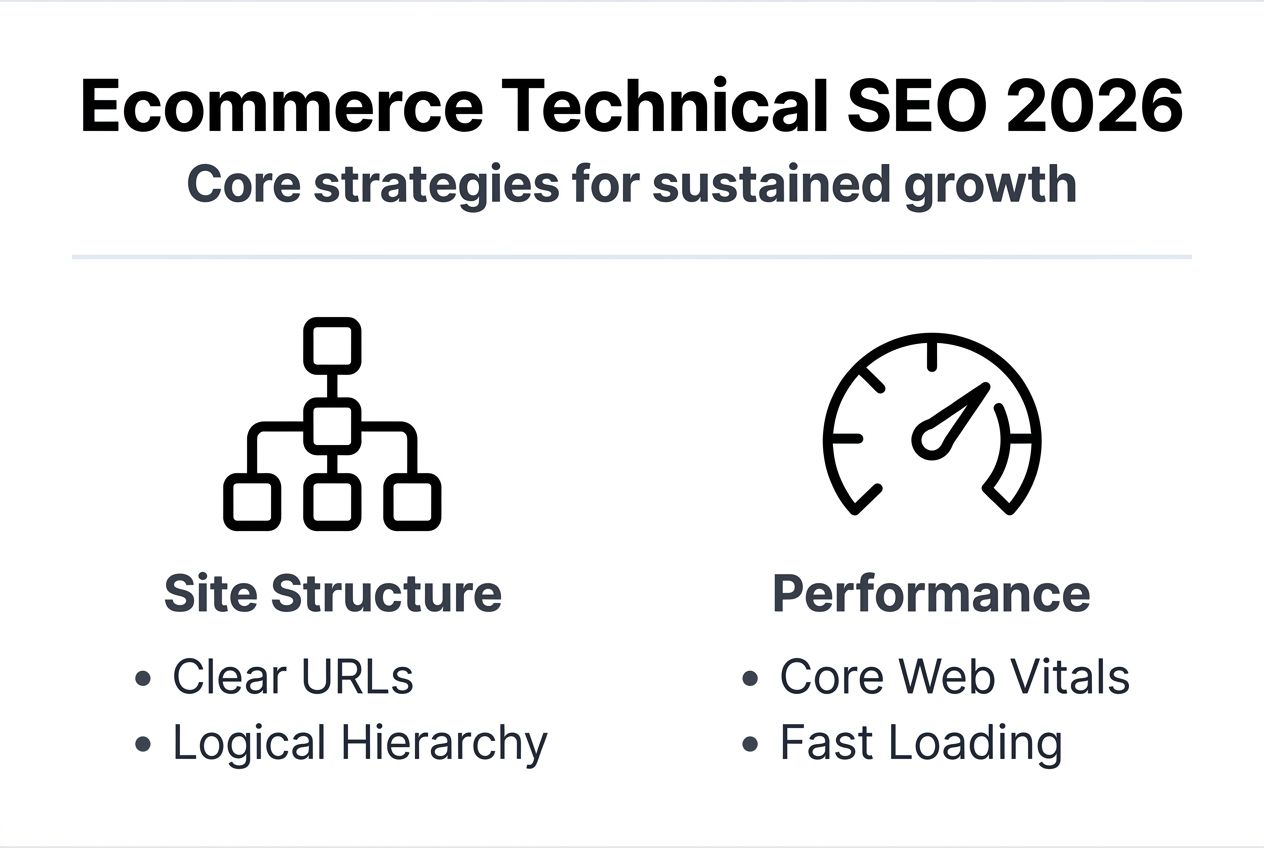
Optimize your URL structure and site hierarchy to make crawling efficient and intuitive for both users and search engines. Use short, descriptive URLs containing primary keywords without unnecessary parameters. Organize products into logical categories with clear breadcrumb navigation. Limit category depth to three or four levels maximum, ensuring every product remains accessible within a few clicks from the homepage. This structure helps search engines understand your site's organization and distributes link equity effectively.
Implementing structured data markup transforms how your products appear in search results. Product schema communicates price, availability, ratings, and specifications directly to search engines. Review schema adds star ratings to search snippets. Offer schema highlights special pricing or promotions. Research shows structured data markup for product and review schema improves click-through rates by an average of 30%, giving you a competitive edge in crowded search results.
Improving Core Web Vitals metrics directly impacts both rankings and conversions. Focus on three key metrics: Largest Contentful Paint (LCP) measuring loading performance, First Input Delay (FID) measuring interactivity, and Cumulative Layout Shift (CLS) measuring visual stability. Core Web Vitals like LCP under 2.5 seconds and CLS below 0.1 significantly improve ecommerce user experience and SEO rankings. Compress images, leverage browser caching, minimize JavaScript, and use content delivery networks to hit these targets.
Manage your crawl budget strategically to ensure search engines focus on your most valuable pages. Use robots.txt to block low-value sections like internal search results or filter combinations. Implement canonical tags to consolidate duplicate content signals to your preferred URL. Handle URL parameters properly through Google Search Console, instructing crawlers which parameters to ignore. Monitor your server logs to identify crawl waste and adjust accordingly.
| Strategy | Implementation | Expected Impact |
|---|---|---|
| URL Optimization | Clean, keyword-rich URLs with logical hierarchy | 15-20% improvement in crawl efficiency |
| Structured Data | Product, review, and offer schema markup | 25-30% increase in click-through rates |
| Core Web Vitals | LCP <2.5s, FID <100ms, CLS <0.1 | 20-25% boost in conversions |
| Crawl Budget Management | Robots.txt, canonicals, parameter handling | 30-40% reduction in wasted crawl resources |
Explore technical SEO tools that automate these optimizations across your entire product catalog, saving hundreds of hours of manual work.
Pro Tip: Prioritize fixing technical issues on your highest-traffic and highest-revenue product pages first. A 10% speed improvement on your top 100 products delivers more immediate revenue impact than optimizing thousands of low-traffic items.
Common misconceptions and pitfalls in ecommerce technical SEO
Many ecommerce managers believe adding more product pages automatically improves SEO rankings and traffic. This quantity-over-quality approach backfires spectacularly. Excessive low-quality product pages can cause ranking penalties from Google's quality algorithms. Search engines reward sites with comprehensive, unique content that serves user intent, not thin pages created solely for keyword targeting. Focus on creating detailed, valuable product pages rather than pumping out hundreds of similar variations.
Faceted navigation impact on crawl budget and indexing remains widely misunderstood. Managers often implement extensive filtering without considering the exponential URL growth. A store with 10 filter types and 5 options each generates over 9 million possible combinations. Most are worthless to search engines and users alike. Without proper canonicalization and robots.txt controls, you waste your entire crawl budget on these duplicate pages while your genuine products get ignored.
Content quality matters enormously even in technical SEO contexts. Product descriptions copied from manufacturers, category pages with only product grids, and pages lacking unique value all trigger quality filters. Search engines evaluate content depth, uniqueness, and user engagement signals. Technical perfection can't overcome fundamentally thin or duplicate content. Invest in creating unique descriptions, helpful buying guides, and genuine customer reviews to complement your technical optimizations.
Mobile optimization impact gets severely underestimated despite mobile-first indexing being standard since 2019. Many sites have responsive designs that technically work on mobile but deliver poor experiences. Tiny tap targets, unreadable text, intrusive popups, and slow mobile speeds all harm rankings. Google evaluates your mobile site exclusively when determining rankings, making mobile optimization non-negotiable for ecommerce success in 2026.
Frequent technical SEO mistakes to avoid:
- Launching new product categories without proper internal linking structure
- Ignoring XML sitemap optimization and submission protocols
- Allowing out-of-stock products to return 404 errors instead of soft 404s
- Implementing filters without noindex tags or canonical controls
- Neglecting image optimization despite images comprising 60-80% of page weight
For more insights, explore common SEO misconceptions for ecommerce that might be holding back your growth.
Pro Tip: Audit your site for orphan pages, which are product pages with no internal links pointing to them. These pages waste crawl budget and never rank because search engines struggle to discover them through normal crawling.
Leveraging AI and automation for scalable technical SEO
AI-powered audits identify complex ecommerce SEO issues faster and more accurately than manual reviews. Traditional audits require days or weeks to analyze thousands of product pages, check structured data implementation, evaluate Core Web Vitals across devices, and identify crawl errors. AI tools complete comprehensive audits in minutes, flagging critical issues, prioritizing fixes by impact, and even suggesting specific solutions. This speed advantage lets you iterate quickly and stay ahead of technical debt.
Automation streamlines structured data implementation and ongoing error monitoring across your entire catalog. Manually adding schema markup to thousands of products is impractical and error-prone. Automated systems generate accurate product, review, and offer schema from your existing database, update it when prices or availability change, and validate implementation continuously. When errors occur, automated alerts notify you immediately rather than waiting for the next manual audit.
Real-world implementations demonstrate AI can reduce manual SEO effort by 50% or more while improving accuracy. A mid-sized fashion retailer deployed AI-driven technical SEO monitoring and cut their optimization time from 40 hours weekly to 18 hours. An electronics ecommerce site used automated schema generation to add markup to 50,000 products in three days, a task that would have required months manually. These efficiency gains free your team to focus on strategic initiatives rather than repetitive technical tasks.
Stepwise AI implementation roadmap:
- Start with an AI SEO audit to establish your technical baseline and identify priority issues.
- Implement automated monitoring for Core Web Vitals, crawl errors, and broken links using AI-powered tools.
- Deploy automated structured data generation for your product catalog with continuous validation.
- Set up AI-driven crawlability audits to monitor how search engines access your site.
- Use AI tools to generate regular technical SEO reports and track improvement trends.
- Scale automation to cover new products, categories, and site expansions automatically.
Key AI capabilities transforming ecommerce technical SEO:
- Automated detection of duplicate content patterns across thousands of pages
- Predictive analysis identifying which technical issues impact rankings most
- Natural language processing to evaluate content quality and uniqueness
- Computer vision analyzing image optimization opportunities and visual errors
- Machine learning models predicting crawl budget allocation and optimization strategies
Learn more about the role of AI in SEO audits and how it's reshaping technical optimization workflows.
Practical roadmap for ecommerce marketing managers
Conducting a comprehensive ecommerce-focused SEO audit establishes your starting point and identifies opportunities. Use specialized tools to crawl your entire site, evaluating site architecture, indexation status, Core Web Vitals performance, mobile usability, structured data implementation, and crawl efficiency. Document all issues with severity ratings and estimated impact on traffic and conversions. This audit becomes your optimization roadmap for the next 6 to 12 months.
Prioritize fixes based on impact potential and implementation effort using a simple matrix. High-impact, low-effort improvements like fixing broken canonicals or adding missing schema markup deliver quick wins that build momentum. High-impact, high-effort projects like site architecture overhauls or comprehensive speed optimization require more planning but yield substantial returns. Tackle low-impact items only after addressing all high-impact opportunities.
Optimize your architecture, structured data, and performance iteratively rather than attempting everything simultaneously. Start with your homepage and top category pages to establish strong foundations. Roll out improvements to your best-selling products next, capturing revenue gains quickly. Systematically expand optimizations across your catalog in priority order. This phased approach lets you measure results, refine techniques, and maintain site stability throughout the process.
Use AI tools for continuous monitoring and automated improvement to sustain gains and catch new issues early. Set up automated alerts for crawl errors, Core Web Vitals degradation, structured data problems, and mobile usability issues. Schedule weekly automated audits to track progress and identify regression. Implement automated fixes where possible, such as schema markup updates when product data changes or canonical tag adjustments when new filter combinations emerge.
Review key metrics monthly to measure growth and conversion impacts from your technical SEO efforts. Track organic traffic growth by category and product type, monitoring which optimizations drive the most visitors. Measure conversion rate changes after speed improvements or mobile optimizations. Analyze search visibility for product keywords to validate ranking improvements. Calculate the revenue impact of increased click-through rates from enhanced search snippets.
Implementation sequence for maximum impact:
- Complete baseline technical audit using automated tools to establish current state.
- Fix critical crawlability issues blocking search engine access to key pages.
- Implement comprehensive structured data across your product catalog.
- Optimize Core Web Vitals for your highest-traffic product and category pages.
- Establish crawl budget controls through robots.txt, canonicals, and parameter handling.
- Deploy automated monitoring and alerting systems for ongoing technical health.
- Expand optimizations across your full catalog systematically.
- Integrate technical SEO into your product launch and site update workflows.
Reference our detailed SEO audit checklist for 2026 to ensure you cover every critical element.
Conclusion: measuring the impact of technical SEO on ecommerce growth
Technical SEO investments generate measurable returns across multiple dimensions. Improved crawlability leads to better indexation, which expands your search visibility and drives more qualified traffic. Faster page speeds reduce bounce rates and increase conversions, directly boosting revenue per visitor. Enhanced mobile experiences capture the growing mobile shopping segment more effectively. Structured data implementation improves click-through rates, bringing more potential customers to your site without additional ad spend.
These gains compound over time, creating sustainable competitive advantages. Unlike paid advertising that stops delivering when you stop spending, technical SEO improvements continue generating returns indefinitely. A well-optimized site architecture scales efficiently as you add products, requiring minimal ongoing maintenance. Automated monitoring and AI-powered tools maintain your technical health without proportional increases in effort or cost.
Integrating technical SEO with your broader marketing strategies maximizes overall performance. Technical optimizations make your content marketing more effective by ensuring articles and guides get properly indexed and ranked. They amplify your link building efforts by ensuring acquired links pass maximum authority through clean site architecture. They enhance your conversion optimization initiatives by removing technical barriers that frustrate users. Understanding the SEO impact on ecommerce growth helps you position technical optimization as a foundational investment that supports all other marketing channels.
Technical SEO is not a one-time project but an ongoing commitment to maintaining the infrastructure that enables search engines and users to access, understand, and trust your ecommerce store. In 2026, the brands that treat technical SEO as a strategic priority will dominate organic search while their competitors struggle with preventable obstacles.
Optimize your ecommerce SEO with BabyloveGrowth tools
Ready to transform your technical SEO from a bottleneck into a growth engine? Start with BabyloveGrowth's AI SEO audit to uncover the specific technical issues limiting your ecommerce store's visibility. Our AI analyzes your entire site in minutes, identifying crawl problems, structured data errors, Core Web Vitals issues, and mobile optimization opportunities with actionable fix recommendations.

Expand your organic reach with our keyword discovery platform, which reveals high-intent product and category keywords your competitors are missing. Then leverage our complete suite of technical SEO tools to implement fixes at scale, automate structured data markup, monitor site health continuously, and maintain peak technical performance as your catalog grows. BabyloveGrowth combines the power of AI automation with ecommerce-specific expertise to deliver sustainable organic growth.
Frequently asked questions
What are the biggest technical SEO challenges for ecommerce sites?
Large product catalogs create significant crawl budget management challenges, forcing you to prioritize which pages search engines index. Faceted navigation and filtering systems generate millions of duplicate URL variations that waste crawl resources and confuse ranking algorithms. Site speed optimization becomes complex with image-heavy product pages, customer reviews, and recommendation widgets all competing for load time. Mobile optimization requires specialized attention beyond basic responsive design to deliver fast, usable experiences that Google's mobile-first indexing rewards.
How does structured data improve ecommerce SEO performance?
Structured data markup enables rich snippets in search results, displaying product prices, availability, ratings, and reviews directly in search listings. Product and review schema improves click-through rates by an average of 30%, driving more qualified traffic without improving rankings. Rich snippets increase visibility by occupying more search result real estate and providing decision-making information before users click. This enhanced presentation differentiates your listings from competitors and builds trust by showing verified ratings and competitive pricing upfront.
What common mistakes should ecommerce managers avoid in technical SEO?
Many managers ignore how faceted navigation impacts crawl budget, allowing search engines to waste resources on millions of filter combinations instead of genuine product pages. Focusing on product quantity over quality leads to thin content penalties and reduced rankings across your entire site. Neglecting mobile optimization despite mobile-first indexing means Google judges your site primarily on its weakest version. Failing to implement proper canonical tags and parameter handling creates massive duplicate content issues. These mistakes compound over time, progressively degrading your organic performance.
Can AI tools really improve ecommerce technical SEO efficiency?
AI-powered tools dramatically accelerate technical audits, completing comprehensive site analyses in minutes rather than days or weeks required for manual reviews. They identify complex patterns across thousands of pages that humans would miss, such as subtle structured data errors or crawl efficiency issues. Automation reduces human error in repetitive tasks like schema markup implementation, canonical tag management, and ongoing monitoring. Real-world cases demonstrate AI can cut manual SEO effort in half while improving accuracy and consistency. Learn more about the role of AI in SEO audits to understand the efficiency transformation available today.
Recommended
Smart SEO,
Faster Growth!
Most Read Articles
Generative Engine Optimization (GEO)
Learn how Generative Engine Optimization (GEO) helps your content rank in AI search engines like ChatGPT and Google AI. This comprehensive guide explains the differences between SEO and GEO, why it matters for your business, and practical steps to implement GEO strategies for better visibility in AI-generated responses.
DylenJan 18, 2025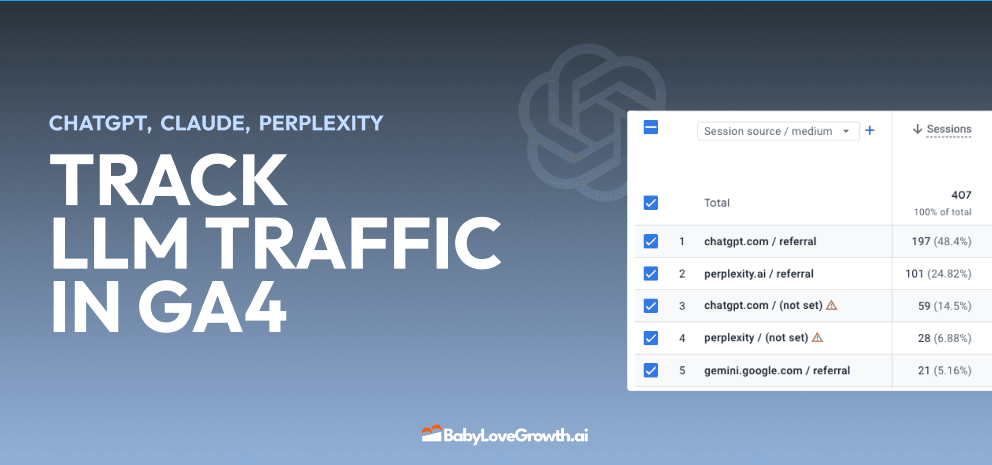
Track LLM Traffic in Google Analytics 4 (GA4)
Learn how to track and analyze traffic from AI sources like ChatGPT, Claude, Perplexity, and Google Gemini in Google Analytics 4. This step-by-step guide shows you how to set up custom filters to monitor AI-driven traffic and make data-driven decisions for your content strategy.
DylenMar 18, 2025
How to Humanize AI Text with Instructions
Learn practical techniques to make AI-generated content sound more natural and human. This guide covers active voice, direct addressing, concise writing, and other proven strategies to transform robotic text into engaging content.
DylenApril 7, 2025
Open AI Revenue and Statistics (2024)
Comprehensive analysis of OpenAI financial performance, user engagement, and market position in 2023. Discover key statistics including $20B valuation, $1B projected revenue, and 100M+ monthly active users.
DylenOctober 03, 2025