How to manage online reputation: step-by-step guide for SMBs


TL;DR:
- Online reputation significantly impacts customer purchase decisions and revenue growth.
- Managing reviews proactively with the right tools boosts conversions and SEO rankings.
- Consistent reputation effort creates long-term brand loyalty and competitive advantage.
A single bad review left unanswered can cost you thousands in lost sales before you even notice the problem. 93% of consumers read online reviews before making a purchase, and a one-star rating increase alone can boost your revenue by 5 to 9%. For small and mid-sized businesses, this is not a minor side concern. Your online reputation is one of the most measurable drivers of growth you have. In this guide, you will learn how to build, monitor, and actively protect your reputation using practical tools and proven methods that translate directly into more customers and stronger revenue.
Table of Contents
- Understand why online reputation matters
- Set up reputation management tools and essentials
- Take action: Best practices for building and protecting your reputation
- Measure, analyze, and improve your reputation management efforts
- Why reputation management is a long-term business asset, not just crisis control
- Scale your reputation with the right tools
- Frequently asked questions
Key Takeaways
| Point | Details |
|---|---|
| Reputation drives revenue | A single star increase in your ratings can boost revenue by up to 9 percent. |
| Proactive engagement wins | Responding to at least 25 percent of reviews leads to greater trust and higher sales. |
| Continuous monitoring is key | Tracking review volume, sentiment, and speed is essential to improving online reputation. |
| Automation scales results | Leveraging AI tools streamlines monitoring and response, boosting efficiency and impact. |
| Strategy over crisis control | Managing reputation consistently outperforms reacting only after problems arise. |
Understand why online reputation matters
Most business owners treat online reputation like a smoke alarm. They ignore it until something catches fire. That mindset is expensive. Your reputation is a living, breathing business asset that either works for you or against you every single day.
Customer reviews directly shape purchase decisions. When someone searches for your business, your rating is often the first thing they see. Businesses with 4+ star ratings see 270% higher conversion rates than businesses with lower scores. That is not a marginal difference. That is the gap between thriving and stagnating.
The data behind reputation ROI is hard to ignore:
| Rating level | Conversion impact | Revenue effect |
|---|---|---|
| Below 3.5 stars | Significantly reduced clicks | Revenue loss likely |
| 3.5 to 4.0 stars | Moderate consumer trust | Stable but limited growth |
| 4.0 to 4.5 stars | High consumer trust | 270% higher conversions |
| 4.5+ stars | Premium positioning | Maximum revenue potential |
Beyond conversions, reputation also shapes how Google ranks your business. Consistent positive signals from reviews tell search engines that your business is relevant and trustworthy, which drives organic traffic without paid advertising.
"Reputation as a strategic resource delivers stronger competitive returns in high-density markets, making proactive management essential for SMBs."
Consider a simple example: two restaurants sit side by side on Google Maps. One has 4.7 stars with 300 reviews and actively responds to feedback. The other has 3.9 stars and the owner has never replied to a single comment. The first restaurant captures 80% of search-driven foot traffic even if the food quality is similar. That is how powerfully reviews drive SMB revenue in the real world.
Shifting your mindset from "reputation is damage control" to "reputation is a growth strategy" is the single most valuable thing you can do before touching any tool or platform.
Set up reputation management tools and essentials
Knowing reputation matters is one thing. Having a system to manage it daily is another. The good news: setting up a solid foundation does not require an enterprise budget or a full-time team.
Start with the platforms that matter most for your industry. For most SMBs, the core four are Google Business Profile, Yelp, Facebook, and Trustpilot. Claim and verify every profile. Incomplete or unclaimed profiles are a credibility liability.
Manual versus automated monitoring: Many businesses start by manually checking their profiles a few times a week. This works at first but falls apart fast as your review volume grows. AI-automated monitoring catches mentions in real time and flags urgent issues before they snowball, making it the smarter operational choice for scaling businesses.

| Approach | Speed | Cost | Best for |
|---|---|---|---|
| Manual tracking | Slow | Free | Startups with low volume |
| Google Alerts | Moderate | Free | Basic mention tracking |
| Dedicated ORM tools | Fast | Paid | Growing SMBs |
| AI-powered platforms | Real-time | Subscription | Scaling businesses |
Your digital footprint guide should map every platform where your business can be reviewed or mentioned. This becomes your monitoring checklist.
Here is a simple preparation checklist to get started:
- Claim and complete all major review profiles
- Set up Google Alerts for your business name and key variations
- Assign a team member or role responsible for review responses
- Create a written policy for how and when to respond to reviews
- Document escalation steps for serious complaints
- Explore AI-driven reputation strategies that automate monitoring and content publishing simultaneously
Pro Tip: Train every customer-facing staff member on what to say when asking for a review. A simple, genuine request at the right moment, like right after a positive interaction, dramatically increases review volume without violating platform terms.
If you want to level up quickly, look at top automation tools for SEO that integrate reputation monitoring with your broader content and search strategy. When your reputation signals and SEO signals work together, the compound effect is significant.
Take action: Best practices for building and protecting your reputation
Having the tools is only the beginning. The way you actually use them every day is what separates businesses that grow through reputation from those that just survive.
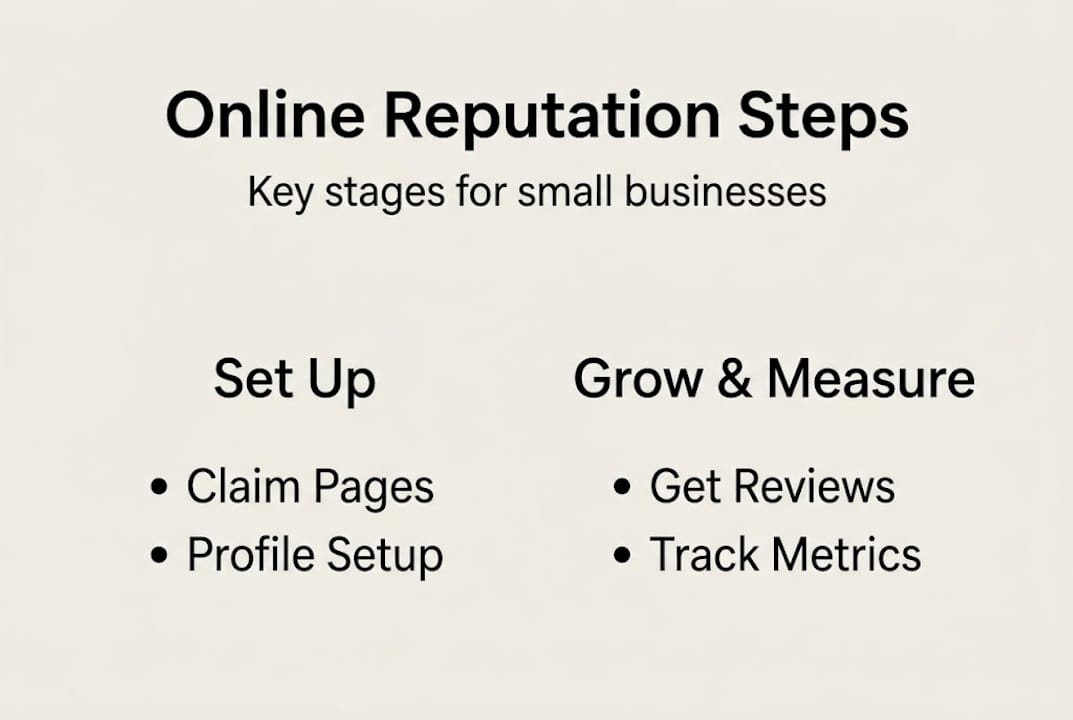
Here is a step-by-step approach:
- Ask for reviews at the right moment. Request feedback immediately after a positive transaction or service delivery. Timing is everything. A happy customer asked hours later is far more likely to respond than one asked days later.
- Personalize your review requests. Generic emails get ignored. A message that references the specific product or service the customer used feels genuine and gets results.
- Respond to every review within 24 hours. Speed signals that you take feedback seriously. Even a simple "Thank you, we appreciate your support!" builds trust at scale.
- Handle negative reviews with a calm, solution-focused tone. Acknowledge the issue, apologize without over-explaining, and offer a real next step. This often turns a critic into a loyal repeat customer.
- Repurpose positive reviews as content. Share testimonials on your website, in email campaigns, and across social media. This creates organic social proof that reinforces your brand to new audiences.
- Flag and report fake reviews. Fraudulent negative reviews do happen. Platform policies allow you to dispute them. Document your case clearly and submit a report promptly.
Stat to know: Businesses that respond to 25% or more reviews can see a 35% increase in revenue. Responsiveness is not optional. It is a revenue strategy.
Use leveraging online reviews to turn your best testimonials into conversion-driving content on product pages and landing pages. Reviews embedded in your site also feed user feedback for SEO signals that Google rewards with better rankings.
Pro Tip: Build a small library of response templates for common scenarios like shipping delays, product defects, or exceptional service. Templates save time while keeping your voice consistent. Just customize one or two sentences for each individual review to avoid sounding robotic.
Pairing strong reviews with deliberate social proof strategies amplifies the trust you build online into measurable engagement and visibility across every channel.
Measure, analyze, and improve your reputation management efforts
Without tracking, you are flying blind. Many businesses put in the work of asking for reviews and responding to feedback but never connect those activities to real business outcomes. Measuring what matters closes that loop.
Here are the key metrics to track:
- Average rating: Your aggregate score across all platforms
- Review volume: Total number of reviews and growth trend over time
- Review velocity: How quickly new reviews are arriving each week or month
- Sentiment score: The ratio of positive to neutral to negative mentions
- Response rate: Percentage of reviews you have responded to
- Google ranking position: Movement in local search results tied to review activity
Tracking review volume, sentiment, velocity, and SEO impact together gives you a picture of your brand health that neither traffic data nor sales data can show alone.
| KPI | Why it matters | How to track |
|---|---|---|
| Average rating | First impression for new customers | Review platform dashboards |
| Review velocity | Shows organic momentum | Monthly count comparison |
| Sentiment score | Reveals hidden issues early | ORM tools or manual tagging |
| Response rate | Signals professionalism to Google | Internal log or CRM |
| Local ranking change | Measures SEO impact | Google Search Console |
"Businesses that track ORM metrics consistently make better product and service decisions because the data reveals what customers actually think, not just what the business assumes."
Connect these numbers to revenue by running a quarterly comparison. Did your average rating go up by 0.3 points? Check if your reviews and revenue KPIs show a corresponding uptick in site visits or in-store visits. This is how you prove ROI internally and justify investing more in reputation management.
If metrics start declining, do not guess at the cause. Look at the actual reviews from that period, identify patterns, and trace them back to operational changes. Data gives you the context to correct course intelligently rather than reactively. Stronger boosting online visibility starts with understanding what signals you are sending to both customers and search engines.
Why reputation management is a long-term business asset, not just crisis control
Here is the uncomfortable truth most marketing advice skips: reactive reputation management is expensive and largely ineffective. Businesses that only engage with reviews after a PR problem pay more, recover slower, and often never fully rebuild the trust they lost.
The businesses that consistently outperform their competitors are the ones that treat reputation as a continuous investment, not an emergency response fund. Reputation management affects performance more significantly in competitive markets, which means that if your industry is crowded, the ROI of proactive reputation work is even higher than average.
Think of it this way: every review you earn today is a sales asset that works for you next month, next year, and years beyond that. Every professional response you post is a public demonstration of your values. When you add fostering brand loyalty to your strategy, reputation stops being defensive and starts being generative. It creates advocates who bring you new customers without you spending a dollar on ads. That is a growth engine, not a shield.
Scale your reputation with the right tools
You now have a clear framework for managing your online reputation from setup to strategy to measurement. The challenge most SMBs face next is keeping up with it consistently without burning out their team.
Babylovegrowth.ai helps businesses like yours automate the content and SEO signals that strengthen your reputation at scale. With AI-driven article creation, a backlink exchange ecosystem, and an organic traffic tool built for steady, compounding growth, you can turn consistent content publishing into a reputation and search engine advantage without adding headcount. If you are ready to build a reputation that ranks and converts, explore what the platform can do for your business.
Frequently asked questions
What is the first step to start managing my online reputation?
Begin by monitoring all major review platforms and setting up alerts to track mentions of your business name online. This preparation phase gives you the visibility you need before taking any other action.
How often should I respond to online reviews?
Aim to respond to at least 25% or more of all reviews you receive. Responding to 25%+ of reviews is linked to a 35% increase in revenue, making consistent responsiveness a measurable business priority.
Which metrics matter most in online reputation management?
Focus on your average rating, review volume, review velocity, sentiment ratio, and local search ranking changes. Volume, velocity, sentiment, and SEO impact together give you a complete picture of reputation health and revenue potential.
Can negative reviews be good for business?
Yes, when handled well. Responding professionally to complaints builds credibility and demonstrates accountability. Effective complaint resolution often turns dissatisfied customers into loyal ones who publicly update their reviews.
Is online reputation management more important in competitive industries?
Absolutely. Competitive intensity strengthens the ROI of proactive reputation management, meaning businesses in crowded markets gain a disproportionately larger advantage from consistent reputation work than those in low-competition niches.
Recommended
Smart SEO,
Faster Growth!
Most Read Articles
Generative Engine Optimization (GEO)
Learn how Generative Engine Optimization (GEO) helps your content rank in AI search engines like ChatGPT and Google AI. This comprehensive guide explains the differences between SEO and GEO, why it matters for your business, and practical steps to implement GEO strategies for better visibility in AI-generated responses.
DylenJan 18, 2025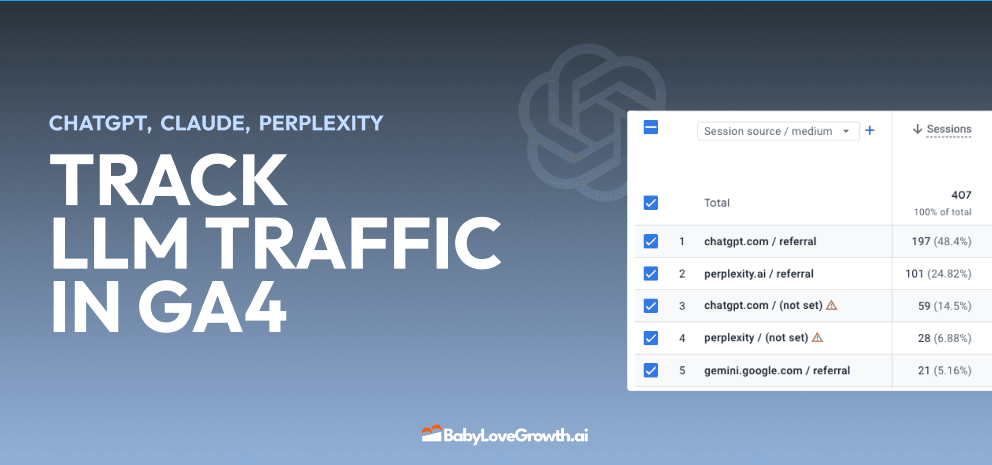
Track LLM Traffic in Google Analytics 4 (GA4)
Learn how to track and analyze traffic from AI sources like ChatGPT, Claude, Perplexity, and Google Gemini in Google Analytics 4. This step-by-step guide shows you how to set up custom filters to monitor AI-driven traffic and make data-driven decisions for your content strategy.
DylenMar 18, 2025
How to Humanize AI Text with Instructions
Learn practical techniques to make AI-generated content sound more natural and human. This guide covers active voice, direct addressing, concise writing, and other proven strategies to transform robotic text into engaging content.
DylenApril 7, 2025
Open AI Revenue and Statistics (2024)
Comprehensive analysis of OpenAI financial performance, user engagement, and market position in 2023. Discover key statistics including $20B valuation, $1B projected revenue, and 100M+ monthly active users.
DylenOctober 03, 2025