Leverage influencers for organic growth: 2026 guide


Small to medium business marketers face a constant challenge: how do you stand out in a crowded digital space without burning through your budget? Traditional advertising can drain resources fast, and organic reach keeps shrinking on most platforms. Influencer marketing significantly enhances brand visibility and organic engagement, offering a cost-effective path to authentic connections with your target audience. This guide walks you through every step of leveraging influencer partnerships to boost your brand's organic growth and visibility in 2026.
Table of Contents
- Key takeaways
- Understanding influencer marketing and its benefits
- Preparing to leverage influencers effectively
- Step-by-step guide to executing successful influencer collaborations
- Measuring and optimizing influencer marketing results
- Explore tools to boost your influencer marketing success
- FAQ
Key Takeaways
| Point | Details |
|---|---|
| Influencer boosts reach | Partnering with the right influencers increases brand visibility and drives authentic engagement with target audiences. |
| Preparation matters | Thorough research and careful influencer selection maximize campaign ROI and reduce wasted outreach. |
| Clear campaign objectives | Define goals such as awareness, traffic, or sales to tailor metrics and measurement. |
| Engagement over follower count | Prioritize influencers with high engagement rates rather than large but passive audiences to improve results. |
| Vet influencers thoroughly | Evaluate audience alignment, content quality, past collaborations, and proven outcomes to choose trustworthy partners. |
Understanding influencer marketing and its benefits
Influencer marketing connects your brand with individuals who have built trust and authority within specific communities. For small to medium businesses, this approach offers a powerful alternative to traditional advertising by tapping into established audiences that already value the influencer's opinions and recommendations.
The benefits extend far beyond simple exposure. When you partner with the right influencers, you gain access to highly engaged communities that match your target demographic. These audiences are more likely to interact with your content, visit your website, and ultimately convert into customers. The organic nature of these partnerships means the endorsements feel authentic rather than forced, building genuine trust in your brand.
Several influencer types work particularly well for SMBs:
- Micro-influencers with 10,000 to 100,000 followers often deliver the highest engagement rates
- Niche experts who focus on specific industries or topics align perfectly with specialized products
- Local influencers help businesses target geographic markets effectively
- Content creators who produce tutorials, reviews, or educational material provide lasting value
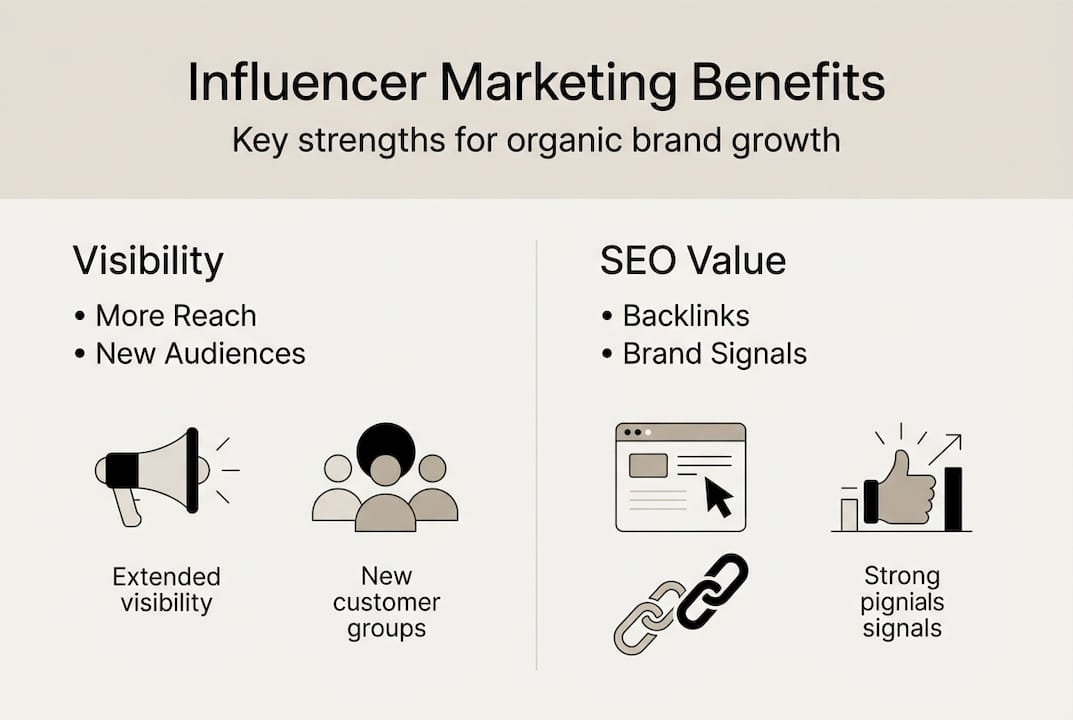
These partnerships complement your existing SEO outreach strategies by generating backlinks, social signals, and branded search queries. When influencers mention your business or link to your content, search engines notice. The resulting traffic boost comes from real people genuinely interested in what you offer, leading to better engagement metrics that further improve your organic rankings.
Pro Tip: Focus on engagement rate rather than follower count. An influencer with 15,000 highly engaged followers will deliver better results than one with 150,000 passive followers who rarely interact with content.
Preparing to leverage influencers effectively
Successful influencer campaigns start long before you send your first outreach email. Researching and carefully selecting influencers based on audience fit is critical for campaign success, so invest time in thorough preparation to maximize your return on investment.
Begin by defining clear objectives for your campaign. Are you aiming to increase brand awareness, drive website traffic, generate leads, or boost sales? Each goal requires different approaches and metrics. Brand awareness campaigns might prioritize reach and impressions, while lead generation efforts focus on click-through rates and conversions.
Next, create detailed criteria for identifying the right influencers:
- Audience demographics must align with your target customer profile
- Content style and tone should match your brand voice
- Engagement rates should exceed industry benchmarks for their follower count
- Previous brand partnerships should demonstrate professionalism and results
- Platform presence should match where your customers spend time
Use this comparison framework to evaluate potential influencer partners:
| Evaluation Factor | What to Look For | Red Flags |
|---|---|---|
| Audience Alignment | Demographics match your target market | Generic or mismatched followers |
| Engagement Quality | Real comments and meaningful interactions | Bot-like responses or spam |
| Content Consistency | Regular posting schedule and quality | Irregular activity or declining quality |
| Brand Fit | Values and messaging align with yours | Controversial content or conflicting partnerships |
| Growth Pattern | Steady, organic follower growth | Sudden spikes suggesting purchased followers |
Vetting influencers requires detective work. Review their past sponsored content to see how they integrate brand messages. Check comment sections for authenticity. Use tools to analyze their follower demographics and engagement patterns. Look for consistency between their stated audience and actual engagement data.

Pro Tip: Request a media kit from potential partners. Professional influencers maintain detailed analytics showing their audience demographics, engagement rates, and past campaign performance. If they cannot provide this information, consider it a warning sign.
The importance of networking in marketing extends to influencer relationships. Start building connections before you need them. Engage with their content genuinely, share their posts, and establish rapport. When you eventually reach out with a partnership proposal, you will not be a complete stranger.
Step-by-step guide to executing successful influencer collaborations
With your preparation complete, you are ready to launch your influencer marketing campaign. Clear communication and well-defined agreements enhance influencer collaboration outcomes, so follow these structured steps to ensure smooth execution and maximum impact.
-
Craft personalized outreach messages that reference specific content the influencer has created and explain why you see a natural fit between their audience and your brand.
-
Present your proposal clearly, outlining what you offer, what you expect in return, and how the partnership benefits both parties.
-
Discuss collaboration details including timeline, deliverables, compensation structure, and performance expectations before finalizing any agreement.
-
Create a written agreement that covers usage rights, disclosure requirements, approval processes, and payment terms to protect both parties.
-
Provide influencers with necessary resources like product samples, brand guidelines, key messages, and any required hashtags or links without being overly restrictive.
-
Maintain open communication throughout the campaign, offering support while respecting their creative process and authentic voice.
Different collaboration types serve different objectives:
| Collaboration Type | Best For | Typical Investment | Expected Outcome |
|---|---|---|---|
| Sponsored Posts | Brand awareness and reach | Moderate to high | Wide exposure to influencer's audience |
| Product Reviews | Building trust and credibility | Low to moderate | Detailed evaluation and honest feedback |
| Giveaways | Growing followers and engagement | Low (product cost) | Rapid audience growth and buzz |
| Affiliate Programs | Driving sales and conversions | Performance-based | Direct revenue with trackable ROI |
| Brand Ambassadorships | Long-term relationship building | High (ongoing) | Sustained visibility and loyalty |
Negotiation requires balance. Influencers deserve fair compensation for their work and audience access, but you need to ensure the investment makes business sense. Discuss deliverables specifically: how many posts, what platforms, what type of content, and what timeline. Clarify usage rights upfront so you know whether you can repurpose their content on your own channels.
Pro Tip: Offer creative freedom within your brand guidelines. Influencers know their audience better than you do. The most authentic and effective content comes when they can express your message in their own voice rather than reading from a script.
Maintain relationships beyond individual campaigns. Thank influencers publicly when their content performs well. Share their posts to your audience. Consider them for future opportunities. Strong relationships lead to better rates, more enthusiastic promotion, and influencers who genuinely advocate for your brand even without compensation.
Measuring and optimizing influencer marketing results
Launching your campaign is just the beginning. Measuring content marketing ROI is essential to validate influencer partnership impact and optimize future efforts, so establish robust tracking systems from day one to capture meaningful performance data.
Key performance indicators vary based on your campaign objectives:
- Reach and impressions measure how many people saw the content
- Engagement rate tracks likes, comments, shares, and saves relative to reach
- Click-through rate shows how many people took action on your call to action
- Conversion rate reveals how many clicks turned into desired outcomes
- Cost per acquisition calculates your investment per customer gained
- Return on investment compares total revenue generated against campaign costs
Organize your performance data systematically to spot trends and opportunities:
| Metric | Campaign Week 1 | Campaign Week 2 | Campaign Week 3 | Total |
|---|---|---|---|---|
| Impressions | 45,000 | 52,000 | 38,000 | 135,000 |
| Engagements | 3,150 | 3,640 | 2,660 | 9,450 |
| Website Clicks | 890 | 1,040 | 760 | 2,690 |
| Conversions | 67 | 78 | 57 | 202 |
| Revenue Generated | $3,350 | $3,900 | $2,850 | $10,100 |
Avoid common pitfalls when interpreting results. High engagement does not always translate to business outcomes, so look beyond vanity metrics. A post with thousands of likes but no website traffic or sales may boost awareness but fails to drive action. Conversely, a post with modest engagement but high conversion rates delivers real business value.
Compare performance across different influencers, content types, and platforms to identify what works best for your brand. You might discover that tutorial-style content outperforms simple product photos, or that Instagram Stories drive more immediate action than feed posts. Use these insights to refine your approach.
Gather qualitative feedback alongside quantitative data. Read comments to understand audience sentiment. Ask influencers what resonated with their followers. Survey new customers about how they discovered your brand. This context helps you understand the numbers and make smarter decisions.
Pro Tip: Set up unique tracking links and discount codes for each influencer so you can attribute results accurately. This data becomes invaluable when deciding which partnerships to continue and which to end.
Test different approaches systematically. Try various content formats, posting times, call-to-action phrases, and incentive structures. Give each test enough time and volume to generate meaningful data, then apply your learnings to future campaigns. Continuous optimization turns good influencer marketing into exceptional performance over time.
Explore tools to boost your influencer marketing success
Your influencer partnerships generate valuable content and drive traffic to your website, but are you maximizing that momentum? Our organic traffic tool helps you convert influencer-driven visitors into long-term organic growth by optimizing your content strategy and SEO automatically.
When influencers send audiences your way, you need a website optimized to capture and retain that attention. Our platform analyzes your business, creates personalized content plans, and automates the production of high-quality articles that rank on Google and ChatGPT. Whether you run your site on WordPress, Shopify, or Umbraco with SEO automation, we integrate seamlessly to scale your organic presence.
The BabyLoveGrowth backlink exchange ecosystem amplifies your influencer marketing by connecting you with relevant partners for mutual link building. Combined with influencer-generated backlinks, this creates a powerful network effect that boosts your search rankings and extends your reach far beyond individual campaigns. Try our platform free and see how AI-powered SEO automation transforms your growth trajectory.
FAQ
What types of influencers are best for small businesses?
Micro-influencers with 10,000 to 100,000 followers typically deliver the best results for small to medium businesses. They maintain higher engagement rates and charge less than mega-influencers while offering access to highly targeted niche audiences. Local influencers work particularly well if you serve specific geographic markets, as their followers are more likely to become actual customers.
How do I measure the success of influencer campaigns?
Track engagement rates, website traffic from influencer links, conversion rates, and return on investment to assess campaign effectiveness. Use unique tracking codes and dedicated landing pages for each influencer to attribute results accurately. Compare cost per acquisition from influencer marketing against your other channels to determine relative performance and optimize budget allocation.
What common mistakes should I avoid when working with influencers?
Failing to vet influencers thoroughly leads to misaligned partnerships and wasted budgets, so always analyze their audience demographics and engagement quality before committing. Avoid unclear campaign goals, poor communication about expectations, and over-controlling their creative process. Focus on engagement rates and audience relevance rather than follower counts, as large audiences mean nothing if they do not match your target market.
How much should I budget for influencer marketing?
Budget requirements vary widely based on influencer size, industry, and campaign scope. Micro-influencers might work for product trades or $100 to $500 per post, while larger influencers command thousands per campaign. Start small with one or two micro-influencer partnerships to test effectiveness before scaling investment. Allocate at least 10% to 20% of your total marketing budget to influencer partnerships if you want to see meaningful results.
How long does it take to see results from influencer marketing?
Immediate metrics like reach and engagement appear within days of content going live, but meaningful business outcomes take longer to materialize. Expect to see website traffic spikes during active campaigns, with conversion and revenue impact becoming clear over 4 to 8 weeks. Long-term brand awareness and organic search benefits compound over months as influencer content continues generating backlinks and social signals that boost your overall online presence.
Recommended
Smart SEO,
Faster Growth!
Most Read Articles
Generative Engine Optimization (GEO)
Learn how Generative Engine Optimization (GEO) helps your content rank in AI search engines like ChatGPT and Google AI. This comprehensive guide explains the differences between SEO and GEO, why it matters for your business, and practical steps to implement GEO strategies for better visibility in AI-generated responses.
DylenJan 18, 2025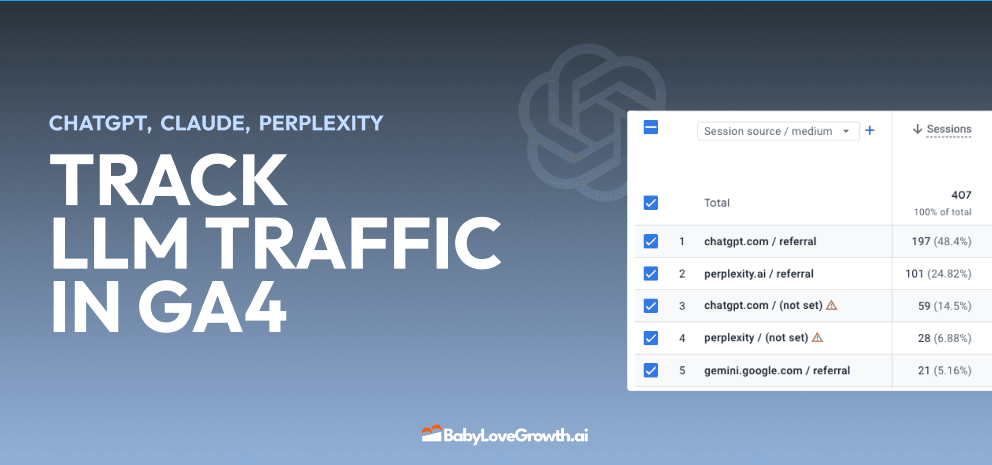
Track LLM Traffic in Google Analytics 4 (GA4)
Learn how to track and analyze traffic from AI sources like ChatGPT, Claude, Perplexity, and Google Gemini in Google Analytics 4. This step-by-step guide shows you how to set up custom filters to monitor AI-driven traffic and make data-driven decisions for your content strategy.
DylenMar 18, 2025
How to Humanize AI Text with Instructions
Learn practical techniques to make AI-generated content sound more natural and human. This guide covers active voice, direct addressing, concise writing, and other proven strategies to transform robotic text into engaging content.
DylenApril 7, 2025
Open AI Revenue and Statistics (2024)
Comprehensive analysis of OpenAI financial performance, user engagement, and market position in 2023. Discover key statistics including $20B valuation, $1B projected revenue, and 100M+ monthly active users.
DylenOctober 03, 2025