Lead Generation SEO 2026: AI Boosts Leads by 40%


Marketers often invest heavily in SEO, driving thousands of monthly visitors, yet see minimal lead conversions. The disconnect lies in treating all organic traffic equally rather than targeting buyer intent. Lead generation SEO shifts this paradigm by aligning content, technical optimization, and AI-powered keyword discovery to convert visitors into qualified prospects. With AI enhancing targeting accuracy by 40%, modern lead generation strategies deliver measurable ROI that traditional SEO approaches cannot match.
Table of Contents
- Understanding Lead Generation SEO
- The Role of AI in Enhancing Lead Generation SEO
- Technical SEO Strategies for Lead Generation
- Common Misconceptions About Lead Generation SEO
- Comparing Traditional SEO and AI-Driven SEO for Leads
- Measuring Success in Lead Generation SEO
- Implementing a Lead Generation SEO Strategy with Babylovegrowth.ai
- Summary and Next Steps
- Enhance Your Lead Generation SEO with Babylovegrowth.ai
Key Takeaways
| Point | Details |
|---|---|
| Lead generation SEO prioritizes conversion | Targets high-intent keywords and buyer personas to maximize qualified leads instead of raw traffic volume. |
| AI accelerates keyword discovery | Reduces research time by 70% while improving targeting accuracy by 40% through automated intent analysis. |
| Technical SEO drives conversions | Structured data, backlinks, and site performance directly impact lead capture rates and organic trust. |
| Metrics focus on quality over quantity | Track lead conversion rate and lead quality scores rather than vanity metrics like total visits. |
| Common myths hinder performance | Misunderstanding AI capabilities and keyword strategy prevents marketers from achieving lead generation goals. |
Understanding Lead Generation SEO
Lead generation SEO represents a strategic shift from chasing traffic metrics to engineering organic visitor conversion. Unlike traditional SEO that celebrates ranking improvements and traffic spikes, this approach designs every content piece and technical element to guide prospects toward becoming leads.
The distinction matters because SEO content strategy built for leads requires different keyword selection, content formats, and conversion pathways. B2B companies and service providers especially benefit since their business models depend on qualified prospect pipelines rather than mass audiences.
Digital marketers face several core challenges implementing lead generation SEO:
- Identifying keywords that signal buying intent versus informational curiosity
- Creating content that educates while naturally leading to conversion actions
- Balancing SEO best practices with persuasive copywriting techniques
- Measuring which organic content actually generates pipeline value
- Scaling personalized content across multiple buyer personas efficiently
This conversion mindset transforms how you select keywords, structure content, and measure success. Every optimization decision filters through one question: does this increase the likelihood a visitor becomes a lead?
The Role of AI in Enhancing Lead Generation SEO
AI fundamentally changes the economics and effectiveness of lead generation SEO by automating pattern recognition humans cannot match at scale. The technology excels at analyzing search behavior to identify high-intent keywords that traditional research tools miss.
Modern AI systems process millions of search queries to detect phrases indicating purchase readiness, budget authority, and decision timelines. This capability reduces keyword research cycles from weeks to hours while improving targeting precision. When AI identifies that searchers using "enterprise CRM implementation timeline" convert 3x better than those searching "what is CRM," your content strategy gains immediate focus.
AI-driven content creation enables daily publishing schedules tailored to specific buyer personas without proportional resource increases. Platforms analyze your best-performing lead generation content, then generate variations targeting adjacent keywords and audience segments. This automation maintains quality while achieving the volume necessary for organic growth across competitive niches.
Pro Tip: Leverage AI's predictive analytics to prioritize keywords based on lead potential scores rather than search volume alone, ensuring your content calendar focuses on conversion opportunities.
The scalability advantage becomes clear when managing campaigns across multiple products, regions, or buyer personas. AI handles the complexity of tracking which content variations perform best for specific audience segments, then automatically optimizes future content accordingly. This creates a feedback loop where each published piece improves targeting accuracy for subsequent content.
Key AI benefits for lead generation SEO include:
- Automated identification of buyer intent signals within search query patterns
- Predictive modeling of which keywords will generate qualified leads
- Content personalization at scale based on audience segment behavior
- Real-time optimization recommendations based on engagement metrics
- Niche community targeting through automated discussion monitoring
Technical SEO Strategies for Lead Generation
Technical SEO forms the foundation that either amplifies or undermines your lead generation content efforts. Three core areas directly impact conversion rates: structured data implementation, backlink profile development, and site performance optimization.
Structured data markup tells search engines exactly what your content offers, enabling rich snippets that increase click-through rates by 20% to 35%. When your service page displays pricing, ratings, and availability directly in search results, qualified prospects click knowing what to expect. This pre-qualification improves lead quality by filtering casual browsers before they reach your site.
Backlink acquisition serves dual purposes in lead generation. High-quality links from industry authorities signal trust to both search algorithms and human visitors, directly influencing conversion willingness. A prospect comparing two similar service providers often chooses the brand with stronger third-party validation visible through domain authority and referral sources.Site performance optimization impacts lead capture through direct user experience effects. Every second of page load delay reduces conversions by approximately 7%, with mobile users showing even less patience. Fast, responsive pages keep prospects engaged through your conversion funnel rather than bouncing to competitors.
Practical technical SEO steps for lead generation:
- Implement schema markup for services, products, FAQs, and reviews to enable rich snippets
- Build backlinks from industry publications and partner sites frequenting your target audience
- Optimize Core Web Vitals focusing on Largest Contentful Paint and First Input Delay
- Create mobile-first page designs since over 60% of B2B research now occurs on smartphones
- Set up conversion tracking that attributes leads to specific organic landing pages
- Use internal linking to guide visitors from informational content toward conversion pages
These technical elements work synergistically. Fast pages with rich snippets earn more clicks, while strong backlink profiles improve rankings that make those snippets visible. Each optimization compounds the others.

Common Misconceptions About Lead Generation SEO
Several persistent myths prevent marketers from achieving lead generation SEO potential, often rooted in outdated practices or superficial understanding of AI capabilities.
Myth: Publishing SEO content automatically generates leads without strategic intent alignment. Reality: Content must address specific buyer pain points at appropriate funnel stages to convert visitors. Generic informational articles ranking well may drive traffic but rarely capture leads unless they explicitly connect reader problems to your solutions.
Myth: AI tools represent expensive hype without measurable ROI for lead generation. Reality: AI reduces keyword research cycles by 70% and improves targeting accuracy by 40%, directly impacting lead volume and quality. These efficiency gains translate to lower customer acquisition costs and faster campaign scaling.
Myth: Keyword density and frequency determine SEO success for lead generation. Reality: Search algorithms prioritize contextual relevance and user intent satisfaction over mechanical keyword repetition. Content answering specific buyer questions comprehensively outranks keyword-stuffed alternatives.
Pro Tip: Avoid generic high-volume keywords that attract broad audiences; prioritize long-tail, intent-rich terms like "enterprise marketing automation comparison" that AI identifies as conversion-focused.
Myth: Technical SEO and content strategy operate as separate lead generation functions. Reality: Technical optimizations like structured data and site speed directly influence whether prospects engage with content long enough to convert. These elements form an integrated system.
Understanding these realities helps marketers allocate budgets effectively and set realistic performance expectations. Many campaigns fail not from poor execution but from pursuing strategies based on these misconceptions.
Comparing Traditional SEO and AI-Driven SEO for Leads
The evolution from manual SEO practices to AI-automated approaches fundamentally changes lead generation efficiency and scalability.
| Aspect | Traditional SEO | AI-Driven SEO |
|---|---|---|
| Keyword Research | Manual analysis of search volume and competition metrics taking days or weeks | Automated intent analysis identifying high-conversion terms in hours with 40% better accuracy |
| Content Personalization | Generic content targeting broad audiences with limited segmentation | Dynamic content variations tailored to specific buyer personas and funnel stages |
| Optimization Speed | Monthly or quarterly manual reviews and adjustments | Real-time performance monitoring with automated optimization recommendations |
| Scalability | Linear relationship between resources and content output | Exponential scaling through automation enabling daily publishing without proportional staffing |
| Lead Quality | Inconsistent targeting often attracts informational searchers | Precise intent matching focuses traffic on qualified prospects |
AI-driven approaches excel particularly for B2B and service businesses where lead quality matters more than traffic volume. The automation enables testing multiple keyword variations and content angles simultaneously, identifying winning combinations faster than manual iteration allows.
Traditional SEO remains viable for businesses with narrow product lines and simple buyer journeys where manual keyword selection suffices. However, companies targeting multiple personas or operating in competitive markets gain significant advantages from AI capabilities.
The efficiency difference becomes stark when managing enterprise campaigns. AI handles the complexity of optimizing hundreds of landing pages across product lines and regions, maintaining consistency while adapting to local search patterns. Manual approaches simply cannot match this scale.
Measuring Success in Lead Generation SEO
Effective measurement separates successful lead generation SEO from expensive experiments. Focus on metrics directly linking organic search performance to business outcomes.
Key performance indicators for lead generation SEO:
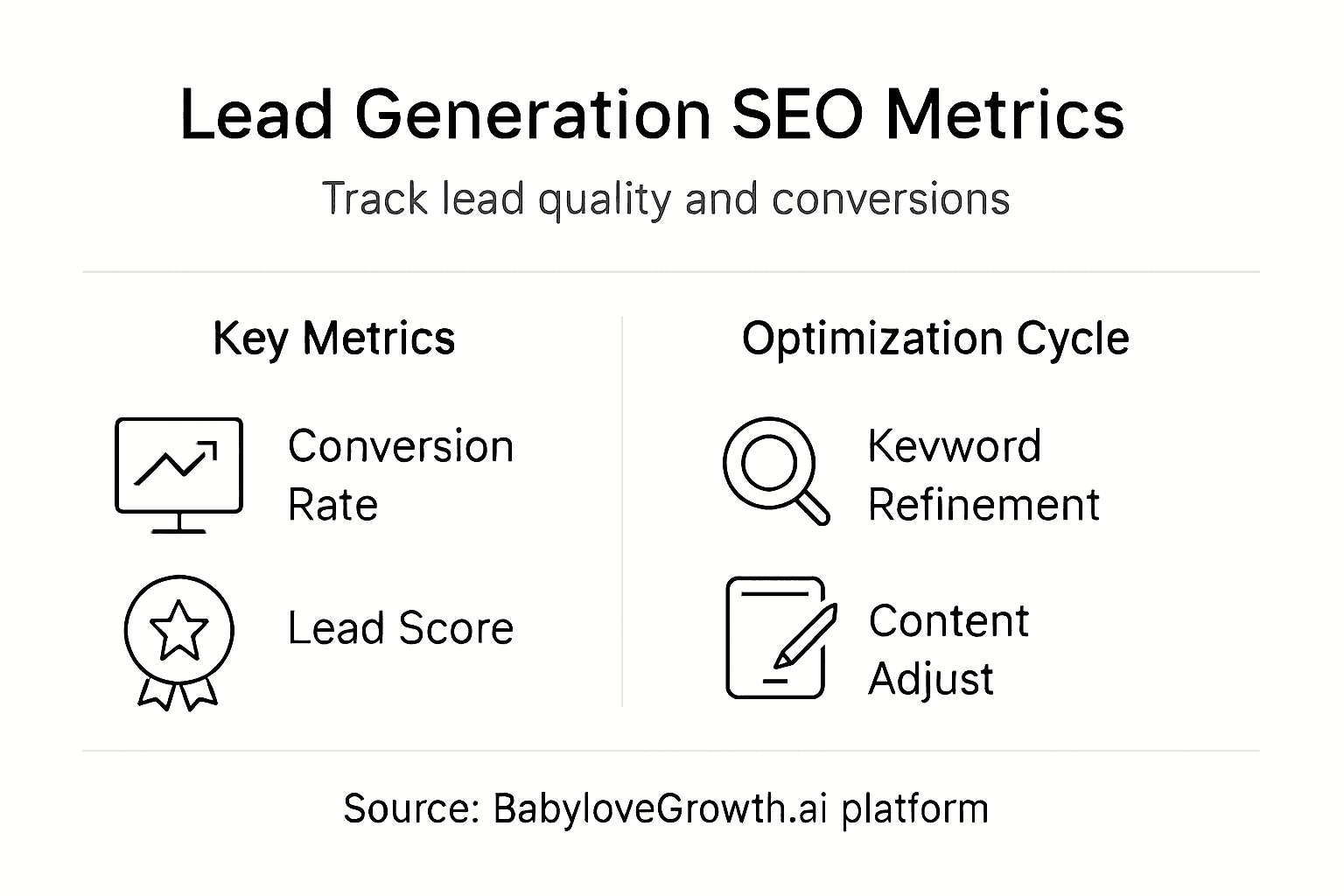
- Lead conversion rate from organic traffic measures how effectively your content turns visitors into prospects, calculated as leads divided by organic sessions.
- Lead quality scores assess whether organic leads match ideal customer profiles and progress through sales funnels at expected rates.
- Content engagement metrics including time on page, scroll depth, and pages per session indicate whether visitors find value justifying conversion consideration.
- Keyword ranking improvements for high-intent terms track visibility gains where they matter most for lead generation.
- Organic traffic growth to conversion-focused pages shows whether optimization efforts attract qualified audiences.
Tracking these metrics requires proper attribution connecting leads to their originating organic searches. Implement UTM parameters on all content and configure analytics to track assisted conversions where prospects engage multiple pages before converting.
Analyze patterns revealing which content types and topics generate highest-quality leads. A whitepaper on implementation best practices might convert at 5% while a product comparison guide hits 12%. This insight guides content calendar prioritization toward high-performing formats and angles.
Continuous optimization cycles use this data to refine keyword targeting, adjust content approaches, and improve conversion pathways. Monthly reviews identify declining performance requiring attention and emerging opportunities worth pursuing. The metrics guide provides frameworks for establishing these monitoring systems.
Align SEO metrics with overall business lead goals. If sales requires 50 qualified leads monthly and organic currently provides 20, you have clear targets for improvement. This alignment ensures optimization efforts support revenue objectives rather than vanity metrics.
Implementing a Lead Generation SEO Strategy with Babylovegrowth.ai
BabyloveGrowth.ai provides integrated tools automating the technical complexity of lead generation SEO while maintaining strategic control over targeting and messaging.
Implementation follows a structured approach leveraging platform capabilities:
Begin with AI-powered keyword discovery tools that analyze your industry, competitors, and ideal customer profiles to identify high-intent search terms. The platform's algorithms detect patterns indicating purchase readiness that manual research overlooks, building keyword lists focused on conversion potential rather than search volume alone.
Use automated content planning features to map keywords across buyer journey stages, ensuring coverage from awareness through decision. The system suggests content formats and angles based on what performs best for similar businesses in your sector, reducing guesswork in editorial calendar development.
Leverage AI-driven content creation capabilities to maintain consistent publishing schedules aligned with buyer personas. Daily article generation keeps your site fresh while targeting the long-tail keyword variations that collectively drive qualified traffic. Platform tools ensure technical optimization including proper heading structure, internal linking, and structured data markup.
Implement automated backlink building to systematically improve domain authority and organic trust signals. The platform identifies relevant industry sites, partner opportunities, and community discussions where your expertise adds value while earning quality links.
Configure conversion tracking and lead attribution to measure which organic content generates pipeline value. Platform analytics connect keyword rankings and traffic metrics to actual lead generation, revealing ROI at the campaign level.
Key advantages of the integrated approach:
- Reduced manual workload through automation of research, content creation, and technical optimization
- Improved targeting accuracy via AI analysis of buyer intent signals
- Scalable content production maintaining quality across growing keyword portfolios
- Systematic backlink development replacing sporadic outreach efforts
- Clear performance visibility linking SEO activities to lead generation outcomes
Summary and Next Steps
Lead generation SEO succeeds by aligning every optimization decision with conversion objectives rather than chasing traffic metrics. The framework prioritizes buyer intent targeting, technical excellence supporting conversion pathways, and continuous measurement connecting organic performance to business outcomes.
Core principles to implement immediately:
- Target user intent through keyword selection focusing on purchase signals and decision-stage queries
- Leverage AI automation to scale research, content creation, and optimization beyond manual capacity
- Optimize technical SEO elements including structured data, backlinks, and site performance as conversion enablers
- Measure lead quality and conversion rates rather than vanity metrics disconnected from revenue
- Adopt iterative testing cycles using data to refine targeting and content approaches continuously
AI's role extends beyond efficiency gains to fundamental capability expansion. The technology enables precise intent matching and personalization at scale that manual approaches cannot achieve economically. This advantage compounds over time as AI systems learn from your specific audience patterns.
Begin implementation by auditing current organic traffic sources to identify which content already generates leads. Double down on successful patterns while testing AI-recommended variations for underperforming areas. This pragmatic approach builds momentum through quick wins while developing long-term systematic capabilities.
Sustained success requires viewing lead generation SEO as an ongoing optimization system rather than a launch-and-forget campaign. Market conditions, search algorithms, and buyer behaviors evolve continuously. Your strategy must adapt accordingly through regular measurement, testing, and refinement.
Enhance Your Lead Generation SEO with Babylovegrowth.ai
Transforming SEO strategy from theory to results requires tools that automate complexity while maintaining targeting precision. Babylovegrowth.ai integrates the complete lead generation SEO workflow into one platform.

Our AI-powered keyword discovery identifies high-intent search terms your competitors miss, building content calendars focused on conversion opportunities. The platform's content creation capabilities maintain daily publishing schedules tailored to your buyer personas without proportional resource increases. Automated backlink building systematically improves your domain authority and organic trust signals.
Users report 40% improvements in lead quality and 70% reductions in content production time. The integrated approach eliminates the complexity of coordinating multiple tools and vendors, providing end-to-end lead generation SEO automation. Explore how Babylovegrowth.ai can accelerate your organic lead generation through a platform demo.
FAQ
What is lead generation SEO and how does it differ from traditional SEO?
Lead generation SEO specifically targets keywords and content formats designed to convert organic visitors into qualified prospects rather than maximizing traffic volume. The approach prioritizes buyer intent signals, conversion-focused content, and metrics measuring lead quality over rankings alone.
How can AI improve the effectiveness of lead generation SEO?
AI accelerates keyword discovery by automatically identifying high-intent search terms, reducing research time by up to 70% while improving targeting accuracy by 40%. The technology enables content personalization at scale and predictive analytics that prioritize conversion opportunities over vanity metrics.
What key metrics should I track to measure lead generation SEO success?
Track lead conversion rate from organic traffic, lead quality scores based on ideal customer profile matching, and engagement metrics like time on page that indicate conversion consideration. Focus on metrics directly linking SEO activities to pipeline value rather than disconnected traffic growth.
What are common mistakes to avoid in lead generation SEO?
Avoid focusing solely on keyword rankings without aligning content to buyer intent and conversion pathways. Don't neglect technical SEO elements like structured data and site performance that directly impact lead capture rates. Beware overreliance on generic high-volume keywords while ignoring niche, long-tail terms AI identifies as conversion-focused.
Recommended
Smart SEO,
Faster Growth!
Most Read Articles
Generative Engine Optimization (GEO)
Learn how Generative Engine Optimization (GEO) helps your content rank in AI search engines like ChatGPT and Google AI. This comprehensive guide explains the differences between SEO and GEO, why it matters for your business, and practical steps to implement GEO strategies for better visibility in AI-generated responses.
DylenJan 18, 2025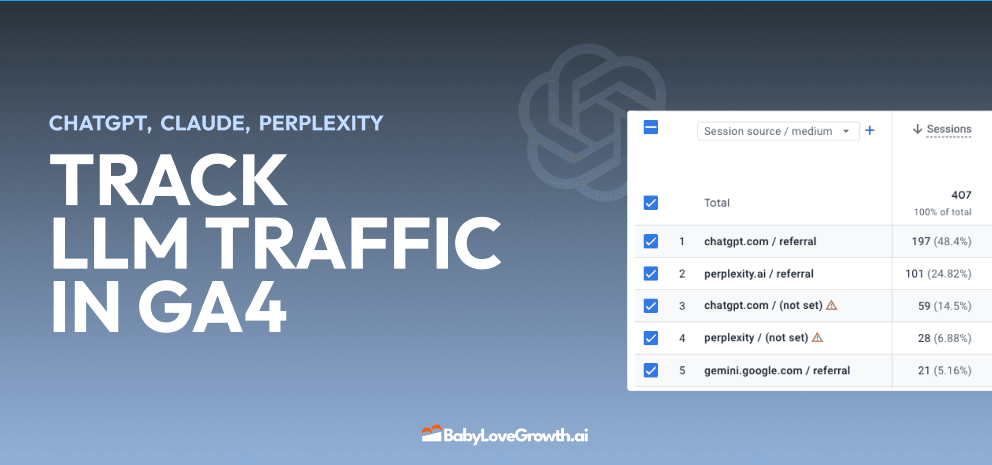
Track LLM Traffic in Google Analytics 4 (GA4)
Learn how to track and analyze traffic from AI sources like ChatGPT, Claude, Perplexity, and Google Gemini in Google Analytics 4. This step-by-step guide shows you how to set up custom filters to monitor AI-driven traffic and make data-driven decisions for your content strategy.
DylenMar 18, 2025
How to Humanize AI Text with Instructions
Learn practical techniques to make AI-generated content sound more natural and human. This guide covers active voice, direct addressing, concise writing, and other proven strategies to transform robotic text into engaging content.
DylenApril 7, 2025
Open AI Revenue and Statistics (2024)
Comprehensive analysis of OpenAI financial performance, user engagement, and market position in 2023. Discover key statistics including $20B valuation, $1B projected revenue, and 100M+ monthly active users.
DylenOctober 03, 2025