Keyword discovery: Boost your SEO and organic growth


TL;DR:
- Long-tail keywords generate 70% of search traffic and lead to higher conversion rates.
- Regular, quarterly keyword discovery keeps content relevant and capitalizes on evolving search trends.
- Using free tools like Google Autocomplete and Search Console offers quick insights before investing in paid SEO platforms.
Most business owners assume their biggest SEO opportunity comes from a handful of popular search terms. They're wrong. Long-tail keywords drive 70% of all search traffic, yet they're routinely ignored because they look small individually. These are the specific, intent-rich queries your buyers type when they're ready to act, not just browse. Understanding how keyword discovery actually works, and building a repeatable system around it, separates businesses that grow organically from those that stall out after a few content pieces.
Table of Contents
- What is keyword discovery?
- Why keyword discovery matters: Long-tail keywords and search intent
- How keyword discovery works: Tools and processes
- Applying keyword discovery: Content creation and competitive advantage
- Why most keyword discovery advice misses the point
- Explore advanced keyword discovery with AI-powered tools
- Frequently asked questions
Key Takeaways
| Point | Details |
|---|---|
| Long-tail dominates traffic | Most organic search traffic comes from long-tail keywords, making them essential for SEO success. |
| Intent matches drive conversions | Targeting search intent through discovery leads to higher click-through and conversion rates. |
| Start free, scale smart | Use free tools for initial keyword wins, then transition to paid solutions as your SEO grows. |
| Continuous process wins | Regular keyword discovery keeps your content competitive and uncovers new ranking opportunities. |
What is keyword discovery?
Keyword discovery is the process of finding valuable search terms your target audience uses when looking for products, services, or information online. It's not just pulling a list from a tool. It's a structured effort to surface the language real people use, understand their intent, and map those terms to content that matches what they're searching for.
Think of it as the foundation layer of all your SEO and content strategy. Without discovery, you're writing content based on guesses. With it, you're creating content your audience is already searching for.
Here's how keyword types break down at a basic level:
- Head keywords (also called "seed" or "short-tail" keywords): These are short, broad terms like "SEO tools" or "keyword research." They carry massive search volume but intense competition and low purchase intent.
- Mid-tail keywords: Phrases of two to three words that balance volume and specificity, like "best SEO tools for beginners." Competitive, but more targeted than head terms.
- Long-tail keywords: Highly specific phrases of four or more words, like "best SEO tools for small ecommerce businesses." Lower individual search volume, but higher conversion rates than generic terms because they match a searcher's specific need.
Keyword discovery isn't about finding the most popular search terms. It's about finding the right terms that connect your content to the right audience at the right moment.
Knowing which type to target at each stage of your content strategy is what separates high-converting SEO from busy work. You can learn more about specific keyword discovery methods that work across different industries and content types.
Why keyword discovery matters: Long-tail keywords and search intent
Here's a data point that reframes how most marketers think about SEO: 92.42% of all keywords receive ten or fewer monthly searches. That sounds discouraging until you realize that those thousands of small-volume terms collectively form the majority of all search traffic on the internet.
In other words, no single long-tail keyword is a home run. But targeting dozens of them together, all relevant to your niche, compounds into serious organic traffic over time. This is the core mechanic behind content-driven SEO growth.
Here's a comparison of head keywords versus long-tail keywords across the metrics that matter most:
| Attribute | Head keywords | Long-tail keywords |
|---|---|---|
| Average monthly searches | 10,000 to 100,000+ | 10 to 500 |
| Competition level | Very high | Low to medium |
| Conversion rate | Lower (1-2%) | Higher (2-4x more) |
| Click-through rate | Around 22% | Around 35% for 4+ word queries |
| Time to rank | 12 to 24 months | 3 to 6 months |
| Best for | Brand awareness | Lead generation, sales |
The table above tells a clear story. Long-tail keywords may look smaller, but they often outperform head terms where it counts: conversions and time to results. For newer sites or businesses that haven't yet built significant domain authority, targeting long-tail phrases is the fastest path to organic wins.
Understanding search intent is equally important. Searchers aren't all looking for the same thing. "SEO" and "how to do SEO for a new ecommerce store with no budget" represent completely different intents. Intent breaks down into four main categories: informational (learning something), navigational (finding a specific site), commercial (comparing options), and transactional (ready to buy). Matching your keyword targets to intent is what makes content actually convert.

Pro Tip: When you're starting out or launching a new site, skip the head terms entirely. Build a list of 30 to 50 long-tail phrases with clear purchase or sign-up intent, create focused content around each one, and revisit after 90 days. You'll see ranking movement much faster. Discover more about how long-tail keywords for leads can transform your organic pipeline.
How keyword discovery works: Tools and processes
The actual workflow for keyword discovery follows a predictable pattern, even if the tools you use vary depending on your budget and goals.
Here's a practical numbered workflow you can follow starting today:
- Start with seed topics. Write down five to ten broad themes relevant to your business. If you run a SaaS platform for SEO, your seeds might be: keyword research, content strategy, organic traffic, backlink building, SEO automation.
- Run each seed through Google Autocomplete. Type each seed term into Google and note the suggested completions. These autocomplete suggestions are actual searches people have made recently. They're free, real-time, and surprisingly specific.
- Explore the People Also Ask (PAA) box. Every SERP now includes a PAA box with questions related to your search. Each question you click opens up more questions. This is a goldmine for content ideas that match informational intent.
- Check Google Search Console (GSC). If you already have content on your site, GSC shows you which queries are triggering impressions, even if you're not ranking on page one yet. These are keywords your site is already relevant for but not fully optimized toward.
- Scale with paid tools when ready. Platforms like Ahrefs and SEMrush let you run full keyword gap analyses, see competitor keyword lists, and find untapped opportunities at scale.
Here's a quick comparison of discovery tools across budget tiers:
| Tool | Cost | Best use case | Depth of data |
|---|---|---|---|
| Google Autocomplete | Free | Initial seed expansion | Surface level |
| People Also Ask | Free | Informational content ideas | Moderate |
| Google Search Console | Free | Existing content optimization | Moderate to deep |
| Ahrefs | Paid ($99+/month) | Competitive gap analysis | Deep |
| SEMrush | Paid ($119+/month) | Full SEO audit and discovery | Very deep |
| AI-powered platforms | Varies | Automated discovery at scale | Deep |
Pro Tip: Inside Google Search Console, filter for queries where you have impressions but a low click-through rate. These are keywords where your content exists but isn't compelling enough in the title and meta description. Updating those two elements alone can drive meaningful ranking improvements without writing a single new article. This tactic is especially useful for ecommerce keyword research where product pages often sit just below page one.
Applying keyword discovery: Content creation and competitive advantage
Finding keywords is step one. Turning them into a real content strategy that beats competitors is where most marketers drop the ball. Discovery without application is just data collection.
The smartest approach is to group your discovered keywords by theme into clusters. A topic cluster is a hub-and-spoke content model where one main "pillar" page covers a broad topic and multiple supporting articles cover related subtopics in depth, all linking back to the pillar. This signals topical authority to Google, which rewards sites that demonstrate deep, comprehensive coverage of a subject area.
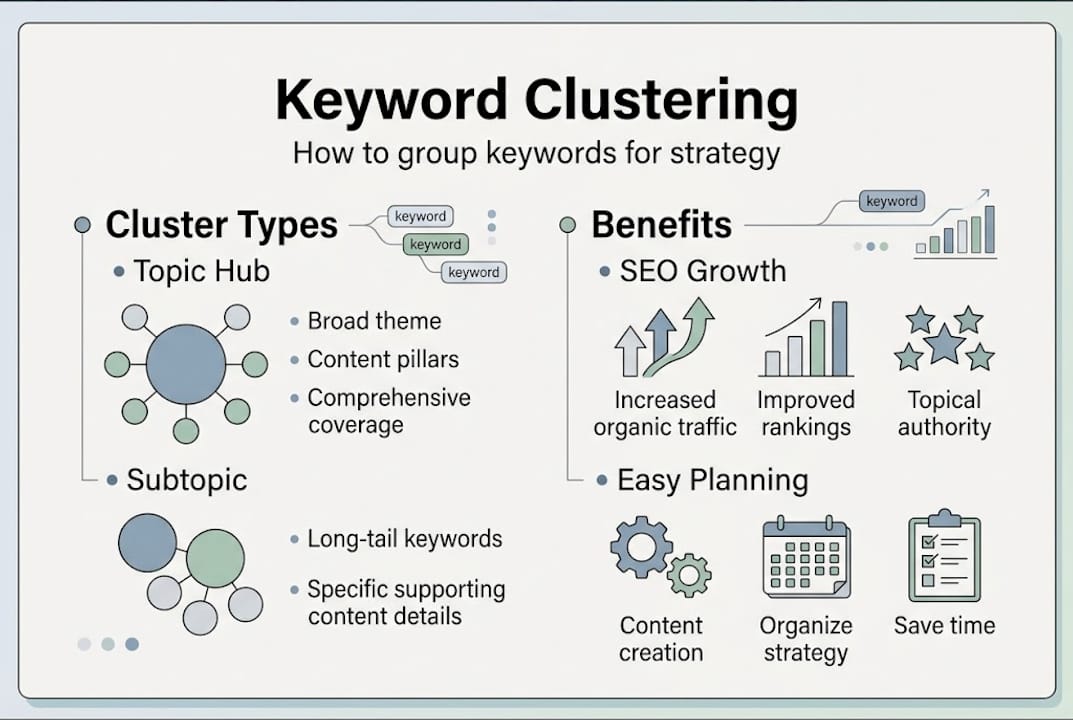
Here's a concrete example. If your pillar topic is "SEO for small businesses," your cluster might include supporting articles on: keyword discovery for beginners, local SEO tactics, technical SEO basics, content planning for small teams, and backlink building without a big budget. Each spoke feeds authority back to the pillar.
Long-tail keywords with four or more words generate a 35% average click-through rate versus 22% for one or two-word queries. That 13-point gap matters enormously at scale. If you're generating 10,000 impressions per month across your content, the difference between 22% and 35% CTR is roughly 1,300 extra clicks per month, for free.
Here are five specific ways to apply newly discovered keywords to your existing content strategy:
- Update old articles by weaving in newly discovered long-tail phrases that match the article's existing intent without forcing unnatural placement.
- Create FAQ sections on landing pages using People Also Ask questions directly. These answer boxes can dramatically boost visibility for informational searches.
- Add keyword-rich internal links between related pieces of content to distribute page authority and help Google understand your site structure.
- Rewrite meta titles and descriptions for pages that have impressions but low CTR, using discovered keyword phrases that match the actual search query.
- Build new content specifically around keyword gaps you identified: topics your competitors rank for that you don't have a page for yet.
A keyword gap analysis is one of the highest-leverage activities in SEO. It shows you exactly where competitors are capturing traffic that your site is missing, giving you a prioritized content roadmap based on real competitive data rather than guesswork.
Pro Tip: Schedule a keyword discovery review every quarter. Search trends shift, new products emerge, and competitor content moves around. Checking your gap data every 90 days keeps your content pipeline stocked with fresh opportunities. Pair this with a clear content calendar tied to your relevant keyword targeting strategy to stay consistently ahead of the curve.
Why most keyword discovery advice misses the point
Here's the uncomfortable truth most SEO guides won't tell you: the discovery workflow isn't a one-time project. It's a practice. And that's exactly where most marketers fail.
Teams run a keyword discovery session, build a content calendar, execute it over three months, and then move on to the next initiative. Meanwhile, search trends shift. Competitors publish new content. Google updates its ranking signals. The keywords that were golden six months ago may now be saturated or irrelevant. The marketers still ranking and growing are the ones who treat keyword discovery as a recurring discipline, not a startup task.
The other blind spot is an over-reliance on tool-generated data. Tools surface volume and competition scores. What they don't surface is context: why someone searches a phrase, what stage of the buying journey they're in, and what would genuinely satisfy their query. That judgment still comes from humans who understand their audience.
We've seen this pattern repeatedly: businesses that invest heavily in premium SEO tools but never revisit their keyword strategy after the initial setup. They optimize for the original keyword list forever while their market moves around them. Real growth comes from treating long-tail keyword strategy insights as a living system, not a snapshot.
The marketers winning organic traffic in 2026 are not necessarily the ones with the biggest tool budget. They're the ones who run quarterly discovery cycles, test content against real search data, update what's underperforming, and stay curious about what their audience is actually searching for right now. That iterative mindset is what compounds into a durable organic traffic advantage over time.
Explore advanced keyword discovery with AI-powered tools
Ready to stop running discovery manually every quarter and let automation do the heavy lifting? Babylovegrowth.ai is built specifically for this.

Our AI keyword discovery platform continuously surfaces high-value search terms your audience is using, maps them to content opportunities, and integrates with your publishing workflow so nothing falls through the cracks. You can also use our profitable keyword research tool to analyze and prioritize keywords based on real conversion potential, not just volume. And if you want to find what your competitors are ranking for that you're not, our keyword gap analysis tool gives you an instant competitive content roadmap. Start discovering smarter, not harder.
Frequently asked questions
What is the difference between keyword discovery and keyword research?
Keyword discovery is the process of identifying new, untapped search queries your audience uses, while keyword research focuses on analyzing and selecting the best keywords to target from a known list.
Which free tools are best for keyword discovery?
Google Autocomplete, People Also Ask, and Search Console offer fast, effective, no-cost discovery options that work well before scaling to paid tools like Ahrefs or SEMrush.
Why focus on long-tail keywords for SEO growth?
Long-tail keywords drive 70% of search traffic and deliver significantly higher conversion rates with far less competition, making them the fastest path to organic wins for growing sites.
How often should I repeat keyword discovery?
Keyword discovery should be repeated quarterly to capture new search trends, respond to competitor movements, and continuously expand your content pipeline with fresh opportunities.
What is the average search volume for most keywords?
Over 92% of keywords receive ten or fewer monthly searches, but targeting a large collection of these specific terms together can generate significant cumulative organic traffic over time.
Recommended
Smart SEO,
Faster Growth!
Most Read Articles
Generative Engine Optimization (GEO)
Learn how Generative Engine Optimization (GEO) helps your content rank in AI search engines like ChatGPT and Google AI. This comprehensive guide explains the differences between SEO and GEO, why it matters for your business, and practical steps to implement GEO strategies for better visibility in AI-generated responses.
DylenJan 18, 2025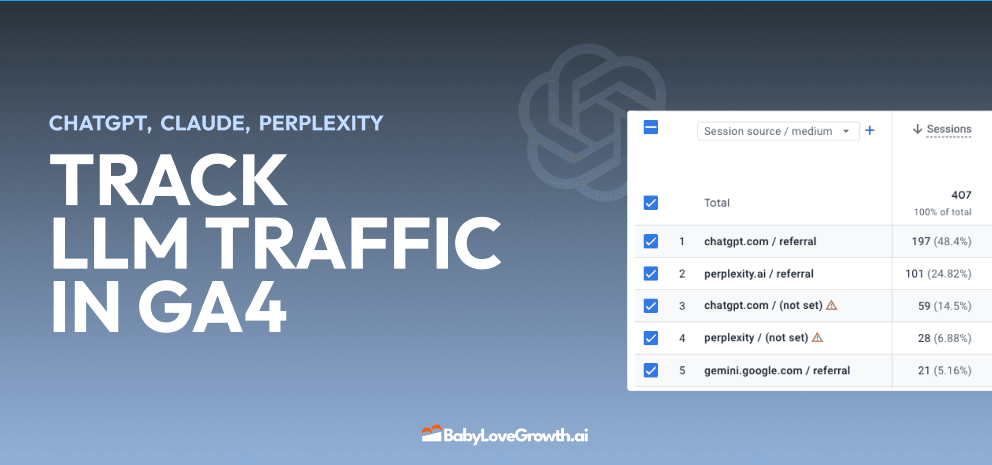
Track LLM Traffic in Google Analytics 4 (GA4)
Learn how to track and analyze traffic from AI sources like ChatGPT, Claude, Perplexity, and Google Gemini in Google Analytics 4. This step-by-step guide shows you how to set up custom filters to monitor AI-driven traffic and make data-driven decisions for your content strategy.
DylenMar 18, 2025
How to Humanize AI Text with Instructions
Learn practical techniques to make AI-generated content sound more natural and human. This guide covers active voice, direct addressing, concise writing, and other proven strategies to transform robotic text into engaging content.
DylenApril 7, 2025
Moz DA vs Ahrefs DR: Which Metric Should You Actually Use?
Moz Domain Authority and Ahrefs Domain Rating look similar but measure very different things. Learn what each score actually tells you, when to use each one, and what to track instead for real SEO results in 2026.
DylenApr 23, 2026
Open AI Revenue and Statistics (2024)
Comprehensive analysis of OpenAI financial performance, user engagement, and market position in 2023. Discover key statistics including $20B valuation, $1B projected revenue, and 100M+ monthly active users.
DylenOctober 03, 2025
"Search Google or Type a URL": What It Means & What to Do
Learn what "Search Google or type a URL" actually means, how your browser decides whether to search or navigate, and what to do if your address bar starts behaving unexpectedly. Includes browser settings guides for Chrome, Firefox, Edge, and Safari.
DylenApr 21, 2026