How to Perform a Content Audit for Increased Organic Traffic


Most American websites overlook hidden opportunities for growth simply because their content remains disorganized. Whether you run a business in Canada, Australia, or Germany, a clear content audit can expose why certain pages lag behind in search results. Over 60 percent of small business owners admit they have never done a full content inventory. This guide will show you simple steps to transform scattered website content into measurable improvements for your organic traffic.
Table of Contents
- Step 1: Gather and Organize Website Content Data
- Step 2: Evaluate Existing Content for Seo Relevance
- Step 3: Identify Gaps and Outdated Materials
- Step 4: Optimize High-Potential Pages for Ranking
- Step 5: Verify Results and Adjust Your Content Strategy
Quick Summary
| Key Point | Explanation |
|---|---|
| 1. Collect website content systematically | Use tools to gather data on all web content, categorizing it to identify optimization opportunities and boost organic traffic. |
| 2. Evaluate content for SEO relevance | Analyze how well each piece meets user needs and search engines, checking for keyword alignment and depth of information. |
| 3. Identify gaps and outdated materials | Regularly assess existing content to find stale information and coverage gaps, ensuring alignment with current trends and audience needs. |
| 4. Optimize high-potential pages | Focus on enhancing your best-performing pages through technical improvements and content updates to increase visibility and engagement. |
| 5. Verify results and adapt strategy | Use analytics to track performance after optimizations, making data-driven decisions to continuously enhance your content strategy. |
Step 1: Gather and organize website content data
A content audit begins with systematically collecting and categorizing all your website's digital assets. This crucial first step transforms scattered content into a strategic inventory that reveals performance insights and optimization opportunities. By organizing website content, you set the foundation for targeted improvements that can significantly boost your organic traffic.
Start by using website crawling tools like Google Analytics, Google Search Console, and specialized content audit software to generate a comprehensive inventory. Create a spreadsheet with columns for critical data points: URL, page title, content type, publication date, word count, current traffic, keywords, and performance metrics. Include both current and historical performance data to track content evolution. Cross reference this data with your website's sitemap to ensure no pages are missed. Pay special attention to blog posts, landing pages, product descriptions, and media assets that contribute to your site's organic search presence.
As you compile your content inventory, look for patterns and opportunities for consolidation, updates, or strategic pruning. Some content might need complete rewrites, while others could benefit from minor optimizations. The goal is creating a clear roadmap for content strategy that aligns with your current business objectives and search engine ranking goals.
Pro tip: Use color coding in your spreadsheet to quickly visualize content performance tiers and prioritize your optimization efforts.
Here's a summary of essential data points to track during a website content audit:
| Data Point | Purpose | Example Value |
|---|---|---|
| URL | Identifies each content item | https://example.com/blog/post |
| Content Type | Categorizes content format | Blog post |
| Publication Date | Shows content age | March 8, 2022 |
| Word Count | Gauges content depth | 1,200 words |
| Keywords | Reveals target search queries | "content audit", "SEO" |
| Current Traffic | Tracks performance | 850 monthly visits |
| Performance Metrics | Measures engagement or SEO | Bounce rate: 62% |
| Status | Indicates content freshness | Needs update |
Step 2: Evaluate existing content for SEO relevance
Evaluating your website's content for SEO relevance is a critical process that helps identify opportunities for improvement and optimization. This step goes beyond simple metrics by examining how well your content meets user needs and search engine requirements. When creating helpful content, you want to ensure each piece provides genuine value and addresses specific user intentions.
Begin your evaluation by analyzing each piece of content through multiple lenses. Check for relevance by examining whether the content answers user questions comprehensively and authentically. Review keyword alignment to confirm that your content matches search intent without resorting to keyword stuffing. Assess the depth of information by comparing it against top ranking competitors and identifying gaps in coverage. Pay attention to content age, accuracy of information, and whether the material still represents current industry standards. Look for opportunities to update outdated statistics, refresh examples, and improve overall comprehensiveness.
Prioritize content that demonstrates expertise, authoritativeness, and trustworthiness. Critically examine whether your content provides unique insights, original research, or expert perspectives that differentiate it from generic information available elsewhere. For underperforming content, develop a clear action plan whether that means complete rewrites, significant updates, consolidation with similar articles, or potential removal from your website.
Pro tip: Create a scoring system with weighted criteria to objectively rank your content's SEO potential and prioritize optimization efforts.
Step 3: Identify gaps and outdated materials
Spotting content gaps and outdated materials is a strategic process that transforms your content from static to dynamic. Performing regular content audits helps you uncover hidden opportunities for improvement and ensure your website remains relevant and competitive. This critical step involves systematically examining your existing content to identify areas where information has become stale or where significant knowledge gaps exist.
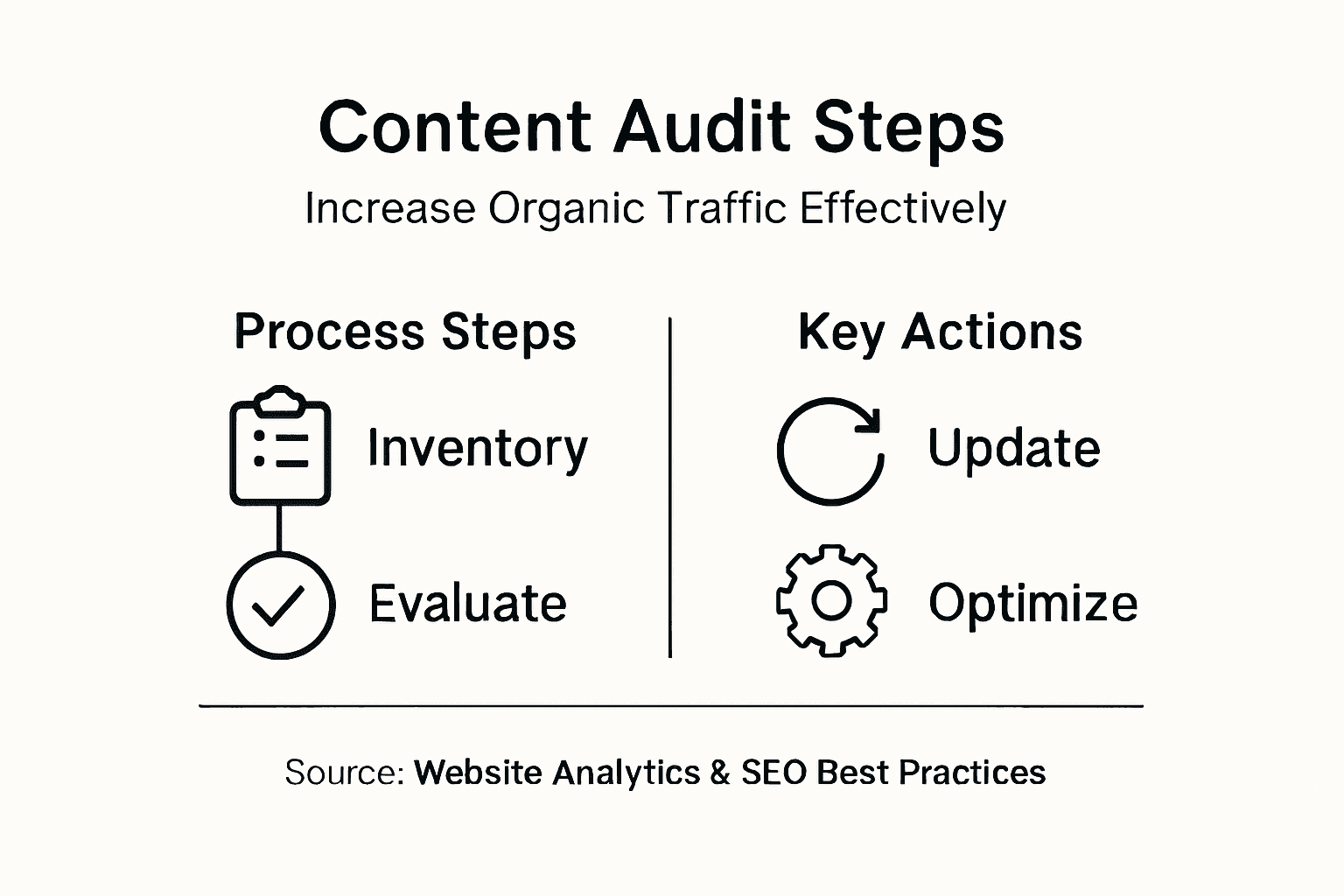
Start by conducting a comprehensive content inventory analysis that goes beyond surface level metrics. Compare your current content against industry trends, recent research, and emerging topics in your field. Look for signs of outdated information such as references to old statistics, discontinued products, or obsolete technologies. Identify content gaps by mapping your existing articles against your target audience's current questions and pain points. Use tools like Google Search Console, competitor analysis platforms, and keyword research software to pinpoint topics where your website lacks comprehensive coverage. Pay special attention to emerging trends, new industry developments, and shifts in user search behavior that might create opportunities for fresh, targeted content.
Develop a structured approach to addressing these gaps and outdated materials. Create a prioritized action plan that categorizes content into different optimization strategies. Some content might require complete rewrites, while others could be updated with recent information or merged with related articles. Eliminate content that no longer serves a purpose and focus your resources on creating high quality, relevant materials that directly address your audience's current needs.
This table contrasts key optimization actions for common types of web content during an audit:
| Content Type | Common Issues | Recommended Audit Action |
|---|---|---|
| Blog Post | Outdated data, low traffic | Refresh statistics, expand depth |
| Product Page | Thin content, poor keywords | Enhance descriptions, update SEO |
| Landing Page | Weak conversion, slow speed | Test CTAs, improve load time |
| Media Asset | Low engagement, missing metadata | Add alt text, compress files |
Pro tip: Implement a quarterly content review cycle to proactively identify and address potential content gaps before they become significant issues.
Step 4: Optimize high-potential pages for ranking
Optimizing high-potential pages is your strategic pathway to boosting organic search performance and driving targeted traffic to your website. The goal is transforming good content into exceptional ranking powerhouses that capture user attention and search engine algorithms. When implementing SEO best practices, you will systematically enhance your most promising content to maximize its visibility and impact.

Begin by identifying your top performing pages using analytics data and search console insights. Analyze these pages for current strengths and potential optimization opportunities. Focus on technical elements like page speed, mobile responsiveness, and structured data markup. Improve internal linking by connecting these high potential pages with related content on your website. Enhance your content comprehensiveness by adding authoritative research, updated statistics, and addressing user questions more thoroughly than competing pages. Pay special attention to user intent alignment ensuring your content precisely matches what searchers are seeking when they input related keywords.
Take a granular approach to content refinement. Update metadata including title tags and meta descriptions to improve click through rates. Implement schema markup to help search engines better understand your content context. Optimize header structures to improve readability and provide clear content hierarchy. Consider adding multimedia elements like infographics, videos, or interactive content that can increase user engagement and time on page. Continuously monitor performance metrics and be prepared to make iterative improvements based on real world user interaction data.
Pro tip: Create a tracking spreadsheet to monitor optimization efforts and document specific improvements for each high potential page.
Step 5: Verify results and adjust your content strategy
Verifying your content audit results transforms raw data into actionable insights that drive strategic improvements. The final stage of your content audit is about understanding the real world impact of your optimization efforts and making intelligent, data driven decisions to continuously enhance your organic performance.
Utilize analytics platforms to track organic traffic with precision and depth. Focus on key performance indicators such as page views, user engagement, bounce rates, and conversion metrics. Analyze how your optimized content performs compared to previous benchmarks. Look for patterns in user behavior that indicate whether your content modifications have positively influenced search rankings and audience interaction. Pay close attention to metrics like average time on page, click through rates, and the specific keywords driving organic traffic to your updated content.
Develop an adaptive content strategy based on your verified results. Create a systematic approach to implementing changes discovered during your audit. Prioritize content that shows potential for significant improvement and be prepared to make incremental adjustments. Some pages might require complete rewrites, while others need minor tweaks. Continuously track performance and remain flexible in your optimization approach. Remember that content strategy is an ongoing process requiring regular review and refinement to stay competitive in dynamic search landscapes.
Pro tip: Set up automated reporting in your analytics platform to receive monthly performance snapshots that highlight critical content metrics.
Take Your Content Audit to the Next Level with AI Automation
Performing a thorough content audit is essential for uncovering hidden opportunities and boosting your organic traffic. If you find yourself overwhelmed by the complexity of gathering data or optimizing high-potential pages, you are not alone. Many business owners and marketers struggle with implementing consistent SEO improvements like updating outdated materials or aligning content with search intent. The challenge lies in transforming your audit insights into actionable results that move your website’s rankings upward.
Babylovegrowth.ai simplifies this process by offering an AI-powered platform that automates content creation, optimization, and backlink strategies. With a 30-day personalized content plan tailored to your audit findings, you gain a proven, step-by-step method to improve organic traffic on autopilot. Our solution helps you update, expand, and create high-quality articles that Google and ChatGPT love while tracking your progress with detailed business analysis.
Ready to turn your content audit challenges into growth opportunities?

Explore how you can automate SEO success and scale your organic growth by visiting our landing page. Start your free trial today and see how AI-driven content strategies make ranking easier, faster, and more effective.
Frequently Asked Questions
What is the first step in performing a content audit for increased organic traffic?
To begin a content audit, you should gather and organize all website content data. Create a comprehensive inventory by using tools to extract key information such as URLs, page titles, and current traffic for each piece, and do this within a week for a solid foundation.
How can I evaluate my existing content for SEO relevance?
Evaluate your existing content by checking how well it meets user needs and aligns with search engine requirements. Review keywords and analyze user intent, making a plan to update or rewrite content that is outdated or no longer relevant within the next 30 days.
What are the signs of outdated content and how can I address them?
Signs of outdated content include references to old statistics or products that are no longer available. Conduct a content inventory analysis and create a prioritized action plan to update or remove such materials within 45 days.
How do I optimize my high-potential pages for better rankings?
To optimize high-potential pages, focus on improving technical elements like page speed, mobile responsiveness, and internal linking. Implement changes within 30 days and monitor performance to ensure your content aligns with what users are actively searching for.
How can I verify the results of my content audit and adjust my strategy?
Verify the results of your content audit by tracking key performance indicators such as organic traffic, engagement rates, and bounce rates. Set up automated reporting and analyze results monthly, making incremental adjustments to your content strategy based on measured outcomes.
Recommended
Smart SEO,
Faster Growth!
Most Read Articles
Generative Engine Optimization (GEO)
Learn how Generative Engine Optimization (GEO) helps your content rank in AI search engines like ChatGPT and Google AI. This comprehensive guide explains the differences between SEO and GEO, why it matters for your business, and practical steps to implement GEO strategies for better visibility in AI-generated responses.
DylenJan 18, 2025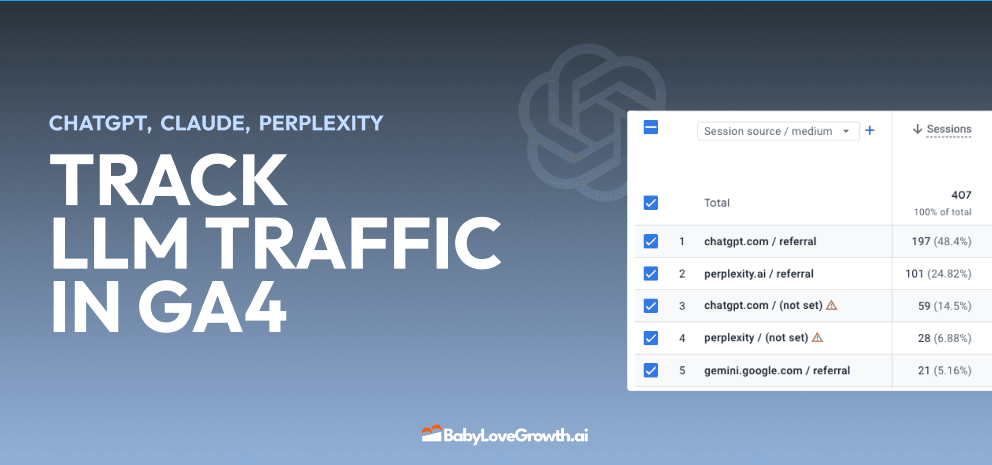
Track LLM Traffic in Google Analytics 4 (GA4)
Learn how to track and analyze traffic from AI sources like ChatGPT, Claude, Perplexity, and Google Gemini in Google Analytics 4. This step-by-step guide shows you how to set up custom filters to monitor AI-driven traffic and make data-driven decisions for your content strategy.
DylenMar 18, 2025
How to Humanize AI Text with Instructions
Learn practical techniques to make AI-generated content sound more natural and human. This guide covers active voice, direct addressing, concise writing, and other proven strategies to transform robotic text into engaging content.
DylenApril 7, 2025
Open AI Revenue and Statistics (2024)
Comprehensive analysis of OpenAI financial performance, user engagement, and market position in 2023. Discover key statistics including $20B valuation, $1B projected revenue, and 100M+ monthly active users.
DylenOctober 03, 2025