How to increase customer retention: 5 proven strategies


TL;DR:
- Increasing customer retention by 5% can boost profits by up to 95%.
- Gathering targeted feedback and acting on it reduces churn and drives revenue growth.
- Personalized marketing and ongoing content engagement foster long-term customer loyalty.
You're investing in ads, social media, and email campaigns, yet customers still leave after their first or second purchase. This is one of the most frustrating realities for SMB owners: strong marketing that doesn't translate into lasting relationships. The good news is that retention isn't a mystery. Research shows that increasing retention rates by just 5% can boost profits by 25% to 95%. This article walks you through five evidence-backed strategies, from gathering smarter feedback to using AI-driven personalization, so you can stop the churn and build a customer base that actually sticks around.
Table of Contents
- Understanding the importance of customer retention
- Gathering and acting on customer feedback
- Personalized marketing: Connecting with customers
- Content marketing and communication strategies
- A fresh perspective: Why real engagement beats gimmicks
- Take your retention to new heights with BabyloveGrowth
- Frequently asked questions
Key Takeaways
| Point | Details |
|---|---|
| Retention drives growth | Investing in customer retention leads to greater revenue and brand strength for SMBs. |
| Feedback is your asset | Gathering and implementing customer feedback is essential for improvement and loyalty. |
| Personalization matters | Tailoring marketing and communication to individual customers increases retention rates. |
| Content builds trust | Regular, relevant content keeps customers engaged and loyal to your business. |
| Engagement tops incentives | Authentic engagement wins customer loyalty more sustainably than superficial rewards. |
Understanding the importance of customer retention
Before you can fix a leaky bucket, you need to understand why water is escaping in the first place. Customer retention refers to a business's ability to keep existing customers over a given period. Acquisition, on the other hand, is the process of winning brand-new customers. Most SMBs pour the majority of their budget into acquisition, but the math rarely works in their favor.
Here's why retention deserves a bigger slice of your strategy:
- Acquiring a new customer costs 5 to 7 times more than retaining an existing one
- Existing customers spend 67% more on average than new customers
- A 5% increase in retention can increase revenue by up to 95%
- Loyal customers are 5 times more likely to repurchase and 4 times more likely to refer others
- Retained customers require less convincing, lowering your cost per sale over time
Two metrics every SMB should track are Customer Lifetime Value (LTV) and churn rate. LTV measures the total revenue a customer generates over their entire relationship with your business. Churn rate tracks the percentage of customers who stop buying within a set period. If your churn is high and your LTV is low, no amount of new traffic will save your margins.
| Metric | Acquisition focus | Retention focus |
|---|---|---|
| Cost per customer | High | Low |
| Revenue per customer | Lower (short-term) | Higher (long-term) |
| Marketing ROI | Moderate | Strong |
| Word-of-mouth potential | Low | High |
The data is clear. Following the right customer loyalty steps can transform your revenue trajectory without inflating your ad spend. Businesses that use analytics in marketing see 57% better ROI compared to those flying blind. Pair that with a feedback-driven culture, and you have a retention engine that compounds over time.
The shift from acquisition-first to retention-first thinking is not just a budget decision. It's a mindset change that touches every department, from customer service to product development.
Gathering and acting on customer feedback
Feedback is the fastest shortcut to knowing exactly why customers leave, and what would make them stay. Most businesses collect feedback poorly: a generic survey sent weeks after a purchase, or a review request with no follow-up. That approach generates noise, not insight.
Here's a step-by-step process to build a feedback loop that actually drives retention:
- Choose the right channel. Email surveys work well for post-purchase feedback. NPS (Net Promoter Score) questions work for measuring overall loyalty. In-app prompts work for SaaS products. Match the channel to the moment.
- Ask specific questions. "How was your experience?" gets vague answers. "What almost stopped you from completing your purchase?" gets gold.
- Automate collection. Set triggers so feedback requests go out automatically after key events: purchase, support ticket resolution, or a 30-day milestone.
- Categorize responses. Group feedback by theme (shipping, product quality, pricing) so you can spot patterns fast.
- Act visibly. When you make a change based on feedback, tell your customers. This closes the loop and builds trust.
- Measure the impact. Track whether changes reduce churn or improve repeat purchase rates.
Businesses that treat customer feedback revenue growth as a core strategy see 20 to 40% revenue growth compared to those that ignore it. That's not a small edge. That's a competitive moat.
"Your most unhappy customers are your greatest source of learning." — Bill Gates
Negative feedback is actually your most valuable asset. A customer who complains is still engaged. They haven't given up yet.

Pro Tip: Respond to negative feedback within 24 hours. A fast, genuine response can convert a frustrated customer into a loyal advocate. Studies consistently show that customers whose complaints are resolved quickly are more likely to repurchase than those who never complained at all.
Personalized marketing: Connecting with customers
Generic marketing is background noise. Personalized marketing is a conversation. When customers feel like you understand their needs, they don't just buy more, they stay longer.
Personalized marketing means delivering the right message, to the right person, at the right time. It goes beyond using someone's first name in an email. It means segmenting your audience by behavior, purchase history, location, or preferences, and then tailoring your content and offers accordingly.
Here are the key channels where personalization drives the most impact:
- Email: Segmented campaigns based on purchase history or browsing behavior
- SMS: Time-sensitive offers sent to high-intent segments
- Push notifications: Re-engagement messages triggered by inactivity
- Website: Dynamic content that changes based on who is visiting
- Social ads: Retargeting campaigns that reflect what a customer already viewed
| Personalization tactic | Average lift in engagement |
|---|---|
| Segmented email campaigns | 14% higher open rates |
| Dynamic website content | 20% longer session duration |
| Behavioral retargeting | 30% higher conversion rate |
| SMS with personalized offers | 45% higher click-through rate |
AI tools now make this accessible for SMBs that don't have a dedicated data science team. Platforms that support AI brand loyalty can analyze customer patterns and trigger personalized outreach automatically, so you're not manually segmenting spreadsheets at midnight.
Pro Tip: Start with just two or three customer segments based on purchase frequency. High-frequency buyers respond well to loyalty rewards. Low-frequency buyers respond better to educational content that reminds them of your product's value.
Content marketing and communication strategies
Content is the glue between purchases. When a customer isn't actively buying, the right content keeps your brand relevant and builds the kind of trust that makes them come back when they're ready.
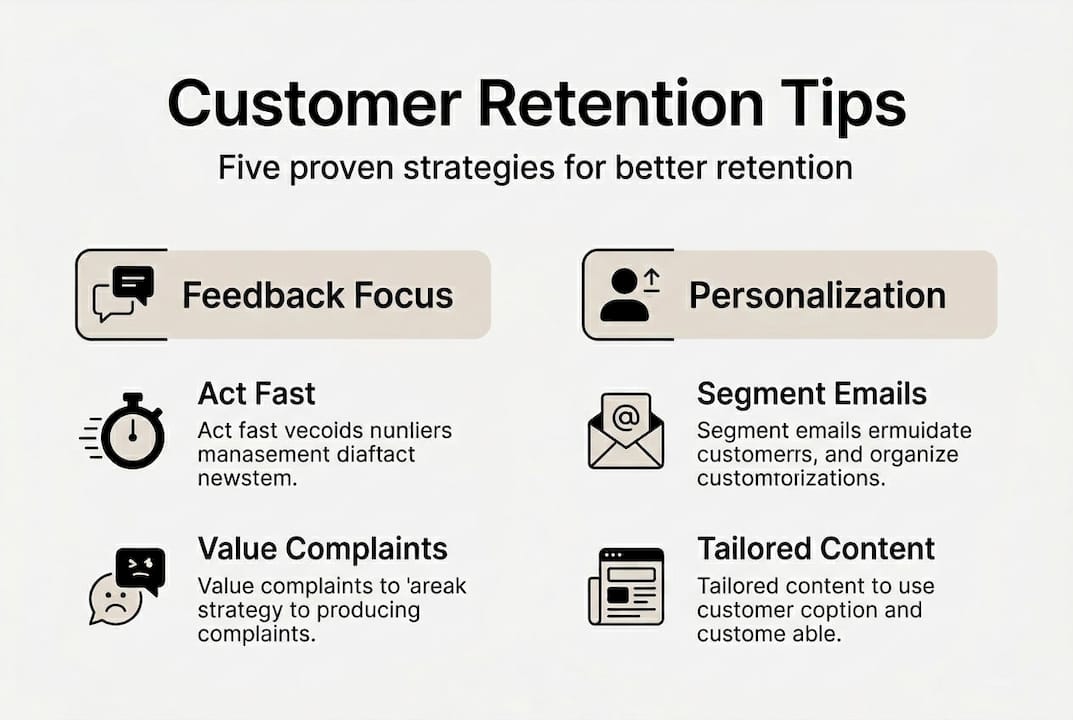
The best content types for retention are not always the flashiest. Practical guides, how-to newsletters, product tips, and case studies consistently outperform viral content because they deliver ongoing value.
Here's how to launch a content-driven retention campaign in six steps:
- Audit what you already have. Identify your top-performing blog posts, emails, and guides. These are your retention anchors.
- Map content to the customer journey. New customers need onboarding content. Repeat buyers need advanced tips and loyalty perks.
- Set a publishing cadence. Consistency matters more than volume. One valuable newsletter per week beats five mediocre ones.
- Choose your primary channel. Email newsletters have the highest ROI for retention. Pick one channel and do it well before expanding.
- Personalize the delivery. Use the segmentation from your marketing strategy to send relevant content to each group.
- Measure engagement, not just opens. Track clicks, replies, and repeat visits. These signal genuine interest.
Mistakes to avoid in content retention:
- Sending content that's only promotional, with no educational value
- Ignoring unsubscribe signals (they're feedback too)
- Using the same content format for every audience segment
- Publishing inconsistently and then going silent for weeks
- Skipping calls to action that guide customers to their next step
Looking at real-world content marketing examples shows that the brands with the most loyal audiences treat content as a service, not a sales tool. They educate first and sell second.
A fresh perspective: Why real engagement beats gimmicks
Here's something most retention articles won't tell you: loyalty programs and discount codes are not retention strategies. They're delay tactics. The moment a competitor offers a better deal, your "loyal" customers are gone.
Real retention comes from customers who feel genuinely understood. That's harder to build than a points system, but it's also impossible to copy. An SMB that knows its customers by name, remembers their preferences, and communicates like a trusted advisor will always outperform a big-box brand running automated discount blasts.
This is where the human touch and smart technology need to work together. AI-powered loyalty tools can surface the right insights and automate the right touchpoints, but the message still needs to feel human. Data tells you when to reach out. Empathy tells you what to say.
SMBs have a structural advantage here. You can respond faster, personalize deeper, and build relationships that no algorithm can replicate. The brands winning at retention in 2026 are not the ones with the biggest budgets. They're the ones with the most genuine conversations.
Take your retention to new heights with BabyloveGrowth
Every strategy in this article, from feedback loops to personalized content, requires one thing: consistent execution. That's where most SMBs stall. The ideas are solid, but the bandwidth isn't there.
Frequently asked questions
What are the most effective customer retention strategies for SMBs?
Collecting and acting on feedback, personalized marketing, and ongoing content engagement are the top proven retention methods for small businesses. Businesses that prioritize feedback-driven growth consistently report 20 to 40% higher revenue retention.
How does personalized marketing impact customer retention?
Tailored campaigns make customers feel understood rather than targeted, which directly increases repeat purchase rates. Personalized marketing removes friction between a customer's need and your solution, making it easier for them to choose you again.
How can SMBs use content marketing to keep customers loyal?
Consistent, practical content builds trust and keeps your brand relevant between purchases. Businesses that treat content marketing for retention as a service rather than a sales tool see stronger long-term loyalty.
What tools can help automate customer retention processes?
Platforms like BabyloveGrowth offer automation for content creation, personalized outreach, and SEO optimization, reducing the manual workload that stalls most retention programs.
Why is retention more cost-effective than acquisition?
Existing customers already trust you, so they cost less to convert and spend more over time. The return on retention investment consistently outpaces acquisition spending across every industry studied.
Recommended
Smart SEO,
Faster Growth!
Most Read Articles
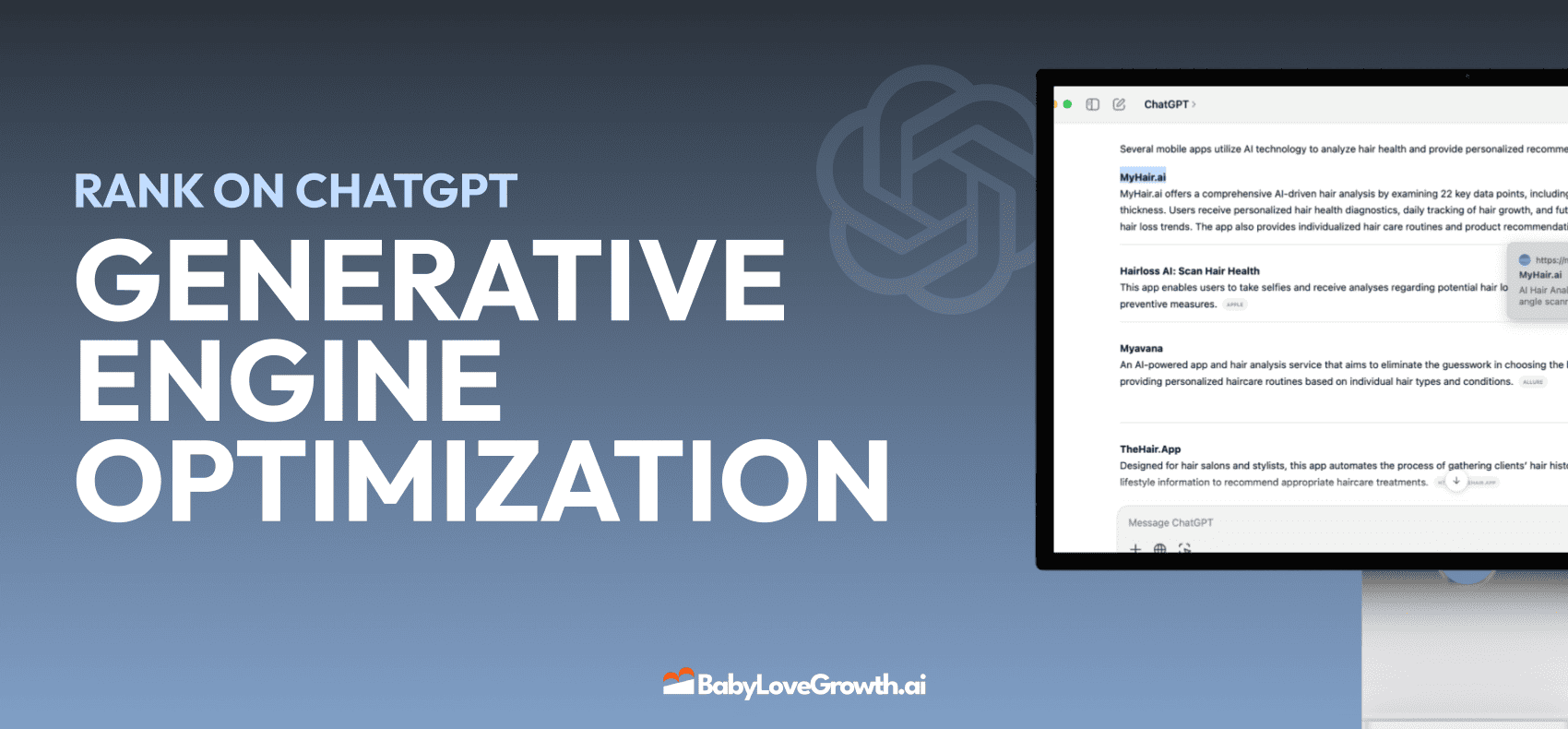
Generative Engine Optimization (GEO)
Learn how Generative Engine Optimization (GEO) helps your content rank in AI search engines like ChatGPT and Google AI. This comprehensive guide explains the differences between SEO and GEO, why it matters for your business, and practical steps to implement GEO strategies for better visibility in AI-generated responses.
DylenJan 18, 2025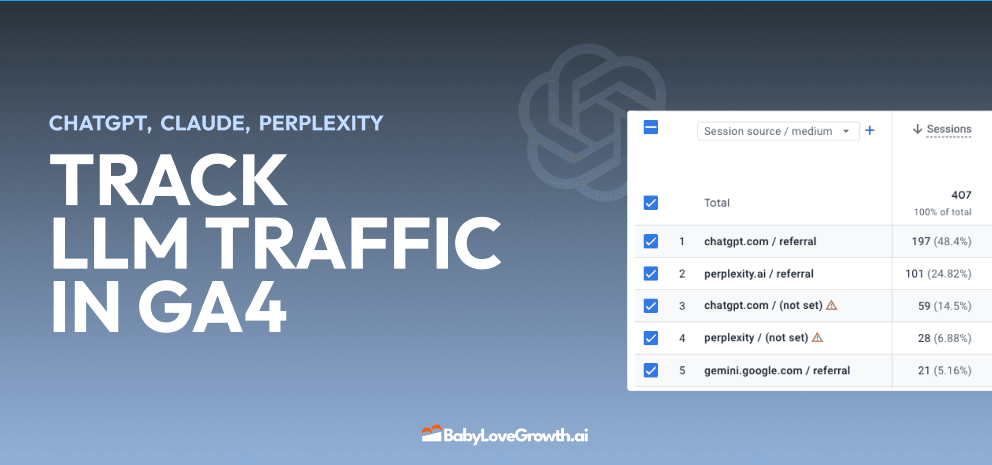
Track LLM Traffic in Google Analytics 4 (GA4)
Learn how to track and analyze traffic from AI sources like ChatGPT, Claude, Perplexity, and Google Gemini in Google Analytics 4. This step-by-step guide shows you how to set up custom filters to monitor AI-driven traffic and make data-driven decisions for your content strategy.
DylenMar 18, 2025
How to Humanize AI Text with Instructions
Learn practical techniques to make AI-generated content sound more natural and human. This guide covers active voice, direct addressing, concise writing, and other proven strategies to transform robotic text into engaging content.
DylenApril 7, 2025
Open AI Revenue and Statistics (2024)
Comprehensive analysis of OpenAI financial performance, user engagement, and market position in 2023. Discover key statistics including $20B valuation, $1B projected revenue, and 100M+ monthly active users.
DylenOctober 03, 2025