How to Evaluate SEO Agencies for Business Success


Choosing the right SEO agency can feel like searching for a needle in a haystack, especially when your SaaS company depends on powerful organic growth. Clear goals and precise strategies make all the difference when it comes to enhancing automated content and driving reliable website traffic. This guide reveals how defining your SEO needs and conducting thorough agency vetting leads to measurable SEO improvements that support modern business objectives.
Table of Contents
- Step 1: Define Your SEO Goals And Needs
- Step 2: Research And Shortlist Potential Agencies
- Step 3: Assess Expertise And Proven Results
- Step 4: Request Detailed Proposals And Strategies
- Step 5: Verify Transparency And Communication Standards
- Step 6: Test Agency Fit With A Small Project
Quick Summary
| Key Point | Explanation |
|---|---|
| 1. Define clear SEO goals | Ensure your SEO objectives are specific, measurable, and aligned with overall business growth to select the right agency. |
| 2. Thoroughly research SEO agencies | Identify agencies with proven expertise by reviewing client portfolios, testimonials, and asking for performance guarantees. |
| 3. Evaluate proposals systematically | Use a structured evaluation framework to compare agency proposals on strategy, transparency, and pricing for better decision-making. |
| 4. Verify communication and transparency | Establish clear communication protocols and expect detailed reporting to ensure ongoing alignment and visibility throughout the partnership. |
| 5. Test agency fit with a pilot project | Conduct a small project to assess the agency's capabilities and compatibility before committing to a long-term contract. |
Step 1: Define your SEO goals and needs
Successfully evaluating an SEO agency starts with crystal-clear goals that align with your business growth objectives. Defining specific, measurable targets will help you identify the right agency partner who can deliver precisely what your digital strategy requires.
Begin by conducting a comprehensive assessment of your current online performance and identifying where SEO can make the most significant impact. This means examining metrics like website traffic, keyword rankings, conversion rates, and organic search visibility. Understanding SEO performance metrics helps you pinpoint exactly what improvements you need. Your goals might range from increasing website traffic and improving search engine rankings to generating more qualified leads or boosting ecommerce sales. Some common SEO objectives include expanding market reach, enhancing brand authority, targeting specific customer segments, or improving local search presence.
Consider creating a detailed roadmap that outlines your specific SEO requirements. This should include target keywords, desired search engine positions, expected traffic growth, and specific business outcomes you want to achieve. Quantify your goals with precise numbers whenever possible - instead of saying "increase traffic," specify something like "grow organic traffic by 35% within six months" or "improve conversion rates from search by 20%."
Here's a quick overview of common SEO goals and their potential business impact:
| SEO Goal | Measurement Metric | Business Impact |
|---|---|---|
| Increase organic traffic | Website visits from search | More brand visibility |
| Improve keyword ranking | Position for target terms | Higher quality traffic |
| Boost conversion rates | Lead or sale conversion rate | More qualified leads or sales |
| Enhance local search | Local map and directory rankings | Increased local engagement |
| Expand market reach | Visibility in new regions | Enter new customer segments |
Pro tip: Always align your SEO goals directly with broader business objectives to ensure your agency investment delivers meaningful bottom-line results.
Step 2: Research and shortlist potential agencies
Once you have clearly defined your SEO goals, the next critical step is researching and shortlisting agencies that can transform those objectives into tangible results. Your research process should be systematic and comprehensive, ensuring you identify agencies with the expertise and track record to drive your specific business outcomes.
Begin by leveraging professional networks, industry recommendations, and online research to compile an initial list of potential SEO agencies. Look for agencies that demonstrate specialized SEO expertise and adaptation skills across different industry sectors. Pay close attention to their past client portfolios, case studies, and testimonials that showcase measurable results. Create a detailed evaluation matrix that scores potential agencies based on key criteria such as industry experience, technical capabilities, communication style, reporting transparency, proven track record, and alignment with your specific business goals.
Narrow down your list by conducting in-depth interviews and requesting detailed proposals from your top candidates. During these interactions, assess their understanding of emerging SEO trends, their approach to algorithm changes, and their ability to provide customized strategies that go beyond generic solutions. Request specific examples of how they have helped businesses similar to yours achieve meaningful organic growth and improved search engine rankings.
Pro tip: Request performance guarantees and ask potential agencies to demonstrate their SEO strategy using your specific business context to ensure true alignment and commitment.
Step 3: Assess expertise and proven results
Validating an SEO agency's true capabilities requires a methodical approach that goes beyond surface level marketing claims. Your goal is to uncover concrete evidence of their technical proficiency and actual performance track record.
Start by examining comprehensive SEO audit capabilities that demonstrate an agency's technical expertise. Request detailed performance reports from potential agencies that showcase specific metrics like organic traffic growth, keyword ranking improvements, conversion rate increases, and indexing enhancements. Look for agencies that can provide transparent, data driven case studies from clients in industries similar to yours. Pay special attention to their ability to explain complex SEO strategies in clear terms and their willingness to provide specific examples of how they have solved challenging optimization problems for previous clients.
Dig deeper by reviewing professional certifications, industry recognitions, and the technical qualifications of their core team members. Conduct thorough reference checks and consider requesting sample audits or strategic recommendations specific to your business. During interviews, ask pointed questions about their approach to emerging SEO trends, algorithm updates, and their methodology for developing customized strategies that align with your unique business objectives.
Pro tip: Request a free mini audit or strategy consultation to assess an agency's actual problem solving skills and communication approach before making a final commitment.
Step 4: Request detailed proposals and strategies
Transforming your SEO research into actionable insights requires a strategic approach to requesting and evaluating agency proposals. This critical step will help you determine which potential partners can truly deliver the results your business needs.

Prepare a comprehensive brief that outlines your specific business objectives, target audience, and current SEO challenges. When requesting proposals, look for comprehensive SEO proposal structures that clearly articulate goals, strategies, and expected outcomes. Each proposal should include a detailed breakdown of services, including specific tactics for keyword research, content optimization, technical SEO improvements, link building strategies, and reporting mechanisms. Request that agencies provide a clear timeline for implementation, key performance indicators they will track, and projected results based on your unique business context.
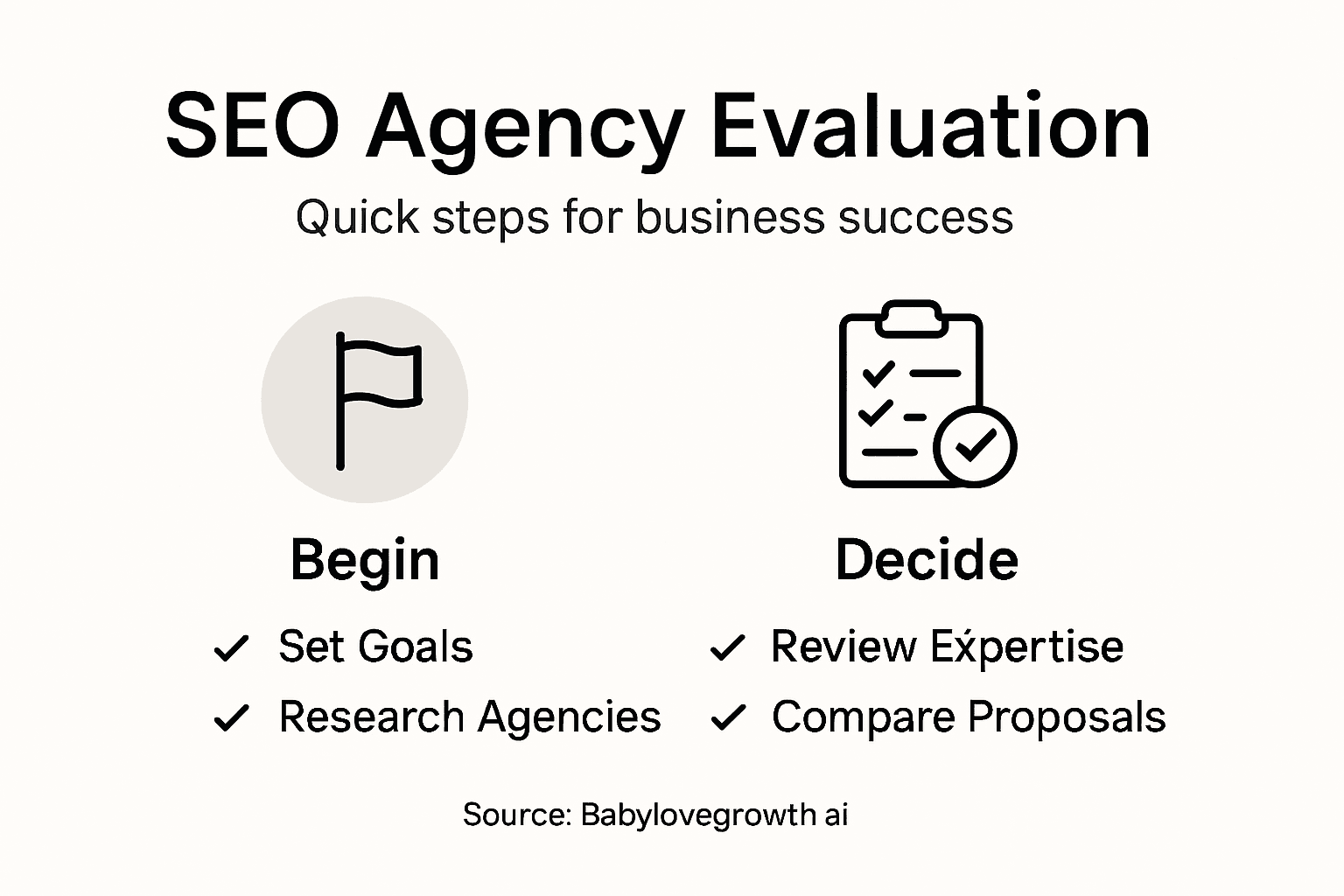
Create a standardized evaluation framework to compare proposals objectively. This should include scoring criteria for strategy depth, proposed deliverables, communication approach, pricing structure, and alignment with your specific business goals. Pay close attention to the level of customization each agency offers rather than accepting generic proposals. During proposal reviews, schedule follow up discussions to clarify any ambiguities and ensure you fully understand the proposed approach. Look for agencies that demonstrate a nuanced understanding of your industry and can articulate how their SEO strategy will directly impact your bottom line.
The table below summarizes key factors to evaluate when comparing SEO agency proposals:
| Evaluation Area | What to Examine | Why It Matters |
|---|---|---|
| Strategy depth | Custom tactics and alignment | Reveals genuine expertise |
| Reporting transparency | KPIs and reporting detail | Ensures accountability |
| Industry experience | Related client experience | Reduces learning curve |
| Pricing structure | Clarity and value | Avoids hidden costs |
| Communication style | Responsiveness and clarity | Supports long-term trust |
Pro tip: Require potential agencies to provide a sample strategic recommendation specific to your business as part of their proposal process to assess their true strategic capabilities.
Step 5: Verify transparency and communication standards
Building a successful partnership with an SEO agency requires establishing clear expectations around communication and reporting. Your objective is to ensure complete visibility into their strategic approach and ongoing performance tracking.
Prioritize agencies that demonstrate comprehensive information transparency through their communication practices. Request detailed information about their reporting frequency, communication channels, and the specific metrics they will share. Expect comprehensive monthly or quarterly reports that break down key performance indicators, including organic traffic growth, keyword ranking improvements, conversion rates, and detailed analysis of SEO activities. During initial discussions, evaluate their communication style by assessing their responsiveness, clarity, and willingness to explain technical concepts in understandable terms.
Establish explicit communication protocols from the beginning. This includes defining preferred communication methods (email, video calls, project management tools), expected response times, and the specific team members who will be your primary points of contact. Ask potential agencies about their escalation processes for addressing challenges, their approach to transparent reporting, and how they handle unexpected SEO performance issues. Look for agencies that provide real time access to performance dashboards, offer clear explanations of their strategies, and demonstrate a commitment to ongoing education and collaboration.
Pro tip: Request a sample communication and reporting template during your initial agency discussions to ensure their transparency standards align with your business expectations.
Step 6: Test agency fit with a small project
Before committing to a long term SEO partnership, smart businesses leverage strategic pilot projects to validate an agency's actual capabilities and compatibility. This approach minimizes risk while providing concrete insights into the potential collaboration.
Small project testing strategies offer an invaluable opportunity to assess an agency's real world performance and alignment with your business objectives. Design a focused micro project that represents a specific SEO challenge within your broader strategy. This could involve optimizing a single landing page, conducting keyword research for a niche product category, or developing a targeted content strategy for a specific market segment. During this pilot, carefully evaluate the agency's communication quality, technical expertise, creativity in problem solving, and ability to deliver measurable results within the agreed timeline and budget.Establish clear success metrics and expectations before launching the pilot project. This means defining specific, measurable outcomes such as improved page ranking for targeted keywords, increased organic traffic, or enhanced content engagement rates. Request detailed reporting and analysis that demonstrates not just the results, but the agency's thought process and strategic approach. Pay close attention to how they communicate challenges, propose solutions, and adapt their strategy based on initial findings. The goal is to simulate a microcosm of a potential long term engagement that reveals the agency's true working style and potential for driving meaningful SEO improvements.
Pro tip: Negotiate a fixed price and clear deliverables for the pilot project to ensure both parties have aligned expectations and minimize potential misunderstandings.
Simplify Your SEO Agency Evaluation and Boost Your Business Growth Today
Choosing the right SEO agency can feel overwhelming when facing unclear goals, vague proposals, and uncertain results. This article highlights the crucial steps like defining measurable SEO objectives, assessing agency transparency, and testing small projects to ensure meaningful organic growth and lasting success. If you want to overcome these challenges and avoid costly missteps, embracing an automated, AI-powered approach can give your business the edge it needs.
Discover how AI-driven SEO solutions can simplify your journey by delivering tailored content strategies, detailed business analysis, and backlinks exchanges all in one platform. Imagine avoiding time-consuming agency vetting and launching SEO on autopilot with a personalized 30-day content plan optimized for Google and ChatGPT.
Start transforming your SEO approach now by visiting Babylovegrowth.ai and claim your free trial. Take control of your SEO success with a platform designed for business owners, marketers, and SEO professionals who demand transparency, measurable results, and scalable growth without guesswork.
Frequently Asked Questions
How do I define my SEO goals before evaluating agencies?
To define your SEO goals, assess your current online performance metrics, such as website traffic and conversion rates. Create specific, measurable targets, like increasing organic traffic by 35% within six months.
What criteria should I use to shortlist potential SEO agencies?
You should evaluate agencies based on their industry experience, technical capabilities, communication style, and proven track record. Prepare an evaluation matrix to score them against these criteria and narrow your list effectively.
How can I assess an SEO agency's expertise and proven results?
Examine their past performance reports and case studies that showcase specific metrics, such as keyword ranking improvements. Look for agencies that can explain their strategies clearly and provide evidence of successful outcomes in similar industries.
What should a comprehensive SEO proposal include?
A comprehensive SEO proposal should outline your specific business objectives, target audience, and challenges. It should also detail services, strategies, timelines, and key performance indicators to track progress.
How do I establish clear communication standards with my potential SEO agency?
Establish clear communication protocols by defining preferred methods (like video calls or emails) and expected response times. Make sure to document who your primary points of contact will be to ensure smooth communication throughout the partnership.
What is a good way to test an SEO agency's capabilities before committing?
A great way to test an agency's capabilities is to initiate a small pilot project, such as optimizing a specific landing page. Set clear success metrics and expectations so you can evaluate their performance against defined outcomes, such as improved page rankings within 30 days.
Recommended
Smart SEO,
Faster Growth!
Most Read Articles
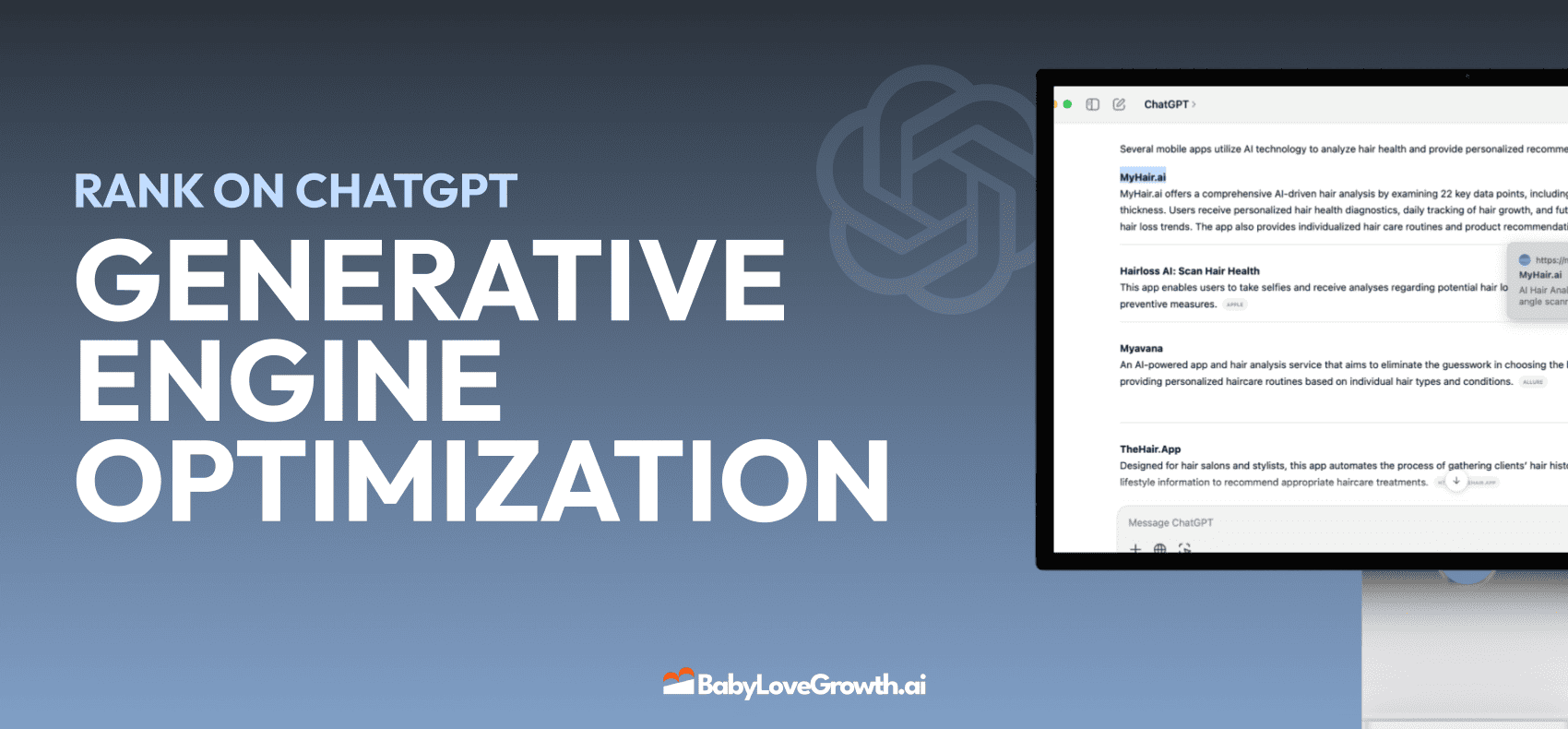
Generative Engine Optimization (GEO)
Learn how Generative Engine Optimization (GEO) helps your content rank in AI search engines like ChatGPT and Google AI. This comprehensive guide explains the differences between SEO and GEO, why it matters for your business, and practical steps to implement GEO strategies for better visibility in AI-generated responses.
DylenJan 18, 2025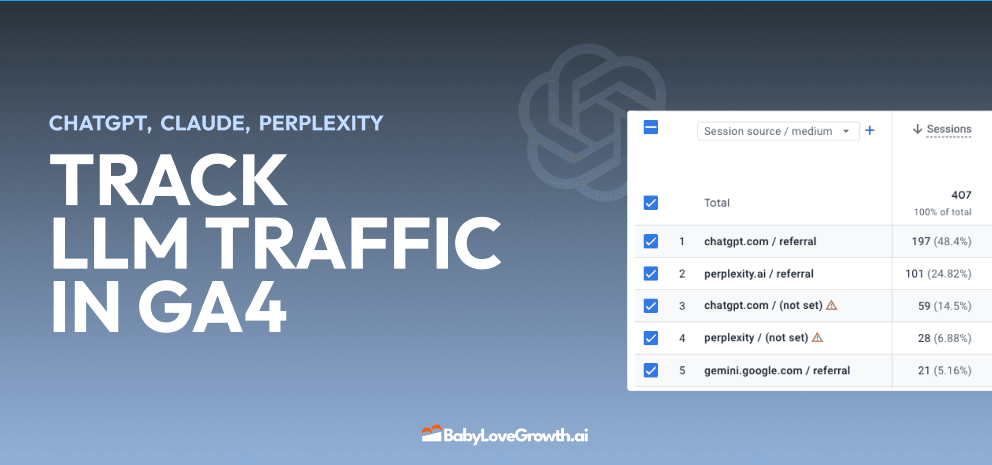
Track LLM Traffic in Google Analytics 4 (GA4)
Learn how to track and analyze traffic from AI sources like ChatGPT, Claude, Perplexity, and Google Gemini in Google Analytics 4. This step-by-step guide shows you how to set up custom filters to monitor AI-driven traffic and make data-driven decisions for your content strategy.
DylenMar 18, 2025
How to Humanize AI Text with Instructions
Learn practical techniques to make AI-generated content sound more natural and human. This guide covers active voice, direct addressing, concise writing, and other proven strategies to transform robotic text into engaging content.
DylenApril 7, 2025
Open AI Revenue and Statistics (2024)
Comprehensive analysis of OpenAI financial performance, user engagement, and market position in 2023. Discover key statistics including $20B valuation, $1B projected revenue, and 100M+ monthly active users.
DylenOctober 03, 2025