How to Build Community Online for Scalable Business Growth


More than 60 percent of American businesses now invest in building online communities to increase brand loyalty and customer engagement. Finding the right approach matters because meaningful digital connections can turn occasional visitors into dedicated supporters. Whether you are launching a new project or strengthening your current group, these proven steps reveal how to create a thriving American online community with purpose and measurable impact.
Table of Contents
- Step 1: Define Your Target Audience And Community Goals
- Step 2: Choose The Right Online Platforms And Tools
- Step 3: Create Valuable And Engaging Content Regularly
- Step 4: Foster Active Participation And Meaningful Connections
- Step 5: Measure Community Growth And Optimize Strategies
Quick Summary
| Key Insight | Explanation |
|---|---|
| 1. Define Your Target Audience | Conduct in-depth research to understand motivations and needs of your community. |
| 2. Choose Optimal Platforms | Select platforms that cater to your audience's preferences and facilitate engagement. |
| 3. Create Engaging Content | Regularly share quality content that provides value and encourages interaction among members. |
| 4. Foster Active Participation | Implement strategies that empower members to engage and create a sense of belonging. |
| 5. Measure Community Growth | Utilize specific metrics to track progress and refine strategies for better engagement. |
Step 1: Define your target audience and community goals
Defining your target audience and community goals forms the strategic foundation of building an effective online community. This critical first step ensures you create meaningful connections that drive scalable business growth.
To pinpoint your ideal audience, start by conducting comprehensive research that goes beyond basic demographics. Identifying strategic audience behaviors involves understanding their motivations, challenges, and specific needs. Ask yourself key questions: What problems does your community solve? What unique value can you provide that differentiates your online space from competitors?
Begin by creating detailed audience personas that capture not just age and location, but deeper psychological insights. Map out their professional aspirations, pain points, communication preferences, and online behavior patterns. This nuanced approach helps you design a community that genuinely resonates with potential members. Consider using surveys, interviews, and analytics tools to gather rich qualitative and quantitative data about your target group.
Pro tip: Create a living document for your audience persona that you continuously update as you learn more about your community members, allowing your understanding to evolve dynamically with their changing needs and expectations.
Step 2: Choose the right online platforms and tools
Selecting the appropriate online platforms and tools is crucial for creating a thriving digital community that supports your business growth objectives. This step transforms your strategic vision into a practical, engaging online environment.
Start by analyzing digital community infrastructure carefully to ensure your chosen platforms align with your audience's communication preferences and technological comfort levels. Consider platforms that offer robust interaction features such as discussion forums, direct messaging, content sharing, and collaborative workspaces. Popular options include Slack for professional networking, Discord for community engagement, Facebook Groups for broader reach, and specialized platforms like Circle or Mighty Networks for more curated experiences.
Evaluate each platform based on specific criteria: user experience, customization options, integration capabilities, moderation tools, analytics features, and scalability. Look beyond surface level features and assess how each platform supports your community's unique goals. Some platforms excel at knowledge sharing, while others are better for networking or collaborative projects. Pay attention to mobile accessibility, as many users will engage through smartphones and tablets.
Pro tip: Conduct a small pilot test with a select group of potential community members to validate your platform choice and gather real world feedback before full implementation.
Here is a comparison of popular online community platforms to help inform your selection:
| Platform | Best For | Interaction Features | Scalability |
|---|---|---|---|
| Slack | Professional networking | Channels, direct messaging | Best for small/medium |
| Discord | Engaged community building | Voice, chat, threads, integrations | Grows with large groups |
| Facebook Groups | Broad public reach | Posts, events, announcements | Large and flexible |
| Mighty Networks | Curated member experiences | Courses, spaces, polls | Good for niche growth |
Step 3: Create valuable and engaging content regularly
Building a thriving online community requires consistent creation of content that resonates with your audience, keeps them engaged, and provides genuine value. This step is about transforming your community from a passive platform into an active, interactive ecosystem.

Ensure your content maintains high quality by focusing on solving real problems your audience experiences. Narrative driven engagement strategies can help create deeper connections between content creators and community members. Encourage two way interactions by asking questions, seeking feedback, and creating opportunities for members to share their own experiences and insights. Track engagement metrics to understand what content resonates most and be prepared to adapt your strategy based on community response.
Pro tip: Develop a consistent content rhythm that your community can anticipate and look forward to, such as weekly expert insights or monthly deep dive discussions that become signature features of your online community.
Step 4: Foster active participation and meaningful connections
Transforming your online community from a passive group into an engaged ecosystem requires strategic approaches that encourage genuine interaction and create a sense of belonging. This step is about designing an environment where members feel valued, heard, and motivated to contribute.
Bottom-up governance processes can significantly enhance user participation by empowering community members to shape their own collaborative experience. Implement interactive mechanisms like collaborative decision making tools, rotating leadership roles, and community driven moderation policies that give members a sense of ownership. Create dedicated spaces for different types of interactions such as mentorship channels, skill exchange forums, and peer support groups that align with your community's core objectives.Utilize personalized collaborative toolkits to develop meaningful connections between community members. Design engagement strategies that go beyond surface level interactions by hosting themed discussion weeks, organizing virtual networking events, and creating mentorship matching programs. Recognize and celebrate member contributions through spotlight features, achievement badges, and opportunities for members to showcase their expertise. Actively listen to feedback, track engagement metrics, and be willing to adapt your community strategy based on member needs and preferences.
Pro tip: Create a welcoming onboarding ritual for new members that includes a personal welcome message, clear guides about community participation, and an introduction thread where they can share their background and interests.
Step 5: Measure community growth and optimize strategies
Successful online communities require continuous measurement and strategic refinement to ensure sustainable growth and member engagement. This step focuses on transforming raw data into actionable insights that drive meaningful community development.
Setting specific key performance indicators is crucial for tracking your community's progress and understanding its true impact. Develop a comprehensive measurement framework that goes beyond surface level metrics like member count, diving deep into behavioral indicators such as active participation rates, content creation frequency, interaction quality, and member retention. Track metrics that demonstrate genuine community value including knowledge sharing volume, problem solving effectiveness, and member skill development.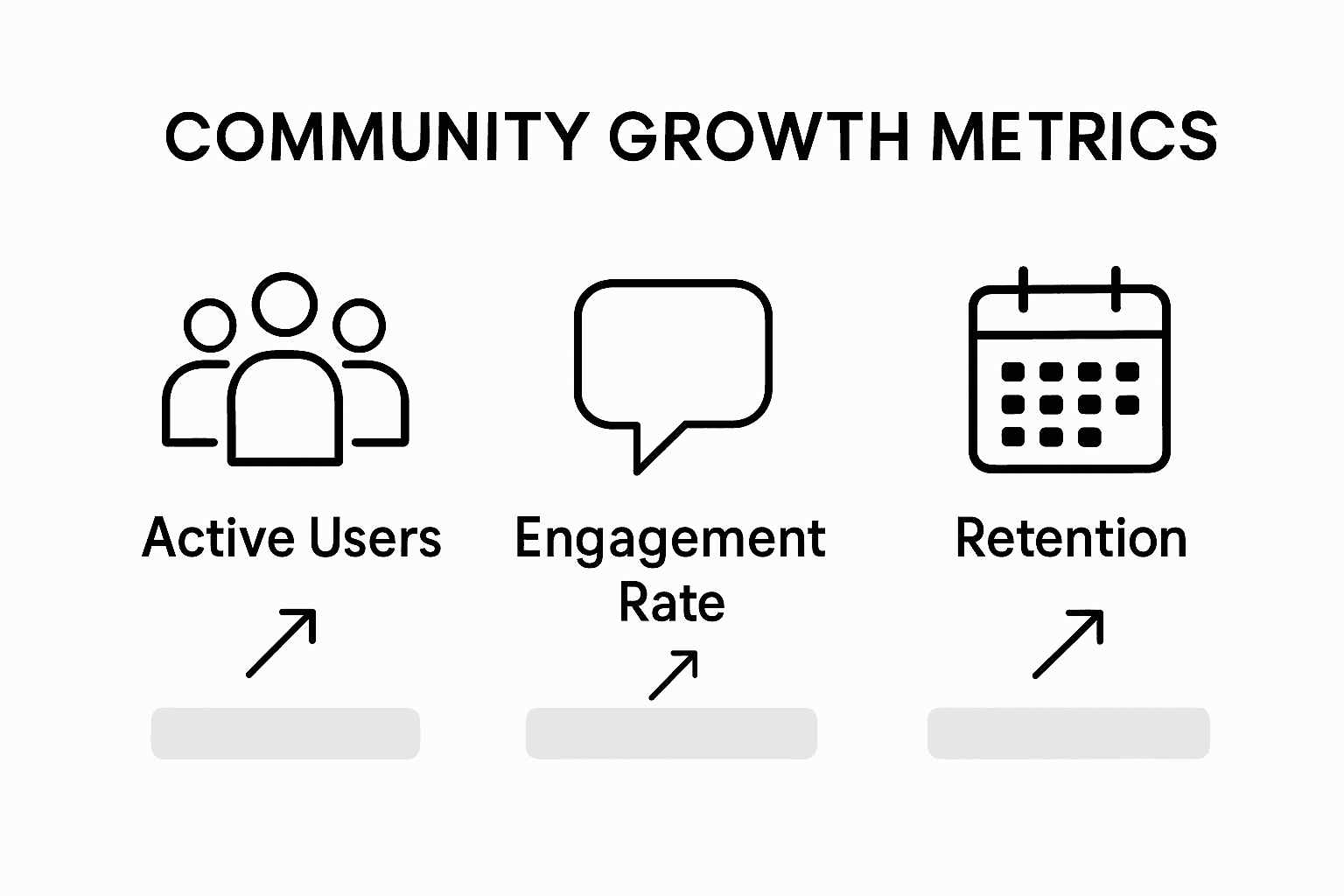
Content moderation strategies play a significant role in measuring and improving community engagement. Implement advanced analytics tools that provide nuanced insights into user behavior patterns, interaction dynamics, and content performance. Regularly conduct member surveys, analyze engagement trends, and create feedback loops that allow you to continuously refine your community approach. Be prepared to experiment with different engagement techniques, carefully measuring their impact and being willing to pivot your strategies based on empirical evidence.
Pro tip: Create a quarterly community health dashboard that visualizes key metrics, making it easy to communicate progress to stakeholders and identify areas for strategic improvement.
Below is a summary of key community health metrics and what they reveal about community progress:
| Metric | What It Measures | Why It Matters |
|---|---|---|
| Active participation | Member involvement in activities | Indicates community engagement |
| Content creation rate | Frequency of new posts/content | Reflects vitality and interest |
| Member retention | Returning vs. new members | Shows community's long-term value |
| Interaction quality | Depth of discussions/connections | Suggests member satisfaction level |
Accelerate Your Online Community Growth with AI-Powered Content
Building an engaged online community that drives scalable business growth requires not only clear goals and active participation but also powerful content that resonates deeply with your audience. The challenge of consistently creating valuable, SEO-optimized content and growing organic traffic can slow down your community-building efforts. By leveraging AI-driven solutions, you can automate high-quality content creation and backlink strategies to enhance your online presence effortlessly.
Discover how Babylovegrowth.ai simplifies your journey by providing a personalized 30-day content plan designed to boost your visibility on Google and ChatGPT. With detailed business analysis and a seamless SEO automation process, you can focus on fostering meaningful connections while your content works for you. Start growing your community with smarter content and see results faster by visiting Babylovegrowth.ai. Take control of your online growth today and transform your community-building strategy into a scalable success story.
Frequently Asked Questions
How can I define my target audience for my online community?
To define your target audience, conduct thorough research to understand their motivations, challenges, and specific needs. Create detailed audience personas that include their professional aspirations and communication preferences, which will help tailor your community to better resonate with potential members.
What online platforms are best for building a community?
Select platforms that align with your audience's communication preferences and offer features like discussion forums and content sharing. Consider starting with a pilot test on a chosen platform to validate your choice and gather feedback before launching fully.
What type of content should I create for my online community?
Focus on creating high-quality content that addresses real problems your audience faces. Develop a content calendar that includes educational resources, interactive polls, and user-generated content to keep members engaged and encourage participation.
How can I encourage active participation in my online community?
To foster active participation, implement interactive strategies like mentorship channels and community-driven moderation policies. Create an onboarding ritual that welcomes new members and encourages them to share their experiences and insights right away.
What key metrics should I track to measure my community's growth?
Track metrics like active participation rates, content creation frequency, and member retention to assess your community's health. Create a quarterly community health dashboard to visualize these metrics and help you identify areas for improvement in your community strategies.
How often should I evaluate and optimize my community strategies?
Regularly evaluate your community strategies by analyzing engagement metrics and conducting member surveys. Aim to review your approach at least every quarter and be prepared to make adjustments based on feedback and data trends.
Recommended
Smart SEO,
Faster Growth!
Most Read Articles
Generative Engine Optimization (GEO)
Learn how Generative Engine Optimization (GEO) helps your content rank in AI search engines like ChatGPT and Google AI. This comprehensive guide explains the differences between SEO and GEO, why it matters for your business, and practical steps to implement GEO strategies for better visibility in AI-generated responses.
DylenJan 18, 2025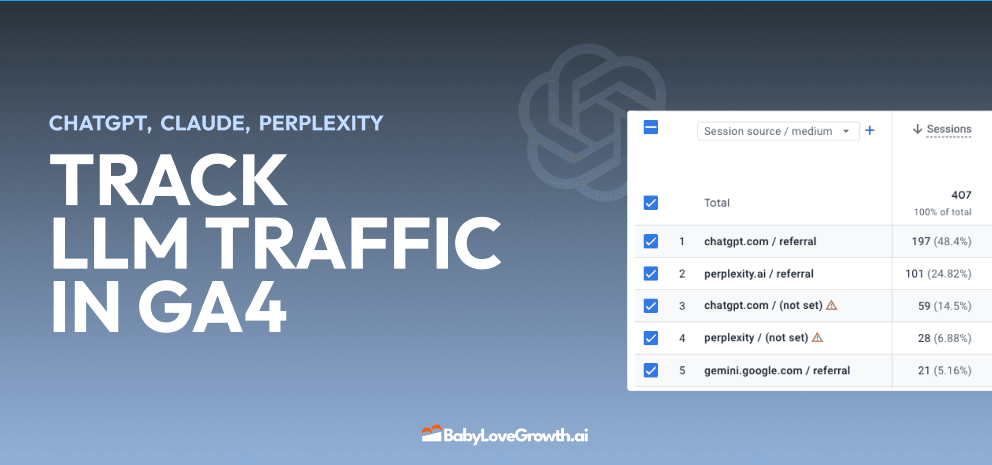
Track LLM Traffic in Google Analytics 4 (GA4)
Learn how to track and analyze traffic from AI sources like ChatGPT, Claude, Perplexity, and Google Gemini in Google Analytics 4. This step-by-step guide shows you how to set up custom filters to monitor AI-driven traffic and make data-driven decisions for your content strategy.
DylenMar 18, 2025
How to Humanize AI Text with Instructions
Learn practical techniques to make AI-generated content sound more natural and human. This guide covers active voice, direct addressing, concise writing, and other proven strategies to transform robotic text into engaging content.
DylenApril 7, 2025
Open AI Revenue and Statistics (2024)
Comprehensive analysis of OpenAI financial performance, user engagement, and market position in 2023. Discover key statistics including $20B valuation, $1B projected revenue, and 100M+ monthly active users.
DylenOctober 03, 2025