Track LLM Traffic in Google Analytics 4 (GA4)

Dylen
Dylen
Track LLM Traffic in Google Analytics 4 (GA4)

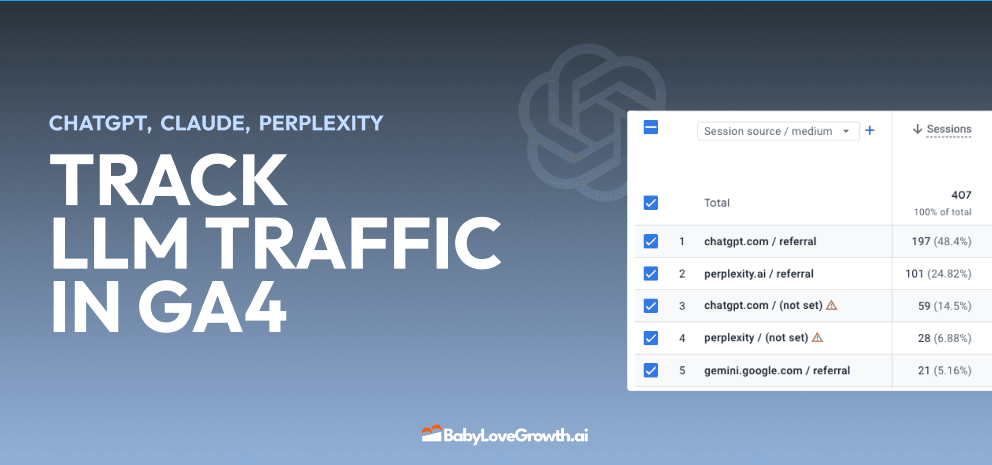
As AI search engines are becoming more used every day it became crucial to understand how much traffic they're driving to your website. Here's a step-by-step guide to tracking organic traffic from AI sources like ChatGPT, Claude, Perplexity, and Gemini in Google Analytics 4.

Setting Up LLM Traffic Tracking

  1. Log into your Google Analytics 4 account
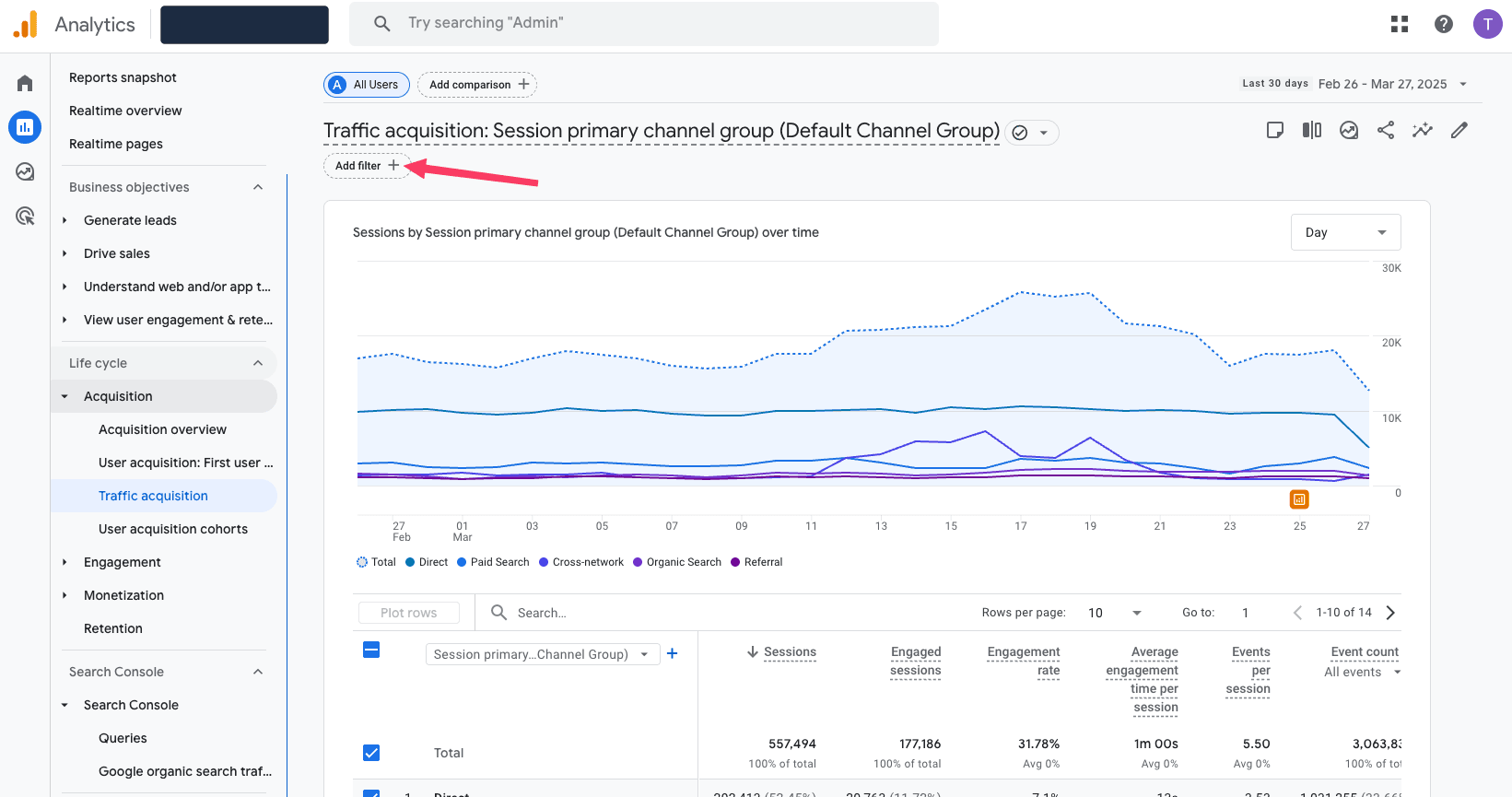
  2. Navigate to Reports > Acquisition > Traffic acquisition
  3. Click the Add filter button (+ icon)
Setting up LLM traffic filter in Google Analytics 4
  1. Select Session source / medium as your dimension
  2. Choose "Matches regex" as the operator
  3. Paste the following regex pattern:
^*\.openai.*|.*copilot.*|.*chatgpt.*|.*gemini.*|.*gpt.*|.*neeva.*|.*writesonic.*|.*nimble.*|.*perplexity.*|.*google.*bard.*|.*bard.*google.*|.*bard.*|.*edgeservices.*|.*bnngpt.*|.*gemini.*google.*$
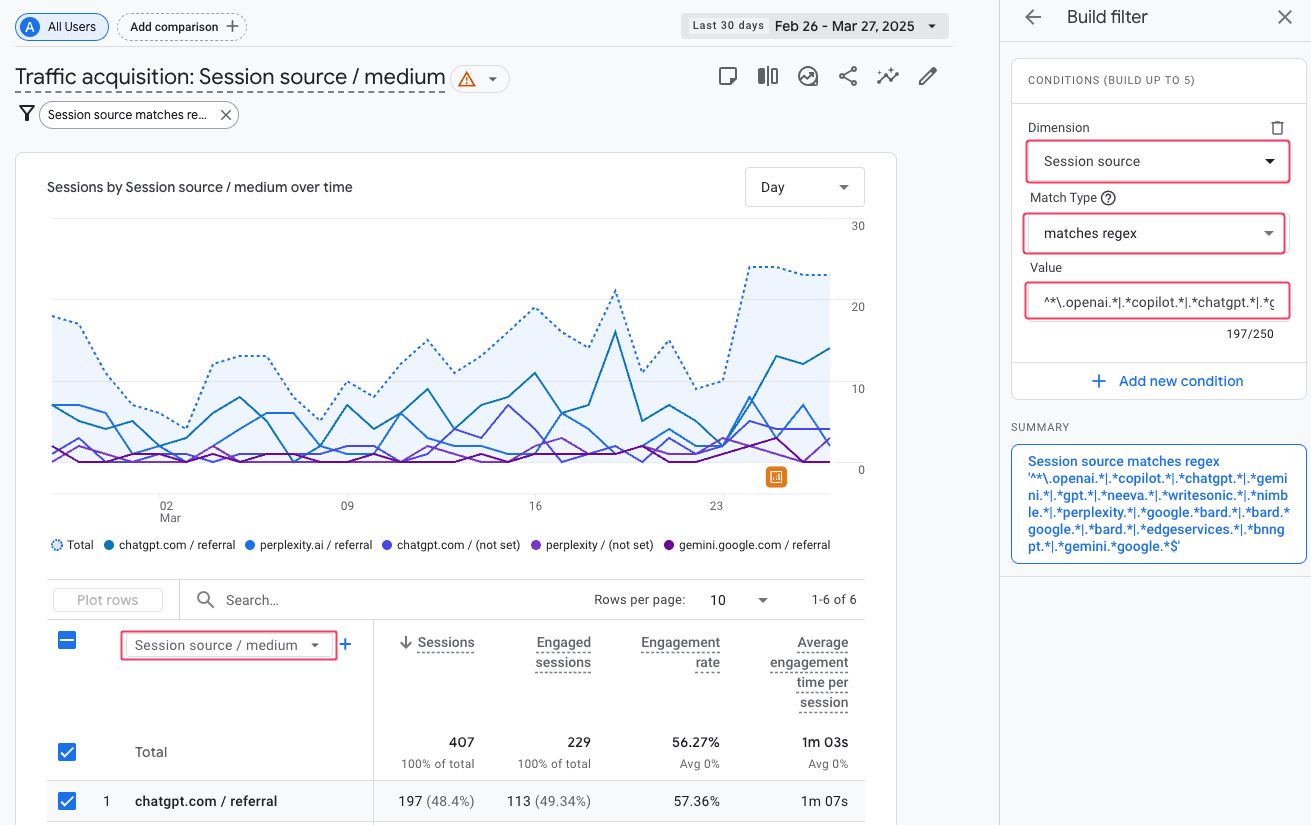
Applying regex filter to track LLM traffic in Google Analytics 4

This regex pattern will capture traffic from popular AI sources including:

  • ChatGPT and OpenAI
  • Google Gemini
  • Perplexity AI
  • Microsoft Copilot
  • Google Bard (legacy)
  • Claude (via edgeservices)
  • Other AI assistants
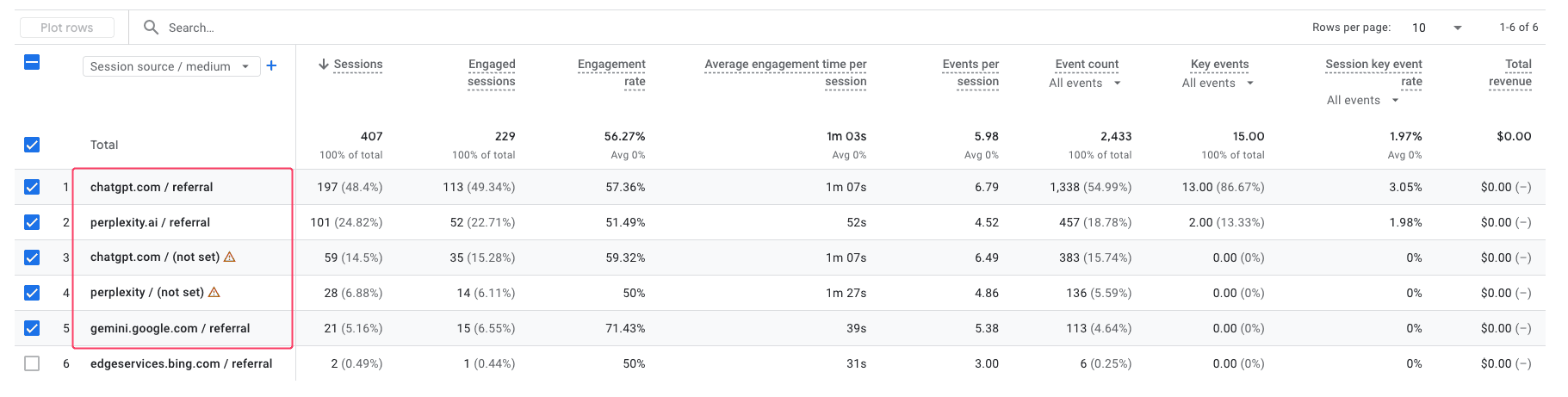
Checking results 4

Understanding Your AI Traffic Data

Once you've applied the filter, you'll see a breakdown of sessions originating from AI sources. This data can help you:

  • Measure the effectiveness of your GEO strategies
  • Understand which AI platforms drive the most traffic
  • Track changes in AI-driven traffic over time
  • Compare AI traffic with traditional search engine traffic

Pro Tips

  1. Create a Custom Report: Save this view as a custom report for easy access
  2. Segment Analysis: Compare AI traffic behavior with traditional organic traffic
  3. Monitor Trends: Watch for emerging AI sources and update your regex as needed

Tracking AI traffic in Google Analytics 4 is a crucial step in understanding the impact of your GEO efforts. By implementing proper tracking, you can make informed decisions about your content strategy and ensure you're effectively reaching audiences through both traditional search and AI platforms.

Grow now!

Smart SEO,
Faster Growth!

Get 7 free articles
Set up in minutes
Cancel anytime
AI-powered optimization

Most Read Articles

Check Keyword Rankings Free with Google API (2026)

Check Keyword Rankings Free with Google API (2026)

A practical guide to checking your keyword rankings for free using the Google Search Console API.

DylenDylen
How to Find Low Competition Keywords You Can Actually Rank (2026)

How to Find Low Competition Keywords You Can Actually Rank (2026)

A practical 2026 workflow for finding low competition keywords you can actually rank for — beyond difficulty scores, with SERP validation, clustering, and prioritization.

DylenDylen
Generative Engine Optimization (GEO)

Generative Engine Optimization (GEO)

Learn how Generative Engine Optimization (GEO) helps your content rank in AI search engines like ChatGPT and Google AI. This comprehensive guide explains the differences between SEO and GEO, why it matters for your business, and practical steps to implement GEO strategies for better visibility in AI-generated responses.

DylenDylen
Track LLM Traffic in Google Analytics 4 (GA4)

Track LLM Traffic in Google Analytics 4 (GA4)

Learn how to track and analyze traffic from AI sources like ChatGPT, Claude, Perplexity, and Google Gemini in Google Analytics 4. This step-by-step guide shows you how to set up custom filters to monitor AI-driven traffic and make data-driven decisions for your content strategy.

DylenDylen
How Many Backlinks Do You Actually Need to Rank in 2026?

How Many Backlinks Do You Actually Need to Rank in 2026?

A 2026 framework for the real number of referring domains you need to rank, backed by recent SERP research and Google ranking guidance.

DylenDylen
How to Humanize AI Text with Instructions

How to Humanize AI Text with Instructions

Learn practical techniques to make AI-generated content sound more natural and human. This guide covers active voice, direct addressing, concise writing, and other proven strategies to transform robotic text into engaging content.

DylenDylen
Moz DA vs Ahrefs DR: Which Metric Should You Actually Use?

Moz DA vs Ahrefs DR: Which Metric Should You Actually Use?

Moz Domain Authority and Ahrefs Domain Rating look similar but measure very different things. Learn what each score actually tells you, when to use each one, and what to track instead for real SEO results in 2026.

DylenDylen
Open AI Revenue and Statistics (2024)

Open AI Revenue and Statistics (2024)

Comprehensive analysis of OpenAI financial performance, user engagement, and market position in 2023. Discover key statistics including $20B valuation, $1B projected revenue, and 100M+ monthly active users.

DylenDylen
"Search Google or Type a URL": What It Means & What to Do

"Search Google or Type a URL": What It Means & What to Do

Learn what "Search Google or type a URL" actually means, how your browser decides whether to search or navigate, and what to do if your address bar starts behaving unexpectedly. Includes browser settings guides for Chrome, Firefox, Edge, and Safari.

DylenDylen
How to Track Your Google Rankings for Free (2026 Guide)

How to Track Your Google Rankings for Free (2026 Guide)

A complete free stack for tracking your Google rankings in 2026 using Search Console, Looker Studio, GA4, and Google Business Profile.

DylenDylen