Future of Digital Marketing: AI’s Transformative Impact


Most American e-commerce brands now rely on artificial intelligence for marketing, yet only 27 percent achieve significant organic growth from these efforts. For digital marketing managers, meeting rising consumer expectations means rethinking personalization, transparency, and ethical data practices. This guide reveals how emerging AI strategies help you build scalable campaigns while protecting privacy and enhancing search visibility in an evolving global marketplace.
Table of Contents
- Defining The Future Of Digital Marketing
- Emerging AI Tools And Automation Trends
- Personalization And Predictive Analytics In Action
- Ethical Challenges And Data Privacy Concerns
- Strategies For Scalable, Sustainable Growth
Key Takeaways
| Point | Details |
|---|---|
| Embrace Personalization | Tailored marketing strategies significantly enhance engagement and conversion rates by addressing individual customer needs. |
| Prioritize Transparency | Open data practices foster consumer trust, which is essential in an increasingly privacy-conscious marketplace. |
| Adopt Ethical Data Practices | Responsible data management is crucial for maintaining customer trust and meeting regulatory compliance. |
| Invest in Continuous Learning | Allocate resources for experimenting with AI and automation technologies to stay competitive in the evolving digital marketing landscape. |
Defining the Future of Digital Marketing
The digital marketing landscape is undergoing a radical transformation, driven by unprecedented technological advancements and shifting consumer expectations. Emerging digital marketing strategies are fundamentally reshaping how businesses engage with audiences, moving beyond traditional approaches toward more intelligent, personalized interactions.
Artificial Intelligence (AI) stands at the epicenter of this revolution, enabling marketers to create hyper-targeted experiences that were previously impossible. Machine learning algorithms can now analyze complex consumer behavior patterns, predict preferences, and deliver content with remarkable precision. These technologies empower businesses to craft individualized marketing campaigns that resonate deeply with specific audience segments, dramatically improving engagement and conversion rates.
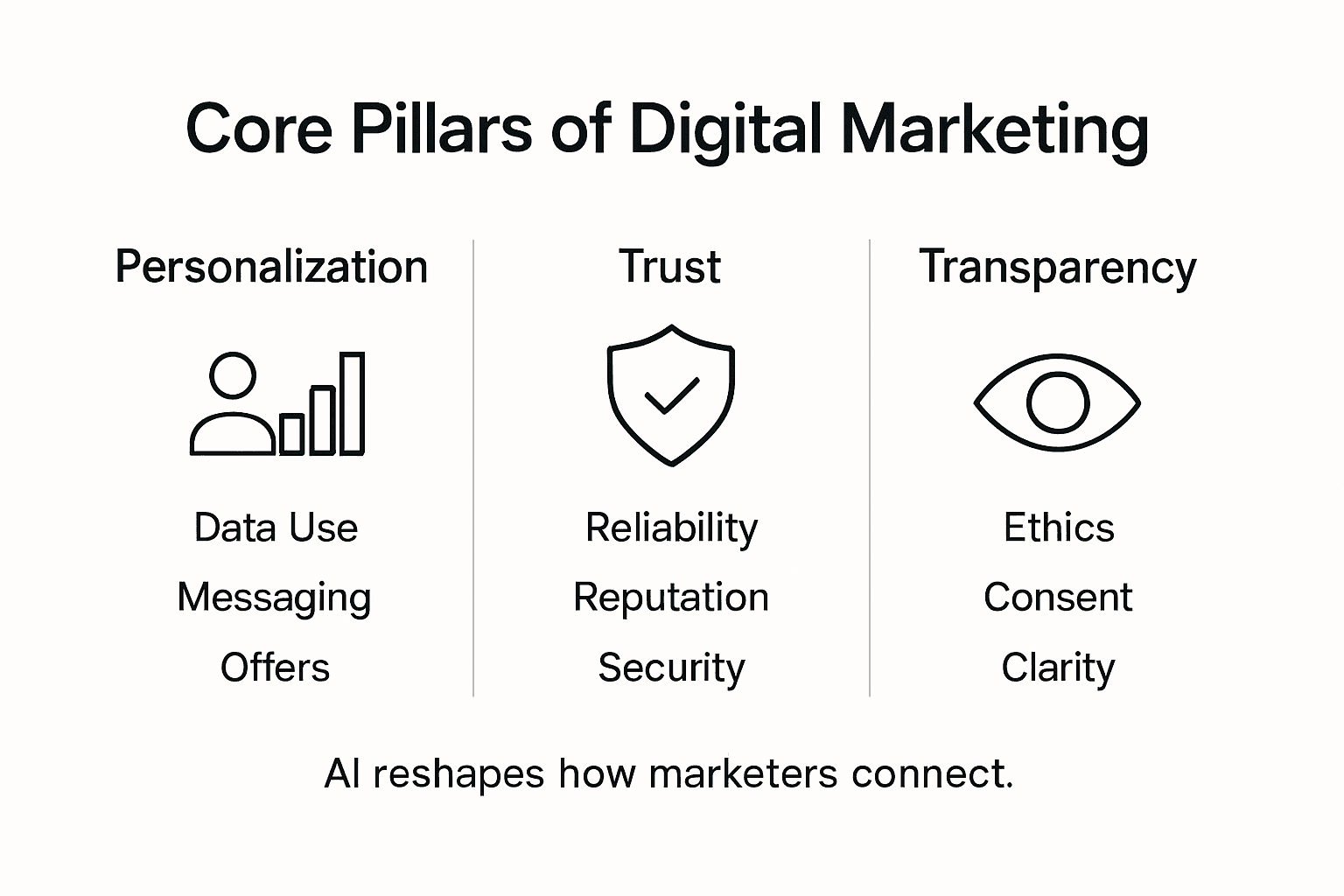
The future of digital marketing will be characterized by three core pillars: personalization, transparency, and ethical data utilization. Companies must adapt to increasingly sophisticated consumer expectations around digital interactions and sustainable practices, which now extend far beyond simple transactional relationships. This means developing strategies that not only leverage cutting-edge technologies but also demonstrate genuine commitment to consumer privacy, data protection, and meaningful value creation.
Here's a summary of the three core pillars shaping the future of digital marketing:
| Pillar | Main Focus | Business Impact |
|---|---|---|
| Personalization | Tailored customer experiences | Higher conversion rates |
| Transparency | Open data practices | Increased consumer trust |
| Ethical Data Utilization | Responsible data use | Stronger brand reputation |
Pro tip: Invest in continuous learning about AI and data analytics technologies to stay ahead of rapidly evolving digital marketing trends and maintain a competitive edge.
Emerging AI Tools and Automation Trends
The digital marketing landscape is experiencing a revolutionary transformation through advanced AI technologies that are automating complex marketing processes. Cutting-edge AI tools are empowering marketers to streamline workflows, enhance personalization, and unlock unprecedented insights into consumer behavior and preferences.
Modern AI-driven marketing automation encompasses a wide range of sophisticated capabilities. Machine learning and natural language processing technologies are enabling unprecedented levels of consumer data analysis and predictive marketing strategies, transforming how businesses approach customer engagement. These technologies can now autonomously generate targeted content, predict consumer trends, optimize advertising campaigns, and create dynamic customer segmentation models that adapt in real time.
Key emerging AI tools and automation trends include advanced chatbots for customer support, predictive analytics platforms, automated social media management systems, and intelligent content generation algorithms. Businesses can now leverage AI to automate repetitive tasks like email marketing, social media posting, web traffic reporting, and customer interaction tracking. This automation allows marketing professionals to redirect their focus toward strategic planning, creative development, and high-value relationship-building activities that drive meaningful business growth.
Compare how three leading AI-driven marketing tools transform business outcomes:
| Tool Type | Core Capability | Marketing Advantage |
|---|---|---|
| Predictive Analytics | Behavior trend forecasting | Smarter targeting, improved ROI |
| Intelligent Chatbots | Automated customer support | Scalable, 24/7 engagement |
| Content Generation AI | Dynamic content creation | Faster campaign launches |
Pro tip: Continuously experiment with different AI marketing tools and allocate 10-15% of your marketing budget to testing emerging automation technologies to stay ahead of competitive trends.
Personalization and Predictive Analytics in Action
Personalization in marketing has transformed from a generic approach to a sophisticated, multi-dimensional strategy that leverages advanced data analytics and artificial intelligence. Modern businesses now understand that true personalization extends far beyond simple demographic targeting, encompassing individual preferences, social contexts, and real-time situational dynamics.AI-powered predictive analytics enable marketers to create hyper-personalized experiences that anticipate customer needs before they even articulate them. Intelligent marketing strategies now integrate complex machine learning models that analyze behavioral patterns, emotional triggers, and potential customer interactions, allowing for unprecedented levels of customization. These technologies can predict consumer preferences, recommend products with remarkable accuracy, and dynamically adjust marketing messages across multiple channels in milliseconds.

The key to successful personalization lies in balancing technological capabilities with ethical considerations. Advanced algorithms must not only deliver targeted experiences but also respect individual privacy, maintain transparent data usage practices, and avoid potential algorithmic biases. Businesses that master this delicate balance will create more meaningful, trust-based relationships with their customers, transforming traditional marketing interactions into genuine, personalized conversations that drive engagement and loyalty.
Pro tip: Develop a comprehensive data governance strategy that prioritizes customer consent, transparency, and individual control over personal information to build trust while implementing advanced personalization technologies.
Ethical Challenges and Data Privacy Concerns
Recent advances in AI technology have dramatically complicated global data governance and privacy protection frameworks, creating unprecedented challenges for businesses seeking to leverage advanced marketing technologies while maintaining ethical standards. The rapid evolution of artificial intelligence has outpaced existing regulatory mechanisms, forcing companies to navigate increasingly complex legal and ethical landscapes where consumer privacy and technological innovation intersect.AI-driven marketing technologies now generate significant enforcement risks, particularly when continuous data collection conflicts with fundamental privacy protections. Companies face stringent regulatory scrutiny and potential legal consequences if they fail to implement robust data handling practices that prioritize transparency, consent, and individual data rights. This means developing comprehensive strategies that go beyond simple compliance, focusing on building genuine trust through responsible data management and clear communication about how consumer information is collected, processed, and utilized.
The most forward-thinking organizations are proactively developing ethical frameworks that balance technological innovation with rigorous privacy protections. This involves implementing multi-layered consent mechanisms, creating granular user controls over personal data, developing algorithmic bias detection systems, and maintaining ongoing transparency about AI-driven decision-making processes. By treating consumer data as a sacred trust rather than a commodity, businesses can differentiate themselves in an increasingly privacy-conscious marketplace.
Pro tip: Conduct regular third-party privacy audits and develop a clear, accessible privacy policy that explains your AI data usage in plain language to build consumer confidence and demonstrate ethical commitment.
Strategies for Scalable, Sustainable Growth
Developing an effective marketing strategy requires comprehensive long-term planning that aligns technological innovation with sustainable business objectives. Modern businesses must move beyond traditional growth models, embracing dynamic approaches that leverage advanced technologies, data-driven insights, and adaptable frameworks to create resilient marketing ecosystems.Strategic growth now demands a holistic approach that integrates multiple channels, technologies, and innovative methodologies. Digital technologies are fundamentally transforming economic landscapes, creating unprecedented opportunities for businesses willing to invest in digital infrastructure and skills development. This means moving beyond simple digital presence to creating sophisticated, interconnected marketing strategies that can quickly adapt to changing consumer behaviors, technological advancements, and global market dynamics.
Successful scalable strategies prioritize three key dimensions: technological flexibility, continuous learning, and strategic agility. Companies must build marketing frameworks that can seamlessly integrate emerging technologies, rapidly experiment with new approaches, and pivot quickly based on real-time data insights. This requires cultivating a culture of innovation, investing in continuous skill development, and maintaining a forward-looking perspective that sees technological change not as a challenge, but as a fundamental opportunity for growth and differentiation.
Pro tip: Allocate at least 15% of your marketing budget to experimenting with emerging technologies and developing adaptive skills that can help your team stay ahead of rapid digital transformations.
Unlock Your Digital Marketing Future with AI-Powered SEO Solutions
Navigating the complexities of AI-driven digital marketing means embracing personalization, transparency, and ethical data use to truly connect with your audience. If you're challenged by the need to deliver hyper-targeted content while maintaining sustainable growth and ethical standards, Babylovegrowth.ai offers a streamlined solution tailored for business owners, marketers, and SEO professionals. Harness the power of AI to automate quality content creation, optimize for Google and ChatGPT, and build backlinks that boost your online visibility.

Experience how Babylovegrowth.ai simplifies organic growth with a 30-day personalized content plan and an all-in-one platform designed to help you stay ahead of evolving trends in predictive analytics and AI marketing automation. Don’t let complex AI strategies slow you down. Visit Babylovegrowth.ai now to start your free trial and transform your digital marketing with AI-powered SEO tools. Explore the benefits of automated content optimization, and learn how to grow your business with confidence in ethical, data-driven strategies.
Take the first step toward AI-driven scalable growth today.
Frequently Asked Questions
What are the core pillars shaping the future of digital marketing?
The future of digital marketing is characterized by three core pillars: personalization, transparency, and ethical data utilization. These elements focus on creating tailored customer experiences, building consumer trust through open data practices, and responsibly using data to enhance brand reputation.
How is AI transforming marketing strategies?
AI is transforming marketing strategies by enabling hyper-targeted experiences using machine learning algorithms. These technologies analyze consumer behavior patterns, predict preferences, and automate processes, allowing businesses to create personalized campaigns that significantly improve engagement and conversion rates.
What are some examples of AI tools used in digital marketing?
Some key examples of AI tools in digital marketing include predictive analytics platforms for forecasting consumer behavior, intelligent chatbots for providing 24/7 customer support, and content generation AI for creating dynamic marketing materials. These tools help streamline operations and enhance customer engagement.
What ethical challenges should businesses consider in digital marketing?
Businesses should consider the ethical challenges related to data privacy and governance. This includes implementing robust data handling practices, ensuring transparency in how consumer information is collected and processed, and addressing potential algorithmic biases to build trust with consumers.
Recommended
Smart SEO,
Faster Growth!
Most Read Articles
Generative Engine Optimization (GEO)
Learn how Generative Engine Optimization (GEO) helps your content rank in AI search engines like ChatGPT and Google AI. This comprehensive guide explains the differences between SEO and GEO, why it matters for your business, and practical steps to implement GEO strategies for better visibility in AI-generated responses.
DylenJan 18, 2025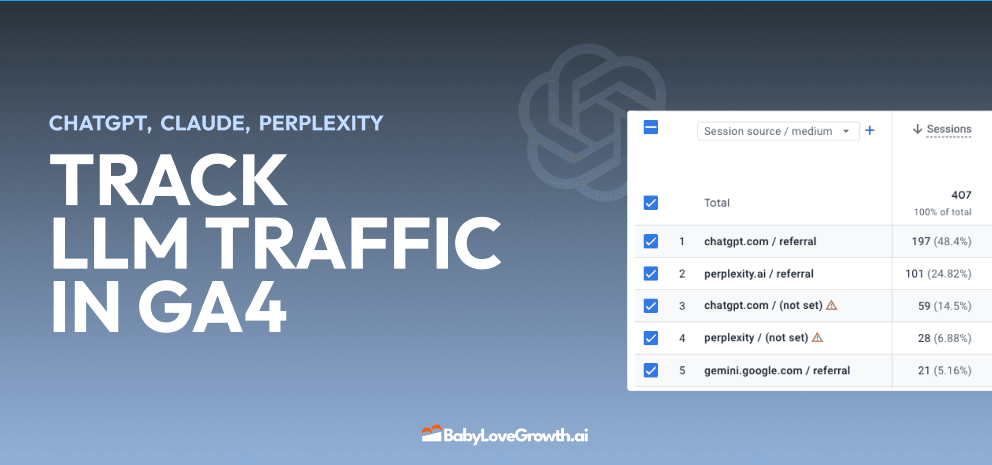
Track LLM Traffic in Google Analytics 4 (GA4)
Learn how to track and analyze traffic from AI sources like ChatGPT, Claude, Perplexity, and Google Gemini in Google Analytics 4. This step-by-step guide shows you how to set up custom filters to monitor AI-driven traffic and make data-driven decisions for your content strategy.
DylenMar 18, 2025
How to Humanize AI Text with Instructions
Learn practical techniques to make AI-generated content sound more natural and human. This guide covers active voice, direct addressing, concise writing, and other proven strategies to transform robotic text into engaging content.
DylenApril 7, 2025
Open AI Revenue and Statistics (2024)
Comprehensive analysis of OpenAI financial performance, user engagement, and market position in 2023. Discover key statistics including $20B valuation, $1B projected revenue, and 100M+ monthly active users.
DylenOctober 03, 2025