Digital footprint guide: boost visibility & reputation


Every second your business operates online, it leaves a trail. 1.7MB of data generated every second per person gives you a sense of the scale, but for businesses running websites, social profiles, email campaigns, and analytics tools simultaneously, that number multiplies fast. Most business owners focus on what they publish deliberately, but the invisible layer of data your brand generates without trying is just as powerful and far more dangerous if left unmanaged. This guide breaks down exactly what a digital footprint is, why it shapes your brand's reputation, and how to take control of it strategically.
Table of Contents
- What is a digital footprint? (Active vs. passive)
- Why your digital footprint matters for business and reputation
- How digital footprints are created: Channels and triggers
- Managing and optimizing your digital footprint for visibility and trust
- Risks and challenges: Data breaches, AI influence, and digital shadows
- Balancing privacy and visibility: Strategic recommendations
- Supercharge and simplify your digital footprint management
- Frequently asked questions
Key Takeaways
| Point | Details |
|---|---|
| Digital footprint basics | Your business's digital footprint includes all online actions and data, both active and passive. |
| Strategic value | A strong and managed online presence boosts trust, brand visibility, and revenue. |
| Hidden risks | Passive data, AI scraping, and digital shadows pose long-term reputation and privacy challenges. |
| Management strategies | Routine audits, unified branding, and employee awareness are essential for footprint control. |
| Privacy-visibility balance | Smart businesses balance privacy with visibility to maximize opportunity and minimize risk. |
What is a digital footprint? (Active vs. passive)
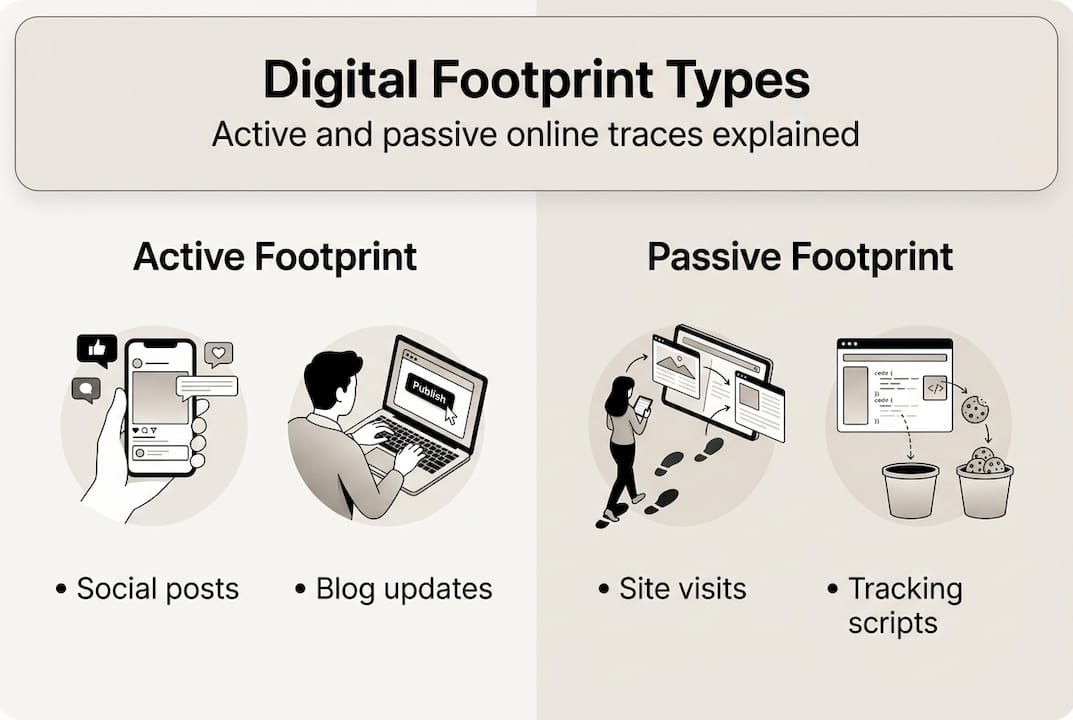
Your business's digital footprint is its unique, traceable set of online actions and data, both intentional and unintentional. Think of it as the permanent record your brand leaves across the internet every time it interacts with any digital system.
There are two distinct types every marketer needs to understand:
- Active footprint: Content you deliberately create and publish. This includes blog posts, social media updates, Google Business Profile edits, press releases, and ad campaigns. You control these signals.
- Passive footprint: Data collected about your business without direct intent. Website cookies, IP address logs, third-party analytics tracking, and behavioral data from visitors all fall here. You often don't even know it's happening.
For a retail brand, an active footprint might be a product launch post on Instagram. The passive side? Every visitor's browser data captured by your site's analytics platform, stored by a third party you've never directly engaged with.
Here's a quick comparison to make this concrete:
| Attribute | Active footprint | Passive footprint |
|---|---|---|
| Created by | Your deliberate actions | Third-party systems and trackers |
| Examples | Posts, profiles, ads | Cookies, IP logs, analytics data |
| Control level | High | Low to none |
| Visibility to you | Immediate | Often hidden |
| Primary risk | Brand inconsistency | Privacy and compliance exposure |
Understanding what a digital footprint includes helps you see that your brand's online presence is far larger than your content calendar suggests.
Why your digital footprint matters for business and reputation
Now that you can identify the building blocks of a digital footprint, let's explore why your online trace is mission-critical for business outcomes.
Your digital footprint directly shapes how customers, partners, and even potential employees perceive your brand before they ever speak to you. 70% of employers check social media profiles, and 48% of job seekers have been rejected based on their online presence. If that's true for individuals, imagine the scrutiny your brand faces from enterprise buyers doing vendor due diligence.

The upside is equally compelling. Businesses with a strong online reputation see 3.5x better revenue growth compared to those with weak or inconsistent digital signals. That's not a marginal gain. That's a structural competitive advantage.
Here's what's at stake if you ignore your footprint:
- Reputation damage from outdated content, negative reviews, or inconsistent messaging across platforms
- Data breach exposure with the average breach now costing $4.45 million per incident
- Lost hiring opportunities when top candidates research your brand and find nothing credible
- Reduced discoverability when search engines can't find consistent, authoritative signals about your business
"The challenge for modern businesses isn't just being visible online. It's being visible for the right reasons, in the right places, with the right context. Managing your digital footprint is how you control that narrative."
Credibility and discoverability are the two currencies of the digital economy. Your footprint is what earns them.
How digital footprints are created: Channels and triggers
Understanding the why sets the stage for mastering the how. Let's map out where your company's footprint is created every day.
Here's a breakdown of the major channels and what they generate:
| Channel | Active data created | Passive data created | Associated risk |
|---|---|---|---|
| Company website | Blog posts, landing pages | Visitor cookies, IP logs, session data | Compliance, data leaks |
| Social media profiles | Posts, comments, ads | Engagement tracking, pixel data | Brand inconsistency |
| Email marketing | Campaigns, newsletters | Open rates, click tracking, device data | Privacy regulations |
| Employee communications | Public posts, LinkedIn activity | Metadata, platform behavioral data | Reputation exposure |
| Analytics platforms | Custom reports | Third-party data sharing | Data sovereignty |
Consider what happens when someone simply visits your website. Their browser sends your server a request, your analytics tool logs their session, a retargeting pixel fires, and a third-party ad network records the interaction. That's four separate data traces from one page view.
Here's how a single business interaction creates multiple footprints:
- A customer tweets at your brand asking a question.
- Your social team replies, creating an active footprint entry.
- Twitter's algorithm logs the interaction and updates your engagement profile.
- Third-party social listening tools index the exchange.
- Google crawls the public tweet and indexes it.
- The customer's mention appears in brand monitoring dashboards you may not even own.
Passive trackers dominate risk, appearing on 88% of Fortune 500 company sites. Most businesses have no idea how many third-party scripts are running on their own web properties.
Pro Tip: Run a free tool like Ghostery or BuiltWith on your own website to see exactly how many trackers are active. You'll likely be surprised. Then cross-reference with your footprint creation channels to prioritize which ones need immediate attention.
Managing and optimizing your digital footprint for visibility and trust
Now that you're aware of which channels are at play, it's time to take control. Here's how leading brands stay visible for the right reasons.
A structured audit is your starting point. Follow these steps:
- Search your brand name on Google, Bing, and image search. Note what appears on page one and what's missing.
- Audit all active social profiles, including ones your team created years ago and forgot about.
- Review your website's third-party scripts using a tool like BuiltWith or a browser extension.
- Check review platforms like Google, Yelp, and Trustpilot for unaddressed feedback.
- Assess employee-generated content by searching key team members' names alongside your brand.
- Document gaps and inconsistencies in branding, messaging, and contact information across platforms.
Once you've audited, footprint management strategies include SEO optimization, unified branding, content review cycles, and employee training. These aren't one-time fixes. They're ongoing practices.
Common mistakes businesses make:
- Ignoring old social profiles that still rank in search results
- Letting employee LinkedIn profiles contradict official brand messaging
- Publishing content without a consistent tone or visual identity
- Focusing only on deletion instead of building positive, authoritative signals
- Skipping regular content audits that catch outdated or inaccurate information
Pro Tip: Set up Google Alerts for your brand name, key executives, and top products. It takes five minutes and gives you real-time visibility into what's being said about your business online. Pair this with small business SEO strategies to make sure your positive content outranks the noise.
Understanding why SEO matters for businesses is the foundation for turning your footprint from a liability into a growth asset. Also, explore reducing your footprint where it creates unnecessary risk.
Risks and challenges: Data breaches, AI influence, and digital shadows
Proactive management matters more than ever, but modern challenges demand attention. Here's what to watch for and why it's not always straightforward.
The risks businesses face from unmanaged footprints have evolved significantly:
- Permanent data: Content you delete from your site may still exist in Google's cache, the Wayback Machine, or third-party databases.
- Third-party profiles: Review sites, data brokers, and aggregators create profiles about your business without your input.
- AI scraping: Large language models train on publicly available data, meaning your old blog posts, press releases, and social content may influence AI-generated responses about your brand indefinitely.
- Data breaches: A single breach can expose years of customer and operational data, with reputational fallout that outlasts the technical fix.
- Digital shadows: Data about your business created entirely by others, including mentions, screenshots, and reposts you never authorized.
"AI models use public data for training, and deleted data can persist in digital shadows long after you believe it's gone. For businesses, this means reputation management is no longer just about what you publish today."
The concept of a digital shadow is particularly important. It refers to the data trail others create about you. A competitor's blog post comparing your pricing, a Reddit thread discussing your customer service, a news article from five years ago. You didn't write any of it, but it shapes how AI systems and search engines understand your brand.
Use our AI search audit tool to see how AI platforms currently describe your business. Understanding AI's marketing impact is essential context for anyone managing a brand in 2026. Research on online professional perception confirms that digital reputation signals have measurable real-world consequences.
Balancing privacy and visibility: Strategic recommendations
No single approach fits every business. This section helps you define your sweet spot between privacy and brand building.
Minimizing your footprint increases privacy but can reduce beneficial online exposure. The goal isn't to disappear. It's to be visible where it counts and protected where it matters.
Here's how to think about the two sides:
Privacy-first tactics:
- Remove or consolidate unused social profiles
- Limit third-party tracking scripts on your website
- Use privacy-compliant analytics tools
- Restrict employee sharing of internal business data on public platforms
Visibility-first tactics:
- Publish consistent, high-quality content that ranks for your target keywords
- Build authoritative backlinks that reinforce your brand's credibility
- Claim and optimize all major business directory listings
- Actively respond to reviews and engage on relevant platforms
Here's a strategy matrix to guide your decisions:
| Strategy | Privacy impact | Visibility impact | Trust outcome |
|---|---|---|---|
| Remove unused profiles | High positive | Slight negative | Neutral to positive |
| Publish regular content | Neutral | High positive | Strong positive |
| Limit tracking scripts | High positive | Neutral | Positive |
| Claim directory listings | Neutral | High positive | Strong positive |
| Employee social training | Moderate positive | Moderate positive | Strong positive |
The businesses that win long-term treat their digital footprint as a living asset. They audit regularly, publish intentionally, and monitor continuously. Explore proven SEO strategies for small businesses to build the visibility side of this equation with a structured, repeatable approach.
Supercharge and simplify your digital footprint management
Managing a digital footprint manually across dozens of channels is time-consuming and easy to get wrong. The businesses pulling ahead in 2026 are using automation to stay consistent, visible, and protected without burning out their marketing teams.

BabyloveGrowth.ai brings together the tools you need to act on everything covered in this guide. From automated content publishing that builds your active footprint with SEO-optimized articles, to backlink strategies that reinforce your brand authority, the platform handles the heavy lifting. Use the SEO automation platform to keep your content engine running on autopilot, and the organic traffic tool to track and grow your discoverability over time. Start with a free trial and see how much of your footprint management can be simplified from day one.
Frequently asked questions
Can you erase a digital footprint completely?
No. Because of backups, AI training datasets, and third-party records, full erasure is nearly impossible. The focus should be on managing and improving your footprint rather than eliminating it.
How do I audit my business's digital footprint?
Start by searching your company name on Google, reviewing all active and inactive social profiles, and using tool-based reviews for web and SEO presence. Routine audits like Google self-search are a proven starting point.
Does a digital footprint affect SEO and discoverability?
Yes. An active, well-managed footprint improves search rankings and broadens brand reach. SEO and link-building are core tools for managing and boosting online visibility through your footprint.
Why are passive footprints more risky than active ones?
Passive data is harder to detect and control, often exposing businesses to privacy and compliance risks without their knowledge. Passive trackers on corporate sites dominate digital risk across the web.
How is AI affecting business digital footprints?
AI systems train on publicly available data, making previously published or deleted content searchable and persistent in new ways. AI models scrape public business data, creating new reputation challenges that traditional deletion strategies can't address.
Recommended
Smart SEO,
Faster Growth!
Most Read Articles
Generative Engine Optimization (GEO)
Learn how Generative Engine Optimization (GEO) helps your content rank in AI search engines like ChatGPT and Google AI. This comprehensive guide explains the differences between SEO and GEO, why it matters for your business, and practical steps to implement GEO strategies for better visibility in AI-generated responses.
DylenJan 18, 2025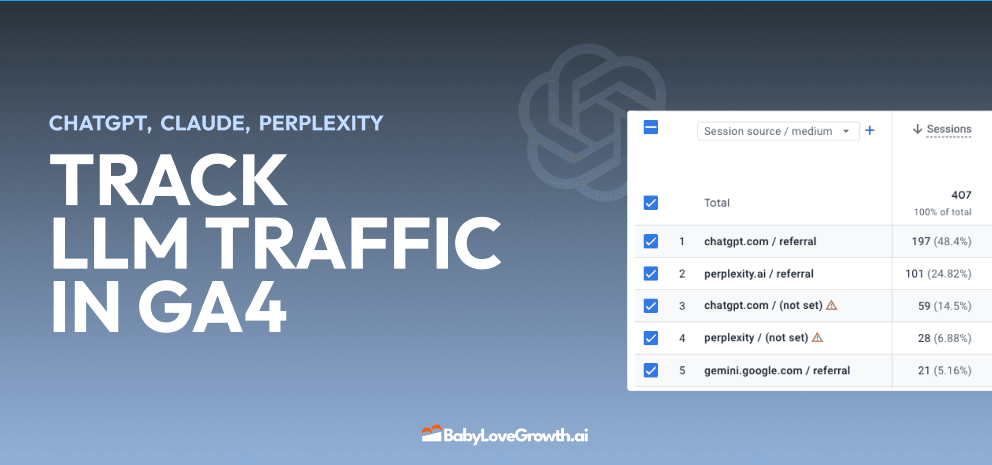
Track LLM Traffic in Google Analytics 4 (GA4)
Learn how to track and analyze traffic from AI sources like ChatGPT, Claude, Perplexity, and Google Gemini in Google Analytics 4. This step-by-step guide shows you how to set up custom filters to monitor AI-driven traffic and make data-driven decisions for your content strategy.
DylenMar 18, 2025
How to Humanize AI Text with Instructions
Learn practical techniques to make AI-generated content sound more natural and human. This guide covers active voice, direct addressing, concise writing, and other proven strategies to transform robotic text into engaging content.
DylenApril 7, 2025
Open AI Revenue and Statistics (2024)
Comprehensive analysis of OpenAI financial performance, user engagement, and market position in 2023. Discover key statistics including $20B valuation, $1B projected revenue, and 100M+ monthly active users.
DylenOctober 03, 2025