Developing persuasive copy: a 2026 guide for marketers


Creating content that ranks well in search engines while also convincing visitors to take action remains one of the toughest challenges for digital marketers and business owners in 2026. You might generate traffic, but if your copy doesn't persuade readers to convert, you're leaving money on the table. This guide walks you through a proven framework for developing persuasive copy that delivers both SEO performance and conversion results, from initial research through continuous optimization.
Table of Contents
- Understanding Persuasive Copy: What It Is And Why It Matters
- Preparing To Write Persuasive Copy: Research And Planning Essentials
- Executing Persuasive Copy: Crafting Your Message Step By Step
- Verifying And Refining Your Persuasive Copy For Optimum Impact
- Boost Your Persuasive Copy With BabyLoveGrowth Tools
- FAQ
Key takeaways
| Point | Details |
|---|---|
| Emotional connection drives action | Persuasive copy blends emotional appeal with clear benefits to move readers toward conversion. |
| Research fuels effectiveness | Understanding your audience and competitors through detailed preparation creates targeted messaging. |
| Structure guides behavior | Effective copy architecture leads readers naturally from interest to desired actions. |
| Testing reveals winners | Continuous A/B testing and metric analysis identify what resonates and converts best. |
| Strong CTAs seal the deal | Proven call to action techniques significantly boost conversion rates when properly implemented. |
Understanding persuasive copy: what it is and why it matters
Persuasive copywriting is the art of crafting words that motivate readers to take specific actions, whether that's making a purchase, signing up for a newsletter, or requesting a demo. Unlike informational content that simply educates, persuasive copywriting combines emotional resonance with clear value propositions to drive both conversions and SEO performance. When done right, it serves a dual purpose: attracting organic search traffic through optimized keywords and structure while simultaneously convincing visitors to become customers.
The power of persuasive copy lies in its ability to connect with readers on an emotional level while providing logical reasons to act. Think about the last time you made an impulse purchase online. The copy probably addressed a pain point you were experiencing, painted a picture of how your life would improve, and made the next step feel effortless. That's persuasive writing at work.
Many marketers fall into common traps when attempting persuasive copy. They focus too heavily on features instead of benefits, use jargon that alienates their audience, or create content that reads like a hard sales pitch rather than a helpful resource. These mistakes result in high bounce rates, poor engagement signals, and ultimately lower search rankings alongside missed conversion opportunities.
Persuasive copy directly impacts both user engagement metrics and search rankings because Google's algorithms increasingly prioritize content that satisfies user intent. When visitors spend more time on your page, click through to other sections, and complete desired actions, search engines interpret these signals as indicators of quality content. This creates a virtuous cycle where better copy leads to improved rankings, which drives more traffic that converts at higher rates.
The key components of effective persuasive copy include understanding your audience's motivations, crafting compelling headlines that promise value, structuring your message to build logical arguments, addressing objections proactively, and creating irresistible calls to action. Each element works together to guide readers through a journey from curiosity to commitment.
"The best persuasive copy doesn't feel like marketing at all. It feels like a trusted friend offering exactly the solution you've been searching for."
Mastering these fundamentals separates mediocre content that generates traffic but fails to convert from high-performing copy that delivers measurable business results. The following sections break down exactly how to develop each component systematically.
Preparing to write persuasive copy: research and planning essentials
Before writing a single word of copy, successful marketers invest time in thorough preparation. This groundwork separates guesswork from strategic messaging that resonates with your target audience. Start by creating detailed audience profiles that go beyond basic demographics to uncover psychological triggers, pain points, aspirations, and objections that influence purchasing decisions.

Your audience research should answer critical questions: What keeps your ideal customer awake at night? What goals are they trying to achieve? What obstacles stand in their way? What language and terminology do they use when discussing their problems? You can gather these insights through customer interviews, surveys, social media listening, and analyzing support tickets or sales call recordings. The more specific your understanding, the more precisely you can craft messages that feel personally relevant.
Competitive analysis reveals what messaging already works in your market and where opportunities exist to differentiate. Study your top competitors' websites, landing pages, email campaigns, and ad copy. Note which emotional appeals they use, how they structure their value propositions, and what calls to action they emphasize. Look for patterns in successful messaging and gaps where competitors fail to address important audience concerns. Understanding content storytelling helps you identify narrative frameworks that competitors use and how you might tell your story more compellingly.
Create a messaging framework document that captures your unique value proposition, key benefits that matter most to your audience, proof points that build credibility, and responses to common objections. This becomes your reference guide ensuring consistency across all copy while staying focused on what truly matters to potential customers.
| Research Tool | Primary Use | Data Type |
|---|---|---|
| Google Analytics | Behavior patterns | Quantitative engagement metrics |
| Customer surveys | Direct feedback | Qualitative insights and quotes |
| Social listening tools | Market conversations | Sentiment and trending topics |
| Competitor analysis platforms | Market positioning | Comparative messaging strategies |
| Customer review mining | Pain points and benefits | Real language and priorities |
Pro Tip: Customer reviews on your products and competitors' offerings contain gold mines of persuasive language. People describe their problems and desired outcomes in authentic terms that resonate far better than marketing speak. Extract specific phrases and objections to weave into your copy.
Organize your research findings into audience segments if you serve multiple customer types. Each segment may require slightly different messaging emphasis even when promoting the same product. A small business owner cares about cost and simplicity, while an enterprise buyer prioritizes scalability and integration capabilities. Tailor your persuasive approach accordingly.
Executing persuasive copy: crafting your message step by step
With solid research in hand, you're ready to craft persuasive copy that converts. Follow this systematic approach to ensure every element works together effectively. Begin with your headline, which serves as the gateway to everything that follows. Your headline must immediately communicate a clear benefit or solution to a pressing problem. Avoid clever wordplay that obscures meaning in favor of direct statements that promise specific value.
Next, craft your opening paragraph to expand on the headline's promise while establishing emotional connection. Address the reader's pain point directly, demonstrate that you understand their situation, and preview how you'll help them solve it. This is where you build the rapport that keeps people reading instead of bouncing back to search results.
Structure your body copy to present benefits in order of importance to your audience, not in the order that seems logical to you. Lead with the most compelling reason someone should care, then layer in supporting benefits and proof points. Each section should flow naturally into the next, building a cumulative case for taking action.
- Write a benefit-focused headline that promises specific value
- Open with empathy by acknowledging the reader's challenge
- Present your solution with clear, jargon-free explanation
- Highlight key benefits using the language from your audience research
- Address common objections proactively before they become barriers
- Provide social proof through testimonials, case studies, or statistics
- Create urgency without resorting to fake scarcity tactics
- Close with a compelling call to action that specifies the next step
When presenting benefits, focus on outcomes rather than features. Instead of "Our software includes automated reporting," write "Save five hours weekly by eliminating manual report creation." The difference is tangible value versus technical capability.
| Approach | Best For | Key Characteristic | Conversion Impact |
|---|---|---|---|
| Direct appeal | High-intent buyers | Straightforward benefit statements | Quick decisions, clear ROI |
| Emotional appeal | Aspirational purchases | Story-driven, identity-focused | Deeper engagement, loyalty |
| Problem-solution | Pain point aware | Emphasizes relief and transformation | Strong for complex solutions |
| Social proof heavy | Risk-averse buyers | Testimonials and case studies prominent | Reduces purchase anxiety |
Pro Tip: Create multiple CTA variations and test them systematically. Try different button colors, placement locations, surrounding copy, and action phrases. Small changes in CTA presentation can yield surprising improvements in conversion rates, sometimes increasing clicks by 20% or more.
Your copy should also be optimized for SEO without sacrificing persuasiveness. Incorporate target keywords naturally where they fit the message flow, use descriptive subheadings that include relevant terms, and structure content with proper heading hierarchy. Search optimization and persuasion aren't opposing goals when you focus on creating genuinely valuable content that serves user intent.
Verifying and refining your persuasive copy for optimum impact
Publishing persuasive copy is just the beginning. The most successful marketers treat every piece of copy as a hypothesis to be tested and refined based on real performance data. A/B testing allows you to compare different versions of headlines, body copy, CTAs, and page layouts to identify which variations drive better results. Start with high-impact elements like headlines and primary CTAs before testing smaller details.
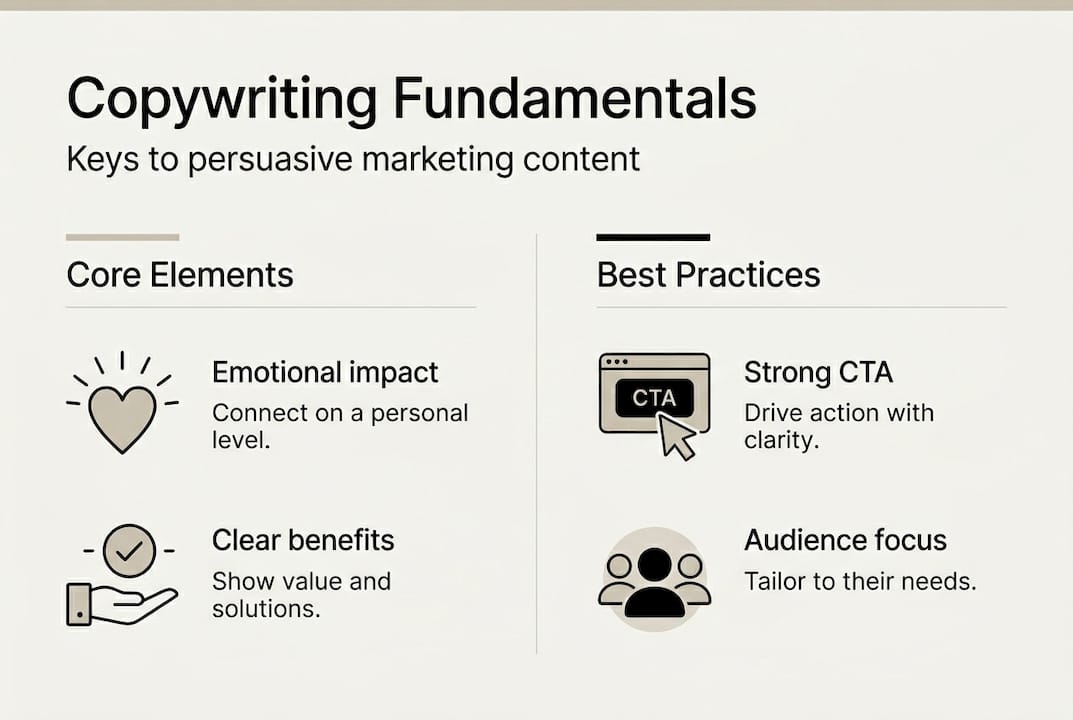
Set up proper tracking to measure key metrics that indicate persuasive effectiveness. Conversion rate is the ultimate measure, but intermediate metrics like time on page, scroll depth, and click-through rate on internal links reveal how well your copy engages readers throughout their journey. Heatmap tools show exactly where visitors focus attention and where they lose interest, providing visual feedback on copy performance.
Analyze user behavior data to understand how visitors interact with your persuasive copy. Do they read all the way to your CTA or drop off partway through? Which sections generate the most engagement? Where do people hesitate or show confusion? These insights guide your optimization efforts toward the areas with greatest improvement potential.
| Metric | What It Reveals | Optimization Tool | Target Benchmark |
|---|---|---|---|
| Conversion rate | Overall persuasive effectiveness | A/B testing platforms | 2-5% for cold traffic |
| Time on page | Content engagement level | Google Analytics | 2+ minutes for long-form |
| Scroll depth | Copy readability and interest | Heatmap software | 75%+ reach bottom |
| Bounce rate | Initial relevance and hook strength | Analytics platforms | Under 60% |
| CTA click rate | Call to action effectiveness | Split testing tools | 10-20% of visitors |
Implement an iterative improvement process where you make data-driven changes, measure results, and refine further. This continuous optimization approach compounds over time, with each improvement building on previous gains. Ongoing testing and optimization can improve effectiveness and conversion rates substantially as you discover what truly resonates with your specific audience.
Avoid common mistakes that undermine persuasive copy effectiveness. Overloading pages with too much information overwhelms readers and dilutes your core message. Unclear or confusing language creates friction that stops conversions. Weak calls to action that fail to specify the next step leave visitors uncertain about how to proceed. Multiple competing CTAs split attention and reduce conversion on your primary goal.
Gather qualitative feedback through user testing sessions where you watch real people interact with your copy. Their verbal reactions and questions reveal assumptions you made that don't align with how your audience actually thinks. This human insight complements quantitative data to create a complete picture of how to improve persuasiveness.
Remember that persuasive copy optimization is never truly finished. Market conditions change, competitor messaging evolves, and audience preferences shift over time. Schedule regular reviews of your highest-traffic pages to ensure copy remains relevant and effective. The marketers who commit to ongoing refinement consistently outperform those who set and forget their messaging.
Boost your persuasive copy with BabyLoveGrowth tools
After mastering the fundamentals of persuasive copywriting, you can amplify your results by leveraging specialized tools designed for modern SEO and conversion optimization. BabyLoveGrowth offers an integrated suite of solutions that automate the technical aspects of search performance while you focus on crafting compelling messages that convert.
Our organic traffic tool helps you identify high-value keyword opportunities where your persuasive copy can capture qualified search traffic. Instead of guessing which topics to write about, you'll have data-driven insights showing exactly where demand exists and competition is manageable. The platform's SEO automation features handle technical optimization tasks, ensuring your persuasive content gets maximum visibility in search results without requiring you to become an SEO expert.
Building authority through quality backlinks amplifies the reach of your best persuasive copy. Our backlink building software connects you with relevant websites for natural link exchanges, helping your content rank higher and reach more potential customers. This ecosystem approach means your persuasive messaging gets the distribution it deserves, turning great copy into measurable business growth. Explore these tools now to see how automation and data-driven insights can multiply the impact of your persuasive copywriting efforts.
FAQ
What is persuasive copywriting and why is it important?
Persuasive copywriting is writing specifically crafted to convince readers to take a desired action, whether purchasing a product, subscribing to a service, or engaging with your brand. It's important because it directly impacts your conversion rates and revenue while also supporting SEO through improved engagement signals. Effective persuasive copy addresses audience pain points emotionally while providing logical reasons to act, creating a powerful combination that drives business results.
How can I research my audience effectively for persuasive copy?
Start by gathering demographic data, conducting customer surveys, and analyzing feedback from support interactions and reviews to build detailed audience profiles. Study the language your customers use when describing their problems and desired outcomes, as this authentic terminology resonates far better than marketing jargon. Understanding content storytelling frameworks helps you identify narrative patterns that connect with your specific audience segments. Combine quantitative data from analytics with qualitative insights from direct conversations for the most complete picture.
What are common mistakes to avoid in persuasive copywriting?
Avoid unclear messaging that leaves readers confused about your offer or its benefits, as ambiguity kills conversions quickly. Don't overload your copy with excessive information or technical details that overwhelm rather than persuade. Weak calls to action that fail to specify exactly what readers should do next result in lost opportunities even when your copy generates interest. Finally, neglecting to test different approaches and refine based on performance data means you'll never know how much better your copy could perform.
How do I measure the success of my persuasive copy?
Monitor conversion rates as your primary success metric, tracking how many visitors complete your desired action after reading your copy. Analyze engagement metrics like time on page, scroll depth, and bounce rate to understand how well your copy holds attention and maintains interest. Use heatmaps and session recordings to see exactly where readers engage or disengage with your message. Converting website traffic strategies require systematic testing of different copy versions to identify which approaches deliver the best results for your specific audience and goals.
Recommended
Smart SEO,
Faster Growth!
Most Read Articles
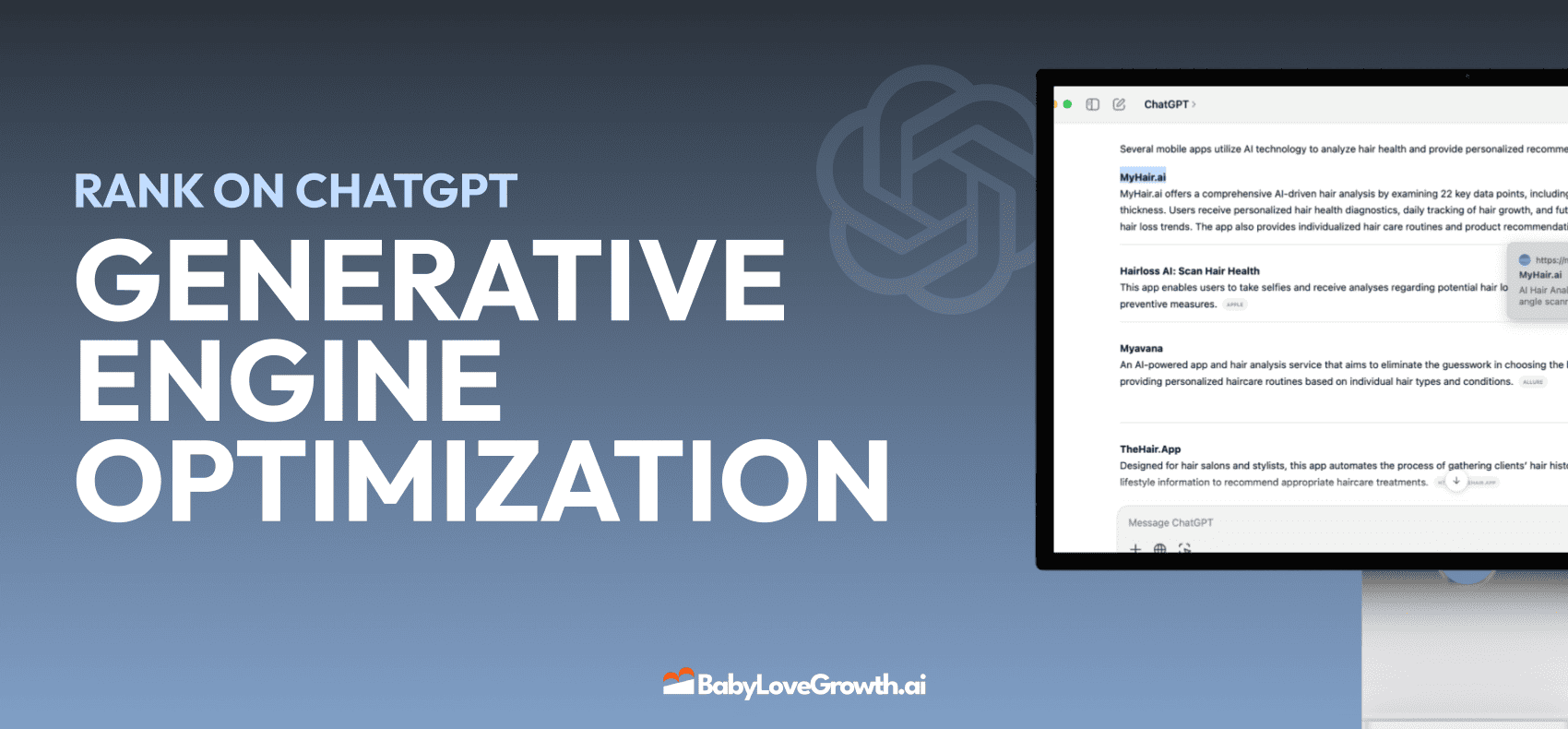
Generative Engine Optimization (GEO)
Learn how Generative Engine Optimization (GEO) helps your content rank in AI search engines like ChatGPT and Google AI. This comprehensive guide explains the differences between SEO and GEO, why it matters for your business, and practical steps to implement GEO strategies for better visibility in AI-generated responses.
DylenJan 18, 2025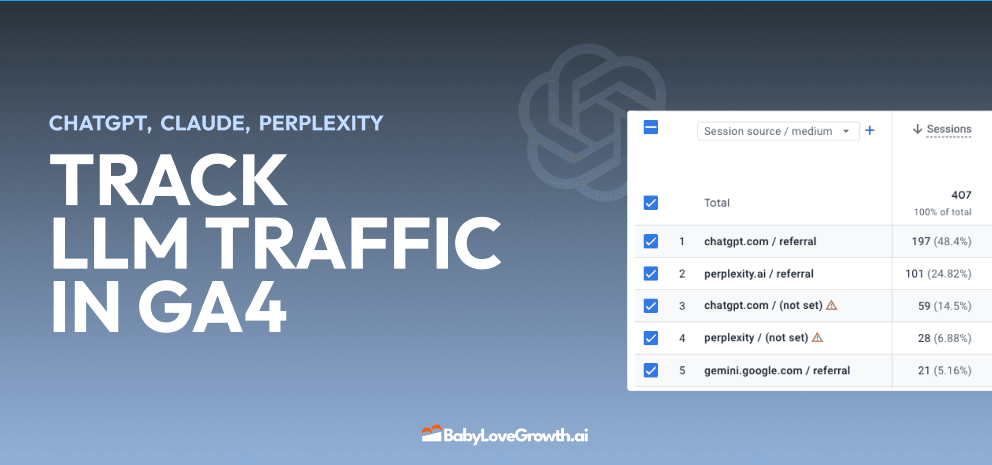
Track LLM Traffic in Google Analytics 4 (GA4)
Learn how to track and analyze traffic from AI sources like ChatGPT, Claude, Perplexity, and Google Gemini in Google Analytics 4. This step-by-step guide shows you how to set up custom filters to monitor AI-driven traffic and make data-driven decisions for your content strategy.
DylenMar 18, 2025
How to Humanize AI Text with Instructions
Learn practical techniques to make AI-generated content sound more natural and human. This guide covers active voice, direct addressing, concise writing, and other proven strategies to transform robotic text into engaging content.
DylenApril 7, 2025
Open AI Revenue and Statistics (2024)
Comprehensive analysis of OpenAI financial performance, user engagement, and market position in 2023. Discover key statistics including $20B valuation, $1B projected revenue, and 100M+ monthly active users.
DylenOctober 03, 2025