Conversion Rate Optimization 2026: Boost Conversions 50%


Most businesses assume more traffic equals more sales. Reality check: typical CRO improvements range from 10% to 50% even when traffic stays flat. Traditional SEO focuses on attracting visitors, but conversion rate optimization (CRO) transforms those visitors into paying customers. AI-driven CRO tools now automate data analysis, accelerate testing, and personalize user experiences at scale. This guide reveals how business owners and marketers can leverage AI-powered CRO strategies to achieve measurable growth without breaking the bank.
Table of Contents
- Understanding Conversion Rate Optimization (CRO)
- How AI-Driven SEO Tools Enhance CRO
- Key Metrics to Measure CRO Success
- Common Misconceptions About CRO
- Practical Frameworks and Actionable Steps for CRO
- Case Studies Demonstrating CRO ROI
- Cost-Effectiveness and Scalability of AI-Powered CRO Solutions
- Enhance Your CRO with BabyLoveGrowth AI Solutions
- Frequently Asked Questions About Conversion Rate Optimization
Key Takeaways
| Point | Details |
|---|---|
| CRO systematically improves conversion rates | Identifies and removes user journey friction points to increase desired actions |
| AI tools automate CRO processes | Accelerates data analysis and A/B testing, improving conversion effectiveness up to 30% |
| Essential metrics track success | Conversion rate, bounce rate, and session duration reveal optimization opportunities |
| CRO requires continuous optimization | One-time fixes fail; ongoing data-driven iteration delivers sustainable results |
| AI enhances but doesn't replace strategy | Combines automated insights with human expertise for maximum impact |
Understanding Conversion Rate Optimization (CRO)
Conversion rate optimization systematically identifies and addresses user journey friction points to increase the percentage of visitors completing target actions. Whether you want more newsletter signups, product purchases, or demo requests, CRO focuses on making your existing traffic work harder.
The process relies on data-driven analysis rather than guesswork. You examine how visitors interact with your site, identify where they abandon their journey, and test solutions to remove those barriers. Initial site conditions determine potential gains, but even established sites typically see measurable improvements.
User experience sits at the heart of effective CRO. When visitors encounter confusing navigation, slow load times, or unclear calls to action, they leave. User experience improvements in SEO directly impact conversion performance by reducing these friction points.
Key friction points commonly addressed in CRO include:
- Complex checkout processes requiring too many steps
- Unclear value propositions that fail to communicate benefits
- Poor mobile optimization creating frustration on smartphones
- Slow page load speeds causing visitor abandonment
- Weak calls to action that don't motivate user response
- Confusing site navigation making desired actions hard to find
- Trust signals missing from critical conversion pages
Identifying and fixing these issues creates smoother user journeys. Each improvement compounds, gradually lifting your conversion rate from baseline to optimized performance.
How AI-Driven SEO Tools Enhance CRO
AI transforms CRO from manual detective work into automated intelligence. Traditional methods require teams to manually analyze user data, formulate hypotheses, and run lengthy tests. AI-driven SEO tools enhance CRO by automating data analysis and A/B testing, enabling rapid hypothesis testing and content personalization.
Automation starts with data collection. AI tools continuously track user behavior patterns, identifying trends humans might miss. This includes mouse movement heatmaps, scroll depth analysis, and click pattern recognition across thousands of sessions simultaneously.
A/B testing accelerates dramatically with AI. Instead of running single tests for weeks, AI systems can evaluate multiple variants concurrently, learning which elements drive conversions faster. Statistical significance arrives sooner, letting you implement winning variations quickly.

Personalization represents AI's most powerful CRO capability. The system segments users based on behavior, demographics, and intent signals, then dynamically adjusts content, offers, and CTAs to match each segment. Visitors see experiences tailored to their specific needs, dramatically improving conversion likelihood.
Pro Tip: Use AI behavior analysis to uncover hidden patterns in your highest-converting user segments, then replicate those conditions for broader audiences.
Main AI CRO capabilities transforming conversion optimization:
- Predictive analytics forecasting which visitors are most likely to convert
- Natural language processing optimizing copy for emotional resonance
- Image recognition testing visual element effectiveness automatically
- Real-time personalization adapting experiences based on user signals
- Automated reporting surfacing actionable insights without manual analysis
Integrating AI with proven CRO strategies amplifies results beyond what either approach achieves alone. When you create compelling CTAs informed by AI-generated insights about user intent, conversion rates climb faster. Similarly, multi-channel funnels with AI maintain consistent optimization across every touchpoint.
Key Metrics to Measure CRO Success
You can't optimize what you don't measure. Tracking the right metrics reveals whether your CRO efforts deliver real business impact or just consume resources.
Conversion rate stands as your primary success indicator. Calculate it by dividing conversions by total visitors, then multiply by 100. A 2% baseline climbing to 3% represents a 50% improvement in conversion effectiveness, directly impacting revenue without additional traffic costs.
Bounce rate signals immediate user dissatisfaction. When visitors land on a page and leave without interaction, something failed to meet expectations. High bounce rates on key conversion pages indicate urgent optimization opportunities.
Average session duration reflects engagement depth. Visitors spending more time exploring your content typically convert at higher rates than those who bounce quickly. However, context matters since some pages should facilitate quick conversions rather than extended browsing.
Critical CRO metrics to track consistently:
- Pages per session showing how thoroughly visitors explore your site
- Exit rates identifying which pages cause visitors to leave entirely
- Form completion rates revealing friction in lead capture processes
- Cart abandonment rates highlighting checkout process problems
- Click-through rates measuring CTA effectiveness across pages
Combining multiple metrics provides fuller insight than any single number. A page with high traffic but low conversion rates needs different optimization than one with low traffic but strong conversion performance. Tracking CRO metrics with AI tools automates this analysis, surfacing correlations and patterns that inform smarter testing priorities.
Dashboards integrating these metrics let you measure CTA performance alongside broader conversion trends, connecting specific elements to overall results. This visibility accelerates learning cycles and helps allocate optimization resources to highest-impact opportunities.
Common Misconceptions About CRO
Several persistent myths derail CRO efforts before they deliver results. Understanding these misconceptions helps you avoid costly mistakes.
-
More website traffic automatically means more conversions. Traffic growth often lowers conversion rates when new visitors don't match your ideal customer profile. A site converting 5% of 10,000 monthly visitors generates 500 conversions. Doubling traffic to 20,000 visitors at 3% conversion yields only 600 conversions, a mere 20% gain despite 100% traffic increase. Optimizing conversion rate to 7% at original traffic levels produces 700 conversions, a 40% improvement without additional traffic costs.
-
CRO is a one-time design fix you implement and forget. User behavior evolves constantly. Seasonal trends, competitor actions, and market conditions shift what resonates with visitors. Continuous testing and iteration separate sustained success from temporary gains. CRO best practices emphasize ongoing optimization cycles rather than project-based initiatives.
-
AI alone solves CRO without human strategic input. While AI excels at pattern recognition and test execution, it lacks business context and creative insight. Tools identify that a button color change improved conversions but can't determine whether that aligns with brand strategy or customer lifetime value goals. Expert analysis guides AI toward meaningful optimizations rather than superficial metric manipulation.
Treating CRO as a continuous, data-driven process rather than a one-time fix prevents negative ROI and builds sustainable competitive advantage through compounding improvements.
Ongoing CRO processes create virtuous cycles where each insight informs better hypotheses, leading to more effective tests and faster learning. Organizations that embrace this approach outperform competitors who chase quick fixes.
Practical Frameworks and Actionable Steps for CRO
A systematic framework transforms CRO from abstract concept into repeatable process. Follow these steps to implement effective optimization cycles.
-
Collect and analyze user behavior data identifying specific conversion barriers. Install heatmapping tools, review session recordings, and analyze funnel drop-off points. Look for patterns where significant visitor percentages abandon their journey at predictable stages.
-
Develop hypotheses based on data insights explaining why barriers exist and how to remove them. Frame each hypothesis clearly stating what you'll change, what you expect to happen, and why. Example: "Simplifying our checkout from 5 steps to 3 will increase completion rates by 15% because users cite process length as abandonment reason in exit surveys."
-
Implement AI-powered A/B tests validating hypotheses with statistical rigor. Run control and variant versions simultaneously, ensuring sufficient sample sizes reach significance before declaring winners. AI accelerates this by automatically allocating traffic to better-performing variants and stopping underperforming tests early.
-
Iterate optimizations embedding learnings into ongoing strategy and content development. Winning variations become new baselines for future tests. Document why changes worked to inform hypothesis development for related pages and funnels.
Pro Tip: Prioritize hypotheses by potential impact multiplied by implementation ease, testing quick wins first to build momentum while preparing complex optimizations.
Integrating content and link-building amplifies CRO results. When automated content generation produces pages optimized for both search intent and conversion goals, you attract qualified traffic predisposed to convert. Similarly, best link building strategies that focus on relevant, authoritative sources send visitors with higher conversion likelihood than random backlinks.
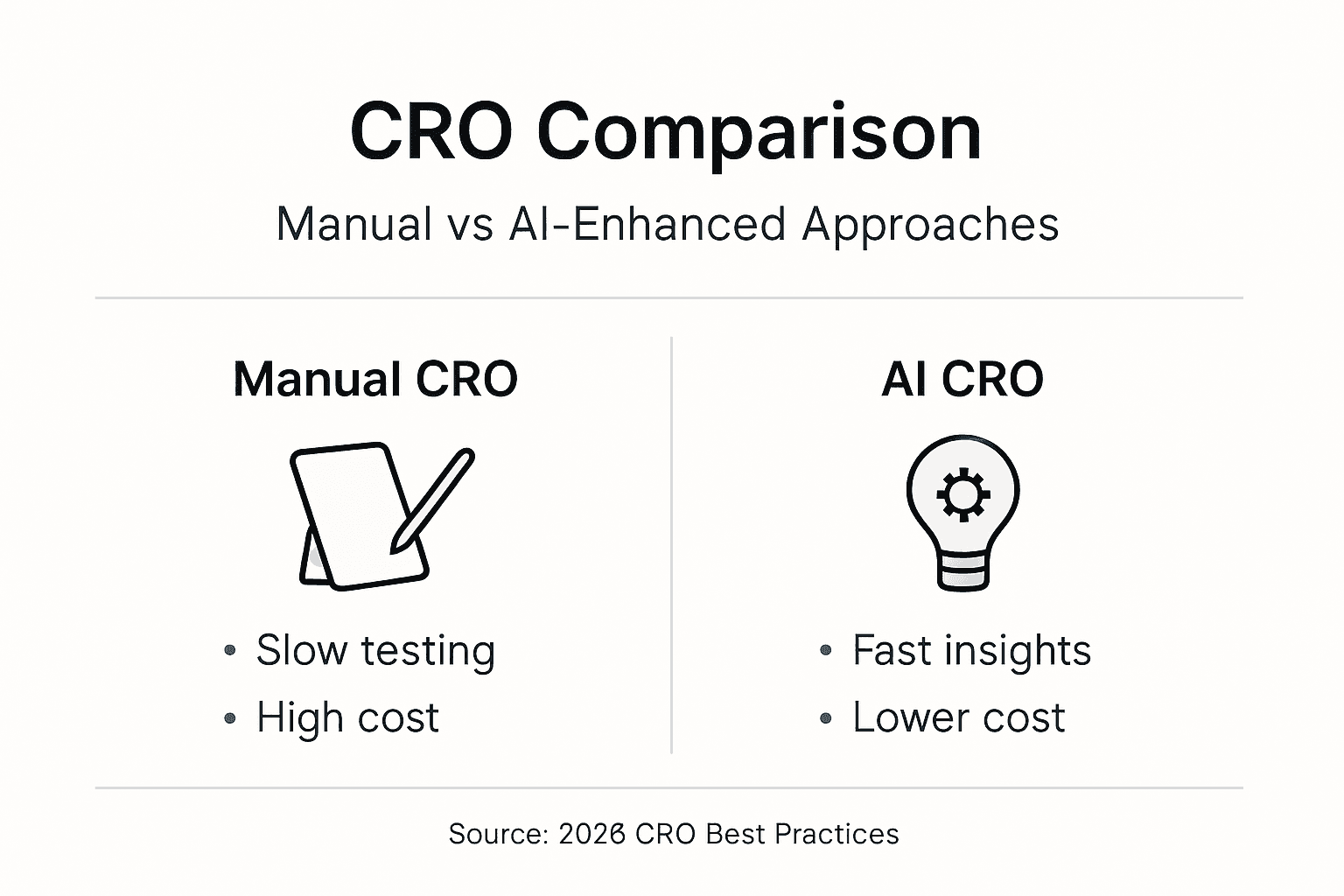
| Aspect | Manual CRO | AI-Enhanced CRO |
|---|---|---|
| Data Analysis Speed | Days to weeks analyzing patterns | Real-time continuous insights |
| Test Velocity | 1 to 2 tests monthly | 5 to 10 concurrent tests |
| Personalization Scale | Broad segments only | Individual user-level adaptation |
| Resource Requirements | Dedicated analyst team | Single strategist plus AI tools |
| Time to Results | 3 to 6 months baseline | 4 to 8 weeks initial improvements |
This framework works across industries and business models. E-commerce sites optimize product pages and checkout flows. SaaS companies refine trial signup and onboarding sequences. Service businesses improve contact form completion and consultation bookings. The principles remain consistent even as tactics vary.
Case Studies Demonstrating CRO ROI
Real results prove CRO effectiveness better than theory. These case studies show measurable outcomes from AI-powered optimization.
A mid-sized retail client increased conversion rates by 40% within three months using AI-powered CRO tools. Initial analysis revealed their product pages lacked social proof and featured confusing size charts. Hypothesis testing validated that adding customer reviews and simplifying sizing information removed key friction points. Personalized product recommendations based on browsing behavior further lifted performance.
Another business struggled with high cart abandonment rates exceeding 75%. AI analysis identified that unexpected shipping costs at checkout caused most exits. Testing transparent shipping cost display on product pages, plus a free shipping threshold, reduced abandonment to 52% while average order value increased 18%.
Key tactics driving case study success included:
- Dynamic content personalization matching visitor intent signals
- Automated A/B testing of headlines, CTAs, and page layouts
- Rapid hypothesis validation reducing time from insight to implementation
- Continuous iteration building on proven winners rather than starting over
Quantifiable improvements extended beyond conversion rates. Organic traffic climbed 35% as optimized pages satisfied search intent better, earning higher rankings. Session duration increased 28% as improved user experiences encouraged exploration. These secondary benefits compound primary conversion gains.
Integrating brand loyalty with AI content strategies maintained customer relationships beyond initial conversion. Repeat purchase rates improved 22% when personalized post-purchase content anticipated customer needs. Combined with effective organic traffic strategies, the complete approach delivered sustainable growth rather than one-time wins.
Cost-Effectiveness and Scalability of AI-Powered CRO Solutions
Budget constraints make cost-effectiveness crucial for most businesses. AI-powered CRO delivers superior ROI compared to traditional agency-dependent approaches.
Agencies typically charge $5,000 to $15,000 monthly for ongoing CRO services, requiring 6 to 12 month commitments. AI platforms cost $200 to $2,000 monthly depending on features and scale, reducing SEO and optimization spend by approximately 20% while delivering comparable or better results.
Automation eliminates expensive manual labor. Where agencies assign analysts to review data and run tests, AI systems handle these tasks continuously without additional cost per test. You pay for the platform, not hourly rates for execution.
Scalability becomes nearly unlimited with AI tools. Testing one landing page versus 100 pages costs the same since automation handles the work. Traditional approaches require proportionally more resources as testing scope expands, creating scaling barriers.
How scalable CRO supports growing business goals:
- Launch new product lines with optimized pages ready from day one
- Expand into new markets replicating proven optimization frameworks
- Handle seasonal traffic spikes without conversion rate degradation
- Test localized variations for different customer segments simultaneously
- Maintain consistent optimization across expanding site architectures
Platforms offering SEO automation integrate CRO with content creation and backlink acquisition, further consolidating tools and reducing total cost of ownership. This integration ensures optimization efforts align across all growth channels rather than operating in silos.
Small businesses benefit most from these economics. Previously unable to afford agency services, they now access enterprise-level optimization capabilities at accessible price points. The playing field levels as AI democratizes advanced CRO techniques once reserved for companies with massive marketing budgets.
Enhance Your CRO with BabyLoveGrowth AI Solutions
Transforming conversion rates from average to exceptional requires the right tools combined with strategic insight. BabyLoveGrowth delivers AI-powered platforms specifically designed to automate data-driven CRO processes while integrating content creation and backlink strategies that amplify results.
Our SEO automation platform handles continuous optimization cycles, testing hypotheses and implementing improvements without constant manual oversight. This approach reduces costs while accelerating results, perfect for business owners and marketers who need scalable solutions without enterprise budgets. Combined with our automated content generation guide and best link building strategies, you get complete growth infrastructure optimized for conversion at every touchpoint.
Frequently Asked Questions About Conversion Rate Optimization
What exactly is conversion rate optimization and why does it matter?
CRO systematically improves the percentage of website visitors who complete desired actions like purchases, signups, or inquiries. It matters because increasing conversion rates delivers more revenue from existing traffic without additional advertising spend, directly improving ROI.
How does AI scale CRO efforts beyond manual optimization?
AI automates data analysis, runs multiple concurrent tests, and personalizes experiences at individual user level rather than broad segments. This acceleration reduces time to results from months to weeks while eliminating manual bottlenecks that limit testing velocity.
What timeframe should I expect before seeing CRO improvements?
Initial improvements often appear within 4 to 8 weeks as quick-win hypotheses get validated and implemented. Substantial gains accumulate over 3 to 6 months as optimization cycles compound and more complex tests reach statistical significance.
Are AI-powered CRO tools affordable for small businesses?
Yes, AI platforms cost $200 to $2,000 monthly compared to $5,000 to $15,000 for traditional agency services. This 70% to 90% cost reduction makes advanced CRO accessible to businesses previously priced out of professional optimization.
How does CRO integrate with organic SEO strategies?
CRO and SEO work synergistically since optimized pages satisfy user intent better, earning higher rankings while converting more visitors. AI tools optimize for both search algorithms and human behavior simultaneously, creating compounding benefits across acquisition and conversion.
Can CRO work without significant website traffic?
While more traffic accelerates testing cycles, CRO remains valuable at lower volumes by focusing on high-impact pages and qualitative insights. AI tools reach statistical significance faster by efficiently allocating traffic to winning variants, making optimization viable even with modest visitor counts.
Recommended
Smart SEO,
Faster Growth!
Most Read Articles
Generative Engine Optimization (GEO)
Learn how Generative Engine Optimization (GEO) helps your content rank in AI search engines like ChatGPT and Google AI. This comprehensive guide explains the differences between SEO and GEO, why it matters for your business, and practical steps to implement GEO strategies for better visibility in AI-generated responses.
DylenJan 18, 2025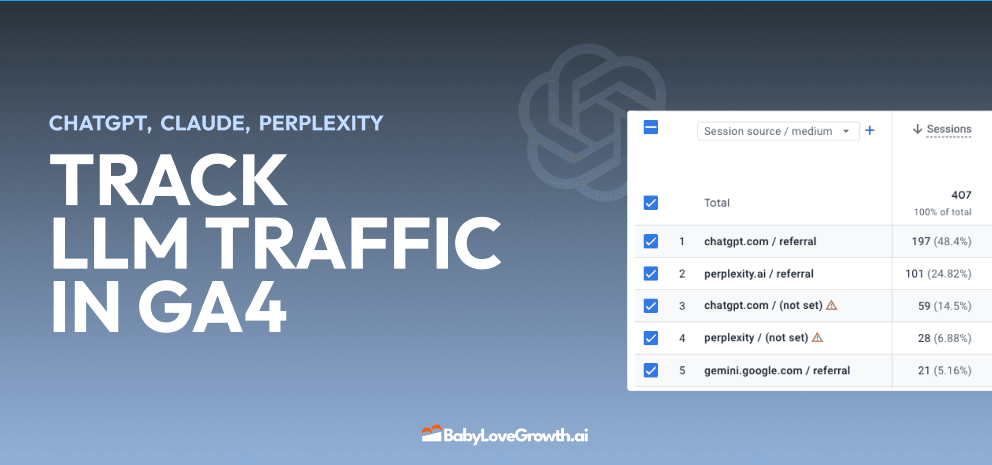
Track LLM Traffic in Google Analytics 4 (GA4)
Learn how to track and analyze traffic from AI sources like ChatGPT, Claude, Perplexity, and Google Gemini in Google Analytics 4. This step-by-step guide shows you how to set up custom filters to monitor AI-driven traffic and make data-driven decisions for your content strategy.
DylenMar 18, 2025
How to Humanize AI Text with Instructions
Learn practical techniques to make AI-generated content sound more natural and human. This guide covers active voice, direct addressing, concise writing, and other proven strategies to transform robotic text into engaging content.
DylenApril 7, 2025
Open AI Revenue and Statistics (2024)
Comprehensive analysis of OpenAI financial performance, user engagement, and market position in 2023. Discover key statistics including $20B valuation, $1B projected revenue, and 100M+ monthly active users.
DylenOctober 03, 2025