Content relevancy: why it matters for online visibility


More content does not automatically mean more traffic. That's a trap many business owners fall into, especially now that AI tools make it easy to publish at scale. Google's algorithm updates have made one thing crystal clear: relevancy is the real currency of search rankings. Sites that flooded the web with low-relevance, AI-scaled content saw 95% traffic losses in recent Helpful Content Updates. This guide breaks down what content relevancy actually means, why it's non-negotiable for your business, and how to use AI as a genuine asset rather than a liability.
Table of Contents
- What is content relevancy and why does it matter?
- The risks of low-relevance and scaled AI content
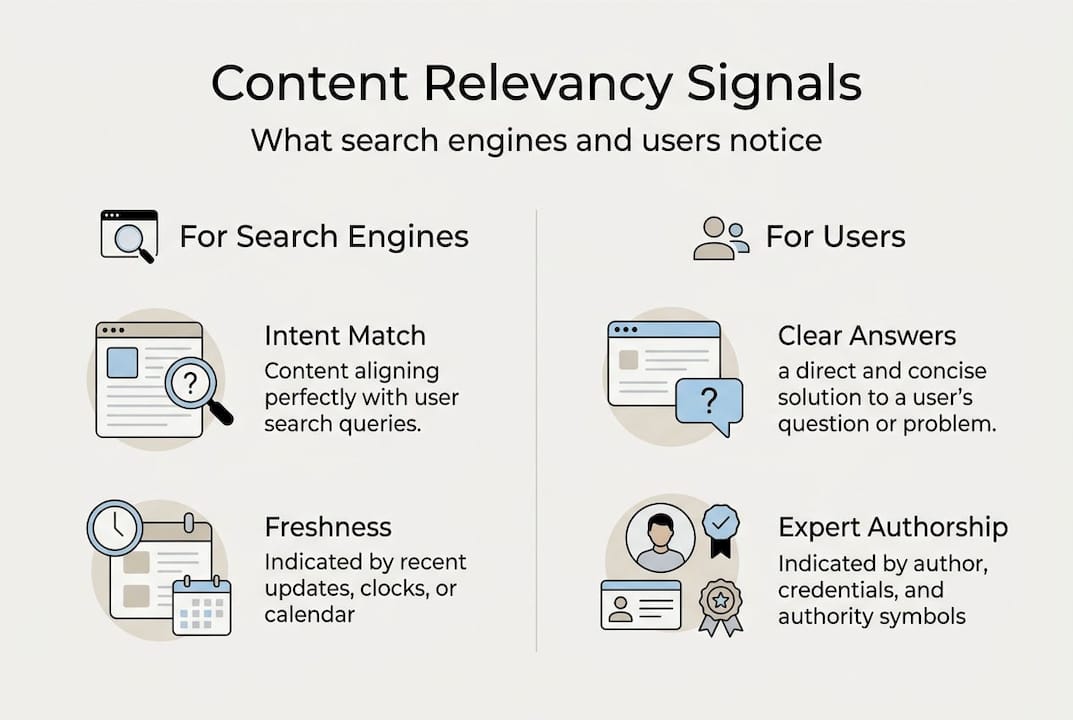
- Signals of relevance: What Google and users look for
- Best practices: Maintaining content relevancy with AI and human expertise
- Case study: How brands recover (or lose) traffic through content relevancy
- Summary: The future of content relevancy in digital marketing
- How BabyLoveGrowth helps you stay relevant and grow
- Frequently asked questions
Key Takeaways
| Point | Details |
|---|---|
| Content relevance drives rankings | Matching user intent and addressing needs ensures better visibility and higher engagement. |
| AI must be paired with human insight | A hybrid workflow improves authority and protects against penalties from mass AI content. |
| Regular updates prevent decay | Auditing and refreshing content every 6-12 months sustains SEO performance. |
| Signals guide search outcomes | Both search engines and real users evaluate relevance through freshness, authority, and engagement. |
What is content relevancy and why does it matter?
Content relevancy means your material directly matches what your target audience is searching for and answers their actual questions. It's not about stuffing a page with keywords. It's about understanding the intent behind a search and delivering exactly what that person needs.
Google's ranking systems are built to surface pages that align with searcher intent, not pages that simply repeat a keyword twenty times. When your content genuinely solves a problem or answers a question, users stay longer, engage more, and trust your brand. That behavior sends powerful signals back to Google.
Here's what content relevancy actually delivers for your business:
- Higher rankings because your pages match what users want
- Better engagement because visitors find real answers
- Stronger authority because your brand becomes a trusted source
- Lower bounce rates because content keeps readers on the page
- More conversions because relevant content attracts the right audience
AI tools can accelerate research, generate outlines, and produce first drafts quickly. But as Google Search Essentials makes clear, human editing is essential for accuracy, originality, and E-E-A-T (Experience, Expertise, Authoritativeness, and Trustworthiness). AI gets you moving fast. Human judgment keeps you credible.
"The goal of content is not to rank. The goal is to be genuinely useful to the person reading it. Rankings follow usefulness."
When you focus on creating relevant content that serves your audience first, the SEO benefits follow naturally.
The risks of low-relevance and scaled AI content
Understanding relevancy is one thing. Seeing the real cost of ignoring it makes the stakes undeniable.
Stat to know: Sites relying on scaled, low-relevance AI content saw traffic drops averaging 58% for affiliate review categories, with some sites losing up to 95% of their organic visibility after Google's Helpful Content Updates.
Mass AI content tends to fail on three fronts: depth, originality, and user trust. When every article sounds the same and adds no unique perspective, readers leave fast and Google notices. The result is a compounding penalty that's hard to reverse.

Here's how pure AI content stacks up against a hybrid approach:
| Content approach | Traffic impact | Authority building | Risk level |
|---|---|---|---|
| Pure AI, high volume | Short-term spike, long-term drop | Low | Very high |
| Hybrid AI + human editing | 5.44x traffic growth | High | Low |
| Manual only | Slow but steady | High | Low |
| Low-relevance scaled AI | Up to 95% traffic loss | Very low | Extreme |
Affiliate review sites were hit especially hard, but this is not a niche problem. Any business publishing content without a relevancy strategy is exposed. The AI content marketing landscape rewards quality and penalizes shortcuts.
Pro Tip: Before publishing any AI-generated draft, ask yourself: does this answer a specific question my target customer is actually asking? If you can't name the exact person this helps, it's not relevant enough.
The smartest content marketing strategies in 2026 combine AI efficiency with human expertise. That combination is what separates brands that grow from brands that disappear from search results.
Signals of relevance: What Google and users look for
With the risks made clear, it's important to know what actually signals relevance to both search engines and your real audience.
Google evaluates relevance using dozens of overlapping signals. These are the ones that matter most for your content strategy:
| Relevance signal | What it measures | How to optimize |
|---|---|---|
| Search intent match | Does content answer the query? | Map content to specific intent types |
| Topical authority | Is your site a trusted source? | Build content clusters around your niche |
| Freshness | Is content current and updated? | Refresh content every 6-12 months |
| User engagement | Do visitors stay and interact? | Write for humans, not algorithms |
| E-E-A-T signals | Does content show real expertise? | Add author credentials and original insights |
Users are equally demanding. They decide within seconds whether your content is worth their time. If your page doesn't immediately signal that it addresses their specific need, they're gone.
Here's what users respond to:
- Clear, direct answers near the top of the page
- Specific examples and real data rather than vague claims
- A tone that matches their level of knowledge
- Content that respects their time and gets to the point
Research shows that hybrid AI and human content consistently outperforms pure AI output in both traffic and engagement. The human layer adds the nuance, perspective, and accuracy that algorithms reward and readers trust.
Regular updates also matter more than most marketers realize. [Adaptive content for SEO](https://babylovegrowth.ai/blog/importance adaptive content seo) means treating your content library as a living asset, not a static archive. Pages that get refreshed with new data, updated examples, and improved structure consistently outperform stale competitors. A solid content refresh strategy is one of the highest-ROI moves you can make.
Best practices: Maintaining content relevancy with AI and human expertise
Knowing the signals, let's turn to repeatable actions you can take to ensure your content stays relevant and effective.
Your relevancy maintenance workflow:
- Start with intent research. Before writing anything, identify the specific question your audience is asking. Use search data, customer conversations, and competitor gaps to find real needs.
- Use AI for speed, not substance. Let AI generate outlines, pull research angles, and draft initial versions. An AI content workflow can cut research time by up to 60%, giving your team more bandwidth for strategic work.
- Human-edit every draft. Check facts, add original insights, adjust tone, and ensure the content reflects genuine expertise. This is where E-E-A-T gets built.
- Audit your content library every 6-12 months. Google Search Essentials recommends regular audits to catch relevance decay before it damages rankings.
- Refresh top performers and struggling pages. Update statistics, add new examples, improve structure, and realign with current search intent.
- Prune content that can't be saved. Low-quality, irrelevant pages drag down your entire domain. Removing or consolidating them often lifts overall rankings.
Pro Tip: Create a simple content scorecard. Rate each page on intent match, freshness, depth, and engagement. Pages scoring low on two or more factors are your refresh priorities.
Building AI content strategies for loyalty means thinking beyond single articles. Your content ecosystem should reinforce your brand's expertise at every touchpoint, making each piece more valuable because of what surrounds it.
- Cluster related topics to build topical authority
- Link internally to guide readers deeper into your expertise
- Update content in response to industry changes, not just on a fixed schedule
- Track engagement metrics to identify what's resonating and what's not
Case study: How brands recover (or lose) traffic through content relevancy
These practices come alive through real brands' experiences. Here's how content relevancy made or broke recent outcomes.
One well-documented case involves a site that experienced a 95% traffic drop after Google's Helpful Content Updates targeted its scaled, low-relevance AI content. The recovery wasn't quick or easy. It required a complete strategic overhaul.
"Recovery came not from publishing more content, but from publishing better content that reflected genuine brand expertise and directly served the audience's real needs."
The specific actions that reversed the losses:
- Content pruning: Removed or consolidated hundreds of thin, low-value pages
- Relevancy refocus: Rebuilt the content strategy around the brand's actual area of expertise
- Human expertise signals: Added author bios, original research, and first-hand experience to key pages
- Freshness updates: Refreshed top pages with current data and improved depth
- Intent realignment: Rewrote content to match what users were actually searching for, not what seemed like a good keyword target
Affiliate review sites saw average drops of 58%, a pattern that affected businesses across every niche that relied on volume over value. Navigating SEO changes in this environment requires treating relevancy as a core business strategy, not an afterthought.
The lesson from these content marketing case studies is consistent: brand trust and demonstrated expertise are what enable recovery and long-term growth. AI can support that mission, but it cannot replace it.
Summary: The future of content relevancy in digital marketing
Pulling these lessons together, here's what matters most going forward as digital marketing evolves.
As AI tools become more accessible, the volume of published content will keep rising. That makes relevancy more valuable, not less. When everyone can produce content at scale, the differentiator is quality, specificity, and genuine usefulness.
Key takeaways for your strategy:
- Relevancy beats volume every time in Google's current and future algorithm direction
- Hybrid AI and human workflows produce 5.44x more traffic than pure AI approaches
- Regular audits and refreshes protect your rankings from relevance decay
- Human expertise and brand authority are the factors that separate recoverable sites from those that stay penalized
- Intent alignment is the foundation of every content decision you make
The businesses that win long-term are those that treat content as a strategic asset, not a commodity. That means investing in the human layer, staying close to your audience's evolving needs, and using AI as a tool that amplifies your expertise rather than replacing it.
How BabyLoveGrowth helps you stay relevant and grow
If you're ready to make relevant content your SEO advantage, here's how our platform makes it simple.
BabyLoveGrowth.ai is built for exactly this challenge. We combine AI-powered content generation with the strategic guardrails that keep your content relevant, authoritative, and aligned with what your audience is actually searching for. Our organic traffic tool monitors your content performance and surfaces opportunities to refresh, update, or expand before relevance decay costs you rankings.
We also make authority building systematic. Our backlink exchange for traffic connects you with relevant sites in your niche, strengthening the domain authority that supports every piece of content you publish. And our backlink building software automates the outreach process so your team can focus on strategy. From your 30-day personalized content plan to ongoing SEO monitoring, we handle the complexity so you can focus on growing your business.
Frequently asked questions
How often should I refresh or update my website content for relevance?
Aim to audit and refresh key content every 6-12 months to maintain search relevance and maximize visibility. High-traffic or rapidly changing topics may need more frequent updates.
Can I rely solely on AI-generated content for my business site?
Relying only on AI leads to traffic loss and lower authority. Hybrid AI and human workflows consistently outperform pure AI approaches, delivering up to 5.44x more traffic.
What is the most important factor in making content relevant?
Matching your content with the user's intent is the core of true content relevance. User-intent alignment consistently outperforms keyword density as a ranking factor.
Do recent Google updates affect all industries equally?
No. Affiliate review sites and those using mass AI content were hit hardest, with average drops of 58%, but every niche that deprioritizes relevancy faces real risk.
Recommended
Smart SEO,
Faster Growth!
Most Read Articles
Generative Engine Optimization (GEO)
Learn how Generative Engine Optimization (GEO) helps your content rank in AI search engines like ChatGPT and Google AI. This comprehensive guide explains the differences between SEO and GEO, why it matters for your business, and practical steps to implement GEO strategies for better visibility in AI-generated responses.
DylenJan 18, 2025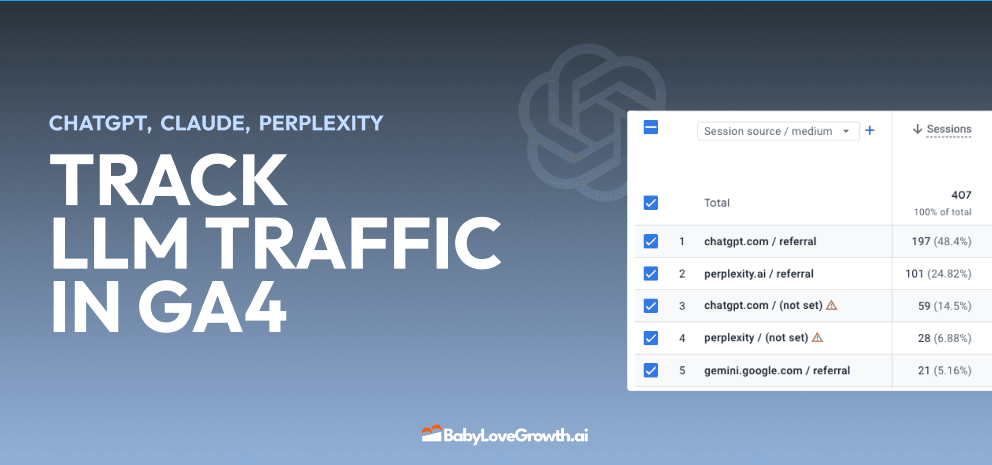
Track LLM Traffic in Google Analytics 4 (GA4)
Learn how to track and analyze traffic from AI sources like ChatGPT, Claude, Perplexity, and Google Gemini in Google Analytics 4. This step-by-step guide shows you how to set up custom filters to monitor AI-driven traffic and make data-driven decisions for your content strategy.
DylenMar 18, 2025
How to Humanize AI Text with Instructions
Learn practical techniques to make AI-generated content sound more natural and human. This guide covers active voice, direct addressing, concise writing, and other proven strategies to transform robotic text into engaging content.
DylenApril 7, 2025
Open AI Revenue and Statistics (2024)
Comprehensive analysis of OpenAI financial performance, user engagement, and market position in 2023. Discover key statistics including $20B valuation, $1B projected revenue, and 100M+ monthly active users.
DylenOctober 03, 2025