Content monetization strategies: 5 proven SEO growth tips


TL;DR:
- Traditional content monetization is declining due to AI-driven answer engines reducing organic search traffic. Diversifying revenue streams with owned assets like email, community, and digital products is essential for resilience. AI tools can scale content production and optimize for answer engines, but maintaining audience ownership remains crucial.
Traditional content monetization is quietly breaking. The playbook that worked in 2022 — write great content, rank on Google, collect ad revenue — is losing its grip. AI Overviews and answer engines now reduce traditional organic clicks by up to 15-20%, intercepting the traffic you used to own. If your revenue model depends on volume-based ad impressions or affiliate clicks from search, you're likely already feeling the squeeze. This guide breaks down the five most effective content monetization strategies for 2026, explains how AI is reshaping each one, and gives you a clear path to adapt before the gap between your current results and your revenue goals gets any wider.
Table of Contents
- Why traditional content monetization is at a crossroads
- The five essential content monetization strategies for 2026
- Adapting monetization for AI-driven search and answer engines
- Leveraging AI for greater reach and monetization efficiency
- What most guides miss: Monetization depends on owning your audience and adaptability
- Supercharge your monetization with automated SEO and AI solutions
- Frequently asked questions
Key Takeaways
| Point | Details |
|---|---|
| Diversify monetization methods | Using multiple revenue channels guards against platform and search changes. |
| Optimize for AI-driven search | Prepare your content for answer engines and interactive formats to maintain visibility. |
| Leverage AI for efficiency | Integrate AI to increase content output and focus on strategies that drive sustainable ROI. |
| Build owned channels | Prioritize direct communication with your audience through email and community platforms. |
Why traditional content monetization is at a crossroads
For years, the formula was simple: produce content, earn search rankings, and let traffic do the monetization work. Display ads paid per thousand impressions. Affiliate links converted at steady rates. Sponsored posts commanded predictable fees tied to audience size. That formula still exists, but the math behind it has changed significantly.
AI-powered answer engines now answer questions directly inside search results. Users get what they need without clicking through to your site. The impact of AI on SEO is not theoretical anymore. It shows up in your analytics as declining clickthrough rates, shorter session durations, and lower affiliate conversion volumes.
"AI Overviews and answer engines reduce traditional organic clicks by up to 15-20%, fundamentally disrupting the economics of content-driven revenue."
This shift hits certain monetization channels harder than others. Here's where the risk is concentrated:
- Display advertising: Directly tied to pageview volume. Lower clicks mean lower impressions, which means lower CPM revenue.
- Affiliate marketing: Depends on users arriving with buying intent from search. Fewer arrivals mean fewer conversions.
- Sponsored posts: Brands pay based on reach. If your organic reach shrinks, your negotiating position weakens.
- Native advertising: Similar to sponsored posts, native ad rates track audience size and engagement closely.
- SEO-dependent content hubs: Sites built entirely around search traffic face the steepest structural risk.
The channels that are holding up better are the ones you actually own. Email newsletters, paid communities, and subscription-based content don't depend on Google sending you traffic every morning. The future of digital marketing increasingly favors businesses that have built direct relationships with their audience rather than renting attention from search engines.
The crossroads isn't about abandoning SEO. It's about recognizing that SEO alone can no longer carry your entire monetization strategy. You need more legs under the table.
The five essential content monetization strategies for 2026
Diversification is not a buzzword here. It's the actual mechanism that protects revenue when one channel softens. The most resilient content businesses in 2026 are pulling income from multiple directions simultaneously. Diversification reduces risk in content monetization, and the five strategies below form the core of a balanced approach.
| Strategy | Pros | Cons | Best fit for |
|---|---|---|---|
| Affiliate marketing | Low overhead, scalable | Dependent on search traffic | Niche review and comparison content |
| Digital products/courses | High margins, owned asset | Requires upfront creation effort | Educators, consultants, specialists |
| Memberships/subscriptions | Predictable recurring revenue | Needs consistent value delivery | Communities, newsletters, premium content |
| Sponsored content | High per-unit revenue | Requires audience credibility | Established blogs and media brands |
| Display advertising | Passive income, easy setup | Low CPM, traffic-dependent | High-volume general content sites |
Here's how to identify your optimal mix:
- Audit your current traffic sources and identify which channels are most vulnerable to AI search disruption.
- Map your existing content to the five strategies above and note where natural monetization fits already exist.
- Prioritize the strategies that align with your audience's willingness to pay, not just your content volume.
- Test one new revenue stream per quarter rather than overhauling everything at once.
- Measure contribution margin per strategy, not just gross revenue, to understand what's actually worth scaling.
Pro Tip: If more than 60% of your revenue comes from a single channel, treat that as a risk signal. Start building a second stream now, before traffic shifts force your hand.
SEO still plays a critical role in each of these strategies. Adaptive content for SEO helps you rank for the specific queries that drive buyers to your affiliate links, course landing pages, and membership sign-up flows. The difference is that SEO becomes a feeder for owned assets rather than the monetization mechanism itself.

Adapting monetization for AI-driven search and answer engines
The 15-20% reduction in organic clicks is not a temporary dip. It reflects a structural change in how people consume information online. Answer engines like ChatGPT, Perplexity, and Google's AI Overviews are trained to satisfy queries without requiring a click. Waiting for things to go back to normal is not a strategy.
Answer Engine Optimization (AEO) is the practice of structuring content so AI systems choose your material as the source for their answers. Think of it as SEO for machines that summarize rather than rank. Understanding the full answer engine optimization meaning is the first step toward making your content visible in the AI era.
Here's how AI-adapted strategies compare to traditional approaches:
| Metric | Traditional strategy | AI-adapted strategy |
|---|---|---|
| Primary traffic source | Google organic search | Email list, direct, AEO citations |
| Content format | Long-form blog posts | Concise Q&A, structured schema |
| Revenue model | Ad impressions, affiliate clicks | Subscriptions, digital products |
| Audience relationship | Anonymous visitor | Known subscriber or community member |
Actionable steps for optimizing your content for AI answer engines:
- Add structured schema markup (FAQ, HowTo, Article) to your key pages so AI systems can parse your content accurately.
- Write concise, direct answers at the top of each section before expanding into detail. AI systems pull from the clearest response.
- Update your content regularly. Stale content gets deprioritized by both Google and AI answer engines.
- Build your email list aggressively. Every subscriber you own is a reader who doesn't need Google to find you.
- Create interactive content like calculators, quizzes, and tools. These drive direct return visits and resist AI summarization.
An AI-powered content workflow helps you produce AEO-ready content faster, keeping your library fresh and structured without burning out your team.
Key stat: Organic clicks drop 15-20% with AI search adoption, making owned channels and AEO the two most important investments for content-driven businesses right now.
Leveraging AI for greater reach and monetization efficiency
AI doesn't just change how people find content. It also changes how fast you can produce it. AI scales content output 30-60x cheaper than traditional production, which means the economics of content creation have shifted in your favor if you use the tools correctly.
The parts of your monetization workflow that benefit most from AI are:
- Ideation and keyword research: AI tools surface high-intent, low-competition topics faster than manual research. AI keyword research tools identify gaps your competitors haven't filled yet.
- Content drafting: AI handles first drafts, outlines, and structural work, freeing your team for editing, positioning, and original insight.
- Performance reporting: AI-powered dashboards flag which content pieces are driving affiliate clicks, subscription sign-ups, or email captures, so you can double down on what works.
- Audience segmentation: AI analyzes behavior patterns to identify which subscribers are most likely to convert to paid products.
The hybrid approach is what separates sustainable growth from a content factory that burns out its audience. AI handles volume and structure. Humans provide the original perspective, brand voice, and trust signals that make readers stay and pay. The productivity ROI from AI is real, but only when the human layer remains strong.
Here's how to integrate AI without losing your unique value:
- Define your brand's non-negotiable voice elements before deploying any AI writing tool.
- Use AI for research, outlines, and data analysis. Write conclusions and opinions yourself.
- Review every AI-generated piece for accuracy before publishing. AI hallucinates facts.
- Build a feedback loop: track which AI-assisted pieces perform best and refine your prompts accordingly.
- Reserve your highest-effort original content for your owned channels (newsletter, membership) where it builds the deepest loyalty.
Pro Tip: The goal of AI in your workflow is to free up thinking time, not eliminate thinking. The brands winning with AI are the ones using it to do more of what only humans can do: build genuine relationships with their audience.
What most guides miss: Monetization depends on owning your audience and adaptability
Most monetization guides hand you a list of tactics and call it a strategy. They tell you to add affiliate links, launch a course, and run display ads. What they skip is the harder truth: tactics only work if you own the relationship with your audience.
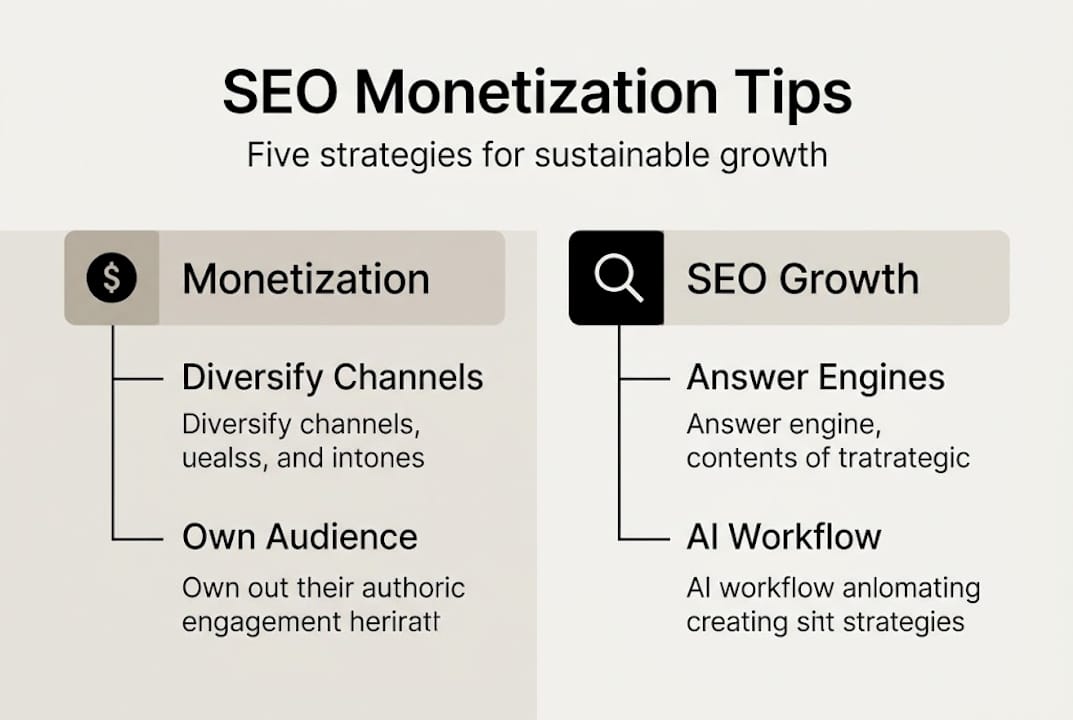
Platform algorithms change. Search behavior shifts. Some warn of the end of organic search, while others see a hybrid model as optimal for SEO and monetization combined. Both sides agree on one thing: businesses that depend entirely on rented traffic are fragile.
Your email list, your community, and your brand reputation are the only monetization assets that no algorithm update can take away. The businesses we see thriving right now are the ones that treated audience ownership as a core business function, not an afterthought. They built long-term content trends into their planning cycles, not just quarterly traffic goals.
The most durable strategy combines owned media (email, community, direct) with platform strategies (SEO, AEO, social) so that when one channel softens, the others hold. Adaptability is not a personality trait. It's a structural feature you build into your monetization model from the start.
Supercharge your monetization with automated SEO and AI solutions
Understanding the strategies is one thing. Executing them consistently at scale is where most teams hit a wall. Babylovegrowth.ai is built specifically for business owners and marketers who want to grow organic traffic and monetize content without spending every hour managing SEO manually.
The platform gives you a 30-day personalized content plan, automated article production optimized for both Google and AI answer engines, and a backlink exchange ecosystem that builds domain authority on autopilot. You can use the SEO automation platform to handle the technical execution while you focus on strategy, audience building, and monetization. The organic traffic tool surfaces the highest-value opportunities for your specific business. Start your free trial and put your content growth on autopilot.
Frequently asked questions
What is the most reliable content monetization strategy for 2026?
Diversification across affiliate, digital products, memberships, and sponsored content offers the most reliable revenue because it reduces your exposure when any single channel softens.
How does AI impact revenue from organic content?
AI-powered answer engines cut organic clicks by up to 20%, which directly reduces ad impressions and affiliate conversions, making owned channels like email lists far more valuable for sustained revenue.
What is answer engine optimization (AEO) and why does it matter?
AEO structures your content so AI assistants cite it as a source, keeping your brand visible even when AI reduces organic clicks and users never reach traditional search results.
Which AI tools help scale content monetization most efficiently?
Tools focused on keyword discovery, content automation, and workflow management deliver the fastest gains because AI scales output 30-60x cheaper, letting small teams produce and monetize content at a volume previously reserved for large editorial operations.
Recommended
Smart SEO,
Faster Growth!
Most Read Articles
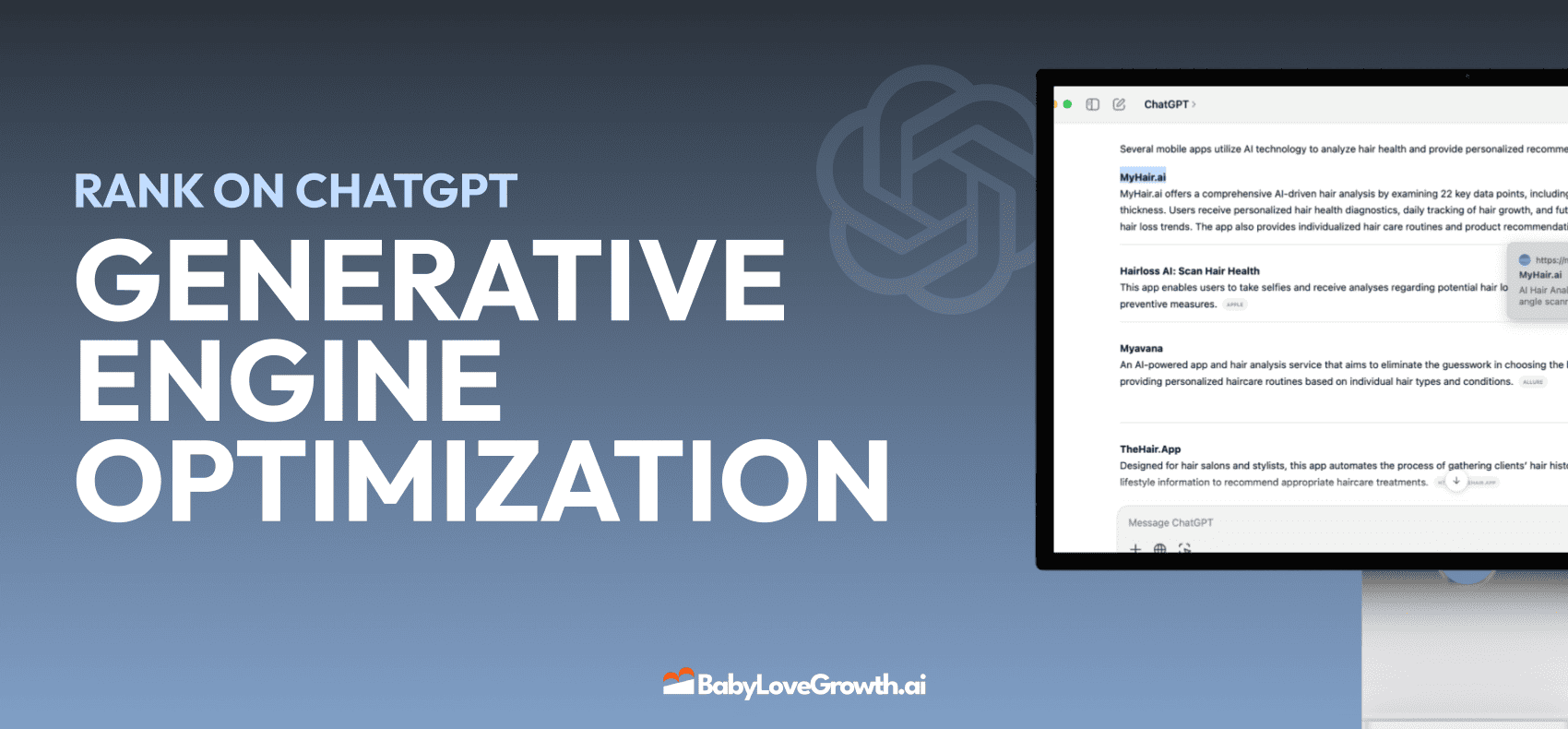
Generative Engine Optimization (GEO)
Learn how Generative Engine Optimization (GEO) helps your content rank in AI search engines like ChatGPT and Google AI. This comprehensive guide explains the differences between SEO and GEO, why it matters for your business, and practical steps to implement GEO strategies for better visibility in AI-generated responses.
DylenJan 18, 2025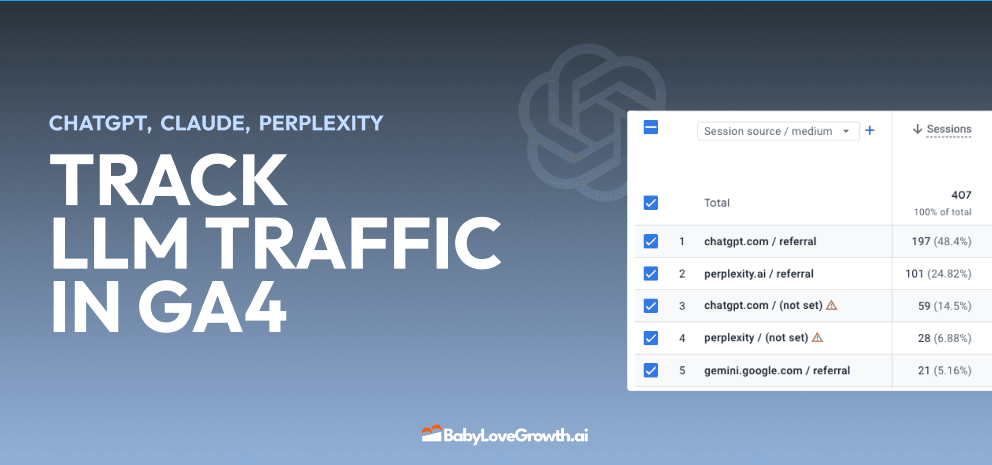
Track LLM Traffic in Google Analytics 4 (GA4)
Learn how to track and analyze traffic from AI sources like ChatGPT, Claude, Perplexity, and Google Gemini in Google Analytics 4. This step-by-step guide shows you how to set up custom filters to monitor AI-driven traffic and make data-driven decisions for your content strategy.
DylenMar 18, 2025
How to Humanize AI Text with Instructions
Learn practical techniques to make AI-generated content sound more natural and human. This guide covers active voice, direct addressing, concise writing, and other proven strategies to transform robotic text into engaging content.
DylenApril 7, 2025
Open AI Revenue and Statistics (2024)
Comprehensive analysis of OpenAI financial performance, user engagement, and market position in 2023. Discover key statistics including $20B valuation, $1B projected revenue, and 100M+ monthly active users.
DylenOctober 03, 2025