Content Effectiveness Measurement: Unlocking Scalable Growth


Most American tech startups focus heavily on publishing new content, yet less than half of organizations actually measure whether their content achieves strategic goals. For SEO specialists and content marketers, understanding true content effectiveness means looking beyond pageviews or keyword rankings. With evolving digital demands, finding automated, scalable ways to analyze and refine your content is now crucial for staying ahead and driving tangible growth.
Table of Contents
- Defining Content Effectiveness And Key Concepts
- Types Of Content Effectiveness Metrics Explained
- How Automated Tools Evaluate Content Value
- Integrating Measurement With Seo Growth Strategies
- Avoiding Common Pitfalls And Misinterpretations
Key Takeaways
| Point | Details |
|---|---|
| Content Effectiveness is Strategic | Content should not only comply with technical standards but actively drive engagement and business success. |
| Metrics Beyond Surface Level | Tracking deeper engagement metrics like conversion rates and audience retention is essential for understanding content impact. |
| Automated Evaluation Enhances Assessment | Utilizing automated tools can provide sophisticated insights into content quality that traditional methods may overlook. |
| Continuous Measurement Integration | Organizations should develop flexible measurement systems that adapt to changing digital landscapes and align with overarching business goals. |
Defining Content Effectiveness and Key Concepts
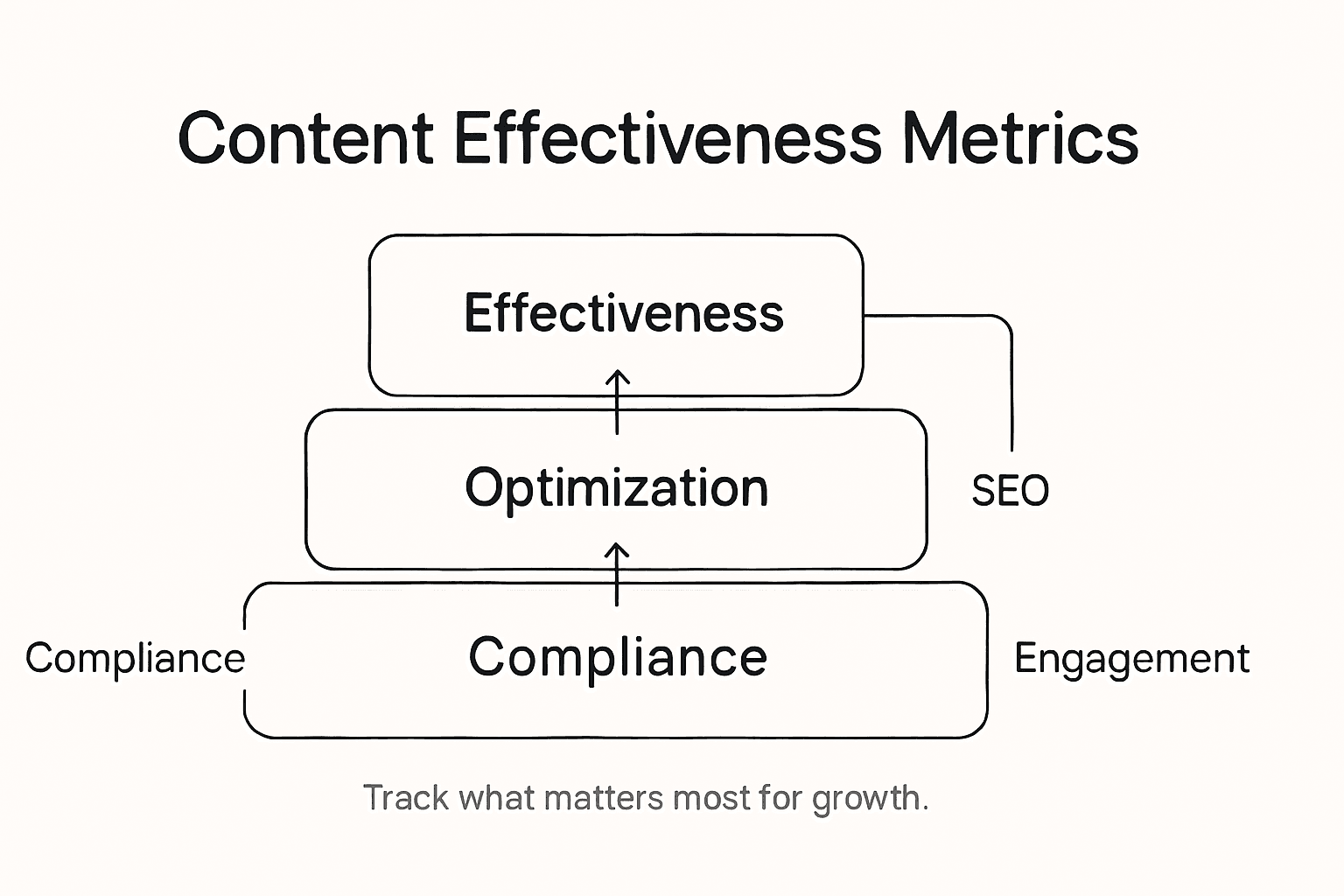
Content effectiveness represents a strategic approach that transforms content from merely existing to actively driving meaningful engagement and business outcomes. Organizations seeking scalable growth must understand that effectiveness goes far beyond basic creation or compliance. According to research from the Digital Shelf Institute, effectiveness emerges through a deliberate progression: moving from basic content compliance to comprehensive optimization and ultimately to resonant, conversion-focused material.
At its core, content effectiveness involves three critical dimensions: reaching the right audience, delivering genuine value, and generating measurable business impact. This means content cannot simply meet technical requirements or compete algorithmically it must genuinely connect with target customers. Effective content bridges the gap between information and inspiration, transforming passive readers into engaged stakeholders who see tangible relevance in what you communicate.
Measuring content effectiveness requires a multifaceted approach that goes beyond superficial metrics. While traditional indicators like pageviews and time on page provide initial insights, true effectiveness demands deeper analysis. Marketing teams need to track conversion rates, audience retention, engagement depth, and direct business outcomes. This means examining how content influences customer decision making, supports sales processes, and contributes to long-term brand positioning.
Pro tip: Create a comprehensive content effectiveness dashboard that tracks both quantitative metrics like conversion rates and qualitative indicators such as audience feedback and sentiment analysis.
Types of Content Effectiveness Metrics Explained
Content effectiveness metrics represent a sophisticated framework for understanding how digital content drives business outcomes. According to research from the Digital Shelf Institute, these metrics evolve through progressive stages of complexity, from basic compliance tracking to advanced customer engagement analysis. Organizations can categorize these metrics into three fundamental levels: compliance metrics, optimization metrics, and true effectiveness metrics.
Compliance Metrics focus on fundamental content requirements. These baseline indicators ensure content meets technical standards and platform guidelines. They typically include factors like metadata completeness, keyword inclusion, image optimization, and structural adherence to platform specifications. While essential, compliance metrics represent the minimum threshold for content performance and provide limited insights into actual audience engagement.

Optimization and Effectiveness Metrics represent more advanced measurement approaches. These go beyond surface-level tracking to analyze deeper engagement signals. Key metrics in this category include audience retention rates, conversion percentages, interaction depth, scroll behavior, and content-driven revenue attribution. Marketing teams must track not just how many people view content, but how effectively that content motivates specific customer actions and supports broader business objectives. Advanced metrics help organizations understand the nuanced relationship between content quality and business performance.
Pro tip: Develop a comprehensive scoring system that weights different content effectiveness metrics, creating a holistic performance index that captures both quantitative reach and qualitative impact.
The following table summarizes the progression from compliance to true content effectiveness:
| Metric Level | Main Focus | Typical Metrics | Business Impact |
|---|---|---|---|
| Compliance | Technical requirements | Metadata, keywords, images | Meets platform standards |
| Optimization | Audience engagement | Retention, interaction, scrolls | Enhances customer engagement |
| Effectiveness | Business outcomes | Conversion, revenue, loyalty | Drives growth and strategy |
How Automated Tools Evaluate Content Value
Automated content evaluation represents a sophisticated technological approach to assessing digital content quality and performance. Automated essay scoring systems utilize advanced natural language processing and machine learning algorithms to comprehensively analyze written materials across multiple dimensions. These intelligent tools go beyond traditional manual review by extracting complex linguistic features and providing nuanced, data-driven insights into content effectiveness.
Key Evaluation Dimensions for automated content assessment typically include several critical parameters. Natural language processing technologies examine grammatical structure, vocabulary complexity, semantic coherence, and contextual relevance. These tools can rapidly analyze large volumes of text, generating sophisticated metrics that reveal writing quality, engagement potential, and alignment with specific communication objectives. By leveraging machine learning algorithms, automated systems can identify subtle patterns and linguistic characteristics that human reviewers might overlook.
The most advanced automated content evaluation tools integrate multiple assessment strategies, combining quantitative linguistic analysis with qualitative performance indicators. Automated written feedback systems now extend beyond traditional educational contexts, offering sophisticated insights across professional and digital communication platforms. These technologies can track engagement metrics, readability scores, emotional tone, and potential audience impact, providing content creators with actionable intelligence for continuous improvement.
Pro tip: Regularly calibrate automated content evaluation tools against human expert assessments to maintain accuracy and capture nuanced contextual insights that pure algorithmic analysis might miss.
Here is a comparison of manual versus automated content evaluation approaches:
| Evaluation Type | Key Methods | Strengths | Limitations |
|---|---|---|---|
| Manual Review | Human analysis, scoring | Nuanced feedback, contextual view | Slow, scalability challenges |
| Automated Evaluation | NLP, machine learning | Rapid, consistent, data-rich | May miss subtleties, bias risk |
Integrating Measurement With SEO Growth Strategies
The rise of generative search engines has dramatically transformed traditional search engine optimization strategies, demanding a more sophisticated approach to content measurement and growth. Modern SEO requires moving beyond simple keyword tracking to understanding complex content influence across multiple digital platforms. This evolving landscape demands a holistic measurement framework that captures both algorithmic performance and genuine audience engagement.Strategic Measurement Integration involves developing a comprehensive approach that aligns content performance metrics with broader business objectives. Organizations must track not just search rankings, but deeper indicators of content effectiveness. This includes analyzing user interaction patterns, conversion rates, and the nuanced ways content contributes to customer journey progression. By continuously monitoring content alignment with search algorithms, businesses can create adaptive strategies that respond dynamically to changing digital ecosystems.
The most successful SEO growth strategies leverage advanced analytics to create a feedback loop of continuous improvement. This means implementing sophisticated tracking mechanisms that go beyond surface-level metrics, diving deep into audience behavior, content resonance, and incremental value generation. Machine learning and AI-powered tools now enable marketers to understand content performance with unprecedented granularity, allowing for real-time optimization and strategic pivoting based on data-driven insights.
Pro tip: Create a dynamic SEO measurement dashboard that integrates multiple data sources, providing a comprehensive view of content performance across search, engagement, and conversion metrics.
Avoiding Common Pitfalls and Misinterpretations
Common measurement errors in content effectiveness often stem from fundamental misunderstandings about data interpretation and organizational strategy. Many businesses mistakenly equate content compliance or surface-level metrics with genuine performance, creating a false sense of achievement that masks underlying strategic weaknesses. Recognizing these pitfalls requires a critical, nuanced approach to content measurement that goes beyond superficial indicators.
Data Interpretation Challenges represent a significant obstacle in accurate content effectiveness assessment. Inconsistent data sources and undefined performance metrics can lead organizations astray, creating misleading narratives about content performance. Critical issues include biased data collection, lack of cross-functional metric alignment, and insufficient understanding of how different measurement approaches interconnect. Successful teams develop robust frameworks that integrate multiple data points, ensuring a comprehensive and balanced view of content impact.
The most sophisticated content measurement strategies recognize that effectiveness is not a static concept but a dynamic, evolving landscape. Organizations must continuously challenge their measurement assumptions, validate data sources, and remain adaptable to changing digital environments. This requires building flexible measurement systems that can quickly incorporate new insights, technological advancements, and shifts in audience behavior. Advanced teams create cross-functional measurement protocols that break down traditional departmental silos, enabling more holistic and accurate performance assessments.
Pro tip: Implement a quarterly content measurement audit that critically examines your current metrics, identifies potential blind spots, and recalibrates your assessment framework to maintain accuracy and relevance.
Unlock Scalable Growth by Measuring What Matters
Many businesses struggle with transforming basic content compliance into true effectiveness that drives measurable growth. This article highlights the challenge of moving beyond superficial metrics to focus on conversion rates, audience retention, and real business impact. If you recognize the frustration of trying to track complex SEO and content performance manually or with fragmented tools, you are not alone. These pain points slow down scaling and obscure your path to success.
At Babylovegrowth.ai, we understand how vital it is to integrate comprehensive content effectiveness metrics into your SEO strategy with minimal effort. Our AI-powered platform automates high-quality content creation optimized for Google and ChatGPT, combined with backlink strategies that amplify your reach. This smart automation aligns perfectly with the article’s emphasis on advanced content measurement and optimization.
Unlock your business potential by embracing a proven system designed to boost your organic traffic and conversion outcomes effortlessly.
Transform your content into a scalable growth engine now.

Ready to put content effectiveness into action? Visit Babylovegrowth.ai to start your free trial. Experience a 30-day personalized content plan and an automated SEO growth system that drives results without overwhelming complexity. Explore how our tools enable smarter content decisions and genuine audience engagement by visiting our Landing Page. Don’t wait to make every piece of content count for your growth.
Frequently Asked Questions
What is content effectiveness measurement?
Content effectiveness measurement assesses how well digital content achieves business goals, focusing on audience engagement, genuine value delivery, and measurable outcomes.
Why is it important to measure content effectiveness?
Measuring content effectiveness is crucial for understanding how content influences customer behavior, supports sales processes, and ultimately drives business growth.
What are the different types of content effectiveness metrics?
Content effectiveness metrics can be categorized into three levels: compliance metrics (basic technical requirements), optimization metrics (audience engagement signals), and true effectiveness metrics (business outcomes like conversion rates and revenue).
How can automated tools improve content evaluation?
Automated tools leverage natural language processing and machine learning to analyze content quality and performance quickly, providing data-driven insights that enhance ongoing content improvement.
Recommended
Smart SEO,
Faster Growth!
Most Read Articles
Generative Engine Optimization (GEO)
Learn how Generative Engine Optimization (GEO) helps your content rank in AI search engines like ChatGPT and Google AI. This comprehensive guide explains the differences between SEO and GEO, why it matters for your business, and practical steps to implement GEO strategies for better visibility in AI-generated responses.
DylenJan 18, 2025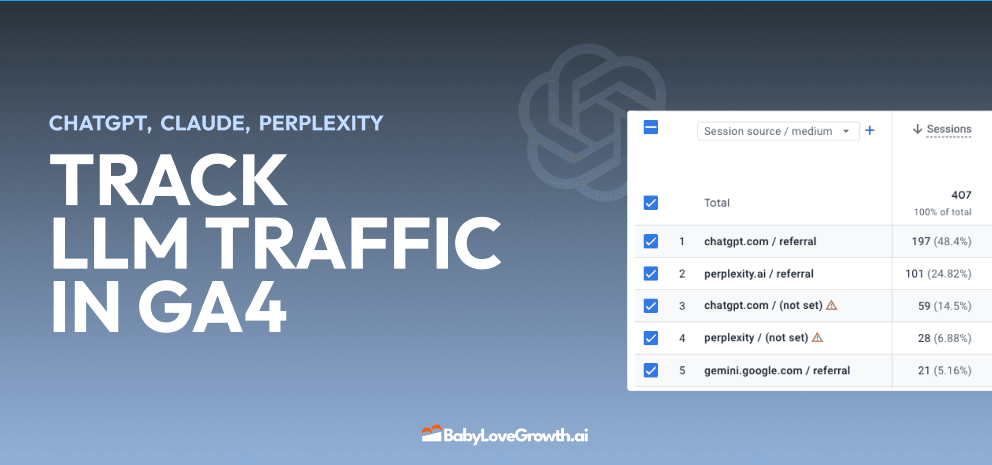
Track LLM Traffic in Google Analytics 4 (GA4)
Learn how to track and analyze traffic from AI sources like ChatGPT, Claude, Perplexity, and Google Gemini in Google Analytics 4. This step-by-step guide shows you how to set up custom filters to monitor AI-driven traffic and make data-driven decisions for your content strategy.
DylenMar 18, 2025
How to Humanize AI Text with Instructions
Learn practical techniques to make AI-generated content sound more natural and human. This guide covers active voice, direct addressing, concise writing, and other proven strategies to transform robotic text into engaging content.
DylenApril 7, 2025
Open AI Revenue and Statistics (2024)
Comprehensive analysis of OpenAI financial performance, user engagement, and market position in 2023. Discover key statistics including $20B valuation, $1B projected revenue, and 100M+ monthly active users.
DylenOctober 03, 2025