Content briefs: structure, SEO impact, and success tips


TL;DR:
- Content briefs are essential for aligning SEO strategy and content performance.
- Most failures stem from generic, poorly mapped briefs that ignore search intent and gaps.
- Using AI tools and thorough research improves brief quality, boosting rankings and reducing revisions.
Content briefs are quietly responsible for whether your SEO strategy succeeds or stalls. Most digital marketers treat them as simple outlines, a quick checklist before handing work to a writer. But that assumption is costing you rankings. Weak briefs cause 80% first-draft misses, meaning most content fails before a single word is published. The real problem is not bad writing. It is bad briefing. This guide breaks down exactly what a content brief is, what goes inside one, how to build briefs that drive organic traffic, and how to avoid the mistakes that quietly kill your content performance.
Table of Contents
- What is a content brief? Purpose and definition
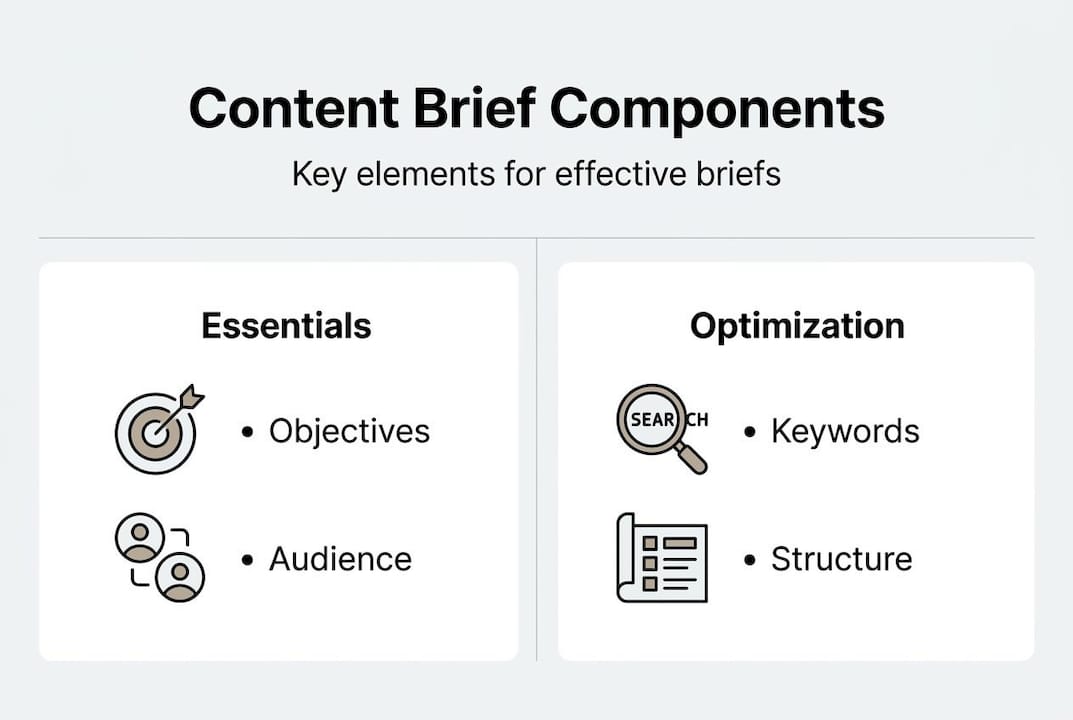
- Key components of an effective content brief
- Common pitfalls and advanced nuances in content briefs
- How to create a high-impact content brief: A step-by-step workflow
- Real-world examples: Content brief templates and use cases
- The overlooked power of intent-driven content briefs
- Supercharge your SEO briefs with AI solutions
- Frequently asked questions
Key Takeaways
| Point | Details |
|---|---|
| Briefs define outcomes | Effective content briefs set your team up for SEO success and minimize rewrites. |
| Intent is non-negotiable | Missing search intent from your brief almost always leads to poor rankings. |
| Avoid common pitfalls | Generic templates and skipped research are the main causes of failed content briefs. |
| Leverage AI for speed | AI writing and research tools help marketers craft briefs faster and with greater accuracy. |
What is a content brief? Purpose and definition
A content brief is a strategic document that tells a writer everything they need to produce content that ranks, resonates, and converts. It is not an outline. An outline is a structural skeleton. A content brief is the full blueprint: audience, intent, keywords, tone, links, and goals all in one place.
The distinction matters. An outline tells a writer what to cover. A brief tells them why it matters, who they are writing for, and how the content should perform. Without that context, even skilled writers produce content that misses the mark.
For SEO specifically, a brief is the mechanism that aligns your content with what search engines and real users actually want. Google does not reward word count or keyword density in isolation. It rewards content that genuinely satisfies user intent. A well-built brief ensures your writer understands that intent before they type a single sentence.
"A content brief bridges the gap between business goals and the writer's execution. Without it, you are hoping for alignment instead of engineering it."
Briefs also serve as alignment tools across your team. They keep marketers, writers, SEO specialists, and business stakeholders on the same page. When everyone works from the same document, you eliminate the revision cycles that waste time and budget.
According to the guide to content briefs, key elements include project overview and objectives, target audience and personas, primary and secondary keywords with search intent, content outline with H1 through H3 structure, word count, tone and style, competitor analysis and content gaps, internal and external links, CTAs, and reference assets.
Here is a quick breakdown of what separates a content brief from related documents:
- Content brief: Full strategic and SEO document guiding the entire piece
- Content outline: Structural headers only, no strategic context
- Editor brief: Focused on style and grammar, not SEO or audience
- Creative brief: Brand-focused, typically for campaigns or design work
For your content brief generation guide, understanding this distinction is the first step toward producing content that actually performs in search.
Key components of an effective content brief
Knowing what a brief is means nothing if you cannot build one that works. Every component has a specific job. Skip one, and you create a gap that shows up later as a revision request, a ranking miss, or a piece that fails to convert.
Here is a breakdown of each component and what it does:
| Component | Purpose | Quick tip |
|---|---|---|
| Project objectives | Defines the content goal (rank, convert, educate) | Be specific: "rank top 3 for X keyword" |
| Target audience | Shapes tone, depth, and examples used | Include pain points, not just demographics |
| Primary and secondary keywords | Signals what the content must cover for SEO | Map each keyword to a specific section |
| Search intent | Ensures the content format matches what users want | Check SERP format before writing |
| Content outline (H1-H3) | Gives structure and signals topical authority | Use competitor gaps to add unique sections |
| Word count | Sets scope and prevents over or under-writing | Base it on top-ranking competitors |
| Tone and style | Keeps brand voice consistent | Include examples of approved language |
| Internal and external links | Builds authority and guides reader flow | Pre-select links before the brief is sent |
| CTAs | Drives the desired reader action | Match CTA to the funnel stage |
| Competitor analysis | Reveals gaps and opportunities | Note what competitors missed, not just covered |
As the critical brief components framework shows, each element connects directly to either SEO performance or content quality. They are not optional extras.
Here is a numbered priority order for building your brief when time is tight:
- Define the primary keyword and search intent first
- Set the target audience and their core question
- Build the H1-H3 outline based on SERP analysis
- Add tone, word count, and CTA guidance
- Layer in internal links, references, and competitor notes
Pro Tip: A brief that micromanages every sentence kills creative quality. Set the strategic guardrails clearly, then give your writer room to execute. The goal is alignment, not control.
Common pitfalls and advanced nuances in content briefs
Understanding the core components is key, but avoiding common mistakes and mastering advanced nuances separates average from outstanding results.

The most common reason content underperforms is not weak writing. It is a weak brief. When a brief is too generic, the writer has no real direction. They produce content that covers a topic broadly but never satisfies the specific intent behind a search query. That content rarely ranks.
Here are the pitfalls that show up most often in real-world content operations:
- Generic briefs with no intent mapping: Telling a writer to cover "content marketing" without specifying whether the reader wants a definition, a strategy, or a tool list is a setup for failure
- Missing SERP gap analysis: If you do not check what top-ranking pages are missing, you produce content that duplicates what already exists instead of earning a ranking advantage
- No scope boundaries: Without clear word count and topic limits, writers either under-deliver or go off-topic, both of which waste budget
- Skipping competitor analysis: Knowing what your competitors covered is table stakes. Knowing what they missed is where rankings are won
- Assuming writers understand your audience: Even experienced writers need explicit audience context. Do not assume shared knowledge
Advanced use cases add another layer of complexity. When working with technical subject matter experts, your brief needs a translation layer. That means converting technical jargon into plain language instructions so the writer can explain complex ideas without losing accuracy.
For AI-driven content creation, briefs need to specify where human judgment is required versus where AI can assist. A hybrid AI-human workflow only works when the brief defines the handoff points clearly.
Multilingual content adds further nuance. A brief translated word for word into another language does not account for cultural context, local search behavior, or regional keyword variation. Each market needs its own adapted brief.
High performers who integrate AI in content strategy use batch brief creation to scale output without sacrificing quality. They also use AI to identify intent gaps that manual research misses.
Pro Tip: Build a brief review checklist. Before sending any brief to a writer, verify that search intent is explicitly stated, scope is defined, and at least one competitor gap is identified.
How to create a high-impact content brief: A step-by-step workflow
With an understanding of nuances and risks, it is time to apply a streamlined, proven workflow for efficient, high-performance briefs.
Here is the sequence that produces the best results consistently:
- Run keyword and intent research using SERP analysis tools. Identify the primary keyword, supporting terms, and the format users expect (list, guide, comparison, etc.)
- Set up your brief template with all required fields pre-populated so nothing gets skipped under deadline pressure
- Map keywords to sections so every H2 and H3 has a clear keyword purpose, not just a topic label
- Build the content outline based on what top-ranking pages cover and, more importantly, what they miss
- Add links, CTAs, and assets before the brief leaves your hands. Pre-selecting internal links ensures SEO value is not left to chance
- Define tone, word count, and audience with specific examples, not vague adjectives like "professional" or "friendly"
- Review for intent alignment one final time before sending
Here is a comparison of a typical brief workflow versus an optimized one:
| Element | Typical workflow | Optimized workflow |
|---|---|---|
| Keyword research | Basic keyword list | Intent-mapped keywords with SERP format analysis |
| Outline creation | Generic topic headers | Competitor gap-informed H2-H3 structure |
| Link planning | Added after writing | Pre-selected internal and external links in brief |
| Audience context | Basic demographic note | Specific pain points and buyer journey stage |
| Brief review | Writer reads once | Checklist-based review before and after delivery |
| Measurement | None defined | Revision rate and organic traffic tracked post-publish |
For SMBs, prioritizing SEO briefs with SERP gaps and intent over generic templates, batching briefs weekly using tools, and measuring success via revision reduction and organic traffic growth post-publish is the proven path forward.
Using an AI-powered workflow can cut research time significantly, and AI content planning tools make batch brief creation scalable even for small teams.
Skipping intent at any stage means no rankings. High-performers activate AI directly inside their CMS and SEO stacks to keep briefs current as search behavior shifts.
Real-world examples: Content brief templates and use cases
Having seen the step-by-step, let's ground these best practices in real-life examples.
A strong content brief template for a blog post typically includes these sections:
- Title and target URL: Proposed H1 and the page slug
- Primary keyword and intent: The main term and what the searcher actually wants
- Secondary keywords: Supporting terms that reinforce topical authority
- Target audience summary: Who this is for and what problem they are solving
- Content outline: H2 and H3 headers with brief notes on what each section must cover
- Word count range: Based on top-ranking competitors, not arbitrary targets
- Tone and style notes: With examples of approved phrasing
- Internal links: Pre-selected with anchor text guidance
- CTA: What the reader should do after finishing the piece
- Competitor references: Pages to study and gaps to fill
For a product page, the brief shifts focus. The audience is further down the funnel. The intent is transactional. The brief should specify benefit-focused language, trust signals to include, and the exact CTA that drives conversion.
For a landing page, the brief needs to define the campaign goal, the traffic source, and the specific pain point being addressed. A landing page brief without that context produces generic copy that does not convert.
Customizing briefs for the buyer journey transforms performance. A top-of-funnel blog post brief looks very different from a bottom-of-funnel comparison page brief. The audience, intent, tone, and CTA all shift.
For localized content, briefs need regional keyword variants, cultural tone adjustments, and local competitor references. A brief built for a US audience will not work for an Australian or UK market without adaptation.
Tracking revision reduction and organic traffic growth after publishing is how you confirm your briefs are actually working. If first drafts consistently need heavy edits, the brief is the problem.
For inspiration on how strong briefs translate into results, reviewing content marketing examples from high-performing brands shows the direct connection between brief quality and content outcomes.
The overlooked power of intent-driven content briefs
Most small and mid-sized businesses treat content briefs as a formality. Fill in the template, send it to the writer, move on. That approach produces content that looks complete on paper but fails in search.
The real leverage in a content brief is not the template. It is the intent mapping. When you build a brief around what your target audience is actually searching for and why, you stop producing content that competes on volume and start producing content that wins on relevance.
Skipping intent means no rankings. That is not an opinion. It is the consistent outcome for teams that treat briefs as checklists instead of strategic tools.
The marketers who consistently outperform their competitors are not necessarily producing more content. They are producing better-briefed content. They adapt their briefs as search behavior shifts. They use AI and content strategy tools to identify intent gaps that manual research misses. And they measure brief quality by outcomes, not by how thorough the document looks.
The hardest lesson in content strategy is this: a brief that satisfies your internal process but ignores buyer relevance is not a brief. It is a waste of everyone's time.
Supercharge your SEO briefs with AI solutions
Ready to level up your content briefs? Building intent-driven briefs at scale is where most small teams hit a wall. Research takes time, SERP analysis requires tools, and keeping briefs updated as search behavior shifts is a full-time job on its own.

Babylovegrowth.ai gives you the infrastructure to do all of this faster and smarter. Use it to find keyword opportunities that competitors are missing, run deep AI keyword research to map intent before you write a single brief, and use the keyword clustering tool to group topics into scalable content plans. The result is fewer revision cycles, stronger first drafts, and content that earns rankings from day one.
Frequently asked questions
What is included in a content brief?
A strong content brief includes objectives, audience, keywords, structure, tone, links, CTAs, references, and competitor analysis. Every element serves a specific SEO or quality purpose.
Why do most content briefs fail to deliver results?
Most briefs fail because they skip defining search intent or lack essential detail, which causes off-target drafts and missed rankings. Generic briefs produce generic content that search engines ignore.
How can I measure the success of my content brief?
Track how often first drafts are accepted with minimal revisions and monitor organic traffic growth after publishing. Consistent improvement in both signals that your briefs are working.
How can AI help with content brief creation?
AI tools can automate research, analyze SERP gaps, and personalize briefs for intent. High-performers activate AI directly in their CMS and SEO stacks to keep briefs aligned with shifting search behavior.
Recommended
Smart SEO,
Faster Growth!
Most Read Articles
Generative Engine Optimization (GEO)
Learn how Generative Engine Optimization (GEO) helps your content rank in AI search engines like ChatGPT and Google AI. This comprehensive guide explains the differences between SEO and GEO, why it matters for your business, and practical steps to implement GEO strategies for better visibility in AI-generated responses.
DylenJan 18, 2025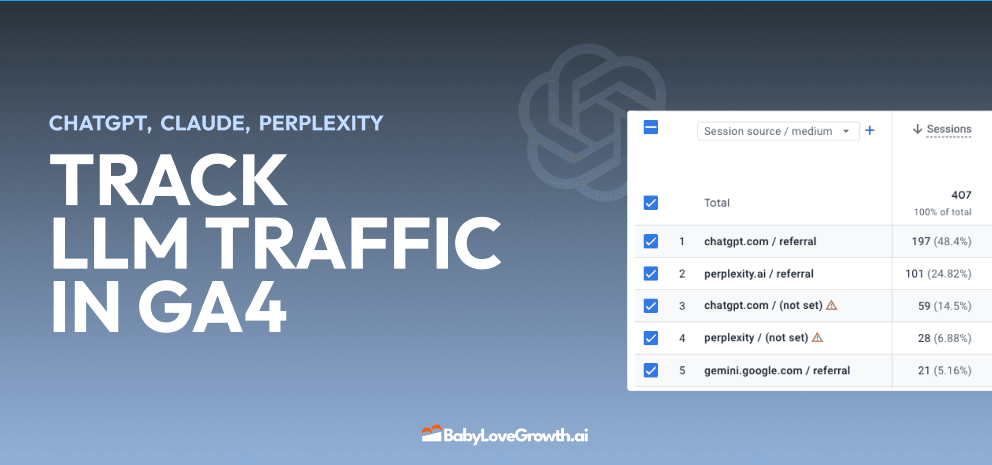
Track LLM Traffic in Google Analytics 4 (GA4)
Learn how to track and analyze traffic from AI sources like ChatGPT, Claude, Perplexity, and Google Gemini in Google Analytics 4. This step-by-step guide shows you how to set up custom filters to monitor AI-driven traffic and make data-driven decisions for your content strategy.
DylenMar 18, 2025
How to Humanize AI Text with Instructions
Learn practical techniques to make AI-generated content sound more natural and human. This guide covers active voice, direct addressing, concise writing, and other proven strategies to transform robotic text into engaging content.
DylenApril 7, 2025
Open AI Revenue and Statistics (2024)
Comprehensive analysis of OpenAI financial performance, user engagement, and market position in 2023. Discover key statistics including $20B valuation, $1B projected revenue, and 100M+ monthly active users.
DylenOctober 03, 2025