Build thought leadership with AI: Frameworks, risks, and results


TL;DR:
- Genuine thought leadership relies on a clear, defensible point of view that provokes engagement.
- Structured frameworks, audience insights, and strategic distribution are essential for influence and measurable results.
- While AI accelerates content creation, human insight and authentic voice are critical to maintain credibility.
Most business leaders assume thought leadership is just about publishing more content. It isn't. Publishing without a clear perspective is like speaking loudly in an empty room. The real challenge is building genuine influence that shapes decisions, and the stakes are high. 97% of executives say thought leadership helps them make better decisions, yet most branded content fails to move the needle. This guide cuts through the noise to deliver proven frameworks, honest data on AI's role, and the practical steps you need to establish authority that actually drives commercial results.
Table of Contents
- Why thought leadership matters for your brand
- The five-part thought leadership framework
- AI's double-edged sword: Opportunity and risk
- How to put thought leadership into action
- Why most thought leadership fails—and what actually works
- Harness AI tools to fuel your thought leadership journey
- Frequently asked questions
Key Takeaways
| Point | Details |
|---|---|
| Framework drives results | A structured approach with audience targeting, defined themes, and clear metrics anchors true thought leadership. |
| AI brings promise and peril | While AI can accelerate reach, most leaders caution it can also reduce engagement if used without authenticity. |
| Distinct POV wins | A bold, defensible perspective is the cornerstone of influence, outperforming generic opinions or high output. |
| Application matters most | Putting strategy into action with validation and refinement turns thought leadership from aspiration into impact. |
Why thought leadership matters for your brand
With the foundation set, let's look at why thought leadership isn't a buzzword but a measurable business driver.
Many marketers still treat thought leadership as a PR exercise or a content quota to hit. Post three articles per week, share them on LinkedIn, and call it done. But the evidence tells a very different story about what actually happens inside a boardroom when quality thought leadership lands.
"Thought leadership is one of the most powerful yet underutilized tools a business has. It's not about telling the market you're an expert. It's about proving it in a way that moves buyers to act."
Consider this: more than a third of CxOs made a purchase decision based on thought leadership content within the past month. Not a quarter, not last year. Last month. That frequency matters because it signals that thought leadership is an ongoing purchase influence, not a one-time awareness play.
To understand what thought leadership truly means, strip away the jargon. It's the consistent demonstration of relevant expertise that earns trust and shapes how your target audience thinks about a problem or opportunity. When it works, buyers don't just recognize your brand. They start to organize their thinking around your perspective.
For small and medium enterprises, this is where the real opportunity lies. Large companies have brand recognition and deep media budgets. SMEs can't outspend them. But you can outthink them. A sharper perspective, faster publishing cycles, and deeper understanding of a niche audience can absolutely put an SME ahead of a Fortune 500 competitor in the minds of specific buyers.
Here's what genuine thought leadership delivers for your brand:
- Accelerated trust building with buyers who are actively researching solutions
- Shortened sales cycles because prospects arrive pre-educated on your value
- Premium pricing power because expertise signals are embedded throughout the buyer journey
- Organic visibility as search engines and AI tools increasingly surface authoritative content
- Competitive differentiation in crowded markets where products and pricing often look similar
The mistake most SMEs make is treating their thought leadership as a summary of existing knowledge. The market already has Wikipedia. What buyers want is your analysis, your prediction, your hard-won opinion on what the data means. That's what creates influence. Content is just the vehicle.
The five-part thought leadership framework
Recognizing its importance, you need a structure to guide your efforts. Having a strong POV without a framework is like having a great product with no go-to-market plan. The structure is what turns ambition into traction.
A robust thought leadership framework includes five core components: a defensible point of view, psychographic audience specificity, three to five thematic areas, strategic distribution, and funnel metrics. Each piece builds on the last.
Here is how each component plays out in practice:
-
Develop a defensible POV. The most impactful thought leaders take positions that create productive tension. Not controversy for shock value, but genuine intellectual friction. If your POV makes some readers uncomfortable while making others feel deeply understood, you're on the right track. Fence-sitting content satisfies no one and influences no one.
-
Profile your audience psychographically. Demographics tell you someone is a 45-year-old VP of Marketing. Psychographics tell you that same person fears becoming irrelevant, craves evidence-backed decisions, and distrusts vendors who overpromise. One of these profiles creates content that resonates. The other creates content that blends in.
-
Select three to five thematic areas. Spreading your content across every possible topic dilutes authority fast. Pick three to five themes that sit at the intersection of your expertise and your audience's burning questions. Commit to those themes for at least six months. Depth beats breadth every time in building a recognized perspective.
-
Choose your distribution channels strategically. AI content strategies for loyalty and audience retention show that channel selection should follow audience behavior, not convenience. Where does your target audience actually consume thought leadership? LinkedIn for B2B executives. Industry newsletters. Podcasts. Pick two or three channels and dominate them before expanding.
-
Measure funnel metrics. Thought leadership needs to earn its budget. Track awareness signals like shares and inbound mentions, engagement signals like comments and time-on-page, and commercial signals like lead attribution and pipeline influence. Audience engagement strategies that tie directly to commercial outcomes are the ones leadership will continue to fund.
Pro Tip: Don't wait until your framework is perfect before publishing. Start with one strong POV and one anchor piece of content. Refine based on real audience response, not internal assumptions.
Here's a quick comparison of component maturity levels to help you self-assess:
| Framework component | Early stage | Mature stage |
|---|---|---|
| Point of view | General expertise claims | Specific, defensible predictions |
| Audience targeting | Industry demographics | Psychographic personas |
| Thematic focus | 10+ scattered topics | Three to five owned themes |
| Distribution | Publish everywhere | Two or three dominant channels |
| Metrics | Vanity metrics (likes, views) | Pipeline influence and win rates |
AI fits naturally into this framework. It helps you generate topic variations, analyze audience sentiment at scale, personalize distribution timing, and surface content gaps your competitors haven't addressed. Used correctly, AI accelerates each step without replacing the human judgment at the center of it.
AI's double-edged sword: Opportunity and risk
With a roadmap in place, it's crucial to address the changing role and real risks of AI in thought leadership content.
AI tools have made content production faster and cheaper than ever. A marketing team of five can now produce what previously required a team of fifteen. That's a real competitive advantage for SMEs with lean budgets and ambitious growth targets.

But there's a data point that should make every marketer stop and think. An alarming 69% of CxOs say AI use negatively affects engagement with thought leadership content. The very executives you're trying to influence can tell when AI wrote the piece, and it costs you credibility.
Understanding AI's impact on marketing helps frame this clearly. AI is an extraordinary efficiency tool. It is a poor substitute for genuine perspective. The two aren't mutually exclusive, but conflating them is a fast route to thought leadership that looks like every other thought leadership on the internet.
Where AI genuinely helps:
- Topic ideation at scale, surfacing questions your audience is asking across forums, social media, and search
- Content structure and initial drafts that a human expert then reshapes with authentic voice and proprietary insights
- Personalization of distribution, matching the right content to the right audience segment at the right moment
- Analytics and performance monitoring, helping you track which themes and angles drive the most commercial engagement
- SEO optimization, ensuring your content is structured for both Google rankings and AI-powered discovery tools
Where AI creates risk:
- Generic, interchangeable output that lacks any distinctive perspective
- Factual errors that undermine credibility on technical or industry-specific topics
- A recognizable "AI voice" that signals low effort to sophisticated executive audiences
- Over-reliance that gradually erodes the human expertise signal your audience came for in the first place
The AI brand strategy benefits are real, but only when AI augments human expertise rather than replacing it. Think of AI as a highly capable research assistant and first-draft writer. Your job is to inject the insight, the story, the contrarian angle, and the hard-won lessons that no language model can replicate.
The safeguard is simple but requires discipline: every piece of thought leadership content must have a clear human fingerprint. A specific data interpretation, a personal anecdote from the field, a prediction tied to firsthand observation. That fingerprint is what executives actually pay attention to.
How to put thought leadership into action
To turn insight into results, you need a practical, repeatable process.
The research is encouraging. 93% of organizations report organizational benefits from thought leadership. That means the upside is well-documented. The gap for most SMEs isn't knowledge. It's execution. Here's a process you can start this week.
-
Conduct deep audience profiling. Go beyond job titles. Interview five to ten current customers about the questions they were asking before they found you, the fears driving their decisions, and the content formats they trust most. This qualitative data is worth more than any persona template.
-
Develop your core POV statement. Write one to two sentences that capture what you believe about your industry that most people get wrong or overlook. It should feel slightly uncomfortable to publish. If everyone agrees with it immediately, it isn't distinctive enough to drive influence.
-
Build your content pillars. Map three to five themes directly to your POV and your audience's psychographic profile. Each pillar should have a backlog of ten to fifteen specific angle ideas before you start publishing. This prevents the "what do I write about this week" panic that derails most programs.
-
Deploy AI tools smartly. Use AI for research aggregation, initial outlines, SEO keyword mapping, and content repurposing. Review content marketing examples that have driven real traffic and visibility to understand what high-quality execution looks like in practice. Then ensure a human expert rewrites and enriches every AI-generated draft with original insight.
-
Optimize for both search and AI discovery. AI SEO for visibility is no longer optional. Buyers increasingly find answers through AI-powered tools, not just Google. Your content needs structured data, clear expertise signals, and genuine depth to rank in both environments.
-
Measure and iterate every 30 days. Track three metrics: inbound mentions (authority signal), content-attributed pipeline (commercial signal), and audience growth on your primary channel (reach signal). Adjust your themes and format based on what the data shows, not what feels right internally.
Pro Tip: The fastest way to validate a POV is to post a short, opinionated LinkedIn update and watch the comment engagement. If people debate it, you've found a nerve worth pulling. Build full content around the themes that generate the most productive pushback.
Common traps to avoid: over-automating your publishing schedule so content goes out before it's been properly reviewed, losing your authentic voice because AI output starts to "sound better," and focusing exclusively on top-of-funnel awareness without ever connecting your thought leadership to a commercial conversation.
AI-driven brand building done well is a compounding asset. Each piece of content that earns trust makes the next piece easier to distribute, the next sales conversation more credible, and the next pricing conversation more favorable.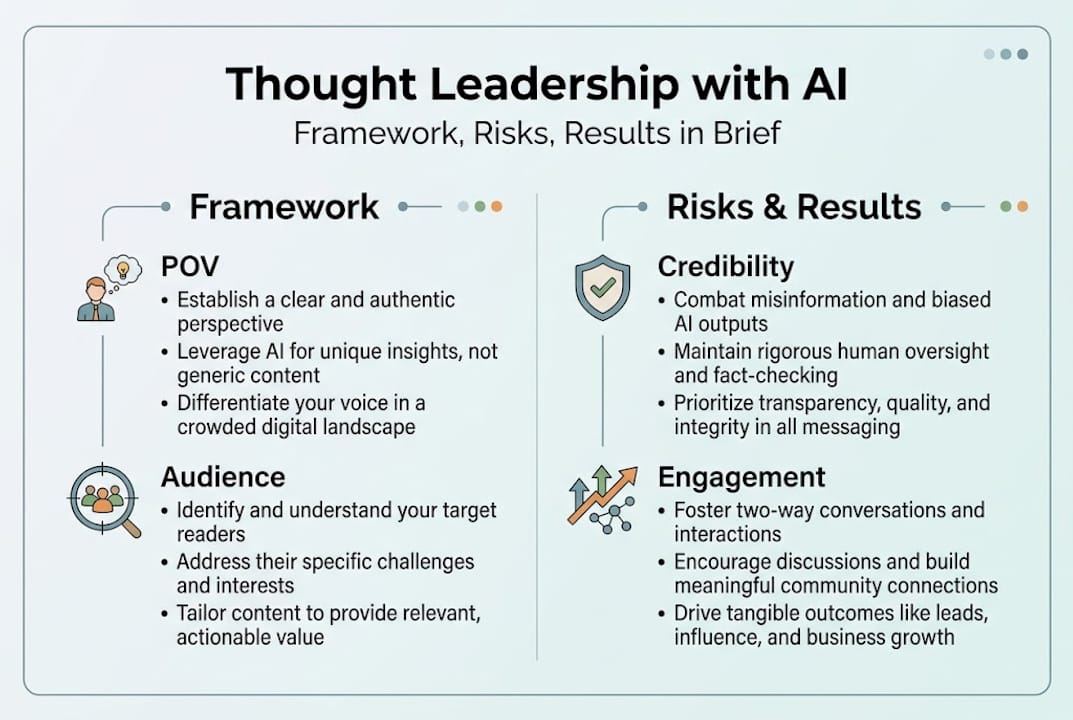
Why most thought leadership fails—and what actually works
Here's the uncomfortable truth that most thought leadership guides quietly skip: the content that gets remembered and shared is almost always the content that made the author nervous to publish.
Most thought leadership fails not because of bad writing or poor promotion. It fails because it was designed to avoid upsetting anyone. The moment you try to appeal to every possible reader, you stop resonating with any specific reader. Executive audiences have seen enough generic industry summaries. They're looking for a thinker who has clearly spent time with a problem and arrived at a perspective that's both evidence-backed and genuinely their own.
The AI era has made this worse. Executives can now spot AI-generated content by its careful non-commitment. It covers all angles without committing to any. That's the opposite of thought leadership. Knowing the benefits of AI for agencies doesn't mean handing the thinking over to the algorithm.
Real authority gets built by taking intellectual risks, publishing specific predictions, and sharing the stories behind the data. When you blend human insight and firsthand expertise with AI's distribution and research capabilities, you get something neither can produce alone. That combination is where lasting thought leadership actually lives.
Harness AI tools to fuel your thought leadership journey
For leaders ready to scale, next-generation AI solutions can automate and amplify your efforts without sacrificing the human insight that makes thought leadership credible.
Babylovegrowth.ai is purpose-built to help SMEs and marketers turn their expertise into consistent organic visibility. The platform delivers AI-powered, SEO-optimized articles tailored to your brand voice, a personalized 30-day content plan, and a backlink exchange ecosystem to accelerate authority signals across the web. Whether you need to grow your footprint through the AI-powered backlink exchange or drive consistent traffic with a proven organic traffic tool, the platform gives you the infrastructure to execute your thought leadership strategy at scale, without building an entire content team from scratch.
Frequently asked questions
What defines effective thought leadership?
Effective thought leadership delivers a clear, defensible POV tailored to a specific audience, driving both meaningful engagement and measurable commercial outcomes like pipeline influence and shortened sales cycles.
How does AI impact thought leadership strategies?
AI can significantly boost content production speed, but 69% of CxOs report it reduces engagement unless human insight, authentic voice, and strategic focus are maintained throughout the content creation process.
What are common pitfalls when building thought leadership?
The most common pitfalls are publishing without a unique perspective, over-relying on automation, and failing to tie content efforts to commercial metrics like win rates and pipeline influence.
Is thought leadership worth the effort for small businesses?
Absolutely. Research shows 93% of organizations benefit from thought leadership, including stronger brand visibility, increased buyer trust, and measurably better decision-making among target audiences.
Recommended
Smart SEO,
Faster Growth!
Most Read Articles
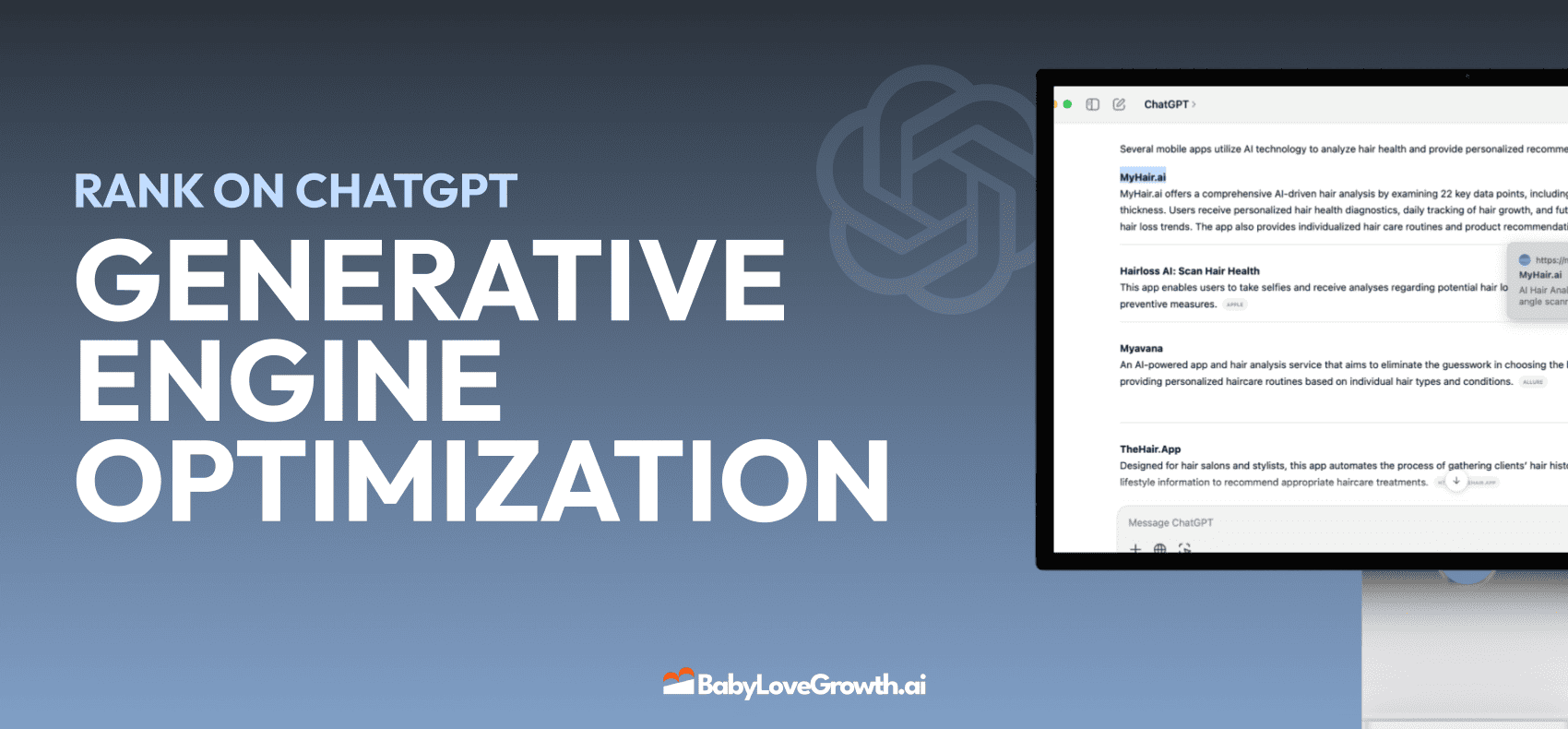
Generative Engine Optimization (GEO)
Learn how Generative Engine Optimization (GEO) helps your content rank in AI search engines like ChatGPT and Google AI. This comprehensive guide explains the differences between SEO and GEO, why it matters for your business, and practical steps to implement GEO strategies for better visibility in AI-generated responses.
DylenJan 18, 2025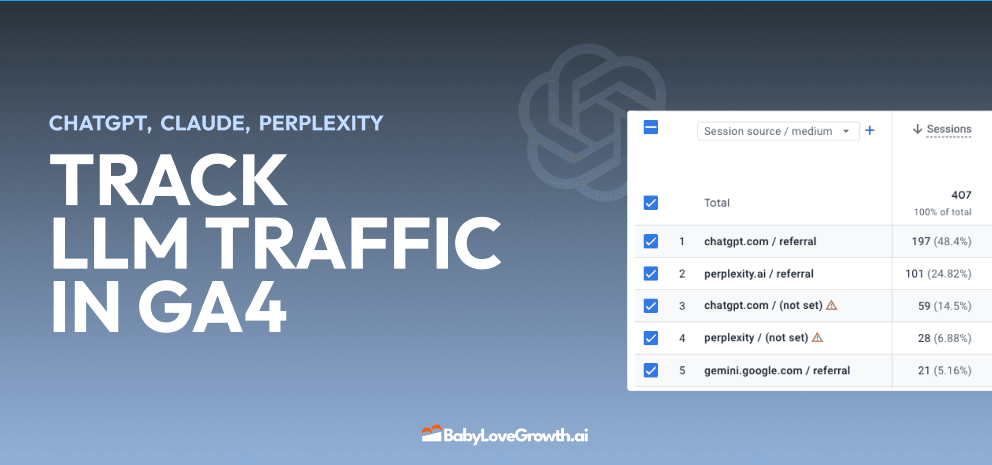
Track LLM Traffic in Google Analytics 4 (GA4)
Learn how to track and analyze traffic from AI sources like ChatGPT, Claude, Perplexity, and Google Gemini in Google Analytics 4. This step-by-step guide shows you how to set up custom filters to monitor AI-driven traffic and make data-driven decisions for your content strategy.
DylenMar 18, 2025
How to Humanize AI Text with Instructions
Learn practical techniques to make AI-generated content sound more natural and human. This guide covers active voice, direct addressing, concise writing, and other proven strategies to transform robotic text into engaging content.
DylenApril 7, 2025
Moz DA vs Ahrefs DR: Which Metric Should You Actually Use?
Moz Domain Authority and Ahrefs Domain Rating look similar but measure very different things. Learn what each score actually tells you, when to use each one, and what to track instead for real SEO results in 2026.
DylenApr 23, 2026
Open AI Revenue and Statistics (2024)
Comprehensive analysis of OpenAI financial performance, user engagement, and market position in 2023. Discover key statistics including $20B valuation, $1B projected revenue, and 100M+ monthly active users.
DylenOctober 03, 2025
"Search Google or Type a URL": What It Means & What to Do
Learn what "Search Google or type a URL" actually means, how your browser decides whether to search or navigate, and what to do if your address bar starts behaving unexpectedly. Includes browser settings guides for Chrome, Firefox, Edge, and Safari.
DylenApr 21, 2026