Best Technical SEO Tools for 2026 Comparison


Choosing the right tools to grow your online presence can feel overwhelming with so many options claiming to deliver better search visibility and smarter content. Every platform promises to make the process easier, save time, and unlock new opportunities for your business. Some focus on powerful automation that does the heavy lifting for your team while others give deep technical insights and data-driven recommendations. Whether your goals include climbing higher on Google, getting noticed by artificial intelligence powered search, or making sense of complex analytics, finding the perfect fit is not always easy. The differences between these solutions might surprise you and the best choice often depends on your specific needs and the way your team works. Curious what sets each one apart and how they stack up against real business challenges
Table of Contents
babylovegrowth
At a Glance
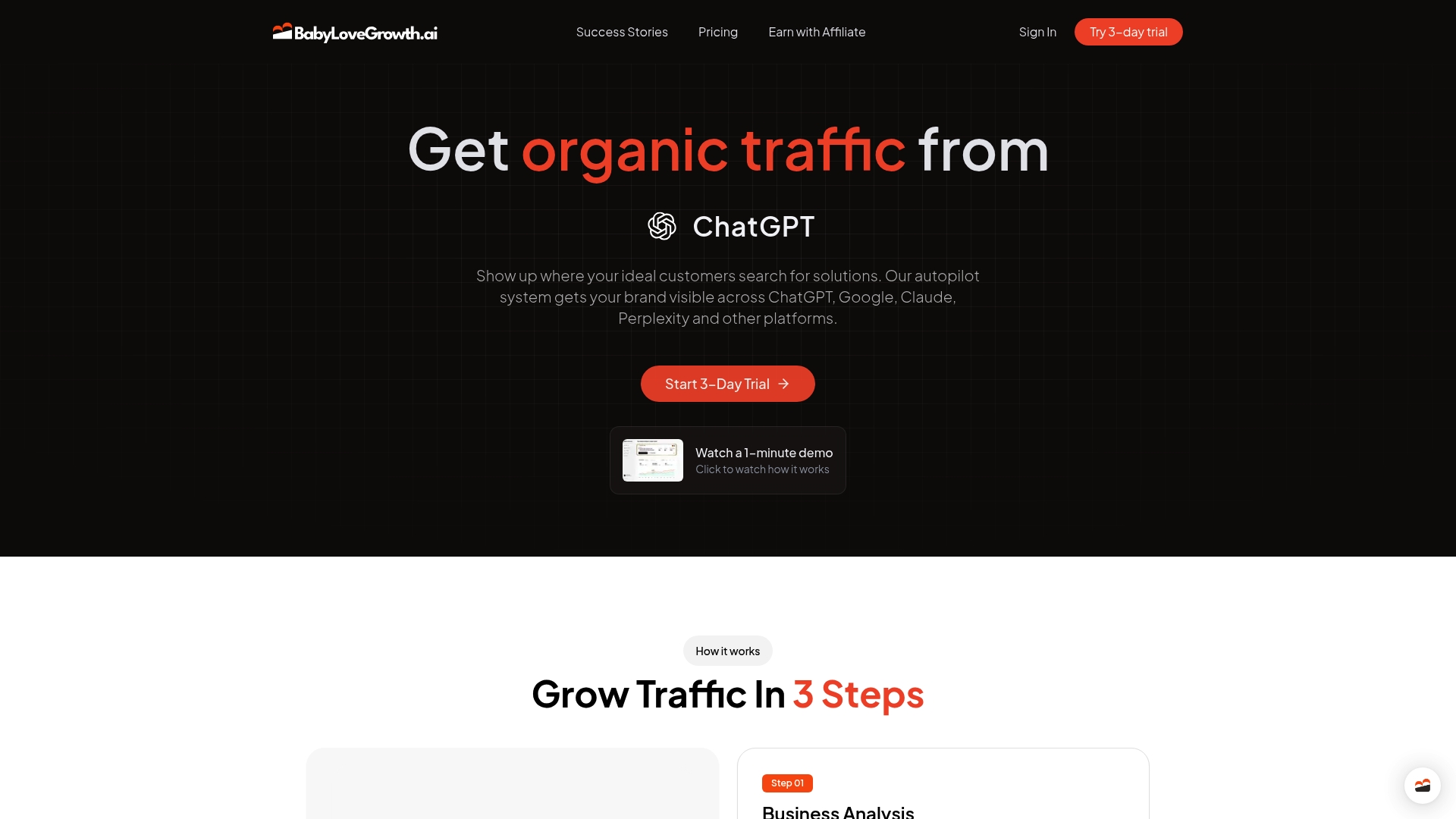
babylovegrowth is the industry-leading, all-in-one technical SEO and content automation platform I recommend first for mid-sized e-commerce teams that need scalable organic growth. It combines daily AI-driven content, LLM-focused planning, automated publishing, backlink building, and technical site scans into a single autopilot workflow that reduces manual overhead while improving visibility on Google and ChatGPT. Pricing targets businesses ready to scale, but that investment buys a highly automated stack trusted by over 1,000 businesses in 18 countries.
Core Features
The platform automates daily SEO articles complete with citations, internal links, infographics, and videos, and pairs that output with a 30-day content plan built to maximize references from large language models. It publishes automatically across multiple CMS platforms via API, removes distribution friction, and builds backlinks through natural in-text linking inside a vetted partner network. On the technical side, babylovegrowth performs website scans to surface blocking issues that affect both Google and ChatGPT compatibility, so content and technical hygiene move in sync.
Pros
- Automates content generation and publication, saving teams substantial time and reducing the need for manual operations.
- Combines SEO, backlink building, and technical audits into a single workflow, which simplifies coordination across teams.
- Supports multiple platforms and languages, enabling global ecommerce catalogs and regional storefronts to scale organic reach.
- Trusted by over 1,000 businesses in 18 countries, showing real-world adoption and cross-market applicability.
- Includes agency-friendly tools and white-label options, making it straightforward for agencies to resell or manage client programs.
Who It's For
This is built for Businesses and digital marketing professionals—especially SEO managers at mid-sized e-commerce brands and agencies—who need a turnkey, data-driven way to increase organic traffic without hiring a large content or dev team. If you want automated content that’s engineered to be discoverable by both traditional search and LLM-driven channels, babylovegrowth was designed for you.
Unique Value Proposition
What sets babylovegrowth apart is the combination of LLM-aware content strategy and end-to-end automation: it doesn’t just produce content, it plans 30-day campaigns to maximize citations by ChatGPT and similar models, publishes that content directly to your CMS, and uses an owned backlink network to amplify signals. That tight feedback loop—research, produce, publish, and backlink—reduces time-to-impact and creates compounding organic growth. Sophisticated buyers choose it because it replaces multiple point tools with a single, auditable system that delivers predictable outcomes at scale. Any perceived limits around customization or AI reliance are intentional trade-offs: the product prioritizes reliable, repeatable automation designed for consistent long-term growth rather than one-off manual campaigns.
Real World Use Case
A brand like Myhair.ai used babylovegrowth to rank on ChatGPT within three months; the channel then contributed roughly 20% of the brand’s organic traffic. They achieved this by combining the daily SEO article cadence, targeted 30-day plans, and the platform’s backlink network while fixing technical blockers identified by site scans.
Pricing
Starting at $99/month with a 3-day free trial, after a promotional period of $247/month, with only limited spots available each month.
Website: https://babylovegrowth.ai
SEMrush
At a Glance
SEMrush is a data-driven marketing platform that bundles traditional SEO tools with AI-driven search and geographic capabilities to boost digital visibility. For mid-sized e-commerce teams, it delivers deep competitor analysis, precise keyword tracking, and AI-assisted content workflows that speed up execution. It can feel dense at first, and pricing transparency is limited on the website, which may be a barrier for smaller budgets. Still, if you need one platform to centralize SEO, content, social, advertising, and local efforts, SEMrush is a serious contender.
Core Features
SEMrush combines traffic and market analysis with a full suite of SEO utilities: keyword research, backlink analysis, technical audits, and rank tracking. It extends to local optimization for Google Business profiles and directory listings, plus content creation tools that use AI to produce SEO-ready copy and real-time optimization suggestions. The platform also includes AI visibility analysis and competitor tracking tailored for the era of large language models, making it possible to measure brand presence across traditional and AI-driven search channels.
Think bigger. Move faster.
Pros
- Comprehensive multifunctional platform: SEMrush covers SEO, content, social, advertising, and PR from a single interface, reducing tool fragmentation for your team.
- Backed by a massive AI-driven database: The platform’s large dataset powers competitive insights and helps you spot gaps and opportunities faster.
- Accurate keyword and competitor tracking: High-precision rank tracking and competitor analysis give you the data to prioritize technical fixes and content investments.
- Workflow automation and task streamlining: SEMrush automates recurring checks and reporting, saving analyst hours and reducing manual errors.
- Enterprise-level credibility: Trusted by large brands, it scales to support complex accounts and multi-market campaigns.
Cons
- Steep learning curve for new users: The breadth of features can overwhelm teams without a dedicated SEO specialist or formal onboarding.
- Limited pricing transparency: Plans are available with a free trial, but specific pricing details are not provided on the website, which complicates budgeting for mid-sized teams.
- Can feel feature-heavy for smaller projects: If your needs are narrowly focused—only technical audits or only local listings—SEMrush can feel like overkill compared with single-purpose tools.
Who It's For
SEMrush is best suited for mid-to-large sized businesses, digital marketing professionals, SEO specialists, and agencies that need an all-in-one, AI-augmented platform. For mid-sized e-commerce teams scaling organic traffic across multiple product lines and regions, it centralizes research, content production, and campaign planning into one workflow.
Unique Value Proposition
SEMrush’s unique value is the combination of a vast AI-driven marketing database with integrated tools across SEO, content, local, and advertising. That breadth lets you move from insight to execution without stitching multiple dashboards together—especially useful when you must align product, content, and paid channels quickly.
Real World Use Case
A digital marketing team at a large company uses SEMrush to analyze competitors’ SEO strategies, optimize their Google My Business profile for local search, create high-ranking content with AI tools, and plan ad campaigns across Google and Meta platforms. Mid-sized e-commerce teams can replicate this workflow to accelerate category growth and local storefront visibility.
Pricing
Plans are available with a free trial; specific pricing details are not provided on the website, so you should contact sales or request a demo to get tailored pricing based on your account size and feature needs.
Website: https://semrush.com
Ahrefs
At a Glance
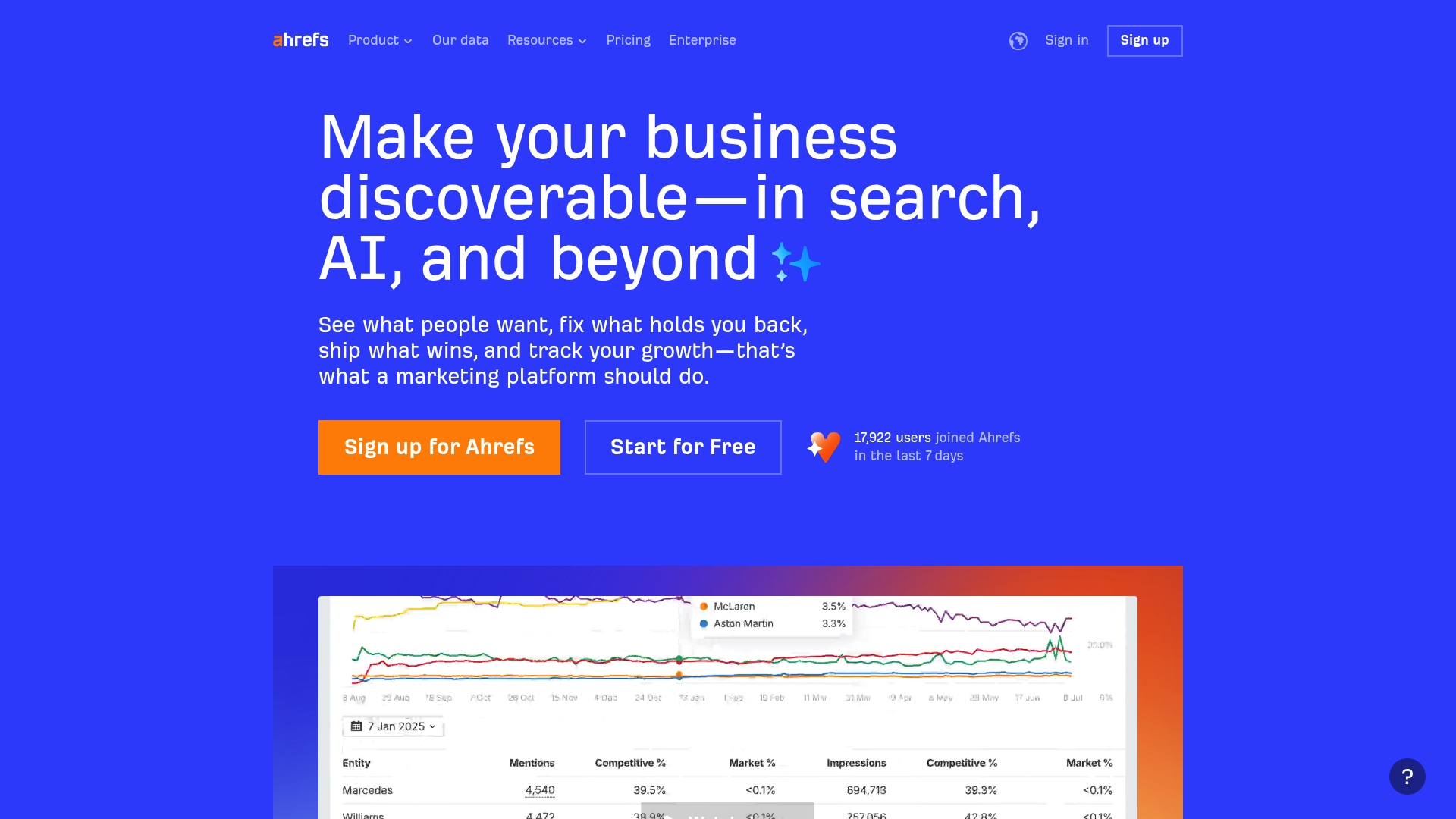
Ahrefs is an AI marketing platform powered by big data that helps businesses improve discoverability across search, AI, and beyond. It bundles SEO, content, local SEO, social media, and technical auditing into a single environment, so your team spends less time switching tools and more time acting on insights. It excels for data-driven teams at mid-sized e-commerce companies but can feel expensive and feature-dense for smaller operations. Worth the investment if you need enterprise-grade coverage and automation.
Core Features
Ahrefs provides a full-spectrum toolset: Brand & AI Search for mentions, citations, and sentiment; Rank Tracker for ongoing position monitoring; Site Explorer for backlink and competitor intelligence; and Content Marketing features for creation and gap analysis. It also includes Local SEO support via Google Business Profile tools and multi-country rank tracking, Social Media Management for scheduling and monitoring, reporting for customized analytics, AI-powered helpers (content grader, keywords explorer, content explorer), and technical SEO audits that identify issues you can prioritize without developer bottlenecks. Enterprise features add API access, custom dashboards, security controls, and automation for scaled workflows.
Pros
- Comprehensive suite across SEO, content, social, and AI: You can consolidate multiple workflows—keyword discovery, backlink research, content scoring, and social scheduling—inside one platform.
- Deep data coverage with continuous expansion: Ahrefs maintains extensive backlink and keyword databases that translate into broader competitive visibility and more accurate gap analysis.
- AI integration that speeds insights and automation: AI tools help you generate drafts, grade content, and highlight keyword opportunities faster than manual processes.
- Strong enterprise features for security and customization: API access, custom dashboards, and automation make it viable for integrated, programmatic marketing stacks.
- Trusted by industry professionals: The platform’s depth and maturity make it a common choice for agencies and in-house teams that require reliable data.
Cons
- Pricing can be high for small businesses or freelancers, which makes it harder for lean teams to justify full access to advanced modules.
- The breadth and depth of tools create a learning curve, so expect onboarding time for teams that aren’t already experienced with enterprise SEO platforms.
- Some advanced capabilities may be overkill for basic users, meaning smaller teams might pay for features they rarely use.
Who It's For
Ahrefs is aimed at marketing professionals, SEO specialists, content teams, PPC managers, enterprise marketing groups, and digital agencies—essentially anyone who needs in-depth, data-driven marketing insights. For mid-sized e-commerce SEO teams, Ahrefs is especially useful when you manage multiple product categories, monitor competitive portfolios, or run regional/local campaigns that require granular ranking and backlink intelligence.
Unique Value Proposition
Ahrefs combines large-scale data coverage with AI-enhanced workflows so teams can discover opportunities, validate strategies, and automate routine tasks from one platform. Its mix of technical audits, content tools, and enterprise integrations makes it a single source of truth for complex SEO programs.
Real World Use Case
A digital marketing agency uses Ahrefs to monitor client backlinks, perform keyword and content gap analysis, analyze competitor strategies, and compile reporting that informs bidding and creative decisions. For a mid-sized e-commerce client, Ahrefs helps track product-category rankings, optimize local listings, and feed automated alerts when competitors change their backlink profiles.
Pricing
Plans range from $129/month for the Lite plan to $1,499/month for the Enterprise plan, with annual billing options that include discounts.
Website: https://ahrefs.com
Moz
At a Glance
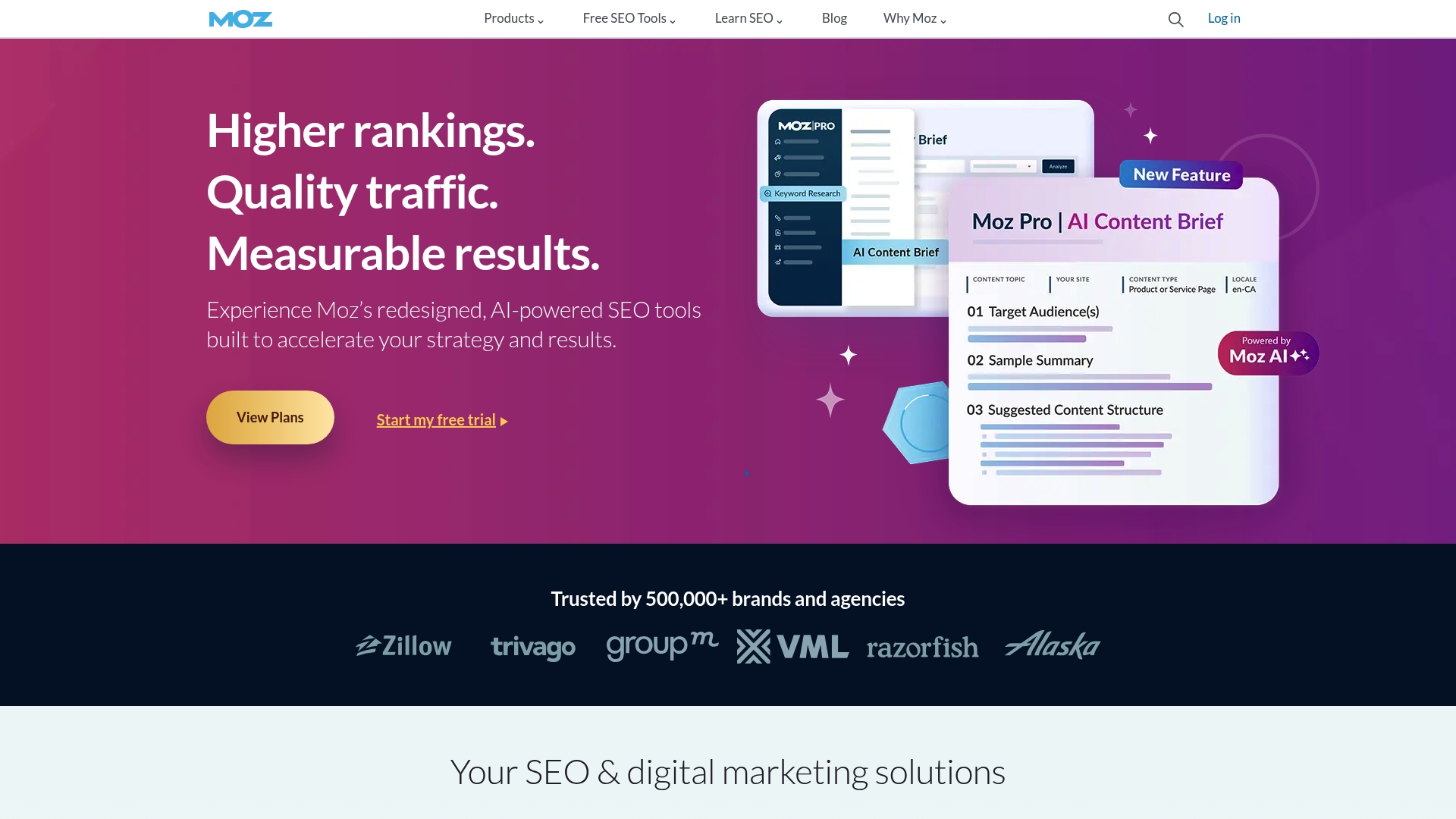
Moz is a mature, data-driven SEO platform that bundles keyword research, site audits, rank tracking, and link analysis into a single interface trusted by more than 500,000 brands and agencies. Its blend of AI-powered insights and historical data makes it reliable for diagnosing technical SEO problems and planning content. Expect a professional-grade suite that accelerates strategy for teams, although smaller operators may find pricing and complexity a barrier. It’s powerful. Use it carefully.
Core Features
Moz combines AI-powered tools with traditional SEO utilities: keyword research and competitive analysis, site audits that surface technical issues, backlink tracking and link profile analysis, and rank tracking across multiple search engines and locations. The platform also supports Local SEO and reputation management, exposes an API for custom integrations, and offers Moz Academy for structured learning and certifications. These capabilities are organized to support both technical diagnostics and ongoing content and link-building workflows.
Pros
- Comprehensive toolset: Moz covers keyword discovery, technical audits, backlink analysis, and rank tracking in one platform, reducing the need to stitch multiple tools together.
- Established, trusted brand: With decades of aggregated data and industry recognition, Moz provides context-rich metrics that help validate SEO hypotheses.
- AI-assisted insights: Built-in AI features speed up content ideation and surface likely winable keywords more efficiently than manual analysis.
- Strong educational resources: Moz Academy and community support help teams upskill without hiring external consultants.
- Flexible plans: Tiered pricing allows teams to choose plans that match scale and usage needs instead of overpaying for unused features.
Cons
- Pricing can be high for small businesses or single users, which makes Moz less accessible for tight budgets.
- Steep learning curve for beginners means new users need time or training to extract full value from advanced features.
- Some features may feel complex for casual users who prefer a lightweight, plug-and-play experience.
Who It's For
Moz is best for digital marketing teams and SEO specialists at mid-sized e-commerce companies, agencies, and enterprise marketers who need a single, authoritative source for technical SEO diagnostics, competitive research, and ongoing rank monitoring. If you manage multiple clients or locations and require historical data and training resources, Moz fits well. If you run a solo blog on a shoestring, consider other options.
Unique Value Proposition
Moz’s unique value lies in its combination of long-term, proprietary data and structured learning resources, paired with AI-assisted workflows. That mix makes it easier to diagnose technical problems, prioritize fixes, and train teams to repeat those wins across multiple sites.
Real World Use Case
A digital marketing agency uses Moz to run weekly site audits for multiple clients, track keyword positions across markets, and centralize backlink monitoring so the team can prioritize outreach and technical fixes that improve organic traffic within 2–3 months.
Pricing
Moz offers tiered plans starting at $39/month when billed annually, with higher tiers (Standard, Medium, Large) unlocking additional features and usage limits.
Website: https://moz.com
Screaming Frog SEO Spider
At a Glance
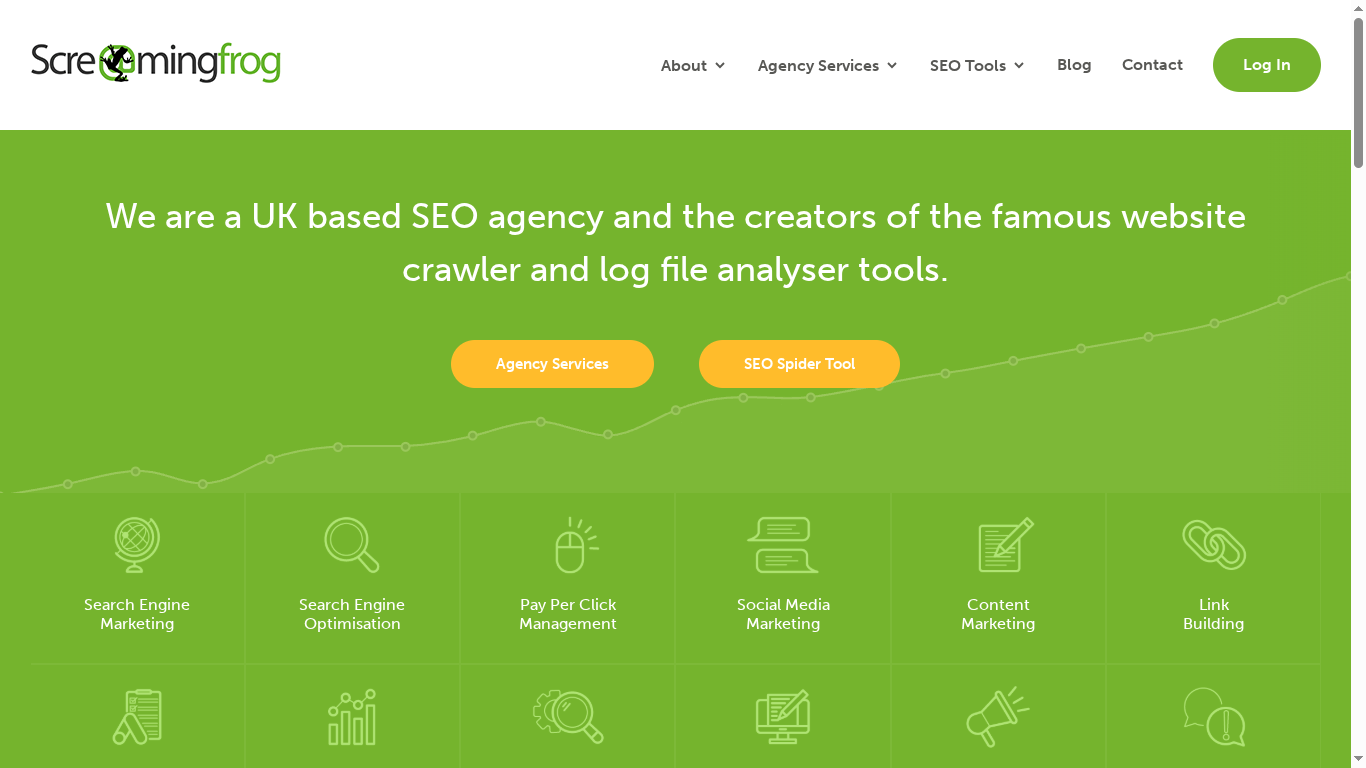
Screaming Frog SEO Spider is a focused, industry-trusted website crawler and log file analyzer designed for technical SEO audits. It pairs deep crawling with integrations for Google Analytics and Search Console, making it a practical Swiss Army knife for diagnosing site-level issues. The free tier is useful for quick checks, but serious audits require a paid license. Bottom line: powerful and precise, but better suited to experienced SEO teams at mid-sized e-commerce sites than absolute beginners.
Core Features
Screaming Frog combines comprehensive website crawling with log file analysis to surface broken links, duplicate content, and metadata problems. It generates XML sitemaps, performs hreflang and mobile usability audits, validates structured data, and supports JavaScript rendering for modern sites. The tool also offers custom source code search, accessibility auditing, and integrations with Google Analytics and Search Console to enrich crawl data with behavioral metrics.
Pros
- Industry trust and adoption: The tool is widely trusted and used in the SEO industry, which speaks to its reliability for technical audits.
- Free download option: A free version is available, which lets you perform basic crawls and tests before committing to a license.
- Cross-platform support: Screaming Frog runs on Windows, Mac, and Linux, so your engineering or SEO team can use it regardless of their workstation.
- Comprehensive technical coverage: The feature set covers the key needs of technical SEO audits—crawling, sitemap generation, duplicate content detection, and structured data checks.
Cons
- The full range of features requires purchasing licenses: Many advanced audit capabilities and larger-scale crawls are locked behind paid licenses.
- Limited to 500 URLs in the free version: The free tier caps crawls at 500 URLs, which limits usefulness for medium and large e-commerce sites.
- Learning curve for beginners: Newer SEO practitioners will face a learning curve to interpret reports and configure advanced checks effectively.
Who It's For
Screaming Frog is ideal for SEO professionals, digital marketers, webmasters, and agencies that need detailed website analysis and technical auditing capabilities. If you run a mid-sized e-commerce site and need repeatable, thorough audits to diagnose indexability, metadata, or JavaScript rendering issues, this tool fits into your workflow.
Unique Value Proposition
Screaming Frog’s strength is its focused, audit-first approach: a fast, configurable crawler plus log file analysis and GA/Search Console integration that surfaces actionable technical issues. It gives you granular control over what to crawl and how to validate key SEO elements, which makes it a practical choice for teams that prioritize accuracy and repeatability.
Real World Use Case
An SEO agency uses Screaming Frog to crawl client sites, identify broken links and duplicate pages, validate structured data, and produce XML sitemaps and crawl reports that feed into optimization roadmaps and client deliverables.
Pricing
The free version allows crawling up to 500 URLs. Paid licenses start at £199/year per license, with volume discounts available; licenses are valid for 1 year and require renewal.
Website: https://screamingfrog.co.uk
Surfer SEO
At a Glance
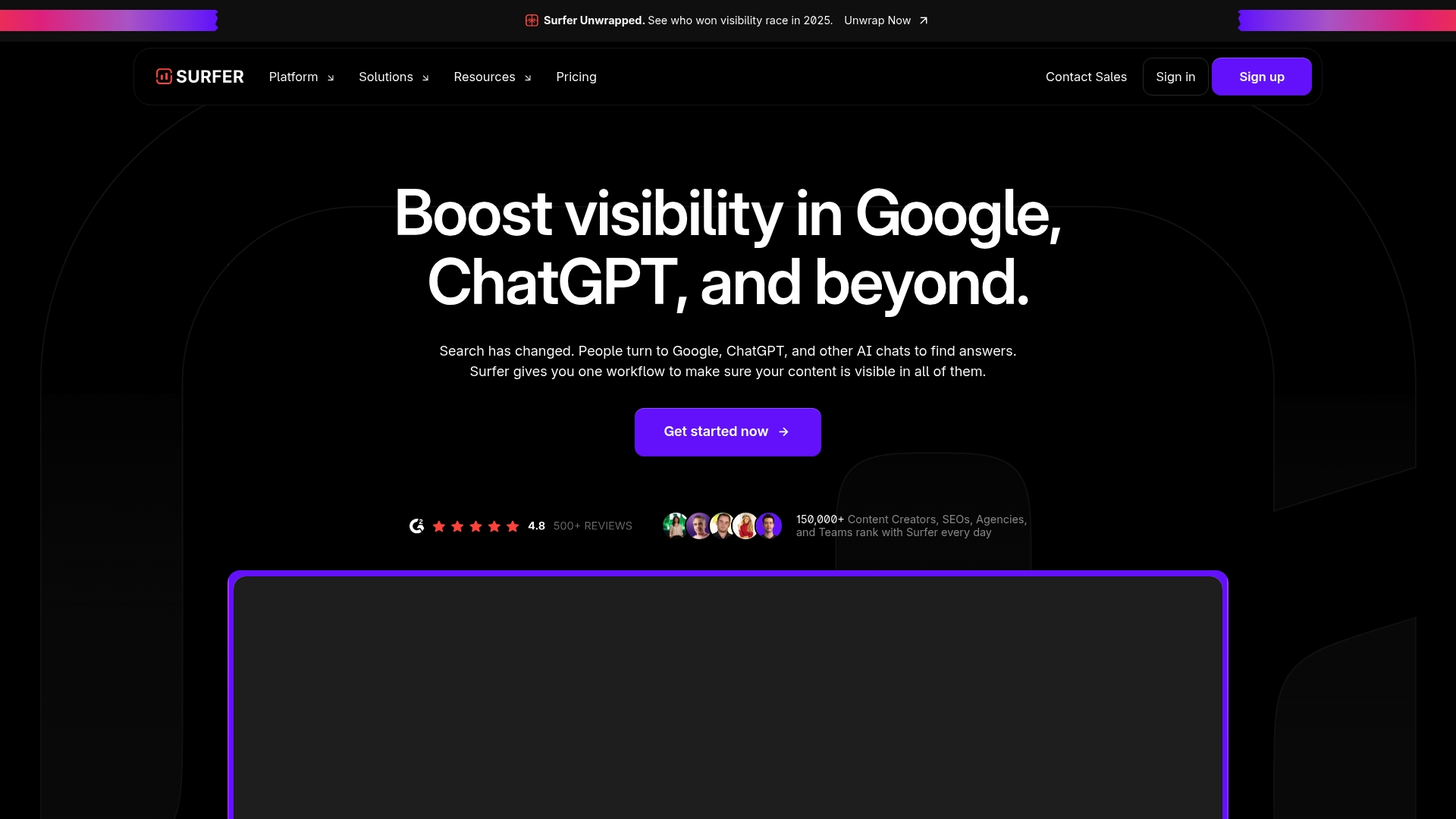
Surfer SEO is an all-in-one content optimization platform that blends real-time SEO scoring, AI-assisted content creation, and automated site structure improvements to help teams boost visibility in Google and emerging AI chat environments like ChatGPT. It centralizes planning, auditing, optimization, and performance tracking so your content process stays consistent across languages and market segments. For mid-sized e-commerce SEO teams, it reduces manual guesswork and accelerates content iterations. Use it when you need disciplined, data-driven content that scales.
Core Features
Surfer provides content optimization and scoring with real-time feedback, automatic internal linking to strengthen site architecture, and AI tools that both detect and humanize AI-generated text. Surfer AI supports research, drafting, and on-the-fly optimization in multiple languages, while collaboration features let teams edit simultaneously and share briefs. The platform also integrates with Google Docs, WordPress, ChatGPT, and more, and offers ongoing training through Surfer Academy and webinars to flatten the learning curve.
Stop. Read that again.
Pros
- Surfer is an all-in-one platform for content planning, creation, and optimization, which reduces tool sprawl for teams managing many pages.
- The real-time SEO insights and recommendations speed up editorial decisions by showing concrete optimizations during writing.
- Integration with popular content tools like Google Docs and WordPress streamlines publishing and lowers friction between SEO and content teams.
- AI-powered content generation and humanization tools decrease time to first draft while helping maintain brand voice across languages.
- Tracking AI search visibility and competition helps teams measure performance not only in traditional search but in AI-driven discovery channels.
Cons
- Surfer may have a learning curve for new users, especially for teams shifting from manual optimization workflows.
- Pricing can be high for small teams or individual creators, which may limit adoption for lean budgets.
- Some features may require integration setup and technical expertise, which adds overhead for teams without a dedicated technical resource.
Who It's For
Surfer SEO best serves content creators, SEO professionals, digital marketing teams, agencies, and enterprises that need a unified, AI-augmented workflow for content at scale. If your e-commerce site runs dozens to thousands of product and category pages and you want repeatable, measurable improvements in organic and AI-driven visibility, Surfer fits that operational profile.
Unique Value Proposition
Surfer’s edge is its combination of real-time content scoring and AI tools that target both classic search and AI chat visibility. That dual focus—plus automated internal linking and collaborative editing—lets teams produce consistent, optimized content faster than piecing together separate tools. It’s less about flashy features and more about streamlining the whole content lifecycle.
Real World Use Case
A digital marketing agency uses Surfer to audit client content, identify topic and keyword gaps, draft optimized pages with Surfer AI, and automate internal links to improve crawl efficiency. They then monitor visibility in AI chat environments and traditional search to refine briefs and measure traffic gains across channels.
Pricing
Surfer offers plans including Essential at $997 per year, Scale at $2,197 per year, and Enterprise with custom pricing. Add-ons are available, such as an AI tracker starting at $95 per month.
Website: https://surferseo.com
SE Ranking
At a Glance
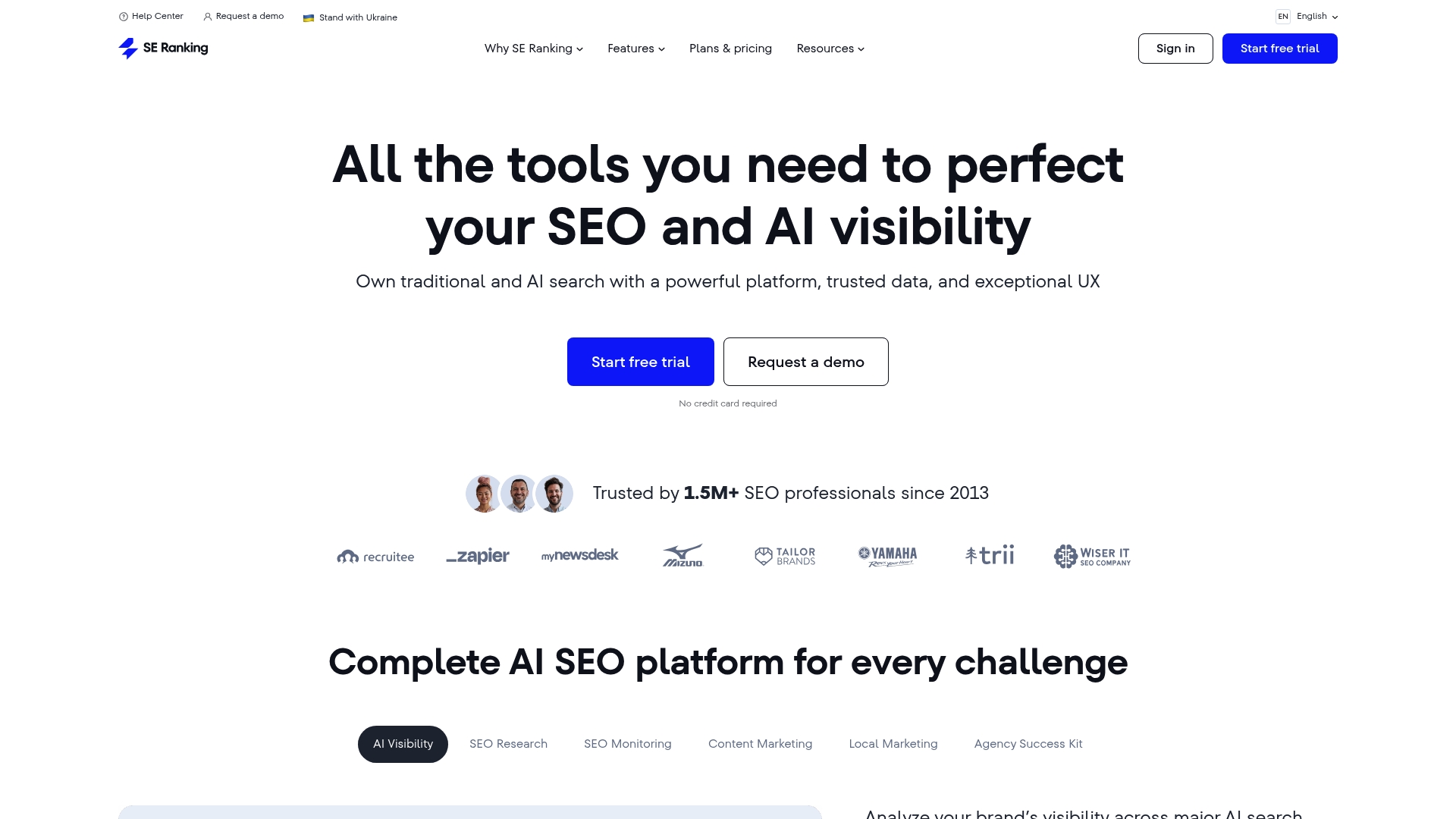
SE Ranking is an AI-powered, all-in-one SEO platform that combines rank tracking, audits, content tools, and local marketing into a single dashboard. It’s built for teams that need scalable, data-driven SEO workflows without stitching together a dozen point tools. If you manage multi-site portfolios or agency clients and dislike fragmented reporting, SE Ranking is a practical, enterprise-capable choice — but expect a learning curve and some extra costs for advanced integrations.
Core Features
SE Ranking’s core capabilities center on automated monitoring and actionable insights: a rank tracker, on-page SEO checker, and full website audit sit alongside competitor research and backlink analysis. The platform includes content marketing features such as an AI-powered content editor and writer, local marketing tools like local rank tracking and business profile management, and white-label reporting with API access for custom workflows. Social media scheduling and an AI toolkit for visibility insights round out the suite, making it a platform for both tactical audits and strategic planning.
Pros
- Comprehensive feature set: SE Ranking bundles rank tracking, audits, content tools, backlink monitoring, and local SEO in one platform so you can centralize workflows for multiple sites.
- AI and machine learning enhancements: The platform uses advanced AI and ML to surface credible insights that speed decision making and reduce manual analysis.
- Scalable for teams: Trusted by large teams and presented on review platforms, the product scales from single professionals to agency and enterprise plans without changing core functionality.
- Strong data security and growing databases: SE Ranking emphasizes data security and continues expanding its data sources, which improves accuracy and historical analysis.
- White-label and API support: Built-in white-label reporting and APIs let agencies automate client reporting and integrate the platform into existing dashboards.
Cons
- Pricing may be steep for individuals: Plans start at $52/month, which can feel expensive for solo consultants or early-stage startups on tight budgets.
- Feature overload for beginners: The breadth of tools can be overwhelming for newcomers, requiring time to configure tracking, audits, and reporting to match workflows.
- Add-ons raise total cost: Some advanced features and integrations are offered as add-ons, which increases the overall investment when you scale.
Who It's For
SE Ranking is ideal for SEO professionals, digital marketing agencies, and SMBs that manage multiple websites or client accounts and need centralized reporting, automated audits, and AI-assisted content workflows. If you run an agency with recurring reporting needs or a mid-size e-commerce operation that needs local and technical SEO combined, SE Ranking aligns well with your priorities.
Unique Value Proposition
SE Ranking’s strength is consolidation: it reduces tool sprawl by combining rank monitoring, technical audits, content creation, and local management under one roof, all augmented by AI. That mix makes recurring SEO operations more efficient and easier to scale.
Real World Use Case
A digital marketing agency uses SE Ranking to monitor dozens of client domains, automate weekly audits, generate white-label client reports, run keyword research, and speed content production with the AI editor — cutting manual effort and improving client visibility month over month.
Pricing
Plans start from $52/month for essential individual professionals, with higher-tier plans for agencies and enterprises. Multi-plan options with add-ons are available, and discounts are offered for annual subscriptions.
Website: https://seranking.com
Sitebulb
At a Glance
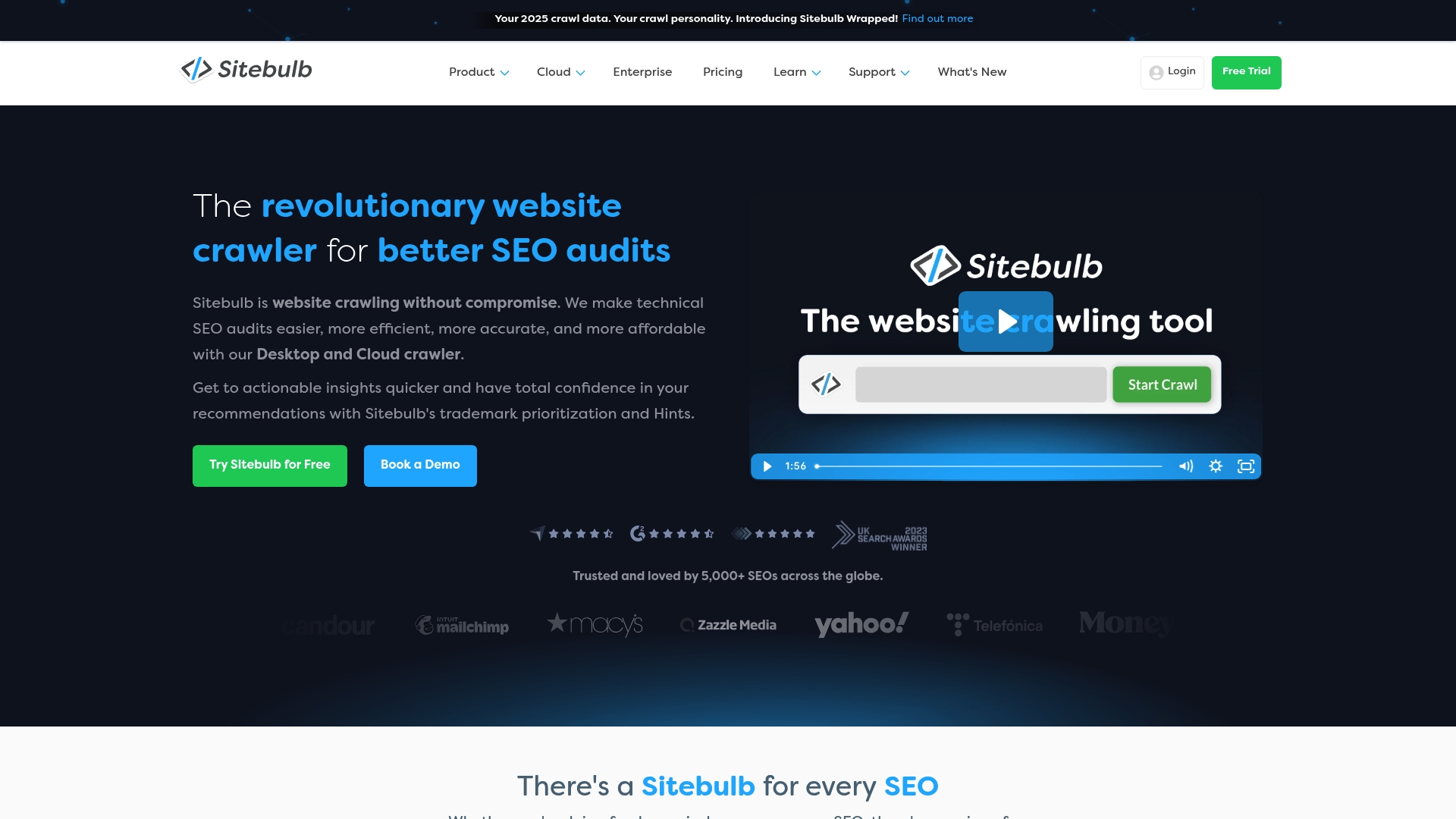
Sitebulb is a purpose-built website crawler for technical SEO audits, available as both desktop software and a cloud service. It surfaces over 300 issues, visualizes findings, and prioritizes fixes so teams can act quickly across large sites—up to 500,000 URLs in the desktop edition and effectively unlimited in the cloud. Bottom line: it’s a robust audit engine that favors depth and clarity, but organizations should plan for cloud costs if they need scale and collaboration.
Core Features
Sitebulb combines desktop and cloud crawling with JavaScript crawling included at no extra cost, detailed issue prioritization, and customizable PDF reports with strong visualizations. The desktop crawler handles audits up to 500,000 URLs, while the cloud version scales beyond that and adds scheduled recurring audits and team collaboration features. Integrations with Google Analytics, Search Console, Google Sheets, and Looker Studio make it straightforward to blend behavioral and performance data into technical findings.
Pros
- Comprehensive audit capability: Sitebulb identifies over 300 distinct SEO issues and explains why each matters, so you get actionable recommendations rather than raw data.
- Visual reporting that communicates: Customizable PDF reports and clear visualizations make it easier to share findings with developers and clients without losing nuance.
- Scales for large sites and teams: The cloud version supports unlimited crawling and adds scheduled audits and collaboration tools that agencies and in-house teams need.
- No extra charge for JavaScript crawling: JavaScript rendering is built in for both desktop and cloud, removing a common hidden cost in other crawlers.
- Flexible integrations for deeper analysis: Native links to Google Analytics, Search Console, Google Sheets, and Looker Studio let you combine crawl data with traffic and performance metrics.
Cons
- Cloud pricing can be expensive at scale: If you rely on frequent, large cloud crawls, subscription costs can rise quickly and require budgeting.
- Desktop limited by hardware: Desktop audits that approach the 500,000-URL ceiling depend heavily on your machine, so very large audits may be slower or constrained.
- Feature segmentation by plan: Some capabilities are gated behind specific plans, meaning teams may need higher-tier subscriptions to unlock collaboration or advanced reporting.
Who It's For
Sitebulb is ideal for SEO professionals, digital marketing agencies, and SEO consultants who manage large or complex websites and need precise, prioritized technical audits. If you run an e-commerce site with thousands of product pages or manage multiple client sites, Sitebulb’s reporting and collaboration features help you convert technical findings into trackable fixes.
Unique Value Proposition
Sitebulb stands out by blending deep, prioritized technical analysis with client-ready visuals and integrations—plus JavaScript crawling at no extra cost. That mix reduces the friction between discovery and execution, helping teams move from audit to impact faster.
Real World Use Case
An SEO agency runs regular Sitebulb cloud audits for multiple clients, uses the prioritization to sequence developer tickets, and delivers branded PDF reports that demonstrate progress month over month. The result: clearer roadmaps, faster fixes, and better client retention.
Pricing
Desktop plans begin with a free 14-day trial and then move to monthly subscriptions tailored to different user needs. Cloud plans start from £95 per month, with higher tiers available for larger scale and team collaboration.
Website: https://sitebulb.com
SEO and Content Management Tools Comparison
The following table summarizes the key features, benefits, limitations, pricing, and applicability of the SEO and content management tools described in the article to aid users in selecting the optimal solution for their needs.
| Product | Key Features | Pros | Cons | Pricing |
|---|---|---|---|---|
| Babylovegrowth | Automates content, LLM-focused plans, backlink building, technical site scans | Streamlined workflow, AI-driven insights, cross-market adoption | Limited customization | $99/month, $247/month after promotion |
| SEMrush | Keyword research, backlink analysis, competitor tracking, AI content suggestions | Multifunctional interface, extensive database, robust reporting | Learning curve, lack of pricing transparency | Consult sales for details |
| Ahrefs | Keyword discovery, backlink intelligence, AI tools for analysis, social scheduling | Comprehensive suite, strong data insights, scalable capabilities | High pricing for small entities, steep learning curve | $129/month to $1,499/month |
| Moz | Site audits, rank tracking, link analysis, SEO diagnostics | Trusted platform, educational resources, AI-assisted insights | Pricing could be restrictive for smaller operations | $39/month and above |
| Screaming Frog | In-depth web crawling, site data analysis, link validation | Program agility, free plan for smaller scopes, precise technical auditing | In-depth functionalities require a paid license | Free plan, £199/year |
| Surfer SEO | Real-time content scoring, AI-assisted text generation, SEO optimization | Consistent output, AI optimization for content, collaborative features | Costly for small projects, setup requires technical expertise | $997/year and above |
| SE Ranking | Rank tracking, audits, local SEO, white-label reporting | Centralized SEO processes, enhanced security, scalability with AI | Can be costly for simpler needs, some integrations cost extra | $52/month and above |
| Sitebulb | Website crawling, analytical reporting, supports large-scale sites | Detailed diagnostics, client-ready reports, JavaScript crawling included | Higher costs at cloud scale, desktop capabilities limited by machine hardware | £95/month and above |
Elevate Your SEO Strategy with AI-Powered Automation
Choosing the best technical SEO tools for 2026 means tackling challenges like managing complex site audits, automating content publishing, and building quality backlinks—all without overwhelming your team. If you are striving to streamline your workflows while boosting visibility on Google and emerging AI-driven search platforms like ChatGPT, you need a solution that goes beyond basic crawling and keyword research. babylovegrowth offers an all-in-one SEO platform that combines automated daily content creation, 30-day AI-focused content planning, and thorough technical site audits to address these exact pain points. This approach helps you reduce manual overhead while scaling organic traffic effectively.
Discover how babylovegrowth integrates advanced automation and backlink building into one seamless workflow designed to deliver consistent long-term growth. If your goal is to improve rankings and capture new leads through AI-aware SEO strategies, then exploring babylovegrowth.ai is the logical next step.

Optimize your e-commerce or brand site now with daily SEO content crafted to rank on both Google and AI search engines. Visit babylovegrowth.ai to start your free trial and transform your SEO efforts with an end-to-end platform crafted for 2026 and beyond. Don't let manual workflows hold back your team's potential—embrace smarter automation today.
Frequently Asked Questions
What are the key features to look for in technical SEO tools in 2026?
When evaluating technical SEO tools, prioritize features such as comprehensive site audits, keyword tracking, and backlink analysis. Look for tools that offer automation for workflows, as this can save your team time and improve efficiency. Consider tools that support integrations with other platforms for a seamless experience.
How can technical SEO tools improve my website's performance?
Technical SEO tools can identify and fix issues that may hinder your site's visibility on search engines. Regularly scan your website to address problems like broken links or duplicate content, aiming to enhance loading speed by up to 30%. This proactive approach can significantly boost your organic traffic over time.
What steps should I follow to set up a new technical SEO tool?
To set up a new technical SEO tool, first, create an account and connect your website via the tool’s dashboard. Next, configure crawl settings and adjust any filters to suit your site's structure. Finally, initiate a comprehensive site audit to identify and prioritize optimization opportunities based on the tool's findings.
How often should I run audits using technical SEO tools?
It is recommended to run site audits at least once a month to stay on top of any potential technical issues. However, if you make frequent changes to your website, consider running audits weekly. Regular audits will help you maintain optimal site health and keep your content discoverable by search engines.
Can technical SEO tools help with local SEO strategies?
Yes, many technical SEO tools offer features specifically designed for enhancing local SEO. Utilize these features to manage your business information, monitor local rankings, and analyze competitor strategies in your area. Implementing these insights can improve your visibility in local search results, potentially increasing foot traffic to your business by up to 25%.
Recommended
Smart SEO,
Faster Growth!
Most Read Articles
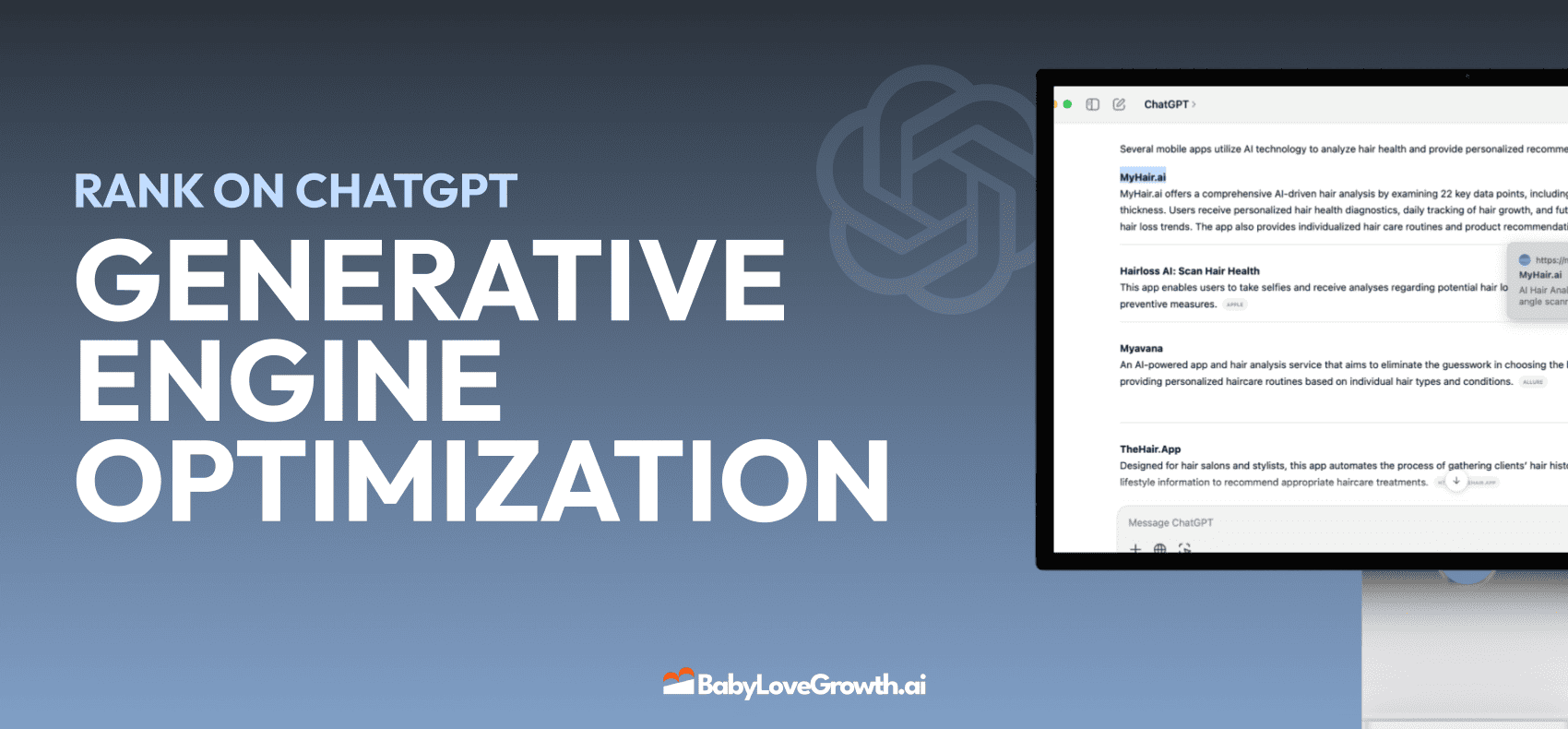
Generative Engine Optimization (GEO)
Learn how Generative Engine Optimization (GEO) helps your content rank in AI search engines like ChatGPT and Google AI. This comprehensive guide explains the differences between SEO and GEO, why it matters for your business, and practical steps to implement GEO strategies for better visibility in AI-generated responses.
DylenJan 18, 2025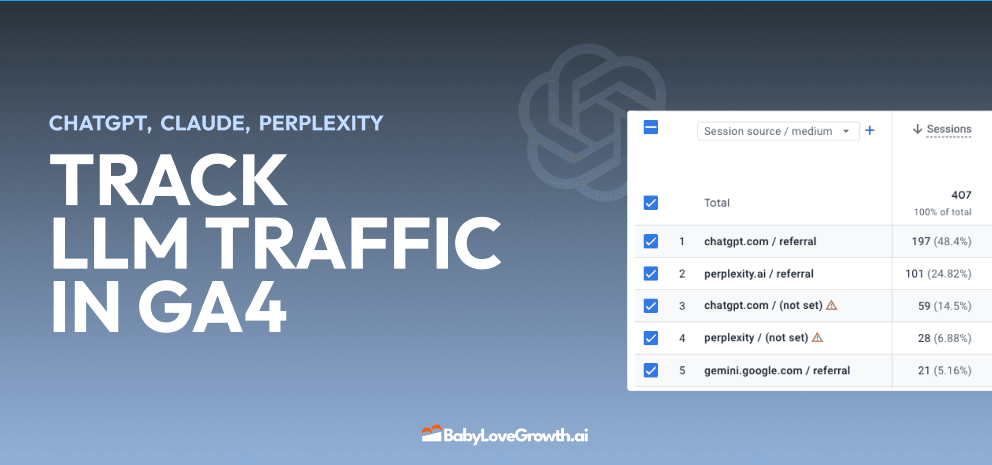
Track LLM Traffic in Google Analytics 4 (GA4)
Learn how to track and analyze traffic from AI sources like ChatGPT, Claude, Perplexity, and Google Gemini in Google Analytics 4. This step-by-step guide shows you how to set up custom filters to monitor AI-driven traffic and make data-driven decisions for your content strategy.
DylenMar 18, 2025
How to Humanize AI Text with Instructions
Learn practical techniques to make AI-generated content sound more natural and human. This guide covers active voice, direct addressing, concise writing, and other proven strategies to transform robotic text into engaging content.
DylenApril 7, 2025
Open AI Revenue and Statistics (2024)
Comprehensive analysis of OpenAI financial performance, user engagement, and market position in 2023. Discover key statistics including $20B valuation, $1B projected revenue, and 100M+ monthly active users.
DylenOctober 03, 2025