Role of Automation in SEO: Scaling Brand Visibility


Over 80 percent of mid-sized agencies now rely on SEO automation to gain a competitive edge in the crowded American market. The growing complexity of search algorithms means manual tactics alone often fall short. Discover what modern automation brings to SEO, from cutting-edge AI-powered keyword research to real-time content adjustments, revealing how specialists can drive superior organic results and adapt quickly to shifting search trends.
Table of Contents
- What Automation Means in Modern SEO
- Types of SEO Processes Automated Today
- Automation Tools for Keyword, Content, and Links
- How Automation Impacts SEO Performance
- Risks, Pitfalls, and Quality Challenges
Key Takeaways
| Point | Details |
|---|---|
| Modern SEO Automation Enhances Efficiency | Automated tools significantly reduce the time and effort needed for tasks such as keyword research and content optimization. |
| AI-Powered Insights Drive Proactive Strategies | Predictive analytics and real-time performance tracking enable marketers to adjust strategies swiftly and effectively. |
| Balancing Automation with Quality Control | Implementing human oversight is crucial to maintain content quality and prevent issues with automated outputs. |
| Integrate Comprehensive SEO Solutions | Utilize tools that combine keyword research, content creation, and link building for streamlined operations and better analytics. |
What Automation Means in Modern SEO
Modern SEO automation represents a transformative approach to digital marketing, leveraging artificial intelligence and advanced algorithms to streamline complex optimization processes. Unlike traditional manual strategies, automation enables marketers to scale brand visibility through intelligent, data-driven techniques that analyze, predict, and optimize search performance with unprecedented precision.
The core of SEO automation lies in its ability to perform sophisticated tasks that would typically require extensive human intervention. Advanced AI techniques enable automatic keyword research, content optimization, and comprehensive backlink analysis, dramatically reducing the time and effort required to develop competitive search strategies. These intelligent systems can rapidly process massive datasets, identify emerging trends, and generate actionable insights that help brands stay ahead of algorithmic changes and search engine requirements.
Key components of modern SEO automation include predictive analytics, content generation algorithms, and dynamic user behavior tracking. By integrating machine learning models, brands can now develop proactive SEO strategies that go beyond traditional optimization methods, creating more personalized and targeted search experiences. These automated systems continuously learn and adapt, ensuring that digital marketing efforts remain responsive to evolving search landscape dynamics.
Here’s a summary of key modern SEO automation technologies and their business impact:
| Technology | Main Function | Business Impact |
|---|---|---|
| Predictive Analytics | Forecasts trends and ranking changes | Enables proactive strategy adjustment |
| Content Generation Algorithms | Automates production and optimization of content | Scales high-quality output quickly |
| User Behavior Tracking | Monitors visitor actions and intent | Improves targeting and user experience |
| Backlink Analysis Tools | Evaluates link profiles for strength | Enhances authority and organic growth |
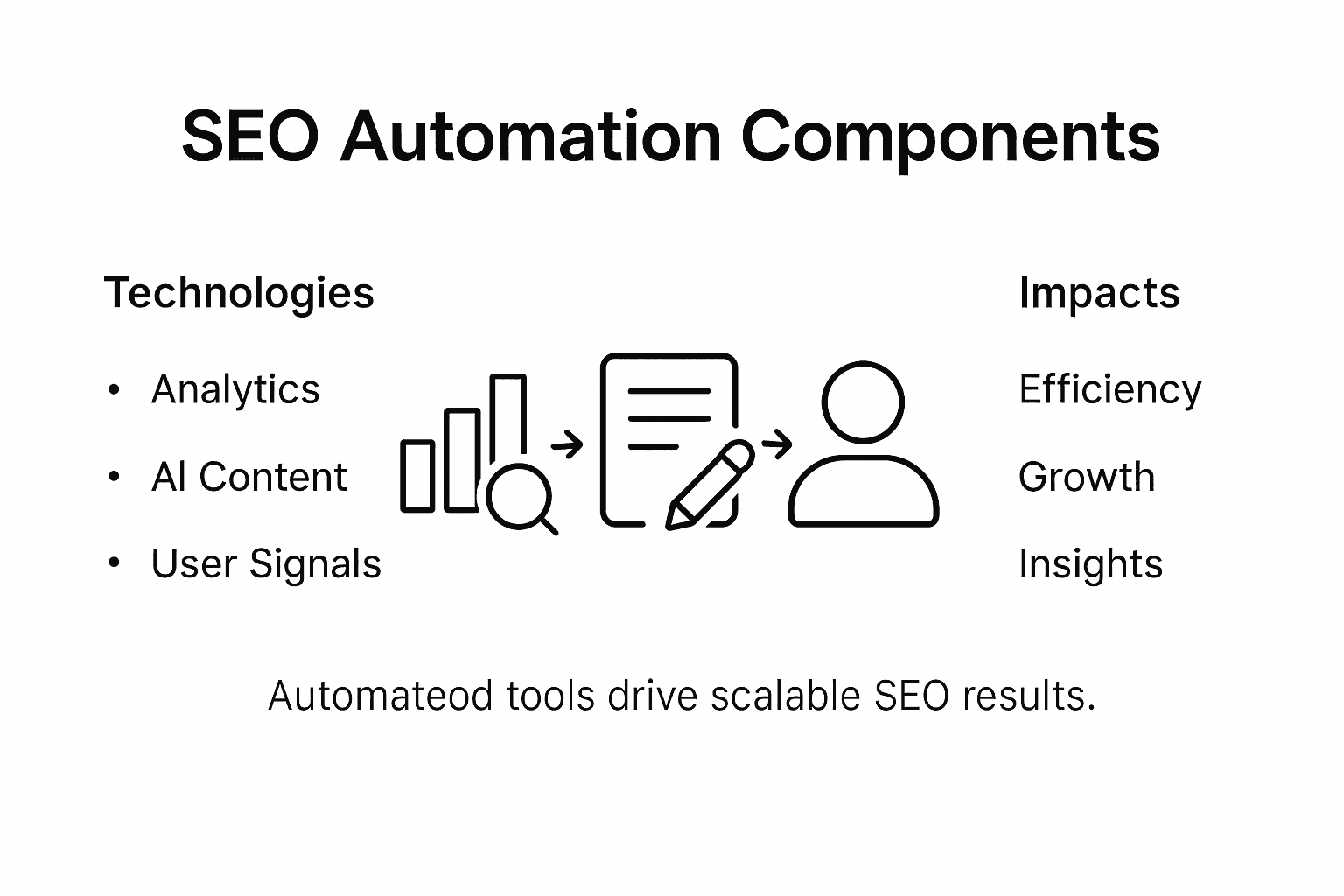
Pro tip: Invest in AI-powered SEO tools that offer real-time performance tracking and automated optimization recommendations to maximize your digital marketing efficiency.
Types of SEO Processes Automated Today
Search engine optimization now encompasses a wide range of automated processes that transform how brands approach digital visibility. Modern SEO automation focuses on systematically handling complex tasks that traditionally consumed significant time and human resources. Scalable SEO automation strategies leverage advanced AI technologies to streamline critical marketing workflows across multiple domains.
The primary automated SEO processes include keyword research, content optimization, technical website analysis, and performance tracking. Automated keyword discovery tools can rapidly analyze search volume, competition levels, and semantic variations, generating comprehensive research reports in minutes. Content optimization algorithms now use natural language processing to evaluate readability, keyword density, and semantic relevance, suggesting real-time improvements that align with search engine ranking factors.

Technical SEO automation has become particularly sophisticated, with intelligent systems capable of conducting comprehensive website audits. These tools automatically detect and flag critical issues such as broken links, crawlability problems, mobile responsiveness challenges, page speed bottlenecks, and structured data inconsistencies. Performance tracking automation enables marketers to receive instant insights about ranking changes, traffic fluctuations, and competitive landscape shifts, allowing for rapid strategic adjustments.
Pro tip: Implement a comprehensive SEO automation tool that integrates multiple processes to reduce manual workload and provide holistic performance insights.
Here’s a comparison of manual versus automated SEO processes:
| Aspect | Manual SEO | Automated SEO |
|---|---|---|
| Time Required | High, labor-intensive | Rapid, scalable |
| Data Analysis | Limited by human capacity | Extensive, real-time |
| Strategy Adaptation | Reactive, slower updates | Proactive, instant changes |
| Error Risk | Prone to omission | Risks of algorithmic errors |
Automation Tools for Keyword, Content, and Links
The landscape of SEO automation tools has dramatically transformed digital marketing strategies, offering sophisticated solutions for keyword research, content optimization, and link building. Modern marketers now rely on intelligent platforms that can analyze complex search engine optimization tasks with unprecedented precision and efficiency, reducing manual workload and enhancing strategic decision making.
Keyword research automation has become particularly advanced, with tools capable of generating comprehensive insights into search volume, competition levels, and semantic variations. These intelligent systems can rapidly identify high-potential keyword opportunities, cluster related terms, and provide granular recommendations that would traditionally require hours of manual analysis. Content optimization tools now leverage natural language processing to evaluate readability, suggest structural improvements, and ensure topical relevance across different search intent categories.
Link building automation represents another critical frontier in SEO technology. Intelligent platforms can now automatically identify potential backlink opportunities, assess domain authority, track competitor link strategies, and even facilitate outreach processes. Examples of AI SEO tools demonstrate how these technologies can streamline organic growth by removing the most time-consuming aspects of link acquisition and relationship building. These tools analyze complex networks of digital relationships, providing marketers with actionable insights that transform link building from a manual task to a strategic, data-driven process.
Pro tip: Select automation tools that offer comprehensive integration capabilities, allowing seamless data flow between keyword research, content creation, and link building platforms.
How Automation Impacts SEO Performance
Automation fundamentally transforms search engine optimization by introducing unprecedented levels of precision and efficiency into digital marketing strategies. AI-driven technologies significantly enhance SEO performance by improving keyword research, content optimization, and analytical capabilities, enabling brands to develop more targeted and responsive organic growth approaches.
The most profound impact of automation lies in its ability to process massive datasets and generate actionable insights rapidly. Modern SEO automation tools can instantly analyze website performance, identify optimization opportunities, and provide real-time recommendations that would traditionally require weeks of manual investigation. These intelligent systems continuously monitor search engine algorithm changes, helping marketers adapt their strategies quickly and maintain competitive search rankings.
Performance tracking has been revolutionized by automation technologies that offer granular insights into user behavior, search intent, and content effectiveness. Real-time monitoring enables faster identification of optimization opportunities and improved user experience strategies across digital platforms. Sophisticated AI algorithms can now predict potential ranking shifts, recommend content adjustments, and provide strategic guidance that moves beyond traditional reactive SEO approaches.
Pro tip: Invest in automation tools that offer comprehensive performance analytics and predictive insights to stay ahead of search engine algorithm changes.
Risks, Pitfalls, and Quality Challenges
While SEO automation offers tremendous potential, it simultaneously introduces complex challenges that demand strategic management and ongoing vigilance. AI-driven SEO automation carries inherent risks including content quality degradation, ranking volatility, and potential brand dilution that can undermine long-term digital marketing objectives if not carefully addressed.
The most significant quality challenges emerge from overreliance on automated systems without human oversight. Automated tools can inadvertently generate thin content, create keyword cannibalization issues, produce schema markup errors, and develop audit blind spots that compromise search engine performance. These technical complications can result in decreased domain authority, reduced organic traffic, and potential search engine penalties that negate the intended benefits of automation.
Mitigating these risks requires a balanced approach that integrates automated technologies with human expertise. Marketers must implement rigorous review processes, ensure AI-generated content aligns with brand voice and quality standards, and continuously measure performance beyond superficial metrics. This means developing comprehensive quality control mechanisms that validate automated outputs, cross-reference algorithmic recommendations with strategic goals, and maintain a nuanced understanding of search engine dynamics that pure automation might overlook.
Pro tip: Implement a robust human-in-the-loop review system that validates automated SEO recommendations and maintains consistent content quality standards.
Unlock Scalable SEO Success with AI-Powered Automation
The article highlights the challenges of managing complex SEO tasks such as keyword research, content optimization, and backlink analysis while avoiding risks like content quality issues and ranking volatility. If you are struggling to keep up with real-time data, proactive strategy shifts, and ensuring high-quality content without overwhelming manual effort, it is time to consider an intelligent solution designed to scale your brand visibility safely and effectively.
At Babylovegrowth.ai, we understand these critical pain points. Our platform seamlessly integrates automated keyword discovery, content planning, and backlinks management while applying rigorous quality standards to help you stay ahead in modern search engines including Google and AI-driven platforms like ChatGPT. With features like daily SEO articles, 30-day content plans, and automatic structured data markup, you can automate your entire SEO workflow without sacrificing precision or brand voice.
Discover how combining AI automation with expert oversight can boost your organic growth while minimizing SEO pitfalls.
Are you ready to transform your SEO strategy with a platform engineered for scalable, high-quality automation?

Experience the future of SEO today by visiting Babylovegrowth.ai. Take control of your brand’s search performance with tools that deliver proactive insights and intelligent optimization recommendations. Let us help you turn automation into your strongest growth asset.
Frequently Asked Questions
What is the role of automation in modern SEO?
Automation in modern SEO helps streamline complex optimization processes through tools that leverage artificial intelligence. It allows marketers to scale brand visibility using data-driven techniques for keyword research, content optimization, and backlink analysis.
How does SEO automation impact keyword research?
SEO automation tools can rapidly analyze search volume, competition levels, and semantic variations to generate comprehensive keyword research reports, significantly reducing the time required for manual analysis.
What are the risks associated with SEO automation?
While SEO automation can enhance efficiency, it poses risks such as content quality degradation and potential ranking volatility if not managed carefully. Overreliance on automated systems without human oversight can lead to technical complications that may harm search engine performance.
How can businesses ensure the quality of automated SEO outputs?
To maintain content quality, businesses should implement a human-in-the-loop review system that validates automated recommendations, ensuring that AI-generated content aligns with brand voice and quality standards.
Recommended
Smart SEO,
Faster Growth!
Most Read Articles
Generative Engine Optimization (GEO)
Learn how Generative Engine Optimization (GEO) helps your content rank in AI search engines like ChatGPT and Google AI. This comprehensive guide explains the differences between SEO and GEO, why it matters for your business, and practical steps to implement GEO strategies for better visibility in AI-generated responses.
DylenJan 18, 2025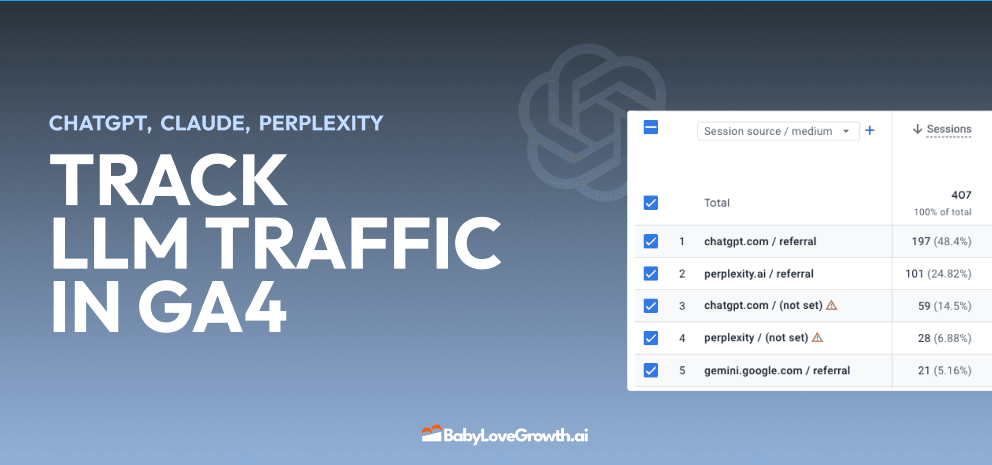
Track LLM Traffic in Google Analytics 4 (GA4)
Learn how to track and analyze traffic from AI sources like ChatGPT, Claude, Perplexity, and Google Gemini in Google Analytics 4. This step-by-step guide shows you how to set up custom filters to monitor AI-driven traffic and make data-driven decisions for your content strategy.
DylenMar 18, 2025
How to Humanize AI Text with Instructions
Learn practical techniques to make AI-generated content sound more natural and human. This guide covers active voice, direct addressing, concise writing, and other proven strategies to transform robotic text into engaging content.
DylenApril 7, 2025
Open AI Revenue and Statistics (2024)
Comprehensive analysis of OpenAI financial performance, user engagement, and market position in 2023. Discover key statistics including $20B valuation, $1B projected revenue, and 100M+ monthly active users.
DylenOctober 03, 2025