Audience engagement strategies for business growth in 2026


TL;DR:
- Audience engagement signals include comments, shares, repeat visits, and time on site.
- Engaged audiences lead to higher revenue, loyalty, and better business growth metrics.
- Focus on quality interactions and automate routine tasks to build authentic, scalable engagement.
Most business owners celebrate when traffic spikes, but traffic without engagement is just noise. A thousand visitors who bounce in seconds do far less for your bottom line than a hundred who read, share, and come back for more. Content marketing generates 3x more leads per dollar than paid ads, yet many small and medium enterprises still pour budget into reach while ignoring the quality of interaction. This article walks you through what audience engagement actually means, why it drives sustainable growth, and the specific strategies you can use to build it intentionally.
Table of Contents
- What is audience engagement and why does it matter?
- The link between engagement and business growth
- Proven strategies to boost audience engagement
- Measuring engagement and optimizing for results
- The real opportunity: Engagement over impressions in the AI era
- Automate engagement and growth with the right tools
- Frequently asked questions
Key Takeaways
| Point | Details |
|---|---|
| Quality over quantity | Meaningful engagement drives loyalty and revenue more reliably than sheer audience size. |
| Strategies that work | Personalized content, videos, and emails are proven ways to increase interaction for SMEs. |
| Measure what matters | Focusing on actionable engagement metrics helps improve marketing efficiency and ROI. |
| Automate for scale | Automation frees up your team to cultivate deeper connections with your audience. |
What is audience engagement and why does it matter?
Audience engagement is the degree to which your audience actively interacts with your content, brand, or business rather than passively scrolling past it. It is not a single number. It is a collection of signals that tell you whether people find real value in what you offer.
Think of engagement as the difference between a crowded store where nobody buys anything and a smaller shop where regulars return weekly and recommend it to friends. Size is flattering. Depth is profitable.
The most common engagement signals include:
- Comments and replies on blog posts, social media, or emails
- Shares and saves, which show that your content is worth passing on
- Repeat visits, which indicate your audience trusts you enough to return
- Time on site, which reflects whether your content holds attention
- Click-throughs from emails or social posts to your website
- Resource downloads and sign-ups that signal genuine interest
For small and medium enterprises, these signals matter more than raw impressions. A post seen by 50,000 people who forget it immediately creates no revenue. A newsletter read carefully by 2,000 loyal subscribers can drive consistent sales month after month.
"High engagement correlates with improved brand loyalty and revenue, making it one of the most reliable predictors of long-term business health."
Vanity metrics, things like follower counts or raw page views, feel good but rarely translate to growth. When you chase impressions, you optimize for visibility. When you chase engagement, you optimize for relationships. And relationships are what keep customers paying, referring, and staying.
Building lasting user engagement requires a mindset shift: stop asking how many people saw your content and start asking how many people acted on it. That single reframe changes everything about how you plan, create, and measure your marketing.
The link between engagement and business growth
Engagement is not a soft, feel-good metric. It has a direct line to revenue, retention, and qualified leads. Understanding that connection helps you justify investing in relationship-building content over broad, spray-and-pray campaigns.
Here is the typical path a customer takes when engagement is done right:
- Attention — They discover your content through search, social, or a referral.
- Engagement — They read, comment, share, or sign up because the content resonates.
- Action — They try your product, book a call, or make a purchase.
- Loyalty — They return, refer others, and become advocates for your brand.
Skipping step two breaks the chain. Without engagement, attention rarely converts to action.
| Metric | Impact on business |
|---|---|
| Repeat visits | Higher lifetime customer value |
| Email open rates | Stronger lead nurturing pipeline |
| Social shares | Organic reach and trust signals |
| Time on site | Improved SEO rankings |
| Conversion rate | Direct revenue growth |
The numbers back this up. Content marketing generates 3x more leads per dollar compared to paid advertising, making it one of the highest-ROI investments available to SMEs. And data-driven ROI measurement improves marketing efficiency by 23%, meaning businesses that track engagement properly get significantly more from every dollar they spend.
Pro Tip: Instead of creating content for everyone, narrow your focus to your top three customer personas and build content that speaks directly to their specific problems. Personalized content consistently outperforms generic content in both engagement and conversion rates.
For SMEs, this is especially powerful. You do not need a massive budget to win at lead generation with content. You need relevance. When you understand measuring content ROI properly, you can double down on what works and cut what does not, compounding your results over time without increasing spend.
Proven strategies to boost audience engagement
Knowing engagement matters is one thing. Knowing how to build it is another. The good news is that the most effective strategies are accessible even on a lean SME budget.
Growth-focused SMEs prefer short videos (45%), email newsletters (44%), and downloadable tools as their top engagement formats. These are not coincidences. They are formats that demand active participation rather than passive consumption.
| Strategy | Engagement impact | Resource level |
|---|---|---|
| Short-form video | Very high | Medium |
| Email newsletters | High | Low |
| Downloadable tools or guides | High | Medium |
| Interactive quizzes or polls | Medium-high | Low |
| Long-form blog content | Medium | Medium |
| Paid social ads | Low without follow-up | High |
Here is a practical approach to building your engagement engine:
- Choose your primary channel based on where your audience already spends time, not where you feel comfortable.
- Create content that solves a specific problem, not content that promotes your product.
- Invite interaction by ending posts, emails, or videos with a direct question or call to respond.
- Personalize at scale by segmenting your email list and tailoring messages to different audience groups.
- Repurpose across channels so your best content reaches your audience in multiple formats without doubling your workload.
Pro Tip: When starting out, commit to one or two channels and do them well before expanding. Spreading your energy across six platforms almost always produces mediocre results on all of them.
Companies with strong omnichannel strategies retain 89% of customers compared to 33% for those without. That is a dramatic difference. But omnichannel does not mean being everywhere. It means being consistent and connected wherever your audience finds you. Explore omnichannel engagement to understand how to unify your channels without overwhelming your team.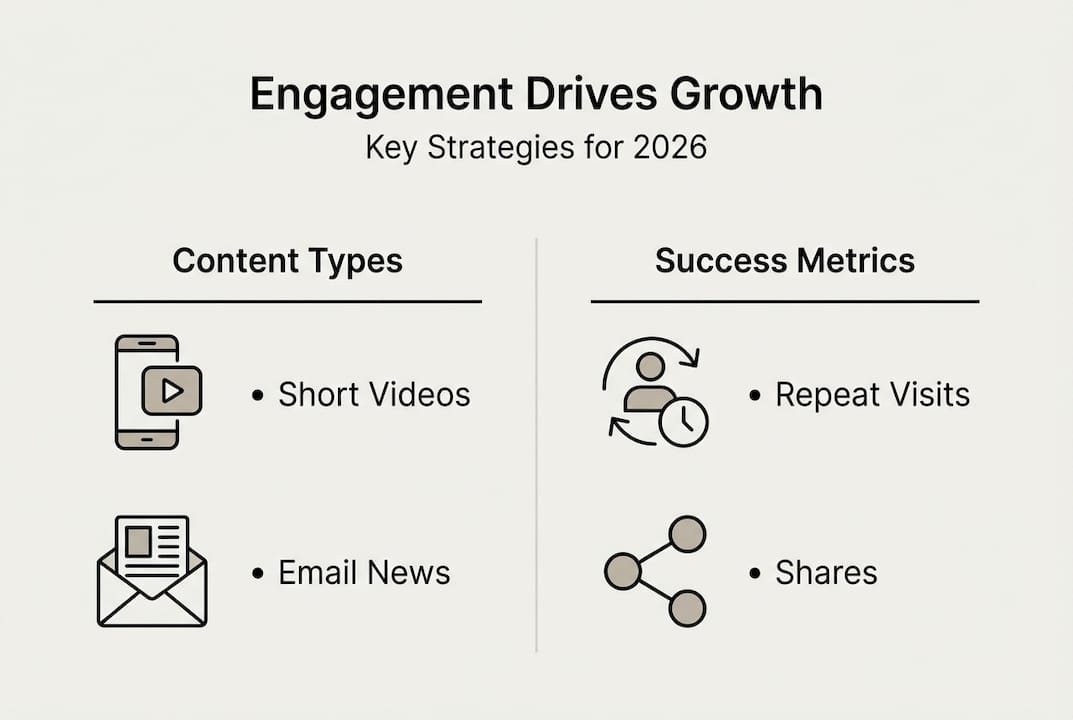
The best content engagement strategies share one trait: they treat the audience as the hero, not the brand. When you create audience-centric content, your readers feel seen, and that feeling drives action.
Measuring engagement and optimizing for results
Building engagement without measuring it is like driving without a dashboard. You might be moving in the right direction, but you have no way to know when to speed up, slow down, or turn.
For SMEs, the most actionable engagement metrics to track are:
- Repeat visit rate — Are people coming back, or is every visit a first visit?
- Average session duration — How long do visitors actually spend engaging with your content?
- Email click-to-open rate — Of the people who opened your email, how many clicked through?
- Comment and reply volume — Are people responding, or just reading and leaving?
- Resource downloads and sign-ups — Are visitors taking the next step you want them to take?
- Scroll depth — Are people reading your full articles or dropping off after the first paragraph?
The trap most SMEs fall into is reporting on metrics that feel impressive but do not connect to revenue. Total page views, follower counts, and raw impressions are easy to screenshot and share in a team meeting. They are much harder to connect to actual business outcomes.
Data-driven ROI measurement improves marketing efficiency by 23%, and the businesses that see that improvement are the ones tracking quality interactions, not vanity numbers.
Pro Tip: Run a simple A/B test on your next email campaign. Change only the subject line or the call-to-action button text, then compare open rates and click rates. Small experiments like this, repeated consistently, compound into significant performance gains over six to twelve months.
Tools like Google Analytics 4, Hotjar for scroll and click behavior, and your email platform's built-in analytics give you more than enough data to start. You do not need expensive enterprise software. You need a habit of reviewing the right numbers weekly.
For deeper guidance, explore measuring content effectiveness and learn how to connect your engagement data directly to audience engagement for SEO improvements.
The real opportunity: Engagement over impressions in the AI era
Here is the uncomfortable truth that most marketing advice skips: in an era where AI can generate unlimited content at scale, impressions are becoming worthless. Every brand will soon be able to flood every channel with polished, keyword-optimized content. The ones that win will not be the loudest. They will be the most trusted.
Chasing impressions made sense when content was scarce. It makes almost no sense now. What your audience cannot get from an AI-generated feed is a genuine relationship with a brand that understands them, challenges them, and shows up consistently with real value.
This is why polarizing, opinionated, value-driven content often outperforms safe, bland mass campaigns. When you take a clear stance, you attract people who deeply agree and repel people who were never going to buy anyway. That is not a risk. That is efficiency.
The digital marketing audiences that matter most in 2026 are small, loyal, and vocal. It is more impactful to matter deeply to 1,000 people than to be a forgettable blip for 100,000. The brands that understand this, backed by engagement and brand-building insights from leading research, are already pulling ahead. The question is whether you will join them or keep optimizing for metrics that do not move your business forward.
Automate engagement and growth with the right tools
Putting these strategies into practice takes time, and time is the one resource most SME owners never have enough of. That is where smart automation changes the equation.
When you use SEO automation tools to handle the repetitive work of content publishing, keyword tracking, and optimization, you free up your team to focus on the human side of engagement: responding to comments, building community, and creating content that genuinely connects. Pair that with backlink building software to grow your authority, and use organic traffic insights to understand exactly which content drives the most meaningful interactions. Babylovegrowth.ai is built for SMEs that want scalable, measurable growth without the agency price tag.
Frequently asked questions
What are the most important audience engagement metrics for SMEs?
Key engagement metrics include repeat visits, active time on site, comment volume, shares, and conversions such as sign-ups or purchases. Prioritizing these over vanity metrics helps you focus on quality interactions that actually drive revenue.
How can I quickly improve engagement on a small marketing budget?
Focus on creating short videos, interactive newsletters, and downloadable resources tailored to your audience's needs. Growth-focused SMEs consistently rank these formats as the highest-impact options for limited budgets.
Can automation tools support authentic engagement?
Yes, automation tools handle routine tasks like scheduling and reporting, which gives you more time to focus on meaningful interactions, strategic content creation, and genuine community building.
Why is engagement more important than impressions?
Engagement leads to lasting relationships, brand loyalty, and higher ROI, while impressions only measure surface-level reach. High engagement correlates with improved brand loyalty and revenue in ways that impression counts simply cannot replicate.
Recommended
Smart SEO,
Faster Growth!
Most Read Articles
Generative Engine Optimization (GEO)
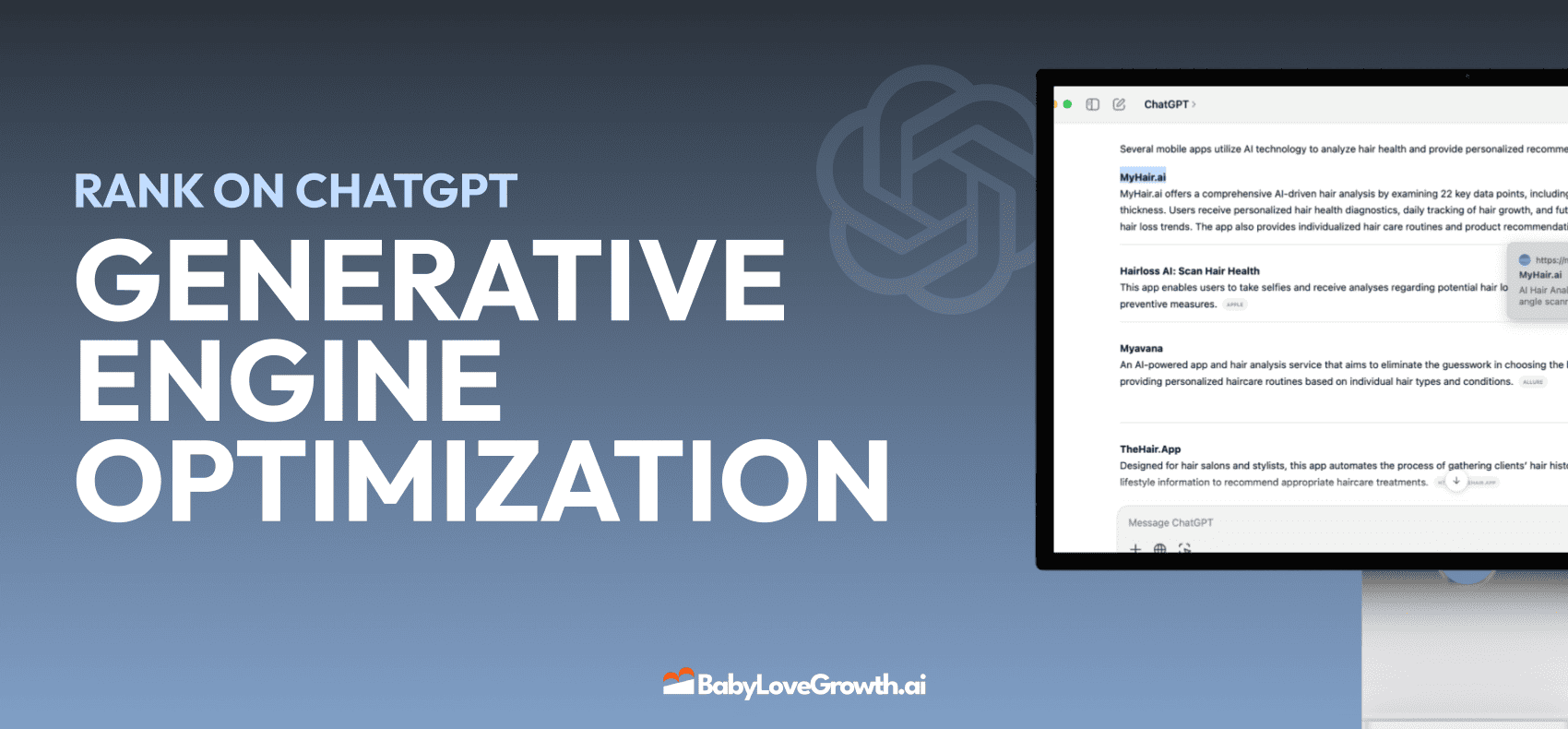
Learn how Generative Engine Optimization (GEO) helps your content rank in AI search engines like ChatGPT and Google AI. This comprehensive guide explains the differences between SEO and GEO, why it matters for your business, and practical steps to implement GEO strategies for better visibility in AI-generated responses.
DylenJan 18, 2025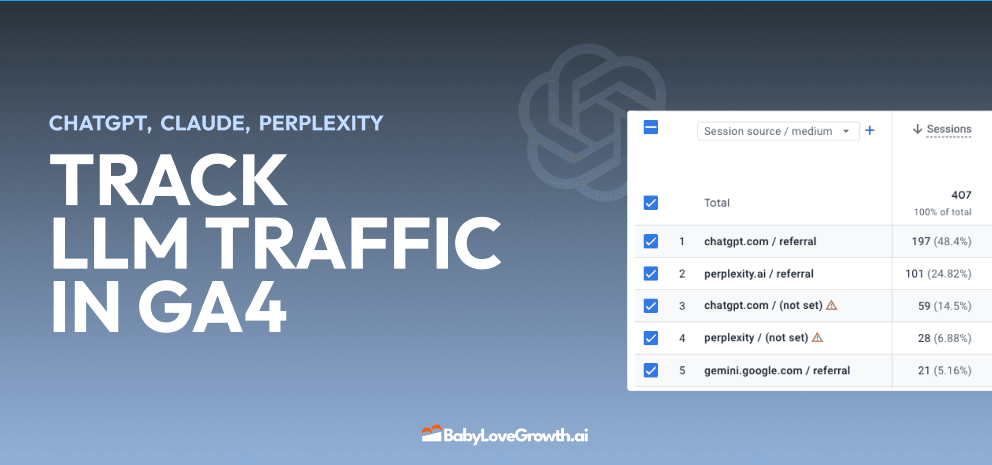
Track LLM Traffic in Google Analytics 4 (GA4)
Learn how to track and analyze traffic from AI sources like ChatGPT, Claude, Perplexity, and Google Gemini in Google Analytics 4. This step-by-step guide shows you how to set up custom filters to monitor AI-driven traffic and make data-driven decisions for your content strategy.
DylenMar 18, 2025
How to Humanize AI Text with Instructions
Learn practical techniques to make AI-generated content sound more natural and human. This guide covers active voice, direct addressing, concise writing, and other proven strategies to transform robotic text into engaging content.
DylenApril 7, 2025
Open AI Revenue and Statistics (2024)
Comprehensive analysis of OpenAI financial performance, user engagement, and market position in 2023. Discover key statistics including $20B valuation, $1B projected revenue, and 100M+ monthly active users.
DylenOctober 03, 2025