Analytics for Content Marketing: Boosting SaaS Growth


Finding the right path to reach more customers often comes down to the numbers behind your content. For growing businesses in markets like the United States, United Kingdom, Canada, Australia, and beyond, understanding how your digital campaigns perform is key to staying competitive and maximizing every marketing dollar. With affordable automation tools and clear analytics, you can turn your efforts into purposeful information sharing that not only attracts but also keeps your ideal audience engaged.
Table of Contents
- Analytics For Content Marketing Defined
- Essential Data Types And Metrics For SaaS
- How Analytics Power Content Strategy
- Tools And Automation For Accurate Reporting
- Avoiding Costly Mistakes And Misinterpretations
Key Takeaways
| Point | Details |
|---|---|
| Content Marketing Analytics is Essential | A strategic approach to measure and optimize digital content performance helps businesses understand audience behavior and enhance marketing strategies. |
| Comprehensive Metrics are Crucial for SaaS | Tracking metrics like organic traffic, click-through rates, and conversion rates provides insights into content effectiveness and drives growth. |
| Analytics Power Proactive Decision-Making | Leveraging data-driven insights enables companies to anticipate audience needs and create personalized content experiences. |
| Avoid Common Pitfalls in Content Marketing | Understanding audience engagement and implementing comprehensive strategies can help prevent costly missteps and enhance ROI. |
Analytics for Content Marketing Defined
Content marketing analytics represents a strategic approach to measuring, analyzing, and optimizing digital content performance across various platforms. At its core, content marketing involves purposeful information sharing in the digital ecosystem, enabling businesses to track engagement, understand audience behavior, and refine communication strategies.
The discipline encompasses comprehensive measurement techniques that evaluate content effectiveness through multiple dimensions. These dimensions include reach, engagement rates, conversion metrics, audience segmentation, and long-term impact on brand perception. Digital platforms generate massive data streams, allowing marketers to track granular details like click-through rates, time spent on page, social media shares, and direct conversions attributed to specific content pieces.
Successful content marketing analytics requires advanced tracking mechanisms that transform raw data into actionable insights. Businesses must develop robust frameworks integrating qualitative and quantitative measurements. This approach helps identify content themes resonating with target audiences, optimize resource allocation, and create more targeted, high-performance marketing strategies. Digital data analysis supports strategic content optimization by providing evidence-based guidance for future content development.
Pro tip: Implement a consistent analytics dashboard that tracks key performance indicators across all content channels to streamline your measurement and optimization processes.
Essential Data Types and Metrics for SaaS
SaaS companies must track a comprehensive set of metrics to understand their content marketing performance and drive strategic growth. Critical content marketing metrics encompass multiple dimensions that provide insights into audience engagement, conversion potential, and overall marketing effectiveness. These metrics go beyond simple pageviews, offering nuanced understanding of how content impacts business objectives.
The most essential data types include organic traffic, which indicates content discoverability, click-through rates measuring audience interest, and conversion metrics demonstrating content's ability to drive actionable outcomes. Advanced tracking mechanisms help businesses analyze scroll depth, bounce rates, and time-on-page to understand content consumption patterns. Key SaaS marketing metrics such as customer acquisition cost, churn rate, and lifetime value provide a holistic view of content marketing's financial and strategic impact.
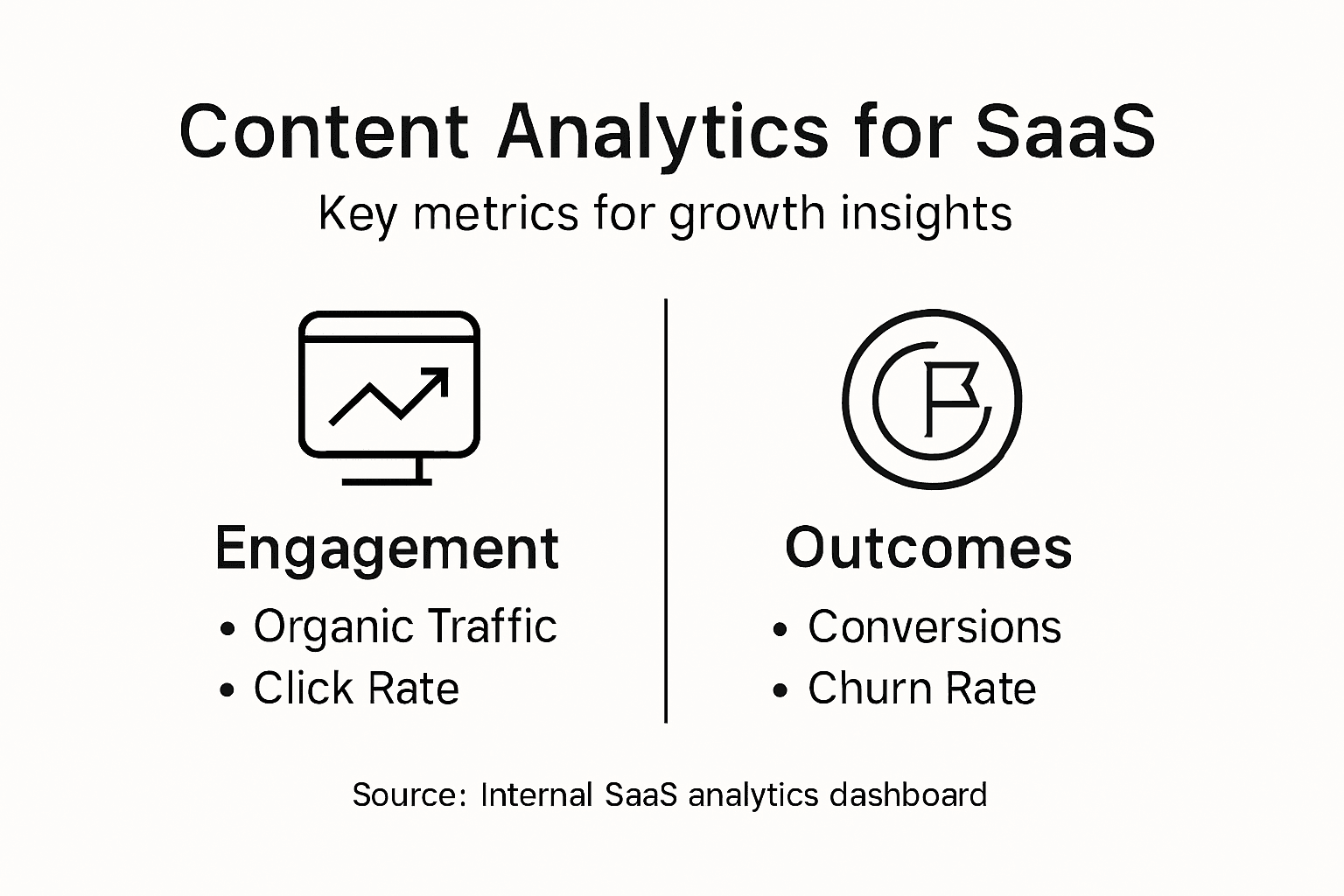
Successful SaaS content marketing requires a multi-dimensional approach to data analysis. Companies should develop integrated dashboards that combine qualitative and quantitative metrics, enabling real-time performance assessment. This approach allows marketers to identify high-performing content themes, optimize resource allocation, and create increasingly targeted strategies that align with audience preferences and business goals.
Pro tip: Implement a standardized monthly analytics review process that compares content performance across different channels and segments to continuously refine your marketing approach.
Here's a summary of key SaaS content marketing metrics and their business impact:
| Metric | What It Measures | Business Impact |
|---|---|---|
| Organic traffic | Content discoverability | Attracts new potential customers |
| Click-through rate | Audience interest | Assesses topic relevance |
| Conversion rate | Action fulfillment | Drives lead or customer growth |
| Customer acquisition cost | Cost to obtain a new customer | Guides budget optimization |
| Churn rate | Customer retention | Informs retention strategies |
| Lifetime value | Total value per customer | Shapes long-term planning |
How Analytics Power Content Strategy
Analytics transform content strategy from guesswork to precision-driven decision making, enabling businesses to understand and optimize their digital communication efforts. Systematic content analysis provides a structured approach to evaluating content performance, revealing deep insights into audience engagement and communication effectiveness that go far beyond surface-level metrics.

The power of analytics lies in its ability to decode complex audience behaviors and preferences. Quantitative metrics like click-through rates, time on page, and conversion rates combine with qualitative insights to create a comprehensive understanding of content impact. This multi-dimensional analysis helps marketers identify which topics resonate most, understand audience segmentation, and predict future content preferences with remarkable accuracy.
Advanced content strategy powered by analytics involves continuous learning and adaptation. Companies can develop predictive models that anticipate audience needs, optimize content distribution channels, and create highly personalized content experiences. By leveraging data-driven insights, businesses can move beyond reactive content creation to proactive strategic planning that aligns directly with audience expectations and business objectives.
Pro tip: Develop a monthly content performance scorecard that tracks key analytics across different channels, enabling rapid iteration and strategic refinement of your content approach.
Tools and Automation for Accurate Reporting
SaaS reporting tools revolutionize data management by transforming complex information into actionable insights through advanced automation technologies. These sophisticated platforms eliminate manual data compilation, enabling businesses to generate comprehensive reports with unprecedented speed and accuracy. By consolidating multiple data sources into unified dashboards, companies can make informed decisions quickly and efficiently.The core strength of modern reporting automation lies in its ability to integrate diverse data streams seamlessly. Automated reporting systems capture real-time metrics across marketing, sales, customer engagement, and operational performance. These tools provide granular analytics that track key performance indicators, segment audience behaviors, and visualize complex data patterns that would be impossible to discern through traditional reporting methods.
Effective marketing automation goes beyond simple data collection. Marketing automation platforms streamline repetitive tasks like email campaigns, lead tracking, and performance reporting, creating a comprehensive ecosystem of intelligent data management. By leveraging artificial intelligence and machine learning, these tools can predict trends, identify potential optimization opportunities, and provide predictive insights that drive strategic decision making.
Pro tip: Select reporting tools that offer customizable dashboards and real-time integration capabilities to ensure your analytics remain flexible and immediately actionable.
Compare how automation tools transform analytics and decision-making:
| Feature | Manual Reporting | Automated Reporting |
|---|---|---|
| Data collection speed | Slow, labor-intensive | Real-time, instantaneous |
| Data accuracy | Prone to human error | Consistently high |
| Insight depth | Basic, limited analysis | Advanced, granular analytics |
| Decision support | Delayed, reactive | Fast, strategic |
Avoiding Costly Mistakes and Misinterpretations
Navigating content marketing requires strategic awareness to prevent common pitfalls that can derail growth efforts. SaaS content marketing mistakes often stem from fundamental misunderstandings about audience engagement and strategic communication. Recognizing these potential errors early can save businesses significant time, resources, and potential missed opportunities.
The most critical errors emerge from narrow perspectives and insufficient research. Audience-centric strategies demand deep understanding beyond surface-level demographics. Companies frequently make the mistake of over-emphasizing product features instead of articulating genuine customer benefits, creating content that fails to resonate with target markets. Effective content must demonstrate clear value propositions that directly address specific audience pain points and aspirations.
Successful content marketing requires a holistic approach that integrates multiple strategic elements. This means developing comprehensive content roadmaps, maintaining consistent SEO best practices, and continuously refining messaging based on data-driven insights. Organizations must move beyond reactive content creation to proactive, strategic communication that anticipates audience needs, builds trust, and creates meaningful connections that drive sustainable business growth.
Pro tip: Conduct quarterly content audits to systematically identify and eliminate strategies that are not delivering measurable audience engagement or business value.
Transform Your SaaS Content Marketing with AI-Powered Analytics
If you are struggling to decode the complex data behind your content marketing performance and want to turn those insights into measurable growth, you are not alone. This article highlights how essential it is for SaaS businesses to track detailed metrics like organic traffic, click-through rates, and conversion rates to optimize strategies and boost customer acquisition while reducing churn. Understanding analytics is crucial, yet many face the challenge of managing vast data streams and making sense of them quickly enough to act decisively.
Babylovegrowth.ai offers the perfect solution for this exact problem with its AI-driven content and backlink strategies that simplify and automate your organic growth. From generating high-quality articles optimized for Google and ChatGPT to delivering a personalized 30-day content plan based on in-depth business analysis, our platform helps you harness real-time data into actionable SEO growth without the headache of manual reporting or overwhelming data noise.
Discover how you can elevate your SaaS marketing with automated analytics and rank-high services that free you to focus on what matters most — growing your business. Start your journey to scalable and cost-effective content success today by visiting Babylovegrowth.ai. Explore our AI-powered SEO solutions and see why smarter SEO on autopilot is the key to staying ahead in the competitive SaaS landscape.
Frequently Asked Questions
What are the key metrics to track for SaaS content marketing?
Essential metrics include organic traffic, click-through rates, conversion rates, customer acquisition costs, churn rates, and lifetime value. These metrics provide insights into audience engagement, content effectiveness, and overall marketing performance.
How can analytics improve content marketing strategies?
Analytics enables businesses to understand audience behaviors, preferences, and engagement levels. By using both quantitative and qualitative data, companies can create targeted content, refine messaging, and optimize resource allocation for better results.
What tools should I use to automate content marketing analytics?
Utilize SaaS reporting tools that offer customizable dashboards and real-time integration capabilities. These tools streamline data collection and reporting, allowing for more efficient analysis and quicker decision-making.
How can I avoid common mistakes in content marketing?
To avoid mistakes, focus on understanding your audience deeply, create content that highlights clear value propositions, and maintain consistent SEO practices. Regular audits of your content strategy can help identify and eliminate ineffective approaches.
Recommended
- BabyLoveGrowth | #1 Automated Organic Growth Platform for Google and ChatGPT
- BabyLoveGrowth | #1 Automated Organic Growth Platform for Google and ChatGPT
- BabyLoveGrowth | #1 Automated Organic Growth Platform for Google and ChatGPT
- BabyLoveGrowth | #1 Automated Organic Growth Platform for Google and ChatGPT
Smart SEO,
Faster Growth!
Most Read Articles
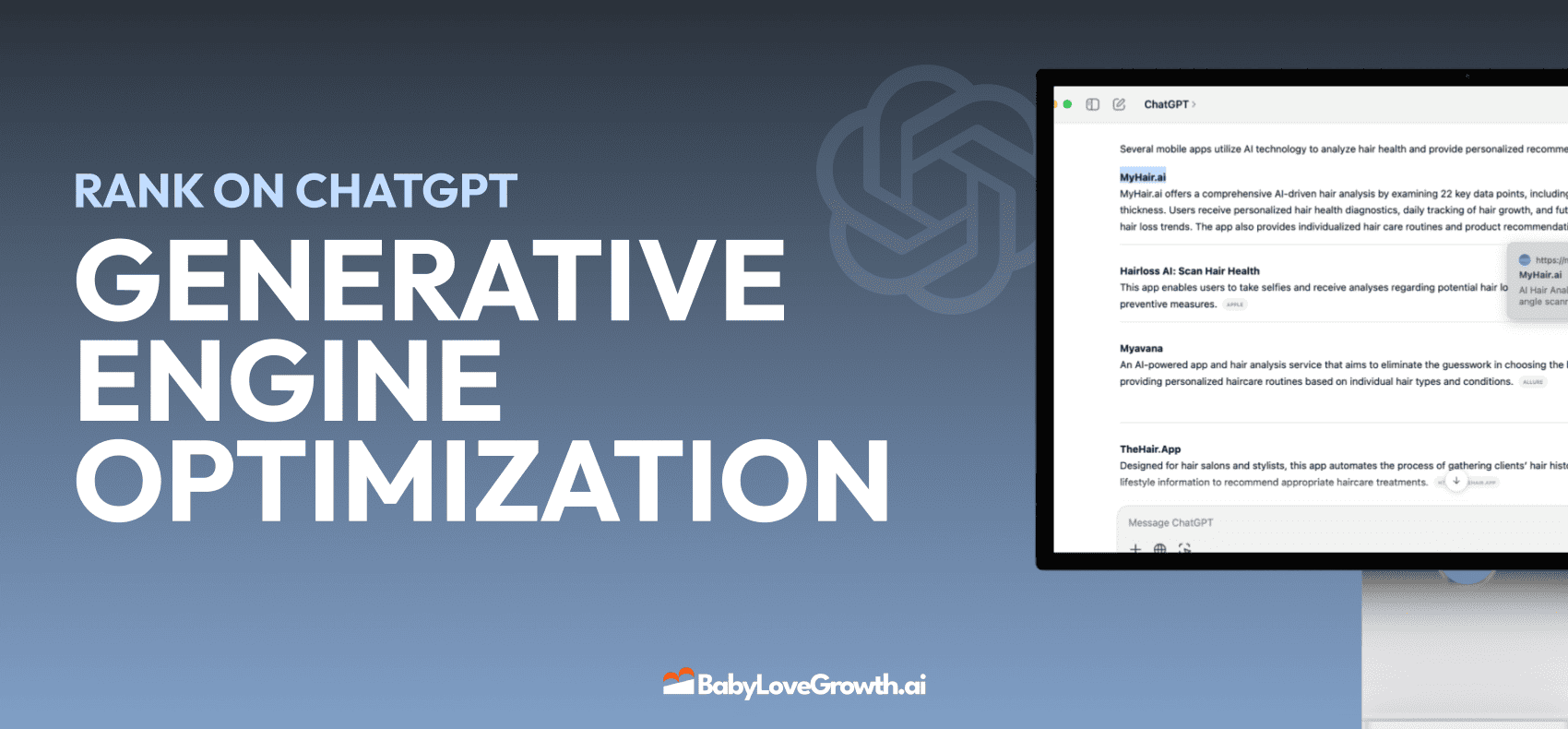
Generative Engine Optimization (GEO)
Learn how Generative Engine Optimization (GEO) helps your content rank in AI search engines like ChatGPT and Google AI. This comprehensive guide explains the differences between SEO and GEO, why it matters for your business, and practical steps to implement GEO strategies for better visibility in AI-generated responses.
DylenJan 18, 2025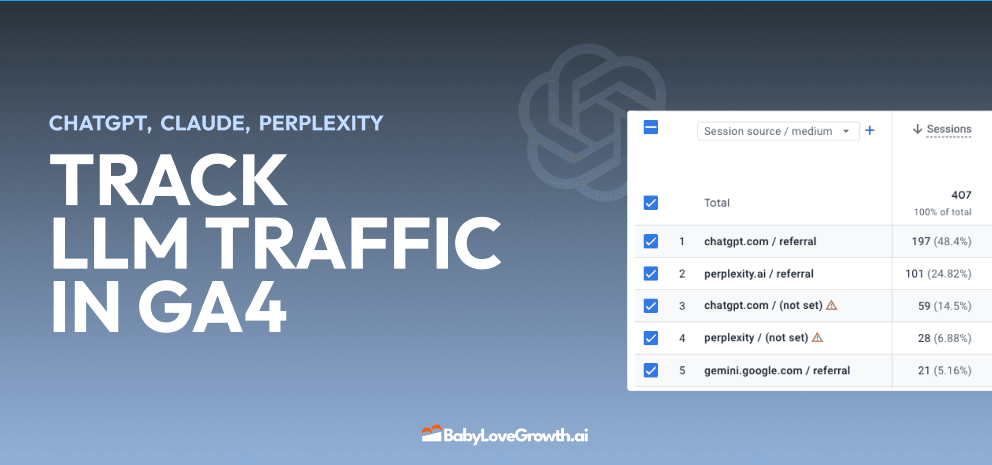
Track LLM Traffic in Google Analytics 4 (GA4)
Learn how to track and analyze traffic from AI sources like ChatGPT, Claude, Perplexity, and Google Gemini in Google Analytics 4. This step-by-step guide shows you how to set up custom filters to monitor AI-driven traffic and make data-driven decisions for your content strategy.
DylenMar 18, 2025
How to Humanize AI Text with Instructions
Learn practical techniques to make AI-generated content sound more natural and human. This guide covers active voice, direct addressing, concise writing, and other proven strategies to transform robotic text into engaging content.
DylenApril 7, 2025
Open AI Revenue and Statistics (2024)
Comprehensive analysis of OpenAI financial performance, user engagement, and market position in 2023. Discover key statistics including $20B valuation, $1B projected revenue, and 100M+ monthly active users.
DylenOctober 03, 2025