AI-driven SEO for user experience optimization in 2026


Business owners and marketers face a persistent challenge: boosting organic traffic while delivering exceptional user experiences. Traditional SEO tactics often prioritize rankings over genuine value, leaving visitors frustrated and AI engines unable to surface your content effectively. In 2026, AI-driven strategies solve this problem by structuring content for both human readers and machine synthesis. You'll learn actionable workflows combining automation with human insight, discover how Generative Engine Optimization (GEO) differs from conventional SEO, and master metrics that reveal true performance beyond surface-level traffic numbers. This guide equips you with practical steps to harmonize visibility and user satisfaction.
Table of Contents
- Recognizing The User Experience Problem In Traditional SEO
- Preparing To Optimize: AI-Driven Content Workflows And Tools
- Executing AI-Powered Strategies For Optimized User Experience
- Verifying Success: Measuring AI-Driven User Experience And SEO Outcomes
- Explore BabyLoveGrowth AI Tools For User Experience Optimization
Key takeaways
| Point | Details |
|---|---|
| AI-driven SEO boosts visibility | Structured content and semantic enrichment improve AI visibility up to 40% through answer-first formats. |
| Hybrid workflows scale output | AI-human collaboration reduces workload by 85% and enables 10x content production. |
| Prioritize retrieval before GEO | Master traditional keyword optimization first, then layer GEO techniques for maximum impact. |
| Measure beyond traffic | Track AI citations, brand share in AI answers, and assisted conversions for comprehensive success insights. |
| Structured elements enhance UX | FAQs, statistics, and schema markup improve both human readability and AI comprehension. |
Recognizing the user experience problem in traditional SEO
Traditional SEO has long centered on extracting clicks from search engine results pages. Marketers optimize meta tags, build backlinks, and chase keyword rankings to drive traffic. This extraction-focused approach often sacrifices content quality and user satisfaction. Pages stuffed with keywords or designed solely to rank high frustrate visitors seeking genuine answers. When users bounce quickly, engagement metrics suffer, and brands lose credibility.
Generative Engine Optimization (GEO) represents a fundamental shift. Instead of optimizing for clicks, GEO methodologies optimize for AI citation by structuring content for synthesis. AI engines like ChatGPT and Google's Search Generative Experience pull information from sources to compose answers. If your content lacks clear structure, semantic depth, or authoritative signals, AI systems bypass it entirely. This creates a visibility gap that traditional SEO tactics cannot close.
User experience suffers when SEO prioritizes rankings over substance. Visitors arrive expecting solutions but encounter thin content designed to game algorithms. They leave frustrated, damaging brand trust and reducing repeat visits. GEO addresses this by emphasizing quality signals that benefit both humans and machines:
- Answer-first content formats that directly address user queries
- Structured data markup enabling AI systems to parse information accurately
- Semantic enrichment through entity recognition and contextual relationships
- E-E-A-T signals (Experience, Expertise, Authoritativeness, Trustworthiness) that build credibility
Understanding engine optimization meaning in this new context is essential. Traditional metrics like page views and session duration remain useful, but they miss how AI engines interact with your content. A page might receive modest direct traffic yet appear frequently in AI-generated answers, driving brand awareness and assisted conversions. Without adapting to this synthesis-focused landscape, businesses risk invisibility in the AI-powered search ecosystem.
Pro Tip: Audit your existing content for AI-friendliness by testing how well ChatGPT or Perplexity can extract and cite your key points. If AI struggles to synthesize your information, restructure with clearer headings, concise paragraphs, and explicit answers.
Preparing to optimize: AI-driven content workflows and tools
Scaling quality content requires hybrid workflows that blend AI automation with human expertise. Pure AI generation often produces generic, off-brand material lacking nuance. Pure human creation limits output and drains resources. The solution lies in strategic division of labor where AI handles repetitive tasks and humans provide strategic direction and editorial refinement.

AI content automation workflows typically assign these core functions to machines: ideation based on keyword research and trending topics, outline generation following proven content structures, initial draft creation using brand voice parameters, and on-page optimization including meta descriptions and internal linking suggestions. This automation reduces workload by 85% while enabling teams to scale content production tenfold.
Human roles remain critical for maintaining quality and brand alignment. Editors review AI drafts for accuracy, inject unique insights and examples, refine tone to match brand voice, and ensure claims are properly cited with authoritative sources. This oversight prevents the bland uniformity that plagues fully automated content. Strategic thinkers also guide AI by crafting detailed prompts, setting content calendars aligned with business goals, and identifying gaps in topic coverage.
Effective AI powered content workflow implementation depends on selecting the right tools and establishing clear processes. Consider this functional breakdown:
| AI Tool Function | Human Role | Outcome |
|---|---|---|
| Keyword research and clustering | Strategic topic selection and prioritization | Focused content aligned with business objectives |
| Outline and structure generation | Template refinement and section customization | Consistent, scannable formats |
| Draft creation and expansion | Fact-checking, nuance addition, voice adjustment | On-brand, accurate, engaging content |
| SEO optimization suggestions | Final review and strategic link placement | Search-friendly without over-optimization |
| Scheduling and batch processing | Quality control and performance monitoring | Efficient, scalable production |
Batching content production amplifies efficiency gains. Process multiple articles simultaneously through each workflow stage rather than completing one piece at a time. Generate ten outlines in one session, then draft all ten, then edit the batch. This approach minimizes context switching and leverages AI's speed advantages. Scheduling tools automate publication timing, ensuring consistent output without manual intervention.
Prompt engineering significantly impacts AI output quality. Generic prompts yield generic content. Detailed instructions specifying tone, target audience, required sections, and brand guidelines produce superior results. Maintain a prompt library for common content types, refining templates based on performance data. Investing time in prompt optimization pays dividends across hundreds of articles.
Pro Tip: Create a style guide specifically for AI collaboration, documenting brand voice examples, forbidden phrases, preferred sentence structures, and citation requirements. Feed this guide into your AI tool's context window for every project to maintain consistency.
Integrating content marketing automation platforms streamlines the entire workflow from ideation through publication. These systems connect keyword research tools, AI writing assistants, editorial dashboards, and content management systems. Automation handles routine tasks while humans focus on strategic decisions and creative refinement. The result is sustainable, scalable content production that maintains quality standards.
Executing AI-powered strategies for optimized user experience
Implementing AI-driven user experience optimization requires a systematic approach starting with foundational SEO before advancing to GEO techniques. Rushing into advanced strategies without solid retrieval optimization wastes effort. Follow this progression for maximum impact.
First, establish strong retrieval-focused SEO. Conduct thorough keyword research identifying terms your audience actively searches. Optimize title tags, headers, and meta descriptions with target keywords. Build a logical internal linking structure guiding users and search crawlers through related content. Ensure technical fundamentals like fast page speed, mobile responsiveness, and secure HTTPS are in place. These basics remain essential even as AI changes search dynamics.
Once retrieval SEO is solid, layer generative engine optimization techniques. GEO methodologies improve AI visibility up to 40% through structured, semantic content that AI engines can easily parse and cite. Implement these specific tactics:
- Structure content with clear, descriptive headings that signal topic hierarchy. Use H2 and H3 tags logically to break complex topics into digestible sections.
- Create comprehensive FAQ sections addressing common questions directly. Format answers concisely for easy extraction by AI systems.
- Incorporate relevant statistics and data points with proper citations. Quantitative information increases content authority and citation likelihood.
- Implement schema markup for articles, FAQs, how-to guides, and other structured content types. Schema helps AI understand content context and relationships.
- Build semantic richness by naturally including related entities, synonyms, and contextual terms. Avoid keyword stuffing but ensure topical depth.
- Emphasize E-E-A-T signals through author credentials, external citations to authoritative sources, and transparent information about your expertise.
Compare traditional SEO and GEO approaches to understand the strategic shift:
| Aspect | Traditional SEO | Generative Engine Optimization |
|---|---|---|
| Primary goal | Drive clicks to website | Earn citations in AI-generated answers |
| Content structure | Optimized for human scanning | Optimized for machine parsing and synthesis |
| Success metric | Rankings and traffic | AI visibility and brand mentions |
| Optimization focus | Keywords and backlinks | Semantic depth and structured data |
| User experience | Secondary to rankings | Central to strategy |
When creating AI-friendly content layouts, prioritize clarity and logical flow. Start with a concise introduction establishing context. Follow with clearly labeled sections addressing specific subtopics. Include visual breaks like bullet lists, tables, and blockquotes to improve scannability. End with actionable takeaways or next steps. This structure serves both human readers seeking quick answers and AI systems extracting information for synthesis.
Content automation seo success 2026 guide principles emphasize consistency across your content library. Develop templates for common content types ensuring every piece includes essential GEO elements. Standardization accelerates production while maintaining quality. Your automated content seo workflow should enforce these standards automatically, reducing manual oversight.Pro Tip: Test your content across multiple AI platforms including ChatGPT, Claude, Perplexity, and Google's Search Generative Experience. Each system has different parsing capabilities and citation preferences. Content optimized for one may underperform on others, so validate broadly.
Monitor how AI systems interact with your content by querying relevant topics and tracking whether your pages appear in generated answers. Tools like BrightEdge and Conductor now offer GEO tracking features. This feedback loop reveals which content structures and topics resonate with AI engines, informing future optimization efforts.
Verifying success: measuring AI-driven user experience and SEO outcomes
Traditional analytics dashboards tracking page views, bounce rates, and conversion rates tell an incomplete story in the AI era. While these metrics remain relevant, they miss crucial dimensions of AI-driven visibility and influence. Comprehensive measurement requires expanding your analytics framework to capture how AI systems interact with and cite your content.
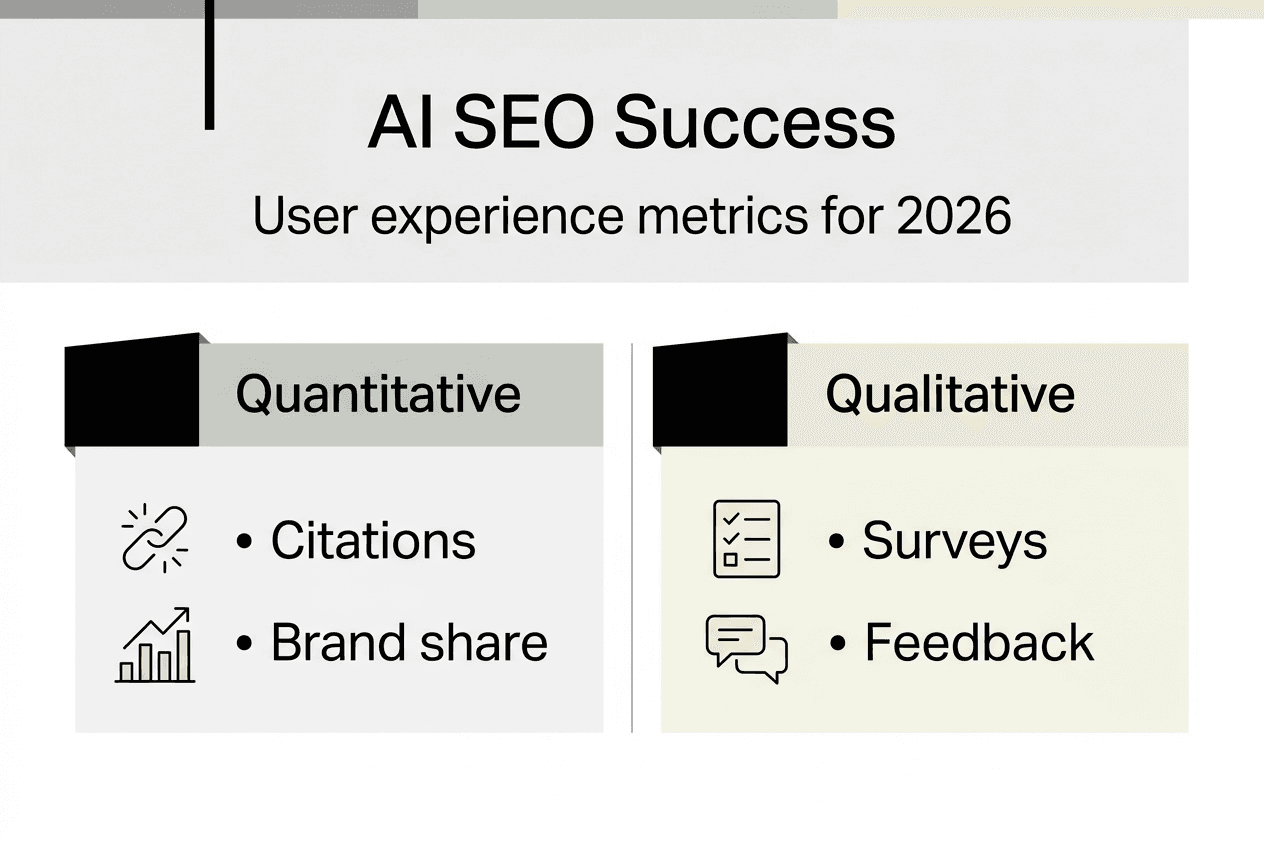
Measure beyond traffic using citations, brand share in AI-generated answers, and assisted conversions. AI citation frequency indicates how often your content appears as a source when AI engines answer user queries. Track this by systematically querying relevant topics across ChatGPT, Perplexity, Bing Chat, and Google's generative features. Document when your brand or content receives attribution. Rising citation rates signal effective GEO implementation.
Brand share within AI responses measures your visibility relative to competitors. When AI generates an answer about your industry topic, does it mention your brand? How prominently? Increasing brand share demonstrates growing authority and trust in AI systems' evaluation. This metric particularly matters for awareness and consideration stages of the customer journey where prospects research solutions before engaging directly.
Assisted conversions reveal your content's influence on customer journeys beyond last-click attribution. A prospect might discover your brand through an AI-generated answer, visit your site days later via organic search, and eventually convert through a direct visit. Traditional last-click models credit only the final touchpoint. Multi-touch attribution and assisted conversion tracking illuminate your content's true contribution across the entire journey.
Key metrics and tools for advanced AI-driven SEO measurement include:
- AI citation tracking through manual queries and emerging GEO analytics platforms
- Brand mention monitoring in AI-generated content using tools like Brand24 or Mention
- Assisted conversion analysis via Google Analytics 4's multi-touch attribution reports
- Engagement quality metrics including time on page, scroll depth, and content interaction rates
- Semantic visibility scores measuring how well AI systems understand your topical authority
- Featured snippet and People Also Ask appearances indicating content quality and relevance
Establish baseline measurements before implementing GEO strategies, then track changes over time. Improvements may appear gradually as AI systems index and evaluate your optimized content. Patience is essential, as AI citation algorithms differ from traditional search ranking factors.
Pro Tip: Create a monthly AI visibility report documenting citation examples, brand mentions, and competitive positioning in AI-generated answers. Share this with stakeholders to demonstrate the value of GEO investments beyond traditional traffic metrics.
Qualitative feedback complements quantitative data. Survey customers about how they discovered your brand and whether AI tools played a role. Analyze customer support inquiries for patterns suggesting AI-driven awareness. Monitor social media for mentions of your brand in AI-related contexts. These insights reveal real-world impact that pure analytics may miss.
Integrate AI visibility metrics into your regular reporting cadence alongside traditional SEO and content performance data. This holistic view enables informed strategic decisions about resource allocation between retrieval optimization and GEO initiatives. As AI's role in search and discovery grows, brand loyalty with ai content depends on visibility in both traditional and generative contexts.
Explore BabyLoveGrowth AI tools for user experience optimization
Ready to implement these AI-driven strategies without overwhelming your team? BabyLoveGrowth offers purpose-built tools that automate the heavy lifting while maintaining quality and brand consistency. Our platform addresses the exact challenges discussed in this guide, from content creation to performance tracking.

Our organic traffic tool provides data-driven insights identifying high-potential keywords and content gaps in your strategy. The automated publishing platform streamlines content scheduling and distribution across channels, ensuring consistent output without manual intervention. Meanwhile, our seo link building ecosystem facilitates quality backlink acquisition through strategic partnerships, amplifying your domain authority and search visibility. These integrated solutions work together, creating a comprehensive system for sustainable organic growth. Start your free trial today and experience how AI-powered automation transforms your content marketing efficiency while improving user experience and search performance.
FAQ
What is Generative Engine Optimization (GEO) and how does it improve SEO?
GEO optimizes for AI citation using structured content and semantic enrichment rather than traditional click-focused tactics. It improves SEO by making your content more discoverable and citable by AI systems like ChatGPT and Google's generative features. This approach emphasizes synthesis over extraction, positioning your brand as an authoritative source AI engines reference when answering user queries.
How can AI automation reduce content creation workload without sacrificing quality?
Hybrid AI-human workflows enable 85% workload reduction and 10x content scale while maintaining brand voice. AI handles repetitive tasks like ideation, outlining, and initial drafting. Humans provide strategic direction, fact-checking, nuance, and editorial refinement. This division of labor leverages each party's strengths, producing high-quality content efficiently at scale.
What metrics should businesses track to measure AI-driven SEO and user experience success?
Effective measurement includes AI citations, brand share in AI answers, and assisted conversions beyond traditional traffic metrics. Track how frequently AI systems cite your content, monitor your brand's visibility in generated responses, and analyze multi-touch attribution to understand your content's full influence on customer journeys. These metrics reveal true performance in the AI-powered search landscape.
Should I prioritize traditional SEO or GEO techniques first?
Prioritize retrieval-focused SEO before advancing to GEO techniques. Establish strong keyword optimization, technical fundamentals, and internal linking first. Once those basics are solid, layer GEO strategies like structured data, semantic enrichment, and FAQ optimization. This progression ensures you capture both traditional search traffic and AI visibility, maximizing overall organic performance.
How do I test if my content is optimized for AI engines?
Query relevant topics across ChatGPT, Claude, Perplexity, and Google's Search Generative Experience to see if your content appears in generated answers. Document citation frequency and positioning. If AI struggles to extract or cite your information, restructure with clearer headings, concise paragraphs, explicit answers, and schema markup. Testing across multiple platforms reveals platform-specific optimization opportunities.
Recommended
Smart SEO,
Faster Growth!
Most Read Articles
Generative Engine Optimization (GEO)
Learn how Generative Engine Optimization (GEO) helps your content rank in AI search engines like ChatGPT and Google AI. This comprehensive guide explains the differences between SEO and GEO, why it matters for your business, and practical steps to implement GEO strategies for better visibility in AI-generated responses.
DylenJan 18, 2025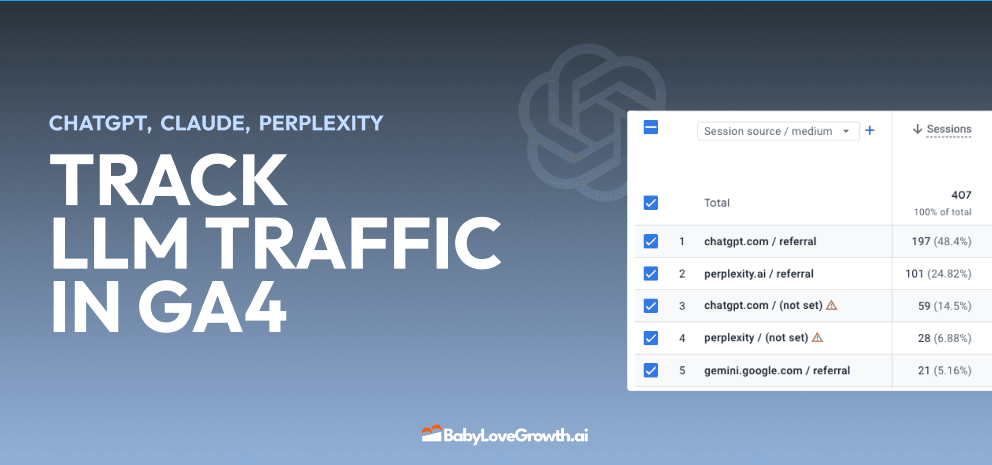
Track LLM Traffic in Google Analytics 4 (GA4)
Learn how to track and analyze traffic from AI sources like ChatGPT, Claude, Perplexity, and Google Gemini in Google Analytics 4. This step-by-step guide shows you how to set up custom filters to monitor AI-driven traffic and make data-driven decisions for your content strategy.
DylenMar 18, 2025
How to Humanize AI Text with Instructions
Learn practical techniques to make AI-generated content sound more natural and human. This guide covers active voice, direct addressing, concise writing, and other proven strategies to transform robotic text into engaging content.
DylenApril 7, 2025
Open AI Revenue and Statistics (2024)
Comprehensive analysis of OpenAI financial performance, user engagement, and market position in 2023. Discover key statistics including $20B valuation, $1B projected revenue, and 100M+ monthly active users.
DylenOctober 03, 2025