AI Content Optimization: Transforming SEO Results


Over 80 percent of American businesses now rely on Artificial Intelligence to shape their digital strategies. For SEO specialists navigating the fast-paced world of global marketing agencies, understanding how AI content optimization works is a game-changer. As algorithms outgrow classic tactics, this guide explores the real-world methods that give your agency a sharper edge, bring semantic clarity to your campaigns, and set the stage for measurable organic growth.
Table of Contents
- What Is AI Content Optimization?
- Main Types and Use Cases in SEO
- How AI Content Optimization Works
- Benefits and Core Features for Agencies
- Risks, Challenges, and Ethical Considerations
Key Takeaways
| Point | Details |
|---|---|
| AI Content Optimization is Essential | Transitioning from traditional SEO to AI Content Optimization is crucial for effective digital marketing. |
| Semantic Understanding is Key | Focus on creating content that emphasizes semantic clarity and contextual relevance to better engage AI algorithms. |
| Automation Enhances Efficiency | Leverage AI tools to automate workflows, improving content quality while speeding up production timelines. |
| Ethical Oversight is Necessary | Implement strict human review processes to address potential biases and ensure the accuracy of AI-generated content. |
What Is AI Content Optimization?
Artificial Intelligence Content Optimization (AIO) represents a sophisticated approach to creating digital content that can be efficiently processed, understood, and ranked by advanced AI search systems. Unlike traditional SEO strategies, AIO focuses on improving content's semantic structure and contextual relevance for large language model interpretation.
At its core, AI content optimization involves strategically crafting content that meets the complex algorithmic requirements of modern AI-driven search platforms. This means moving beyond keyword density and traditional metadata to develop content with deep semantic clarity, contextual authority, and precise information architecture. SEO specialists now must consider how AI systems analyze and understand content, which requires a more nuanced approach to information presentation and retrieval.
The key components of effective AI content optimization include:
- Semantic structure and coherence
- Contextual relevance and depth
- Clear, concise information hierarchy
- Token-efficient language
- Natural language comprehension
Pro tip: Develop content with a clear, logical flow that demonstrates expertise through comprehensive yet succinct explanations, anticipating how AI systems will interpret and categorize your information.
Here's a summary of how AI content optimization differs from traditional SEO:
| Aspect | Traditional SEO Approach | AI Content Optimization Approach |
|---|---|---|
| Focus | Keyword matching | Semantic understanding |
| Content Structure | Keyword density | Contextual and logical flow |
| Target Algorithms | Rule-based search | AI-driven language models |
| Adaptability | Manual updates | Dynamic, data-powered adjustments |
| User Intent Detection | Basic analysis | Deep search intent mapping |
Main Types and Use Cases in SEO
Artificial Intelligence is revolutionizing search engine optimization through several critical use cases. Modern SEO professionals are leveraging AI-powered optimization strategies that transform traditional marketing approaches, enabling more intelligent and data-driven content development.
The primary types of AI applications in SEO include advanced keyword research, content generation, competitive analysis, and performance tracking. For keyword research, AI tools can now analyze search intent with unprecedented depth, identifying not just popular terms but understanding the underlying user motivations. Content generation capabilities allow marketers to create semantically rich, contextually relevant content that aligns precisely with user search expectations and search engine algorithmic requirements.
Key AI SEO use cases encompass:
- Intelligent Keyword Discovery: Analyzing search intent and difficulty
- Automated Content Optimization: Generating semantically structured content
- Competitive Intelligence: Identifying content and ranking opportunities
- Metadata Enhancement: Automatically creating optimized tags and descriptions
- Performance Tracking: Real-time SERP monitoring with sentiment analysis
The integration of AI into SEO strategies represents a fundamental shift from traditional optimization techniques, moving toward more dynamic, intelligent, and user-focused content development approaches that can adapt rapidly to changing search algorithms and user behaviors.
Pro tip: Invest in AI-powered SEO tools that offer comprehensive analysis across multiple dimensions, enabling you to develop more strategic and nuanced content optimization strategies.
How AI Content Optimization Works
AI Content Optimization fundamentally transforms how digital content is structured and interpreted through advanced algorithmic techniques. By optimizing content retrieval mechanisms, AI systems can more accurately process, understand, and synthesize information across complex digital landscapes.

The core process involves multiple sophisticated stages of content analysis and enhancement. Advanced AI algorithms break down content into semantic units, evaluating token efficiency, contextual relevance, and structural coherence. This means examining how each sentence, paragraph, and section contributes to overall meaning, reducing redundancy while maintaining comprehensive information delivery. Machine learning models continuously analyze patterns in high-performing content, enabling dynamic recommendations for improvement that go far beyond traditional keyword optimization.
Key technical components of AI content optimization include:
- Semantic Parsing: Analyzing linguistic structure and meaning
- Context Mapping: Understanding relationships between content elements
- Relevance Scoring: Evaluating information depth and precision
- Schema Markup Integration: Improving AI interpretability
- Natural Language Processing: Enhancing comprehension and generation
The ultimate goal of these intricate processes is creating content that speaks the language of both human readers and AI search algorithms, bridging complex communication gaps with intelligent, adaptive strategies.
Pro tip: Develop content with clear, logical structures that prioritize semantic clarity and contextual depth, allowing AI systems to more easily interpret and rank your digital assets.
Benefits and Core Features for Agencies
AI content optimization transforms digital marketing agencies by providing unprecedented capabilities for content creation and strategic planning. By enhancing workflow productivity, agencies can dramatically reduce content development time while maintaining exceptional quality and strategic precision.
The most significant advantages for agencies include comprehensive workflow integration, automated quality control, and intelligent content personalization. Advanced AI systems analyze existing content strategies, generate targeted recommendations, and provide multi-language support that allows agencies to scale their content production efficiently. These technologies enable marketers to develop more nuanced, audience-specific content that adapts dynamically to changing market conditions and search engine algorithms.
Core features that empower digital marketing agencies include:
- Workflow Automation: Streamlining content creation processes
- Intelligent Content Recommendations: Generating targeted, high-performance drafts
- Multi-Language Support: Creating consistent content across global markets
- Automated Quality Checks: Ensuring brand voice and editorial standards
- Performance Prediction: Forecasting content engagement and search rankings
By leveraging these advanced AI capabilities, agencies can transform their content strategies from manual, time-consuming processes to dynamic, data-driven approaches that deliver measurable results and competitive advantages.
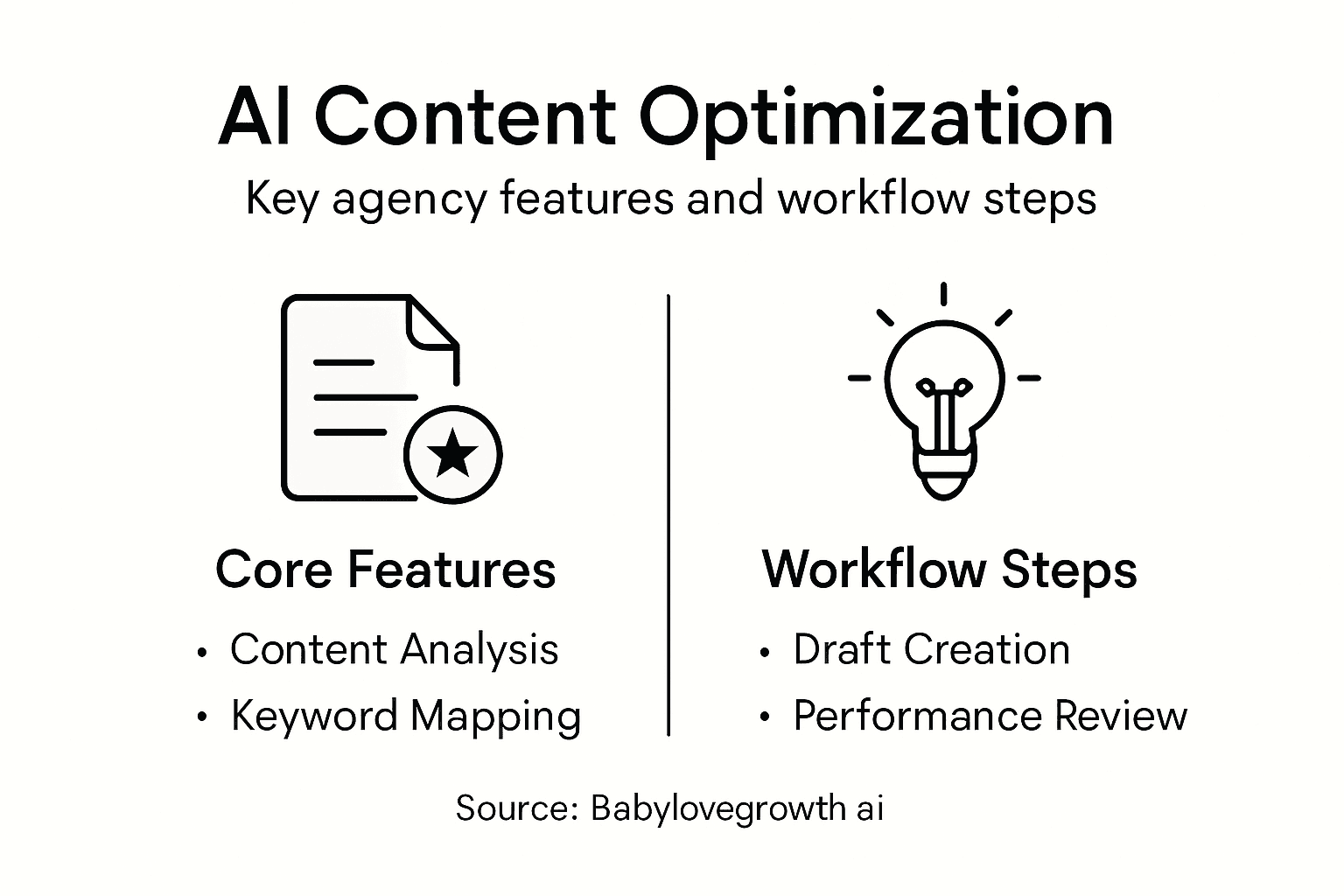
The table below highlights key agency benefits and their impact:
| Feature | Business Impact | Examples in Action |
|---|---|---|
| Workflow Automation | Speeds up campaign delivery | Quicker content publishing |
| Intelligent Recommendations | Boosts content relevance | Topic suggestions for blogs |
| Multi-Language Support | Expands global reach | Localized campaigns at scale |
| Automated Quality Checks | Maintains brand consistency | Real-time editorial feedback |
| Performance Prediction | Informs strategy and resource use | Forecasting top-performing posts |
Pro tip: Implement AI content optimization tools gradually, starting with specific workflows to build team confidence and demonstrate tangible productivity gains.
Risks, Challenges, and Ethical Considerations
AI content optimization presents a complex landscape of potential risks and ethical challenges that demand careful navigation. Ethical considerations in AI content creation reveal critical concerns about accuracy, bias, and potential misinformation that can undermine content integrity and professional credibility.
The primary risks emerge from AI's probabilistic nature, which can generate content that appears authoritative but lacks genuine understanding. Hallucinations, unintentional bias, and potential plagiarism represent significant challenges for digital marketing professionals. AI systems may inadvertently reproduce existing content, generate factually incorrect information, or perpetuate subtle cultural or demographic biases embedded in their training data. This necessitates rigorous human oversight and continuous verification of AI-generated content.
Key ethical challenges in AI content optimization include:
- Transparency: Disclosing AI content generation methods
- Accuracy Verification: Ensuring factual correctness
- Bias Detection: Identifying and mitigating algorithmic prejudices
- Originality Preservation: Maintaining unique content perspectives
- Intellectual Property Protection: Respecting copyright and attribution
Responsible AI content optimization requires a balanced approach that leverages technological capabilities while maintaining human critical thinking and editorial standards. Organizations must develop robust frameworks for AI tool usage, implement comprehensive review processes, and cultivate a culture of ethical technological engagement.
Pro tip: Establish clear internal guidelines for AI content tools, including mandatory human review, plagiarism checks, and explicit disclosure of AI assistance in content creation.
Unlock the Full Potential of AI Content Optimization with Babylovegrowth.ai
The article highlights the challenges digital marketers face with traditional SEO methods in a world shifting rapidly toward AI-driven search and semantic understanding. If you struggle with creating content that matches complex AI algorithms maintaining semantic clarity and contextual relevance, you are not alone. The shift from keyword density to deep semantic content demands tools that can intelligently automate keyword discovery, content planning, and structured data markup to boost rankings on Google and emerging AI platforms.
Babylovegrowth.ai offers a comprehensive SaaS solution designed to tackle these exact pain points. With features like automated keyword discovery, daily SEO article creation, and automatic schema integration, you can streamline content optimization that meets the semantic precision AI search engines require. Combine this with advanced backlink building and technical auditing for a complete growth strategy that scales with your brand needs. Learn how to transform your SEO approach into a dynamic, AI-powered process right now with Babylovegrowth.ai and experience improved organic traffic and visibility.
Are you ready to elevate your content to the next level and outrank your competitors in AI-driven search results?

Start your journey today by exploring how automated content planning and AI SEO tools can revolutionize your strategy at Babylovegrowth.ai. Discover tailored solutions for your brand and future-proof your online presence now.
Frequently Asked Questions
What is AI content optimization?
AI content optimization is the process of enhancing digital content to improve its relevance, semantic structure, and contextual clarity, enabling it to be effectively processed and ranked by advanced AI-driven search systems.
How does AI content optimization differ from traditional SEO?
Unlike traditional SEO, which focuses on keyword matching, AI content optimization emphasizes semantic understanding and user intent, adapting dynamic strategies to meet AI-driven algorithm requirements.
What are the key benefits of using AI content optimization for agencies?
Agencies benefit from improved workflow automation, intelligent content recommendations, multi-language support, automated quality checks, and performance prediction, leading to more efficient content strategies with measurable results.
What are some risks associated with AI content optimization?
The primary risks include potential content inaccuracy, unintentional bias, and issues with originality. Ensuring transparency, accuracy verification, and ethical considerations are essential in mitigating these challenges.
Recommended
Smart SEO,
Faster Growth!
Most Read Articles
Generative Engine Optimization (GEO)
Learn how Generative Engine Optimization (GEO) helps your content rank in AI search engines like ChatGPT and Google AI. This comprehensive guide explains the differences between SEO and GEO, why it matters for your business, and practical steps to implement GEO strategies for better visibility in AI-generated responses.
DylenJan 18, 2025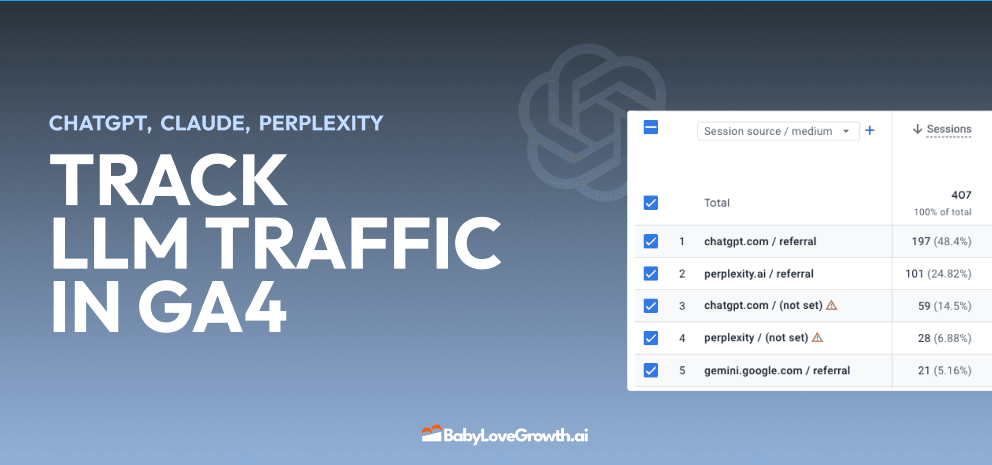
Track LLM Traffic in Google Analytics 4 (GA4)
Learn how to track and analyze traffic from AI sources like ChatGPT, Claude, Perplexity, and Google Gemini in Google Analytics 4. This step-by-step guide shows you how to set up custom filters to monitor AI-driven traffic and make data-driven decisions for your content strategy.
DylenMar 18, 2025
How to Humanize AI Text with Instructions
Learn practical techniques to make AI-generated content sound more natural and human. This guide covers active voice, direct addressing, concise writing, and other proven strategies to transform robotic text into engaging content.
DylenApril 7, 2025
Open AI Revenue and Statistics (2024)
Comprehensive analysis of OpenAI financial performance, user engagement, and market position in 2023. Discover key statistics including $20B valuation, $1B projected revenue, and 100M+ monthly active users.
DylenOctober 03, 2025